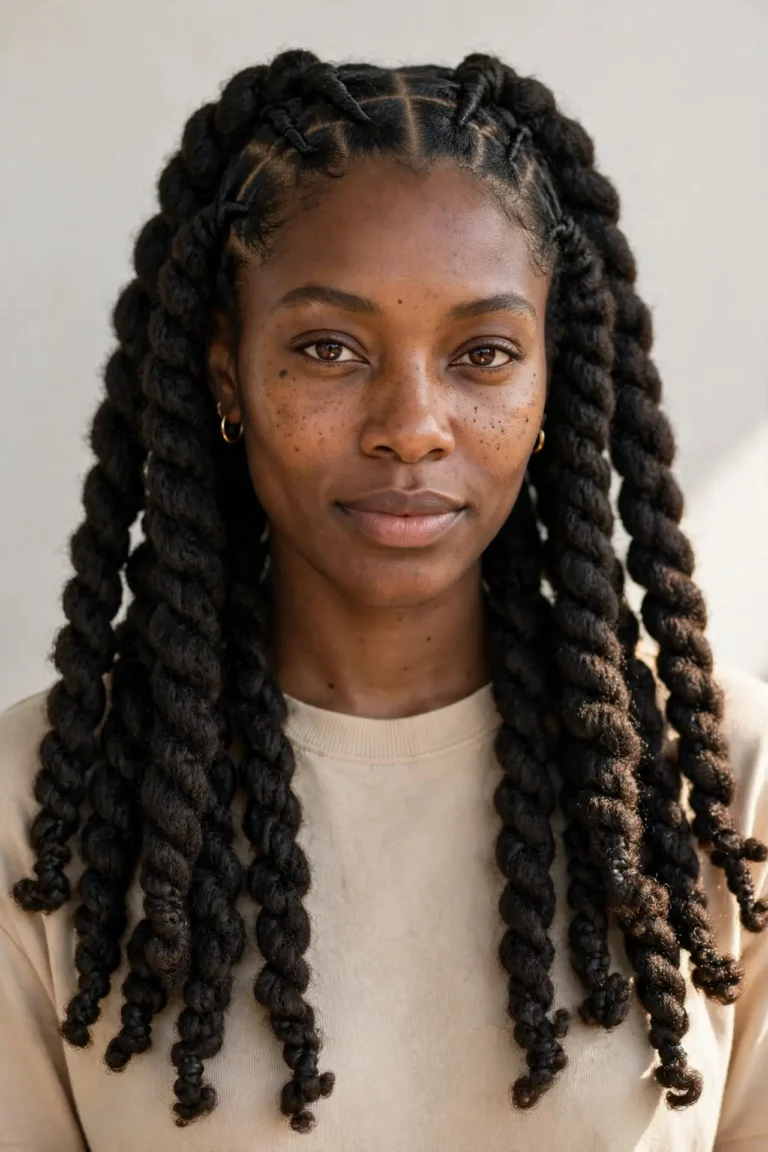
12 Short Haircuts for Fine Flat Hair

Introduction
If your fine hair falls flat no matter how much you tease, backcomb, or spray it, the right short haircuts for fine flat hair can change everything. The problem is usually weight: long fine strands pull themselves flat at the roots, while a short cut removes that drag and lets your hair’s natural body spring back to life. Below you’ll find 12 short haircuts designed to build volume into fine, flat hair — from stacked bobs and textured pixies to tousled shags — each with styling tips, salon wording, and maintenance advice. If you love the bob family, also browse our roundup of short bob hairstyles for thin fine hair and round faces for even more flattering ideas for delicate strands.
The Volumizing Stacked Bob for Fine, Flat Hair
The stacked bob is the classic volume fix for fine hair, and it earns its reputation honestly. Layers stack up through the back from a shorter nape to a longer front, creating a rounded, almost architectural shape that holds lift on its own. This is one of the short haircuts for fine flat hair that works on nearly every face shape: the angled front pieces elongate round faces, while the stacked back adds width and balance for long or oval faces. Because the volume is built into the cut itself, you never have to fight your hair to keep it lifted — the layers do the work. It looks especially good on naturally straight fine hair, where each layer reads crisp and clean.
- Blow-dry the back sections with a round brush, lifting each layer upward.
- Apply a volumizing mousse to damp roots before styling for lasting body.
- Flip your part to the opposite side for an instant root refresh.
- Finish with a light mist of flexible hairspray to lock in the shape.
Ask your stylist for a stacked bob with short graduated layers through the back, a clean nape, and front pieces that reach the jawline. At home, rough-dry upside down until mostly dry, then finish with a round brush aimed upward at the back. This cut holds its shape well and needs a trim every five to seven weeks to keep the stacking crisp. If you ever grow it out, ask the stylist to even out the graduation gradually rather than letting the back grow shaggy.
The Piecey Pixie-Bob That Fakes Thickness
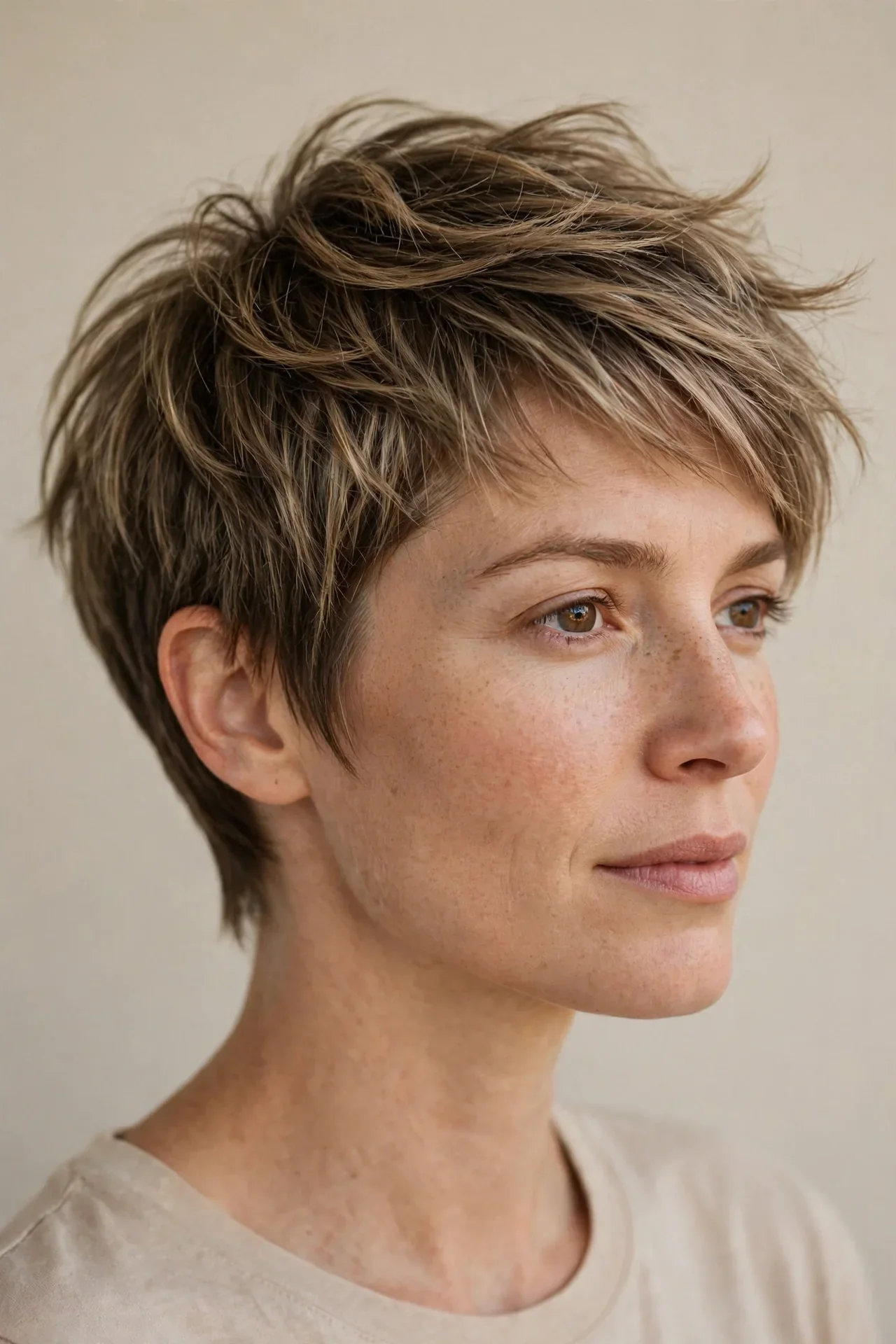
A pixie-bob (or bixie) gives you the boldness of a pixie with the forgiving coverage of a bob, which makes it a dream for fine hair that shows every scalp glimpse. The slightly longer length lets strands overlap and support each other, so the hair reads thicker than it is. Wispy, piecey ends create texture and movement that stop fine hair from lying flat in a single sheet. This cut flatters oval, heart, and round faces beautifully, since the tousled texture adds width and interest wherever your face needs balance. It works on straight, wavy, and even slightly curly fine hair, and the messy finish is very forgiving of second-day hair.
- Scrunch a pea-sized amount of texturizing paste through the ends.
- Blow-dry with your fingers instead of a brush for natural piece separation.
- Tease the crown lightly to create airy lift that lasts all day.
- Pinch individual pieces with pomade to define texture without stiffness.
Tell your stylist you want a pixie-bob with longer layers on top, tapered sides, and piecey, point-cut ends. At home, apply mousse to damp hair and scrunch as you diffuse or air-dry for soft texture. Refresh the crown on day two with dry shampoo and a quick finger-tease. Trim every four to six weeks to keep the taper neat. Growing it out is easy — the longer layers blend smoothly into a shaggy bob stage.
The Choppy Pixie for Fine Flat Hair with Airy Crown Layers

When you want short hair with serious attitude, a choppy pixie with airy crown layers delivers edge without sacrificing fullness. The secret is the length left through the crown: long, textured pieces on top create visible volume, while the short back and sides keep the silhouette sleek. Among short haircuts for fine flat hair, this one is perfect if you love low-maintenance mornings, because the choppiness hides regrowth and the texture does all the styling work for you. It suits heart, oval, and square faces best, and the uneven ends flatter both straight and wavy fine hair. Ask for longer fringe pieces swept to one side to soften the look.
- Apply a volumizing powder or spray directly at the crown roots.
- Ruffle the top layers with your fingers while blow-drying on medium heat.
- Work a tiny amount of matte clay through the ends for separation.
- Sweep the fringe diagonally across the forehead for extra coverage.
Ask your stylist for a pixie with choppy, textured layers on top, closely tapered back and sides, and a longer sweeping fringe. At home, shampoo with a lightweight line and skip heavy conditioners at the roots — fine hair needs the lift. Style in under five minutes by rough-drying and scrunching the crown. Book trims every four to five weeks to keep the edges crisp. To grow it out, let the back and sides catch up while trimming the crown into bob layers.
The Graduated Chin Bob with a Soft Undercut Nape

A graduated chin bob with a soft undercut at the nape looks dramatic from behind and polished from the front. The undercut removes bulk from the neckline so the top layers fall cleanly and hold their curve, while the graduated back builds natural lift through the crown. This cut is lovely on fine hair because removing that hidden weight at the nape means the rest of the hair doesn’t get pulled down. It flatters round and heart faces especially well, with the longer front framing the jawline elegantly. The shape suits straight fine hair best, where the sleek graduation shows off beautifully.
- Blow-dry the crown with a round brush, curving each section inward.
- Apply a smoothing serum only through the mid-lengths, never at the roots.
- Brush the nape upward to show off the clean undercut line.
- Tuck one front piece behind the ear for an asymmetrical styling option.
Tell your stylist you want a graduated bob with a soft, natural undercut at the nape — not shaved, just shortened — and front pieces that skim the chin. At home, lift the crown with a round brush and keep the nape smooth with a flat iron if it flips. The undercut grows out quietly, but trim every five weeks to keep the graduation sharp. For washing advice that protects delicate hair, the American Academy of Dermatology’s hair-care resources offer helpful guidance on gentle routines for fine strands.
The Tousled Short Shag for Fine, Flat Hair

The short shag is built on one brilliant idea: layers everywhere. Choppy, face-framing pieces from crown to ends break up the solid sheet of hair that makes fine strands look flat, replacing it with airy, lived-in texture. This is one of the most forgiving short haircuts for fine flat hair because the messier you wear it, the fuller it looks. It suits oval, round, and long faces, and works beautifully on wavy fine hair — the shag’s layers amplify whatever natural wave you have. If your hair is dead straight, a few bends with a flat iron create the same effect. The shag also hides fine-hair sparseness around the hairline better than blunt cuts do.
- Scrunch sea salt spray into damp hair and let it air-dry for texture.
- Backcomb the crown lightly before smoothing the top layer over it.
- Flip your head upside down and blast roots with cool air for lift.
- Finish with a flexible-hold spray that keeps movement soft.
Ask your stylist for a short shag with layers throughout, textured bangs optional, and razored ends for maximum movement. At home, skip heavy styling creams — the shag wants lightweight products only. Refresh with a spritz of texturizing spray on day two and three. Trim every six to eight weeks; this cut forgives uneven growth better than most. Growing it out works naturally, since the layers simply become a medium-length shag with time.
The Blunt Short Bob with a Thick Baseline

Sometimes the simplest answer is the strongest: a blunt short bob with every hair ending in one thick line. By removing all layers, you concentrate every strand into a dense, heavy-looking perimeter that makes fine hair look dramatically fuller. The short length — usually between the earlobe and the jaw — keeps the weight off the roots so the top stays lifted instead of collapsing. This cut flatters round, oval, and square faces, and it looks razor-sharp on naturally straight fine hair. It also photographs beautifully, giving that sleek, editorial finish. The only real commitment is maintenance: a blunt line grows out visibly, so regular trims keep it crisp.
- Blow-dry straight down with a paddle brush for a glassy finish.
- Apply a pea-sized drop of smoothing oil to the ends only.
- Part hair dead center to emphasize the graphic blunt line.
- Run a flat iron over the last inch with a slight inward bend.
Tell your stylist you want a one-length short bob, blunt from roots to ends, hitting between the earlobe and jaw with a sharp baseline. At home, protect the sleek finish with a heat protectant every time you flat-iron. Trim every five to six weeks — a blunt bob announces regrowth loudly. To grow it out, ask for long layers added gradually so the heavy perimeter transitions into a lob without a harsh line.
The Bouncy Curled Crop for Flat, Fine Strands

Fine hair holds a curl surprisingly well — often better than thick hair — so a short crop designed around curls is a secret weapon against flatness. This cut keeps layers short and bouncy, with curls or waves stacked from mid-shaft to ends, creating width and body that straight fine hair can never achieve. The curl pattern lifts strands away from the scalp, so roots look full even without teasing. This style flatters round, heart, and oval faces, and it works on naturally wavy or curly fine hair, or on straight fine hair given a little heat-styling help. The result reads playful, feminine, and noticeably fuller.
- Set damp hair in small foam rollers or use a narrow curling iron.
- Apply a curl-defining cream to damp hair before styling for bounce.
- Diffuse upside down to keep the curls lifted at the roots.
- Refresh next-day curls with a light mist of water and scrunch.
Ask your stylist for a short layered crop cut to support curl — layers through the crown with enough length on top to coil. At home, wash with a moisturizing line since curls drink up hydration, then diffuse rather than air-drying to protect the lift. Trim every six to eight weeks to keep curls springy. For mature readers exploring textured short cuts, our guide to hairstyles for thin fine hair over 50 has more age-flattering volume ideas. Growing this out is graceful — curls simply fall into a longer curly bob.
The French Bob with Wispy Texture

The French bob — chin-grazing, full of easy Parisian attitude — gets a fine-hair makeover with wispy texture through the ends. The classic shape brings natural fullness because the length stops where fine hair is still at its thickest, before strands thin out. Wispy, feathery ends keep it from looking like a helmet, adding soft movement that stops flatness in its tracks. This cut flatters oval, long, and heart faces beautifully, and the fringe option (a soft, brow-skimming bang) adds coverage across the forehead where fine hair often looks thinnest. It suits straight to slightly wavy fine hair and carries an effortlessly chic energy.
- Blow-dry with a diffuser attachment for soft, natural texture.
- Sweep the fringe to one side while damp, letting it dry in place.
- Apply a lightweight wax to the ends for feathery separation.
- Shake the roots with your fingers instead of brushing for airiness.
Tell your stylist you want a French bob that grazes the chin with soft, wispy ends and optional curtain bangs. At home, avoid heavy conditioners that drag the shape down — a lightweight mask once a week is plenty. Style with minimal heat for that undone French finish. Trim every five to seven weeks to hold the chin length. When growing it out, the wispy texture blends easily into a longer textured bob.
The Asymmetrical Bob with a Dramatic Side Part
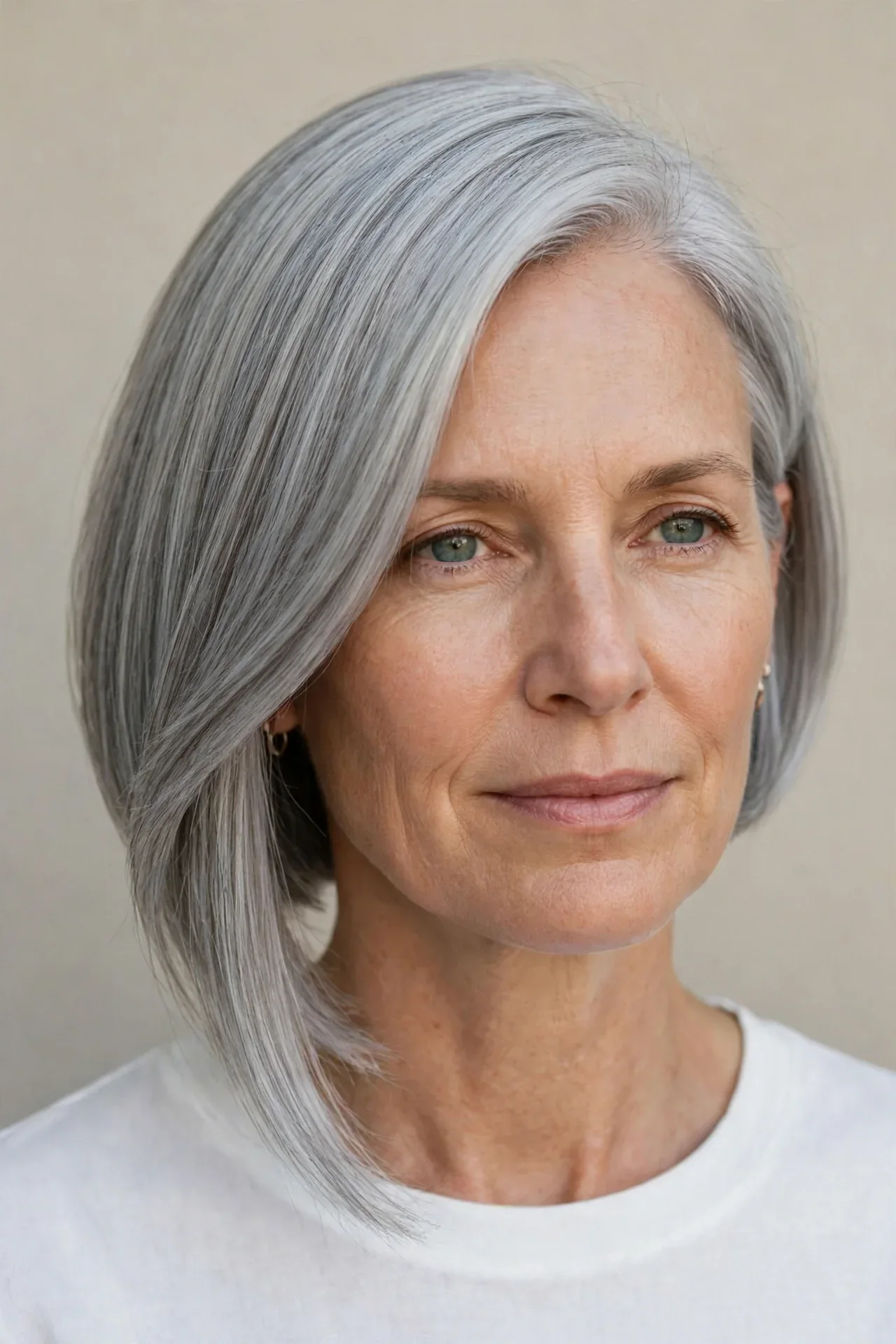
An asymmetrical bob — longer on one side, shorter on the other — creates instant visual interest that distracts the eye from any flatness. The dramatic side part does the heavy lifting: flipping most of your hair to one side builds natural root lift and gives the illusion of much thicker coverage. This cut suits oval, round, and square faces, with the longer side softening strong jawlines and adding length to round faces. It works best on straight fine hair, where the clean diagonal line reads sharp and intentional. The asymmetry also means you get two looks in one — wear the long side forward for drama, or tuck it behind the ear for polish.
- Create a deep side part on slightly damp hair with a fine-tooth comb.
- Blow-dry the heavy side forward and away for maximum sweep.
- Apply root-lifting spray along the part line before drying.
- Smooth the shorter side behind the ear to emphasize the angle.
Ask your stylist for an asymmetrical bob with a two-inch difference between sides and a deep side part cut to support the sweep. At home, reset the part after every wash — fine hair slides back to center easily. Keep the longer side sleek with a flat iron pass for the graphic effect. Trim every five to six weeks to maintain the angle. Growing it out just means evening up the sides over a couple of appointments.
The Pixie with Long, Voluminous Crown Layers

This is the pixie for anyone who wants short hair but refuses to give up volume. The back and sides stay neat and tapered, but the crown keeps serious length — long, layered pieces that lift, flip, and move. All that length on top creates visible fullness and gives you endless styling options: sweep it forward, push it back, or tousle it wild. It flatters oval, heart, and long faces, with the height on top balancing longer face shapes beautifully. The contrast between the close sides and the full crown is exactly what makes fine hair look like it has three times the body.
- Lift crown sections with a round brush while blow-drying upward.
- Apply volumizing mousse to the crown while hair is still damp.
- Backcomb the roots under the top layer for hidden support.
- Flip the crown forward, then sweep it back for lasting volume.
Tell your stylist you want a pixie with a tapered nape and sides but long, layered length through the crown — almost a pixie-bob hybrid on top. At home, keep conditioners off the crown to preserve lift. Refresh on day two by misting the crown with water and re-lifting with your fingers. Trim every four to six weeks to keep the taper tidy. This cut grows out gracefully into a shaggy pixie-bob with almost no awkward phase.
The Short Bob with Side-Swept Volume Bangs
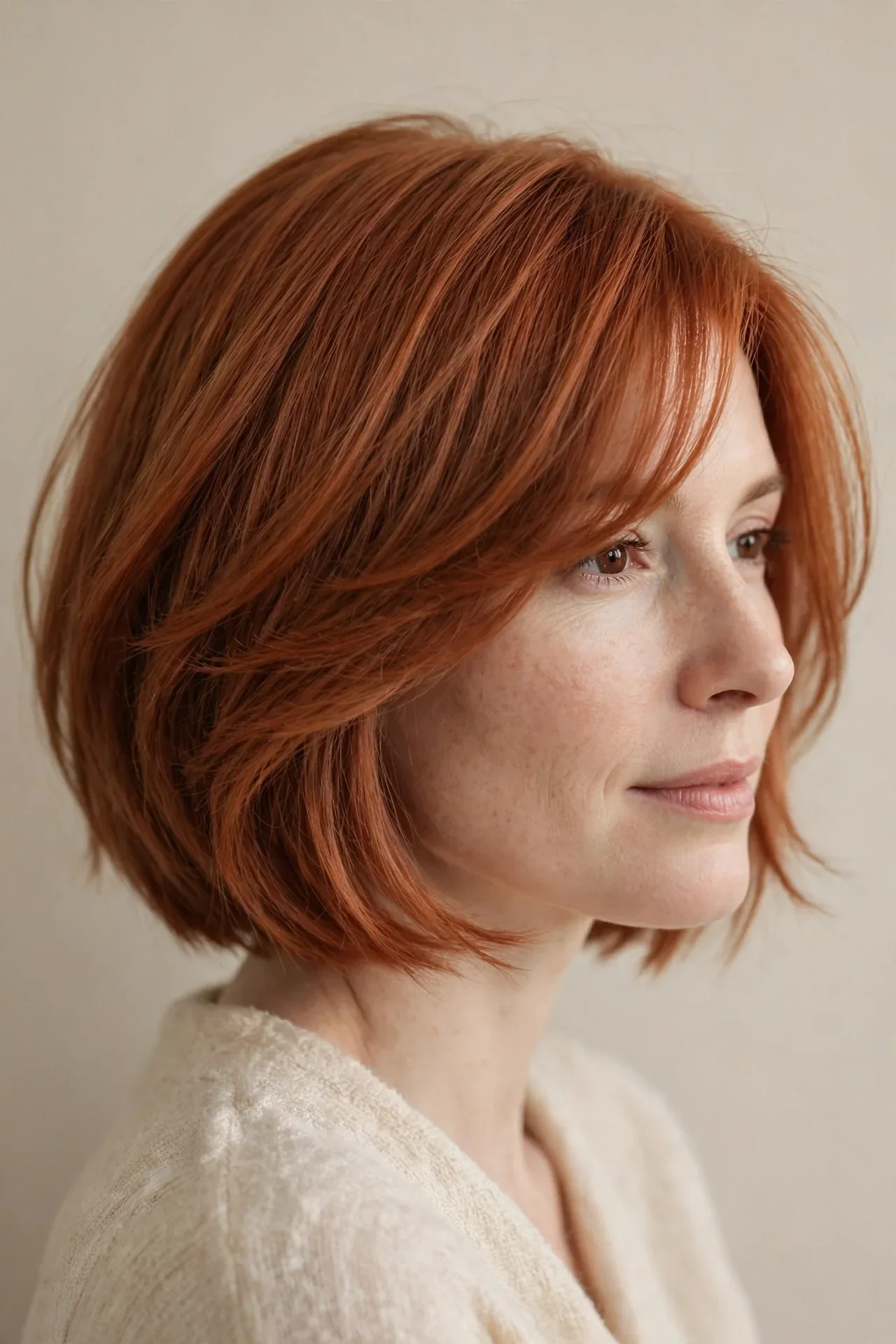
Bangs are a fine-hair cheat code: they add visible volume across the forehead, disguise a thinning hairline, and draw the eye to your face instead of your ends. Paired with a short bob, side-swept volume bangs create a sweeping diagonal line that makes the whole cut look fuller. The bangs are cut longer and layered so they blend into the sides, which means no harsh ledge and no daily styling battles. This cut suits round, oval, and heart faces especially well, and works on straight or wavy fine hair. The overall effect is soft, face-framing, and romantic — while secretly being one of the easiest bangs to maintain.
- Blow-dry bangs in the opposite direction first, then sweep to your side.
- Apply a light root spray to the bang area for all-day lift.
- Use a medium round brush to curve the bangs gently across the forehead.
- Pin bangs back on gym days to avoid flat, sweaty separation.
Ask your stylist for long, layered side-swept bangs that blend into a short bob with soft layering. At home, wash bangs separately if they get oily before the rest of your hair — a common fine-hair quirk. Dry them first after washing so they set in the right direction. Trim bangs every three to four weeks between full appointments. When growing bangs out, they become face-framing layers that blend into the bob seamlessly.
The Tapered Pixie with Feathery Texture

The tapered pixie with feathery texture is short, soft, and deceptively full. Fine, feathered ends layered through the top create airy movement that catches light at every angle, making hair look like it has more body than it does. The taper at the nape and around the ears keeps the silhouette clean and elegant, while the texture on top does all the volumizing work. This cut flatters oval, heart, and square faces, and suits straight fine hair beautifully — the feathering is what gives it that soft, feminine finish instead of a severe boyish look. It is also wonderfully wash-and-go once the texture is cut in properly.
- Work a feather-light texturizing cream through damp hair.
- Blow-dry with a small round brush, flicking the ends outward.
- Pinch the crown pieces between your fingers for soft separation.
- Mist with a flexible hairspray to hold the feathered shape.
Tell your stylist you want a pixie with a clean taper at the nape and ears, keeping length and feathered texture through the top and fringe. At home, let the cut do the work — over-styling flattens the feathering. A pea-sized amount of product is all you need. Trim every four to five weeks to keep the taper sharp. Growing out is gentle: the feathered layers merge into a soft shaggy pixie without harsh lines.
Conclusion
The right short cut does more than change your look — it changes how your hair behaves. Fine, flat strands stop fighting you when the weight is gone and the volume is built into the shape itself, whether that shape is a stacked bob, a choppy pixie, or a tousled shag. Pick the cut that matches your face shape and your morning routine, bring the salon wording to your appointment, and give your hair a few weeks to settle into its new rhythm. For even more ideas tailored to delicate strands, explore our collection of short hairstyles for thin fine hair and find the style that makes you feel your best every single day.