12 Hairstyles for Thin Fine Hair Over 50

Introduction
Finding flattering hairstyles for thin fine hair over 50 can feel discouraging — strands that once held a curl through dinner now fall flat by noon. Here is what your stylist may not tell you: the right cut does most of the volume work for you. The 12 styles below are engineered for fine, low-density hair, using stacked weight, internal layering, clever partings and face-framing movement to fake fullness. Whether you love a swingy lob or a wash-and-go pixie, you will find your match — alongside reader favorites from our most-loved hairstyles for thinning hair over 50.
Collarbone-Length Layers for Thin Fine Hair Over 50 That Fake Fullness
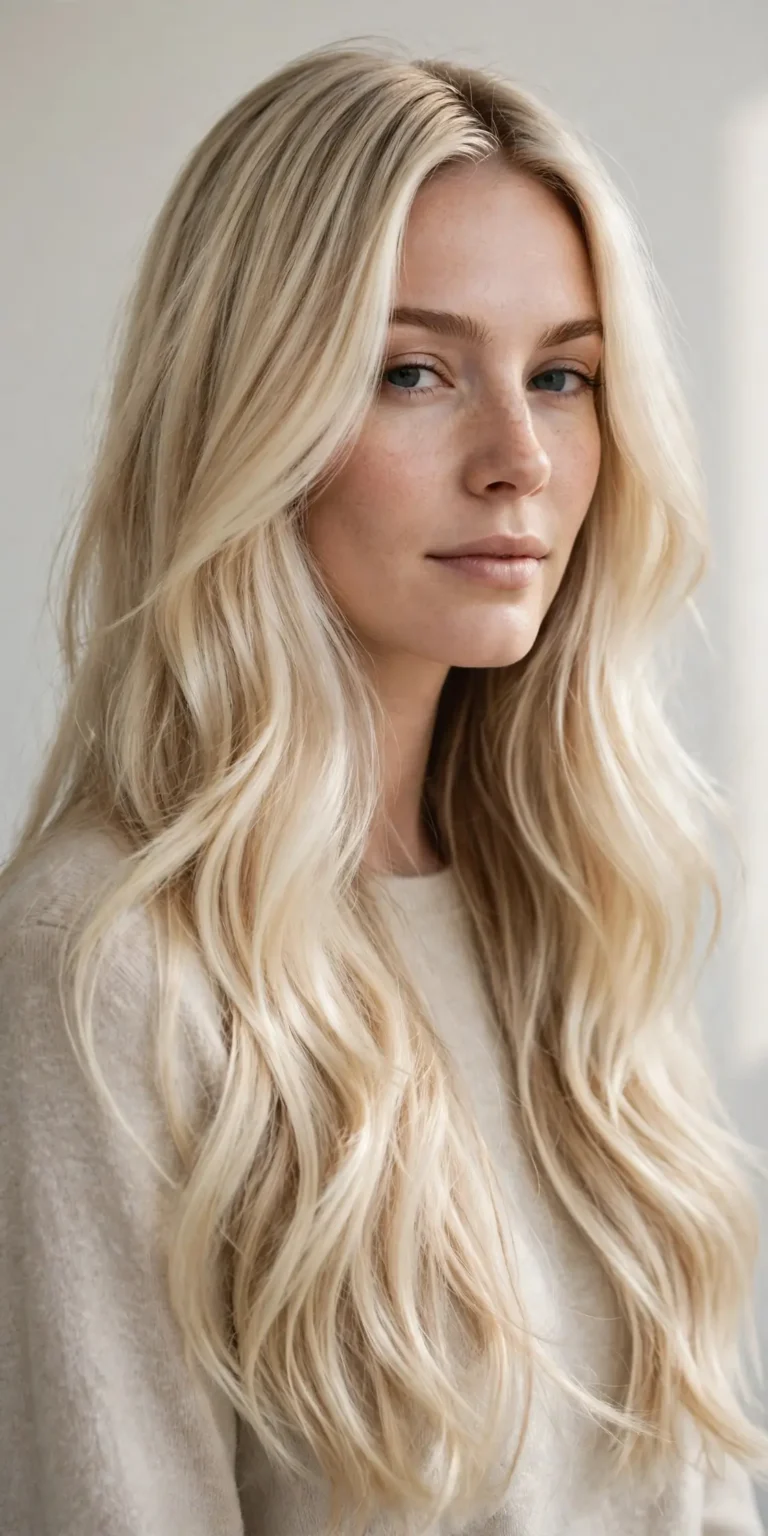
The collarbone lob is the sweet spot for fine hair losing density: long enough to feel feminine, short enough that the ends still look solid and healthy. Long, seamless layers beginning at the collarbone remove just enough weight to stop hair dragging itself flat, while their movement catches light in ways that read as thickness. The shape flatters oval, heart and oblong faces, and works from straight to wavy — a slight bend multiplies the look of fine strands beautifully. Keep the perimeter blunt and full at the bottom to avoid wispy, see-through ends, and you get a polished silhouette that still swings.
- Ask for collarbone-grazing layers.
- Blow-dry roots upward.
- Apply mousse to damp roots.
- Flip your part weekly.
Ask for weight removed through the mid-lengths but a strong, blunt perimeter — point-cutting just the last inch keeps ends feathery without hollowing them out. Rough-dry upside down until 80 percent dry, then polish with a round brush for smoothness with lasting lift. A pea-sized drop of serum on the ends, never the roots, adds shine without collapsing volume. Trim every eight to ten weeks to keep the bottom edge crisp; growing it out is painless, since the shape simply becomes a longer layered cut. Between washes, a lightweight texturizing spray misted onto dry roots extends the volume beautifully all day long.
The Stacked Nape Bob That Pumps Up the Crown

If your crown has gone flat, a stacked nape bob is the fastest architectural fix available. The back is graduated — shorter at the nape, longer toward the crown — so hair stacks on itself and builds automatic height where fine hair needs it most. Longer front pieces draw the eye downward, elongating the face and balancing fullness at the back. It is a dream for round and square faces, because the angled front softens width while the lifted back adds the illusion of length. Straight, fine hair shows the crisp graduation best, though a slight wave adds lovely texture.
- Request stacked graduation through the nape.
- Blow-dry crown forward.
- Dust volumizing powder on roots.
- Tuck one side behind ear.
Ask for graduated layers concentrated at the nape, blended smoothly into longer front sections hitting at or just below the chin. At home, this cut rewards a quick blow-dry more than any product cocktail: direct heat at the crown roots while lifting upward, then let the back fall into its stacked shape. A flexible-hold hairspray misted from underneath keeps the graduation from collapsing by evening. Because the shape depends on that precise nape graduation, plan trims every six weeks without fail. Sleeping on a silk pillowcase reduces overnight friction, so the stacked shape survives beautifully until morning. Daily styling takes mere minutes.
Wispy Curtain Bangs on a Feathered Shoulder-Skimming Cut
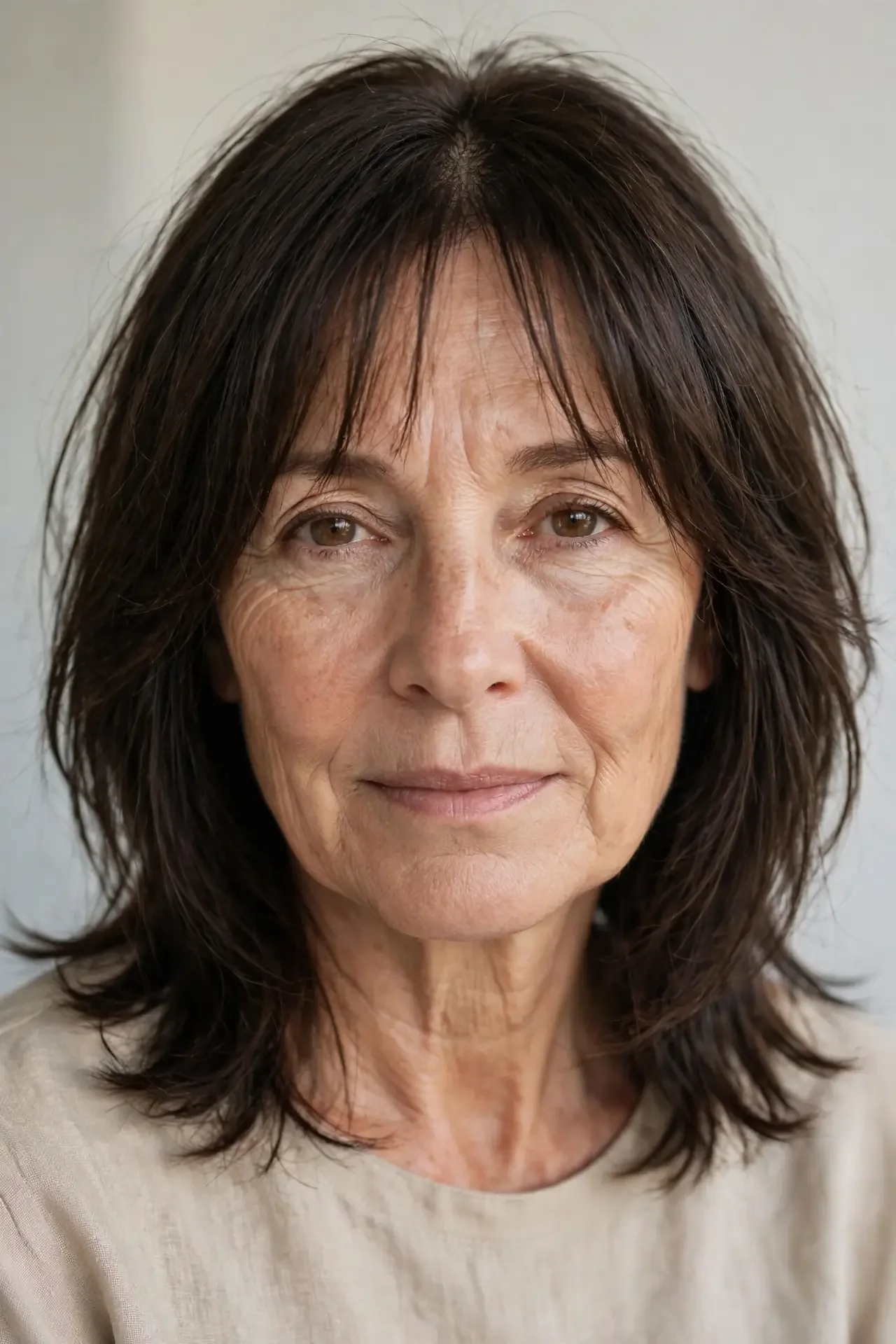
Thinning temples and a higher hairline are among the first things women notice after 50, and wispy curtain bangs address both without the commitment of a full fringe. Parted softly in the center and sweeping outward, they veil sparse areas at the temples while drawing attention to your eyes and cheekbones. Paired with feathered layers through a shoulder-skimming length, the whole cut moves like it has far more hair — each feathered edge catches light and air, multiplying the sense of density. The shape suits nearly every face and is especially kind to longer faces. The bangs grow out gracefully into face-framing layers.
- Ask for bangs starting at cheekbones.
- Blow-dry bangs forward, then sweep outward.
- Sprinkle dry shampoo at roots.
- Pin bangs back on lazy days.
Keep the bangs wispy rather than thick — dense bangs on fine hair can expose the scalp, while feathered lightness blends seamlessly into the lengths. Style the bangs first while still damp, since they set the tone for the whole cut; a quick flat-iron pass bending the ends away from the face gives that effortless curtain sweep. A tiny drop of serum on the bang tips keeps them piece-y rather than fluffy. Schedule bang trims every three to four weeks and full-shape trims every eight. A mini flat iron kept in your bag lets you touch up the curtain sweep before evening plans.
The Deep Side-Part Lob That Hides a Widening Part
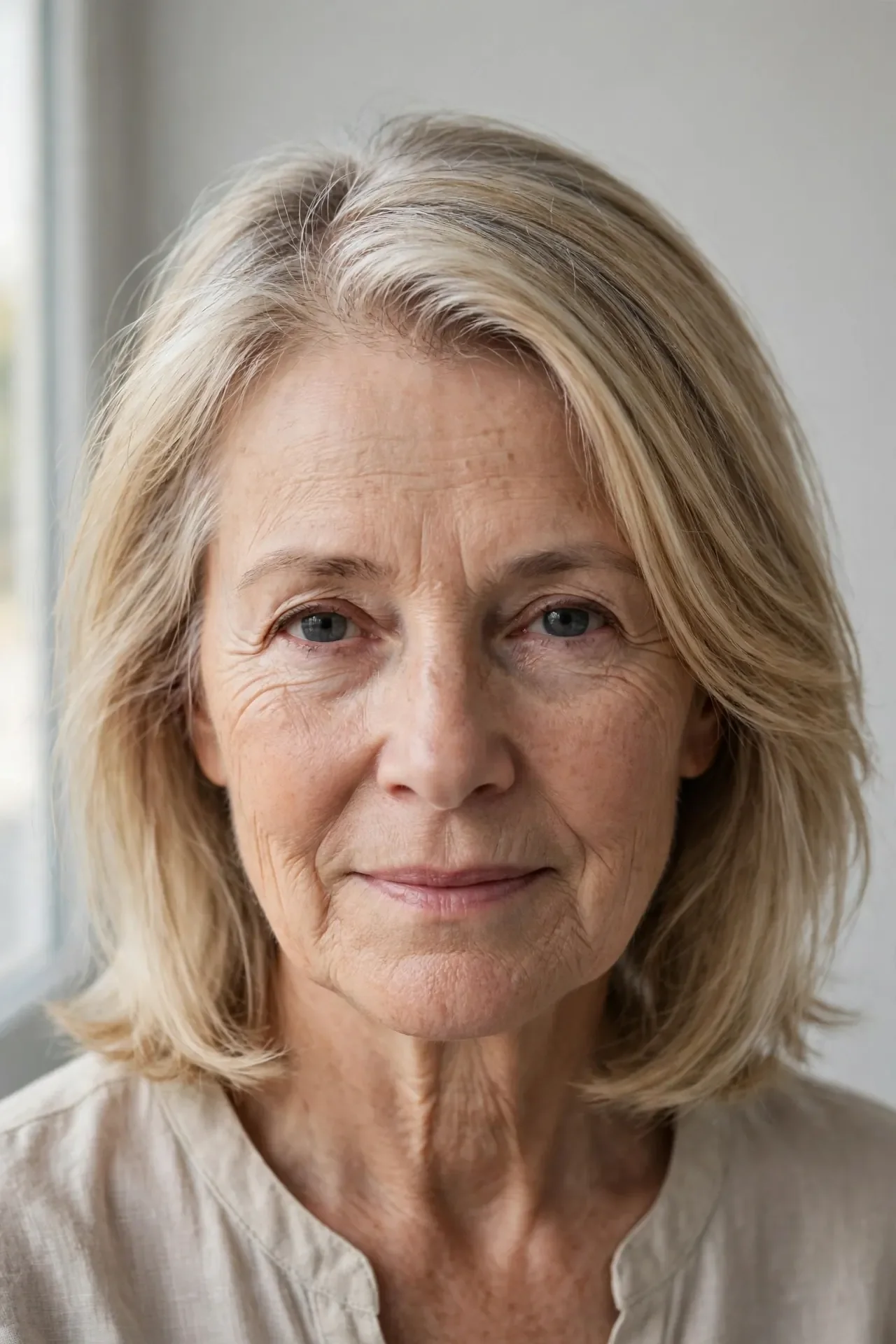
A widening center part is one of the most visible signs of thinning hair, and a deep side part is its most elegant disguise. Sweeping the bulk of your hair across the crown covers sparse areas along the old part line, while the asymmetry itself creates instant, dramatic volume — hair falling diagonally looks thicker than hair falling straight down. The lob length keeps ends looking substantial, and the long sweep across the forehead doubles as face-framing softness for oval, long and heart-shaped faces. Straight to wavy fine hair takes to this style beautifully and holds the swoop with ease.
- Part deeply on your fullest side.
- Apply root-lift spray to heavier side.
- Blow-dry the front up and over.
- Switch part side every few months.
Ask your stylist to map your natural growth patterns first, so the deep part falls where your hair genuinely wants to go — fighting a strong cowlick will only frustrate you daily. If the part keeps widening despite styling tricks, it is worth understanding what is happening at the scalp; the American Academy of Dermatology’s guidance on caring for thinning hair is a trustworthy place to start before your next salon visit. Trim every eight weeks, and refresh the part each morning with damp fingers. A boar-bristle brush used gently on dry hair smooths the sweep without flattening the roots.
Tapered Pixie-Bob with Airy Crown Layers

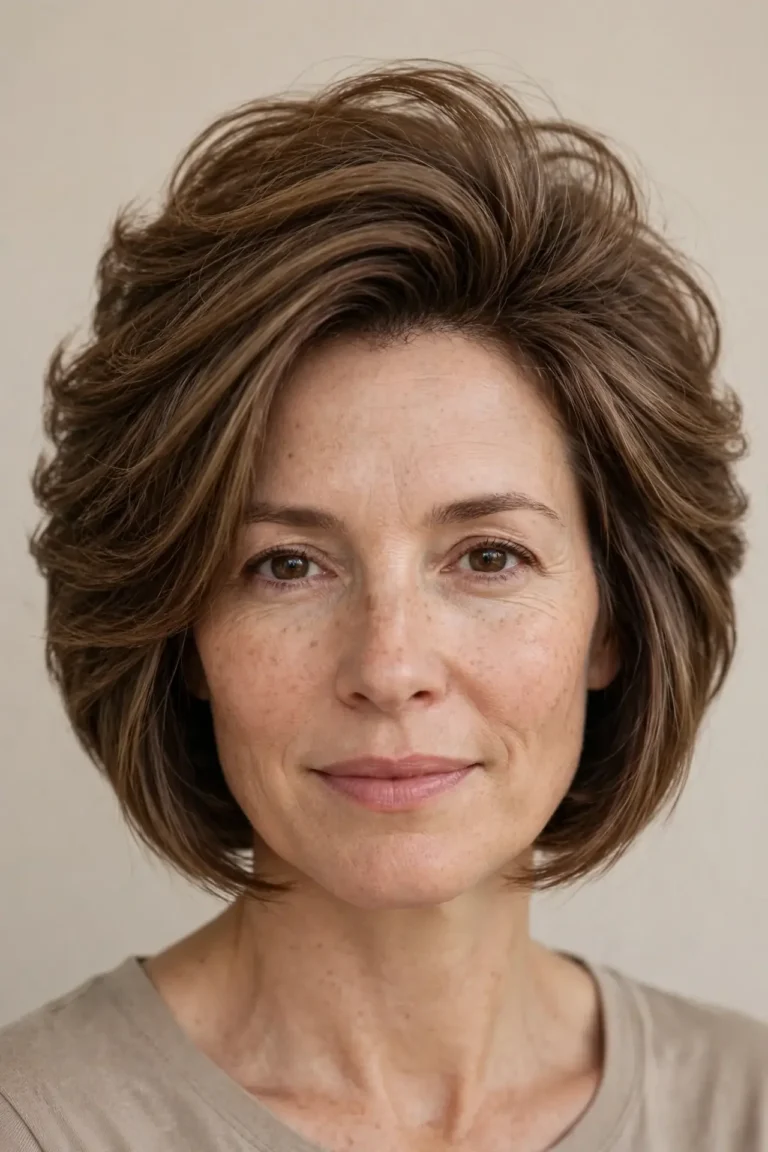
When density is low, sometimes the boldest move is going shorter — and the tapered pixie-bob is the gentlest way to get there. The nape and sides are tapered close for a clean, modern outline, while the top keeps pixie-bob length with airy, piece-y layers that stand up and create height exactly where fine hair goes limp. With less hair to weigh itself down, what remains looks noticeably thicker and more energetic. This hybrid flatters petite, oval and heart-shaped faces and opens up the neckline beautifully, drawing every eye upward to your smile. It also shows off earrings and a defined jawline.
- Ask for a softly blended tapered nape.
- Work matte paste through layers.
- Blow-dry top forward with fingers.
- Ruffle crown midday for revival.
Ask for length through the top — at least two to three inches — with texture cut in rather than aggressively razored, since over-thinning fine hair backfires badly. The daily routine is delightfully short: a dab of paste or cream, thirty seconds of finger-styling, and you are out the door. This cut air-dries well on slightly wavy hair, and a silk pillowcase keeps the shape fresher between washes. Because tapered edges grow out visibly, book maintenance trims every four to five weeks. Carry a travel-size paste for quick touch-ups, since short texture benefits from midday revival. It fits easily in any handbag.
Soft Rounded Perimeter Layers for a Fuller Silhouette

A rounded bob with a soft, curved perimeter is like a push-up bra for fine hair: the ends curl gently under, stacking into a solid edge that reads as one thick, healthy band. Soft internal layers remove just enough bulk to let the perimeter swing freely, without carving visible steps that would expose thinness underneath. The curved shape is wonderfully forgiving on round and square faces, hugging the jawline in a way that looks intentional and polished. At chin to neck length, it stays substantial while remaining short enough that gravity cannot pull it flat. The shape also pairs beautifully with statement earrings and scarves.
- Request a rounded, under-curved perimeter.
- Blow-dry ends under with large brush.
- Smooth cream through ends to seal.
- Sleep on a silk pillowcase nightly.
Ask for a perimeter that is nearly blunt but bevelled underneath, so it turns under naturally instead of flipping out at the ends. The styling key is tension: keep the round brush moving slowly through each section so the heat sets the curve firmly. On second-day hair, mist the ends lightly and re-roll just the bottom inch for a quick refresh. Finish with a flexible hairspray misted from below. Trim every six to eight weeks; the rounded edge loses its magic once ragged. A weekly deep-conditioning mask keeps the curved ends smooth and swingy between salon visits. Your stylist will thank you.
The French Bob That Makes Thin Fine Hair Look Thicker Over 50
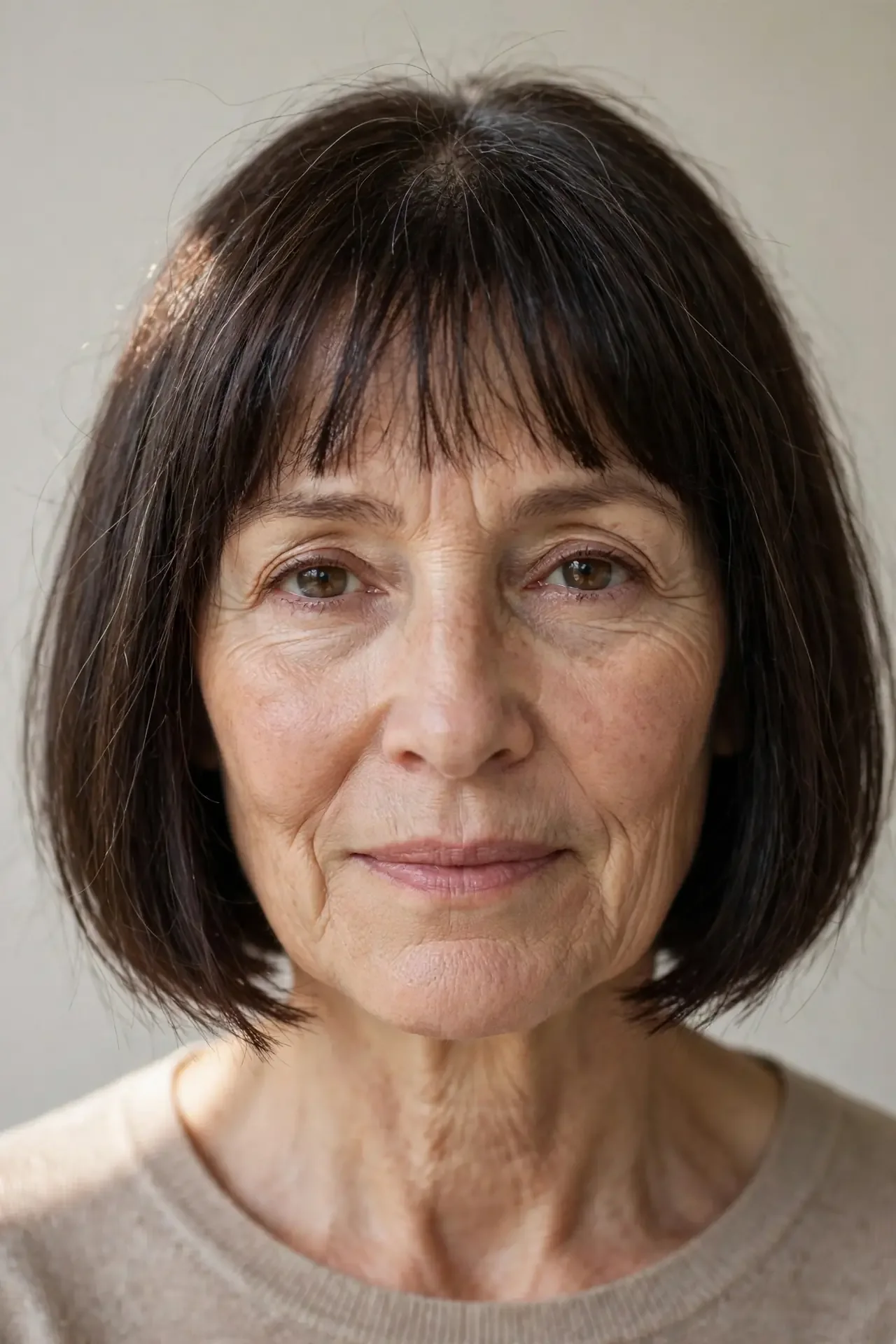
The Parisian French bob — chin-length, blunt, often paired with a brow-skimming fringe — is practically designed for fine hair. Every strand ends at the same line, so all your density lands in one place and the bottom edge looks remarkably full and healthy. The fringe adds hair where many women over 50 are losing it, at the front hairline, while the jaw-skimming length frames the face with unmistakable chic. It loves oval, heart and long face shapes, and it is at its best on straight fine hair, where the clean geometry does all the talking. It transitions effortlessly from office polish to evening elegance.
- Ask for chin-length, lightly textured ends.
- Style pin-straight or air-dry tousled.
- Keep fringe piece-y with pomade tips.
- Embrace slight wave — imperfection suits it.
Ask for the classic French length — lip to chin — with a fringe that can be worn full or swept aside as it grows out. At home, less is more: over-styling kills the insouciance completely. A quick flat-iron pass for polish or a tousled air-dry both work beautifully; finish with one drop of shine oil smoothed over the surface. The fringe needs trimming every three weeks to stay out of your eyes, while the bob itself holds its shape for six to eight weeks. Tuck one side behind your ear with a decorative pin for an instant evening variation.
Side-Swept Pixie with a Feathered Volumized Fringe
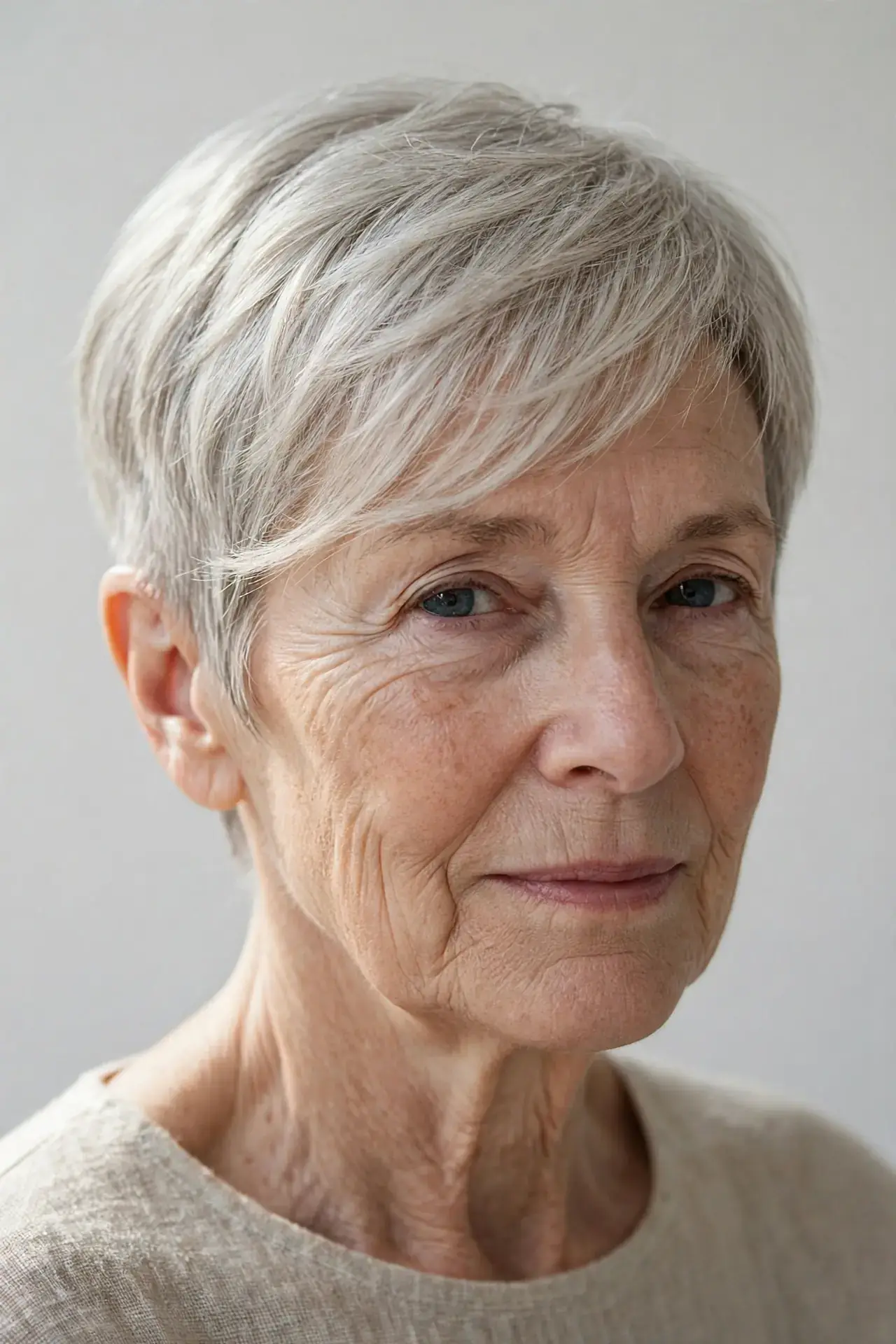
A pixie with a long, feathered fringe swept across the forehead solves two problems at once: it camouflages a thinning hairline and creates volume exactly where the eye lands first. The back and sides stay short and tapered for a crisp, low-maintenance outline, while the fringe — the star of the show — is layered and feathered so it moves with airy lightness instead of lying flat and lifeless. The cut suits nearly every face shape, because the diagonal fringe line can be adjusted to flatter round, square, oval or heart faces alike. The short silhouette also keeps you cool and comfortable in warm weather.
- Ask for a long, feathered textured fringe.
- Style with fingers and matte paste.
- Blow-dry the fringe across the forehead.
- Push roots upward while drying.
Keep weight through the fringe rather than thinning it aggressively — density in the fringe is what hides the hairline most effectively. If you are tempted to go even shorter elsewhere, browse these short haircuts for women over 60 with thin fine hair for inspiration on how cropped shapes handle low density. Day to day, this cut takes five minutes: paste, fingers, done. Refresh the shape every four to six weeks. A small amount of shine serum smoothed over the surface adds polish without weighing the fringe down. Have the fringe dusted between full appointments to keep it out of your eyes.
The Textured Midi Cut with Invisible Internal Layers

The midi — falling between the shoulders and the shoulder blades — is the longest length fine hair over 50 can carry convincingly, and invisible internal layers are what make it possible. These short layers hide beneath the top surface: no visible steps, no choppy outline, just secret scaffolding that removes weight and lets the outer hair move with surprising body and bounce. The result keeps the length you love while behaving like a lighter, fuller cut. It suits oval and round faces especially well, and fine hair with a natural wave sings in this shape. It is also wonderfully low-maintenance for busy mornings.
- Ask specifically for invisible internal layering.
- Scrunch light mousse into damp hair.
- Diffuse on low heat or air-dry.
- Mist mid-lengths with sea-salt spray.
Ask for a perimeter that looks one-length while the interior is quietly de-bulked — point-cutting inside, never at the outline itself. At home, resist over-brushing: it pulls the hidden layers flat and erases the effect entirely. Instead, refresh second-day hair by misting with water and scrunching upward with your hands. A weekly lightweight mask keeps the lengths supple without weighing them down. Because the perimeter stays blunt, stretch trims to eight or ten weeks. Sleep with hair loosely piled atop your head to preserve the wave pattern until morning. A dab of curl cream on the ends defines the waves further.
Asymmetrical Waves on a Shoulder-Grazing Lob
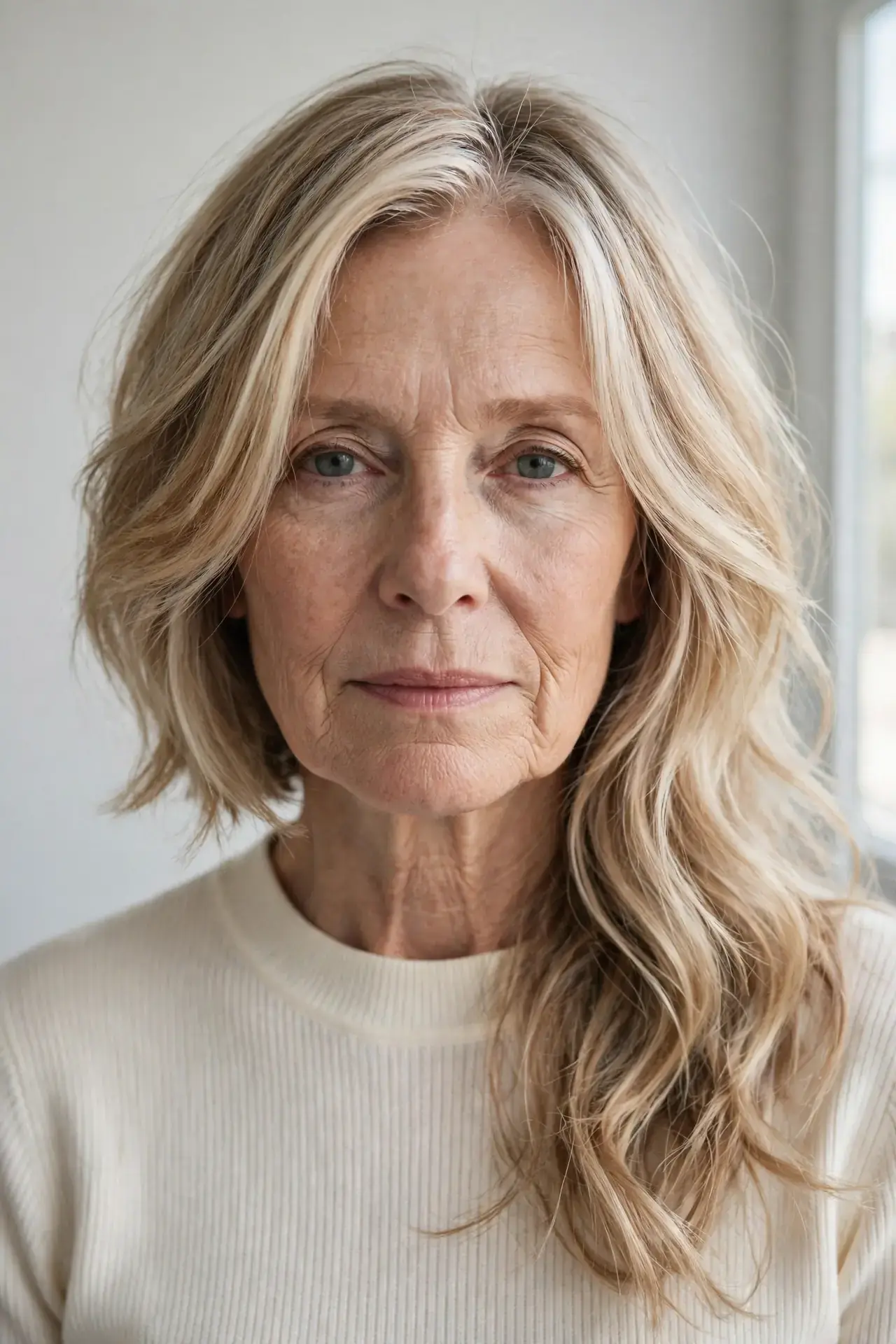
A whisper of asymmetry — one side sitting about an inch longer than the other — is a styling secret for fine hair: the uneven hemline keeps the eye moving, which reads as fullness and energy rather than flatness. Add soft, undone waves and the cut looks like twice the hair it is, because every bend catches light and casts the tiny shadows our brains interpret as density. The shoulder-grazing length is the ideal canvas — long enough to wave freely, short enough to stay buoyant and full at the ends. The movement also catches light beautifully in photographs every time.
- Ask for subtle one-inch asymmetry.
- Wrap alternating sections around a wand.
- Shake waves out; mist texturizing spray.
- Tuck the shorter side behind ear.
Tell your stylist which side you naturally part on, so the longer side falls where it flatters your face most. The waves should look lived-in, not pageant-perfect: wrap some sections toward the face and some away, always leaving the last inch uncurled for a modern finish. A texturizing spray, not heavy hairspray, keeps the bends piece-y all day long. A pea-sized serum drop tames any frizz. Trim every eight weeks to maintain the asymmetry. Sleep on a silk pillowcase to keep the waves defined and frizz-free until morning. A light misting of water revives the waves beautifully on non-wash days.
The Chin-Skimming Wedge That Lifts Fine Hair Up
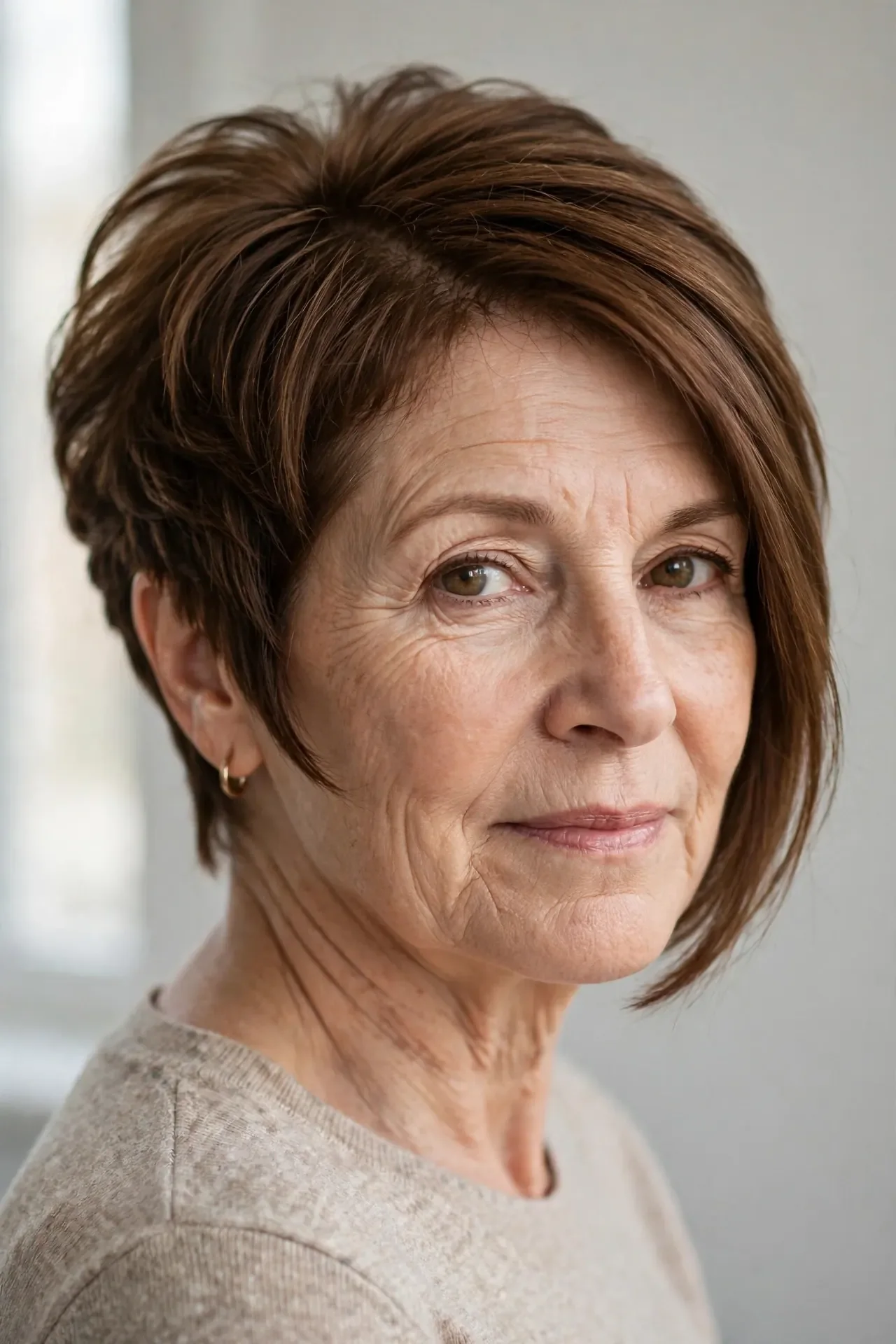
The wedge is the vintage volume trick that never really left: stacked layers through the back build a rounded crown, while the front angles down toward the chin in a sleek frame. On fine hair, that stacked back is pure magic — it manufactures lift that limp strands could never achieve alone, and the angled front gives the face a lifted, sculpted look. The cut flatters oval and heart-shaped faces beautifully and has a chic, architectural quality that reads as confident and utterly put-together every single day. It also works with both sleek styling and soft, touchable texture in any season.
- Request soft wedge graduation at back.
- Blow-dry the back upward forcefully.
- Smooth front sections down and under.
- Finish with light-hold spray at crown.
Ask for a contemporary wedge: stacked but soft, with the nape tapered rather than shaved into a severe line. The styling is all about the blow-dry — lift each back section straight up off the head, and the graduation holds the height for you. A root-boosting powder at the crown on day two extends the style beautifully between washes. Because the wedge’s geometry is precise, schedule trims every five to six weeks to keep the silhouette sharp and intentional. A paddle brush can substitute for the round brush when you are short on time. It still builds impressive crown volume.
Face-Framing Foil-Lite Layers for Thin Fine Hair Over 50

Sometimes the fullest-looking hair is not about the cut at all — it is about dimensional color. Delicate babylights and face-framing ribbons of lighter color create light-and-shadow depth that tricks the eye into seeing density where strands are actually sparse. Paired with soft face-framing layers on a mid-length cut, the effect is luminous: brightness around the face lifts your complexion while dimensional color makes every layer look thicker and healthier. This approach suits all face shapes and every shade of fine hair, from silver to brunette. The brightness around your face takes years off your overall look. Book a consultation first.
- Ask for babylights around the face.
- Keep lightener within two shades.
- Curve layers away from the cheeks.
- Refresh shine with a clear gloss.
Ask for dimension, not drama — the goal is multi-tonal depth that mimics how sunlight hits naturally fuller hair. Pair the color with long, soft layers rather than choppy ones, so the ribbons of lightness flow instead of breaking apart visibly. At home, use a color-safe shampoo and a weekly mask to keep fine, lightened hair from going straw-like and dull. Trim the layers every eight to ten weeks, and plan partial highlight refreshes two to three times a year.
Conclusion
The most flattering hairstyles for thin fine hair over 50 all share one secret: they stop fighting your hair’s nature and start working with it. Stacked napes build the crown, deep parts disguise the scalp, invisible layers release movement, and color fakes the density time has thinned. Choose the silhouette that fits your face shape, your hair texture and the amount of morning effort you truly enjoy. If you are still deciding between lengths, our guide to hairstyles for older women with thin fine hair covers even more flattering shapes for this hair type. Bring your favorite to your stylist and walk out with hair that looks and feels like more of it. hairstyles-for-fine-wavy-hair If you are in your forties, our 12 hairstyles for women over 40 with thin fine hair go deeper on cuts that add volume at this stage of life.
One Comment