12 Layered Long Bob Hairstyles
Introduction
A layered long bob is the cut women ask for when they want change without regret — you keep your length, lose the heaviness, and gain movement that makes your hair look alive again. If your long hair has started to hang flat, triangle out at the ends, or hide your face behind one solid curtain, the right layered long bob fixes all three in one appointment: layers lift the crown, lighten the perimeter, and open up your features. In the next few minutes you will find 12 distinct versions, from feathered and bouncy to sleek and polished. If you loved our guide to long layered bob haircuts, consider this your fresh, updated edit with new shapes for every hair type.
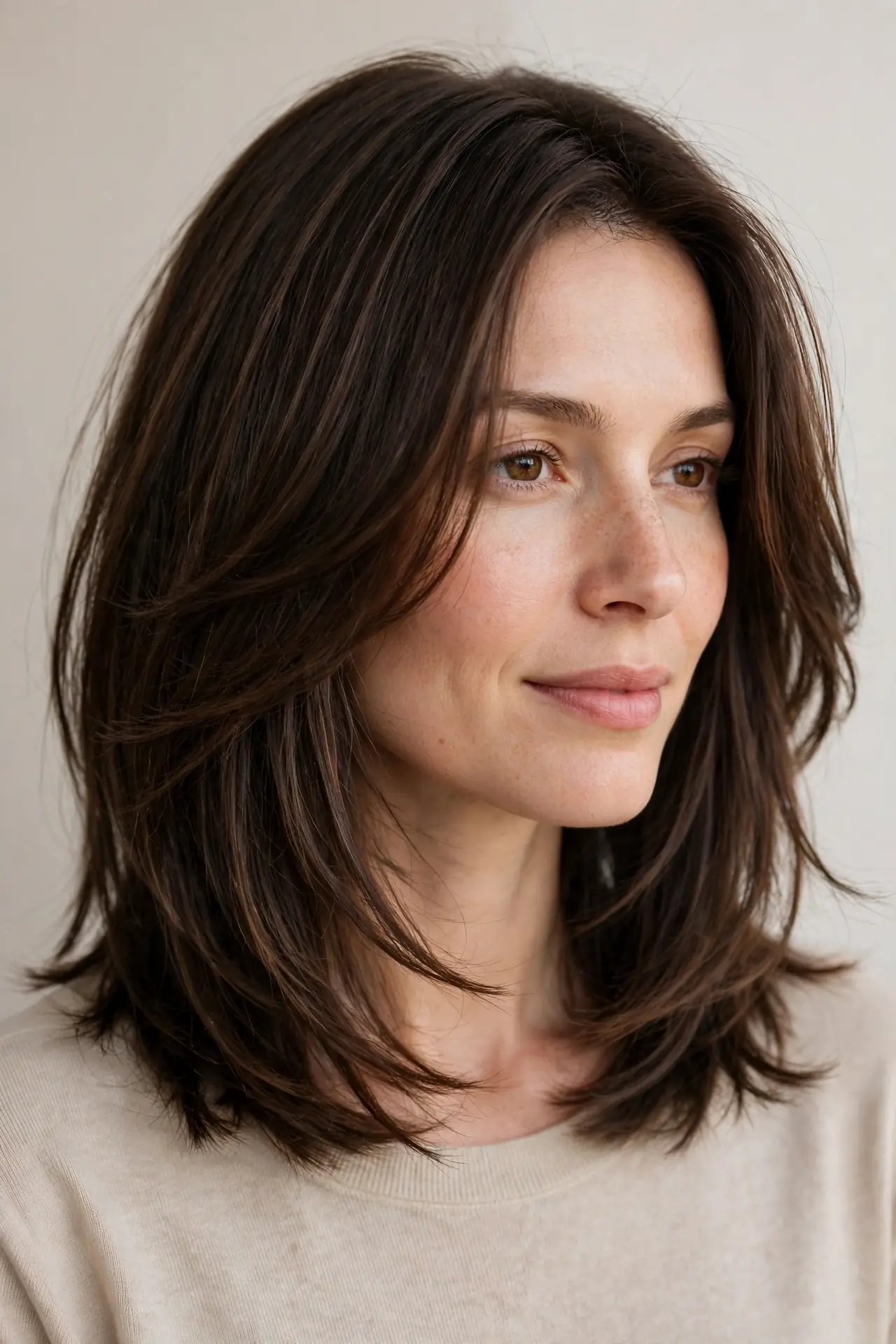
Feathered Layered Long Bob with Soft Movement
The feathered layered long bob is the softest way into this cut, with layers that flip gently outward at the ends instead of lying in one heavy block. Your stylist cuts fine, graduated layers through the mid-lengths so each section feathers over the next, creating that breezy, salon-fresh movement even on second-day hair. It flatters oval, heart, and long faces especially well because the flicked ends add a little width where the jaw narrows. Straight and slightly wavy hair show the feathering best, and the effect looks expensive without any complicated styling — a quick blowout is genuinely all it needs.
- Ask for fine, graduated layers concentrated through the mid-lengths and ends
- Blow-dry ends with a round brush, rolling them slightly outward
- Keep layers longer around the face so the feathering frames, not fragments
- Finish with a light shine spray rather than heavy oils
Ask your stylist for a collarbone-length lob with feathered layers and a soft, blunt-ish base line underneath, so the cut keeps its shape as it grows. At home, blow-dry in sections away from your face and let the ends cool on the brush for ten seconds — that set is what makes feathers hold. A medium round brush and a volumizing mousse at the roots are your whole kit. Plan a reshape every eight weeks; feathered layers lose their flick when they grow past the shoulders, and a light dusting brings the movement straight back.
Layered Long Bob with Curtain Bangs and Face Frame

Pairing a layered long bob with curtain bangs gives you instant face framing without committing to a full fringe. The bangs part in the center and sweep down both cheeks, melting into the longest face-framing layers so there is never a visible step. This version suits round and square faces beautifully, because the two diagonal sweeps soften the jaw and draw attention to your eyes and cheekbones. It also grows out more gracefully than almost any other bang style — in six weeks your curtain simply becomes longer face-framing layers. If you have been bang-curious for years, this is the lowest-risk place to start.
- Ask for the shortest point of the curtain to hit your nose bridge
- Keep the outer bang pieces long enough to tuck behind your ears
- Blow-dry the fringe forward first, then sweep each side away from your face
- Blend the bangs into face-framing layers, never a separate shelf
Tell your stylist to cut the curtain bangs dry and slightly longer than your instinct suggests, so you can see exactly where they land. At home the routine is two minutes: round-brush the fringe forward, split it, and sweep it back. Stylists at Allure often point to curtain bangs as the most versatile fringe because they suit so many face shapes — and on a layered lob they do double duty as the start of your layers. Book fringe trims every four weeks, or let them grow into layers if you want a change.
Wavy Layered Long Bob with Beachy Texture

A wavy layered long bob is made for women who want their hair to look styled when they have barely touched it. The layers are cut to encourage your natural wave pattern, removing weight from the spots where waves clump and leaving length where they need room to spring. Worn with a center or soft side part, the result is relaxed, beachy, and full of dimension — especially flattering on medium to thick hair that feels too heavy worn one-length. This is also the most forgiving version for humid climates, because the style works with frizz-prone texture instead of fighting it.
- Ask for layers that follow and release your natural wave pattern
- Scrunch in a sea-salt or texture spray on damp hair
- Diffuse on low heat or air-dry, then break the cast with your fingers
- Avoid brushing dry waves — rake through with wide fingers only
Ask for a lob that sits between your collarbone and chest, with layers starting around your chin so the waves stack with volume rather than puff. At home, apply product to soaking-wet hair, scrunch upward, and leave it alone while it dries — touching it is what creates frizz. Refresh day-two waves with a water-and-conditioner mist and a quick re-scrunch. Because wavy cuts are best judged dry, ask your stylist to finish and refine the cut on dry hair. Trims every eight to ten weeks keep the shape buoyant.
Layered Long Bob for Thin Fine Hair with Invisible Layers

Fine hair can absolutely wear a layered long bob — the secret is invisible layers. Instead of obvious choppy steps that leave fine ends looking stringy, your stylist removes tiny amounts of internal weight so the hair moves and lifts while the perimeter stays full and blunt-looking. The result reads as thicker hair with gentle movement, not a thinned-out cut. This version is ideal if your fine hair goes flat by noon or separates into wispy ends at longer lengths. Keep the length at or above the collarbone, because fine hair looks densest when it is not stretched too long.
- Request invisible, internal layers — no visible choppy steps
- Keep the perimeter blunt to preserve the illusion of thickness
- Apply volumizing mousse only at the roots, never the ends
- Blow-dry upside down, then smooth just the surface layer
Tell your stylist your priority is density first, movement second, and show them where your hair separates. At home, a root-lift spray and a cool-shot finish make a visible difference on fine hair, and dry shampoo on clean hair — before it gets oily — prevents flatness. If density is your main concern, our roundup of long bob hairstyles for thin fine hair has more fine-hair-specific shapes to compare. Book trims every six to seven weeks; fine ends fray faster, and regular dusting is what keeps this cut looking full.
Sleek Glass Layered Long Bob with Blunt Perimeter
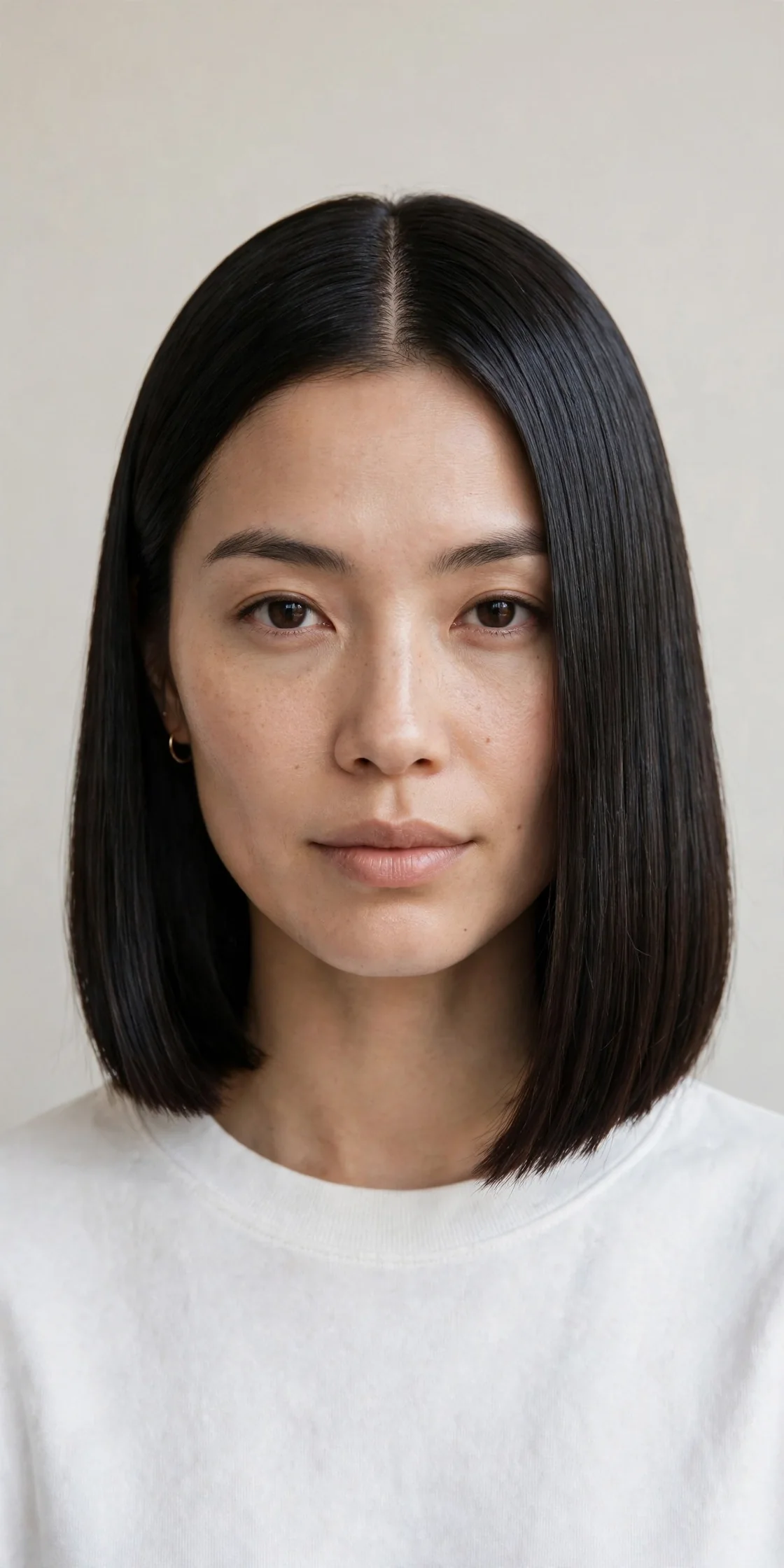
The glass version of the layered long bob is all polish: a blunt, collarbone-grazing perimeter, with only the lightest internal layers so the surface falls in one glossy sheet. Worn with a sharp center part, it looks modern, intentional, and quietly luxurious — the kind of cut that makes a plain outfit look styled. It suits straight and relaxed hair best, and it flatters strong jawlines and oval faces because the clean lines do the framing. The layers here are hidden insurance against stiffness, not the star of the show.
- Keep layers internal and minimal so the surface stays sleek
- Ask for a blunt perimeter at collarbone length
- Flat-iron in small sections over a heat protectant
- Seal ends with a single drop of lightweight gloss serum
Ask your stylist to cut the base line first, perfectly blunt, then add only enough internal layering to stop the ends kicking out. At home, blow-dry with a paddle brush and the nozzle pointed down the shaft, then pass a flat iron once — glass hair is about smoothness, not poker-straight stiffness. A weekly gloss or shine treatment keeps the sheet-like finish. This cut shows every split end, so commit to trims every six weeks and heat protection every single time you style.
Layered Long Bob with Side Part and Root Lift

Changing your part changes the whole personality of a layered long bob, and a deep side part is the most flattering trick in this list. The heavy side sweeps across the forehead with real root lift, the layers cascade diagonally, and your face instantly looks longer and more sculpted. This version works on almost every hair type and is brilliant for fine or flat hair, because the flipped roots create volume that no product alone can fake. It also hides a growing-out fringe and softens a strong center-part rut in one move.
- Part two inches further over than your natural part
- Blow-dry roots in the opposite direction first, then flip to your side
- Ask for layers cut to follow the side sweep, not a center fall
- Set the lift with a cool-shot blast before you leave the brush
Have your stylist cut and finish the hair in the side part you will actually wear, because layers cut for a center part rarely sweep as cleanly. At home, lift the root area with a round brush, direct the heat upward, and pin the heavy side to cool while you do your makeup — that cooling set is the difference between lift that lasts an hour and lift that lasts all day. Flip sides on day two for instant revival. No special upkeep beyond your normal eight-week trim.
Curly Layered Long Bob with Shaped Layers
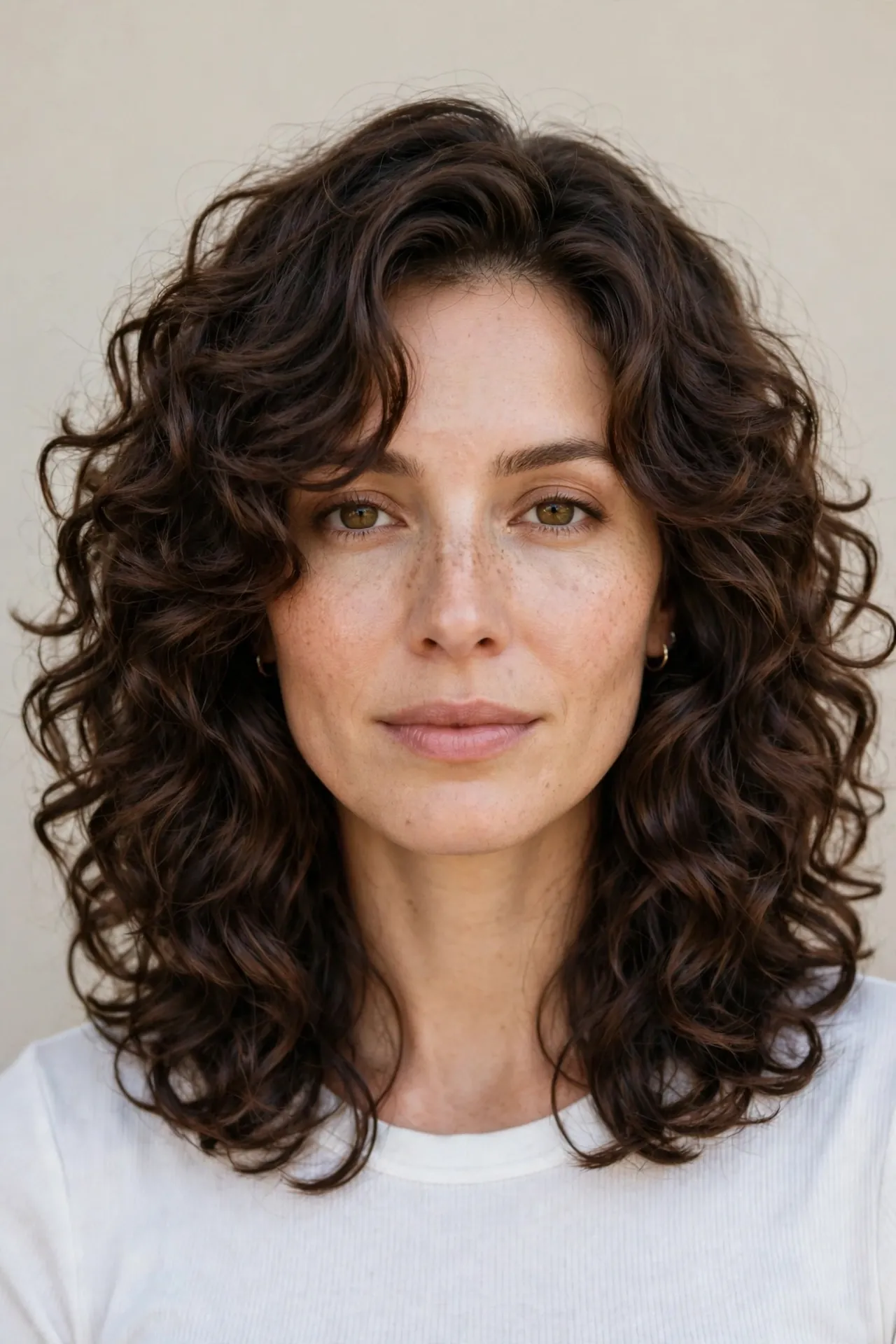
Curly hair needs its own blueprint for a layered long bob, and shaped, curl-by-curl layers are it. Instead of cutting wet hair in straight lines — which springs up unevenly when dry — your stylist shapes each curl family at its natural fall, building a rounded, balanced silhouette that keeps length while removing the dreaded triangle shape. The result is a lob full of bounce that frames your face in spirals. This cut celebrates volume instead of controlling it, and it suits loose curls through to tight coils with the right shaping.
- Book a stylist who cuts curls dry, curl by curl
- Ask for shaped layers that remove triangle bulk at the sides
- Apply leave-in and gel to wet hair, section by section
- Diffuse or air-dry completely before touching or fluffing roots
Bring photos of curls with your pattern, not a different texture, and be clear you want length kept at the front. At home, refresh curls with a mist of water and a pea-sized amount of leave-in scrunched upward. Sleep on a silk pillowcase or in a loose pineapple to protect the shape overnight. Curly lobs hold their shape a long time — most women reshape every ten to twelve weeks — but the ends still need regular dusting to stop tangles and single-strand knots.
Layered Long Bob with Balayage Dimension

If your layered long bob ever feels flat in photos, dimension is usually what is missing — and balayage painted through the layers fixes it in one session. Lighter pieces are hand-painted where your layers move most, so every flick and wave catches the light, while the roots stay deeper for a soft, low-maintenance grow-out. The contrast makes fine layers look thicker and gives thick hair visible separation. Choose tones within two shades of your base for an expensive, natural effect, whether you are brunette, blonde, or copper.
- Place the lightest pieces around the face and through the top layers
- Keep roots deeper for a soft, forgiving grow-out
- Ask for a gloss at the same appointment to seal the color
- Use a color-safe, sulfate-free shampoo to protect the paint
Ask your colorist to paint after the cut, not before, so the highlights land exactly where your new layers fall. At home, a purple or blue toning gloss once a month keeps blonde and brunette balayage from going brassy, and a heat protectant matters more than ever on lightened ends. Because balayage grows out softly, most women refresh it every three to four months with just a face-frame top-up in between — one of the lowest-maintenance color pairings for a lob.
Textured Layered Long Bob with Razored Ends

The textured layered long bob trades polish for edge: layers are point-cut or razored so the ends finish wispy, piecey, and full of separation. It is the version that looks best slightly undone — think tousled, finger-styled, and deliberately imperfect. This cut is a gift for thick, straight hair that normally falls in a solid sheet, because the razored ends break the weight into movement. It also adds grit to fine hair that looks too soft. If your style leans relaxed and modern rather than sleek and classic, start here.
- Ask for point-cut or razored ends for piecey separation
- Keep layers longer if your hair is fine, to avoid wispy thinness
- Work a matte texture paste through dry ends, twisting small sections
- Skip heavy serums — they collapse the texture you just created
Tell your stylist you want movement you can see, and agree the longest layer length first so the razor work never eats your length. At home this is a wash, rough-dry, and pinch-the-ends cut: two minutes with paste on dry hair beats twenty minutes of brush styling. Razored ends need trims every six to eight weeks to stay piecey rather than frayed, and if your hair is very fine or damaged, ask for scissor point-cutting instead of a razor for a cleaner finish.
Layered Long Bob with Long Front Layers and U Shape
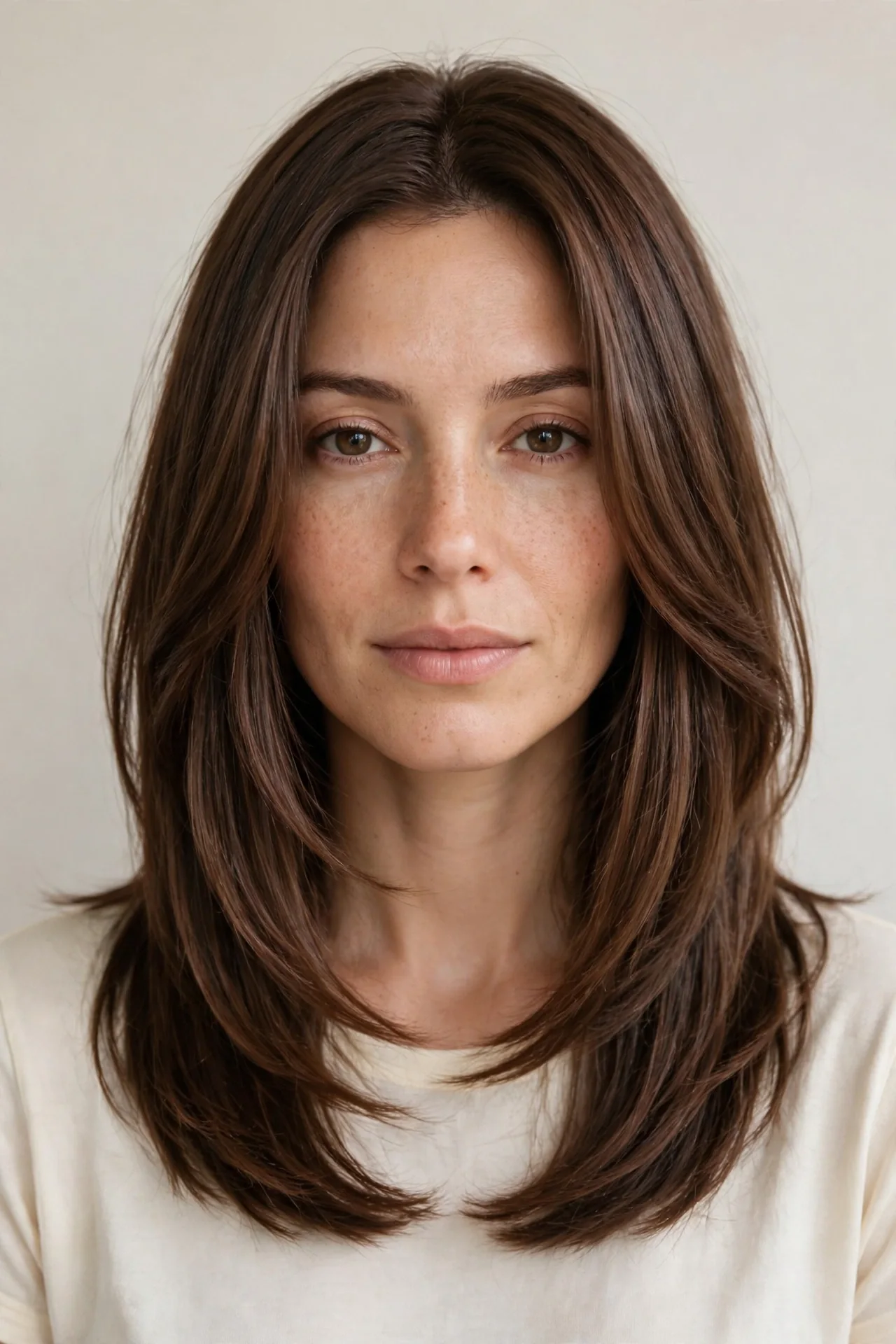
This version keeps the back slightly shorter and fuller while the front layers cascade long past the chin, with the perimeter shaped into a soft U when seen from behind. The long front pieces give you the face-framing drama of long hair, while the lifted back stops the cut dragging your features down. It is especially flattering if you love wearing your hair up, because the front layers fall out of ponytails and buns in soft, intentional tendrils. On straight and wavy hair, the U shape also makes the hair swing as one glossy curtain when you move.
- Ask for a soft U-shaped perimeter, shorter and fuller at the back
- Keep front layers starting at the chin and falling long
- Blow-dry front pieces forward, then sweep them back for the curtain effect
- Leave front tendrils loose when you wear the rest up
Show your stylist the back shape in a photo — U versus V is a small difference that changes the whole feel, and the U is softer and fuller. At home, a large round brush on the front sections gives that swept-back, expensive fall. This shape grows out beautifully into simply long layers, so it is a safe choice if you are transitioning from a shorter bob. Reshape every eight to ten weeks to keep the U clean rather than straggly.
Layered Long Bob for Thick Hair with Internal Layers

Thick hair in one length can feel like wearing a blanket — heavy at the ends, flat at the roots, and hot by midday. The thick-hair layered long bob solves it with internal layers: weight is removed from inside the cut, underneath the surface, so your hair keeps its lush look but loses the bulk that causes puff and triangle shape. The surface stays smooth and full, the inside moves freely, and styling time drops noticeably. If you have ever had layers go wrong and puff out, internal layering is the controlled version you actually wanted.
- Ask for internal, under-surface layers to remove hidden weight
- Keep the top surface layer long and smooth to prevent puff
- Request the ends be thinned only underneath, never on top
- Blow-dry with the nozzle downward to keep the surface sleek
Be specific in the chair: say you want debulking, not visible layers, and ask the stylist to check the shape dry before you leave. At home, section your hair when you blow-dry — thick lobs dry unevenly in one mass — and use a smoothing cream through the mid-lengths. Many thick-haired women find this version in our asymmetrical lob haircuts guide too, if you want the weight removal with a diagonal twist. Reshape every eight weeks, because internal layers growing out is what brings the bulk back.
Old Money Layered Long Bob with Bouncy Blowout
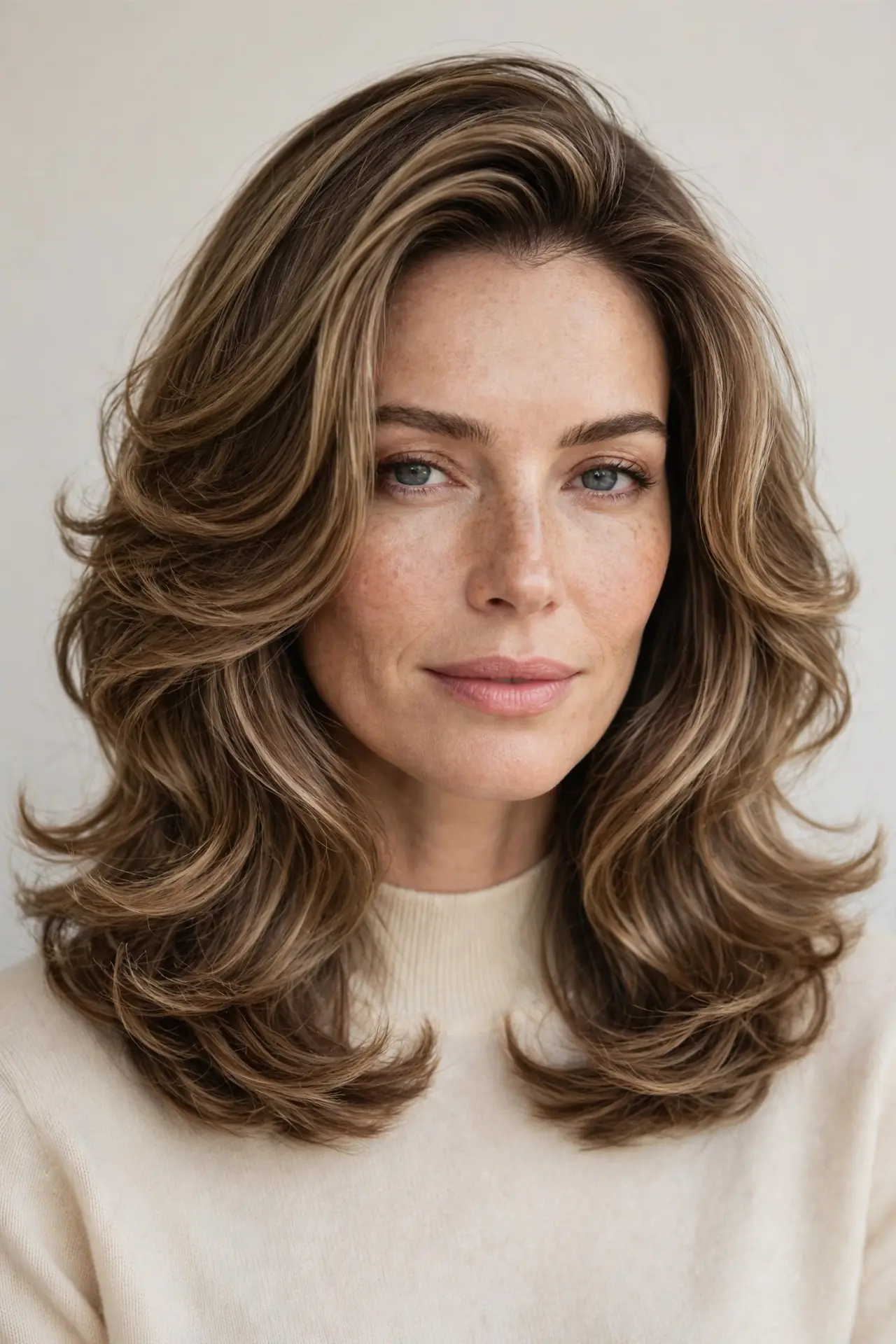
The old money layered long bob is quiet luxury in haircut form: long, polished layers, a soft side or center part, and a bouncy blowout finish that moves like it was done this morning, every morning. The layers are long and blended — nothing choppy, nothing trendy — so the hair falls in smooth, expensive-looking waves that frame the face and skim the collarbone. It suits almost every face shape and age, photographs beautifully, and pairs with everything from tailoring to a plain white tee. This is the layered long bob to choose when you want timeless over fashionable.
- Ask for long, blended layers with no choppy or razored ends
- Keep the length skimming the collarbone for the classic proportion
- Blow out with a large round brush, rolling sections and pinning to cool
- Set with a light, flexible hairspray — never a stiff finish
Ask your stylist for a blowout cut: layers judged by how they fall after a full round-brush blow-dry, not wet. At home, the pinned-cooling step is non-negotiable for the bounce — roll each dried section up, clip it, and release everything once cool for waves that last two days. A silk scarf or loose bun overnight preserves it. Because the shape is so blended, it grows out gracefully; most women reshape every ten weeks and simply enjoy how polished it looks in between salon visits.
Conclusion
A layered long bob earns its reputation because it gives you options instead of rules: feather it for softness, sleek it for polish, wave it for ease, or hide the layers inside if your hair is fine or thick and needs control. Whichever of these 12 versions you choose, bring photos, name your length out loud, and agree where the shortest layer will fall before the scissors start — that one conversation is the difference between a good cut and your cut. Start with the version that matches how you actually live and style your hair, and let it grow, shift, and evolve with you from there.

One Comment