12 Short Bob Hairstyles for Thin Fine Hair and Round Faces

Introduction
Finding short bob hairstyles for thin fine hair and round faces can feel like solving two puzzles at once: you need a cut that creates the illusion of fullness in fine strands while also adding length and structure to softer facial contours. The good news is that the bob is one of the few haircuts that can do both beautifully when it is shaped with intention. This guide delivers 12 bob variations designed for your combination — cuts with built-in crown volume, strategic jawline length, and finishes that make fine hair look thicker. If you are also exploring more options, our roundup of hairstyles for thin fine hair covers longer lengths and updos too. Let us find the bob that makes you look in the mirror and smile.
Chin-Length Layered Short Bob for Thin Fine Hair and Round Faces
This classic cut sits right at the chin with invisible interior layers that remove weight without thinning the perimeter. For thin fine hair, keeping the ends blunt and full is what creates the illusion of density, while the hidden layers inside add movement. For round faces, a chin-length bob works because the length draws the eye down rather than outward, and when the sides fall slightly forward they visually narrow the cheeks. Ask for the layers to stay high and subtle — too much layering on fine hair can make the ends look wispy. This low-drama style suits straight or slightly wavy textures, for any occasion.
- Apply a pea-sized amount of volumising mousse to damp roots before drying.
- Blow-dry with your head flipped upside down to lift the roots.
- Tuck one side behind your ear for an asymmetrical, face-slimming effect.
- Finish with a light-hold hairspray to keep the shape without stiffness.
Ask your stylist for a chin-length bob with a blunt perimeter and soft interior layering, plus a side part if your face is very round, since a deep side part breaks up facial symmetry. At home, blow-dry with a small round brush, lifting each section upward at the root, then curl the ends slightly inward with the brush. A root-lifting spray and a lightweight texturising spray are all you need — apply both sparingly so fine hair is never weighed down. Book a trim every six to eight weeks to keep the perimeter crisp and the shape from growing into a triangle.
Graduated Angled Bob with Added Crown Lift
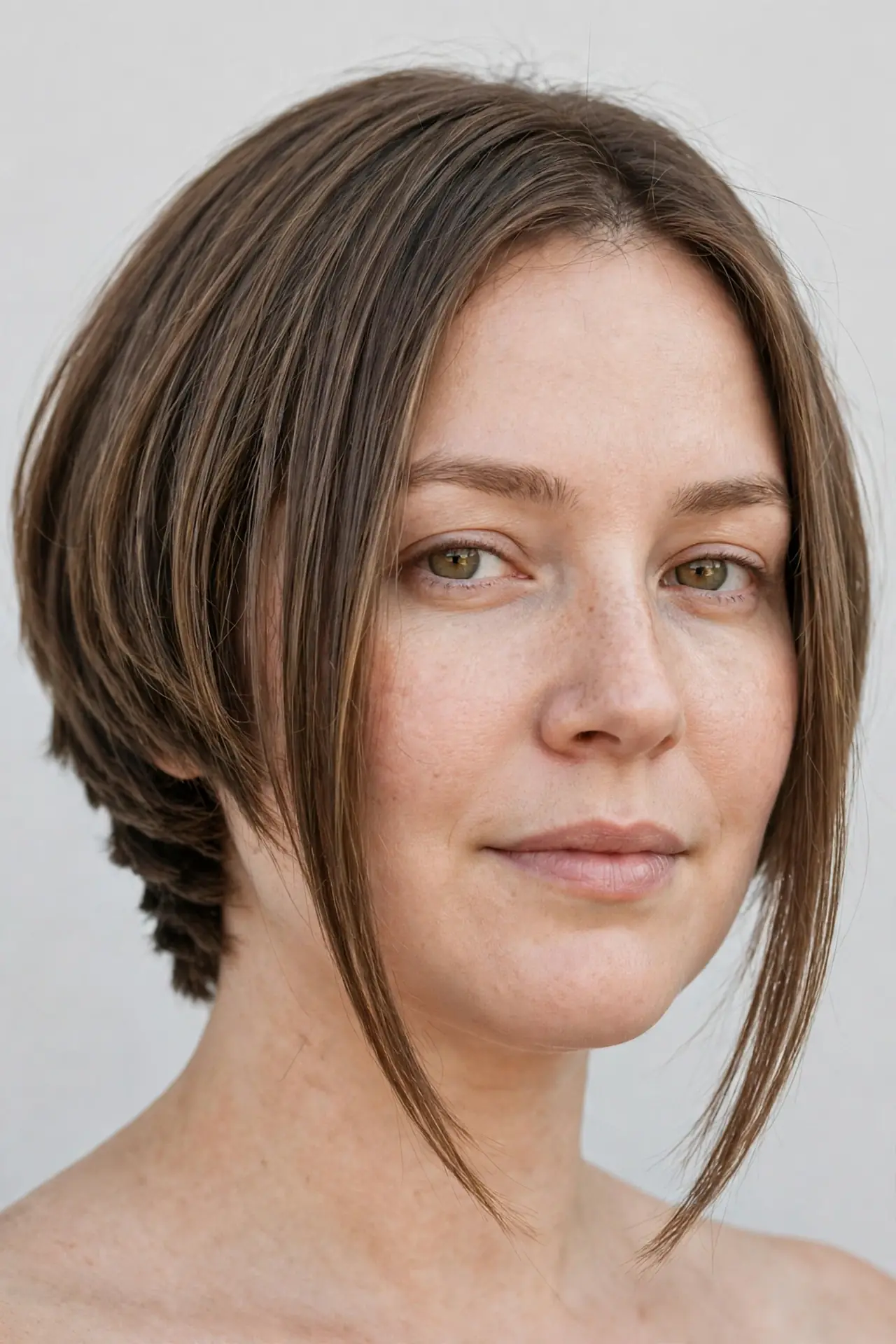
A graduated angled bob is shorter at the back and longer toward the front, and that built-in slope flatters thin fine hair on a round face. The stacked layers at the nape create automatic fullness at the crown — the spot where fine hair tends to lie flat — while the longer front pieces sweep past the cheeks and visually elongate the face. Because the shape is engineered into the cut, you get volume with minimal styling effort. This style flatters straight, fine textures best and reads modern and confident without colour or curls. Soft jawline? This is the cut to try.
- Apply volumising spray directly to the crown before blow-drying.
- Blow-dry the back sections upward and forward to maximise the stack.
- Smooth the front pieces with a flat brush so they lie sleek past the jaw.
- Run a drop of shine serum through the ends for a polished finish.
Ask your stylist for a graduated bob with stacked layers at the nape and front pieces that reach at least to the chin — longer if you want extra face-slimming. Keep the angle noticeable but not extreme, so it looks wearable and grows out gracefully. At home, rough-dry the roots for lift, then use a paddle or round brush on the front sections. A dry texturising spray at the crown on day two revives the volume without a full wash. Maintain the graduation with trims every six weeks, because once the nape grows out, the stacked effect disappears. For more angled inspiration, see our guide to angled bob hairstyles.
Textured Beach-Wave Bob with Piecey Ends
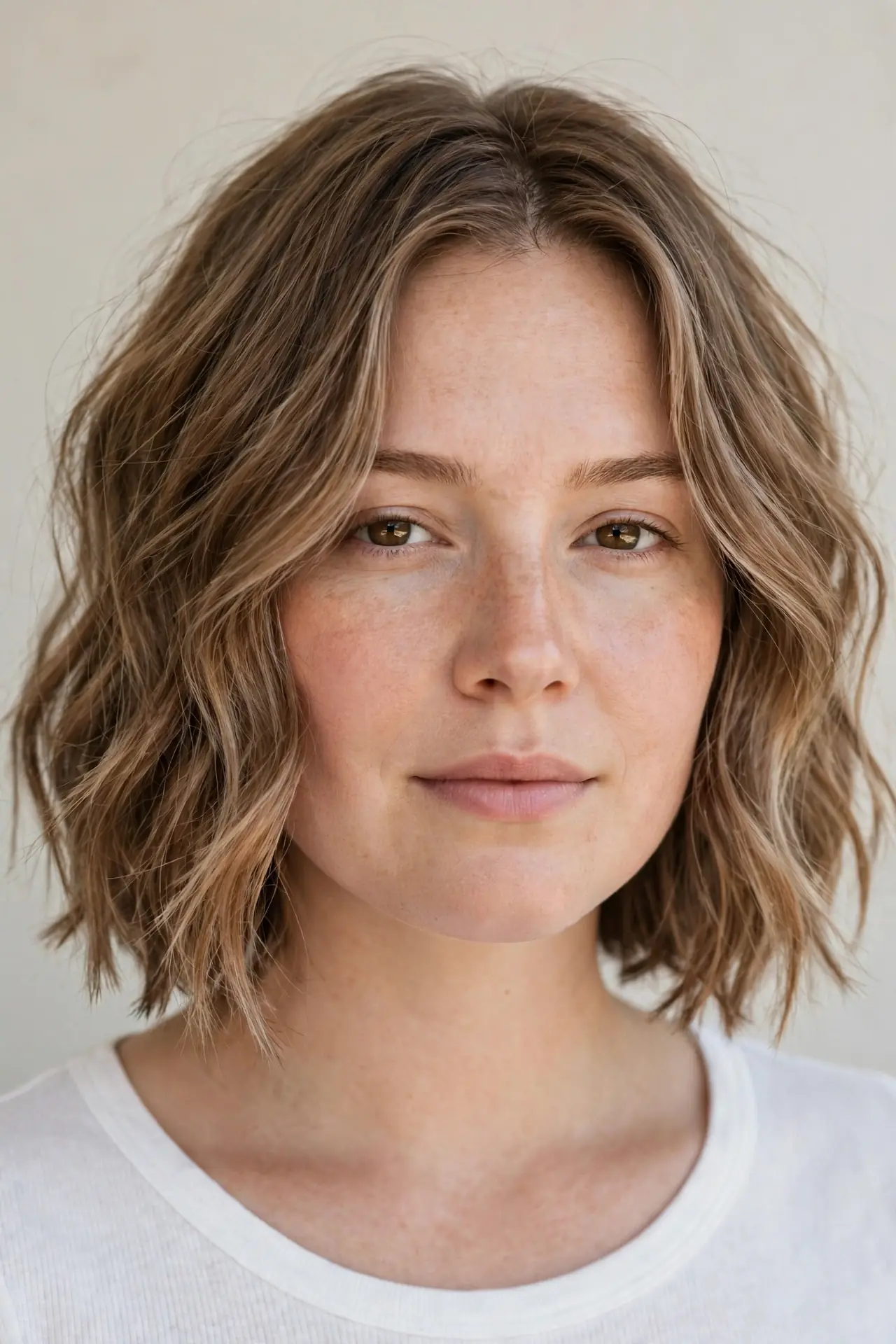
If your fine hair falls flat no matter what you do, texture is your best friend, and this shoulder-skimming beach-wave bob delivers it beautifully. The cut combines a chin-to-collarbone length with point-cut, piecey ends that let the hair separate into soft waves rather than clinging together as one thin sheet. Waves create width and movement, which tricks the eye into seeing more hair, and the slightly longer length keeps the waves from puffing outward at cheek level — a common pitfall for round faces. The result is effortless and modern, flattering dressed up or down. This style works beautifully on fine hair with a natural wave or bend.
- Apply sea-salt spray or wave-enhancing mousse to damp hair before drying.
- Twist random sections around your fingers while blow-drying on low heat.
- Scrunch the ends upward with your hands to encourage the wave pattern.
- Break up the waves with a wide-tooth comb once fully dry for softness.
Request a textured bob cut with point-cutting through the ends, cut somewhere between chin and collarbone length, and tell your stylist you want piecey separation rather than a solid blunt line. At home, the easiest method is to braid damp hair loosely overnight and undo it in the morning, or use a large-barrel curling wand on alternating sections, leaving the very ends straight for a lived-in feel. A pea-sized amount of texturising cream defines the pieces without heaviness. Trim every eight weeks to keep the ends fresh, since split ends make waves look stringy fast, with sea-salt spray reviving the wave on refresh days.
Blunt Chin Bob with a Deep Side Part
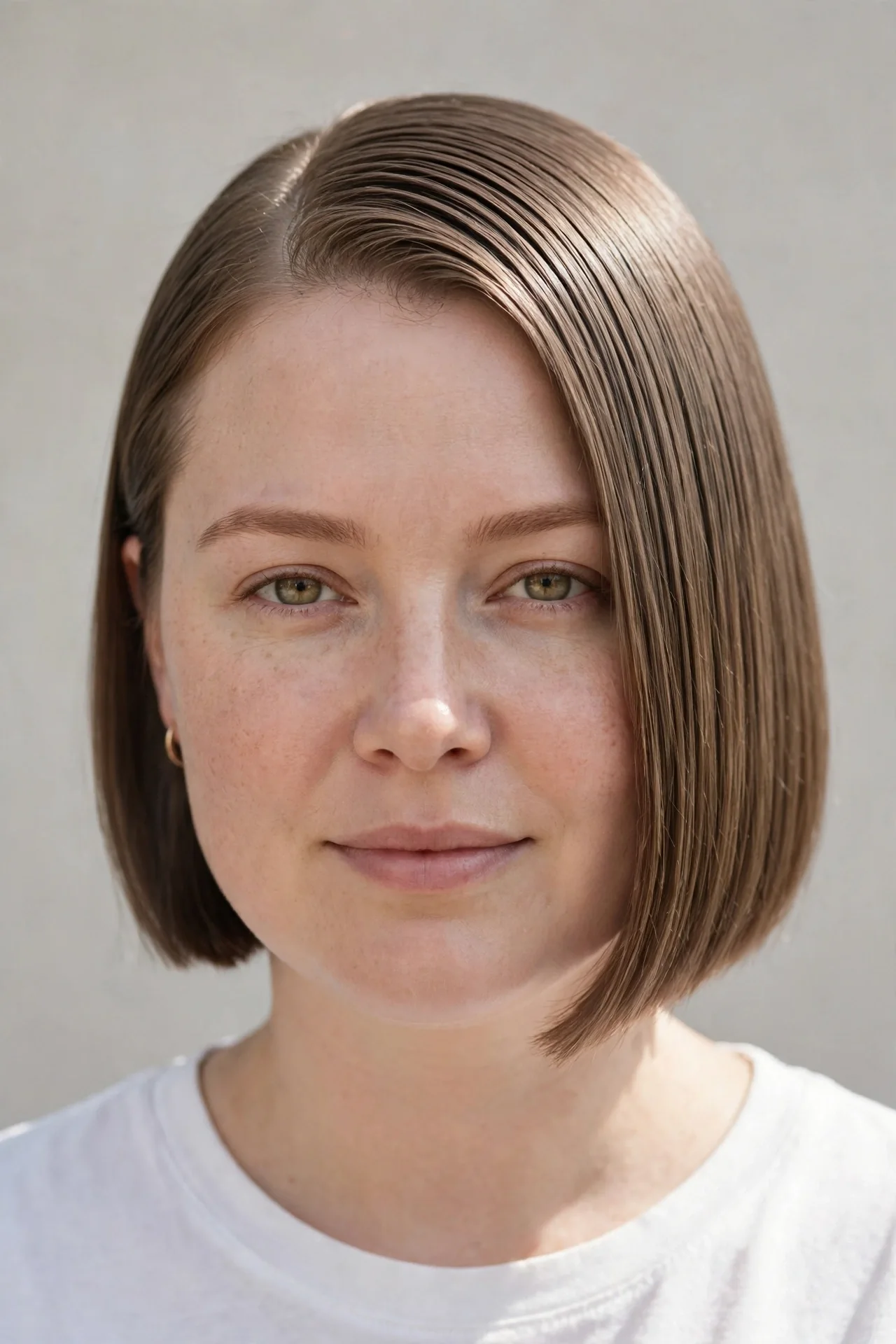
Sometimes the boldest choice is the simplest: a sharp, blunt bob with zero layers and a deep side part. For thin fine hair, a blunt perimeter is the single most effective trick for looking thicker, because every strand ends at the same line and the edge reads dense and deliberate. The deep side part is what makes this work for round faces — it breaks the face’s symmetry, creates a diagonal line across the forehead, and gives the illusion of an oval rather than a circle. This cut is chic and suits straight fine hair best, and it photographs beautifully. If you love minimalist style and clean lines, this bob is your match.
- Apply a smoothing cream to damp hair to keep the blunt edge sleek.
- Blow-dry with a paddle brush, directing hair away from the part line.
- Flat-iron the ends with a slight inward curve for a sharp finish.
- Sweep the fringe section across the forehead for extra face-slimming.
Tell your stylist you want a one-length blunt bob cut straight at chin level with a deep side part — no layers, no graduation, just a crisp perimeter. The precision of the cut is everything here, so choose a stylist known for sharp bob work. At home, blow-dry smooth with a paddle brush and finish with a flat iron on the ends only, protecting them with a heat-protectant spray first. A tiny amount of shine serum keeps the edge looking glassy. Because blunt lines show growth quickly, schedule trims every five to six weeks to keep the edge razor-clean, and ask your stylist to check the line from the back at every visit.
A-Line Bob with Soft Curtain Fringe

This feminine cut pairs a classic A-line silhouette — slightly shorter in back, longer in front — with a soft curtain fringe that parts in the middle and sweeps outward. The A-line shape gives fine hair natural fullness through the back while the longer front pieces slim a round face, and the curtain fringe is the secret weapon: it opens up the forehead, draws attention to the eyes and cheekbones, and creates vertical lines that counteract roundness. Unlike a heavy straight fringe, a curtain fringe is feathered and light, so it never overwhelms fine hair or makes the face look shorter. It is romantic and versatile.
- Apply root-lifting mousse to damp hair, focusing on the crown.
- Blow-dry the curtain fringe with a small round brush, curving it outward.
- Backcomb the crown lightly for extra lift before smoothing over.
- Spritz the fringe with dry shampoo on day two to keep it fresh.
Ask your stylist for an A-line bob with the back sitting just below the occipital bone and the front reaching the chin, plus a long curtain fringe that starts around the cheekbones. The fringe should be cut dry if possible, so the stylist can see exactly how it falls. Your daily routine: blow-dry the fringe first while it is still very damp, curving it away from the face, then style the rest of the bob. A round brush is your most important tool here. Trim the main shape every six to eight weeks, and ask for fringe touch-ups between appointments so it never grows into your eyes.
Stacked Bob with Voluminous Crown Layers
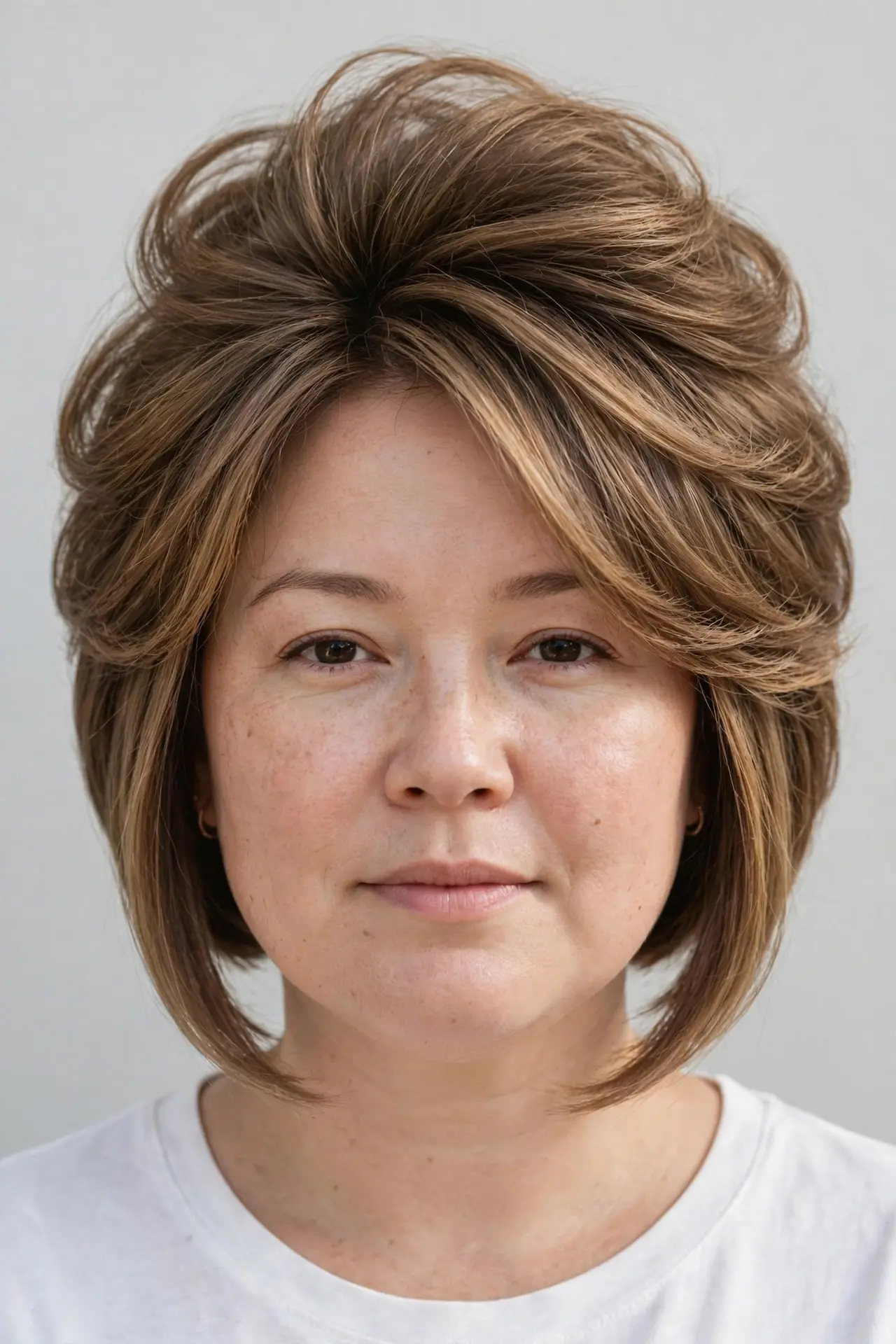
The stacked bob is the bob family’s volume champion, and it suits thin fine hair perfectly. Layers are cut progressively shorter from the front to the back, stacking on top of each other at the nape to build a rounded, full silhouette with height at the crown. For round faces, that added crown height is the key benefit — it lengthens the overall look of the face and balances out fuller cheeks. The front stays longer and sleeker, framing the face and adding the elongation a round face needs. This cut has a polished, put-together energy that works from the office to evening events.
- Apply volumising mousse generously to the crown and nape area.
- Blow-dry the nape sections upward with a round brush for maximum stack.
- Smooth the front sections downward with a paddle brush for contrast.
- Set the crown with a cool shot from the dryer to lock in the lift.
Request a stacked bob with graduated layers concentrated at the back and front pieces left long enough to reach the jawline or chin. Be specific that you want visible volume at the crown rather than a flat stack. At home, the blow-dry technique is everything: work in small sections at the back, lifting each one straight up and over the round brush. A root powder or dry shampoo at the crown adds grip and lasting lift between washes. This structured cut needs maintenance — trims every five to six weeks keep the stacked silhouette crisp, since even a little growth flattens the shape.
Face-Framing Layered Bob for Slimmer Cheeks
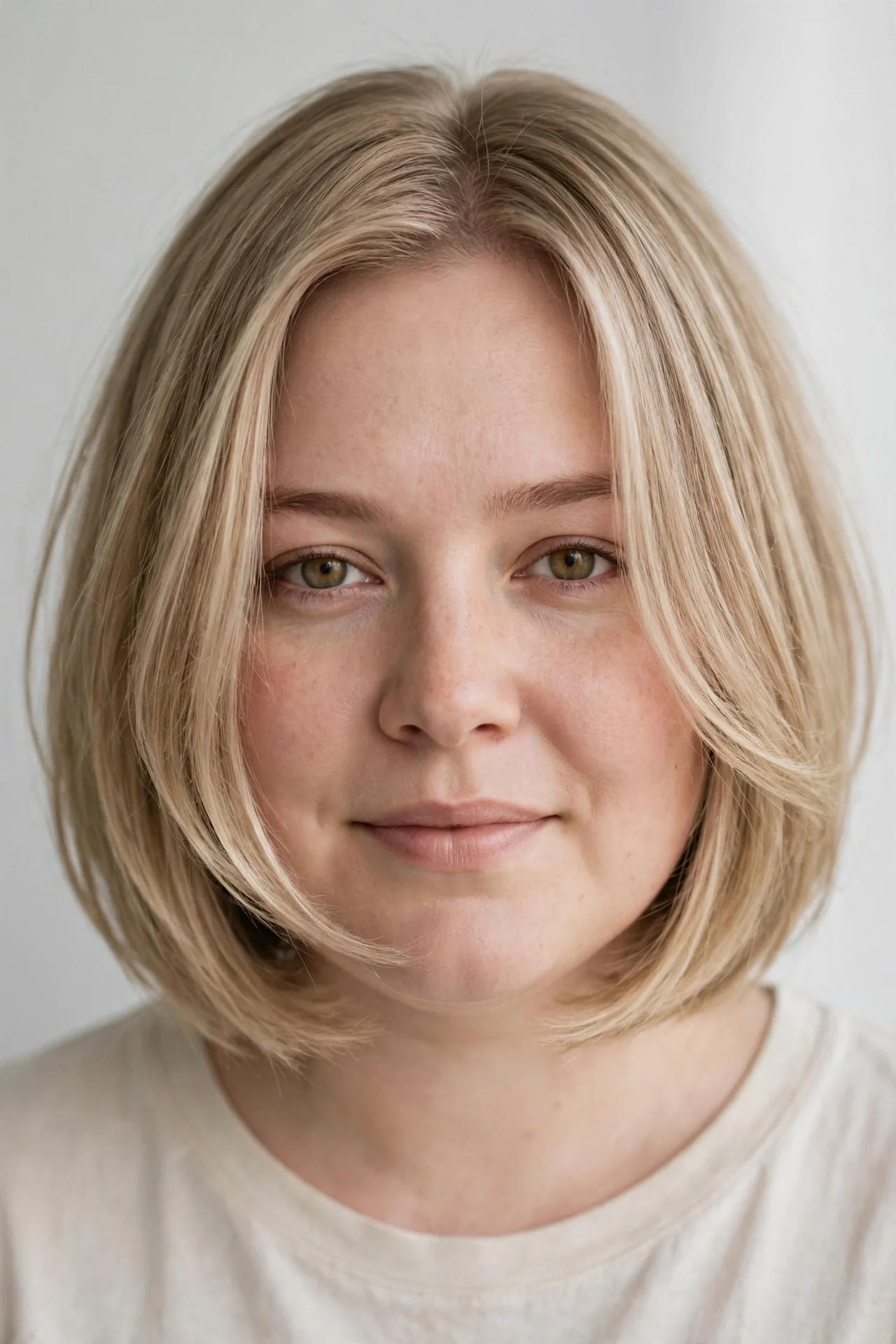
This chin-length bob features long, face-framing layers that start at the cheekbones and sweep downward. For thin fine hair, the body of the bob stays relatively solid so the ends look full, while the framing layers add soft movement exactly where you want it. For round faces, those descending pieces are contouring in haircut form — they create shadow and definition along the cheeks, making the face appear narrower and more oval. The effect is gentle rather than dramatic, which makes this one of the most universally flattering bobs on the list. It suits every texture from straight to wavy.
- Apply a lightweight styling cream to damp framing layers to control frizz.
- Blow-dry the face-framing pieces forward and inward with a round brush.
- Pinch the ends with a flat iron, curving them slightly toward the chin.
- Mist the finished style with flexible-hold hairspray for movement.
Ask your stylist for a chin-length bob with face-framing layers beginning at the cheekbones. The rest of the bob should stay blunt-ish to preserve fullness in fine hair. Your at-home routine focuses on those front pieces: they need the most attention, so style them first with a round brush, pulling them forward and under. A small flat iron touch on the framing sections refreshes the look between washes without restyling the whole head. Trim every six to eight weeks, and have the framing layers refined at each visit so they never grow past the point where they slim the face.
Tousled Shaggy Bob with Feathered Ends
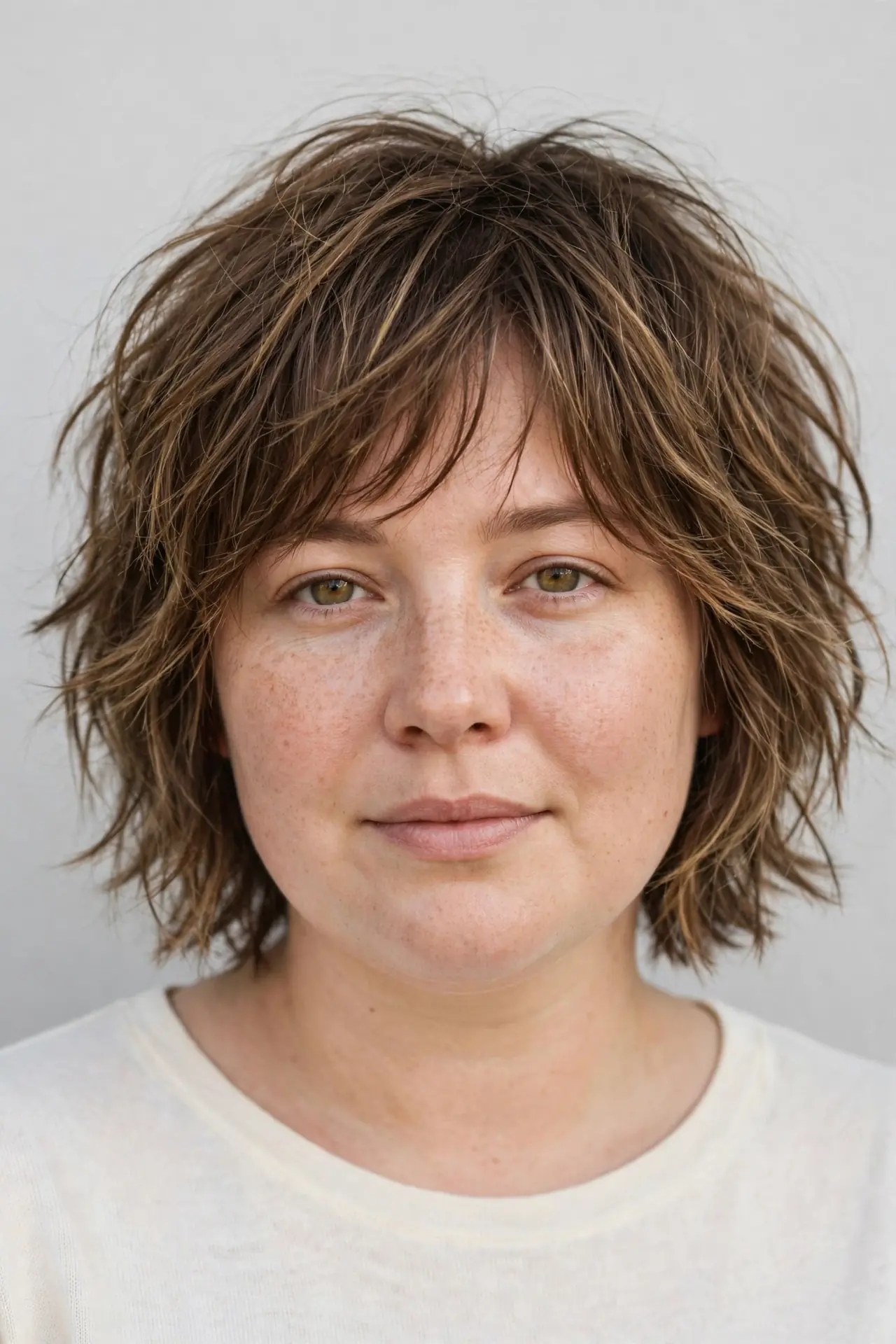
This bob combines choppy layers, feathered ends, and a deliberately undone finish. For thin fine hair, the shag’s signature texture is transformative: all those snipped, feathered ends create separation and airiness that make fine hair look fuller and more interesting than a solid cut ever could. For round faces, the key is keeping the volume at the crown and ends while keeping the sides close — the tousled texture should move, not puff outward. This is the most low-maintenance bob on the list, since its charm lies in looking slightly imperfect. If your style is relaxed and a little edgy, this one is calling your name.
- Apply texturising spray to damp hair from mid-lengths to ends.
- Scrunch sections upward while diffusing on low heat for lived-in texture.
- Twist small pieces around your fingers to define the feathered ends.
- Shake the roots with your fingertips once dry for effortless separation.
Tell your stylist you want a shaggy bob with choppy, feathered layering throughout and lots of texture at the ends, cut around chin to jaw length. Emphasise that you want movement without width at the cheeks. The best at-home approach is wash-and-go: apply your texturising products, scrunch, and let it air-dry or diffuse. On non-wash days, a spritz of dry shampoo at the roots and a quick finger-tousle revives the whole style. Because the shag is meant to look undone, you can stretch trims to eight or even ten weeks — grow-out is part of the aesthetic — with point-cut ends refreshed at each visit to keep the texture airy.
Inverted Bob with Elongated Front Pieces
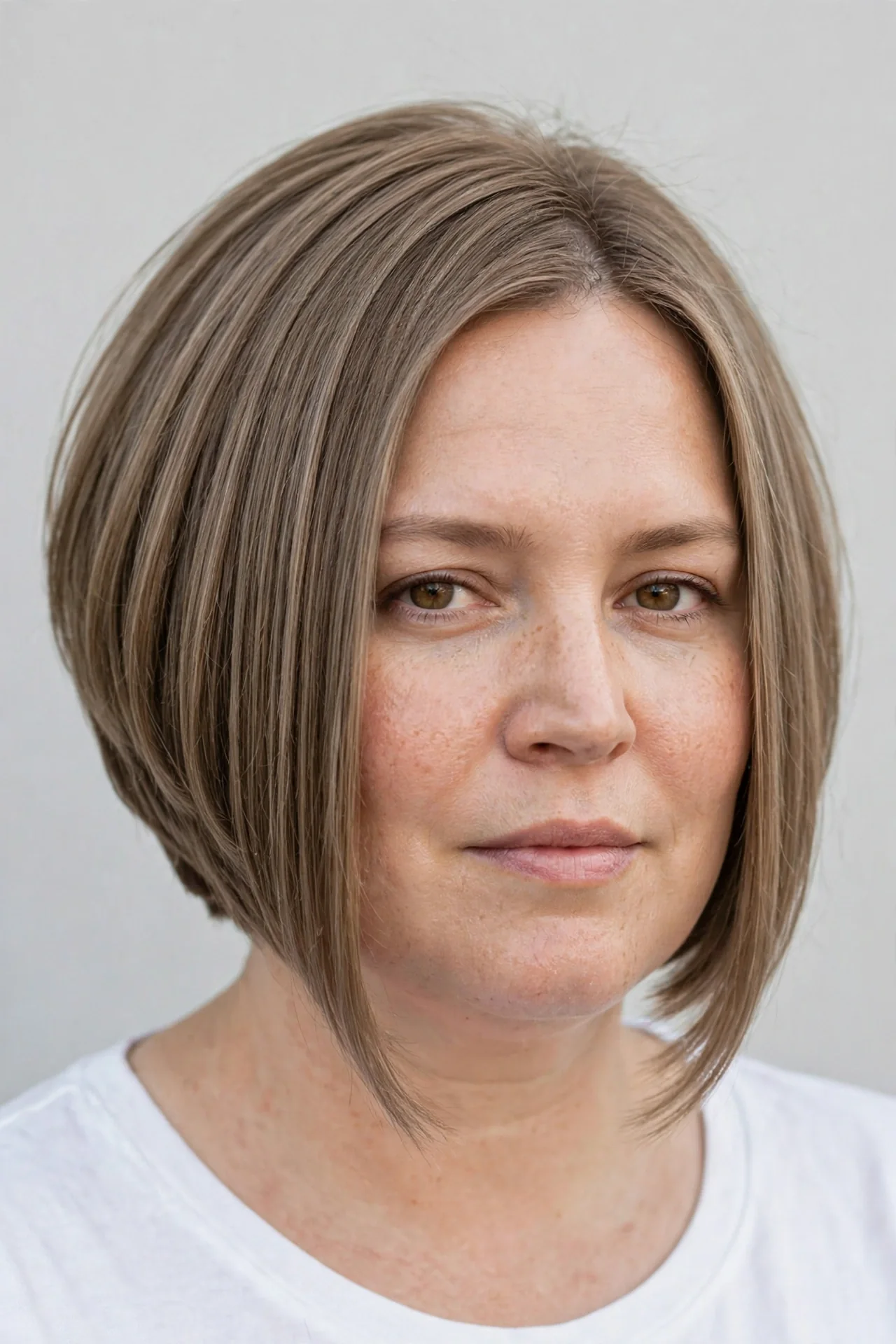
The inverted bob takes the angled bob’s slope and exaggerates it: dramatically stacked at the back, with front pieces that fall well past the chin, sometimes grazing the collarbone for extra drama. For thin fine hair, the stacked back delivers concentrated volume where it counts, and because the front is left long and solid, the overall impression is of abundant hair. For round faces, those elongated front pieces are the star — they create strong vertical lines, drawing the eye downward and slimming the cheeks. This is a statement cut for anyone who wants their haircut to do the talking.
- Apply volumising mousse to the stacked back section before drying.
- Blow-dry the nape upward and the front pieces straight down for contrast.
- Flat-iron the front pieces sleek so they fall in a clean line past the jaw.
- Tuck one front piece behind your ear to show off the dramatic angle.
Ask for an inverted bob with a steep graduation at the back and front pieces reaching the collarbone, with a bold but wearable angle. Your stylist should check the slope from the side. At home, treat the back and front as two zones: build volume in the back with a round brush, then sleek the front pieces down with a paddle brush or flat iron — the contrast between voluminous back and sleek front is what makes this cut striking. A lightweight smoothing serum on the front pieces prevents frizz. Maintain the drama with trims every five to six weeks, as growth quickly softens the angle.
Sleek Straight Short Bob for Round Faces
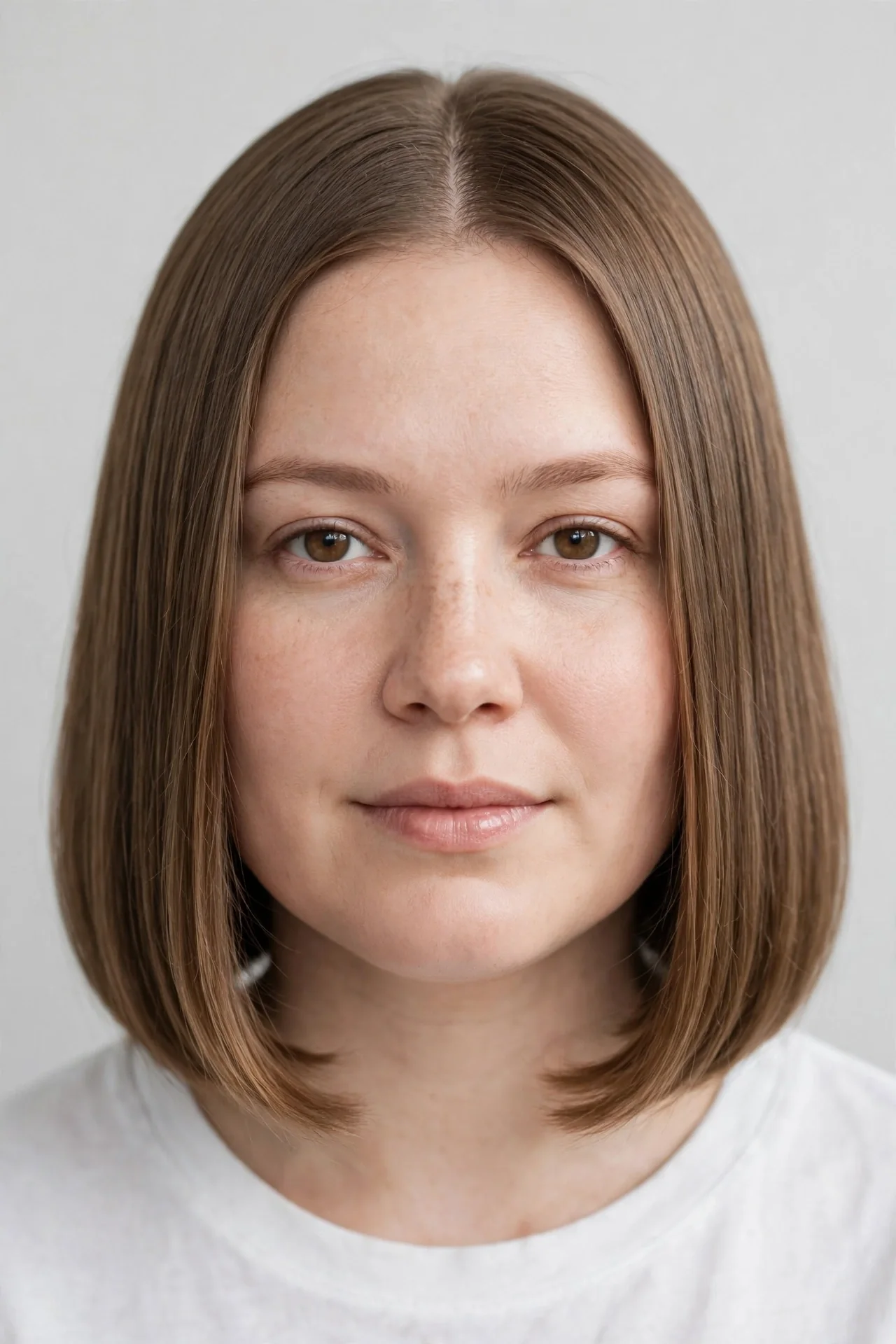
A sleek, straight short bob is the minimalist’s power move — a jaw-length cut worn pin-straight with a centre or off-centre part. For thin fine hair, wearing it sleek and straight showcases a sharp, dense perimeter that reads thicker than textured styles can. For round faces, the centre part and the straight vertical fall of the hair create the illusion of length, and when the ends tuck slightly inward at the jaw, they frame the face like a curtain. This look is timeless, elegant, and versatile — it works with a blazer, a slip dress, or your favourite weekend denim.
- Apply heat-protectant spray to damp hair before any heat styling.
- Blow-dry straight with a paddle brush, working in thin sections.
- Flat-iron in small passes, keeping the iron moving to avoid damage.
- Smooth a pea-sized amount of shine serum over the surface to finish.
Request a jaw-length bob with a precise blunt perimeter and a centre or slightly off-centre part. Keep the length right at or just below the jawline for the most flattering face-framing effect. Your routine centres on smooth, healthy hair: always use a heat protectant, and keep flat-iron temperatures moderate since fine hair damages easily. For expert guidance on protecting fine hair from heat and chemical damage, the American Academy of Dermatology’s hair-care guidance is a trustworthy starting point. Sleep on a silk pillowcase to preserve the sleekness overnight. Trim every six weeks to keep the perimeter razor-sharp, because this cut’s elegance depends entirely on precision.
Soft Permed Bob with Root Volume

A modern soft perm — think loose, touchable waves rather than tight 1980s curls — can be life-changing for thin fine hair. The perm adds permanent texture and body at the root and through the lengths, so fine hair holds volume for months instead of hours. For round faces, the trick is keeping the curls soft and open rather than tight and round: elongated waves create vertical movement that flatters, while a chin-length permed bob keeps the fullness controlled and close to the head. This is the ultimate wash-and-go option for women who want lasting fullness without daily heat styling.
- Apply curl-defining cream to damp permed hair and scrunch upward.
- Diffuse on low heat or air-dry to preserve the soft wave pattern.
- Refresh second-day waves with a light mist of water and scrunching.
- Avoid brushing dry permed hair; finger-comb only to prevent frizz.
Talk to your stylist about a soft, large-rod perm on a chin-length bob, and be honest about your hair’s history — previously coloured or fragile fine hair needs a gentler formula. A consultation and strand test are non-negotiable. At home, treat permed hair gently: use sulphate-free shampoo, deep-condition weekly, and never brush it dry. Curl cream and a diffuser are your essentials. Perms on fine hair typically need refreshing every three to four months as the texture loosens, and the bob shape itself benefits from trims every eight weeks to keep the silhouette tidy. A weekly deep-conditioning mask keeps permed fine hair supple between appointments.
Pixie-Bob Hybrid for Maximum Lift
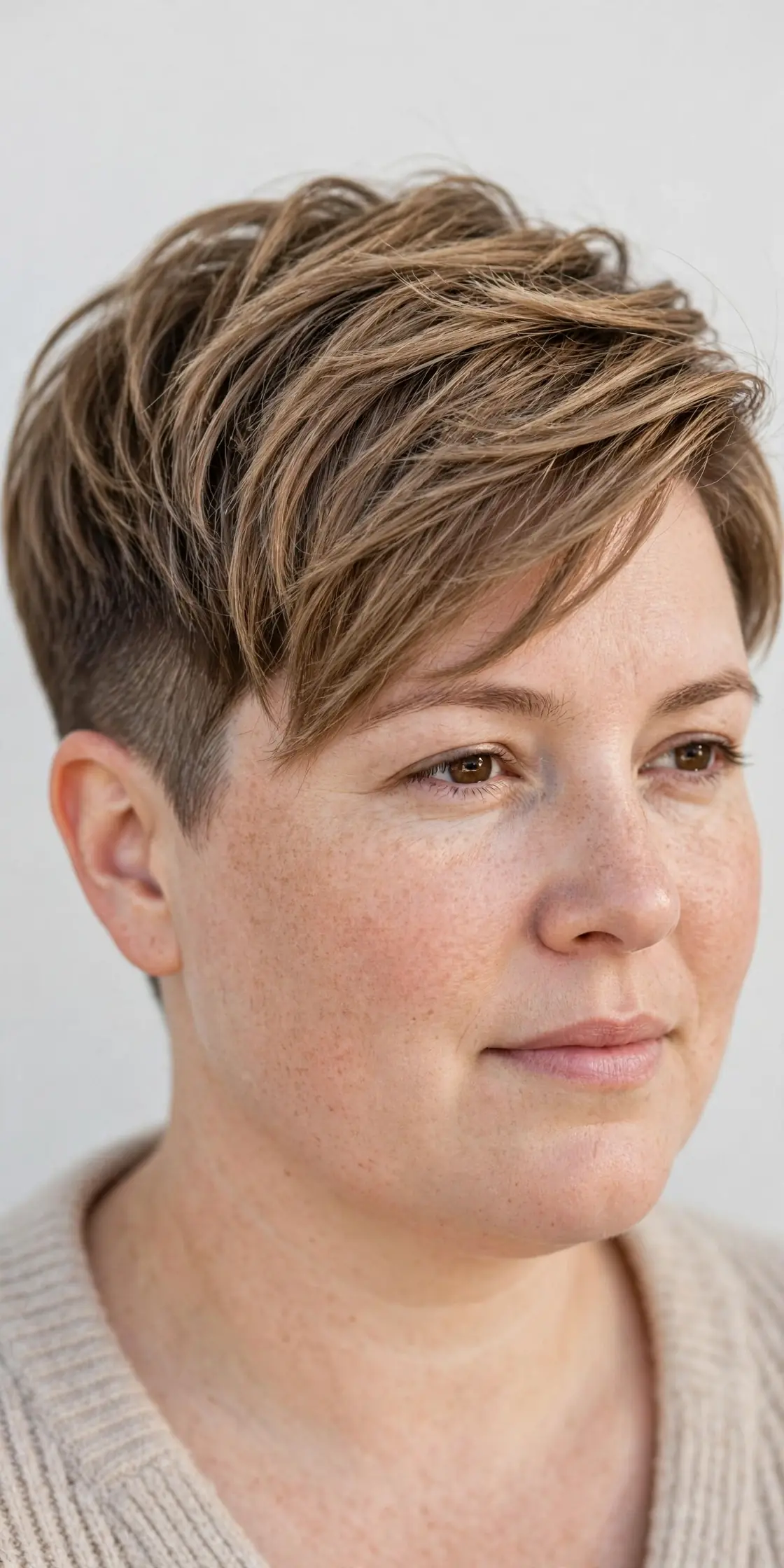
The pixie-bob, or bixie, is the boldest volume play on this list: shorter than a bob at the back and sides, with longer, piecey length on top. For thin fine hair, removing bulk from underneath while keeping length on top creates the illusion of much thicker hair — the top layers stand up and out instead of being dragged down by weight. For round faces, the height on top is transformative: it adds inches of visual length to the face, balancing fuller cheeks beautifully, especially when the fringe is swept to the side rather than cut straight across. This cut is confident, modern, and incredibly freeing if you are ready for shorter hair.
- Apply volumising powder or mousse to the top layers at the roots.
- Blow-dry the crown upward and forward with your fingers for lift.
- Piece out the top layers with a tiny amount of wax or pomade.
- Sweep the fringe diagonally across the forehead for face-slimming asymmetry.
Ask your stylist for a pixie-bob with closely tapered sides and nape and longer, textured layers on top, plus a side-swept fringe. Bring reference photos, since “bixie” can mean different things to different stylists. The at-home routine is quick: a two-minute blow-dry with your fingers does most of the work, and a dab of matte wax defines the pieces. This is a wash-and-wear cut that looks better slightly tousled. The trade-off for short hair is frequent maintenance — book trims every four to five weeks to keep the tapered shape crisp, because the back grows out fastest. A travel-size wax lets you reshape the top layers on the go.
Conclusion
The right short bob hairstyles for thin fine hair and round faces prove you never have to choose between fullness and flattering — the best cuts on this list deliver both in a single shape. Whether you fell for the stacked volume of the graduated bob, the face-slimming lines of the inverted cut, or the effortless texture of the shaggy bob, your perfect match comes down to your styling time and boldness. Start with the cut that excited you most, bring these notes to your stylist, and give your new bob a week to settle before judging it. For more ideas in this family, explore our short layered bob hairstyles for volume-boosting variations.




One Comment