12 Short Hairstyles for Thin Fine Hair
Introduction
If you have thin, fine hair, you already know the frustration: short cuts that look airy and full on everyone else fall flat on you by midday, and wispy ends can make a bob look sparse instead of chic. The problem is rarely the length — it is the wrong cut and the wrong technique. Short hairstyles for thin fine hair work best when they remove weight in the right places, keep the ends dense, and build volume into the shape itself rather than relying on products. The twelve styles below are chosen specifically for fine strands, from precision micro-bobs to playful crops that lift from the root. If round cheeks are also on your mind, you may also love 12 short bob hairstyles for thin fine hair and round faces for more targeted inspiration. Ready to meet the short cut that finally makes your hair look like more of it?
The Blunt Micro-Bob for Fine Hair
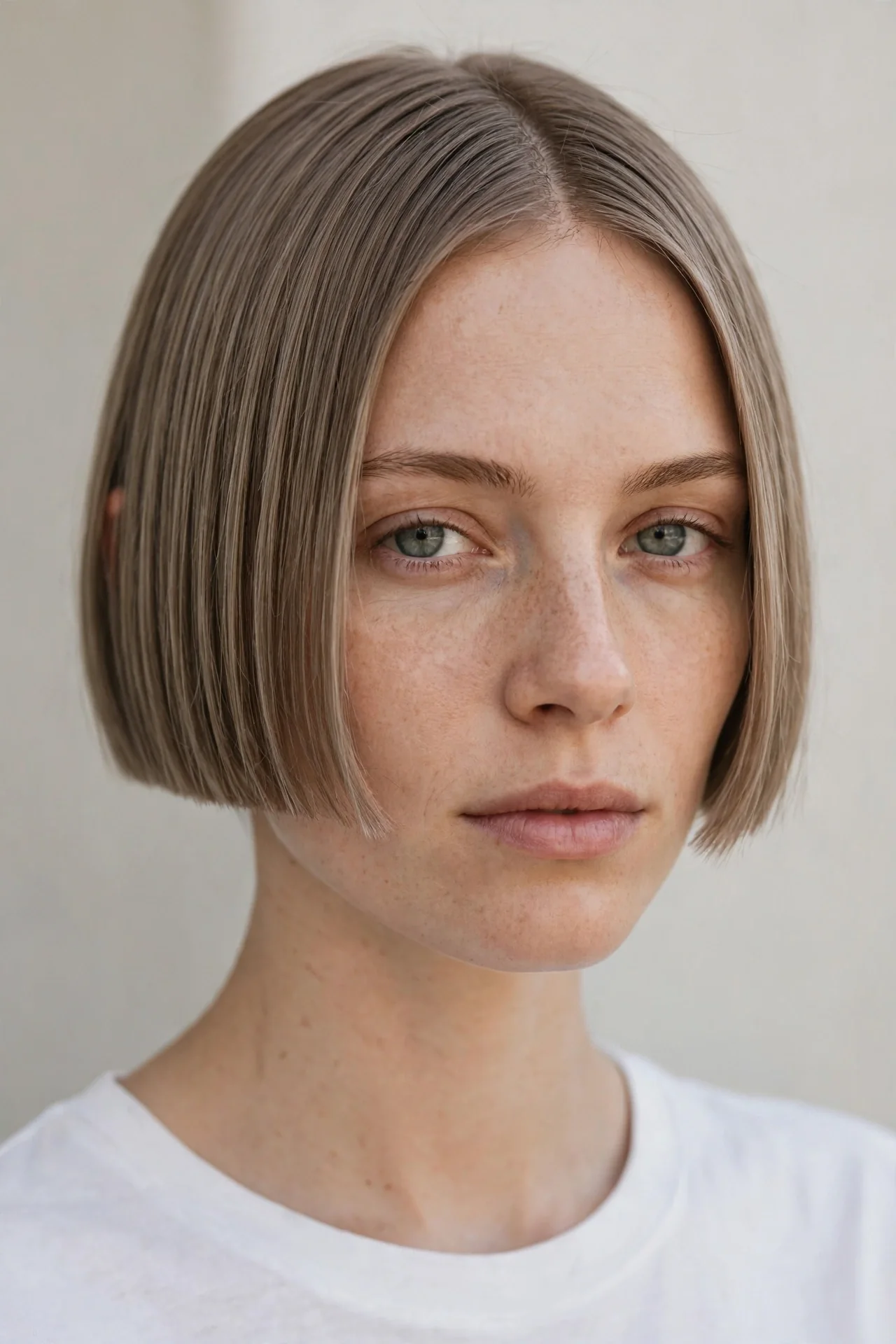
The blunt micro-bob is proof that the shortest distance between you and thicker-looking hair is a sharp, honest line. Sitting just above the jawline — shorter than a classic bob but longer than a pixie — it is cut as one solid length with zero layers. That single blunt perimeter is the whole secret: instead of tapering your strands into wispiness, it stacks every hair into one dense edge, so your ends look as full as your roots. This cut flatters oval, heart, and long face shapes especially well, because the strong horizontal line adds flattering width and balances length. Straight fine hair shows off the precision beautifully, while gentle waves soften it into something Parisian and effortless. Best of all, the shape is architectural — it looks deliberate even on second-day hair.
- Blow-dry with a paddle brush, directing hair straight down for a crisp line.
- Smooth a pea-sized amount of anti-frizz cream through the ends only.
- Part slightly off-center to create natural root lift.
- Tuck one side behind your ear for instant asymmetry.
Ask your stylist for a one-length bob that ends above the jaw, cut with the head upright so the line stays true, and skip layers and graduation entirely. At home, keep it simple: a volumizing shampoo, conditioner applied only from mid-lengths down, and a root-lifting spray before blow-drying. A flat iron gives the glass-like finish, but never press the roots flat — lift them with a round brush for that airy crown. Book a trim every five to six weeks, because a blunt edge softens quickly on fine hair. If you grow it out, it simply matures into a chin-length blunt bob, which is equally flattering on thin strands.
The Jaw-Length Wedge for Thin Hair

The jaw-length wedge is a vintage classic that behaves like it was engineered for fine hair. Short, graduated layers are stacked tightly at the nape and melt into a fuller, rounded crown, creating built-in lift exactly where fine hair tends to collapse. The rounded silhouette reads as one continuous curve of hair, which tricks the eye into seeing density from every angle. It suits oval, heart, and square faces beautifully, softening strong jawlines and adding feminine roundness. Straight to slightly wavy fine hair takes the shape best, since the graduation needs a smooth canvas to show its architecture. The wedge also photographs wonderfully — the curve catches light and shadow, adding visible dimension to thin strands.
- Blow-dry the nape downward and under with a small round brush.
- Lift the crown in sections with a medium round brush for roundness.
- Apply volumizing mousse to damp roots before drying.
- Smooth flyaways with a light pomade on your fingertips.
Ask your stylist for a graduated wedge: a short stacked nape, a rounded full crown, and length grazing the jawline in front. Bring reference photos, because the wedge’s slope can be subtle or dramatic. At home, the blow-dry is everything — skip it and the graduation falls flat. Use a lightweight mousse on damp hair, dry the nape under first, then build the crown upward and outward. Avoid heavy serums that pull the shape down. Trim every four to five weeks to keep the stack crisp. Growing it out works well: the nape can grow into a stacked bob while the front keeps its jaw-length frame.
The Textured Micro-Crop
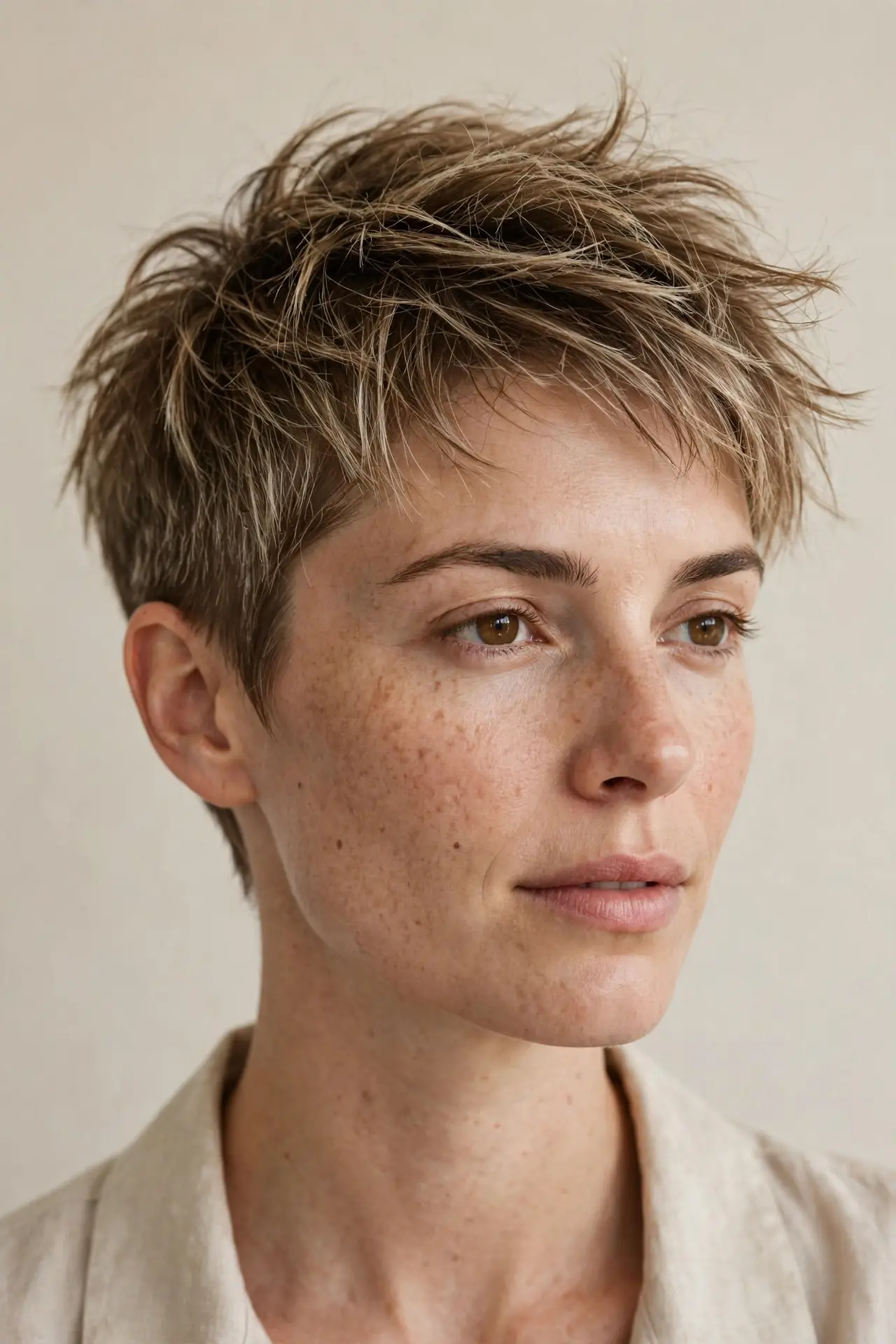
If you are ready to go truly short, the textured micro-crop is the most liberating option for thin fine hair. Cut all over to roughly ear length or shorter, then point-cut into soft, piece-y texture, this cut trades length for movement — and movement is what makes fine hair look abundant. The uneven texture breaks up the scalp-revealing flatness that plagues longer fine hair, creating shadows and separation that read as thickness. It suits oval, heart, and round faces, especially with a little extra length left on top to elongate. Fine, straight hair takes the texture crisply; fine wavy hair gets effortless tousle for free. It is wash-and-go in the truest sense, with a bold, confident edge that turns fine hair into a style statement.
- Work a dab of matte texture paste through dry hair for definition.
- Blow-dry with your fingers, lifting at the roots as you go.
- Pinch random pieces at the crown to create separation.
- Skip conditioner at the roots; apply it only to the ends.
Ask your stylist for a short all-over crop with point-cut texture and slightly more length through the top. Emphasize that you want texture, not thinning shears — fine hair loses density fast under a razor. At home, a volumizing shampoo and a pea of mousse is the whole routine; heavy products are the enemy of this cut. Finger-dry for lift, then define pieces with a matte paste or clay. Trim every three to four weeks, since short crops lose their shape quickly. The grow-out path is graceful: it becomes a longer pixie, then a pixie-bob, giving you months of stylish in-between stages.
The Tapered Nape Pixie

The tapered nape pixie is the polished cousin of the edgy crop, and it is quietly one of the best volume tricks for fine hair. The nape and sides are tapered close — not buzzed, just neatly graduated — while the top keeps generous length with soft layers. That contrast does all the work: the sleek sides make the textured top look dramatically fuller by comparison. It flatters oval, heart, and diamond faces, drawing attention upward and opening the eyes. Fine straight hair looks sleek and intentional; fine wavy hair gets lovely natural lift on top. The neat nape also makes the neck look longer and the whole silhouette more elegant, which is why this cut photographs so beautifully.
- Apply root-lifting mousse to damp hair, focusing on the crown.
- Blow-dry the top forward and up with your fingers.
- Define the tapered nape with a light styling cream.
- Sweep the fringe to one side for softness.
Ask your stylist for a pixie with a softly tapered (not shaved) nape and layered length through the crown and fringe. Clarify how much length you want on top — bring photos, since “long on top” varies wildly. At home, volumizing shampoo and mousse are the staples; blow-dry the top away from the part for lift. Keep the nape tidy between appointments, and ask your stylist about quick maintenance trims. Visit the salon every four to five weeks to preserve the contrast. Growing out is simple: keep the nape trimmed while the top lengthens into a longer pixie or pixie-bob.
The Side-Swept Short Crop for Thin Fine Hair
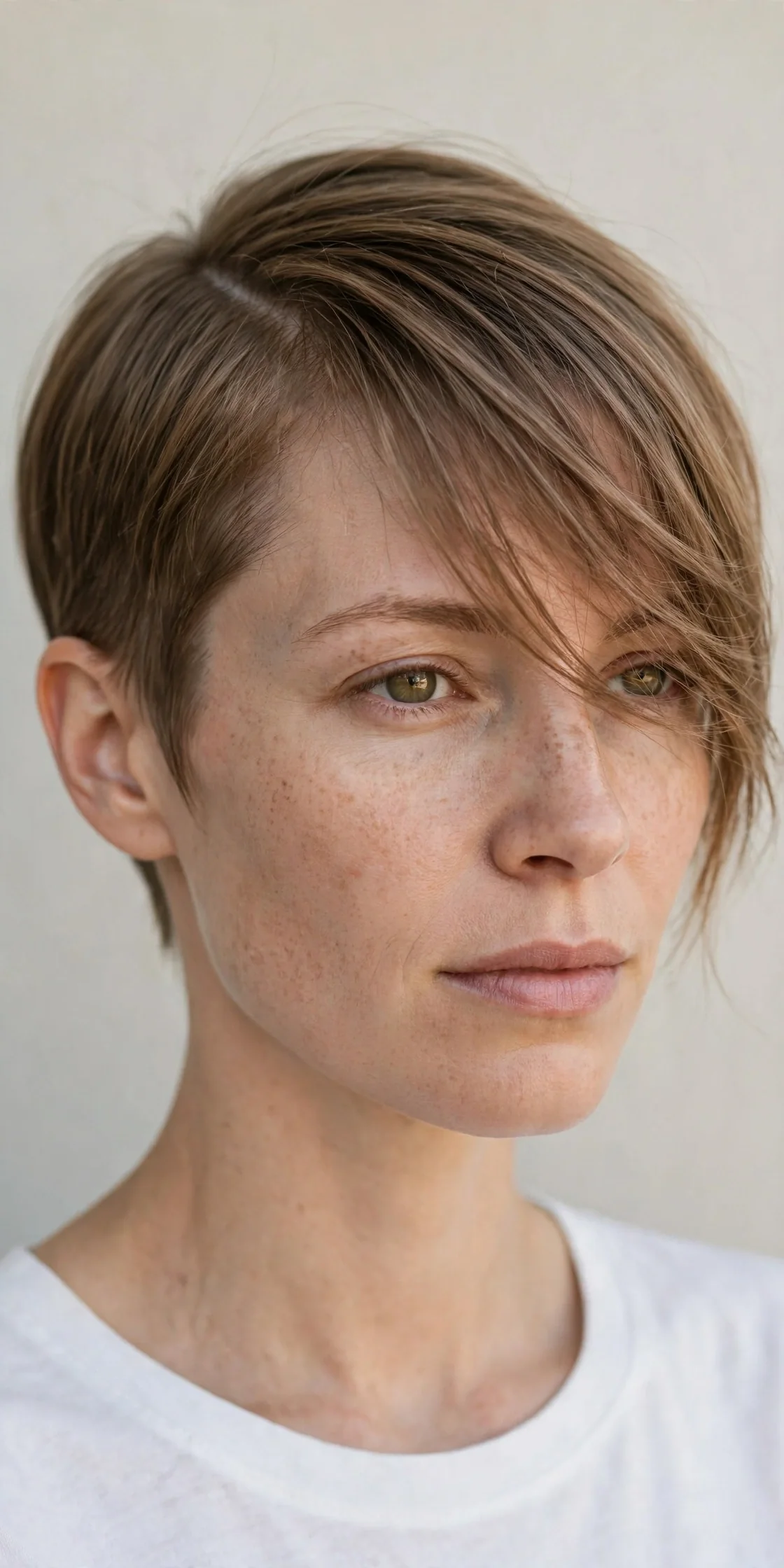
A deep side part is the oldest volume trick in the book, and the side-swept short crop builds an entire haircut around it. The hair is cut to ear-to-chin length with a dramatic side part, then swept across the forehead in a long, soft fringe that covers the crown — exactly where fine hair parts and reveals the scalp. That diagonal sweep creates instant fullness and movement, while the asymmetry flatters round, square, and heart faces by breaking up symmetry. Fine straight hair lies beautifully in the sweep; fine wavy hair adds romantic texture. It is feminine, office-friendly, and endlessly wearable, and it hides a high forehead or thinning temples better than almost any other short style.
- Part deeply on one side while hair is damp.
- Blow-dry the fringe across the forehead with a round brush.
- Apply a light volumizing spray at the roots before drying.
- Secure the sweep with a small clip while it cools for lasting hold.
Ask your stylist for a short crop with a deep side part, longer sweeping fringe, and tapered sides and nape for contrast. The fringe should be long enough to tuck behind the ear on the short side. At home, always style from a damp deep part — fighting a dry part is a losing battle. A root-lifting spray and a round brush do the heavy lifting; finish with a flexible-hold spray rather than stiff hairspray. Trim every four to six weeks. If you grow it out, the fringe becomes face-framing layers and the cut evolves into an asymmetric bob.
The Soft Undercut Bob for Fine Hair
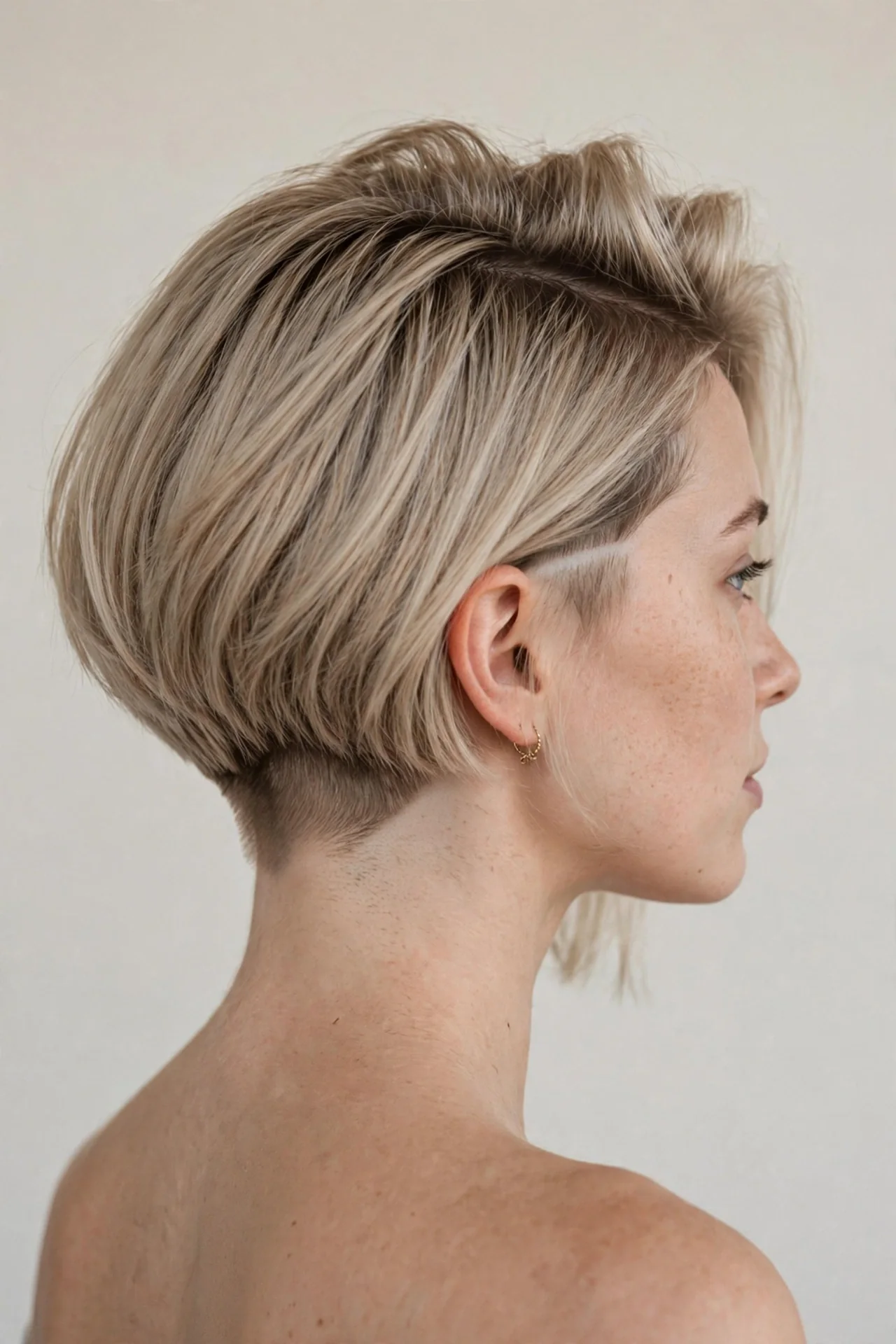
The soft undercut bob is the secret-weapon haircut for women whose fine hair has hidden density underneath. A discreet undercut at the nape — invisible when the hair falls — removes weight and bulk from beneath, so the top layers float with airy volume instead of being dragged flat. The visible result is a chic chin-to-jaw bob with a surprisingly full crown. It suits oval, heart, and round faces, and the shorter nape beautifully elongates the neck. Fine, straight hair shows the clean lines best, while the undercut also tames hair that is thick at the nape but fine on top. Nobody sees the undercut; everyone notices the volume.
- Blow-dry the top layers with a round brush for crown lift.
- Apply volumizing mousse to damp roots before drying.
- Flip your head upside down while drying for extra body.
- Smooth the surface with a light shine spray, avoiding the roots.
Ask your stylist for a chin-length bob with a hidden undercut at the nape, keeping the top layers one length for density. Make sure the undercut sits high enough to stay covered when your hair moves. At home, the routine is all about root lift: mousse on damp roots, a round-brush blow-dry, and no heavy conditioners near the scalp. The undercut needs tidying every four to six weeks, or it grows into an awkward shelf. If you are exploring cuts designed with the same fullness-first thinking for a later stage of life, hairstyles for older women with thin fine hair is worth a look too.
The Wispy Micro-Fringe Pixie
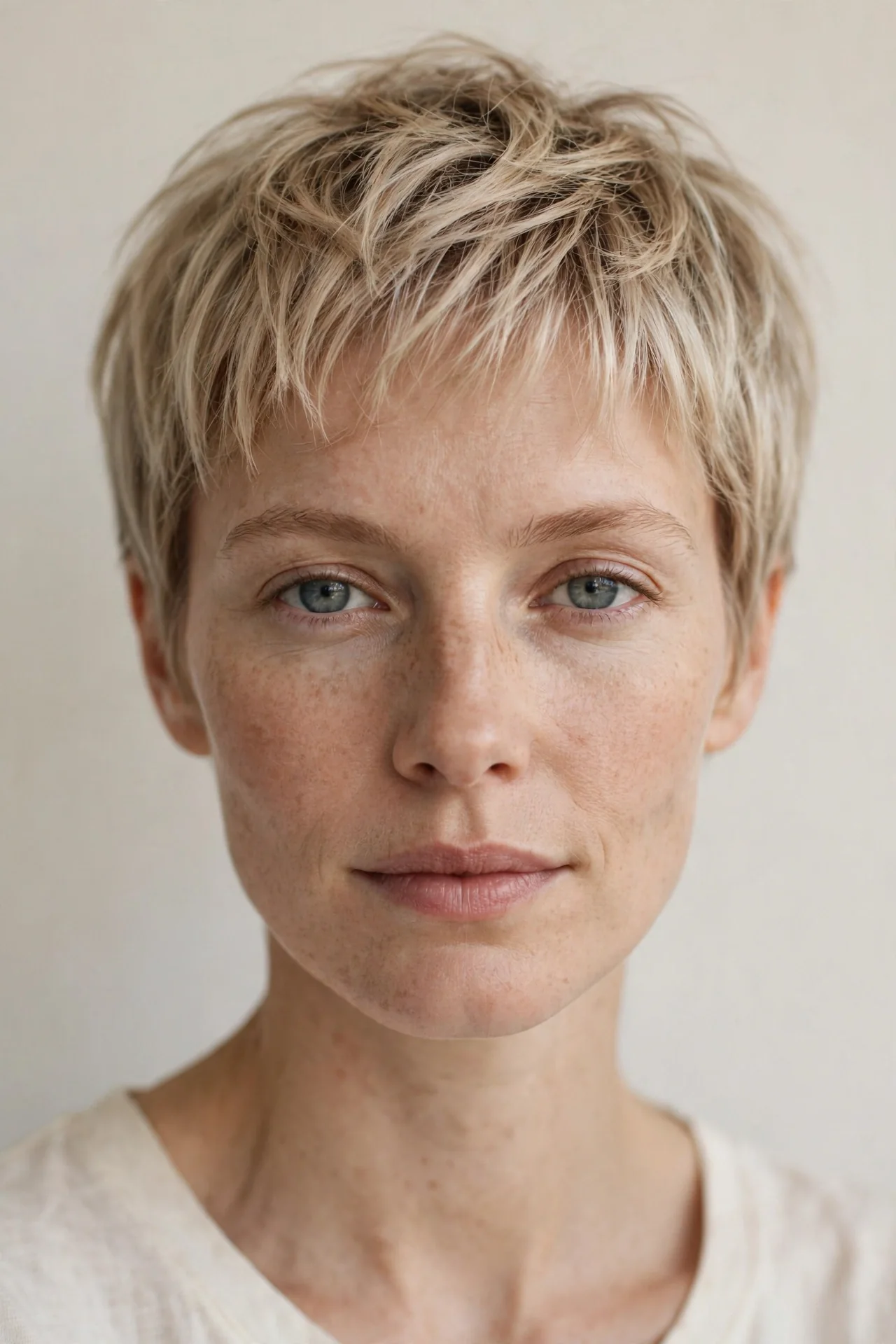
The wispy micro-fringe pixie proves that bangs and fine hair can be best friends — if the fringe is featherlight. A short, airy fringe cut well above the brows is paired with a soft pixie, and because the fringe is wispy rather than heavy, it never looks sparse or stringy. The short fringe draws the eye to your eyes and cheekbones while the textured pixie adds playful fullness through the crown. It flatters oval, heart, and long faces, shortening a long forehead beautifully. Fine straight hair keeps the fringe crisp; fine wavy hair makes it deliciously undone. The whole look reads youthful and French-girl chic without trying too hard.
- Blow-dry the fringe forward with a small round brush.
- Apply a tiny amount of texture cream to the fringe tips.
- Lift the crown with your fingers while blow-drying.
- Trim the fringe between appointments to keep it above the brows.
Ask your stylist for a soft pixie with a wispy micro-fringe, point-cut for softness rather than cut straight across. Stress that the fringe must stay light — a heavy fringe on fine hair separates and looks thin. At home, style the fringe first while it is dampest; fine fringe sets fast. A dab of lightweight cream defines the wisps without gluing them together. Rinse the fringe separately between full washes if it gets oily — a quick rinse takes sixty seconds. Trim the fringe every three weeks and the pixie every five. Growing it out turns the fringe into curtain bangs and the pixie into a shaggy bob.
The Ear-Tuck Bob
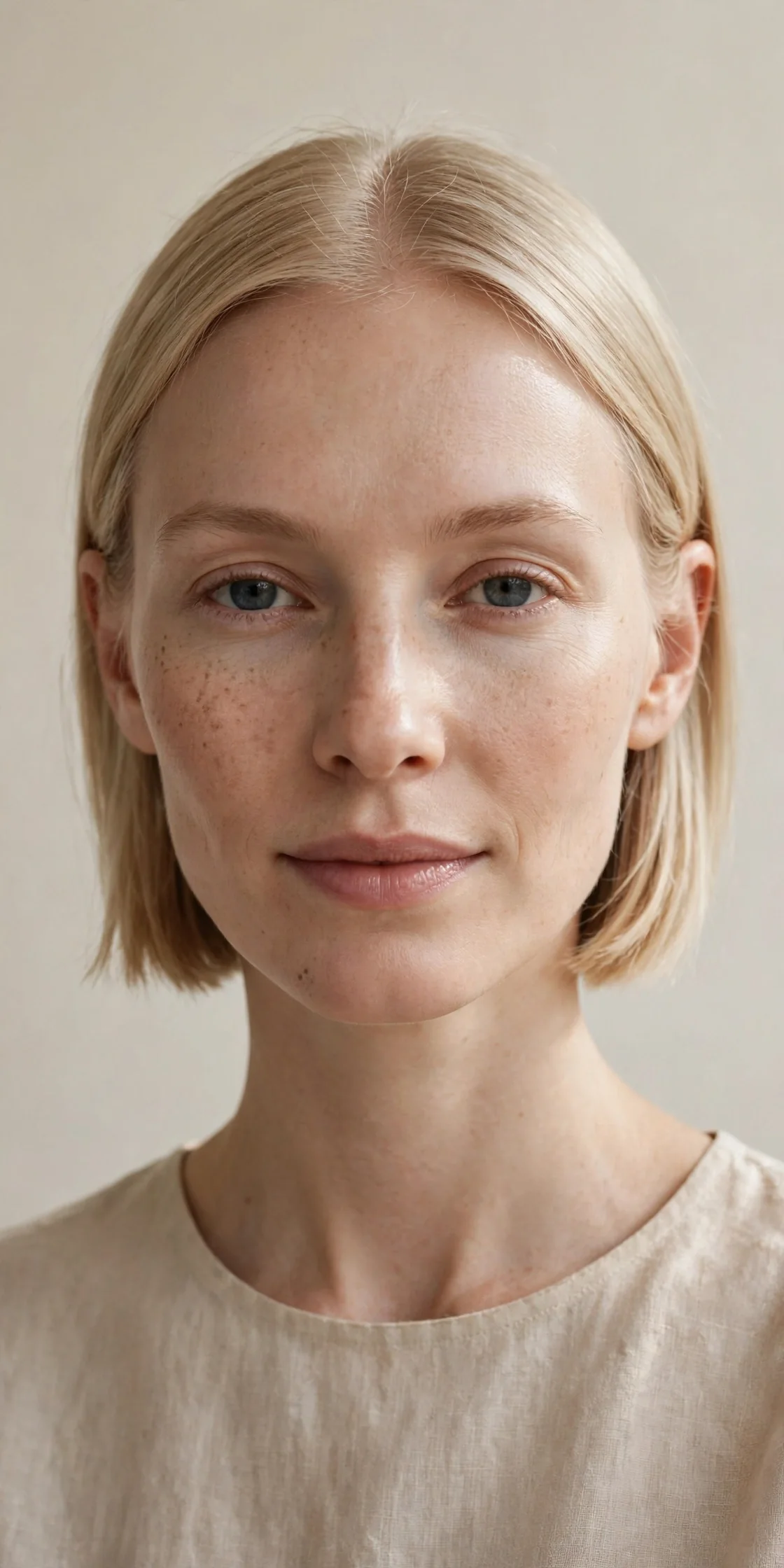
The ear-tuck bob is less a haircut and more a styling philosophy — and it is tailor-made for thin fine hair. Cut to chin or just-below-ear length with a clean perimeter, it is worn tucked behind one or both ears, which does two flattering things at once: it reveals the jawline and cheekbones, and it pushes fullness upward so the crown looks thicker. The tuck creates a beautiful curved silhouette that reads as intentional and chic. It suits oval, round, and heart faces, and the visible ear adds a delicate, feminine detail. Fine straight hair tucks sleekly; fine wavy hair tucks into soft, romantic curves. It is the lowest-effort short style on this list and one of the most elegant.
- Tuck one or both sides behind your ears on freshly styled hair.
- Blow-dry smooth with a paddle brush before tucking.
- Apply a light smoothing serum to control flyaways.
- Add a delicate hair clip or pin to hold the tuck elegantly.
Ask your stylist for a chin-length one-length bob with clean ends — no layers — so the tuck sits smoothly. The cut should be short enough that the tuck stays put but long enough to tuck at all, which your stylist will calibrate to your ears. At home, this is a five-minute style: blow-dry smooth, tuck, and go. A touch of serum keeps flyaways down without heaviness. Trim every six weeks to maintain the line. If the tuck will not hold, your hair is telling you it has grown into a lob — enjoy the transition and re-tuck with a pretty clip.
The Asymmetric Short Bob for Thin Hair

The asymmetric short bob uses geometry to fake what genetics did not provide. One side is cut slightly longer — usually by an inch or so — while the other sits shorter near the jaw, and that diagonal line pulls the eye across the hair instead of down, creating the impression of movement and density. The asymmetry also breaks up the flat, uniform look that makes fine hair seem thinner. It flatters round and square faces especially well, since the diagonal softens width and jawlines. Fine straight hair shows the architectural line crisply; fine wavy hair softens it into something romantic. It is modern, confident, and quietly dramatic without being difficult to wear.
- Blow-dry the longer side smooth to emphasize the diagonal line.
- Apply volumizing mousse at the roots for lift.
- Part on the shorter side to maximize the sweeping effect.
- Finish with a light flexible-hold spray.
Ask your stylist for an asymmetric bob with a clear one-to-two-inch difference between the sides, keeping the perimeter blunt for density. Decide which side you prefer longer — it usually looks best longer on the side opposite your part. At home, style with the asymmetry in mind: smooth the long side, add lift at the crown on the short side. Trim every five weeks, because asymmetry grows out into unevenness faster than symmetrical cuts. If you tire of the drama, your stylist can even it out into a classic bob at your next appointment.
The Modern Bowl Bob
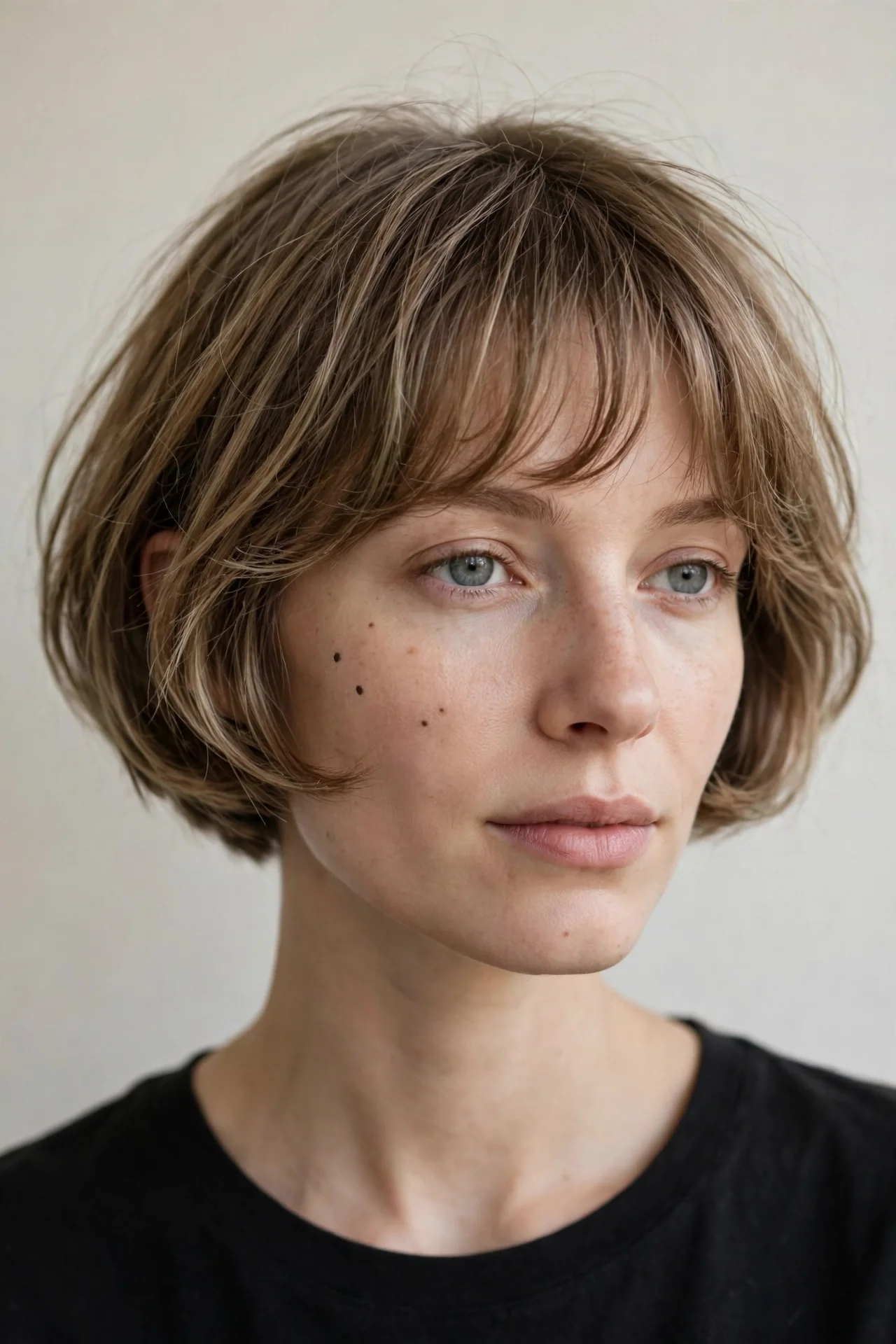
The modern bowl bob has left its school-photo past far behind. Today’s version is textured, slightly undone, and cut to hug the head in a rounded shape that ends around the ears or cheekbones. For fine hair, that rounded silhouette is pure magic: it wraps the head in a continuous curve of hair, hiding sparse spots and making the whole head look full. The weight of the perimeter keeps fine hair from floating away, while textured ends keep it current. It suits oval, heart, and long faces beautifully, and the curved fringe area frames the eyes like a portrait. Fine straight hair gets the sleek mod look; fine wavy hair gets soft, gamine charm.
- Blow-dry with a round brush, curving the ends under.
- Apply a pea-sized amount of smoothing cream to the perimeter.
- Lift at the crown with your fingers while drying.
- Tuck the fringe area lightly for a softer finish.
Ask your stylist for a modern, textured bowl cut — rounded through the perimeter, soft through the fringe, with point-cut ends so it never looks like a helmet. Bring photos of the current textured versions, not the vintage ones. At home, the blow-dry shapes everything: curve the ends under with a round brush and keep the roots lifted. Lightweight products only — this cut collapses under heavy wax. Trim every four to five weeks to hold the curve. Growing it out naturally becomes a rounded bob, one of the easiest transitions on this list.
The Cropped-Nape Bob with Long Front Pieces
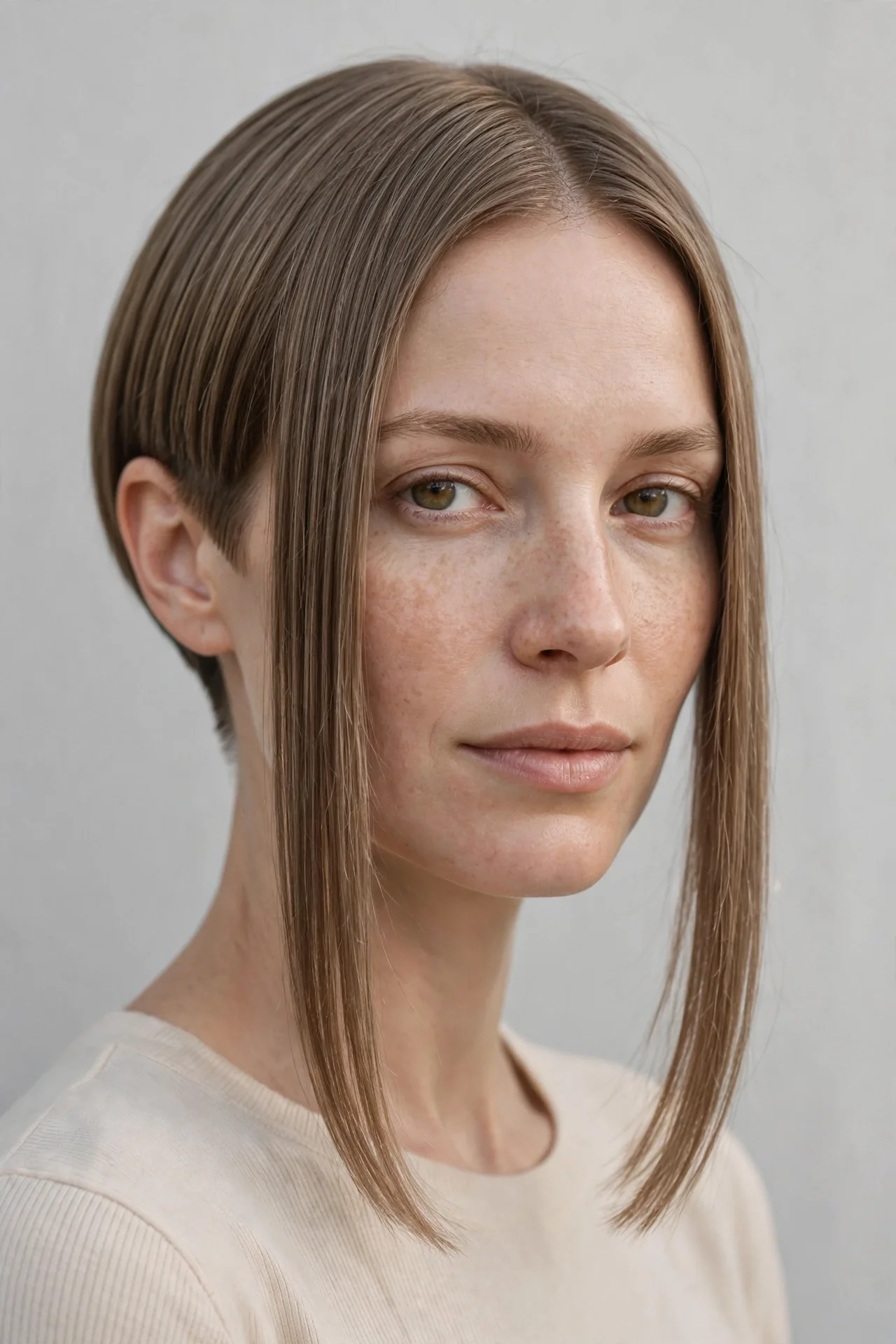
This cut is the sophisticated cousin of the edgy crop — polish in the front, volume in the back. The nape is cropped close and graduated while the front pieces stay long, reaching the chin or jaw. Removing the weight at the back lets the crown lift freely, and the long front pieces frame the face with flattering softness while the perimeter stays blunt enough to look dense. It flatters oval, heart, and square faces, and the exposed nape makes the neck look wonderfully long. Fine straight hair shows the contrast crisply; fine wavy hair gets a playful flick at the front. It is edgy but entirely wearable, even in conservative offices.
- Blow-dry the nape flat against the head with a paddle brush.
- Curl the front pieces under with a round brush for polish.
- Apply root-lifting spray to the crown before drying.
- Smooth the long front pieces with a light serum.
Ask your stylist for a graduated nape cropped close, blended into long one-length front pieces at the jaw. Clarify exactly how short the nape may go — “cropped” means different things to different stylists. At home, the contrast is maintained with two techniques: flatten the nape, lift the crown. A root spray and round brush handle the top; a paddle brush and smoothing cream handle the back. Trim the nape every four weeks to keep the shape sharp. Growing it out, the nape simply becomes a stacked bob — one of the most requested fine-hair cuts there is.
The Feathered Ear-Length Cut

The feathered ear-length cut is the gentlest entry on this list, perfect if you want short hair without the shock. Cut to just below the ears, the ends are feathered with light layering that flicks outward, creating airy movement around the face. The feathering breaks up the solid sheet of hair that can make fine strands look flat, replacing it with soft, separated pieces that catch the light. It suits every face shape, especially round and square faces, since the outward flick adds flattering width at the cheekbones. Fine straight hair feathers elegantly; fine wavy hair practically styles itself. It is feminine, timeless, and endlessly flattering at any age.
- Blow-dry with a round brush, flicking the ends outward.
- Apply a lightweight mousse to damp hair for hold.
- Feather the front pieces away from the face.
- Finish with a flexible-hold spray to keep the flick.
Ask your stylist for an ear-length cut with feathered, flicked-out ends and light face-framing layers — texture through the ends, never thinning shears at the roots. At home, treat your fine hair gently: the American Academy of Dermatology’s hair care guidance reminds us that fine hair breaks easily, so use a wide-tooth comb on damp hair and keep heat tools on moderate settings. Blow-dry with a round brush flicking outward, and refresh the flick between washes with a quick pass of a warm brush. Trim every six weeks to keep the feathering fresh. This cut grows out gracefully into a feathered bob, so there is no awkward phase.
Conclusion
Short hair and thin, fine strands are not enemies — they are partners, as long as the cut is chosen with fullness in mind. Every one of these short hairstyles for thin fine hair uses the same quiet logic: keep the ends dense, lift the roots, and let shape do the work that products cannot. Whether you fell for the sharp micro-bob, the playful crop, or the feathered ear-length cut, take your favorite photo to your stylist and talk through what your hair can realistically do. For even more fullness-first inspiration, browse 12 hairstyles for thin fine hair to find your perfect match. Your finest hair days are the short ones — go enjoy them. If you love soft, lived-in layers, our 12 Shaggy Lob Hairstyles for Fine Hair show how a longer lob adds movement without losing fullness.


4 Comments