12 Long Bob Hairstyles for Thin Fine Hair

Introduction
If your hair is thin and fine, you have probably been told the long bob is off-limits — but the right long bob hairstyles for thin fine hair actually make strands look thicker, not thinner. This cut sits right around the collarbone, long enough to feel feminine and versatile, yet short enough to stop fine hair from dragging flat under its own weight. In the next few minutes you will find 12 long bob ideas built for fine, low-density hair: blunt edges that fake density, soft layers that add movement without wisps, and styling tricks that give you all-day body. If you have also been eyeing shorter options, the shaggy bob hairstyles for thin fine hair are a great companion read for days you want even more edge.
Long Bob for Thin Fine Hair with Curtain Bangs
Curtain bangs are the kindest entry point into a long bob for thin fine hair because they add fullness exactly where fine hair looks weakest — around the face. Keep the length brushing the collarbone, with soft layers that open like curtains from a center part; the angled pieces pull the eye outward and upward, so flat strands look fuller instead of limp. This pairing flatters oval, heart, and oblong faces, and it gently camouflages a high forehead or sparse temples — two spots where thin hair tells its secrets. With the fringe carrying the interest up top, the rest of the cut can stay blunt and thick at the ends, exactly what fine hair needs.
- Blow-dry the bangs first with a round brush, rolling them away from your face.
- Apply volumizing mousse to damp roots before drying for lasting lift.
- Part your hair down the middle so the curtain layers fall open naturally.
- Refresh second-day hair with a light mist of dry shampoo at the crown.
Ask for a one-length long bob at the collarbone, with curtain bangs starting at the cheekbone and blending to the chin. Keep the perimeter clean and blunt — removing weight from the ends is what makes fine hair look thinner. At home, rough-dry to 80 percent, then use a medium round brush to sweep the bangs outward and lift the roots. A lightweight volumizing mousse gives the most believable fullness; skip heavy creams that collapse fine strands. Dermatologists advise washing fine hair with a sulfate-free volumizing shampoo and rinsing well to prevent root-flattening buildup — see the hair loss and thinning hair guidance from the American Academy of Dermatology. Trim every eight to ten weeks to keep the ends crisp.
Blunt Long Bob with a Deep Side Part
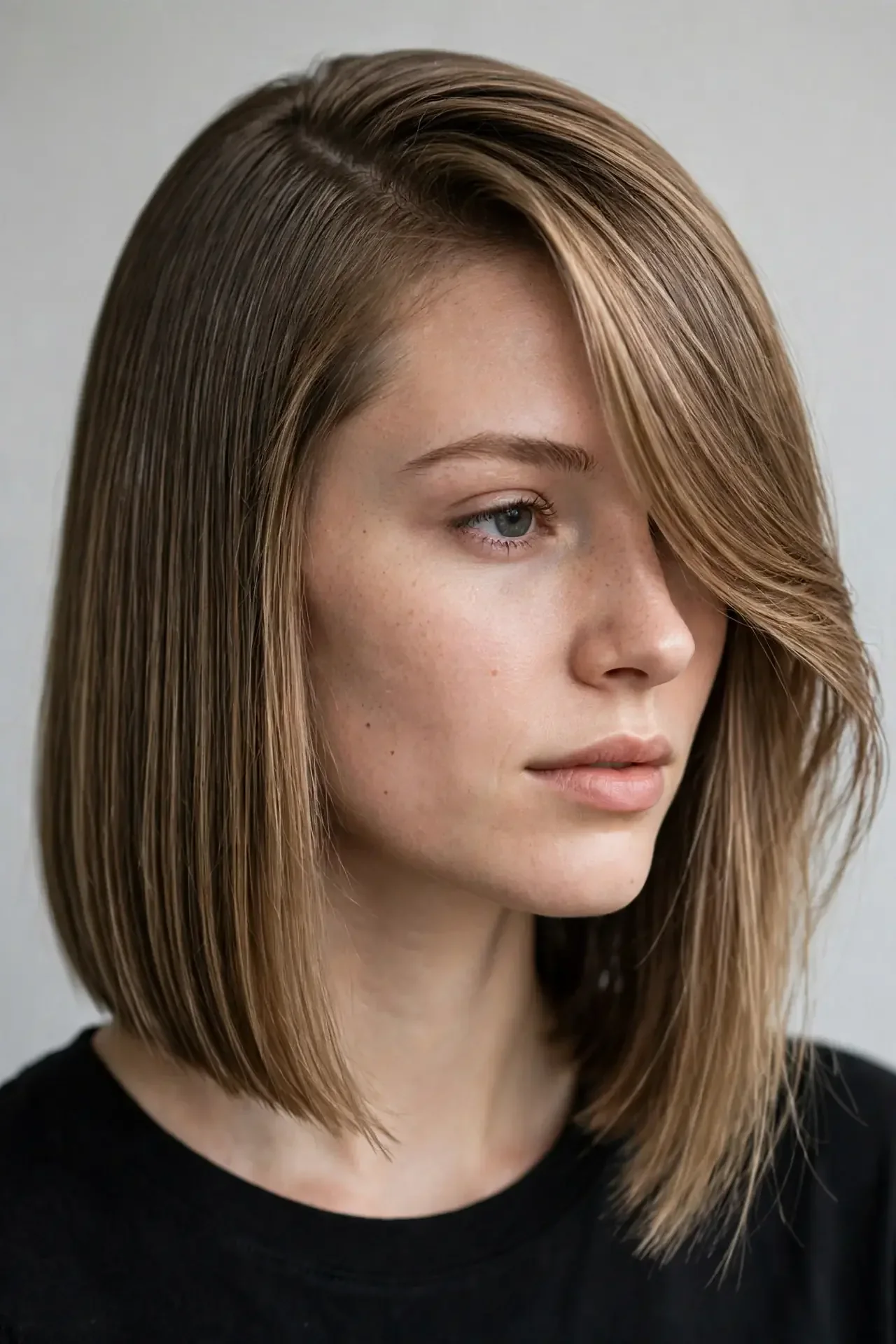
A blunt perimeter is the single most effective illusion for fine hair, and a deep side part turns a simple collarbone bob into a statement. When every strand ends at the same length, the eye reads density — no straggly layers reveal how little hair you have. The deep side part adds instant architecture: flipping the hair to one side creates a dramatic curtain of fullness on the heavier side, while the shorter side stays neat and polished. This suits oval, square, and diamond faces beautifully because the asymmetry softens strong jawlines and cheekbones. It is also the easiest long bob to keep healthy, since the blunt edge protects ends from splitting upward. If your hair is fine but reasonably dense, this cut can look genuinely thick.
- Blow-dry with the part flipped to the opposite side, then flip it back.
- Apply smoothing serum only to the mid-lengths and ends, never the roots.
- Tuck the shorter side behind your ear for an asymmetric, face-opening effect.
- Finish with flexible-hold hairspray to lock the part in place all day.
Ask your stylist for a razor-straight, one-length bob ending at the collarbone, cut dry if possible so the line is perfectly even. Request zero layers — the bluntness is the whole point — and have them check the back in a hand mirror before you leave. Styling is simple: blow-dry smooth with a paddle brush, then press a flat iron lightly over the ends to sharpen the line. Return every six to eight weeks; blunt edges fray fast and lose their thick illusion the moment they thin out. Sleep on a silk pillowcase to keep the cut sleek overnight, and refresh with a dab of lightweight oil on the ends only. Growing it out is painless — just let it pass the collarbone for a perfect one-length medium cut.
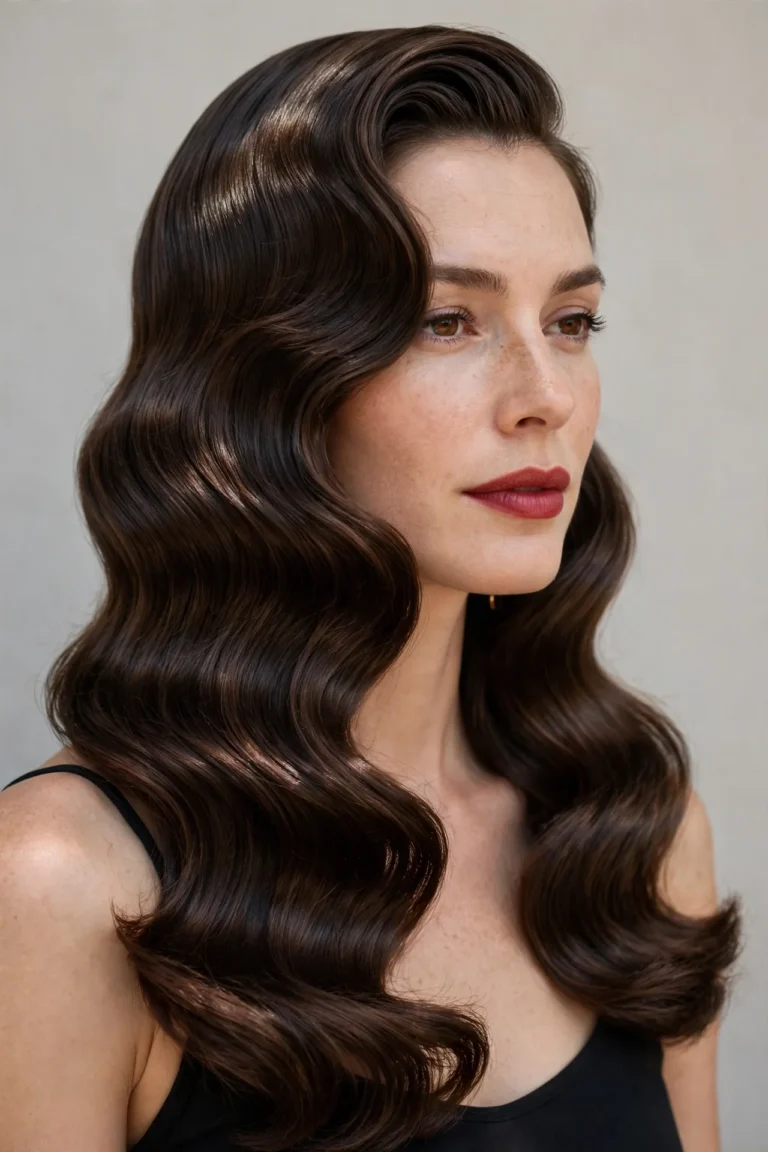
Textured Long Bob for Thin Fine Hair with Soft Waves
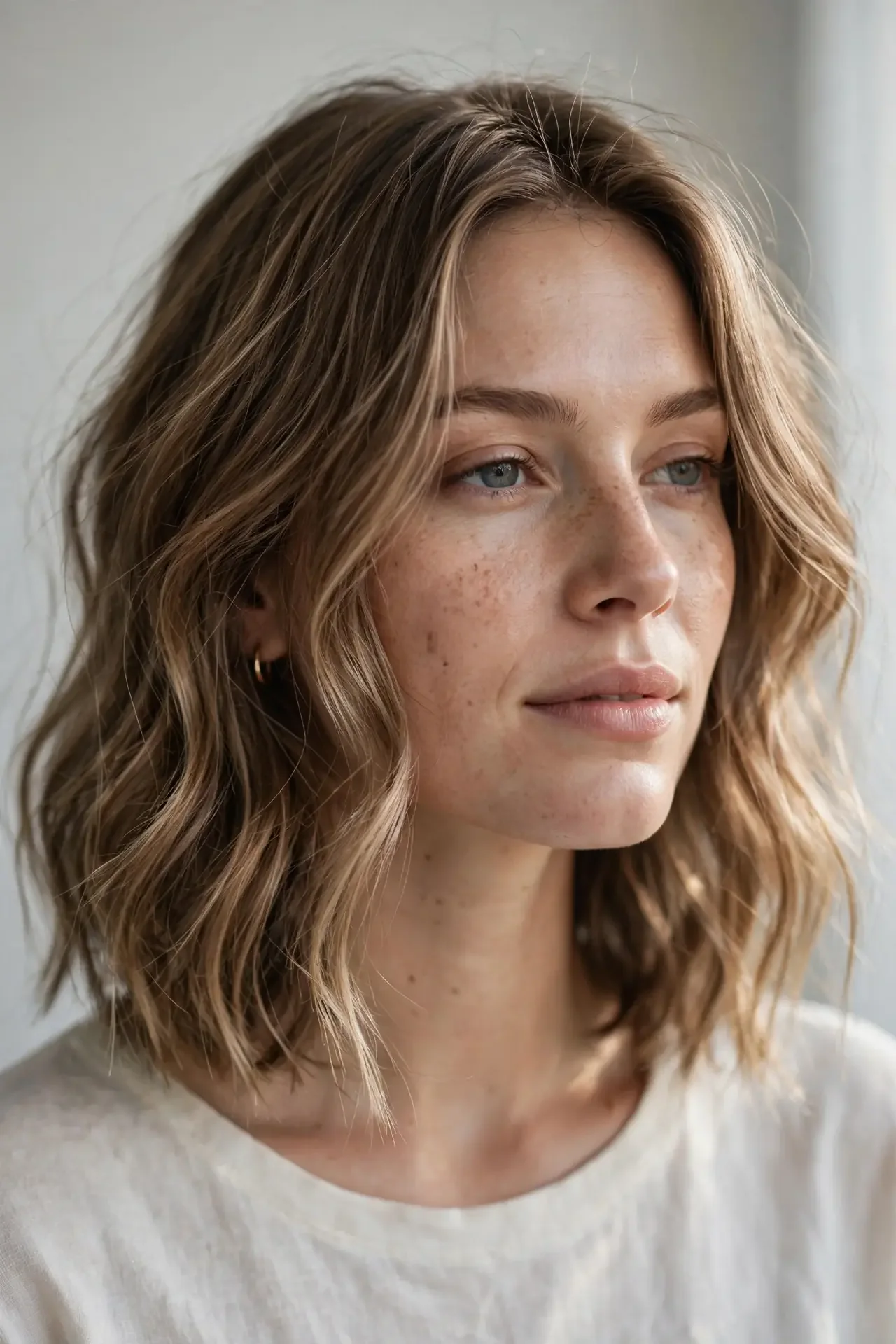
Soft, broken-up waves are the fastest way to make fine hair look twice as thick, and this long bob is designed to show them off. The trick is restrained layering: long, invisible layers through the mid-lengths give the wave something to spring off, while the ends stay heavy enough to read as one full piece. Wavy texture creates light and shadow across the hair, and that dimension is what the eye interprets as fullness. This suits every face shape — waves soften angular features and add width around narrow cheeks — and it is especially kind to women whose fine hair lies pin-straight no matter what they do. Wear the waves loose and airy rather than tight and polished; the undone finish is what makes the hair look abundant.
- Scrunch sea-salt spray into damp hair before air-drying for natural grit.
- Wrap one-inch sections around a curling wand, leaving the last inch straight.
- Shake the waves out with your fingers — never brush them with a paddle.
- Mist texturizing spray at the roots for instant, touchable volume.
Ask for a collarbone-length bob with long, soft layers starting at the chin and a blunt-ish perimeter that keeps the ends looking full. Tell your stylist you want movement, not shag — the layers should be invisible when the hair is straight. At home the routine is lazy: sleep in a loose braid or low bun, undo it in the morning, and refresh flat sections with a quick curling-wand pass. Apply texture spray to damp hair for grit that holds the wave all day. Trim every eight to ten weeks to keep ends from looking straggly, and get a salon gloss twice a year — shine makes fine wavy hair look significantly thicker. If you have considered short bob hairstyles for thin fine hair and round faces, this wavy lob is their relaxed, longer cousin.
Inverted Long Bob with Stacked Layers

The inverted long bob is pure architecture for thin fine hair: shorter stacked layers at the back push everything forward, so the front strands look dramatically fuller. The back is cut slightly higher with graduated stacking, which builds in automatic volume that never lies flat, while the front pieces graze the collarbone and keep the silhouette long and feminine. This is brilliant for oval, heart, and round faces — the forward angle slims the cheeks and draws the eye down in a flattering diagonal. The stacked back also removes weight where fine hair goes limp at the nape, so the whole style holds its shape for days. If you love the bob but worry a chin-length cut looks older, the long front keeps you firmly in modern territory.
- Blow-dry the back with a round brush, lifting each section straight up.
- Apply root-lifting spray to the nape area where the stacking sits.
- Smooth the front pieces with a flat iron, curving them slightly inward.
- Polish the crown with a small amount of smoothing cream for shine.
Ask your stylist for an inverted bob: stacked, graduated layers at the nape rising about an inch and a half above the front length, with the front falling to the collarbone. Emphasize that you want visible graduation at the back — that is what creates the built-in volume. Styling takes five minutes: blast the roots upward with a round brush for lift, then smooth the front sections forward over your shoulders. Because the stacking does the heavy lifting, you need very little product — a root lift at the back and a shine spray on top are plenty. Book trims every six to eight weeks; grown-out stacking loses its architecture fast. As it grows, the inversion softens into a pretty A-line shape, so the grow-out still looks intentional.
A-Line Long Bob with Face-Framing Pieces

The A-line shape — slightly shorter in back, longer in front — is one of the most flattering silhouettes for fine hair because the angled front pieces concentrate all your hair where it is most visible. Instead of layers scattered through the back where nobody sees them, every strand graduates toward the face, creating a curtain of hair that reads as thick and intentional. Add explicit face-framing pieces — longer layers carved around the cheeks — and you get movement without sacrificing density. This suits round and square faces especially well, since the diagonal line elongates and slims. It also works beautifully on stick-straight fine hair: the angle gives straight hair shape and purpose.
- Blow-dry with a paddle brush, directing the front pieces forward over the shoulders.
- Apply heat protectant before every hot-tool session — fine hair is fragile.
- Create a center or slightly off-center part to show off the angled lines.
- Define the face-framing pieces with a dab of lightweight styling cream.
Tell your stylist you want an A-line long bob: the back sits just below the nape, angling down to collarbone-grazing front pieces, with face-framing layers starting at the chin. Ask them to keep the back blunt for maximum thickness and to texturize only the very ends of the front pieces. Daily styling is quick — a smooth blow-dry shows off the line best, but the cut also air-dries well if you tuck the front pieces behind your ears while damp. Use a light heat protectant every time you touch up the angle with a flat iron, since fine hair burns easily. Trim every seven to nine weeks to preserve the crisp angle; once the back catches up to the front, the effect fades.
Long Bob with Wispy Bangs for Fine Hair

Wispy bangs and thin fine hair are a match made in heaven — because your fringe is naturally fine, it falls into that airy, piece-y texture without any fighting. A long bob with soft wispy bangs frames the whole face, drawing attention to your eyes while the collarbone length keeps the overall look balanced and full. This pairing is especially flattering for heart and oval faces, and it is one of the few fringe styles that works when hair is sparse at the crown, since wispy bangs need very little hair to look right. The softness of the fringe also contrasts beautifully with a blunt or lightly textured perimeter: delicate on top, substantial at the ends.
- Blow-dry bangs downward with your fingers first, then flick them side to side.
- Apply dry shampoo to the fringe on day two instead of washing daily.
- Trim just the bangs between salon visits with sharp hair-cutting scissors.
- Keep moisturizer and sunscreen off your forehead — they make bangs go stringy.
Ask your stylist for curtain-soft wispy bangs starting around eyebrow level and feathering out toward the temples, paired with a blunt collarbone bob. The bangs should be cut on dry hair so you can see exactly how your fine texture falls. At home, styling the fringe takes ninety seconds: dry it first while it is still wettest, using your fingers or a small round brush, before moving to the rest. A pea-sized amount of lightweight mousse gives wispy bangs staying power without stiffness. Plan a full trim every eight to ten weeks, and book a free fringe trim between appointments — most salons offer these, and wispy bangs lose their charm fast when they creep into your eyes.
Sleek Straight Long Bob with Glass Ends
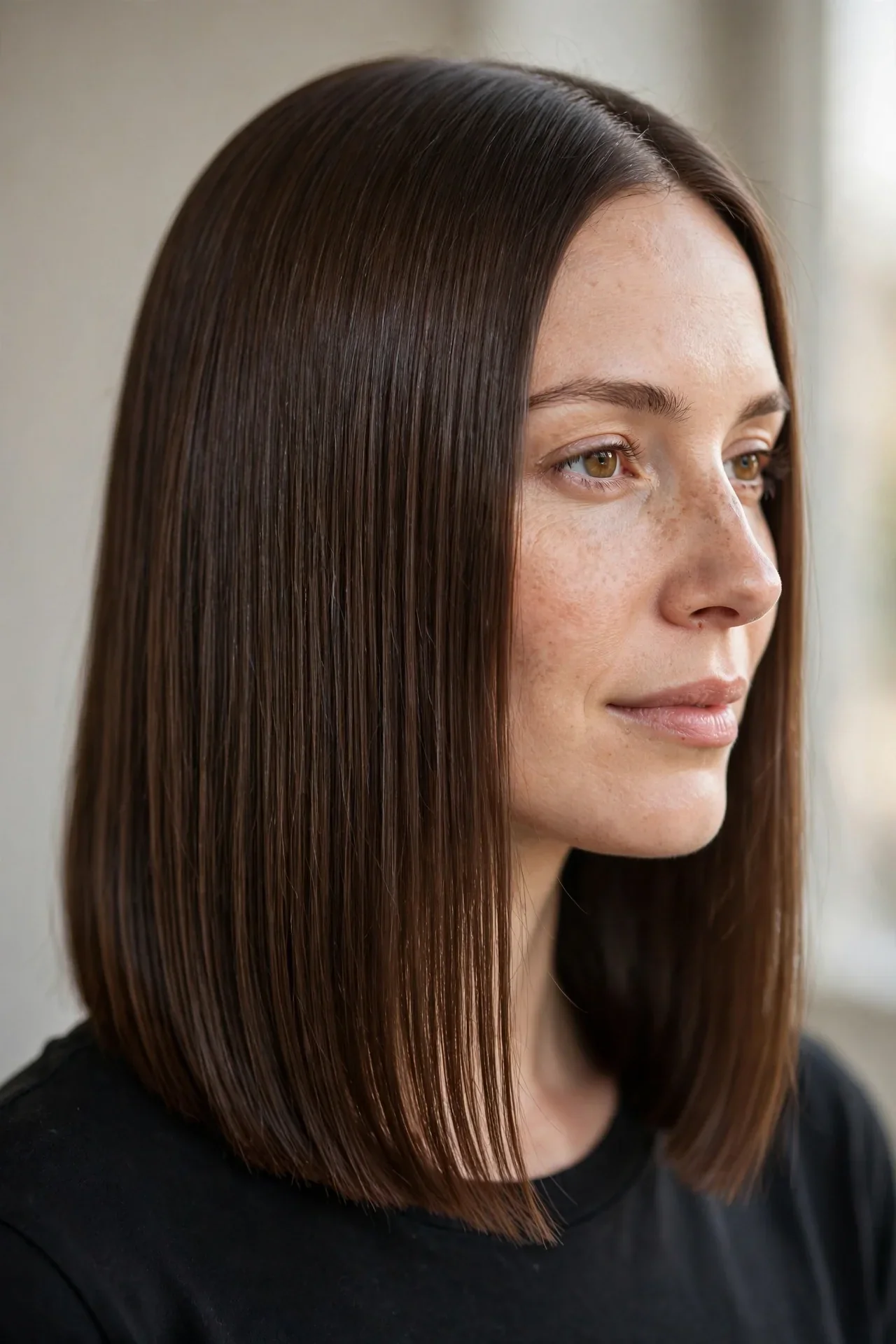
There is a quiet luxury to a perfectly straight long bob with glass-like ends, and on thin fine hair the polished finish can look surprisingly full. When every strand lies smooth in the same direction, light reflects evenly down the hair shaft, and that uniform shine creates the visual illusion of density — frizz and flyaways are what make fine hair look thin and scraggly. The collarbone length is ideal: long enough to show off the sleek line, short enough that fine ends do not turn stringy. This suits oval, oblong, and heart faces, and it is a power move for professional settings where you want hair that looks expensive with minimal effort. The key is condition: glass ends only work when the hair is healthy and trimmed.
- Apply heat protectant from roots to ends before any hot styling.
- Blow-dry in sections with a paddle brush, pointing the nozzle downward.
- Glide a flat iron slowly over one-inch sections for a mirror-smooth finish.
- Seal the ends with two drops of silicone-based shine serum.
Ask your stylist for a one-length, blunt long bob with minimal layering, ending at the collarbone. Discuss a smoothing treatment — keratin or a gloss can make this style dramatically easier on fine hair. Your at-home routine centers on the blow-dry: work in clean sections with a paddle brush and direct the dryer nozzle down the shaft to seal the cuticle. Follow with a single slow flat-iron pass, then press the ends under just slightly for that glassy bevel. Do not wash fine hair daily; every other day with a sulfate-free shampoo keeps the sleek finish from going limp. Trim every six to eight weeks without fail — this cut lives or dies on crisp ends.
Shaggy Long Bob with Razored Layers

If your fine hair falls flat no matter what, a shaggy long bob with razored layers might be your liberation. The shattered, feathered layers remove bulk in exactly the right places so the remaining hair moves, flips, and catches air — and movement is what reads as volume on fine hair. Unlike heavy layering that thins out the ends, razoring on a collarbone bob keeps the perimeter reasonably full while the interior texture creates effortless, piece-y separation. This suits oval, round, and square faces and brings a youthful, rock-and-roll energy a blunt bob cannot. It is the lowest-maintenance option on this list: the whole point is that it looks better slightly undone.
- Scrunch texturizing spray into damp hair and let it air-dry for natural separation.
- Flip your head upside down and blast the roots with the dryer for instant lift.
- Twist random one-inch sections around your finger to encourage piece-y texture.
- Skip the brush on day two — just refresh with dry shampoo and finger-style.
Ask your stylist for a collarbone-length shag with razored, disconnected layers through the mid-lengths and ends, plus a textured fringe or curtain bangs if you like. Be explicit that you want texture, not thinning — razoring should create movement, not remove density from the perimeter. At home this cut practically styles itself: apply texture spray to damp hair, scrunch, and either air-dry or diffuse. Bedhead is the goal, so morning styling takes about three minutes. Trim every eight to ten weeks to keep the layers from merging into shapelessness. If you are curious how much shorter you could go, the short hairstyles for thin fine hair roundup has twelve more volume-boosting cuts to explore.
Long Bob with Balayage Dimension
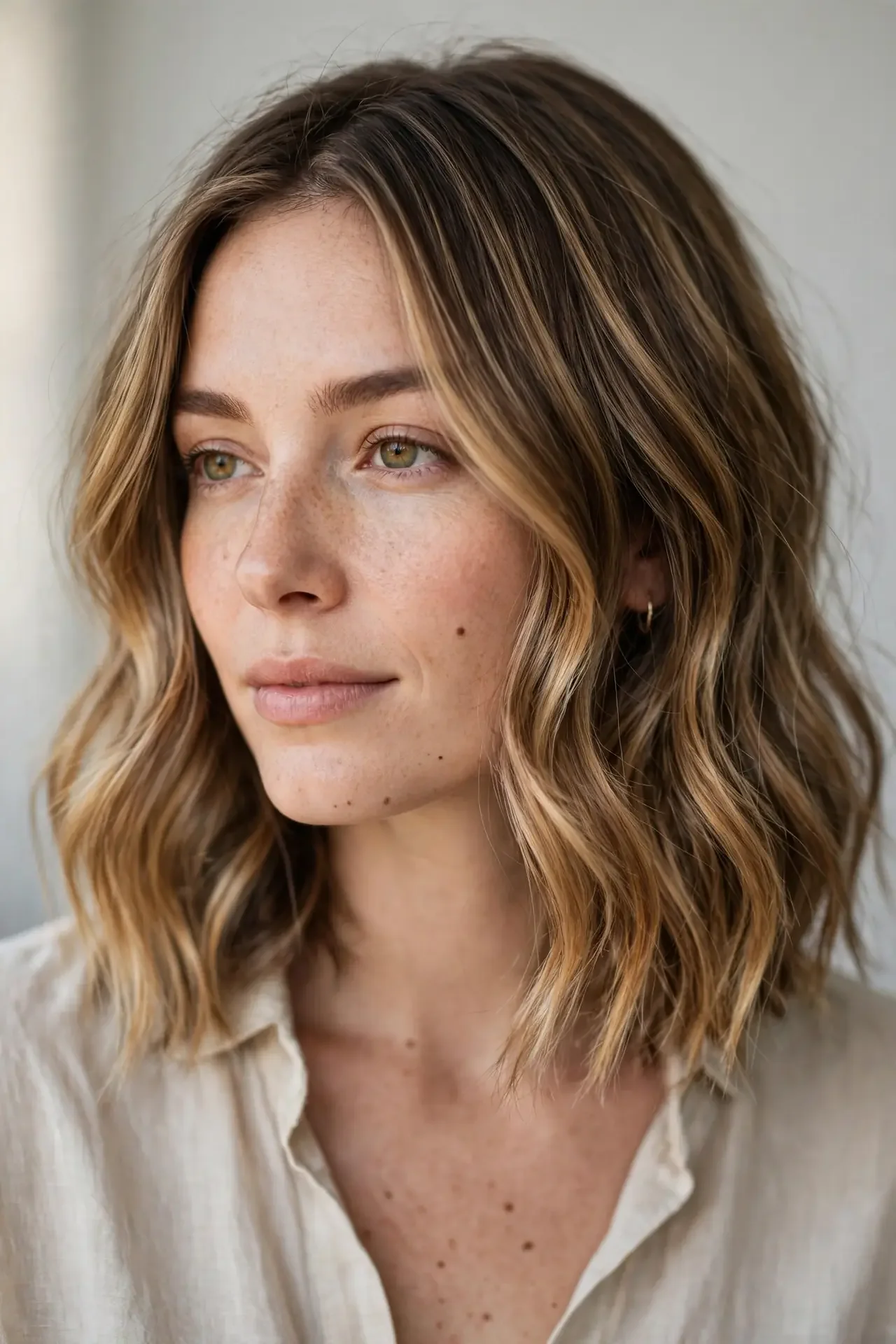
Color is a secret weapon for fine hair, and a long bob with soft balayage dimension proves it. Hand-painted highlights woven through the mid-lengths and ends create ribbons of light and shadow, and that multi-tonal depth tricks the eye into seeing thickness where a single flat color would reveal sparseness. Balayage grows out softly, so you avoid harsh root lines that can make fine hair look even thinner at the scalp. This combination flatters every face shape and skin tone — your colorist simply places the brightness where it flatters you most, usually around the face and through the ends. A collarbone bob shows off the painted dimension perfectly: long enough for the color to travel, short enough to stay healthy.
- Ask for face-framing highlights two shades lighter than your base color.
- Use a color-safe, sulfate-free shampoo to protect the painted dimension.
- Apply a purple or blue toning mask once a week to keep brassiness away.
- Style with loose waves to show off the multi-tonal ribbons of color.
In the salon, ask for a soft, lived-in balayage: brightness concentrated through the mid-lengths and ends, with your natural root left alone for a seamless grow-out. Tell your colorist your hair is fine, so they use gentle, low-volume developer and avoid over-processing — damaged fine hair defeats the whole purpose. At home, protect the investment with color-safe shampoo and a weekly deep-conditioning mask; balayaged fine hair dries out faster than virgin hair. Style in loose waves or a bouncy blowout to display the dimension — straight styling hides the color work. Refresh the balayage every twelve to sixteen weeks; the grow-out is forgiving, which is the point of the technique.
Curly-End Long Bob with a Center Part

A long bob that is sleek on top and softly curled through the ends gives fine hair the best of both worlds: polished roots and a full, bouncy finish. The curled ends add width exactly where the bob sits — around the collarbone and shoulders — which makes the whole style look abundant without backcombing or teasing. A center part keeps the look modern and symmetrical, letting the curls frame both sides of the face evenly. This flatters oval, heart, and long faces especially, since the width at the bottom balances a narrower chin. It is also a fantastic occasion style: the same cut you wear straight to the office transforms into something glamorous with twenty minutes and a curling iron.
- Curl only the bottom third of the hair, leaving the roots smooth and sleek.
- Alternate curl directions on each section for a natural, lived-in finish.
- Let every curl cool completely before touching it — this sets the shape.
- Brush the cooled curls gently with a wide-tooth comb for soft, blended waves.
Ask your stylist for a blunt or very lightly layered long bob ending at the collarbone, with no layers above the chin — you need weight at the ends for the curls to look full. At home, blow-dry smooth first, then wrap the bottom three to four inches around a one-inch curling iron, holding each section for eight seconds. Let the curls cool while you do your makeup, then comb through gently for soft waves. A light-hold hairspray keeps the curls bouncy without stiffness; skip heavy mousses that weigh fine ends down. This style holds best on second-day hair, so wash the night before and sleep in a loose topknot. Trim every eight weeks to keep the curled ends from looking thin.
Long Bob with a Voluminous Blowout
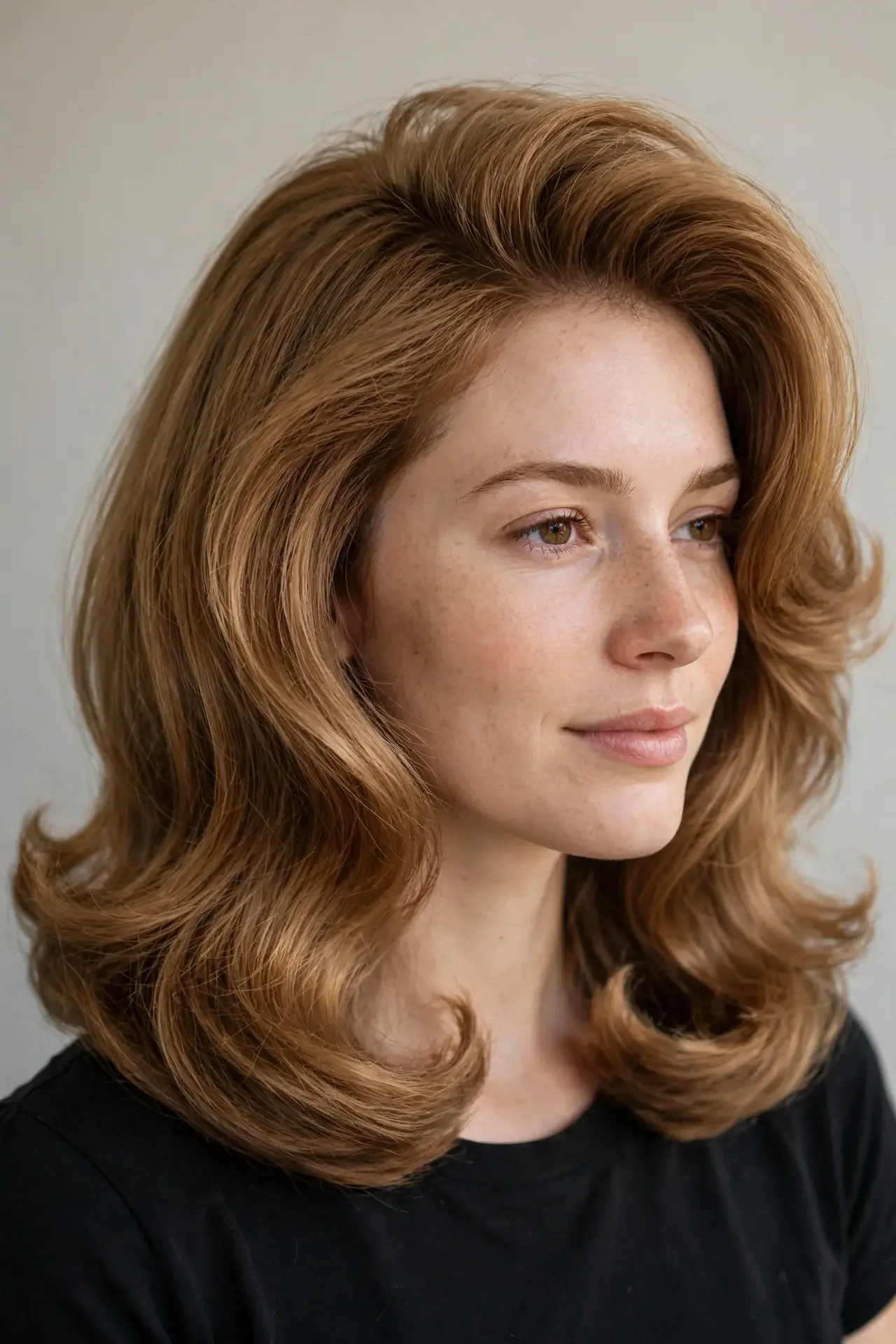
Nothing says full hair like a proper blowout, and a long bob is the ideal canvas for one. The bouncy, rounded shape lifts fine hair away from the scalp, creating root volume that lasts for days — and because the bob ends at the collarbone, the turned-under ends stack on each other for a thick, cushioned finish. This suits every face shape; the roundness softens angular features and adds youthful fullness to narrow faces. A blowout is also the most versatile base on the list: wear it polished for work, then muss it up with dry shampoo on day three for a completely different texture. The investment is in technique, not products — once you learn the round-brush method, you can recreate it at home.
- Apply root-lifting mousse to towel-dried hair before you pick up the dryer.
- Dry with your head flipped upside down until hair is 70 percent dry.
- Use a large round brush, rolling each section up and away for maximum lift.
- Set the style with a blast of cool air on each section before releasing.
Ask your stylist for a long bob with long layers that support a round-brush blowout — layers starting at the chin give the brush something to grip. Request a blowout lesson at the end of your appointment; most stylists will show you their sectioning technique. At home the method is: mousse on damp roots, rough-dry upside down to 70 percent, then smooth each section with a large round brush, rolling upward for lift. Finish with cool air to set the volume — this one step doubles the longevity. Sleep with your hair in a loose high bun to preserve the bounce, and refresh day-two roots with dry shampoo instead of re-blow-drying. Trim every eight to ten weeks.
Asymmetrical Long Bob with a Sharp Edge

For the woman who wants her fine hair to make an entrance, the asymmetrical long bob delivers drama no amount of layering can match. One side falls to the collarbone while the other sweeps several inches longer, and that diagonal line creates instant visual interest — the eye follows the angle instead of noticing density. The sharp, precise edge keeps the perimeter looking thick and deliberate, which is exactly what fine hair needs. This flatters oval, round, and heart faces; the longer side slims the face while the shorter side opens it up. It is a bold choice but a surprisingly practical one: the asymmetry does the styling work for you, so even air-dried hair looks intentional.
- Blow-dry smooth with a paddle brush to emphasize the sharp diagonal line.
- Tuck the shorter side behind your ear to exaggerate the asymmetry.
- Apply a shine serum to highlight the precision of the cut.
- Wear a deep side part on the longer side for maximum dramatic effect.
Ask your stylist for a long bob that is noticeably longer on one side — a two-to-three-inch difference reads as intentional without looking like a mistake. The cut should be razor-blunt along the diagonal so the line stays crisp. At home, styling is about polish: a smooth blow-dry with a paddle brush, then a flat iron over the ends to sharpen the angle. This is a high-maintenance shape in one way only — trims. Book every six weeks, because as the shorter side grows the asymmetry softens and the drama fades. Between appointments the style grows out into a chic angled lob, so you never have an awkward phase.
Conclusion
Twelve ideas, one shared promise: the right long bob hairstyles for thin fine hair do not hide what you have — they make the most of it. Whether you fell for the soft romance of curtain bangs, the sharp confidence of a blunt edge, or the undone cool of a shaggy finish, every cut on this list was chosen for the way it creates the look of fullness on fine strands. Take your favorite to your stylist, bring a photo, and talk honestly about your hair’s texture and density — a good cut starts with a good consultation. And if you ever want to go shorter, the short hairstyles for thin fine hair roundup is waiting with twelve more density-boosting ideas. Your best hair is not thicker hair — it is hair cut and styled like it was made for you. blonde-choppy-bob-haircuts

5 Comments