12 Short Layered Hairstyles for Women Over 60
Introduction
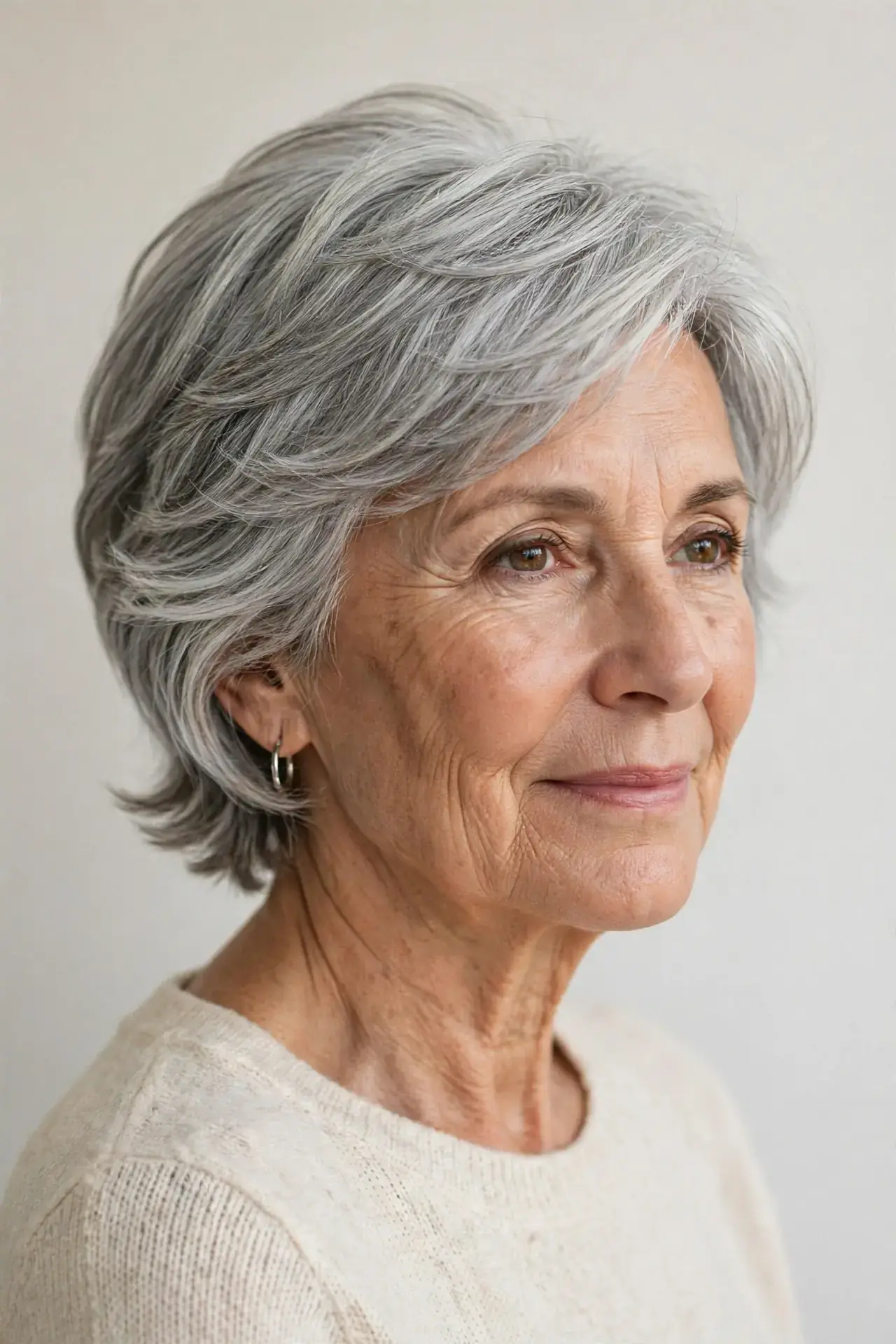
If your short hair has started lying flat and looking a little tired, layering is the simplest fix you can ask for. Short layered hairstyles for women over 60 create instant lift at the crown, soft movement around the face and airy texture that makes fine or thinning hair look noticeably fuller — all without adding length or morning fuss. A well-placed layer removes dragging weight and adds shape exactly where you need it, which is why stylists reach for layered cuts for a fresher look without a dramatic change. Below are twelve distinct layering techniques — feathered, stacked, choppy, razored and more — each with who it suits, salon wording and at-home styling. If a classic shape appeals to you, our guide to short layered bob hairstyles pairs beautifully with these ideas.
Short Feathered Crop with Soft Stacked Layers
Feathered layering is the gentlest way to add movement to short hair, and it suits women over 60 beautifully. Your stylist cuts the ends at a soft angle so they flick and taper rather than sitting in a blunt line, which opens up the face and softens the jawline and neck. It works especially well on straight to slightly wavy hair of medium density, flattering oval, round and square faces alike because the feathery pieces can be angled to slim or soften wherever you need it. The stacked layers at the nape build natural height at the back of the head, countering the flatness that aging hair often develops. Best of all, feathered ends grow out gracefully, so you never hit that awkward in-between stage. The cut reads polished rather than severe, making it a confident choice for work, weekends and everything between.
- Ask for “feathered layers with a softly stacked nape” at your appointment.
- Blow-dry with a small round brush, rolling the ends outward.
- Apply a pea-sized amount of lightweight smoothing cream to tame flyaways.
- Finish with a flexible-hold hairspray to keep the feathering soft.
At the salon, show your stylist a photo and ask for the nape to be stacked gradually rather than cut in one heavy wedge, which keeps the back from looking bulky. At home, wash and blow-dry upside down for extra root lift, then smooth the top layer with a round brush for that polished feathered finish. A volumising mousse at the roots helps fine hair hold the shape through the day. Book a trim every five to six weeks to keep the feathered ends crisp; left too long, they lose definition and the shape goes boxy. If you are growing it toward a bob, the stacked nape simply gets trimmed less often while the top layers keep their movement.
Choppy Razored Layers for Airy Texture

If blunt short cuts make your hair look thinner than it is, choppy razored layers will change the story. Your stylist uses a razor or deep point-cutting to create uneven, piecey ends that catch the light and create the illusion of density through texture rather than bulk. This technique is a gift for fine, straight hair that refuses to hold a curl, and it flatters long and oval faces because the broken-up ends stop the eye from travelling in one long line. Women over 60 love it because it looks intentionally modern without trying too hard — the layers give you that effortless, just-left-the-salon energy even on day three. The cut works with your natural texture instead of fighting it, so it stays flattering as your hair’s density changes.
- Ask for “razored layers with choppy, piecey ends” at your appointment.
- Scrunch a texturising spray into damp hair to define the pieces.
- Blow-dry roughly with your fingers instead of a brush for lived-in texture.
- Pinch a tiny amount of styling wax through the ends for separation.
Tell your stylist you want the layers disconnected enough to see the texture but not so aggressive that the shape collapses — a skilled razor cut removes weight without stealing length. At home, let your hair air-dry halfway before blow-drying to encourage natural separation, and avoid heavy conditioners that flatten fine hair. A salt spray or dry texturiser at the roots keeps the crown from going flat by midday. Trim every six weeks; razored ends fray faster than scissor-cut ones, and fresh ends keep the choppy effect sharp. Between appointments, a little dry shampoo at the part line buys you an extra day of style.
Short Layered Shag with a Wispy Side Fringe
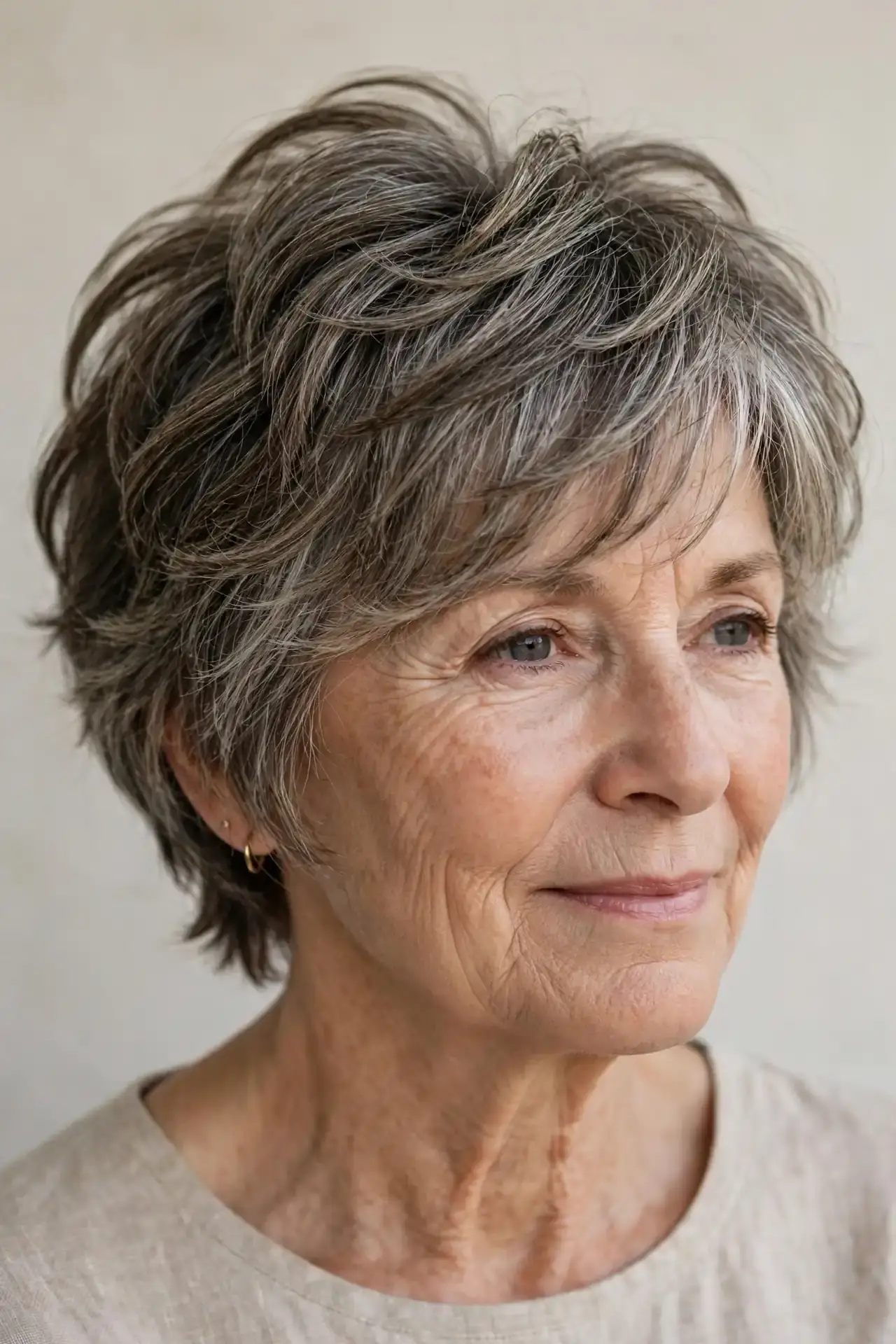
The modern shag is one of the most forgiving short layered hairstyles for women over 60, because its layers do all the work. Cascading layers through the crown and sides create volume where hair tends to thin, while a wispy side fringe softens the forehead and draws attention to your eyes rather than fine lines. It suits wavy and curly textures wonderfully — the layers let curls spring up instead of pulling flat — and it flatters heart and oval faces by adding width through the cheekbones. The shag’s deliberately undone finish means it looks better slightly lived-in, which is a relief on busy mornings. It carries a youthful, creative energy without looking like you are chasing trends.
- Ask for “a short shag with layered crown and wispy side fringe” at your appointment.
- Diffuse wavy or curly hair to encourage springy, defined layers.
- Work a curl-enhancing cream through damp hair before styling.
- Flip your part to the opposite side for instant root lift.
Ask your stylist to keep the fringe long enough to sweep — about brow to cheekbone length — so it grows out without poking your eyes. The top layers should be short enough to create lift but long enough to tuck behind your ears on demand. At home, a diffuser is your best friend for wavy and curly versions; for straight hair, a large round brush adds the bend the layers need. Refresh second-day hair with a water spritz and a little mousse scrunched into the ends. Trim every six to eight weeks, focusing on the fringe and crown layers. The shag grows out into a longer layered cut gracefully, so you can experiment with length.
Graduated Layers on a Chin-Length Bob
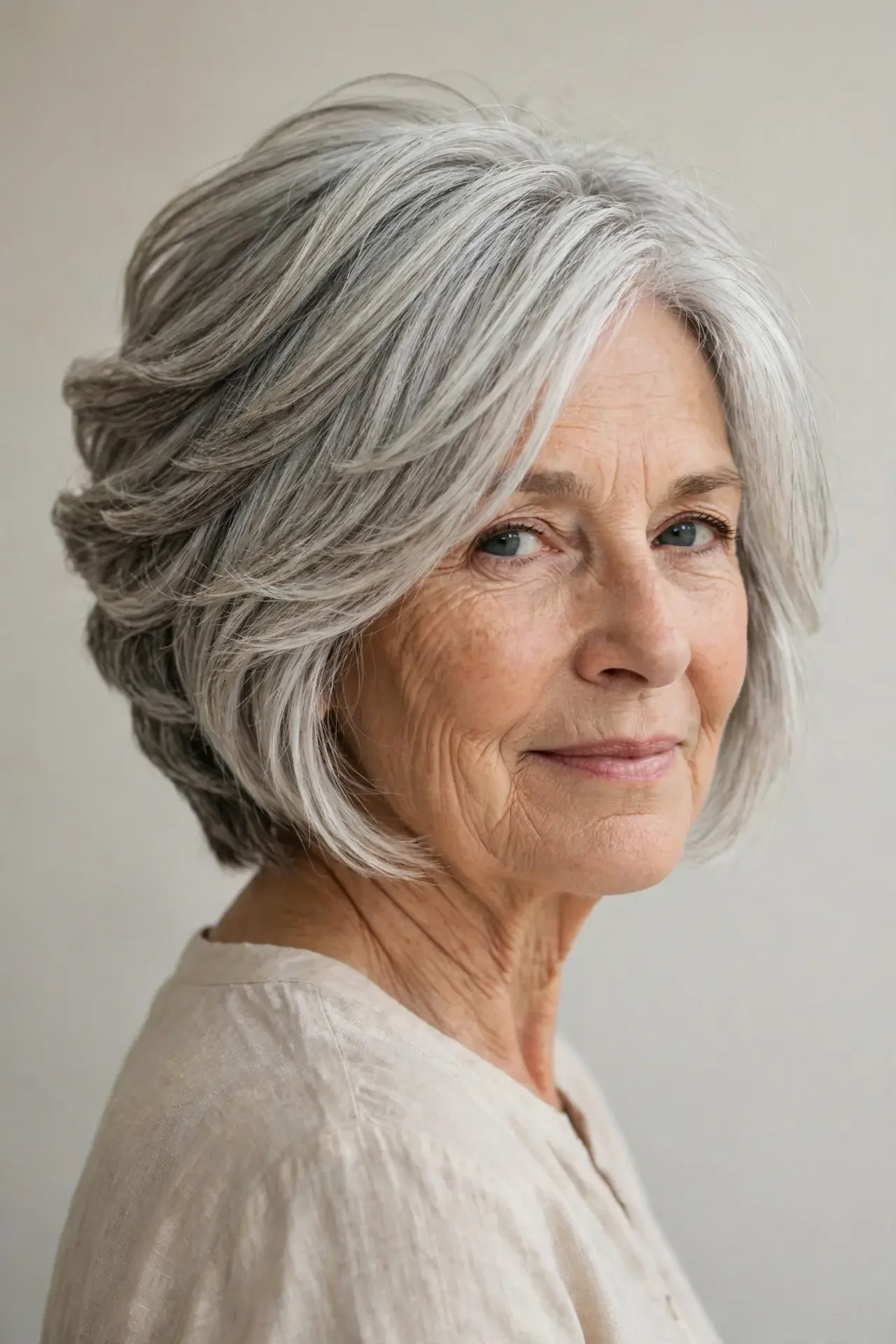
Graduated layers are the precision technique behind the most flattering chin-length bobs. Your stylist cuts the hair slightly shorter at the back and longer toward the front, building a curved, stacked silhouette that gives the illusion of thicker hair and a lifted profile. This shape is wonderful for women over 60 with fine or thinning hair, because the stacked back creates automatic volume where you need it most. It suits round faces beautifully — the longer front pieces elongate the face — and it works on straight to wavy textures that can hold a smooth finish. The cut looks neat and intentional with minimal effort, which makes it a strong everyday choice that still feels special.
- Ask for “a graduated chin-length bob with stacked back layers” at your appointment.
- Blow-dry the back upward with a round brush to emphasise the stack.
- Smooth the front pieces downward with a flat brush for a sleek frame.
- Apply a shine serum to the ends for a polished finish.
Tell your stylist how dramatic you want the graduation — a gentle slope is timeless, while a steeper angle reads more modern. The front should just kiss the jawline or chin so it frames rather than hides your face. At home, the key move is drying the crown back layers with upward tension; that is where the volume lives. A smoothing cream on damp hair prevents frizz, and a flat iron can refine the front pieces if your hair is wavy. Trim every five weeks to keep the graduated line crisp, since this shape shows growth quickly. If you want a softer version, ask for the ends to be point-cut so the line looks feathered rather than sharp.
Stacked Layers for Crown Volume
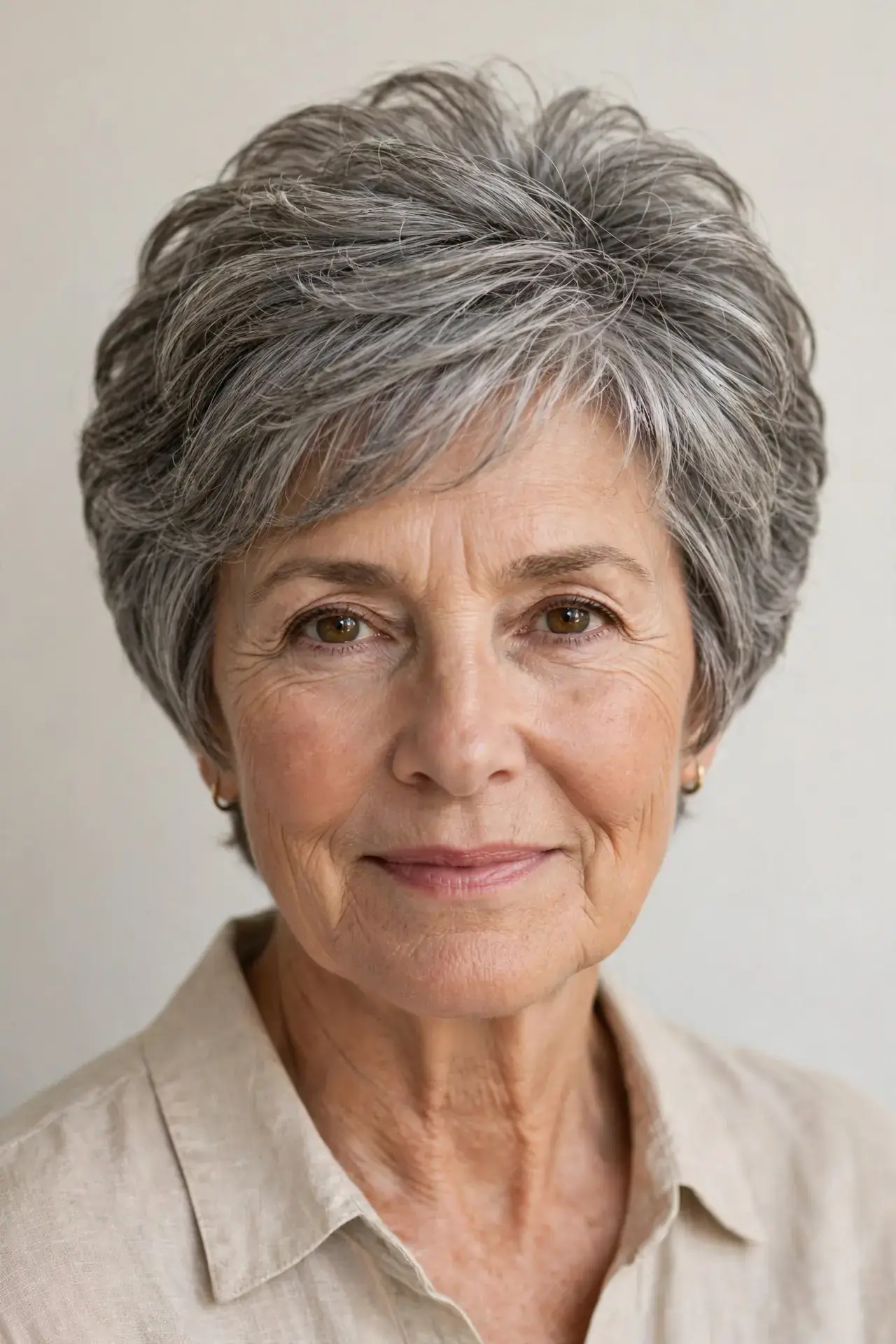
Flat crowns are one of the most common complaints about short hair after 60, and stacked layering is the direct answer. Your stylist cuts progressively shorter layers from the nape upward, so each layer sits on top of the one below and builds a rounded, voluminous shape at the back of the head. This technique is ideal for fine, straight hair that lies limp, because the architecture of the cut creates fullness mechanically rather than relying on products alone. It flatters round and heart-shaped faces by adding height that balances width through the cheeks. The result is a perky, rounded silhouette that photographs beautifully and holds its shape through the day. For women who want their hair to look deliberately styled with very little effort, stacked layers deliver.
- Ask for “stacked layers with a rounded crown” at your appointment.
- Blow-dry the crown forward and up for maximum lift.
- Apply root-lifting mousse before drying to reinforce the stack.
- Backcomb the crown lightly on flat-hair days for extra height.
Explain to your stylist whether you want a soft or dramatic stack — the more pronounced the layering, the more volume you get, but the more often you will need trims to keep it tidy. At home, drying with your head tipped forward is the fastest way to activate the stacked shape, and a round brush on the crown layers locks in the curve. Avoid heavy oils near the roots, which collapse the stack; keep conditioning to the mid-lengths and ends. Trim every four to five weeks, since stacked shapes grow out visibly. If you decide to grow it out, the stacked back simply gets trimmed less while the top layers gain length, transitioning easily toward medium length hairstyles for women over 60.
Wispy Point-Cut Layers for Fine Hair
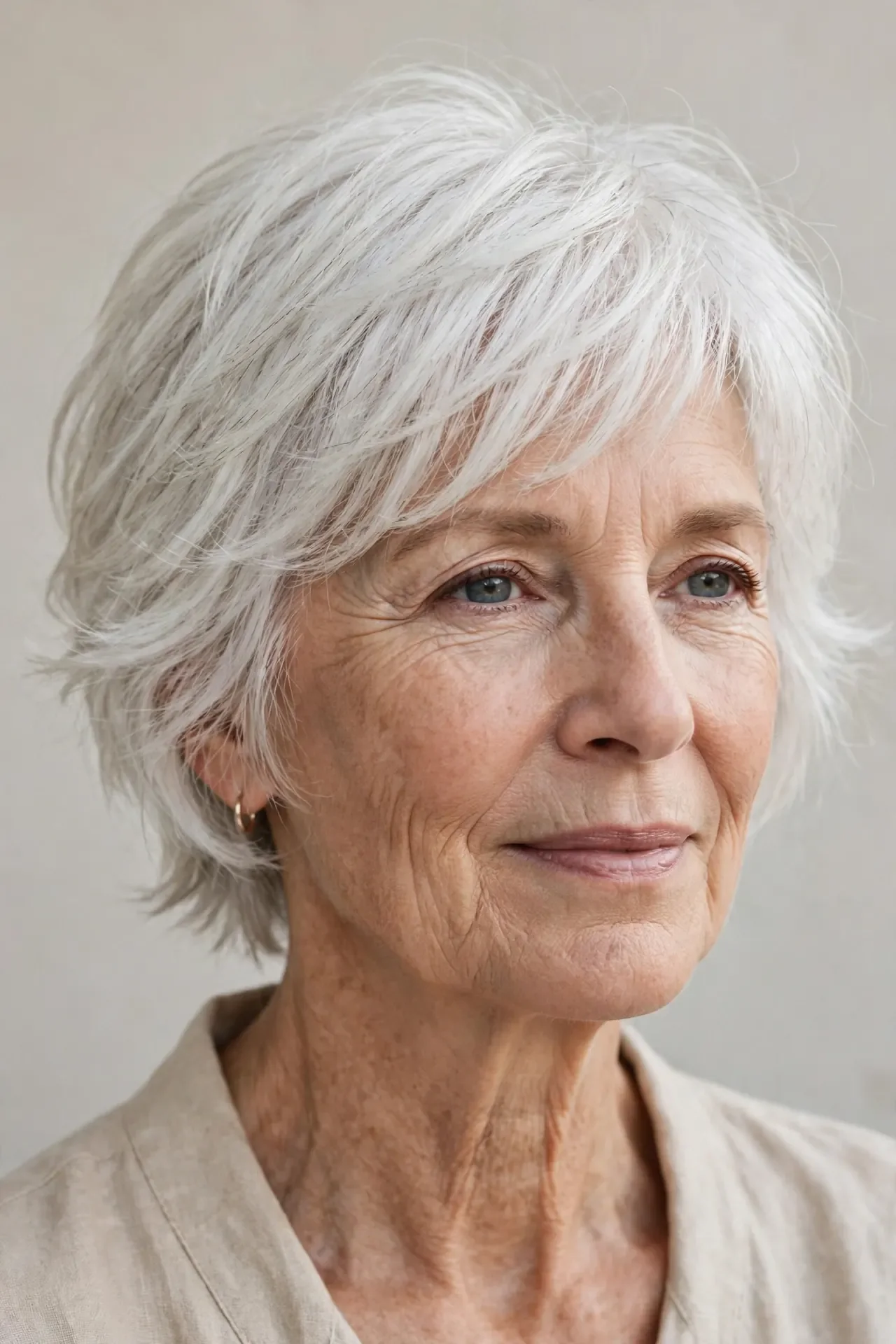
Point-cutting — snipping into the ends at an angle rather than straight across — creates wispy layers that make fine hair look thicker without removing precious density. This is the layering technique to request when your hair is thin but you still want movement and shape. The softened ends blend into each other so there are no harsh lines, which is flattering for women over 60 because it keeps the overall look gentle and feminine. It suits straight to slightly wavy hair best, and it works on every face shape since the layers can be placed to frame your best features. The cut is beautifully low-maintenance: the wispy ends fall naturally into place, and a little styling product is all you need to look finished. It is the quiet achiever of layered cuts.
- Ask for “wispy point-cut layers to add movement” at your appointment.
- Blow-dry with a vent brush for a smooth, natural fall.
- Apply a lightweight leave-in conditioner to prevent flyaways.
- Tuck one side behind your ear for an elegant asymmetric look.
Tell your stylist to be conservative with how much length comes off the ends — on fine hair, every millimetre counts, and the goal is texture, not thinning. At home, wash with a volumising shampoo and keep conditioner light, since fine hair is easily weighed down. A pea-sized amount of smoothing cream on damp ends keeps the wisps tidy without greasiness. Dermatologists note that aging hair benefits from gentle handling and mild products, and you can find trustworthy hair care advice from the American Academy of Dermatology to guide your routine. Trim every six weeks to keep the wispy ends fresh, and skip aggressive backcombing, which can snap fine strands.
Swingy Layers on a Pixie-Bob
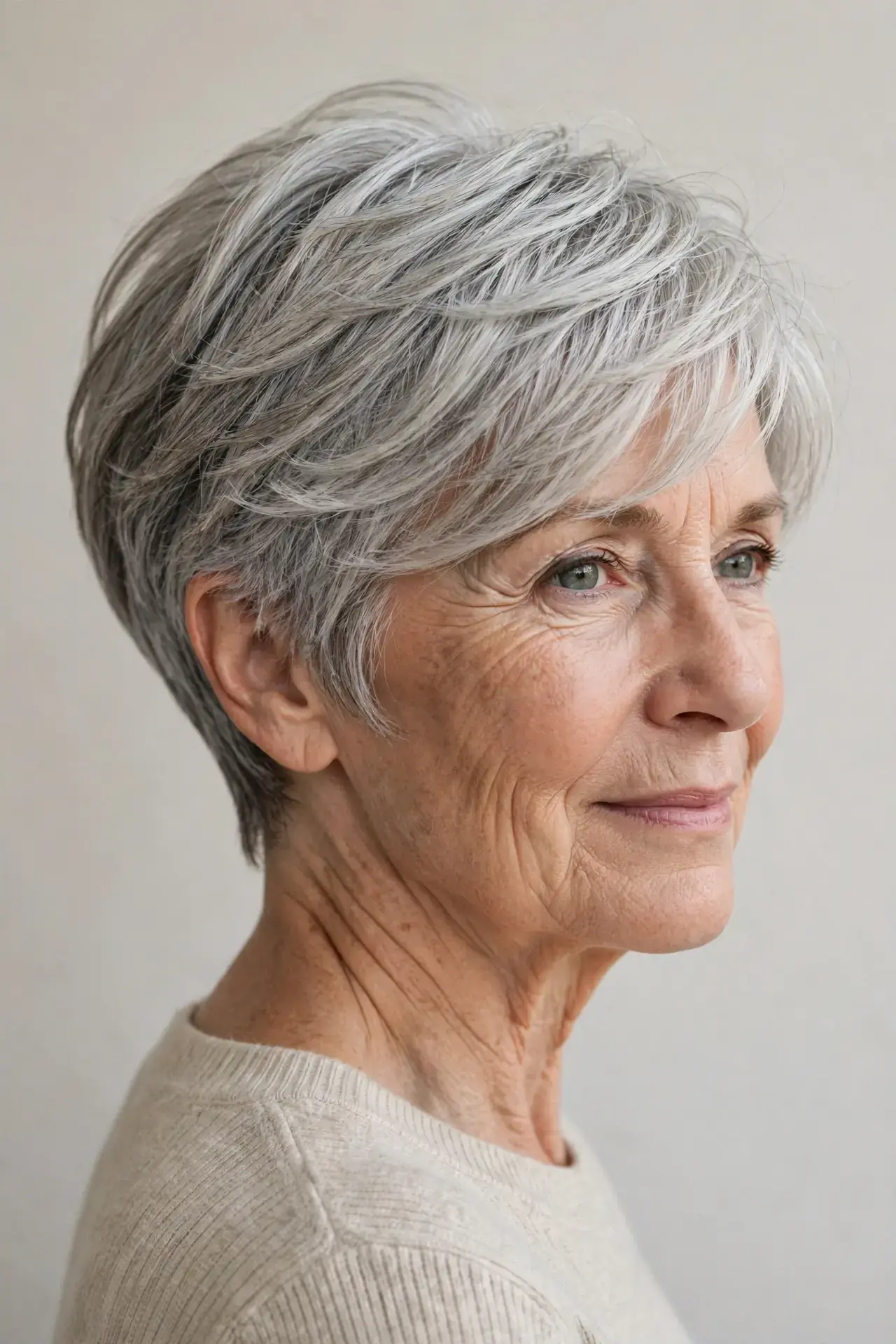
The pixie-bob sits between a pixie and a bob, and its swingy layers give you the best of both worlds. Longer layers on top swing softly over a tapered underneath, creating movement and softness around the face while keeping the nape neat. This cut is wonderful for women over 60 who want short hair with feminine length on top — it flatters square faces by softening the jawline and suits straight to wavy hair that can hold a little bend. The layered top adds the illusion of thickness, which is kind on thinning crowns. It reads chic and contemporary, works for glasses wearers beautifully, and transitions easily from day to evening with a simple product change.
- Ask for “a pixie-bob with long swingy top layers” at your appointment.
- Blow-dry the top layers forward with a medium round brush.
- Apply a smoothing balm to add swing and control frizz.
- Switch your part from centre to side for two different looks.
Ask your stylist to keep the underneath tapered but not shaved unless you want an edgier finish — a soft taper grows out more gracefully. The top layers should be long enough to tuck or sweep, roughly three to four inches, so they move. At home, blow-dry the top with forward motion to build the swing, then flick the ends outward or under depending on your mood. A flat iron can refine individual pieces on humid days. Trim every four to six weeks; the nape grows out fastest and is what keeps the silhouette crisp. Grow-out is simple — just let the taper lengthen and the cut becomes a short layered bob.
Face-Framing Layers for Soft Movement

Face-framing layers are the most universally flattering layering technique, and they deserve a place in every short cut. Your stylist cuts graduated pieces that start around the cheekbones or jawline and blend back into the rest of the hair, creating soft movement exactly where the eye lands first. For women over 60, these pieces are magic: they soften the appearance of fine lines, draw attention to your eyes and cheekbones, and add a youthful bounce to even the simplest short cut. They work on straight, wavy and curly hair and flatter every face shape, because the starting point of the layers can be customised to your features. This is layering at its most wearable.
- Ask for “face-framing layers starting at the cheekbones” at your appointment.
- Blow-dry the front pieces forward and under with a round brush.
- Apply a tiny amount of serum to keep the framing pieces sleek.
- Curl the front layers away from your face for extra lift.
Tell your stylist where you want the shortest framing piece to begin — cheekbone length is the most versatile, while chin length suits longer faces. The pieces should blend seamlessly into the back so there is no visible step. At home, the front layers need the most attention: dry them first while they are damp, directing them forward and slightly under for that soft curve. A flat iron can polish them in seconds on second-day hair. Refresh with dry shampoo at the roots rather than re-washing daily, since over-washing flattens fine hair. Trim every five to six weeks, or ask your stylist to tidy just the front layers between full cuts. They grow out into longer framing that still looks intentional.
Flicked-Out Layers with Side-Swept Bangs

Flicked-out ends bring a playful, retro energy that keeps short layered hair from looking serious. Your stylist layers the cut so the ends naturally kick outward, and pairs it with a side-swept fringe that softens the forehead and adds asymmetry. This combination flatters round faces because the outward flicks and diagonal fringe create diagonal lines that slim the face, and it suits straight to slightly wavy hair that holds a flip. Women over 60 often rediscover this style because it is fun without being fussy — the flicks give the hair bounce and personality, and the side sweep keeps the look modern. It is an excellent choice if your hair is fine but you want visible, lively movement.
- Ask for “flicked-out layers with a side-swept fringe” at your appointment.
- Blow-dry the ends outward with a small round brush.
- Apply a light pomade to define individual flicks.
- Sweep the fringe across your forehead and pin for evening polish.
Ask your stylist to cut the layers so the flick happens naturally — the ends should be light enough to turn out on their own with a round brush. The fringe should start at the part and sweep long enough to blend into the side layers. At home, the round-brush flick is the whole technique: wrap each section around the brush and roll outward as you dry. A quick blast of cool air sets the flick in place. Avoid heavy serums that pull the flicks down; a light texturising spray gives better hold. Trim every five to six weeks to keep the ends crisp enough to flip. If the flicks start falling flat between cuts, a large-barrel curling iron turned outward revives them in minutes.
Tapered Layers with a Rounded Crown
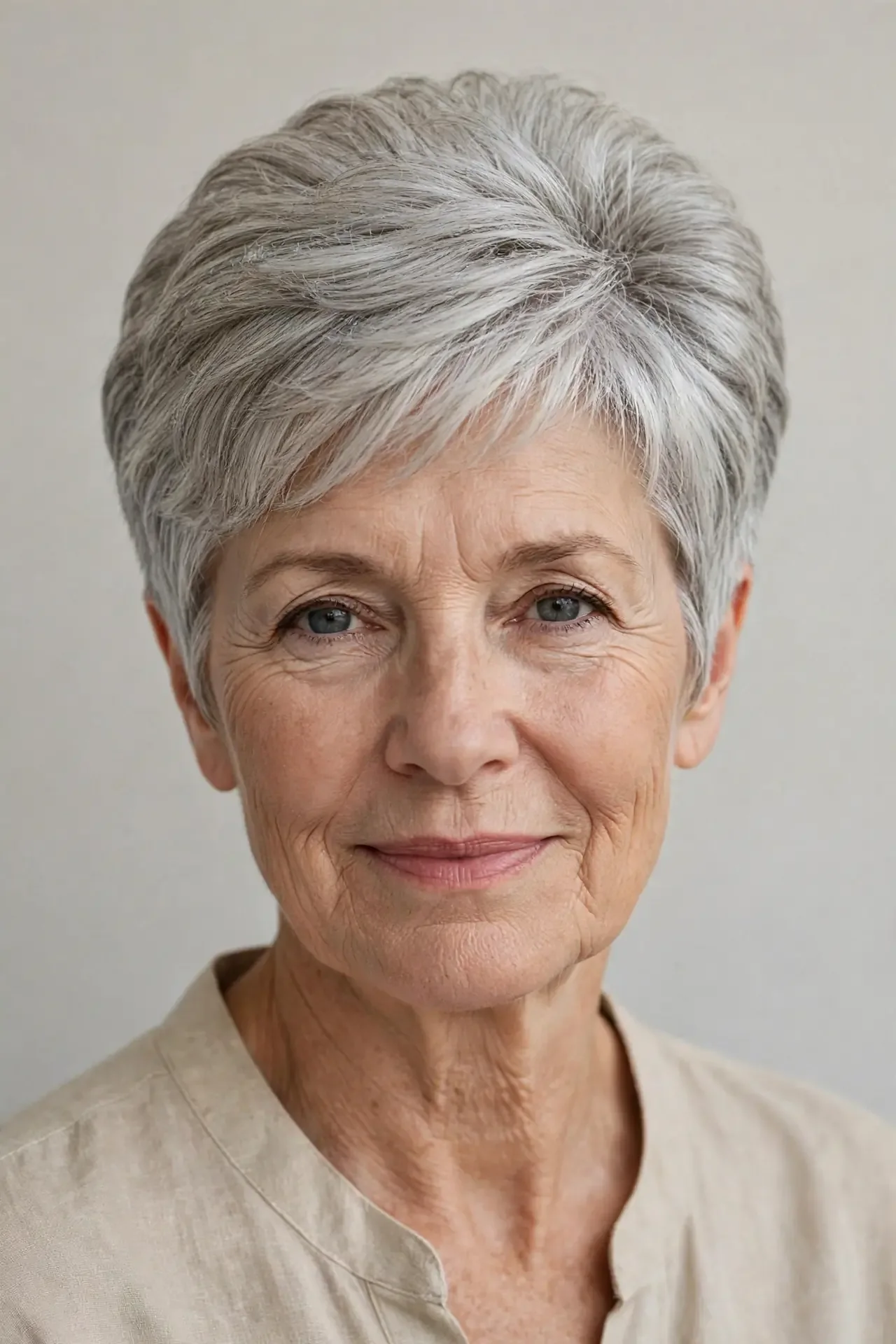
Tapered layering creates a smooth, sculpted shape that looks polished from every angle. Your stylist cuts the hair progressively shorter toward the nape and sides while keeping rounded, fuller layers through the crown, producing a neat silhouette with built-in height. This technique suits women over 60 who prefer a tidy, put-together look — it flatters oval and heart-shaped faces and works beautifully on straight hair that lies smoothly. The taper keeps the edges clean so the style never looks overgrown, while the rounded crown prevents the flat-top effect that can age a short cut. It is the kind of cut that looks intentional even when you have done nothing to it, which is the true test of a great haircut.
- Ask for “tapered sides with rounded crown layers” at your appointment.
- Blow-dry the crown upward with a vent brush for smooth volume.
- Apply a polishing cream to the tapered edges for a clean finish.
- Mist with medium-hold spray to lock the shape all day.
Tell your stylist how tight you want the taper — a gentle taper is classic and grows out softly, while a closer taper reads more contemporary. The crown layers should be left long enough to create the rounded dome that gives this cut its lift. At home, the crown is the only area that needs real attention: lift it with a vent brush and warm air, then smooth it once cool. The tapered sides need almost nothing beyond a dab of cream. This cut is kind to glasses and earrings, since the neat sides keep them visible. Trim every four weeks to maintain the taper’s precision; this is one shape where regular maintenance makes all the difference. Grow-out stays tidy because the layers lengthen evenly.
Shaggy Layers with Piecey Ends
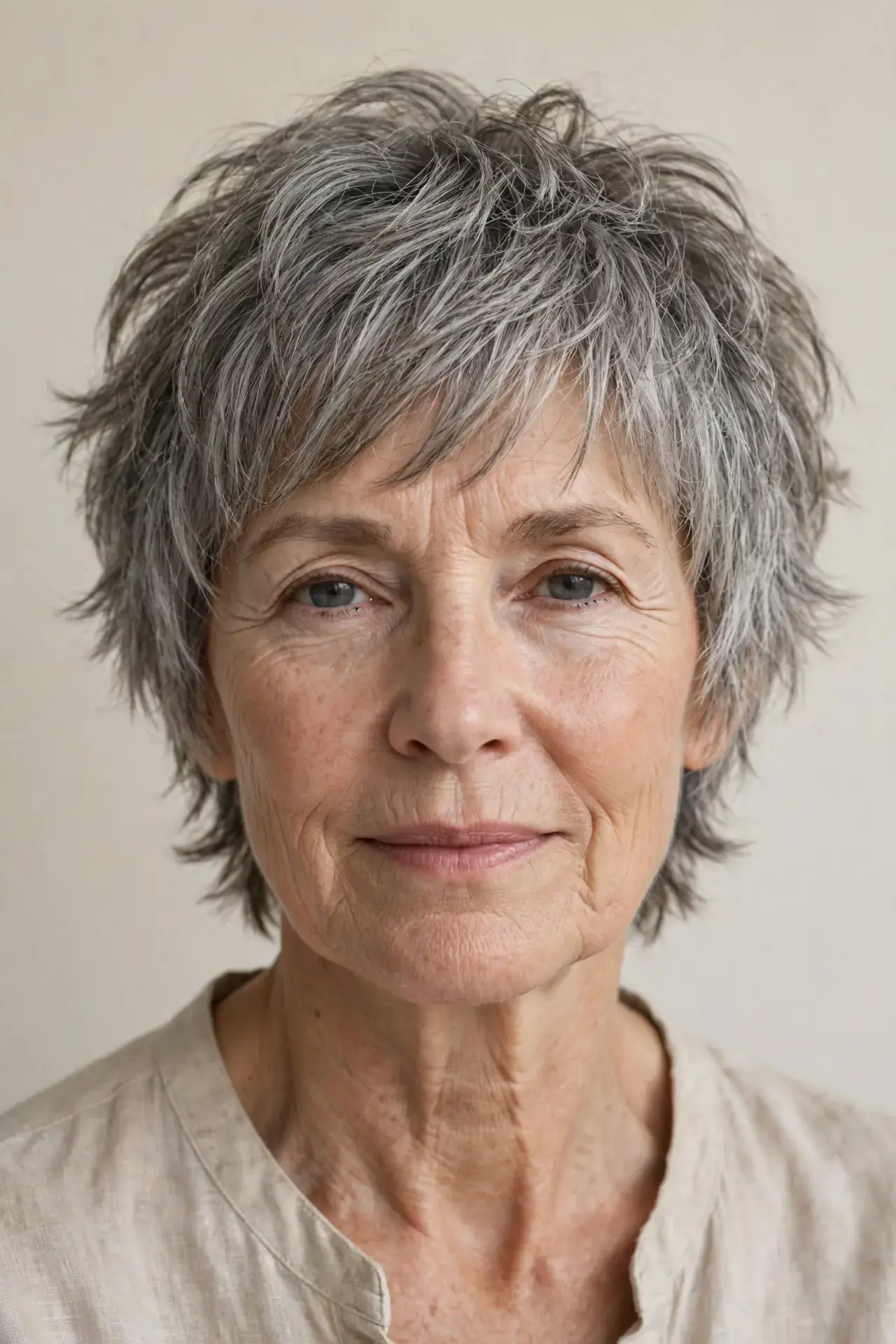
Shaggy layering takes the disconnect of a shag and shrinks it to a short, easy length. Your stylist cuts choppy, varied layers throughout the crown and sides, leaving piecey ends that move independently for a textured, youthful finish. This is a brilliant technique for women over 60 with thick or wavy hair, because the layers remove bulk and let the hair move instead of sitting like a helmet. It flatters oval and long faces by breaking up length with texture, and it is wonderfully forgiving — the whole point is that it looks a little undone. If you have been wearing the same neat bob for years, shaggy layers are the refresh that makes people ask what changed.
- Ask for “short shaggy layers with piecey, textured ends” at your appointment.
- Scrunch mousse into damp hair to encourage separation.
- Diffuse or rough-dry to enhance the shaggy texture.
- Rub a dab of matte paste between your fingers and pinch the ends.
Ask your stylist to personalise the layer placement to your texture — wavy hair needs fewer, longer layers, while straight hair can take more aggressive chopping. The shortest layers should sit at the crown for lift, never at the sides where they can widen the face. At home, product is minimal but essential: a little mousse or texturising spray gives the pieces their definition. Second-day hair often looks better than freshly washed, so embrace a dry-shampoo refresh. Trim every six to eight weeks, though this cut forgives a late appointment better than most. Growing it out is seamless — the shaggy layers simply become longer textured layers.
Soft Blended Layers for Effortless Everyday Style
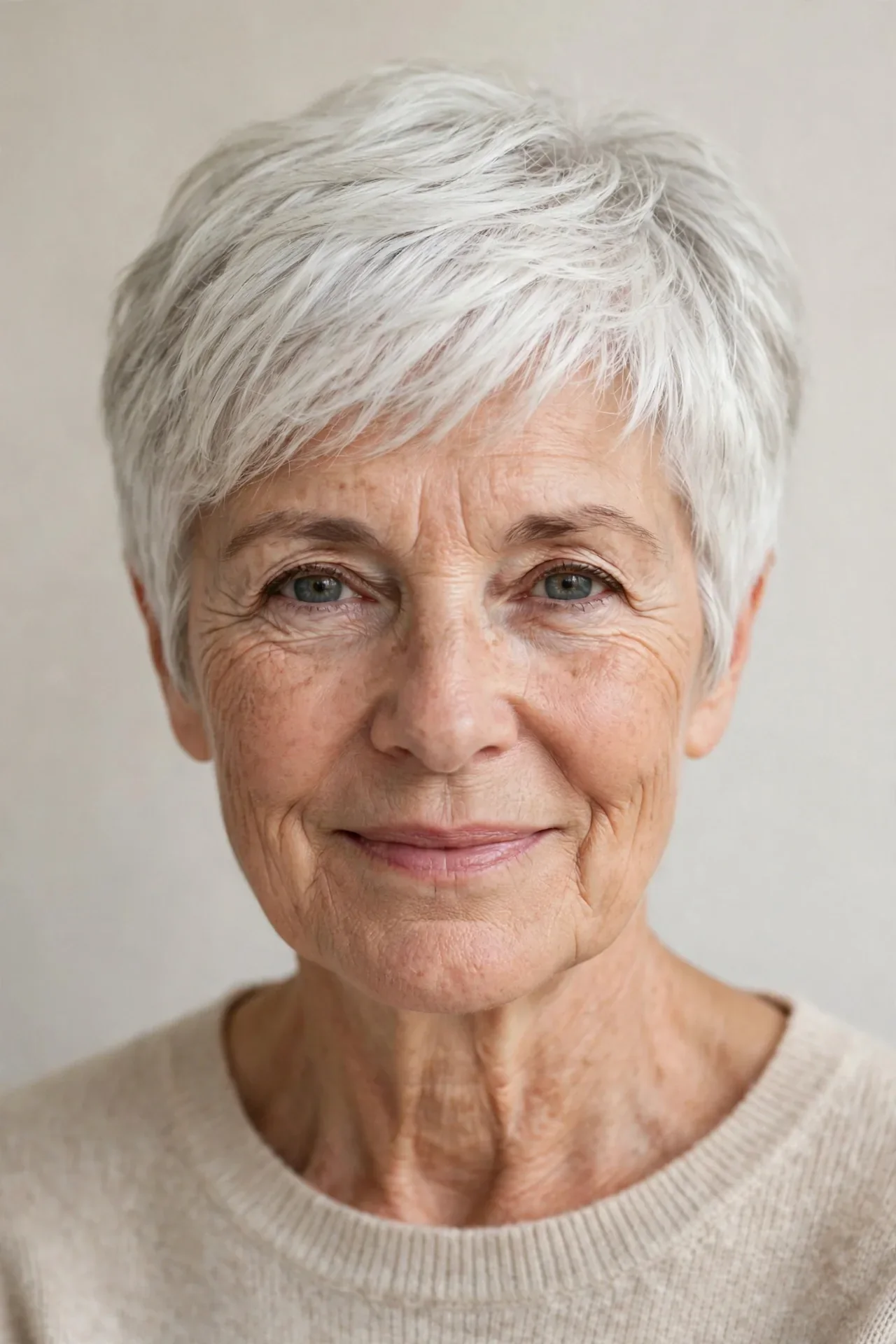
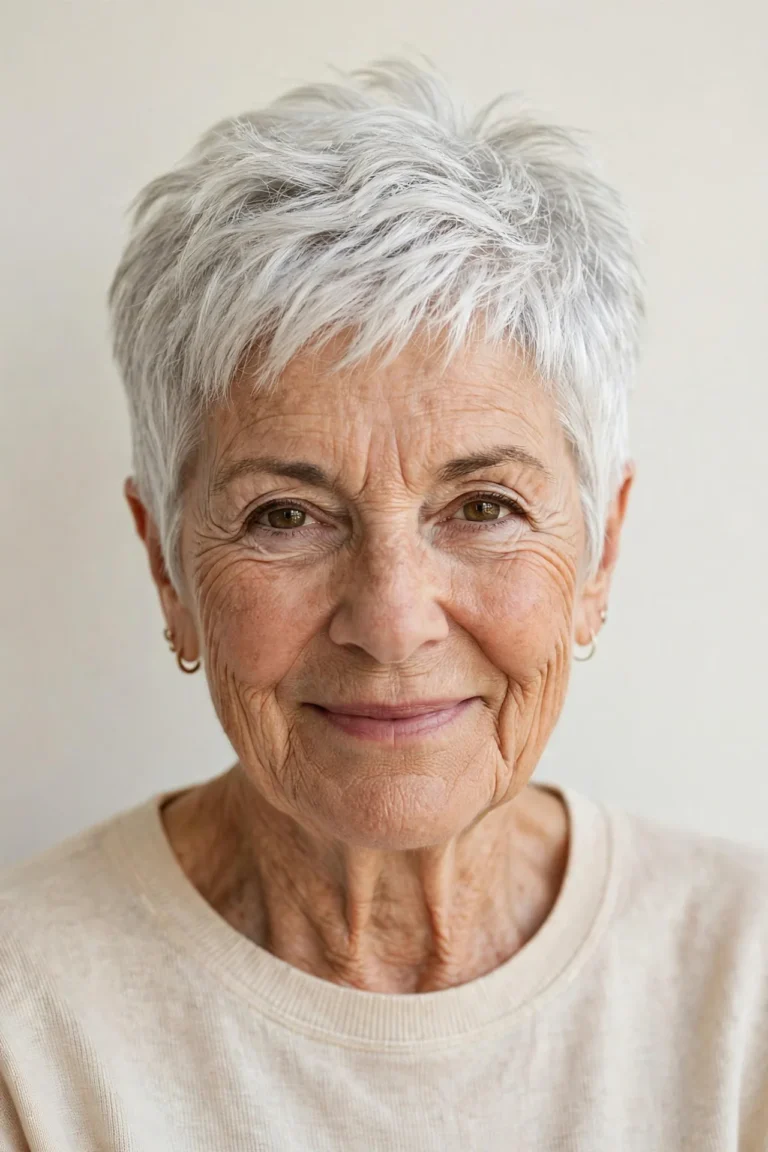
Not every layered cut needs to make a statement — blended layers are the invisible technique that simply makes short hair behave better. Your stylist cuts subtle, seamless layers that melt into each other with no visible steps, adding gentle movement and removing just enough weight to give the hair life. This is the ideal layering approach for women over 60 who want a natural, easy-care cut: it suits all textures and face shapes, looks appropriate everywhere from the office to a wedding, and never demands complicated styling. The layers do their work quietly, giving you softness around the face and a little lift at the crown without any piecey or dramatic effects. It is the most low-maintenance way to wear layers.
- Ask for “soft blended layers with a natural finish” at your appointment.
- Blow-dry smoothly with a paddle brush for a polished look.
- Apply a lightweight cream to damp hair for soft definition.
- Let it air-dry on relaxed days — the layers still look tidy.
Tell your stylist you want the layers “invisible” — the goal is movement you feel rather than see. This cut works with your natural part and texture, so mention how you usually wear your hair. At home, a simple blow-dry with a paddle brush is all it takes, and the cut air-dries beautifully on low-effort days. A lightweight styling cream keeps the ends from looking dry, which matters more as hair ages and produces less natural oil. Trim every six to eight weeks; because the layers are blended, grow-out is the smoothest of any technique here. If you ever want more drama later, your stylist can point-cut the existing layers into a choppier finish without starting over.
Conclusion
The right layers can genuinely transform short hair after 60 — adding the volume, movement and softness that make a cut feel fresh again. Whether you are drawn to feathered ends, stacked crowns or shaggy texture, short layered hairstyles for women over 60 share one advantage: they work with your hair’s natural changes instead of fighting them. Take a photo of your favourite idea to your stylist, be honest about how much time you will spend styling, and give the cut two or three weeks to settle into its true shape. For a more relaxed, undone take on these ideas, browse our short messy hairstyles for women over 60 next — you may find your perfect everyday style there.
2 Comments