12 Short Choppy Haircuts
Introduction
If your short hair keeps falling flat no matter how you style it, short choppy haircuts might be the change you need. Choppy layers are all about broken, textured ends that create instant volume and movement, which means fine hair looks fuller and thick hair feels lighter and easier to manage. Unlike blunt cuts that can look heavy or shapeless as they grow out, choppy cuts keep their edge thanks to deliberately uneven lengths. In the next few minutes you will find 12 wearable choppy ideas, from pixies and bobs to shags and crops, each with simple styling tips you can use at home. If your hair is on the finer side, our 12 short shag haircuts for fine hair pair beautifully with the textured cuts below.
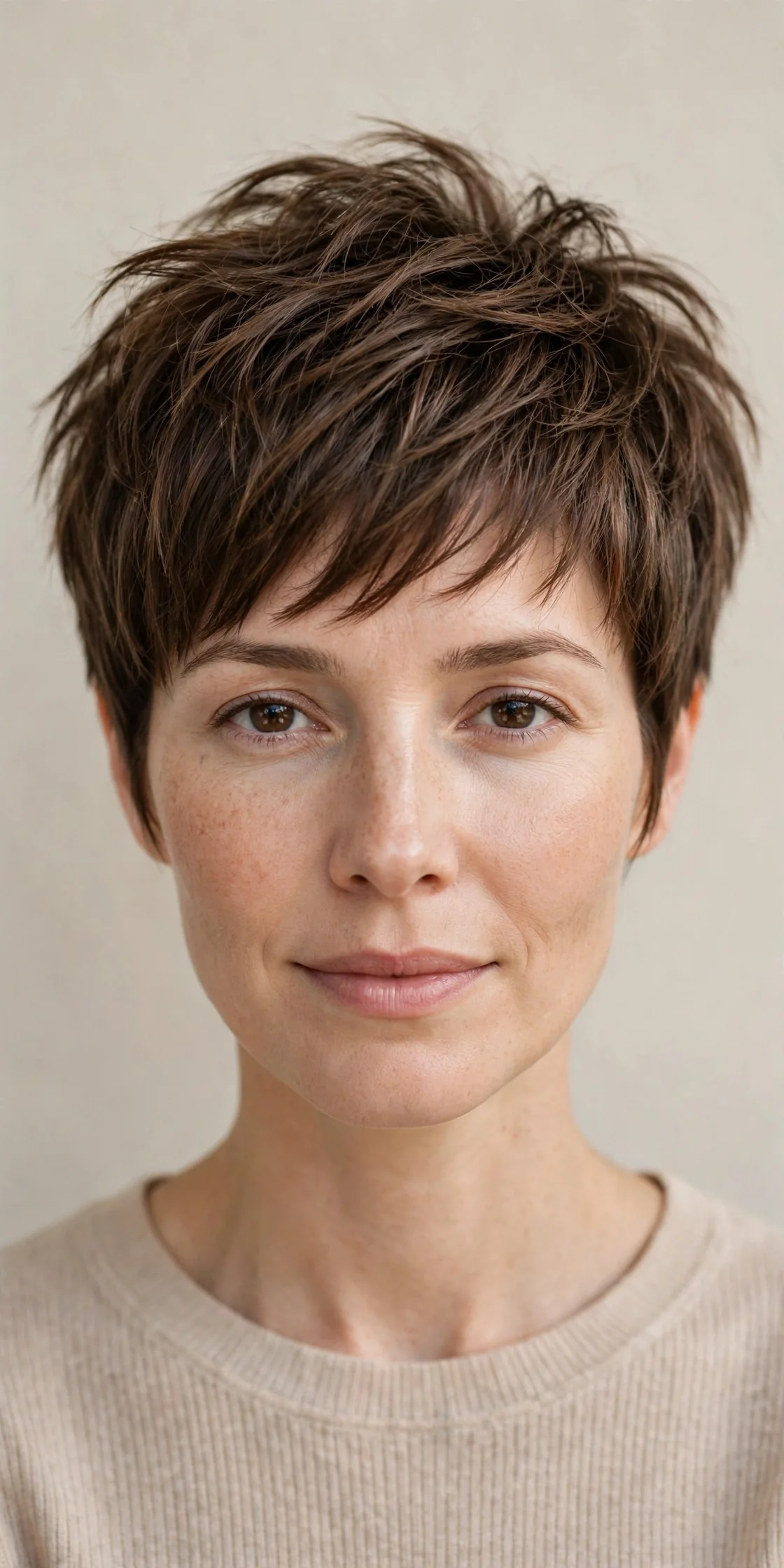
The Choppy Pixie with a Long Crown
This is the classic entry point into choppy texture: a short pixie that stays neat and tapered through the sides and nape while the crown and top carry deliberately uneven, point-cut length. It flatters oval, heart, and square faces especially well, because the added height on top balances a wider jawline and visually lengthens a rounder face. Fine hair benefits the most — the short stacked layers sit on top of each other, so hair that usually lies flat suddenly has lift, air, and movement. It works beautifully on straight to wavy textures, and because the ends are broken rather than blunt, the grow-out stays soft instead of turning boxy. The overall feel is modern and confident: polished enough for the office, yet easy to rough up for the weekend.
- Apply a pea-sized amount of texturizing paste to dry hair for piecey separation.
- Blow-dry the crown upward with your fingers to build lift at the roots.
- Tuck one side behind your ear for an asymmetric, polished finish.
- Ruffle the top with your fingertips right before you head out.
Ask your stylist for a pixie with a longer crown — roughly two to three inches on top — with the sides and nape tapered short and everything point-cut or razor-textured for choppy ends. Mention that you want the fringe long enough to sweep to one side. At home, wash-and-go genuinely works: smooth a light styling cream through damp hair, rough-dry with your hands instead of a brush, then pinch the ends with paste for definition. Book a trim every four to six weeks to keep the silhouette sharp. If you ever decide to grow it out, the top blends into a longer pixie-bob hybrid without an awkward stage.
A Short Choppy Bob with Broken Ends
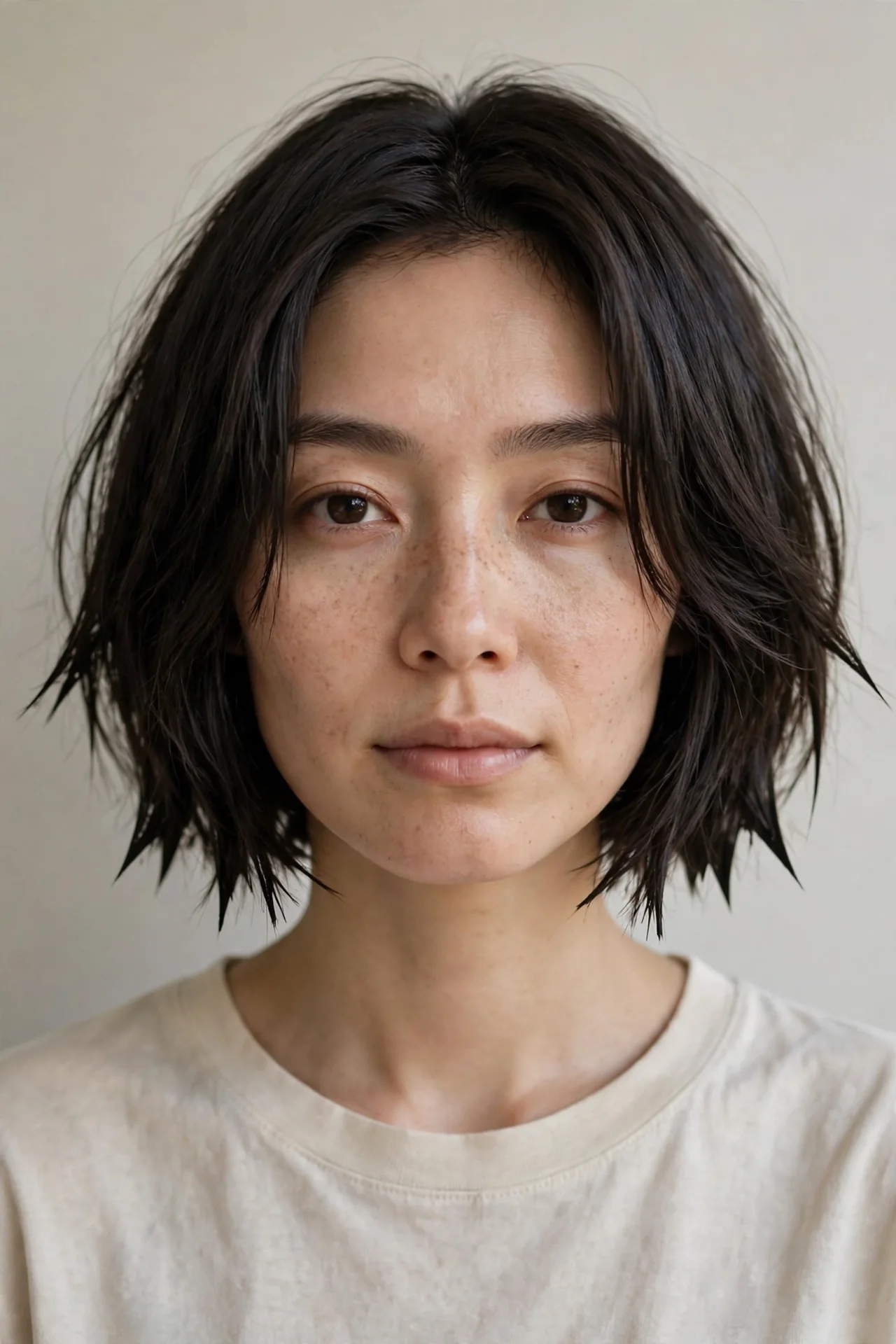
The short choppy bob takes the timeless jaw-length bob and roughs up the perimeter with jagged, uneven ends that catch the light as you move. It flatters oval, round, and heart faces — the broken ends break up the width of a round face, while the jaw-skimming length defines the jawline without looking severe. Fine to medium hair is the sweet spot: choppy layering removes weight from the ends so hair moves freely instead of hanging in one solid sheet. Straight and wavy textures show off the texture best, though coarse hair can be point-cut to soften the edge. The vibe is effortlessly cool — a little undone, never messy — and it photographs beautifully from every angle.
- Air-dry or rough-dry your hair instead of using a round brush.
- Twist small sections with sea-salt spray to encourage natural separation.
- Flat-iron only the very tips in alternating directions for extra pieceyness.
- Flip your part to the opposite side for instant root volume.
Ask your stylist for a bob that sits at or just below the jawline, cut with a razor or deep point-cutting through the ends for that broken edge, plus light interior layers for movement. Request that the perimeter stay slightly uneven rather than perfectly level — that is what makes it “choppy” instead of just layered. Your at-home routine stays simple: apply a texture cream to damp hair, scrunch, and let it air-dry or diffuse. Trim every six to eight weeks to refresh the ends, though this cut grows out gracefully precisely because the ends were never blunt to begin with.
Short Choppy Layers on a Textured Crop
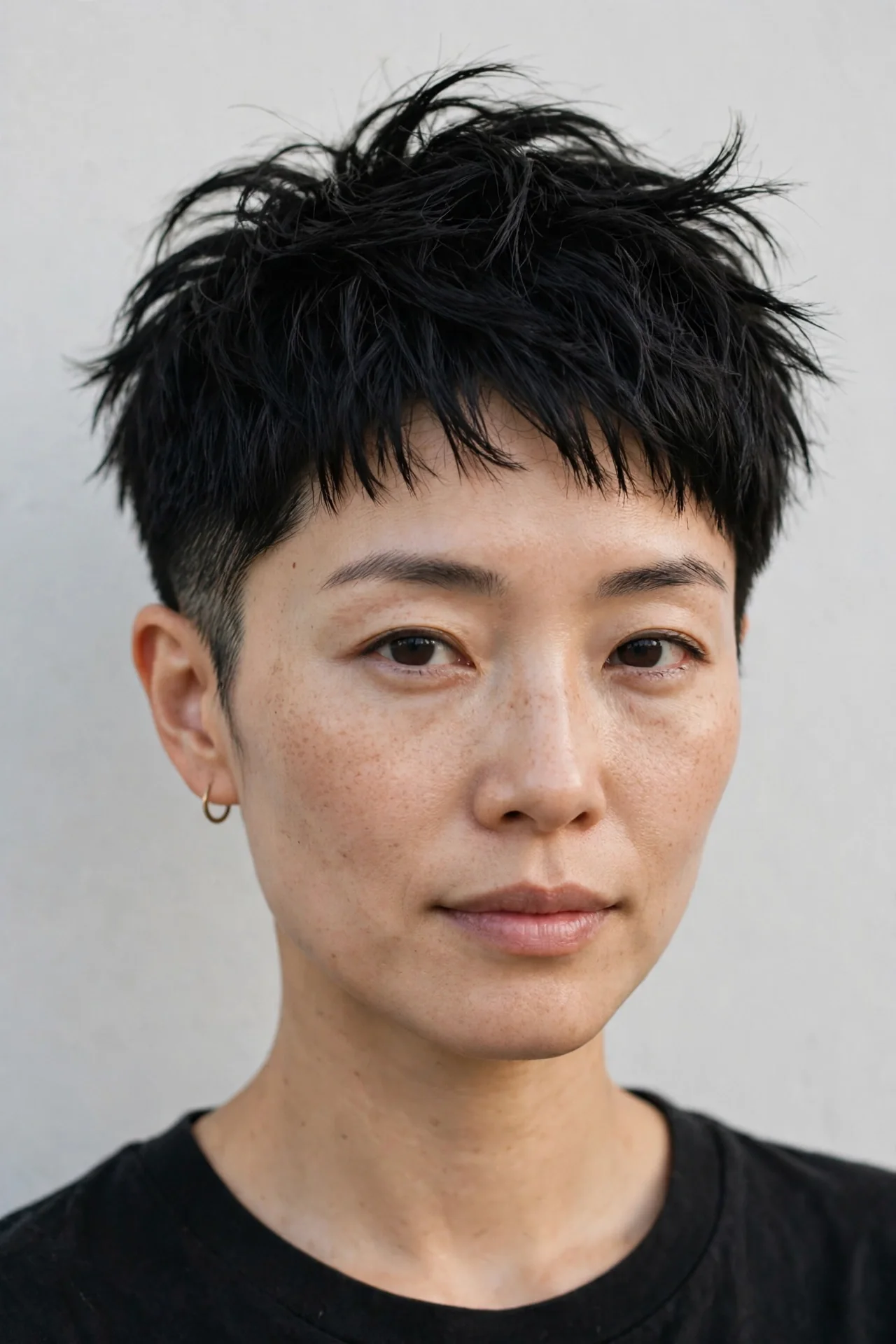
Shorter than a pixie and bolder than a bob, the textured crop is cut close through the back and sides with about an inch or two of choppy, tousled length on top. It suits oval and heart-shaped faces best, where the short silhouette opens up the cheekbones and eyes. Fine hair gains surprising fullness because the short layers stand away from the scalp, while thick hair gets a welcome de-bulking that makes mornings faster. Straight to slightly wavy textures are easiest, and the cut’s androgynous edge reads chic rather than severe when the top is kept piecey. If you love low-maintenance hair that still looks intentional, this is your cut.
- Work a matte clay through dry hair for gritty, touchable texture.
- Push the top forward with your fingers for a lived-in finish.
- Define a few front pieces with extra product to frame your eyes.
- Skip the comb entirely — fingertips give the best choppy result.
Ask your stylist for a tapered crop with at least an inch of length on top, texturized with point-cutting or a razor so the ends look shattered rather than cut. Bring a photo of the exact shortness you want on the sides, since “short” means different things to different stylists. Styling takes under five minutes: towel-dry, add product, and shape with your fingers for a piecey, lived-in finish. You will need trims every three to four weeks to keep the nape and sides crisp. The upside is that growing it out simply returns you to pixie territory, so there is no painful in-between phase.
A Shaggy Choppy Lob with Feathered Ends

The shaggy choppy lob lands between the chin and the collarbone, pairing a longer length with heavily textured, feathered ends and face-framing layers. It flatters nearly every face shape, but round and oval faces gain the most — the vertical layers draw the eye downward and the choppy ends keep the perimeter from looking heavy. Medium to thick hair is ideal here, since the cut removes bulk while keeping enough length for ponytails and updos. Wavy and curly textures shine in this cut, though straight hair gets lovely flicked-out movement. It is the most versatile of the choppy family: romantic when soft, edgy when tousled.
- Scrunch damp hair with mousse, then diffuse for soft, full waves.
- Twist the face-framing pieces away from your face while drying.
- Flip the ends outward with a flat iron for a retro flick.
- Finish with a light-hold hairspray to lock in the feathered texture.
Ask your stylist for a lob with long shag layers starting at the cheekbones, heavily point-cut ends, and curtain-style face framing. If your hair is thick, ask for internal thinning so the choppy layers sit properly instead of puffing out. At home, this cut rewards low effort: a pea-sized amount of smoothing cream on damp ends prevents frizz, and most days you can simply scrunch and go. If you heat-style often, protect your ends — the American Academy of Dermatology’s hair care tips advise limiting heat and using conditioner regularly to prevent breakage and split ends. Trim every eight to ten weeks to keep the feathering fresh.
The Piecey Razored Pixie Bob
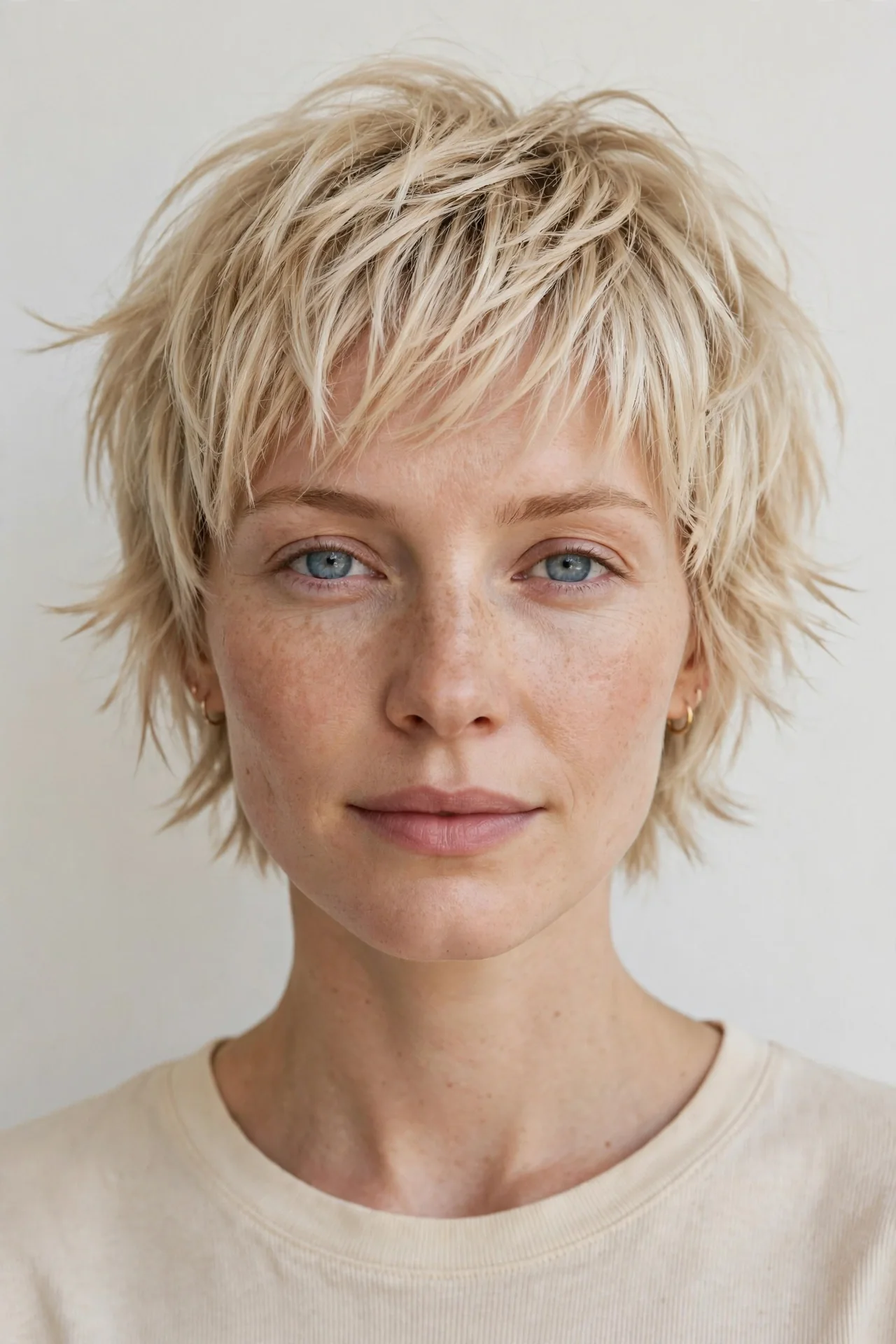
The razored pixie bob — sometimes called a bixie — lives between a pixie and a bob, with longer length around the ears and nape and a razor-shattered finish throughout. It flatters oval, heart, and long faces, because the fuller sides add width where narrow faces need it and the textured ends keep the length from dragging the face down. Fine to medium hair works best: the razor creates feathered, airy ends that make thin hair look twice as thick, while the piecey finish stops medium hair from looking puffy. Straight and wavy textures both wear it well. It is the perfect compromise if a pixie feels too daring but a bob feels too safe.
- Emulsify a smoothing cream between your palms before touching your hair.
- Pinch the ends in small sections to emphasize the razored texture.
- Sweep the front pieces forward and slightly to one side.
- Add a dab of shine serum on the very ends for a healthy glow.
Ask your stylist for a pixie-bob hybrid: pixie-short at the crown and nape, bob-length around the ears and fringe, finished with a razor for wispy, piecey ends. Be clear that you want texture, not thinning shears, since the two create very different effects. At home, this cut is forgiving — dampen, add a light cream, and rough-dry while lifting at the roots. The fringe can be worn forward, swept, or tucked, which gives you three looks from one cut. Trim every five to seven weeks; the razor finish softens beautifully as it grows, so you can stretch appointments a little.
A Choppy Curly Pixie with Defined Curls
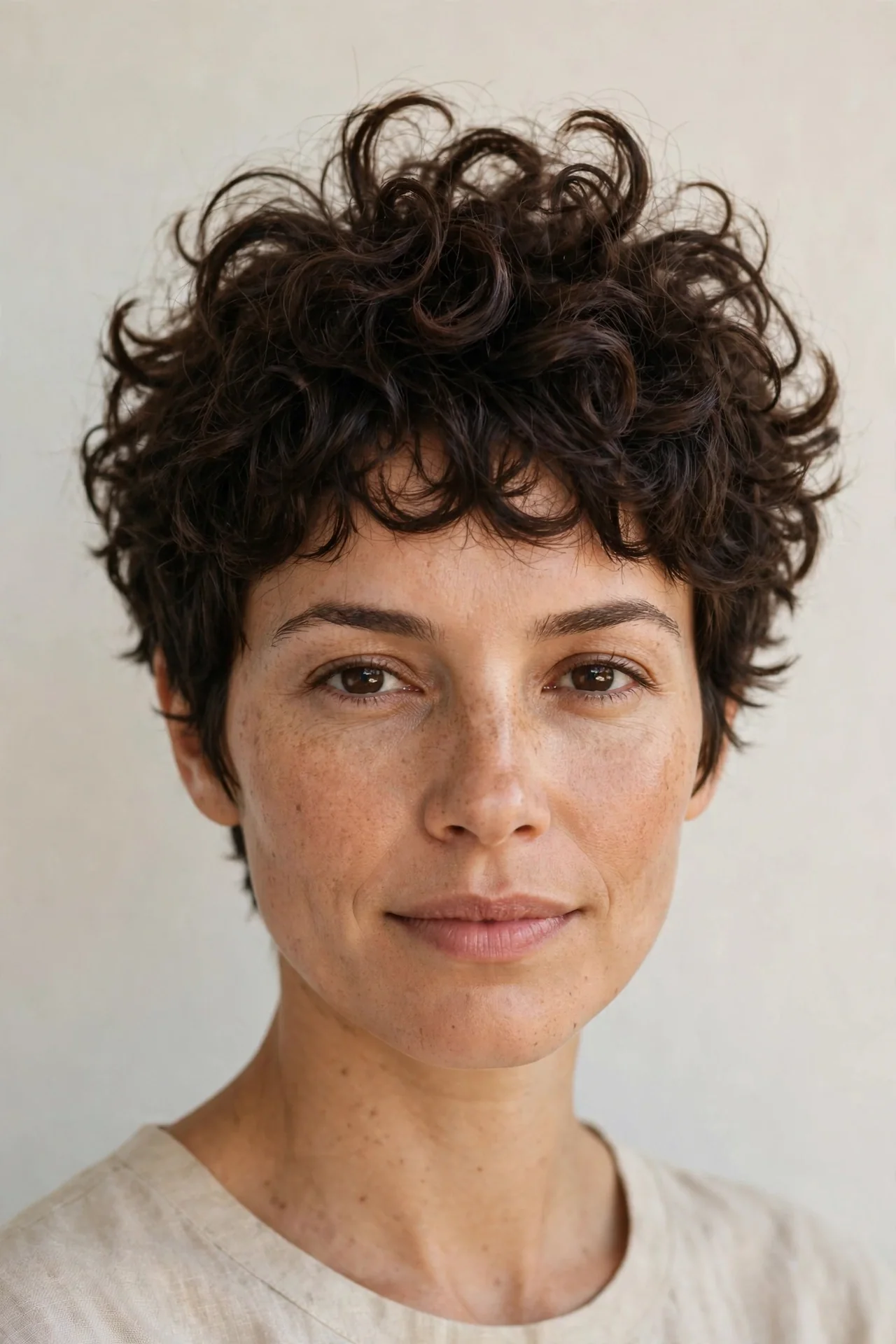
Curly hair and choppy texture are a natural match: short, uneven layers let curls spring up and form defined ringlets instead of collapsing into a triangle shape. This cut suits oval, round, and heart faces, because the volume sits high on the head and elongates the face rather than widening it. It is made for naturally curly to coily hair of any density — the choppy layering removes the bulk that pulls curls down, so each curl keeps its bounce. The result is joyful and full of personality, turning an ordinary wash day into a great hair day: a halo of defined, touchable curls with a modern, edgy finish.
- Apply curl cream to soaking-wet hair, section by section.
- Scrunch upward with a microfiber towel to encourage curl formation.
- Diffuse on low heat, hovering the dryer rather than scrunching roughly.
- Fluff the roots with a pick once fully dry for extra volume.
Ask your stylist for a curly pixie cut dry, curl by curl, with the top left longer and the sides and back shaped close — cutting curls dry is essential so the length lands correctly. Request choppy, staggered layers rather than even ones so the curls stack naturally. Your at-home routine is all about moisture: leave-in conditioner, curl cream, and a light gel, refreshed between washes with a water-and-conditioner mist. Trim every eight to twelve weeks, since curls hide growth well. Avoid brushing dry curls — it breaks the curl pattern and creates frizz instead of definition. Stick to a wide-tooth comb on wet, conditioned hair for gentle detangling.
The Undercut Choppy Bob with a Long Fringe
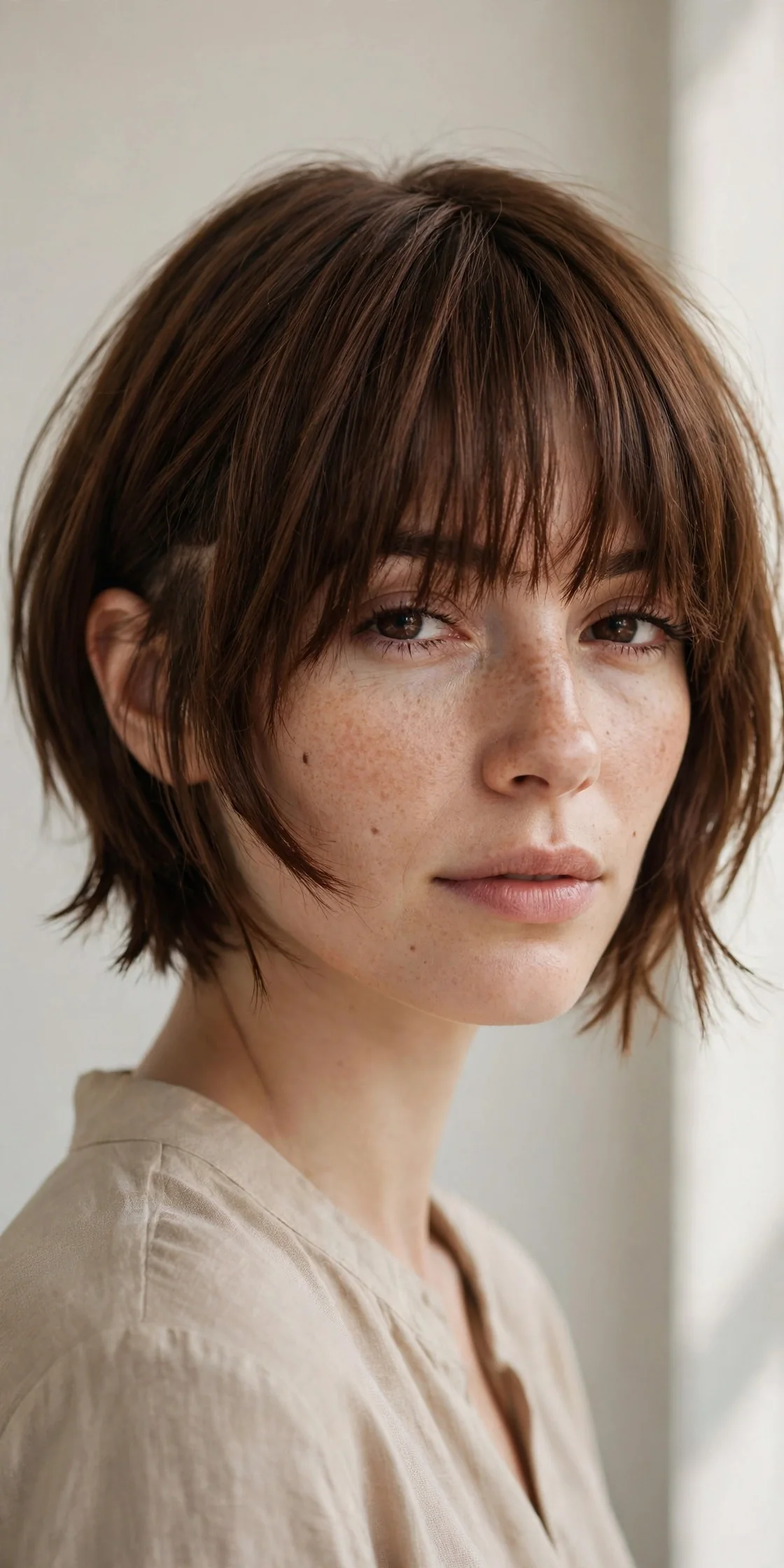
For maximum attitude, pair a choppy bob with a hidden undercut at the nape and a long, textured fringe that grazes the eyes. The undercut removes weight from underneath so the top layers fall with extra swing, while the long fringe adds mystery and frames the eyes dramatically. It suits oval and heart faces best, where the fringe softens a high forehead and the short back keeps the silhouette balanced. Thick, straight to wavy hair is ideal — the undercut tames density that would otherwise overwhelm a bob. This is a statement cut: bold, fashion-forward, and endlessly fun to style.
- Blow-dry the fringe forward with a paddle brush for a smooth drape.
- Add root-lifting spray at the crown before drying for height.
- Tuck the longer side behind your ear to show off the undercut.
- Finish with texturizing spray through the mid-lengths for grit.
Ask your stylist for a jaw-length bob with the nape undercut (clipped short underneath, with the top layer long enough to cover it), plus a long fringe point-cut for a choppy, eyelash-grazing finish. Decide how bold you want the undercut to be — a subtle one stays hidden, a higher one shows when you tuck your hair. At home, the undercut needs a tidy-up every three to four weeks even if the rest of the cut can wait six to eight. Style the fringe with a round brush for polish or let it air-dry for an undone feel. Growing out the undercut takes patience, so commit before you cut.
A Tousled Choppy Cut with Face-Framing Layers

This chin-to-neck-length cut is all about softness: tousled choppy layers throughout, with longer face-framing pieces that start at the cheekbones and melt into the ends. It flatters round, square, and heart faces, because the framing pieces slim the cheeks and soften a strong jawline without hiding your features. Fine to medium hair is the sweet spot — the layers create the illusion of thickness while the framing keeps the cut feminine and romantic. Straight, wavy, and loosely curled textures all work, and the airy layers flatter oval faces too. If you want a choppy cut that feels pretty rather than edgy, start here.
- Mist damp hair with a wave-enhancing spray before styling.
- Twist random sections around your finger while air-drying.
- Bend the face-framing pieces inward with a flat iron for softness.
- Shake your head upside down, then arrange the pieces with your fingers.
Ask your stylist for a tousled cut with the shortest layers at the crown, face-framing layers beginning at cheekbone level, and point-cut ends throughout for that soft choppy finish. Bring photos showing both the length and the amount of layering you want, since “tousled” is subjective. Your at-home routine is delightfully simple: most days, a little texture spray on dry hair and a finger-comb is enough. Wash every two to three days rather than daily — second-day hair holds tousled texture even better. Trim every six to eight weeks to keep the framing pieces at the right length around your face.
The Asymmetrical Choppy Pixie
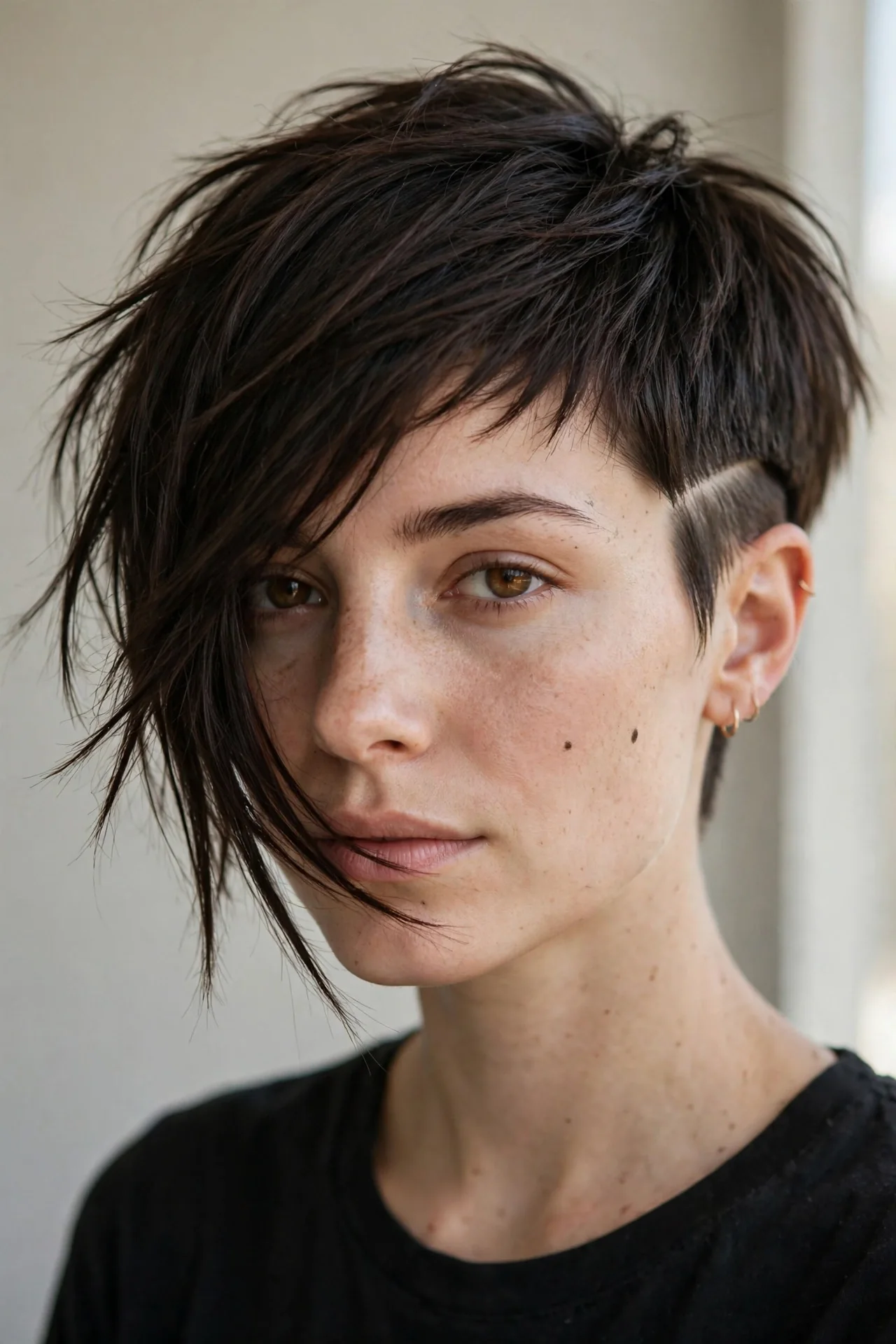
One side cropped close, the other left long and sweeping — the asymmetrical choppy pixie is the most architectural cut on this list, and the choppy texturing keeps it wearable rather than severe. It suits oval and heart faces beautifully, because the long side creates a diagonal line that slims and elongates, while the short side shows off the jawline and neck. Fine to medium straight hair shows the asymmetry most crisply, though wavy hair adds a softer, romantic take. This cut turns heads in the best way: it is bold, modern, and surprisingly flattering once the balance is right.
- Blow-dry the long side smooth in the direction it naturally falls.
- Apply pomade to the short side to keep it sleek against the head.
- Deepen your side part to exaggerate the asymmetric line.
- Tuck the short side behind your ear to sharpen the contrast.
Ask your stylist for a pixie with a distinct length difference — the short side tapered close, the long side reaching the cheekbone or jaw — with choppy point-cutting through the longer side so it moves instead of hanging flat. Precision matters here, so choose a stylist whose portfolio shows short precision cuts. At home, styling takes about ten minutes: dry each side in its own direction and define with product. Trim every four to five weeks, since asymmetry loses its impact as the short side grows. If you tire of the drama, the short side grows out into an even pixie within a couple of months.
A Short Choppy Shag with Curtain Bangs
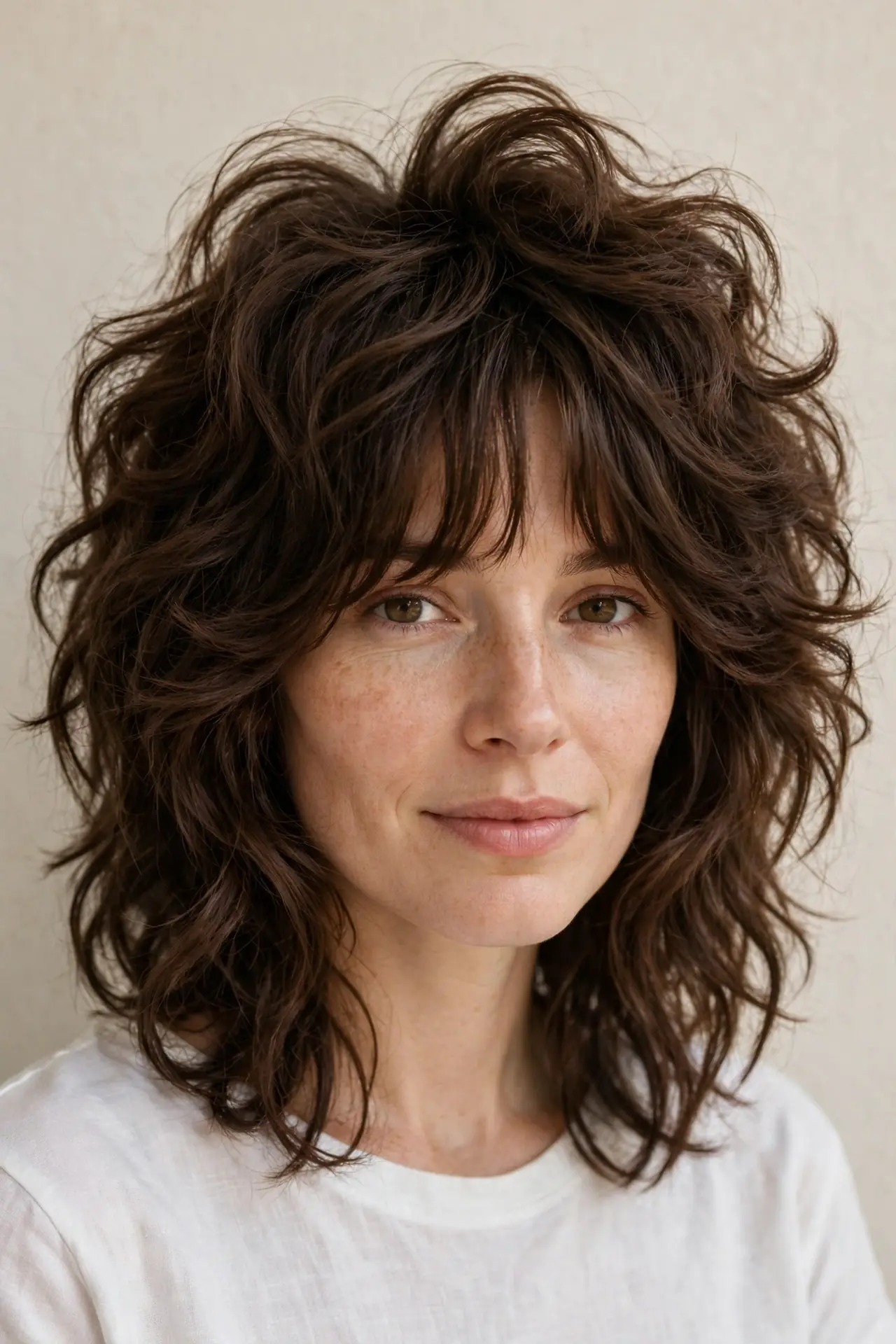
The short choppy shag brings seventies rock-star energy into a modern, wearable cut: heavily layered crown, shattered ends, and curtain bangs that part in the middle and frame the eyes. It flatters oval, long, and heart faces, because the curtain bangs shorten a long forehead and the voluminous crown balances narrow features. Medium to thick wavy hair is the dream texture — the layers amplify natural wave into full, bouncy movement. Straight hair can wear it too with a little wave-enhancing product and a quick tousle with your fingers. It is the cool-girl cut of the moment: effortless, textured, and full of personality.
- Part your curtain bangs down the middle while they are still damp.
- Blow-dry the bangs with a round brush, rolling them away from your face.
- Scrunch the layers with mousse to boost natural wave and volume.
- Flip your whole head forward and shake for instant rocker texture.
Ask your stylist for a short shag with the shortest layers at the crown, choppy ends throughout, and curtain bangs cut to cheekbone length so they frame rather than cover your eyes. If your hair is very thick, ask for the weight removed from underneath so the shag sits close instead of mushrooming. Your routine centers on enhancing texture: mousse or curl cream on damp hair, then diffuse or air-dry. Refresh the bangs between washes with a quick blow-dry — they are the focal point and worth the extra minute. Trim every six to eight weeks to keep the shaggy layers defined.
The Blunt-Base Bob with Choppy Surface Texture
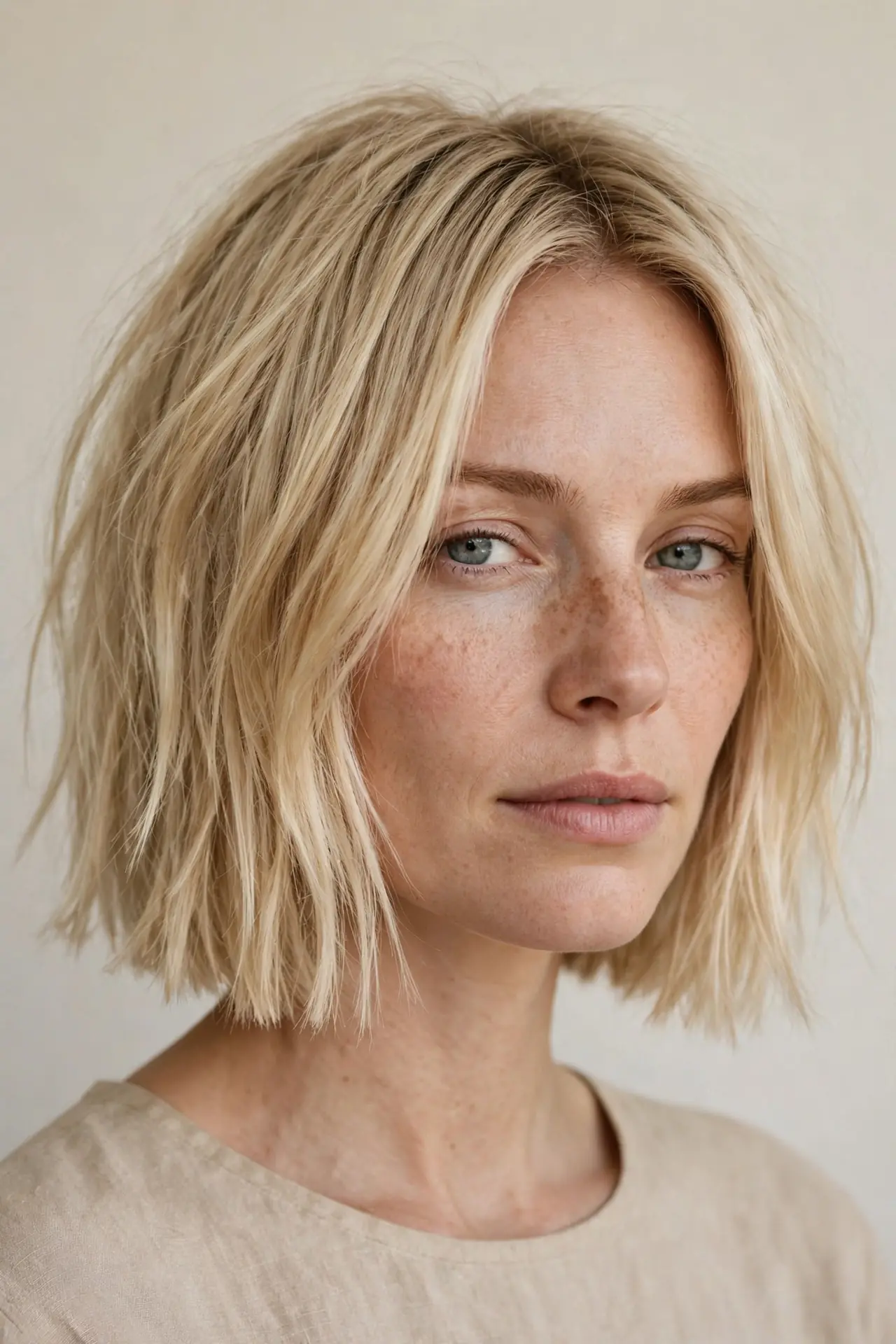
This cut gives you the best of both worlds: a clean, blunt perimeter at jaw length for that sharp, polished line, with choppy, shattered layers carved only into the top surface for movement and texture. It flatters oval, round, and square faces — the blunt baseline defines the jaw while the broken surface layers prevent the cut from looking heavy or severe. Fine to medium hair is ideal: the blunt ends make hair look thicker, while the choppy interior keeps it from falling flat. Straight hair shows off the contrast best, with the sleek baseline playing against the tousled top.
- Flat-iron the bottom two inches straight for a crisp, clean baseline.
- Backcomb lightly at the crown, then smooth the top layer over it.
- Piece out the surface layers with a tiny amount of wax.
- Mist with flexible-hold spray so the texture moves naturally.
Ask your stylist for a one-length bob cut blunt at the jawline, then interior choppy layers cut into the top half only — the perimeter must stay perfectly even for the contrast to work. Emphasize that you want the texture invisible from underneath: when the hair hangs still it should read as a blunt bob, and the choppiness reveals itself in movement. Style by smoothing the baseline and roughing up the top — two different techniques for one head of hair. Trim every six weeks to keep the blunt edge sharp; the surface layers can go a little longer between appointments.
A Choppy Boyish Crop with a Side Sweep
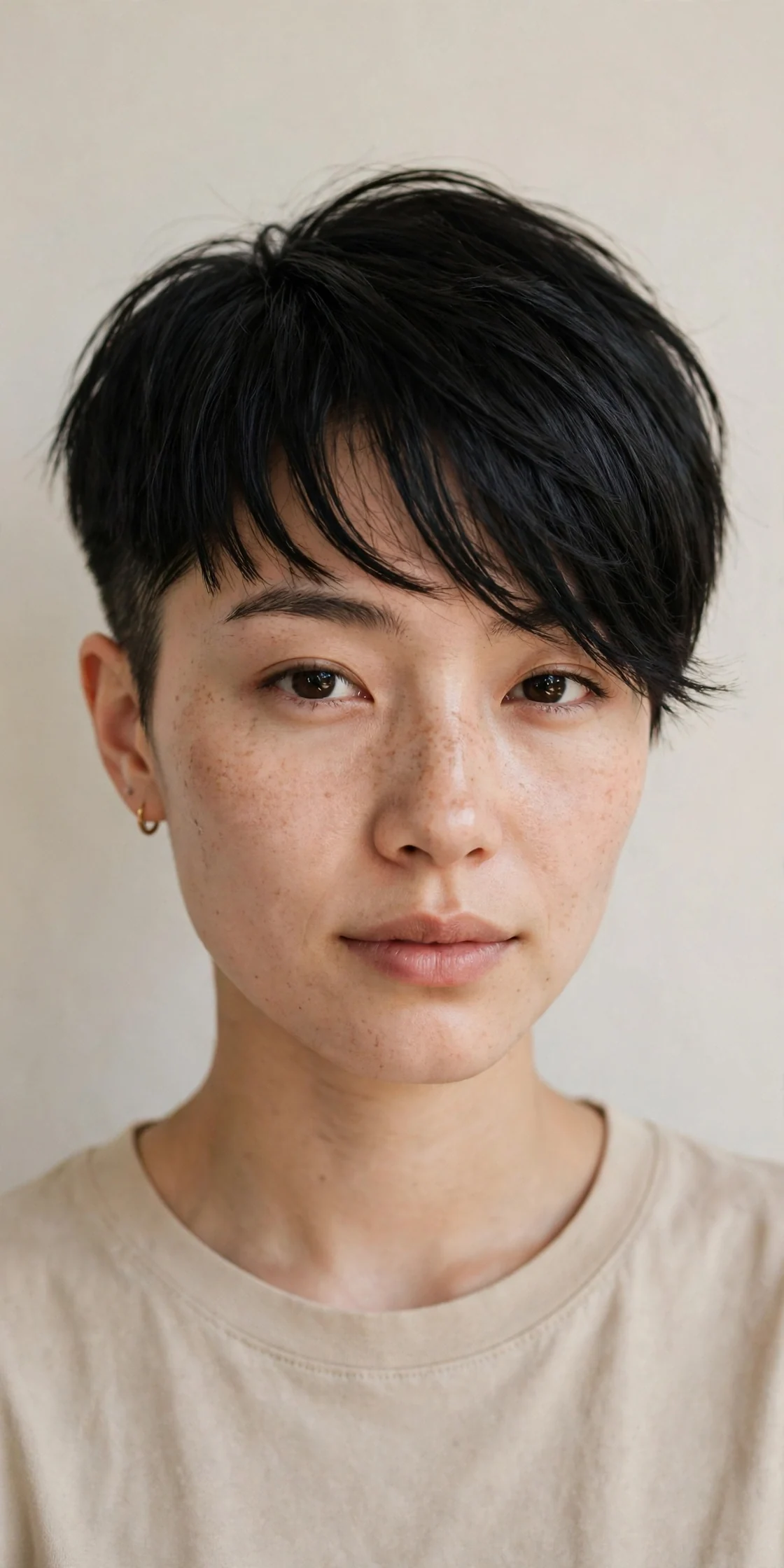
The boyish crop borrows its silhouette from classic menswear — short back and sides, a little more length on top — but the choppy texturing and a soft side-swept fringe keep it unmistakably feminine. It suits oval, heart, and square faces, where the side sweep softens angles and the short length spotlights the eyes and cheekbones. Fine to thick straight or wavy hair both work: fine hair gets volume from the short layers, thick hair gets relief from the tapered sides. It is the ultimate wash-and-wear cut for women who want style without fuss — gamine, chic, and quietly confident.
- Sweep damp hair to your preferred side before it dries.
- Blow-dry the fringe across your forehead with a vent brush.
- Rub a small amount of paste between your fingers for separation.
- Push the crown slightly forward for a soft, modern finish.
Ask your stylist for a short crop with tapered sides and nape, about two inches of choppy length on top, and a side-swept fringe long enough to reach the brow. The key word is “soft” — you want the edges textured, not clippered harshly. At home, this is a five-minute cut: product on damp or dry hair, sweep, and go. It also air-dries beautifully if you set the part while it is wet. Trim every four weeks to maintain the tapered shape. As it grows, it transitions naturally into a longer pixie, so you are never stuck with an awkward stage if you change your mind.
Conclusion
Short choppy haircuts prove that texture is the real secret to great short hair — a few well-placed uneven layers can make fine hair look fuller, thick hair feel lighter, and any face shape look more defined. Whether you lean toward the boldness of an undercut bob, the romance of a tousled face-framing cut, or the ease of a wash-and-go crop, there is a choppy version with your name on it. Bring photos to your appointment, be honest about how much styling time you will actually do, and trust a stylist who understands textured cutting. If bangs are calling your name, our guide to trending choppy bob with bangs hairstyles will help you pick the perfect fringe to pair with your new cut.



2 Comments