12 Short Shag Haircuts for Fine Hair
Introduction
If your hair is fine, you already know the struggle: it lies flat, refuses to hold a curl, and by midday your morning volume has quietly disappeared. The good news is that short shag haircuts for fine hair are practically designed to solve every one of those problems. With feathery layers, choppy ends, and built-in texture, shags trick the eye into seeing fullness, bounce, and movement where fine strands would otherwise fall limp. You do not need extensions or a cabinet full of products — you need the right cut. Below, you will find twelve shaggy styles that work with fine hair instead of against it, each with styling tips and maintenance advice so you walk out of the salon knowing exactly what to do at home. Prefer more length? See our shaggy hairstyles for women over 50 with thin, fine hair for longer layered options with the same airy texture.
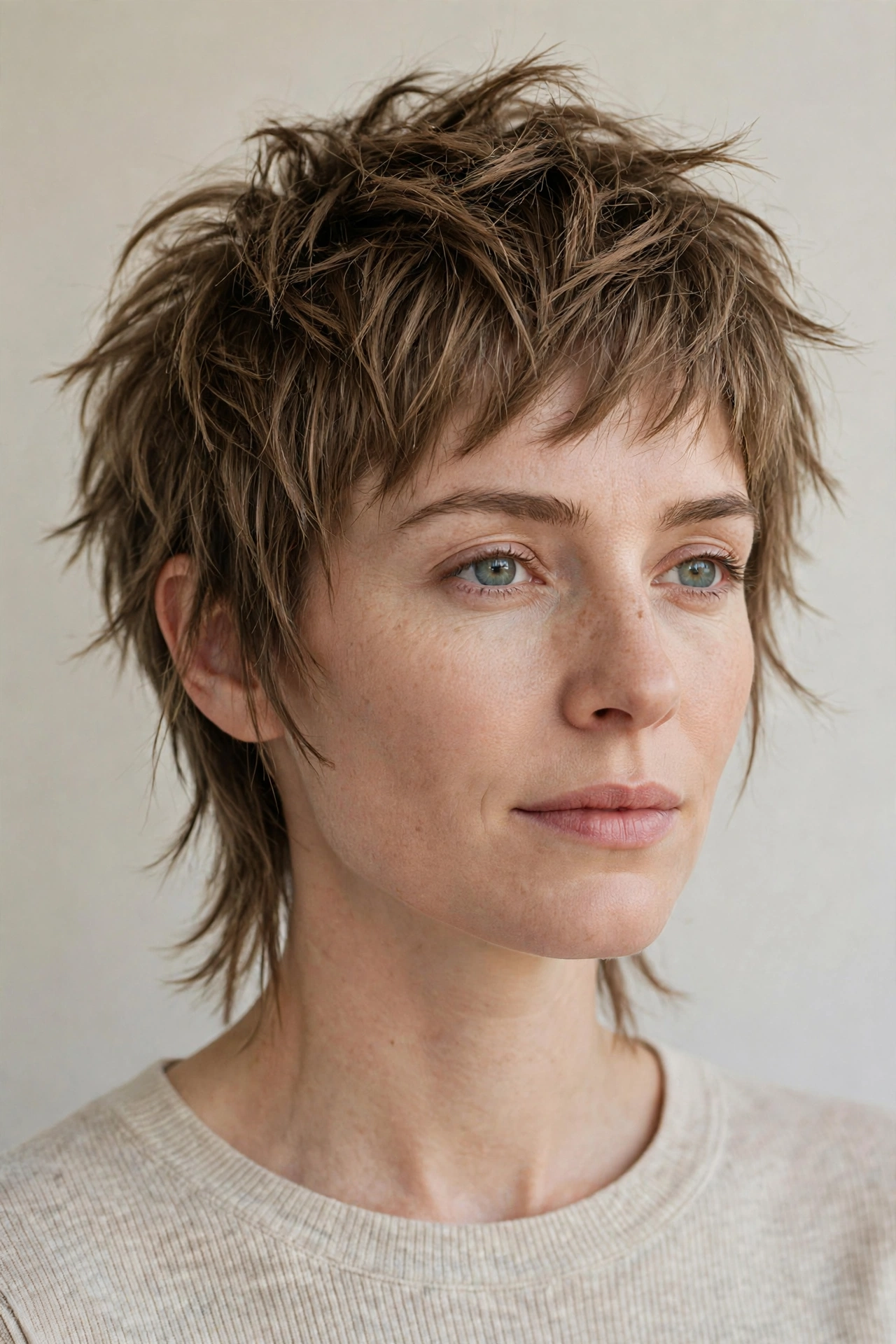
Choppy Textured Pixie Shag
The choppy textured pixie shag is the boldest answer to fine hair on this list. It takes the classic pixie silhouette and roughs it up with jagged, piecey layers through the crown and sides, leaving longer wisps around the ears and nape for that unmistakable shag DNA. This cut suits women with delicate facial features and anyone embracing shorter hair for the first time. Because the layers are cut at varied lengths, light catches each piece differently, creating the illusion of density — something fine hair desperately needs. Your stylist will likely use point cutting or a razor to soften the ends so nothing looks blunt or blocky.
- Ask your stylist to keep weight in the crown for maximum height.
- Work a pea-sized amount of matte paste through dry hair to separate pieces.
- Blow-dry upward at the roots with a small round brush for lift.
- Skip heavy serums that weigh fine strands down and flatten texture.
To get the most from this cut, start with nearly dry hair and rough-dry with your head flipped upside down — gravity does half the volumizing work. Pinch small sections with a dab of texturizing cream to help those choppy bits stand apart. Let the longer pieces around your ears air-dry, or tuck them behind one ear for an asymmetric feel. Refresh the shape every four to six weeks, since shaggy layers grow out quickly, and a light dusting of dry shampoo at the roots on day two keeps the crown from going flat. This hybrid rewards low effort, so resist the urge to over-style.
Layered Bob Shag with Curtain Bangs
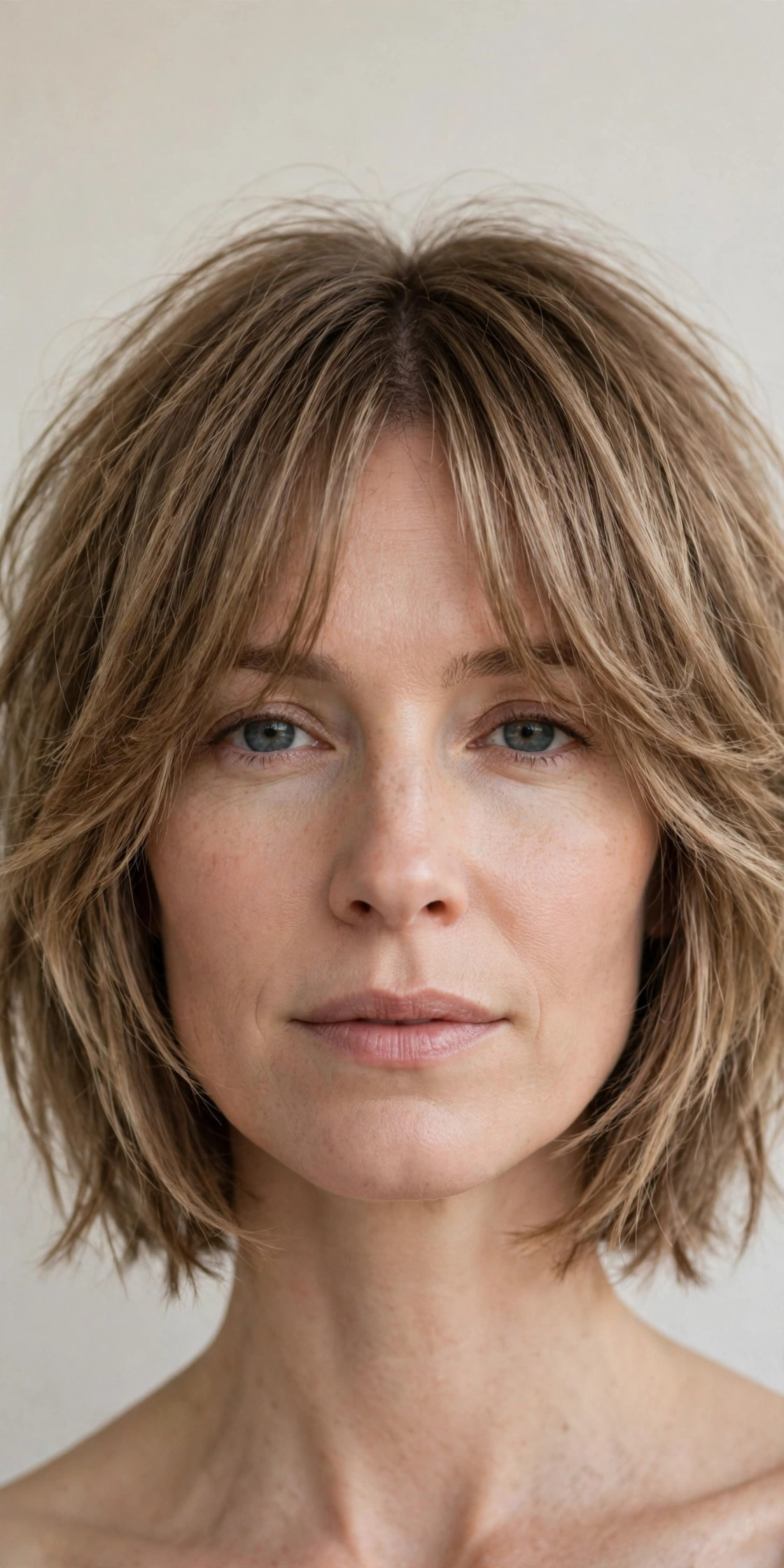
Few cuts flatter fine hair like a layered bob shag paired with curtain bangs. The bob sits at or just below the jawline, while internal layering removes just enough weight to let the ends flick outward with effortless, tousled swing. Curtain bangs parted down the middle sweep outward to frame your cheekbones while hiding a thinning hairline — a common concern with fine hair. This style suits almost every face shape, but it is especially kind to round and heart-shaped faces, where the parted fringe creates the illusion of length. The secret to its fullness: layers concentrated through the mid-lengths leave the perimeter looking thicker while the interior moves freely.
- Part bangs in the center and blow-dry each side outward with a round brush.
- Spritz roots with a volumizing spray before drying for lasting lift.
- Twist random sections around your fingers while drying to encourage wave.
- Refresh ends with a wide-tooth comb rather than a brush to preserve pieceyness.
Ask your stylist for a jaw-grazing length with long, blended layers rather than dramatic ones — fine hair can look stringy if layers are cut too short. At home, apply mousse to damp hair and dry in sections, lifting at the roots; finish by flicking the ends outward with a flat iron for a retro shag flip. If your bangs separate into a wispy gap, a drop of lightweight balm smooths them without greasiness. Trim every six to eight weeks to keep the perimeter crisp, and consider a gloss treatment twice a year for extra shine and the appearance of thickness.
Feathered Pixie Shag with Wispy Crown
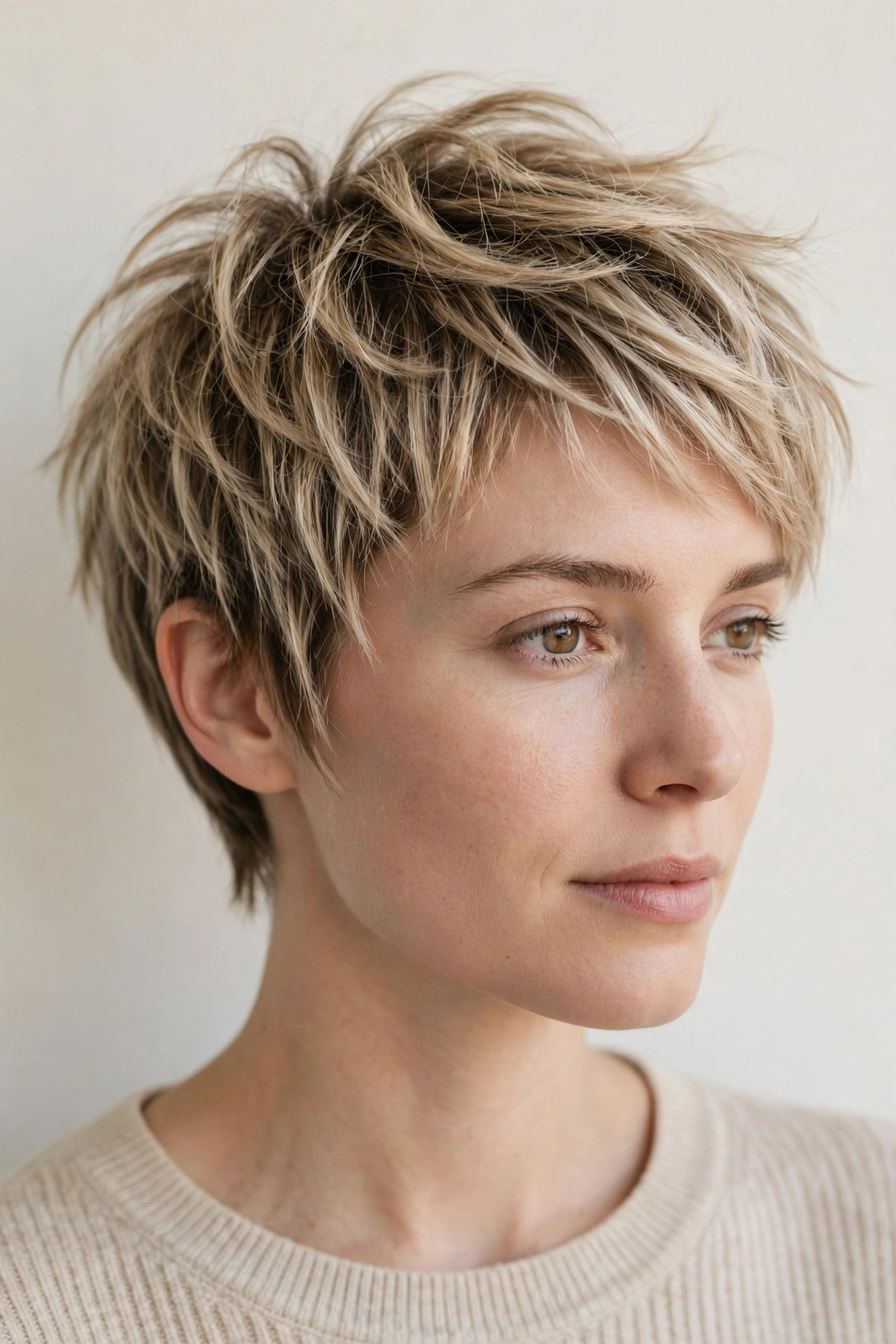
The feathered pixie shag with a wispy crown is all about softness. Instead of hard, choppy edges, this version uses feathering — tiny, tapered cuts along the perimeter and crown — to create a cloud-like halo of texture. It suits women with fine, straight hair who want a short cut that still feels feminine and touchable, and it is forgiving on oval and long face shapes because the soft crown layers add width rather than height. Why does it work for fine hair? Feathering removes bulk where strands tend to clump together, so each layer floats independently instead of collapsing into one flat sheet. The result reads as airy fullness rather than helmet-like volume.
- Direct crown sections forward while blow-drying to build soft fullness.
- Use a feathering razor request at the salon for truly seamless tapering.
- Dab a light styling cream on fingertips and flick ends outward.
- Sleep on a silk pillowcase to keep feathery ends smooth overnight.
To style it, rough-dry with a diffuser on low heat, pushing the crown layers forward and upward. When hair is fully dry, warm a tiny amount of flexible cream between your palms and flick the ends in different directions — the goal is a just-tousled, wind-kissed finish. A shorter variation with more length on top suits anyone growing out a pixie, while a slightly longer nape version reads more like a modern shag. Maintenance is easy: a trim every five weeks keeps the feathering crisp, and with no hard lines, it grows out gracefully between appointments. Avoid daily washing if you can — second-day hair often holds feathered texture even better.
Tousled French Bob Shag

The tousled French bob shag brings Parisian nonchalance to fine hair, and it is one of the chicest short shag haircuts for fine hair here. Cut to lip or chin length with deliberately undone, broken-up layers, it channels that “I woke up like this” elegance. This cut suits women who prefer polish without fussiness, flattering square jawlines as the soft, ragged ends blur strong angles. For fine hair, the magic lies in the texture: those intentionally imperfect pieces create dimension and movement, making one head of hair look like it has twice the strands. A side-swept fringe or micro-bangs completes the look and adds coverage at the front where fine hair often looks sparse.
- Embrace air-drying — this cut looks best with natural, imperfect texture.
- Scrunch a golf-ball-sized amount of mousse into damp lengths.
- Define a few random pieces with a 1-inch curling wand, alternating directions.
- Finish with a light mist of flexible-hold hairspray, never a stiff one.
Tell your stylist you want the perimeter blunt enough to look thick, with shattered, point-cut layers inside for movement. Styling takes minutes: apply mousse, scrunch, and air-dry, then touch up only the pieces that need it with a wand. For straighter fine hair, a quick pass with a flat iron bent at the ends creates the same tousled wave. The French bob shag grows out into a lovely lob, so you can stretch trims to eight weeks. If your hair leans oily, a touch of texturizing powder at the roots adds grit and volume without dry shampoo’s heaviness.
Micro Bangs Shag Crop

A micro bangs shag crop is the edgy, fashion-forward pick of the bunch — short, textured bangs cut well above the brows paired with a messy, layered crop around the ears. This style suits confident personalities and fine hair with some natural wave or bend, since the texture does the styling for you. The micro bangs draw attention to your eyes and brows while the shaggy, uneven layers around the crown build height and body. For fine hair, keeping everything cropped means less weight pulling strands downward, so volume stays where you put it. It is also wonderful if you love accessories — the short fringe frames statement earrings and bold glasses perfectly.
- Keep bangs slightly longer than you think — they bounce up as they dry.
- Finger-style with a small amount of clay for piecey definition.
- Let the back grow slightly longer than the front for a modern mullet-ish edge.
- Book fringe trims every three weeks to keep micro bangs sharp.
At the salon, ask for choppy, shattered layers through the crown and sides, with bangs cut dry so your stylist sees exactly where they will fall. Styling is delightfully simple: apply a root-lifting spray, rough-dry while scrunching, and define individual pieces with your fingers and a dab of matte clay. A slightly grown-out version transitions easily into a pixie shag, so you are never stuck. This cut needs the most frequent fringe maintenance here, but many salons offer complimentary bang trims between full appointments — ask yours. If your fine hair is pin-straight, a salt spray before drying adds the grit needed to hold those piecey ends apart.
Asymmetrical Shag Bob
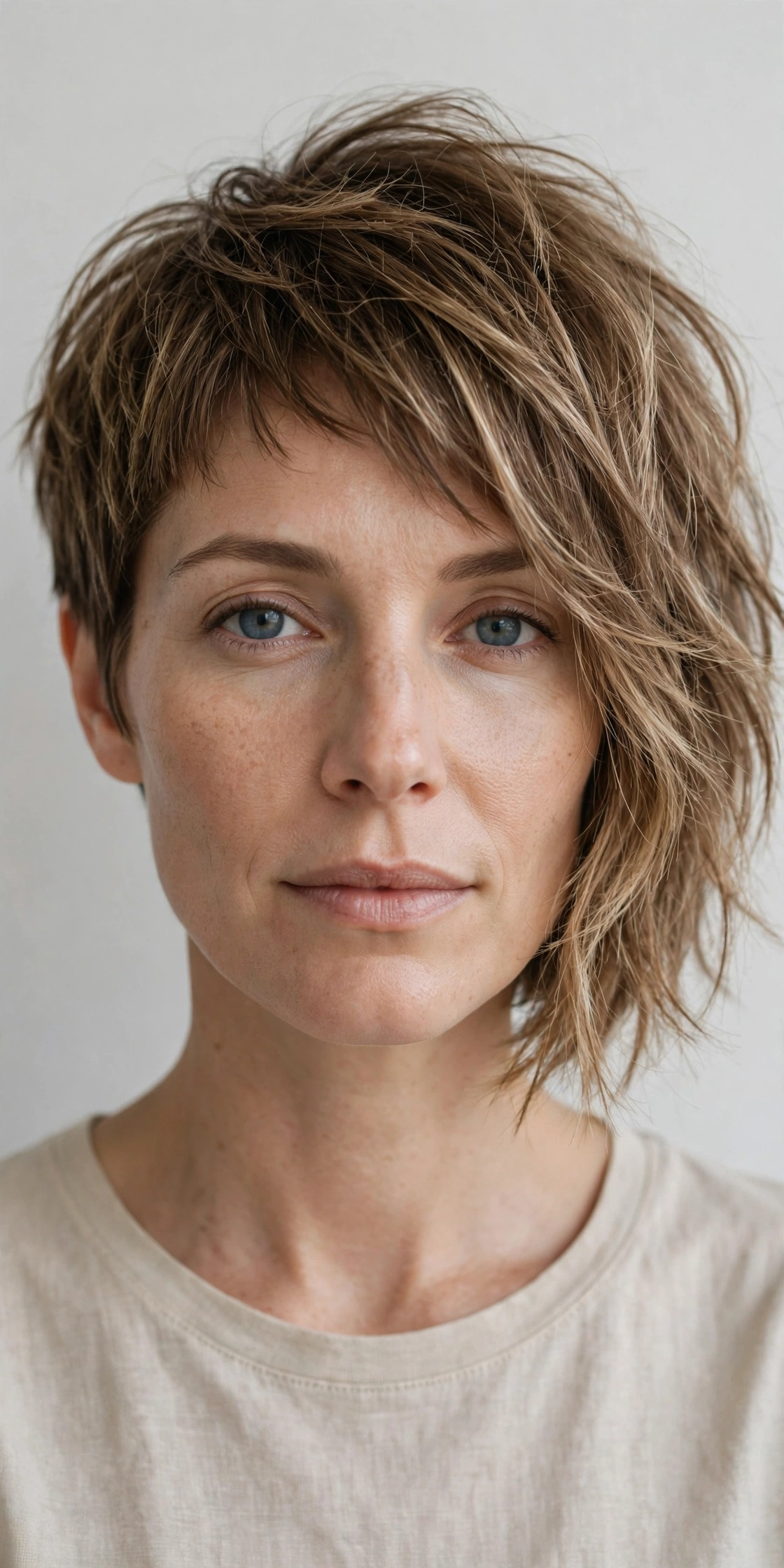
The asymmetrical shag bob gives fine hair instant drama: one side sweeps longer, grazing the chin or collarbone, while the other is cropped shorter with shaggy, deconstructed layers. This cut suits women who want built-in personality, and it is especially flattering on round faces because the longer sweep creates a slimming diagonal line. For fine hair, asymmetry is a secret weapon — the eye follows the longer line and registers more hair than actually exists, while the layered shorter side provides volume and texture. It also hides uneven growth beautifully, making it one of the most forgiving grow-outs in the shag family.
- Sweep the longer side over with a deep side part for maximum impact.
- Dry the shorter side with a round brush for a smooth, tucked finish.
- Alternate styling: flip the part for a quick, casual change-up.
- Use a shine spray on the longer pieces to highlight the asymmetry.
Ask your stylist for at least a one-to-two-inch difference between sides, with layers that get progressively shorter toward the back for a classic shag stack. To style, create a deep side part on damp hair, apply volumizing mousse, and blow-dry the longer side smooth while tousling the shorter side — that mix of sleek and messy is what makes it modern. A flat iron refines the longer sweep, while a dab of texture paste adds grit to the cropped side. Trim every six to seven weeks to preserve the intentional imbalance, and if you ever want to even it out, the longer side simply grows into a standard shag bob.
Curly-Textured Short Shag
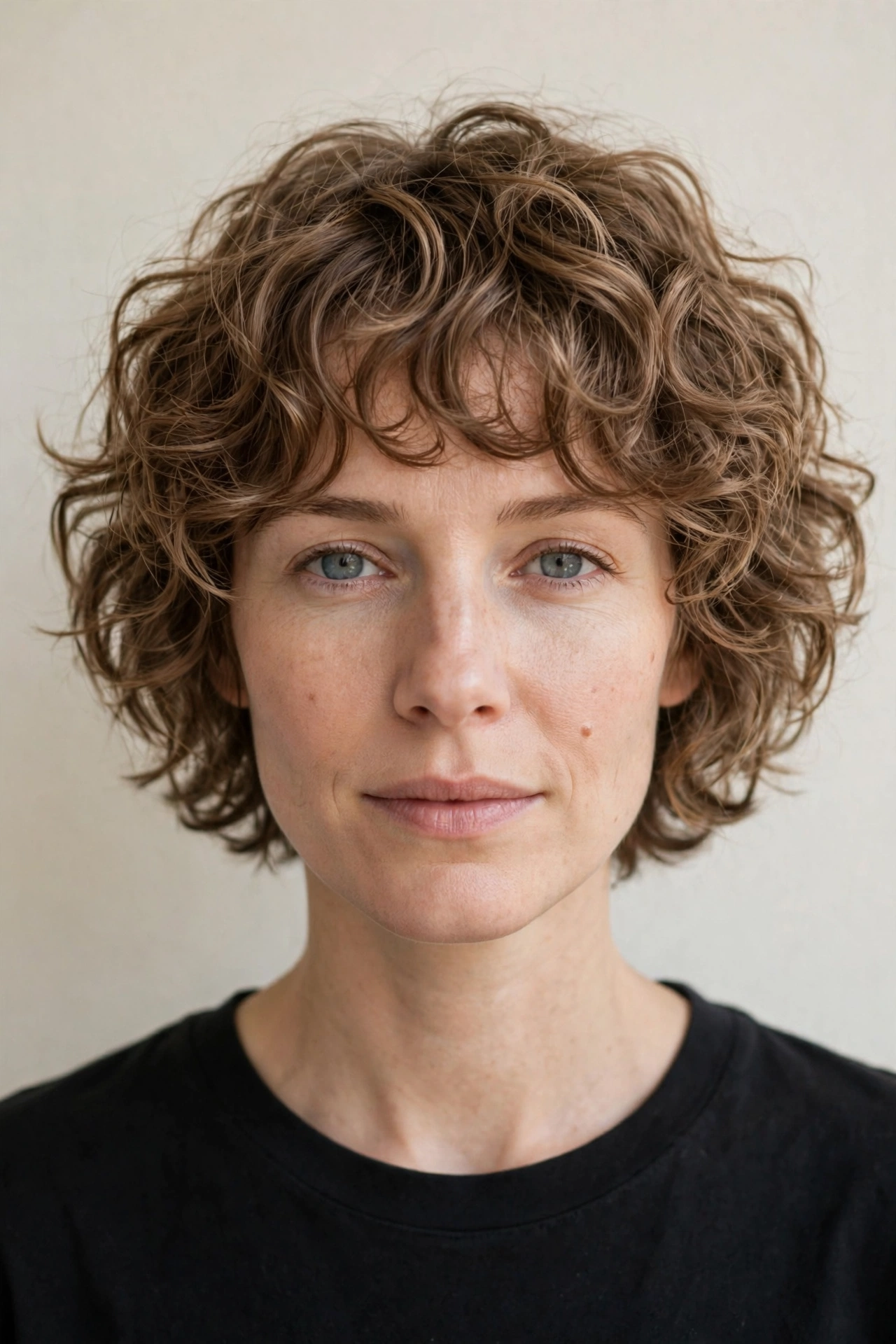
If your fine hair has natural curl or wave, a curly-textured short shag lets it do what it wants to do — only better. Cut with layers that follow your curl pattern, this shag sits from ear to jaw length and encourages spirals and waves to spring into their fullest shape. This style suits women with fine, curly or wavy hair who are tired of triangle-shaped volume at the ends, because the rounded shag layers distribute fullness evenly around the head. It works so well because curls naturally expand outward, and when fine strands are layered correctly, that expansion reads as thickness. A curl-by-curl cutting technique gives the most precise result.
- Apply curl cream to soaking-wet hair, then scrunch upward to encourage clumps.
- Diffuse on low heat and speed, cupping sections to protect the pattern.
- Refresh day-two curls with a light water-and-cream mist, not full washing.
- Pineapple your hair in a loose scrunchie overnight to preserve volume.
Find a stylist experienced in cutting curly hair dry, so they can see exactly how each layer will shrink and settle. At home, keep the routine simple: hydrating shampoo and conditioner, a leave-in, then curl cream scrunched through dripping-wet strands. Never brush dry curls — it destroys definition and turns fine curls into frizz. A shorter bang area with curly fringe makes this look even more playful, while a longer version softens into a shaggy lob. Trim every eight to ten weeks, and remember that fine curls thrive with less product, not more — a light touch keeps them bouncy instead of weighed down.
Shaggy Pixie with Long Fringe
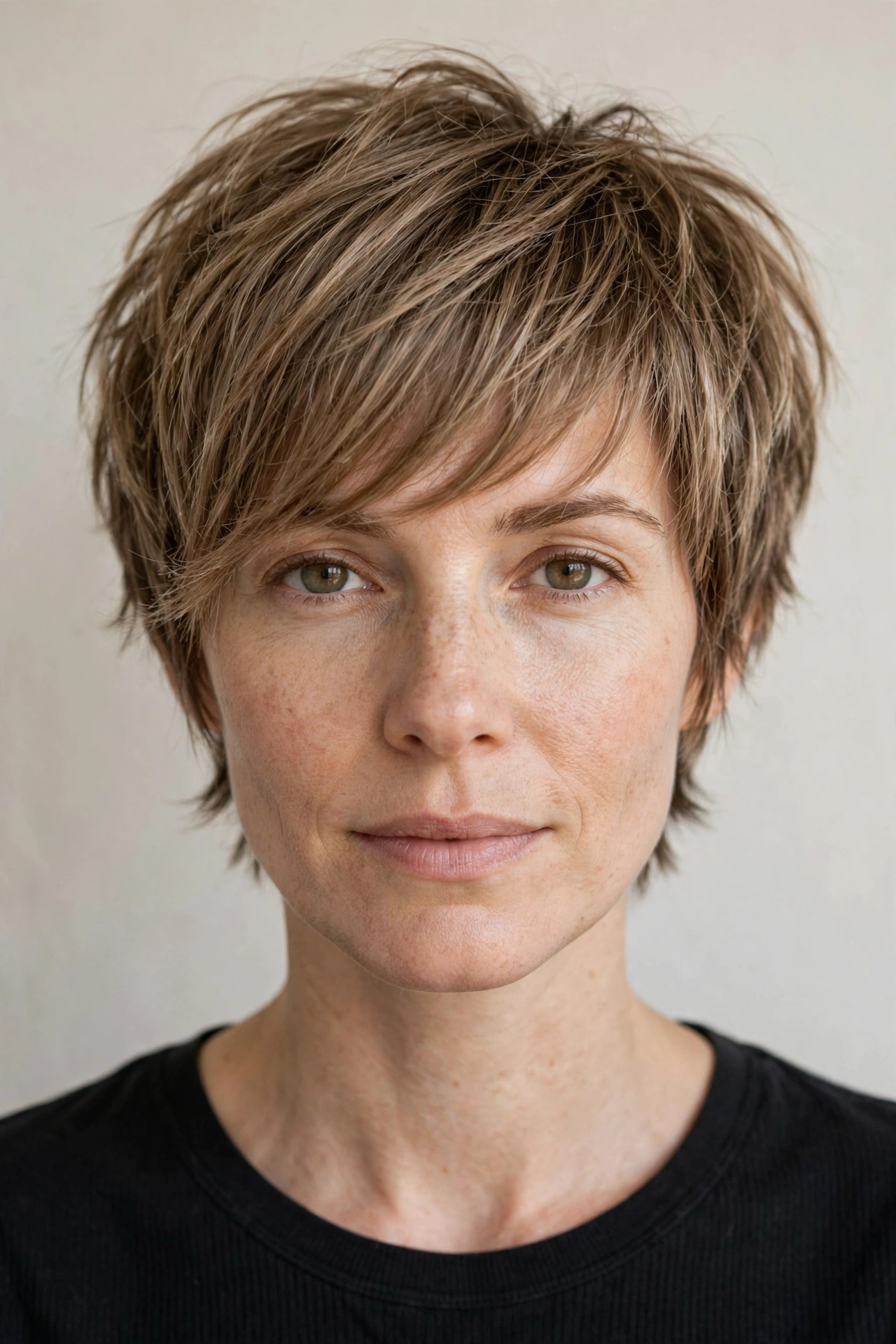
The shaggy pixie with long fringe is the best of both worlds: short, textured layers at the back and crown, with a dramatically longer fringe sweeping across the forehead. This cut suits women with fine hair who are nervous about going very short, because the long fringe gives styling versatility and the option to feel covered up front. It flatters heart-shaped and oval faces, where the sweeping fringe balances a wider forehead. For fine hair, the long fringe adds perceived density right where people look first — your face — while the shaggy back layers keep the silhouette light and airy. Sweep it to one side, tuck it behind an ear, or wear it straight across for completely different moods.
- Blow-dry the fringe forward first, while it is wettest, to control its direction.
- Use a flat brush on the fringe and round brush on the crown for contrast.
- Switch your part side occasionally to prevent the fringe from lying flat.
- Add clip-in volume at the crown only if the back feels too close to the head.
Ask your stylist to keep the fringe long enough to tuck behind your ears — that length gives maximum styling options. To style, dry the fringe forward with a paddle brush for smoothness, then tousle the back with your fingers and a touch of texture spray. For evenings, sweep the fringe dramatically to one side and pin it loosely for a vintage feel. The back needs trimming every five to six weeks to keep its shape, but the fringe can grow out gracefully into curtain bangs if you want a change. This is one of the most versatile short shag haircuts for fine hair, so experiment until you find your signature sweep.
Stacked Shaggy Bob
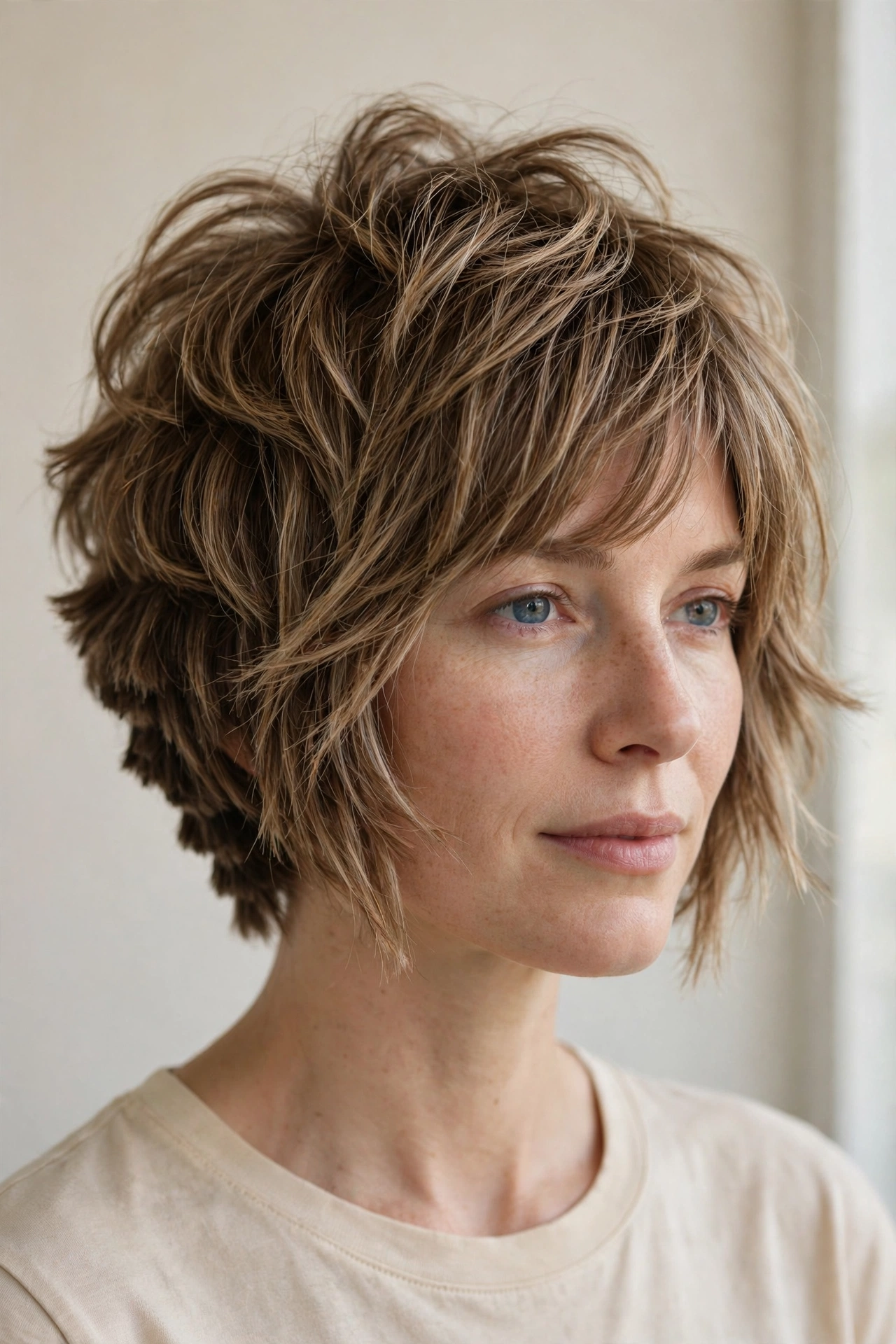
The stacked shaggy bob is the volume king of this list. Shorter, graduated layers stack up at the nape like steps, building automatic height at the back of the head, while the front falls longer and shaggy around the jawline. This cut suits women with fine, straight hair who crave serious lift at the crown, and it is a classic choice for mature women because the stacked back creates a youthful, lifted silhouette. It works for fine hair because stacking is structural — the shorter layers physically push the longer ones upward, creating volume that does not depend on products or heat styling. The shaggy, textured ends keep it from looking like a dated, overly rounded bob.
- Blow-dry the nape upward with a round brush to emphasize the stack.
- Backcomb the crown lightly for special occasions, then smooth the surface.
- Keep the front pieces longer than the back by at least two inches.
- Use a root-lifting powder at the crown for all-day structural hold.
At the salon, ask for a soft, modern stack — not the severe, sharp-angled versions from decades past. Styling is straightforward: apply mousse to damp hair, dry the nape section upward and forward, and let the front pieces fall naturally. A slight bend at the ends with a flat iron gives the shaggy pieces definition. Because the graduation is precise, this cut needs reshaping every five to six weeks to maintain its lift. Fine hair often struggles to hold stacked volume past day one, so a light mist of strong-hold spray at the crown before bed preserves the shape overnight. Choose this cut when you want your fine hair to look dramatically fuller.
Undercut Shag Pixie
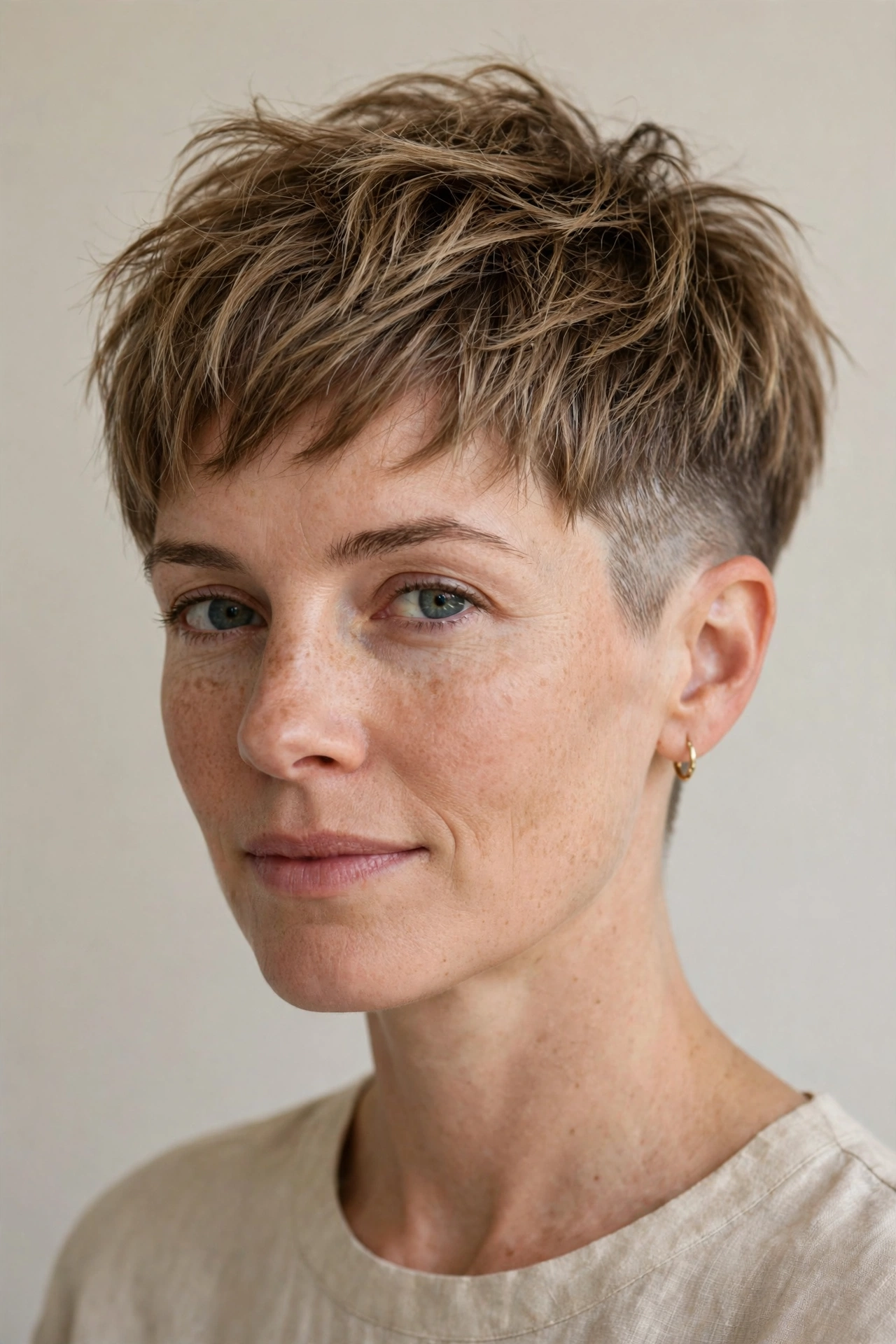
The undercut shag pixie pairs a closely cropped undercut at the nape and sides with longer, shaggy layers on top that fall over it. This style suits bold women with fine hair who want an edgy look that is secretly low-maintenance — the undercut removes weight where fine hair is thinnest, while the top layers get all the attention. It works well in warm climates and for active lifestyles, since the undercut keeps the neck cool and cuts drying time. For fine hair, this is almost a cheat code: removing the bottom layers entirely means the remaining hair only has to cover the top of your head, where it naturally looks denser. The contrast between the tight sides and the tousled top creates instant visual interest.
- Keep the undercut tight with touch-up trims every three to four weeks.
- Style only the top — the undercut needs no daily attention at all.
- Add a design or fade line at the salon if you want extra personality.
- Grow the top longer between cuts while the undercut stays short.
Ask your barber or stylist for a disconnected undercut — the top layers clearly longer than the faded sides — for the strongest contrast. To style, apply a volumizing product to the damp top section, rough-dry while lifting at the roots, and finish with texture paste for piecey separation. The undercut itself can be maintained with clippers at home if you are comfortable, or through quick salon visits. As the top grows, sweep it further back or to the side for new looks without changing the cut. Fine-haired women love this style because wash-and-go actually means wash-and-go — the undercut does most of the heavy lifting.
Beachy Wavy Shag Lob

The beachy wavy shag lob — a long bob grazing the collarbone — is the most low-commitment of the short shag haircuts for fine hair, and perfect if you are not ready to go very short. Its loose, beachy layers enhance natural wave, and the longer length still pulls into a ponytail or bun. This cut suits nearly everyone, but it is a dream for women with fine, wavy hair who want movement without sacrificing length. Why does it work? The shag layering removes just enough weight to let fine waves spring up, while the lob length creates the illusion of more hair overall. The beachy texture also camouflages the stringiness fine hair can develop at longer lengths.
- Twist damp sections and let them air-dry for natural beachy waves.
- Scrunch in sea-salt spray for texture and a lived-in finish.
- Braid loosely overnight for heatless waves by morning.
- Flip your part to the opposite side for instant root lift.
Request long, blended layers with face-framing pieces starting at the chin — your stylist should avoid cutting layers too short on top, which can make fine hair look sparse. Styling is the easiest here: work salt spray or a light mousse through damp hair, twist a few sections, and air-dry or diffuse. For straighter fine hair, a large-barrel wand creates soft waves in about ten minutes; alternate the curl direction for the most natural result. Trim every eight weeks to keep the ends healthy, since fine hair shows damage quickly at lob length. This shag grows out beautifully, so it is also the perfect first step toward shorter styles later.
Razored Shag with Face-Framing Layers
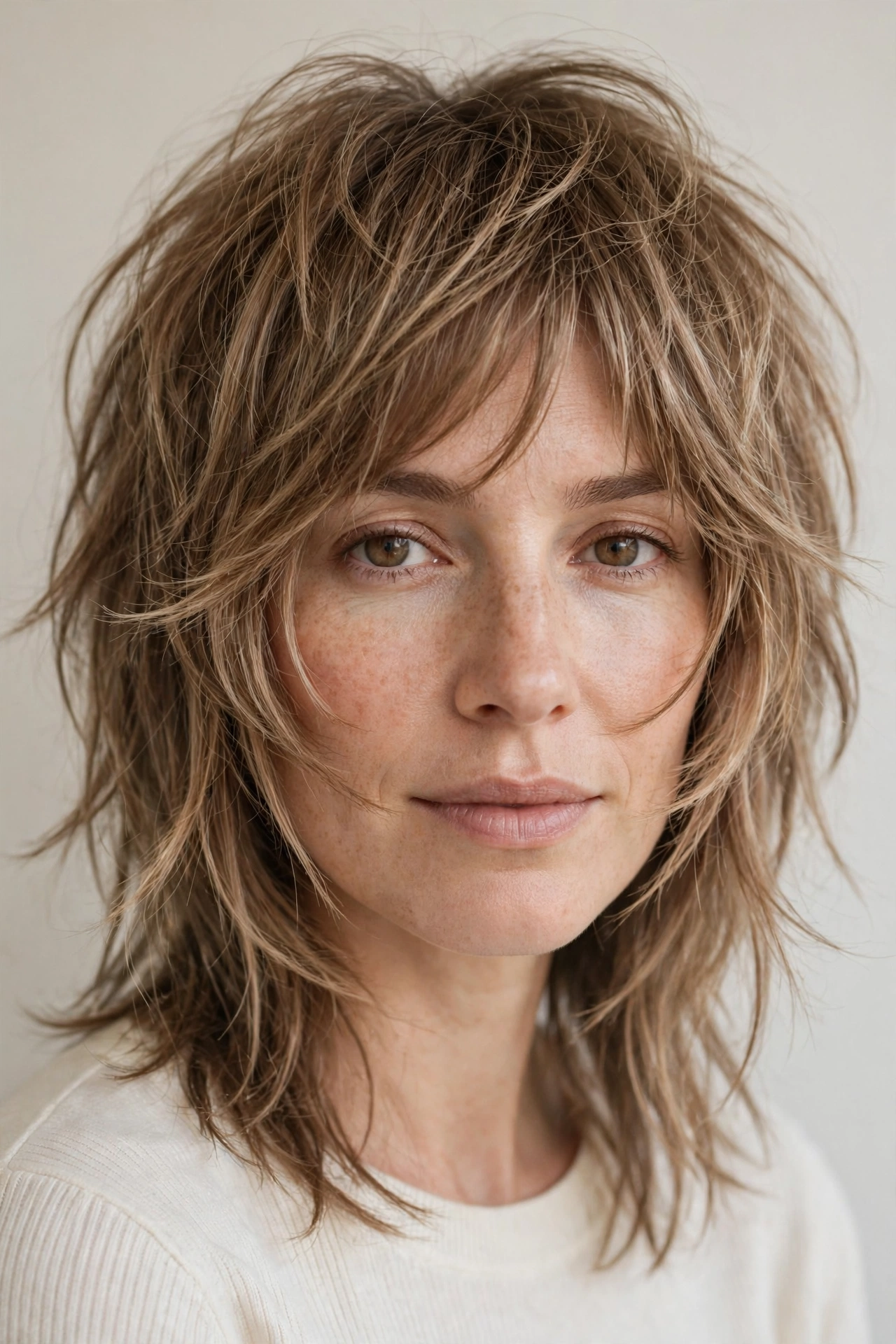
The razored shag with face-framing layers is the classic rock-and-roll shag, updated for fine hair. A razor is used instead of scissors through the interior layers, creating wispy, feathered ends that move like they have a life of their own, while longer face-framing pieces spotlight your cheekbones and jawline. This cut suits women with fine, straight to slightly wavy hair who want maximum movement and a touch of edge. It works for fine hair because razor cutting thins the ends gradually rather than cutting them blunt, preventing the dreaded triangle shape and making each layer flutter independently. The face-framing pieces also add perceived fullness around your features, where it matters most.
- Ask specifically for razor-cut layers, not just thinned ends, at the salon.
- Blow-dry face-framing pieces forward and under for a soft curtain effect.
- Flip ends outward with a flat iron for the classic seventies shag flick.
- Use a lightweight oil only on the very ends to prevent dryness.
Tell your stylist you want the shortest layers at the crown and the face-framing pieces starting around the cheekbones for the most flattering effect. To style, rough-dry with a diffuser, then use a flat iron to flick random pieces outward — the razored ends take this bend beautifully. Curl the face-framing layers under for softness or leave them straight for edge. Razor cuts can leave fine hair prone to split ends, so trim every six weeks and use a weekly deep-conditioning mask. A touch of dry shampoo at the roots on day two revives crown volume, and this shag looks even better slightly lived-in, so skip a wash occasionally.
Conclusion
From the bold choppy pixie shag to the easygoing beachy wavy lob, these twelve styles prove that fine hair and short shags are a perfect match — every cut on this list uses layering, texture, and clever weight distribution to create the fullness fine strands lack on their own. The real secret is customization: bring reference photos to your stylist, discuss your hair’s natural texture and your daily routine honestly, and choose the version you will actually enjoy styling. Keep up with regular trims to preserve the shape, go easy on heavy products, and remember that second-day texture is often your best friend. With the right shag, your fine hair will not just look thicker — it will feel like it was always meant to move this way. Looking for even more fullness? Our haircuts for women over 70 with natural volume are packed with body-building ideas that work at any age. If a fuller face shape is your concern, our 12 short hairstyles for plus size women are chosen to flatter rounder faces. If your hair is on the finer side, these hairstyles for thin fine hair add fullness without weighing it down. Love layers? Our 12 long curly haircuts with layers for women show how layers transform longer curly hair too. If you like this lived-in texture but want a bit more length, our 12 textured modern medium cuts keep the choppy layers on medium hair.


5 Comments