12 Cozy Winter Hairstyles for Fine Hair

Introduction
Finding cozy winter hairstyles for fine hair that survive a wool beanie is one of the season’s quiet battles. The moment the hat goes on, fine strands press flat against your scalp; take it off, and static turns everything into a halo of flyaways while dry indoor heat saps what little moisture your ends were holding. The fix is not thicker hair — it is smarter winter styling. Below you will find twelve ideas chosen specifically for delicate, fine strands: cuts that manufacture density, updos that slide under hats without crushing, and braids that keep fragile ends out of the wind. Each look balances warmth, hat-compatibility, and volume, so you can come in from the cold looking polished instead of flattened. For styles that tuck ends away completely, pair these with our guide to winter protective hairstyles for women — and let this be the winter your hair stops fighting the season.
Soft Layered Lob with Curtain Bangs
The layered lob is fine hair’s most reliable winter ally: long enough to tuck into a scarf or slide under a beanie, short enough that the ends cannot drag the roots flat. Soft internal layers remove just enough weight for the hair to bounce back after hat compression, while curtain bangs parted down the middle add fullness across the forehead where fine hair often looks sparsest. The collarbone length suits oval, round, and heart-shaped faces beautifully, and it flatters women from their thirties into their sixties who want polish without high maintenance. Because the layers collapse into each other, the style reads thick and touchable even on the coldest, driest days, and a quick shake restores its shape the moment you step indoors.
- Apply a root-lifting mousse to damp roots before blow-drying.
- Blow-dry with a medium round brush, rolling sections upward.
- Part the curtain bangs down the center and sweep them outward.
- Refresh flattened roots with a puff of dry shampoo.
Ask your stylist for a collarbone-grazing lob with invisible internal layering and curtain bangs that blend in at the cheekbones — say you want movement, not visible steps. At home, the whole routine takes fifteen minutes: mousse, round brush, done. On non-wash days, dry shampoo at the crown revives the lift that hats steal, and a pea-sized drop of anti-static cream smoothed over the surface tames winter flyaways without weighing hair down. Book a trim every eight weeks to keep the ends from thinning out; as it grows, this cut melts gracefully into a shoulder-length style, so there is never an awkward phase.
Low Braided Bun, a Cozy Winter Hairstyle for Fine Hair
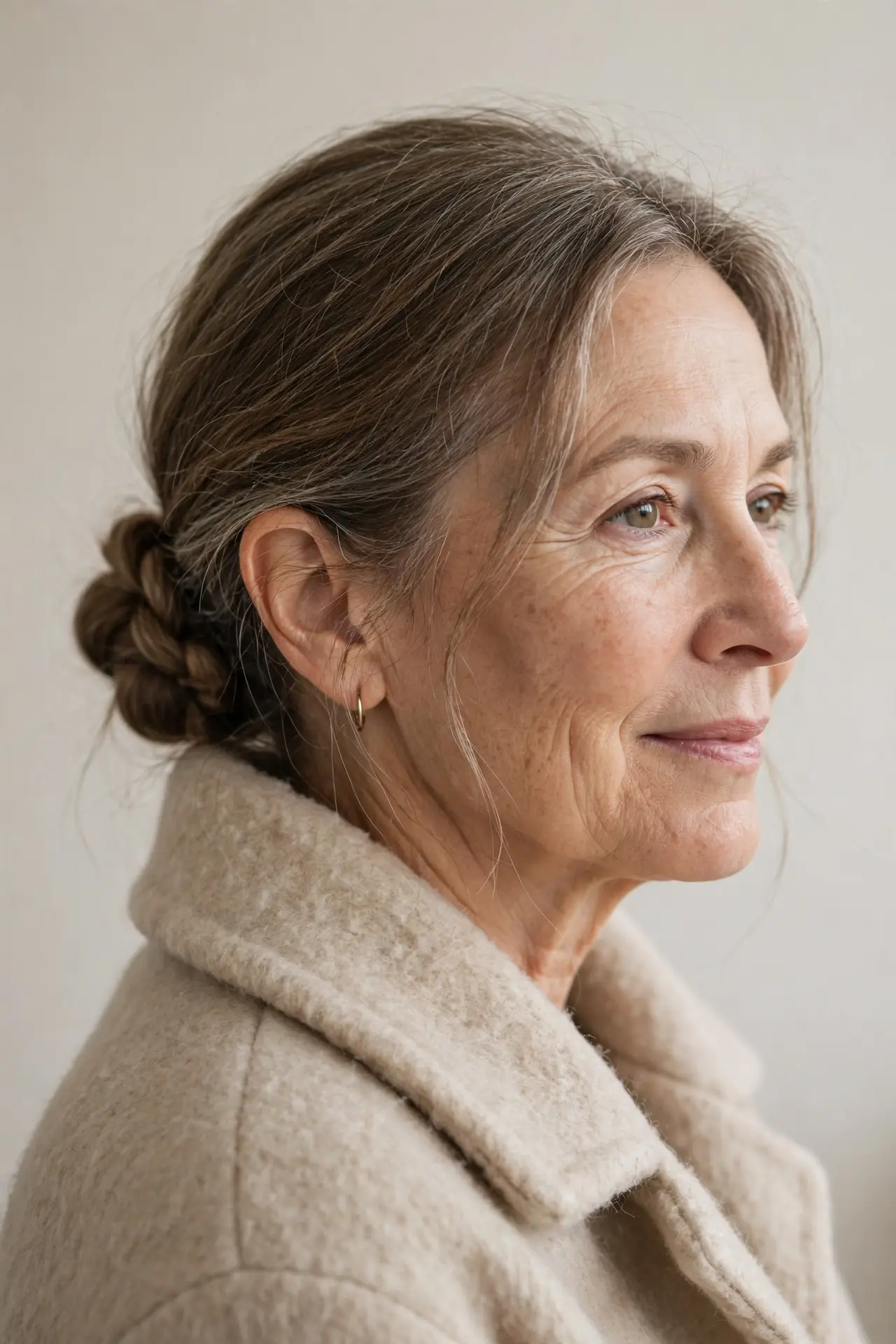
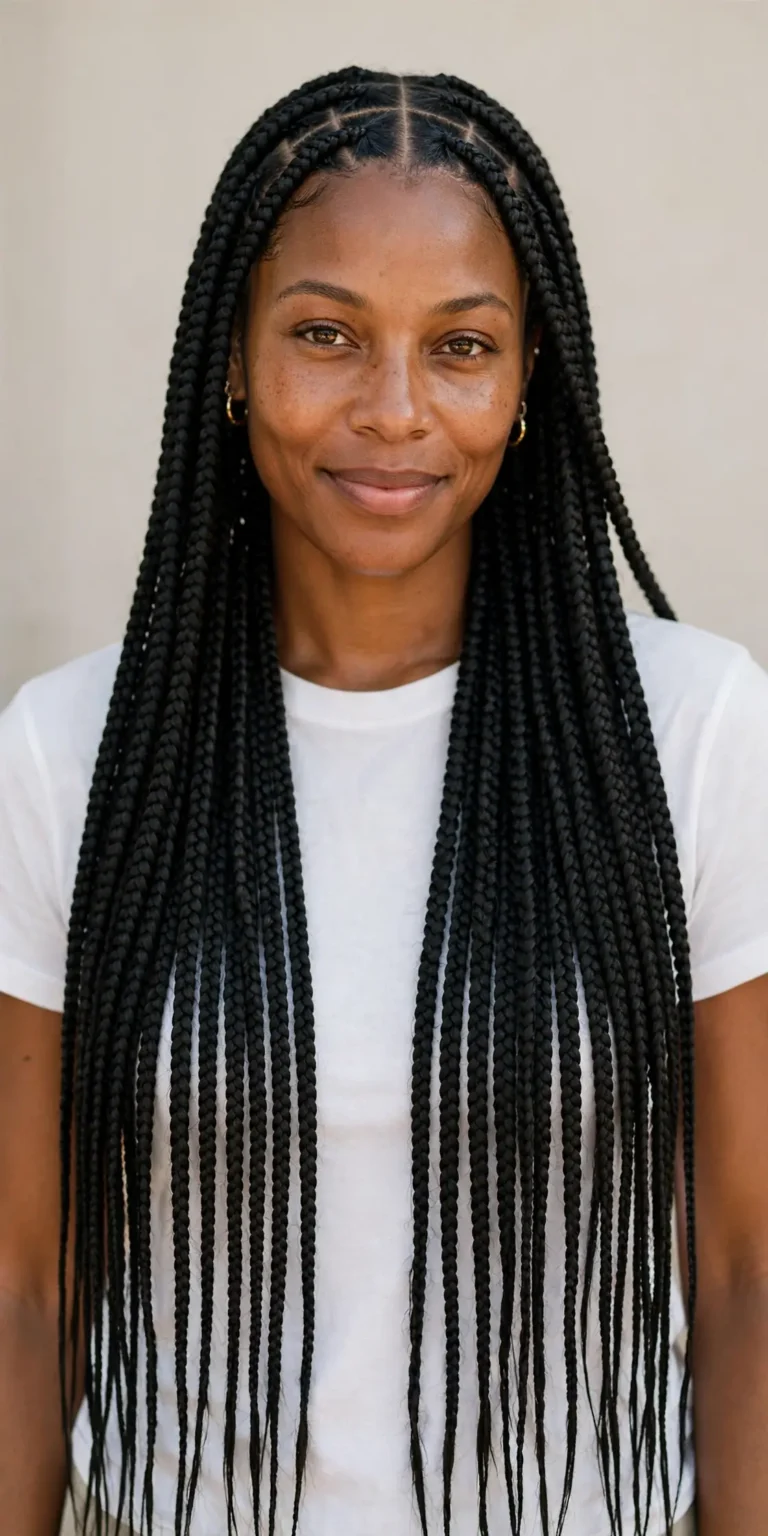
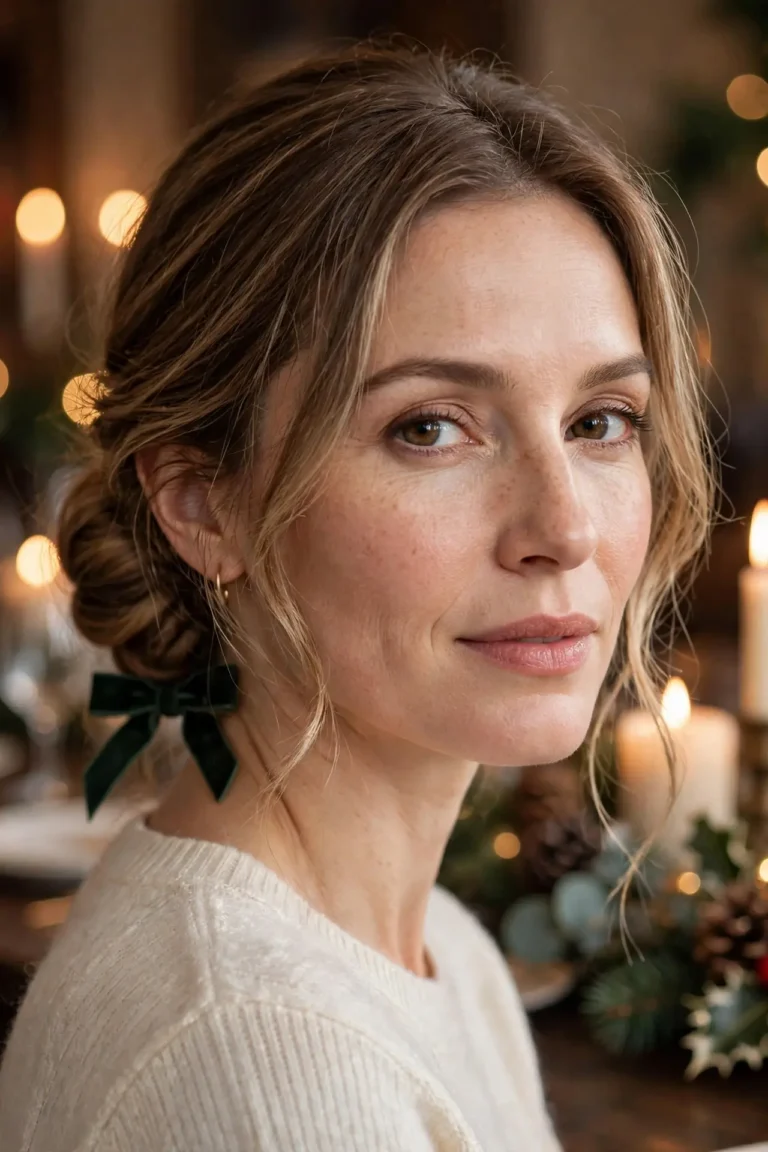
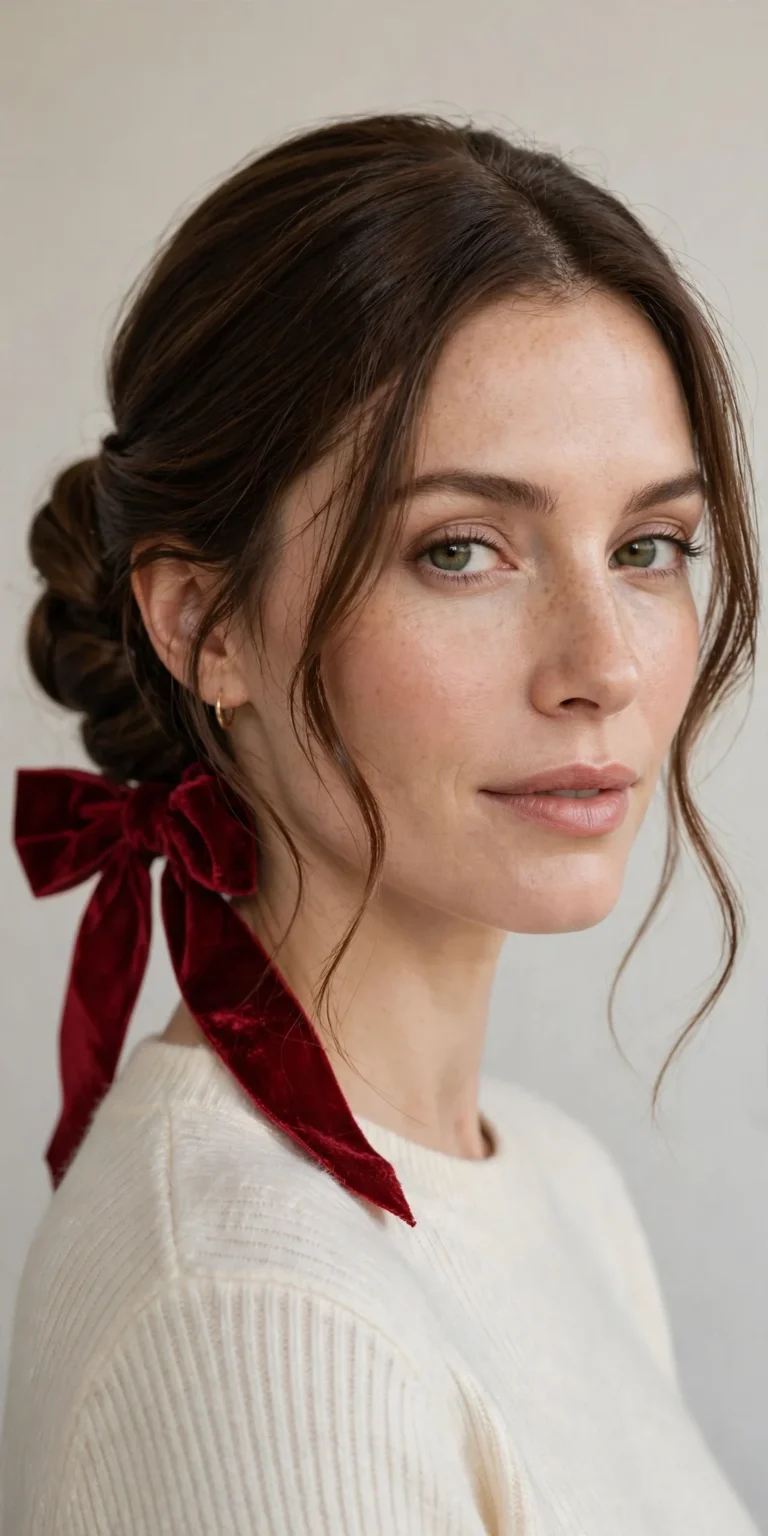
A low braided bun is the hat-day hero fine hair has been waiting for. Sitting at the nape, it disappears completely under a beanie — no awkward bulk, no crushed crown — and because every strand is wrapped and pinned, the icy wind never touches your ends. The braid itself is a density trick: woven texture catches the light in a way that makes even the finest hair look substantial, and a gently loosened braid reads twice as thick as a plain twist. This style flatters every face shape, works beautifully on shoulder-length to long fine hair, and suits women of all ages who want one dependable cold-weather updo. It is equally at home under a ski hat or at a holiday dinner once the coat comes off.
- Braid second-day hair for natural grip and extra fullness.
- Gently tug the braid edges outward to widen it softly.
- Coil the braid flat against the nape and pin it securely.
- Smooth a drop of anti-static serum over the finished bun.
Start with a low ponytail at the nape, braid it to the ends, then wrap it into a flat coil and anchor with bobby pins crossed for hold. Fine hair slips easily, so mist a little texturizing spray through the ponytail before braiding — grip is everything. Wear it for a full day of hat-on, hat-off without worry; at night, take it down and sleep on a silk pillowcase to protect the strands. You can rebuild this bun in under five minutes each morning, making it a genuine everyday winter style rather than an occasion-only updo.
Textured Pixie with Wispy Fringe

Short hair is winter’s secret weapon against fine-hair flatness, and the textured pixie proves it. With the weight gone, delicate strands stand up instead of lying down, and the style is virtually immune to hat hair — a beanie slides on and off without disturbing the shape, and a quick fingertip tousle restores it instantly. Wispy fringe across the forehead softens the look and adds coverage where fine hair tends to look thin, while the longer textured crown creates real height. This cut shines on oval, heart, and petite faces and is a favorite among women in their fifties and sixties who want a confident, wash-and-go winter cut. It also dries in minutes, a small mercy on freezing mornings.
- Work a pea-sized amount of matte paste through dry hair.
- Blow-dry the crown upward with your fingers for lift.
- Pinch the fringe pieces apart for soft, airy separation.
- Refresh the shape each morning with a quick tousle.
Tell your stylist you want a pixie with length and texture on top, tapered sides, and a soft wispy fringe — “piecey, not spiky” is the phrase that lands it. At home, styling takes about five minutes: dry, add product, tousle, go. Because the cut is so short, trims every four to six weeks keep it crisp; let the crown grow and it transitions smoothly into a short shag. On bitter days, the pixie tucks neatly under any hat or hood, and unlike longer styles it never emerges tangled or staticky.
Side-Swept Loose Braid Over a Chunky Knit

There is nothing cozier than a loose braid draped over a chunky knit scarf, and for fine hair it is as practical as it is pretty. Gathering everything to one side keeps your lengths away from scratchy coat collars and biting wind, which means less breakage and far less static by evening. A loose, softly pulled braid also manufactures fullness — the woven sections stack up visually, so fine strands look abundant instead of stringy. This style suits long to medium fine hair and flatters every face shape, since you can position the braid to balance your features. Women of all ages wear it well, from school-run mornings to winter market strolls, and it looks intentional even on unwashed hair.
- Start the braid on second-day hair with dry shampoo at the roots.
- Keep the braid loose, pulling gently at the edges for width.
- Drape it forward over one shoulder above your scarf.
- Mist the finished braid with flexible-hold hairspray.
Sweep all your hair over one shoulder and braid loosely, securing with a snag-free elastic — then gently tug each section outward until the braid looks twice its size. The dry shampoo is doing quiet work here: it gives fine hair the grit to hold the braid and soaks up the oil that makes hats flatten roots. A smoothing cream pressed over the surface controls flyaways without stiffness. Sleep in a loose version of the same braid to protect ends overnight, and simply re-braid each morning; the whole routine takes under five minutes and survives scarves, hoods, and commutes.
Bouncy Blowout with Face-Framing Layers

The bouncy blowout is the classic answer to winter limpness: maximum root lift, swinging face-framing layers, and ends that curl under with polish. For fine hair, those face-framing pieces do the heavy lifting — they break up the solid curtain of hair so light and shadow create the illusion of density, while the layered shape springs back instead of collapsing. This style suits medium to long fine hair and flatters oval, long, and round faces, and it is the go-to for women who want holiday-party hair without extensions. The blowout’s real winter talent is recovery: even if a hat flattens it during the commute, the layered cut bounces back with a quick shake and a little dry shampoo once you arrive.
- Apply root-lifting spray to damp roots before drying.
- Blow-dry sections upward with a large round brush.
- Set the front layers with Velcro rollers while they cool.
- Finish with a cool shot of air to lock in the volume.
Ask your stylist for long layers with face-framing pieces starting at the chin, and always use a heat protectant before the dryer — winter air is already drying enough without extra heat damage. For dermatologist-vetted basics on keeping hair healthy through harsh seasons, the American Academy of Dermatology is a trustworthy reference. At home, rollers are the fine-hair secret: ten minutes of cooling time doubles the longevity of your blowout. Expect two to three days of wear with dry shampoo reviving the roots each morning, and sleep with hair loosely piled on a silk pillowcase to preserve the shape.
Sleek Low Ponytail with Hidden Volume

The low ponytail gets a winter upgrade with one invisible trick: a softly teased cushion at the crown hidden under a smooth top layer. From the outside it reads sleek and polished; underneath, that hidden volume keeps fine hair from looking scraped-back and thin. Sitting low at the nape, the ponytail slides effortlessly under beanies and hoods, and the tail itself can tuck inside a coat or scarf on the coldest days, shielding your ends from the wind. This style flatters oval and round faces especially well, suits fine hair of medium length and beyond, and carries women from office days to evening events with quiet confidence. It is minimal effort with maximum polish — exactly what busy winter mornings need.
- Tease the crown lightly, then smooth the top layer over it.
- Secure the ponytail low at the nape with a covered elastic.
- Wrap a strand of hair around the elastic and pin it.
- Smooth flyaways with a light anti-frizz serum.
Backcomb a two-inch section at the crown, then brush the top layer smoothly over it so the teasing disappears — this hidden cushion is what gives fine hair its fullness. Gather everything low, secure, and wrap the elastic for a finished look. A silk or satin scrunchie prevents the dent marks that regular elastics leave in fine hair, which matters when you take the style down at night. Refresh a second-day ponytail with dry shampoo at the part and crown; the style restyles in minutes and the ends stay protected whenever you tuck the tail into your scarf.
The Cozy Winter Shag for Fine Hair

The shag is arguably the best haircut a fine-haired woman can get for winter, because its entire philosophy is organized texture. Choppy layers cut at varying lengths collapse into each other, manufacturing fullness and movement that fine hair could never achieve with a blunt cut. Better still, the shag is the rare style that hats cannot ruin — a beanie flattens it, you shake it out, and the lived-in messiness just looks intentional. With curtain bangs framing the face, it flatters oval, long, and heart-shaped faces, and it brings a cool, effortless energy that works from your thirties through your sixties. On freezing mornings when styling time is zero, this cut still looks deliberate.
- Scrunch volumizing mousse into damp hair from roots to ends.
- Diffuse on low heat, lifting sections at the crown.
- Twist random pieces around your finger for lived-in bends.
- Shake the roots with your fingertips to revive the shape.
Ask your stylist for a shoulder-length shag with plenty of choppy layers and curtain bangs, emphasizing that you want movement without losing the ends entirely. At home this is a true wash-and-go: mousse, diffuse or air-dry, a spritz of texture spray, and you are out the door. Trim every eight to ten weeks to keep the layers lively; the grow-out is famously forgiving, simply becoming a longer shag. On hat days, embrace the flattening — a quick upside-down shake indoors restores the volume, and the style’s whole charm is that it never looks overdone.
Warm Knit Turban Twist
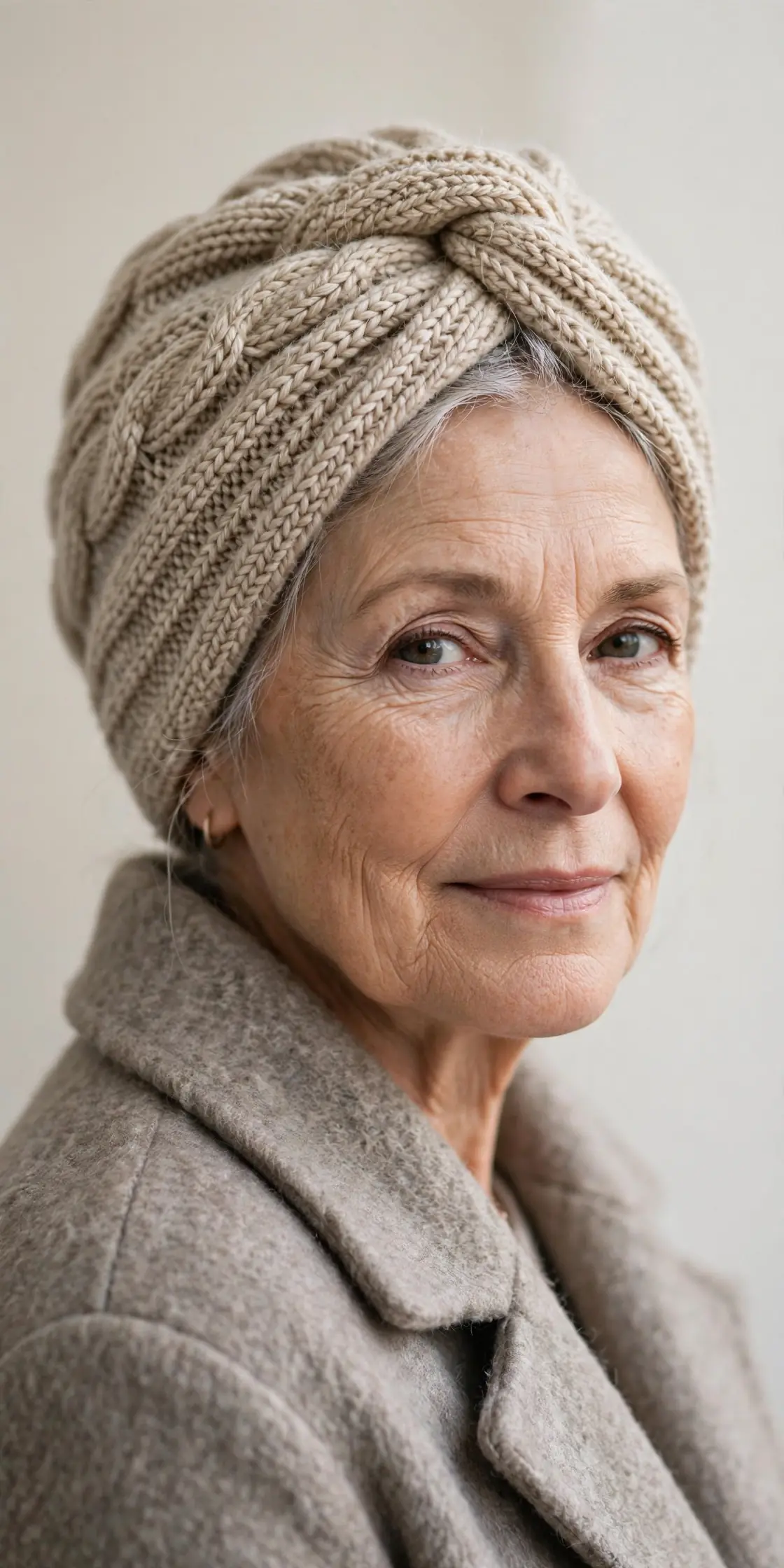
The knit turban twist turns a winter necessity — covering your head — into the hairstyle itself. A wide knit band or scarf twisted over pulled-back hair keeps your ears and hairline warm while tucking every fragile strand out of the wind, which means zero static and zero tangling by the time you arrive. For fine hair this is a gift: nothing is exposed to the drying air, and the wrapped silhouette adds presence and polish that delicate hair sometimes lacks on its own. The look flatters all face shapes — position the twist higher for round faces, lower for long ones — and it is wonderfully elegant with a wool coat. It is also the ultimate second-day-hair rescue.
- Pull hair into a low bun or smooth ponytail first.
- Place a silk scarf underneath if the knit feels rough.
- Twist the knit band once at the front for a turban effect.
- Tuck any stray ends fully under the wrap.
Gather your hair low and secure it, then wrap the knit band or a long scarf around your head, twisting at the forehead and tucking the ends at the nape. The silk layer underneath matters: coarse wool rubbing all day can rough up fine hair, so a thin silk scarf as a barrier keeps strands smooth. Each evening, unwrap gently and let your hair down — many women find their hair looks freshly styled underneath thanks to the contained warmth. Rotate two or three knits through the week in different colors, and this becomes a signature winter look rather than a bad-hair-day fix.
Curly Bob with Winter Moisture Shine

Fine hair with natural wave or curl gets its moment in the curly bob — a chin-to-shoulder cut that lets texture do the volumizing. Curls are nature’s density trick: each bend catches light and creates shadow, so even the finest head of hair reads full and lively. Keeping the length at bob level stops the weight from pulling the curl pattern flat, and the rounded shape frames the face with joyful bounce. This style suits round, oval, and heart faces beautifully and brings a youthful, fresh energy at any age. In winter, the focus shifts to moisture, because dry air is curl’s biggest enemy — but a well-hydrated curly bob in December looks positively radiant against a dark wool coat.
- Apply curl cream to soaking-wet hair in sections.
- Diffuse on low heat or air-dry to protect the curl pattern.
- Deep-condition once a week through the cold months.
- Sleep on a silk pillowcase to preserve curl definition.
Ask your stylist for a rounded bob with layers cut specifically for curl — dry-cutting by a curl specialist gives the most predictable shape. At home, the winter routine is all about sealing in moisture: leave-in conditioner, then cream, then a light gel cast that you scrunch out once dry. Refresh curls on non-wash days with a water-and-leave-in mist rather than a full rewash. Trim every six to eight weeks, because straggly ends drag curls down fast; with regular trims and weekly deep conditioning, this bob stays bouncy all season.
Twisted Half-Up Crown for Hat Days

The twisted half-up crown solves fine hair’s hat dilemma elegantly: structure on top where hats flatten, freedom below. Two soft twists drawn back from the temples and pinned at the back of the head create lift and visual interest at the crown — exactly the zone a beanie crushes — while the remaining hair falls naturally and can tuck into a scarf for warmth. The twists themselves add texture that makes fine hair look more abundant, and the style flatters every face shape since the height can be adjusted. It reads romantic and a little festive, which makes it lovely for the holiday season, yet it takes only minutes. Under a hat, the pinned twists hold their shape far better than loose hair ever could.
- Tease the crown lightly before twisting for lasting lift.
- Twist two front sections back and pin them securely.
- Pull a few face-framing pieces loose for softness.
- Mist with flexible-hold spray to resist hat compression.
Section off the front hair on each side, twist each piece back toward the crown, and cross the twists over each other before pinning — the overlap hides the pins and adds fullness. A light backcomb at the crown before you start gives fine hair the grip and height it needs to survive under a hat. This is a daily style: build it fresh each morning in under ten minutes, and take it down at night to let the scalp breathe. On the very coldest days, wear the loose lengths tucked inside your coat; the twists keep the top polished no matter how bundled up the rest of you gets.
Soft French Twist, Modernized
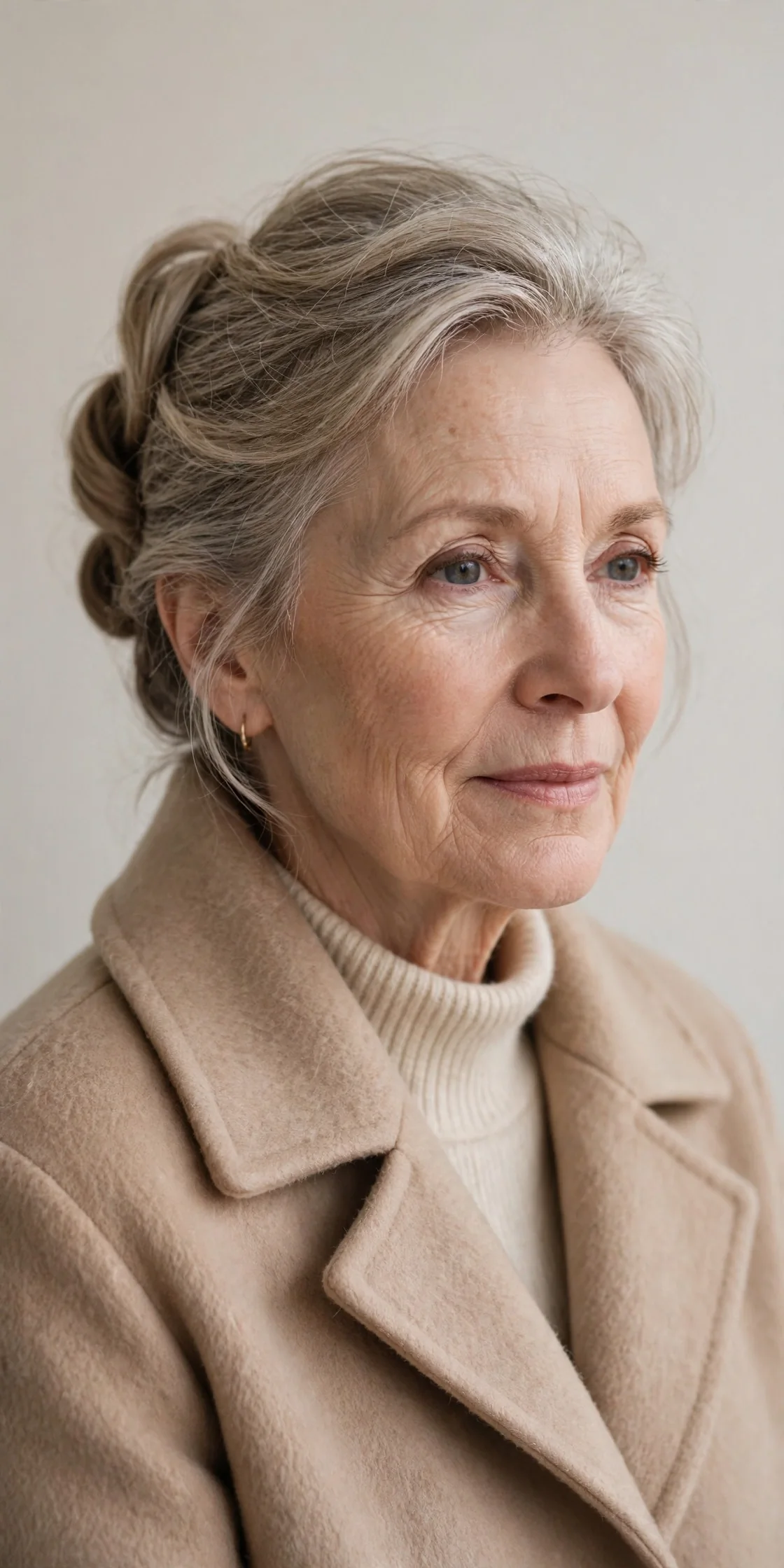
The French twist is winter elegance distilled: every end tucked away from the cold, nothing left for the wind to tangle. The modern version skips the stiff, shellacked finish of decades past — instead it is loose, soft, and a little undone, with face-framing pieces left out to keep it current. For fine hair, the twist is a masterclass in faking density: gentle backcombing plus texturizing spray before twisting creates a fullness the hair would never have on its own, and the vertical shape elongates the neck beautifully. It suits oval and long faces particularly well, sits low enough to slide under any hat, and moves seamlessly from workday to holiday party. When the invitation says festive, this is your answer.
- Backcomb the crown gently and mist with texturizing spray.
- Gather hair low, twist upward, and tuck the ends inside.
- Anchor the twist with U-shaped pins, not just bobby pins.
- Pull a few soft pieces loose around the face.
This style loves second-day hair — the natural texture gives fine strands the grip they need, so add dry shampoo at the roots before you start. Gather everything to one side at the nape, twist upward against the head, and fold the ends into the pocket of the twist, securing with several U-pins crossed for strength. Leave the finish soft rather than scraped tight; a little looseness is what makes it modern. It will hold through an evening event, and at night simply remove the pins and brush out — the backcombing washes out easily with your next shampoo.
Flipped-End Bob, a Cozy Winter Hairstyle for Fine Hair

A bob with flipped-out ends brings playful retro charm to the cold months — and it is secretly brilliant for fine hair. Where most styles fight gravity, the outward flip adds width right at the jawline, creating the illusion of fullness exactly where fine hair tends to taper and disappear. The strong perimeter line makes ends look thicker and more deliberate, and the swingy movement keeps the style lively even under layers of winter clothing. This cut flatters oval, heart, and square faces, suits straight to slightly wavy fine hair, and has a cheerful, put-together energy that brightens grey January days. Peeked out from under a beanie, those flipped ends look utterly charming.
- Blow-dry with a round brush, flicking the ends outward.
- Or press the ends outward with a flat iron for precision.
- Apply a light pomade to define each flipped section.
- Set the shape with a mist of flexible-hold hairspray.
Ask your stylist for a chin-to-neck-length bob with a clean perimeter and ends beveled to flip — “swingy with an outward kick” describes it perfectly. At home, the flip takes two minutes with a round brush or flat iron once the hair is dry; a heat protectant is non-negotiable in winter’s already-drying air. Trim every six weeks to keep the flip crisp, since grown-out ends lose their kick. As it grows, this cut transitions smoothly into a lob, and the flipped finish works just as well at the longer length — one cut, two seasons of style.
Conclusion
Winter does not have to mean flat, staticky, defeated hair. With cozy winter hairstyles for fine hair built around smart layering, hat-friendly shapes, and a little extra moisture, the cold months can actually be your hair’s best season — the scarves, the knits, and the festive occasions all become part of the look instead of the enemy. Try one new idea each week, keep a travel-size anti-static cream in your coat pocket, and notice which styles survive your own routine. And when spring planning starts, revisit our guide to hairstyles for thin fine hair for year-round cuts that keep the volume going long after the last snowfall.