12 Hairstyles for Thin Fine Hair
Introduction
If your hair falls flat by midday no matter what you do, you are not alone — thin, fine strands are beautiful, but they need the right cut to show their best side. The secret is smarter shape, not more hair. The right hairstyles for thin fine hair build volume through layers, texture, and clever structure, so your hair looks fuller from root to tip. Below you will find 12 flattering cuts — bobs, lobs, pixies, and layered styles — each chosen to lift flat roots and make styling easy. If you are over 50, our guide to shaggy hairstyles for women over 50 with thin fine hair pairs perfectly with these ideas, and fans of edgier texture will love our short shag haircuts for fine hair too. Ready to find your perfect cut?
The Textured Bob
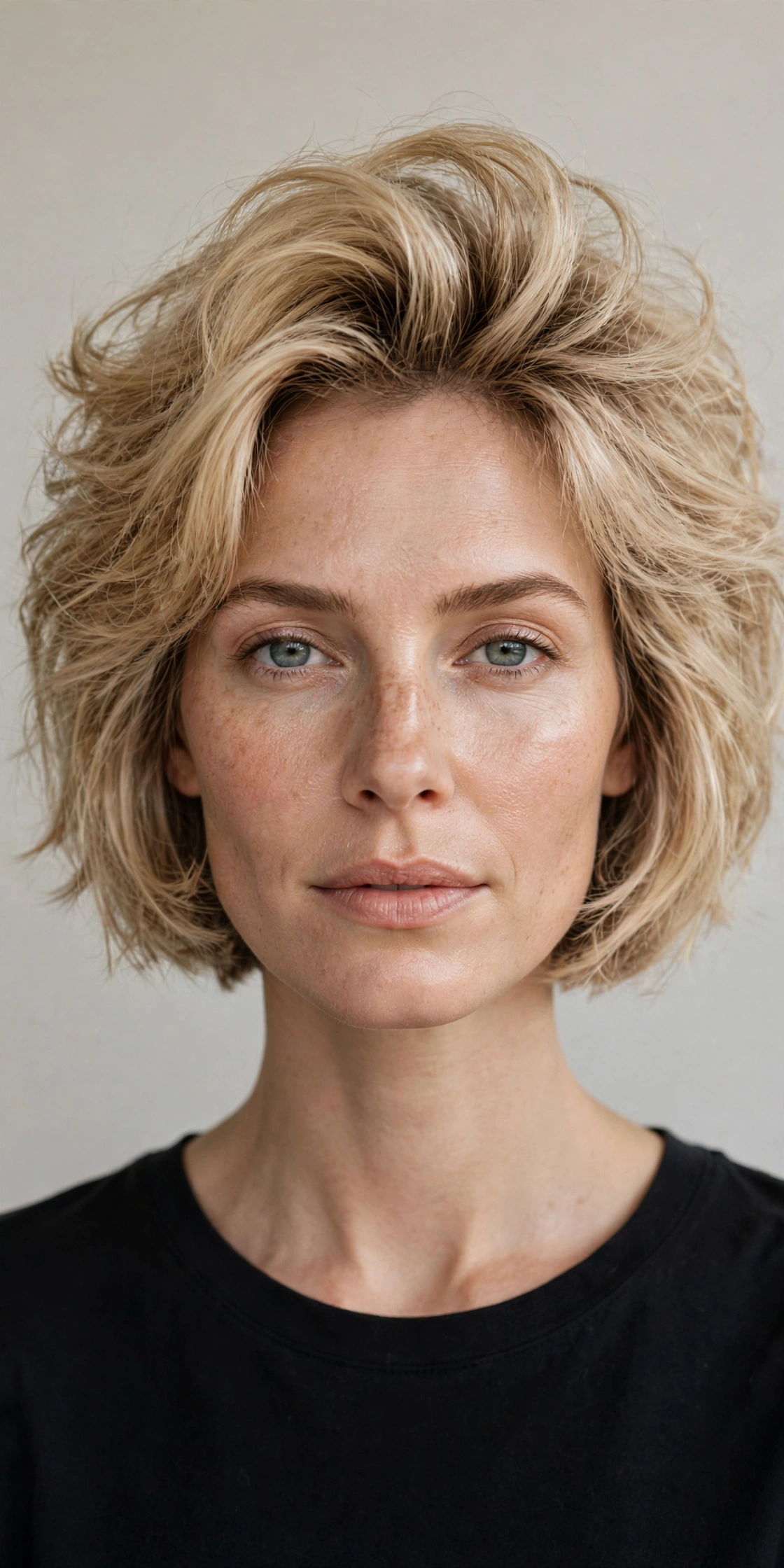
The textured bob is the undisputed hero of hairstyles for thin fine hair, and for good reason: it hits that sweet spot where short enough to bounce but long enough to feel feminine. Ask your stylist for a chin-to-jaw-length bob with interior layers and point-cut ends, which remove bulk weight without thinning the perimeter. This cut suits oval, round, and heart-shaped faces beautifully, and it works for women of any age — it is especially flattering on women over 40 who want lift without losing softness. Because the weight line sits high, fine hair springs up instead of dragging down, and the textured ends create the illusion of density. It also grows out gracefully, keeping its shape for weeks between appointments.
- Apply a volumizing mousse to damp roots before blow-drying.
- Blow-dry with a round brush, lifting sections upward for root lift.
- Scrunch a pea-sized amount of texture cream into the ends.
- Tease the crown lightly with a fine-tooth comb for extra height.
Ask your stylist for a blunt-ish perimeter with soft internal layering and lightly textured tips — say “I want the ends to look piecey, not heavy.” At home, keep your routine simple: wash with a lightweight volumizing shampoo, avoid heavy conditioners near the roots, and re-fluff each morning with dry shampoo. A dime-sized drop of root-lifting spray works wonders on second-day hair. Book a trim every 6 to 8 weeks to keep the shape crisp; letting it grow past the jawline for too long will pull the volume downward again. A light mist of flexible-hold hairspray at the crown adds staying power, and the shape grows out smoothly into a lob.
The Stacked Inverted Bob
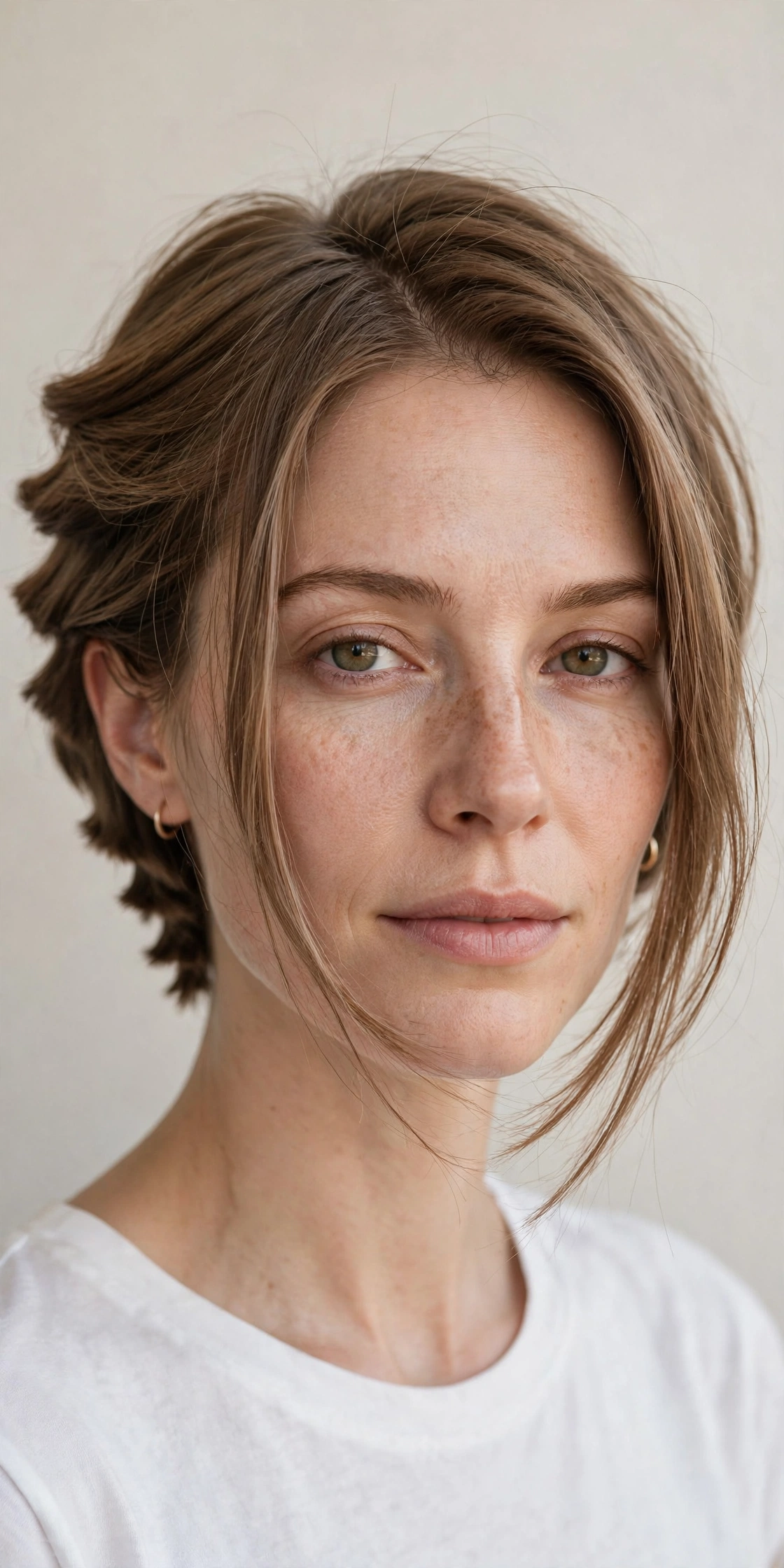
A stacked inverted bob is pure architecture for fine hair — shorter, graduated layers at the nape build a natural cushion of volume exactly where thin hair needs it most. The back rises in stacked tiers while the front angles longer toward the chin, creating a sleek, polished silhouette with surprising fullness. This style flatters oval, heart, and square faces, and it is a favorite among professional women in their 30s through 60s who want a cut that looks intentional and chic every single day. The stacked graduation forces fine strands to stack on top of each other, instantly doubling the visual density at the crown. It is one of the most reliable volume-building cuts your stylist can offer.
- Apply root-lifting mousse to the nape and crown while hair is damp.
- Blow-dry the back sections upward with a small round brush.
- Smooth the front pieces forward and under for that angled finish.
- Mist with flexible-hold hairspray to lock the shape in place.
Tell your stylist you want a graduated nape with an angled front — “stacked in the back, longer in the front, about chin length.” Bring a photo for reference, since the angle varies. At home, this cut is wonderfully low-maintenance: a quick blow-dry is all it needs, and the stacked shape practically styles itself. Avoid heavy serums that flatten the graduation; stick to lightweight volumizing products. Trim every 5 to 6 weeks, because the precision stacking loses its lift quickly once the nape grows out. Subtle highlights through the crown emphasize the stacking, but the crisp nape needs its regular trim to keep its lift.
The Chin-Length Bob with Curtain Bangs

Curtain bangs paired with a chin-length bob create a frame that draws the eye exactly where you want it — across the cheekbones and toward the fullest part of the cut. The center-parted bangs blend seamlessly into the bob’s layers, adding movement and softness around the face while the chin-length ends keep fine hair from looking stringy. This combination suits round, square, and oval faces, and it works across age groups from your 20s to your 60s. The bangs add density at the front hairline where many women with fine hair notice sparseness, making the whole style look thicker. It is romantic, modern, and incredibly wearable.
- Part damp bangs down the center and blow-dry each side outward.
- Apply a light styling cream to bangs to keep them piecey, not flat.
- Blow-dry the bob with a paddle brush for a smooth, swingy finish.
- Pinch and twist the bang ends for soft, lived-in separation.
Ask your stylist for a chin-length bob with long, face-framing curtain bangs that start around the cheekbones. Mention you want them “soft and blendable, not a blunt fringe.” At home, bangs need a quick daily refresh — a 30-second blow-dry or a dry-shampoo spritz keeps them from separating. The bob itself holds its shape well; trim the bangs every 3 to 4 weeks and the bob every 6 to 8 weeks. As the bangs grow, they melt into the layers, so grow-out is forgiving. The bangs grow out gracefully into face-framing layers, so there is never an awkward in-between stage.
The French Bob

The French bob is the effortlessly chic answer for fine hair — cropped to the jaw or just above, often with soft bangs, it turns delicacy into an asset. Because there is simply less hair weighing things down, every strand sits with more body, and the short perimeter makes thin ends look fuller and more deliberate. This cut shines on oval, heart, and petite faces, and it suits women who love a fashion-forward, low-fuss aesthetic at any age. The French bob’s slightly tousled finish hides sparseness beautifully, and its strong shape line makes fine hair look intentionally styled rather than thin. It is Parisian polish in its purest form.
- Apply texturizing spray to dry hair and tousle with your fingers.
- Blow-dry with your head flipped upside down for instant root lift.
- Tuck one side behind the ear for an asymmetrical, chic look.
- Define the bangs with a small flat iron, bending them slightly under.
Ask your stylist for a jaw-length bob with soft texture through the ends and optional wispy bangs — “I want it to look effortlessly undone, not precise.” At home, embrace the tousle: this cut looks best slightly imperfect, so skip the over-styling. A light texture spray is your best friend, and washing every other day with dry shampoo in between keeps the roots lively. Trim every 6 weeks to maintain the sharp perimeter; once it creeps past the jaw, it loses its French character. To grow it out, let the back grow while keeping the front trimmed — it morphs into a classic bob with little fuss.
The Volumizing Pixie with a Long Crown
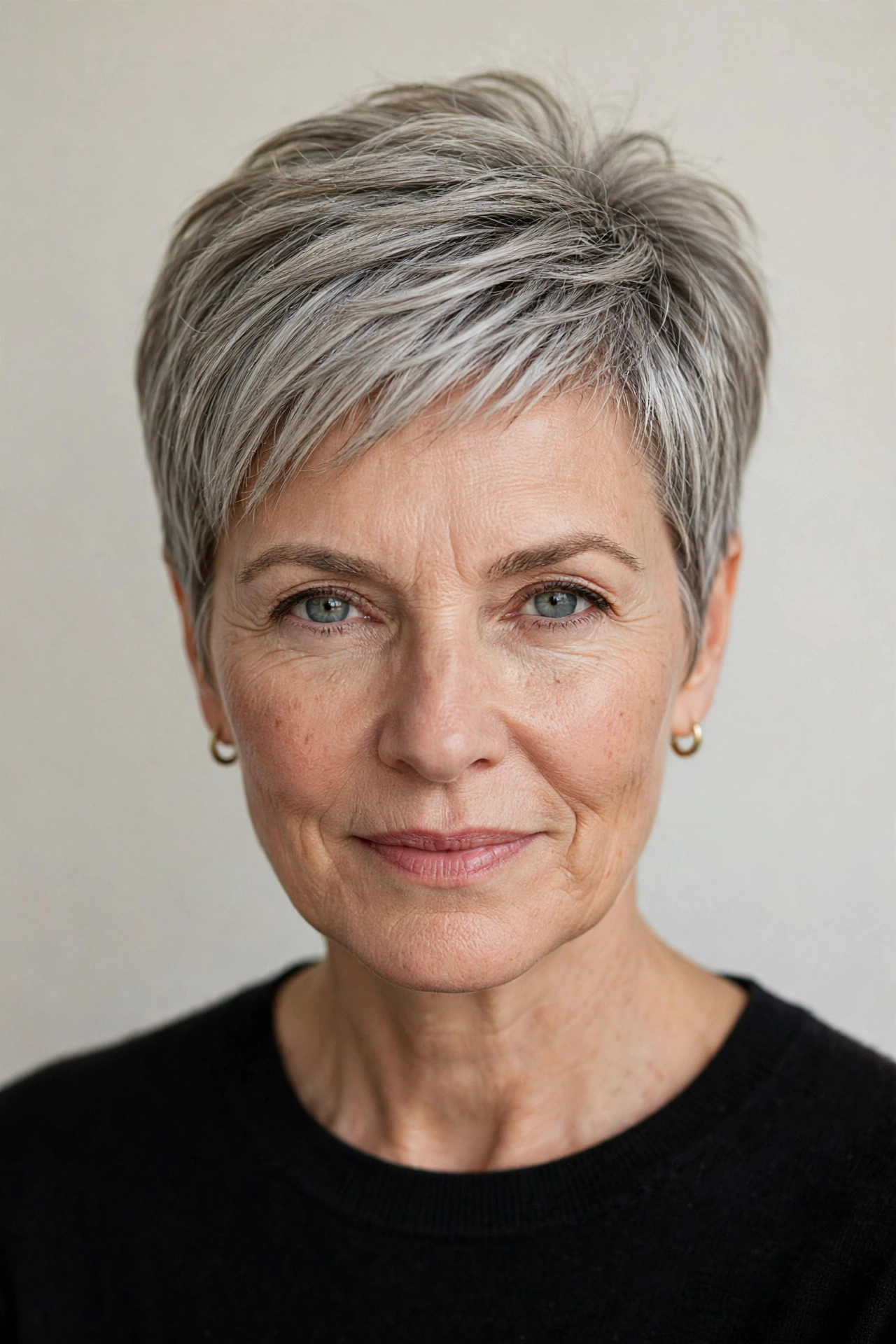
This pixie keeps the crown long and layered while the sides and nape stay neat and tapered — and that contrast is exactly what gives fine hair its fullest possible look. The long top layers stand up and interlock to create genuine height, while the close-cut sides make the crown appear even denser by comparison. It suits oval, heart, and diamond faces especially well, and it is a brilliant choice for women over 50 who want a confident, modern cut with minimal daily effort. Of all the hairstyles for thin fine hair, this one delivers the most dramatic volume-to-length ratio. It is bold, flattering, and endlessly stylish.
- Apply a root-boosting mousse to the crown before blow-drying.
- Blow-dry the top layers upward with a small round brush.
- Work a dab of matte pomade through the crown for piecey definition.
- Tease the very crown lightly for all-day staying power.
Tell your stylist you want a pixie with “length and layers on top, tapered sides, and a textured crown.” Ask for point-cutting on top so the layers blend without looking choppy. At home, this cut takes about five minutes: blow-dry up, add product, done. Sleep on a silk pillowcase to keep the crown’s shape overnight. Trim every 4 to 5 weeks — pixies grow out of their crisp shape fast. If you ever want to grow it out, the long top transitions easily into a short shag. A little wax on the crown ends adds definition, and the cut grows out easily into a short shag.
The Piecey Pixie with Side-Swept Fringe
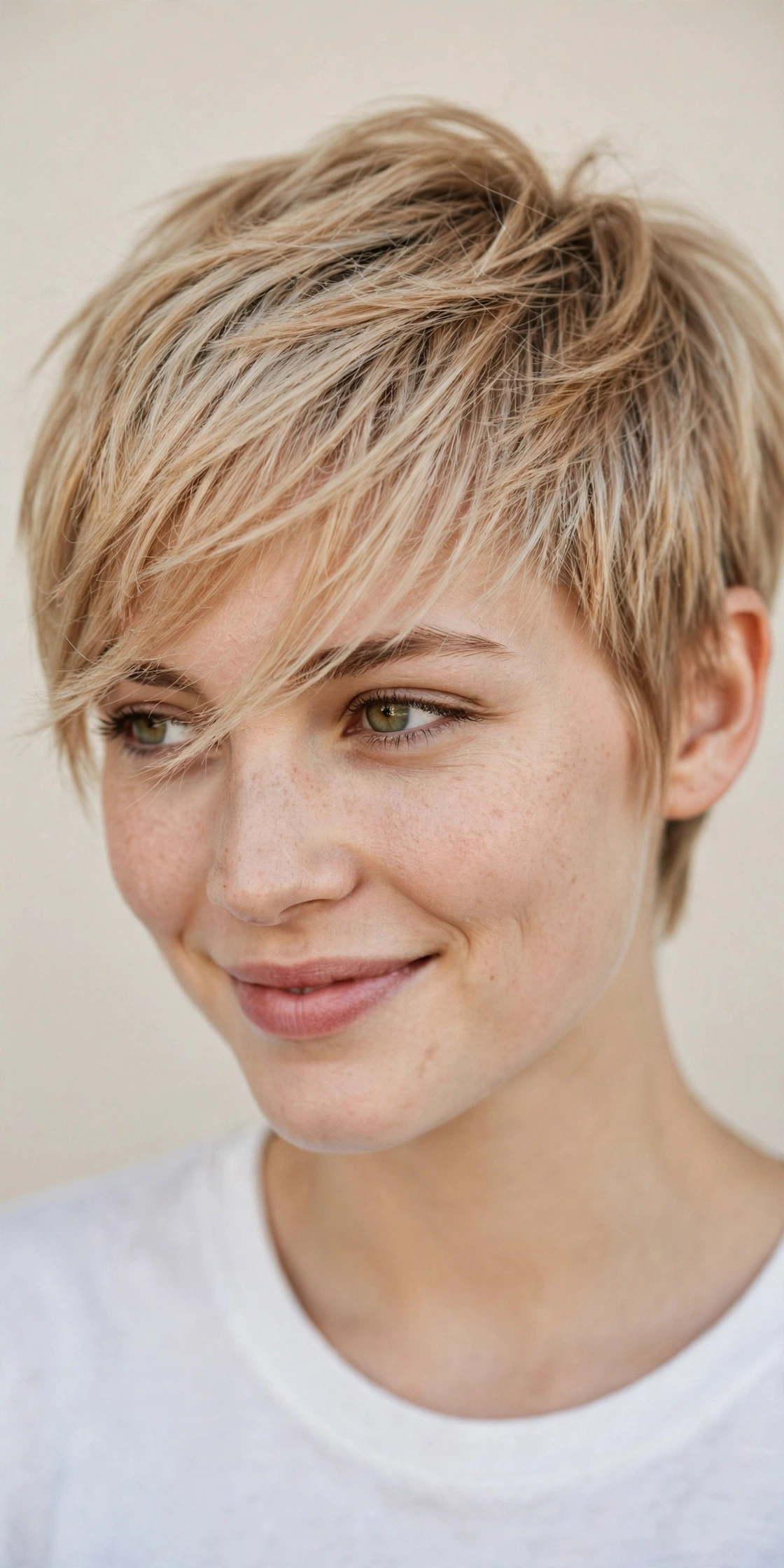
A piecey pixie with a sweeping fringe is all about texture and movement — feathered, separated strands that catch the light and make fine hair look far more abundant than it is. The side-swept fringe softens the forehead and adds width where you want it, while the piecey crown creates playful, touchable volume. This cut flatters round, square, and heart faces, and it works wonderfully for women from their 30s through their 70s who want an easy, youthful edge. The separated, feathered pieces create shadows and highlights across the hair, which is the oldest trick in the book for faking density. It is fun, flattering, and full of personality.
- Apply a pea-sized amount of texturizing paste to dry strands.
- Blow-dry the fringe across to the side with a small round brush.
- Pinch and separate the crown pieces with your fingertips.
- Finish with a light-hold spray to keep the pieces defined.
Ask your stylist for a “soft, piecey pixie with a long side-swept fringe and lots of texture on top.” Emphasize that you want separation, not a solid bowl shape. At home, styling is fingertip-simple: a little product and some pinching is all it takes. Refresh the fringe each morning with a quick brush-through. Trim every 4 to 6 weeks to keep the pieces sharp; as it grows, the fringe can sweep longer into a chic, asymmetric look. Dry shampoo restores the piecey texture on no-wash days, and the pieces blend beautifully as they grow longer. A quick fingertip tousle each morning keeps the shape lively.
The Textured Lob with Face-Framing Layers
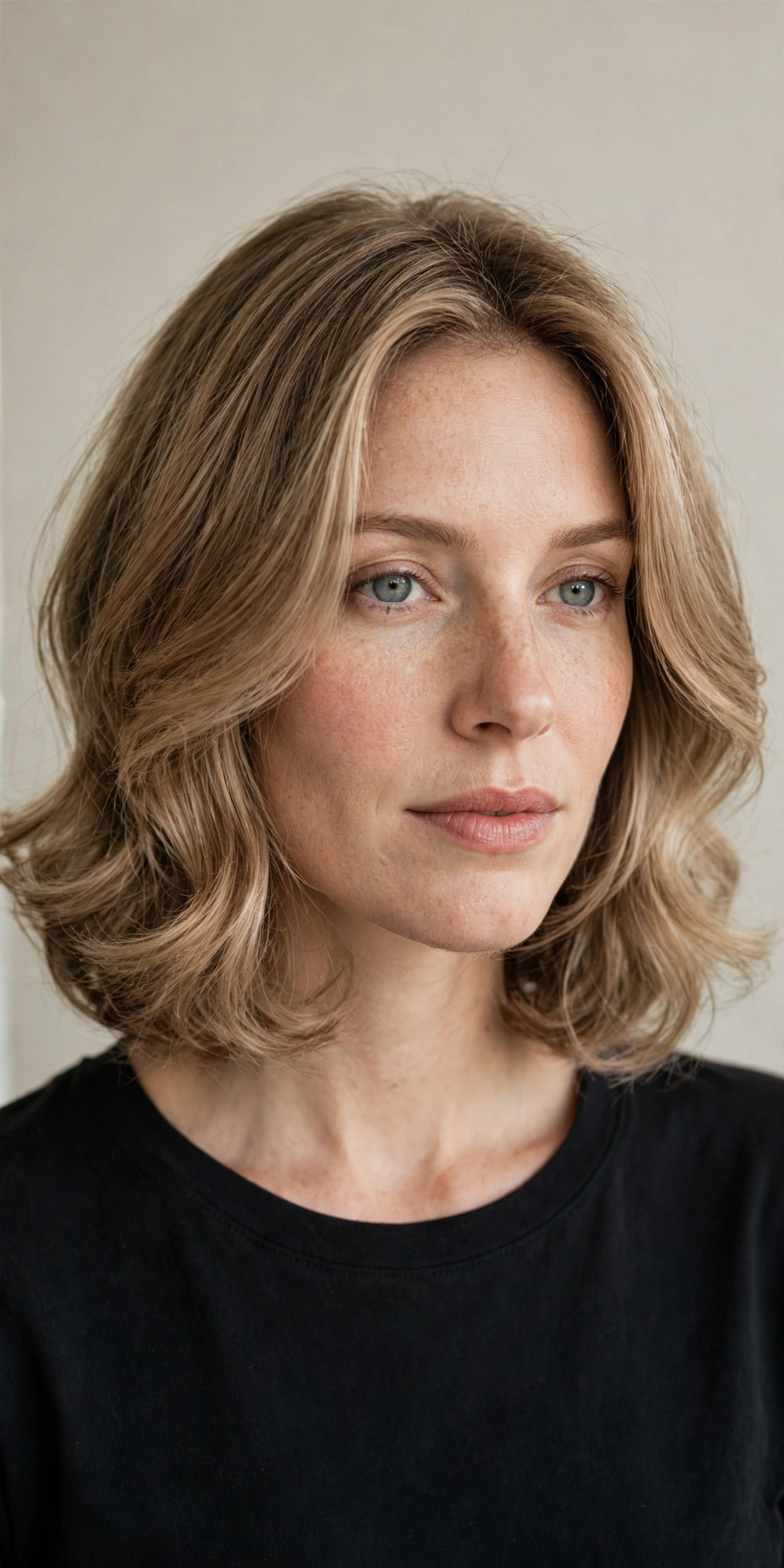
The textured lob — a long bob grazing the collarbone — gives you the best of both worlds: enough length to feel versatile, enough structure to keep fine hair buoyant. Face-framing layers starting at the chin break up the solid curtain of hair, creating movement and the illusion of thickness around the face. This cut suits nearly every face shape and is a go-to for women in their 20s through 50s who want a modern, low-drama style. The collarbone length keeps ends from looking wispy, while the internal texture stops the style from falling flat. It is the most versatile of all hairstyles for thin fine hair.
- Apply volumizing mousse from roots to mid-lengths on damp hair.
- Blow-dry with a large round brush, turning ends slightly under.
- Wrap front sections away from the face for soft, bouncy framing.
- Spritz sea salt spray on dry ends for beachy separation.
Ask your stylist for a collarbone-length lob with “face-framing layers from the chin down and textured, not blunt, ends.” At home, this cut air-dries reasonably well but rewards a proper blow-dry with much more volume. Use a lightweight leave-in conditioner on the ends only, never the roots. Trim every 8 to 10 weeks; the length gives you more grow-out room than shorter cuts. It also pulls back into a small ponytail on off days, which is a bonus. It stays flattering all the way to shoulder length — just ask your stylist to keep the face-framing layers intact. This keeps the cut balanced and bouncy at every length.
The Shoulder-Length Shag
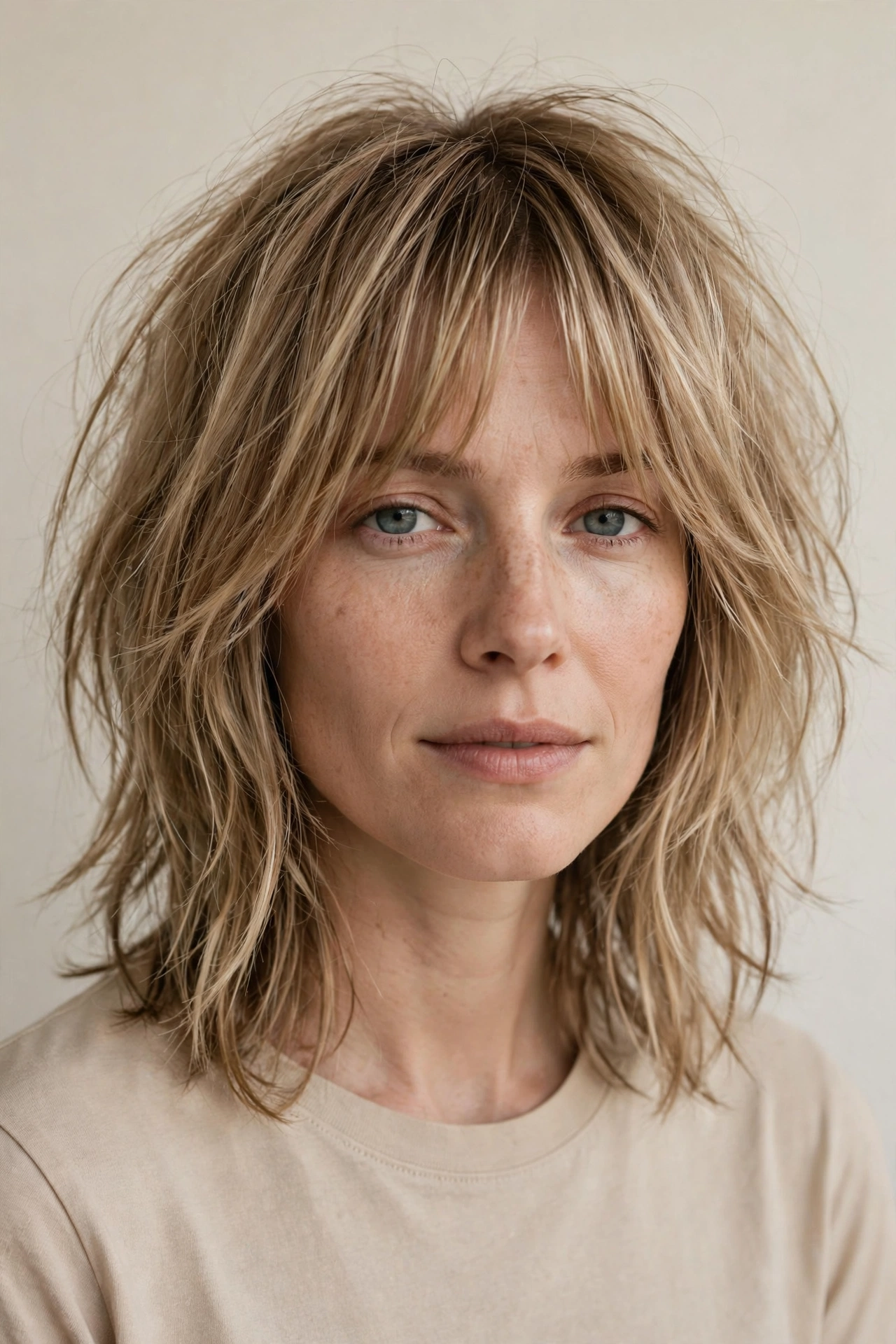
The shoulder-length shag is a volume machine for fine hair — choppy layers throughout, curtain bangs, and a lived-in texture that makes thin strands look wildly abundant. The layers are cut at varying lengths so the hair collapses into itself, creating natural fullness and movement with almost no effort. This style flatters oval, long, and heart faces, and it has a cool, rock-chic appeal for women of all ages. Because the shag thrives on imperfection, it is perfect for fine hair that never quite behaves — the messier it gets, the better it looks. It is effortlessly cool and surprisingly easy to maintain.
- Apply mousse to damp hair and scrunch upward for texture.
- Blow-dry with a diffuser on low heat to enhance natural wave.
- Twist random sections around your finger for lived-in bends.
- Shake the roots at the crown with your fingertips for lift.
Ask your stylist for “a shoulder-length shag with lots of choppy layers and curtain bangs.” Mention you want the layers “disconnected enough to move, but not so short the ends disappear.” At home, this is a wash-and-go dream: air-dry or diffuse, add texture spray, and you are done. A trim every 8 weeks keeps the layers lively. If it grows out, it simply becomes a longer shag — no awkward phase. Grow-out is the easiest of any style here — it just gets longer and cooler with occasional layer refreshes. Embrace the lived-in texture; this cut only gets better with time.
Long Layers with Bottleneck Bangs
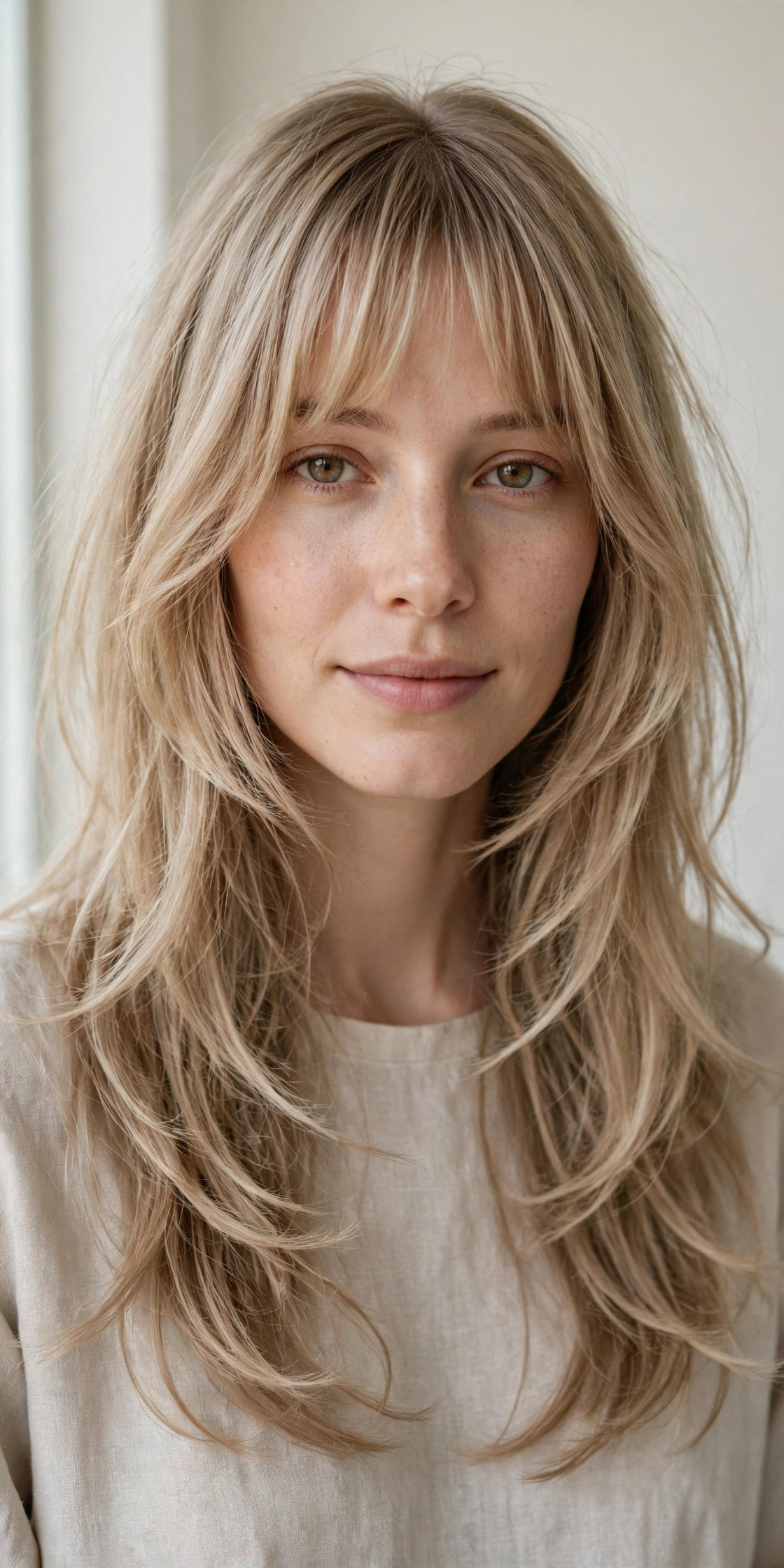
If you love your length, long layers with bottleneck bangs prove you do not have to go short to get volume. The layers start high — around the cheekbones — so the top of the hair has movement instead of hanging flat, while bottleneck bangs (narrow at the top, widening at the cheeks) add fullness right at the hairline. This style suits oval, round, and long faces, and it is ideal for women in their 20s through 40s who want to keep their length but lose the limp look. The strategic layering removes just enough weight to let fine hair swing and bounce. It is feminine, flowing, and full of life.
- Apply root-lift spray to the crown and bangs before blow-drying.
- Blow-dry bangs forward with a round brush, then part softly.
- Wrap long layers around a large round brush for bounce.
- Flip your head over and shake for instant root volume.
Ask your stylist for “long layers starting at the cheekbones with bottleneck bangs that blend into the face-framing pieces.” At home, focus your styling energy on the roots and bangs — the lengths mostly take care of themselves. Use a clarifying shampoo once a week to prevent product buildup from weighing things down. Trim every 10 to 12 weeks, with bang trims every 4 weeks. As the bangs grow, they become regular face-framing layers, so there is no harsh grow-out line. A loose topknot overnight preserves the bounce, and re-shaping every 12 weeks keeps the layers from dragging down. This keeps the top full and the ends healthy.
The Feathered Mid-Length Cut
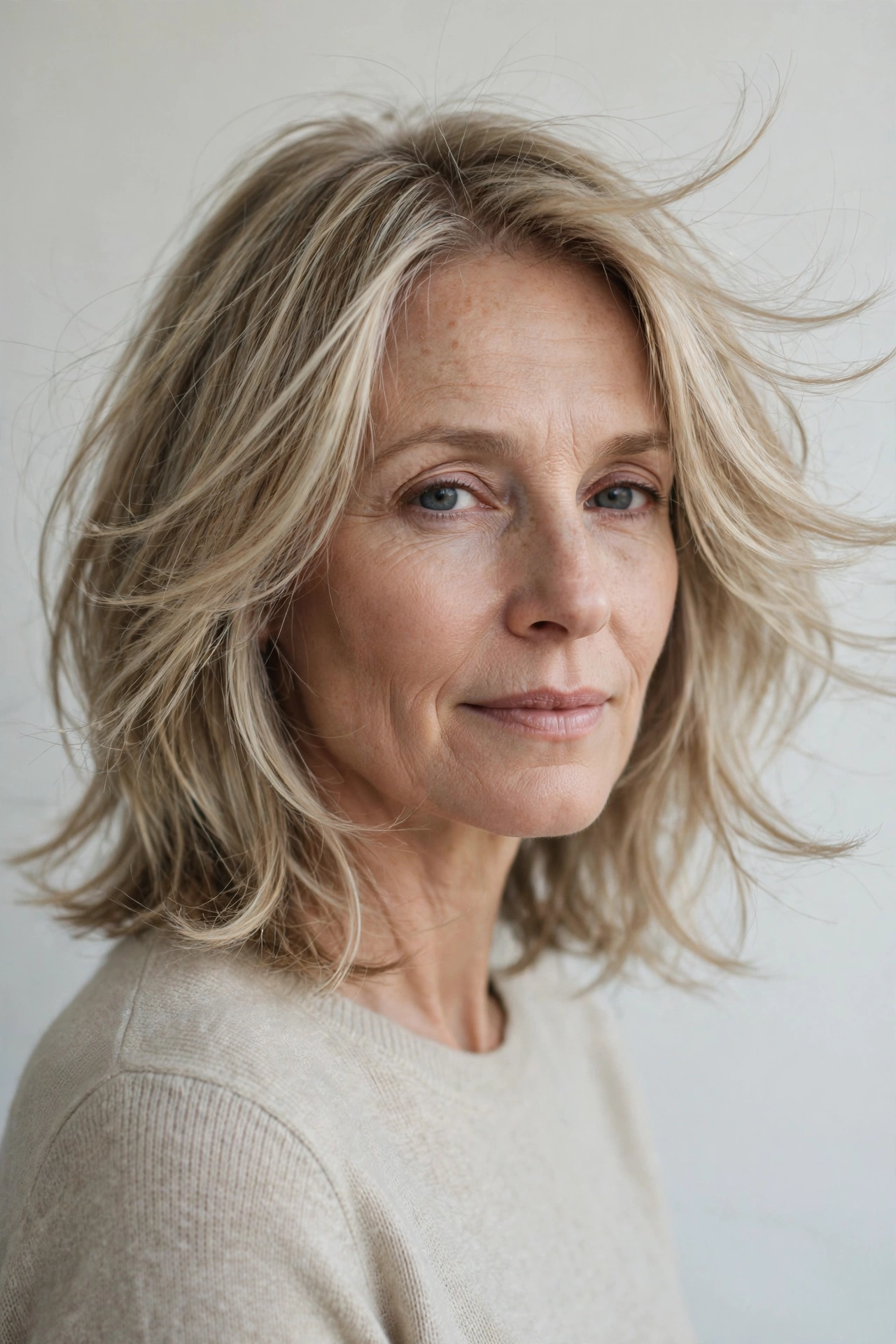
Feathered layers are a classic volume trick that never goes out of style — soft, angled layers that flick outward and inward, creating airy fullness through the mid-lengths. The feathering technique thins the very ends while keeping the interior full, so fine hair looks layered and light rather than stringy. This cut suits oval, square, and heart faces, and it is especially beloved by women over 40 who want graceful movement without a severe shape. The flicked layers create the impression of twice the hair, and the soft finish is flattering on every hair texture. It is timeless, elegant, and endlessly wearable.
- Apply smoothing cream to damp hair to control flyaways.
- Blow-dry layers with a round brush, flicking the ends outward.
- Turn the brush under at the nape for a soft, rounded finish.
- Mist with shine spray to highlight the feathered texture.
Ask your stylist for “a mid-length cut with feathered layers throughout and a soft, flicked finish.” Bring a reference photo showing the amount of flick you like. At home, the round-brush blow-dry is the whole game — it takes ten minutes and makes all the difference. Avoid heavy oils that drag the feathers down; a light shine mist is enough. Trim every 8 weeks to keep the feathered edges fresh and prevent the ends from looking wispy. Velcro rollers at the crown add extra lift, and the feathers lengthen gracefully into soft layers as they grow. A lightweight volumizing mousse keeps the feathers airy and lifted.
The Deep Side-Part Lob
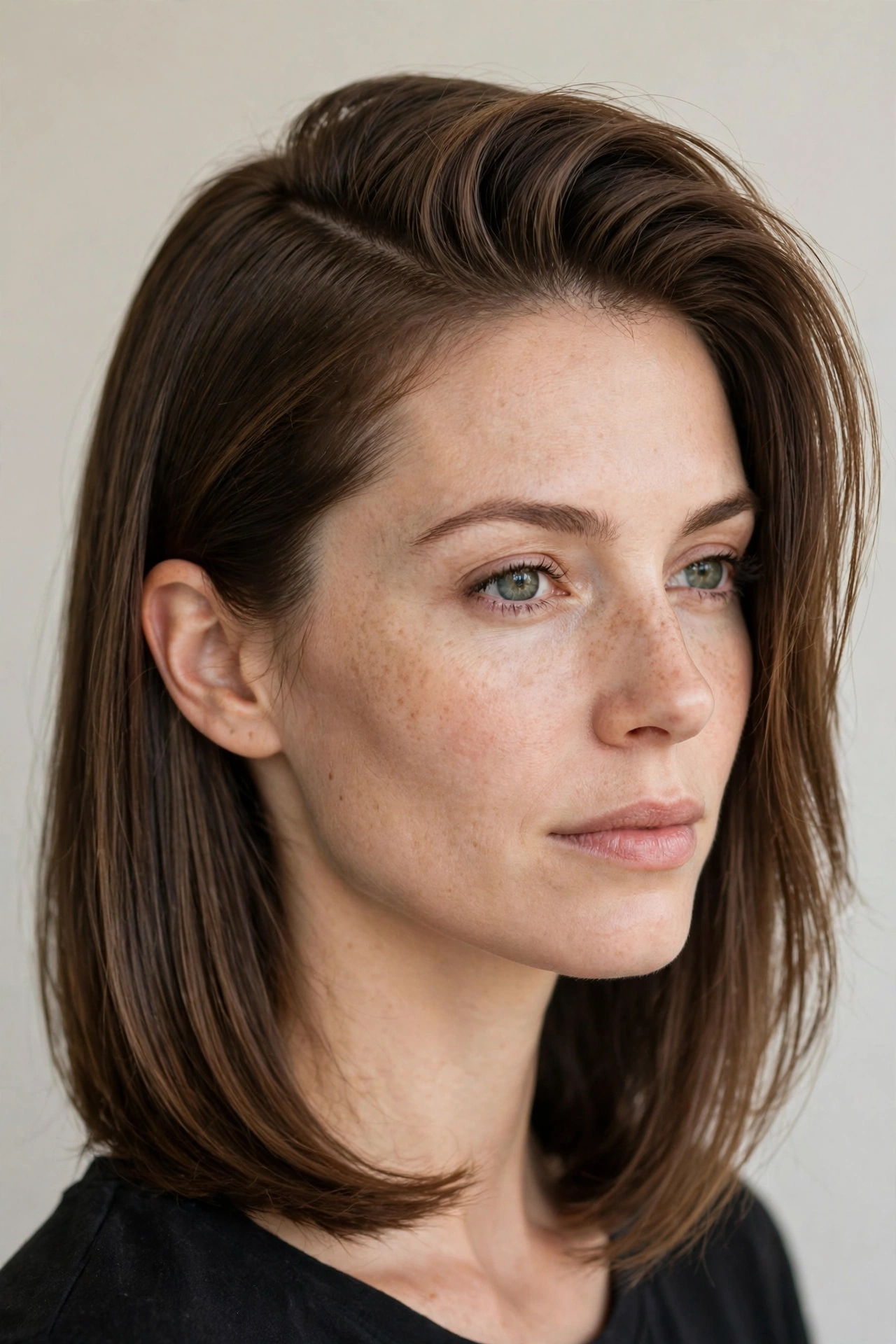
Sometimes volume is just a part-line away — a deep side part on a lob instantly lifts the roots on the heavy side, creating dramatic fullness with zero cutting. Combined with a collarbone-length bob and subtle layers, the deep part gives fine hair a glamorous, red-carpet sweep. This style flatters round, square, and heart faces beautifully, and it suits women of all ages who want maximum impact with minimum effort. The asymmetry draws the eye diagonally, which makes the hair look thicker and the face more sculpted. It is the simplest transformation on this entire list, and it also photographs beautifully, since the swept volume catches the light across the crown.
- Part damp hair deeply to one side, about two inches off-center.
- Apply mousse to the roots on the heavy side before blow-drying.
- Blow-dry the heavy side upward and over for maximum lift.
- Tuck the lighter side behind the ear for sleek contrast.
Ask your stylist for a “collarbone lob with subtle layers and a shape that works with a deep side part.” At home, train your part by blow-drying it into place for a few days — hair has memory and will start to cooperate. Switch the side occasionally to keep roots from going flat. A root-boost powder on the heavy side adds staying power. Trim every 8 weeks; the deep part keeps working no matter how it grows out. The volume comes from the part rather than the cut, so this style grows out effortlessly. Flip the part occasionally to keep the roots from going flat.
The Soft Layered Cut with Wispy Bangs
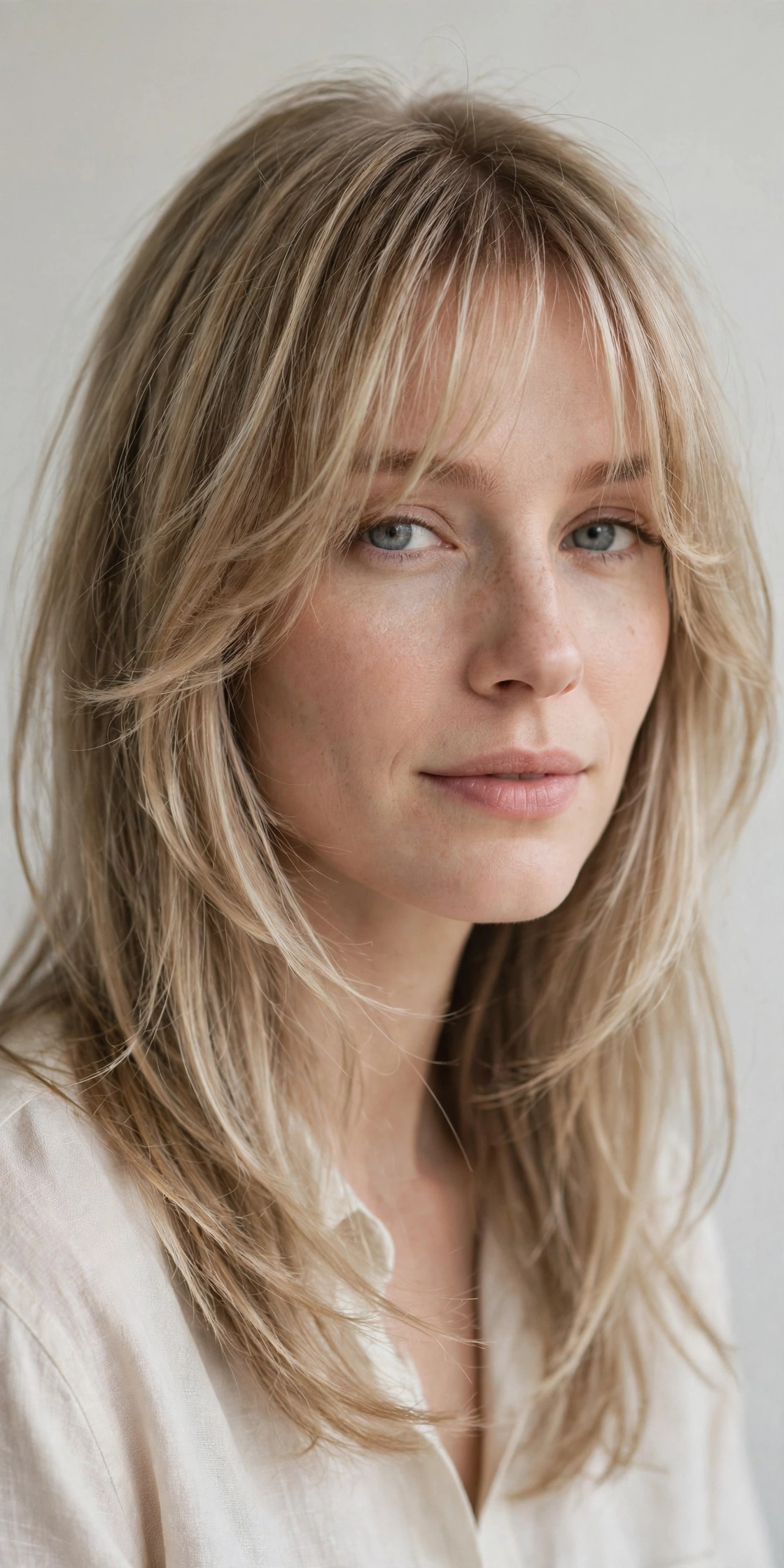
Wispy bangs paired with soft, long layers are a gentle, romantic way to fake fullness — the feathery fringe adds density across the forehead while the layers keep the lengths from looking thin. The bangs are cut sheer and piecey so they never look heavy, and they blend into face-framing layers that add movement around the cheeks. This style suits oval, long, and heart faces, and it is lovely for women in their 30s through 60s who want softness and femininity. The wispy texture catches the light in a way that makes fine hair shimmer with apparent thickness. It is delicate, pretty, and quietly transformative.
- Apply a tiny amount of styling cream to bangs for piecey texture.
- Blow-dry bangs down and forward with a small round brush.
- Wrap face-framing layers under for a soft, curved finish.
- Refresh the fringe midday with a quick brush and dry shampoo.
Ask your stylist for “soft long layers with wispy, piecey bangs that I can also sweep aside.” Make sure the bangs are cut dry or nearly dry so the length is accurate. At home, the bangs are the only high-maintenance part — a 30-second morning touch-up keeps them perfect. Keep the rest simple with a volumizing shampoo and light conditioner on the ends. Trim bangs every 3 to 4 weeks and layers every 8 to 10 weeks; the grow-out is soft and forgiving. The bangs grow quickly into soft face-framing pieces with no harsh line if upkeep ever feels like too much.
Conclusion
The right cut changes everything for thin, fine hair — suddenly your hair has lift at the roots, movement through the lengths, and a shape that works with you instead of against you. Whether you fell for a bold pixie, a textured bob, or flowing long layers, the common thread is the same: strategic layers and thoughtful shape create the fullness that fine hair needs. Take these ideas to your stylist, bring reference photos, and don’t be afraid to ask for exactly what you want — a great haircut is a collaboration. And if you’re craving even shorter inspiration after exploring these 12 looks, our guide to pixie cuts for thin wavy hair is full of cropped styles that make fine strands look incredibly full. Your hair is already beautiful — now it has the cut to prove it. A slim headband pushed back from the face is one of the easiest tricks to fake fullness — our 12 cute headband hairstyles round up the prettiest options.



2 Comments