12 Oxidized Copper Hair Color Ideas
Introduction
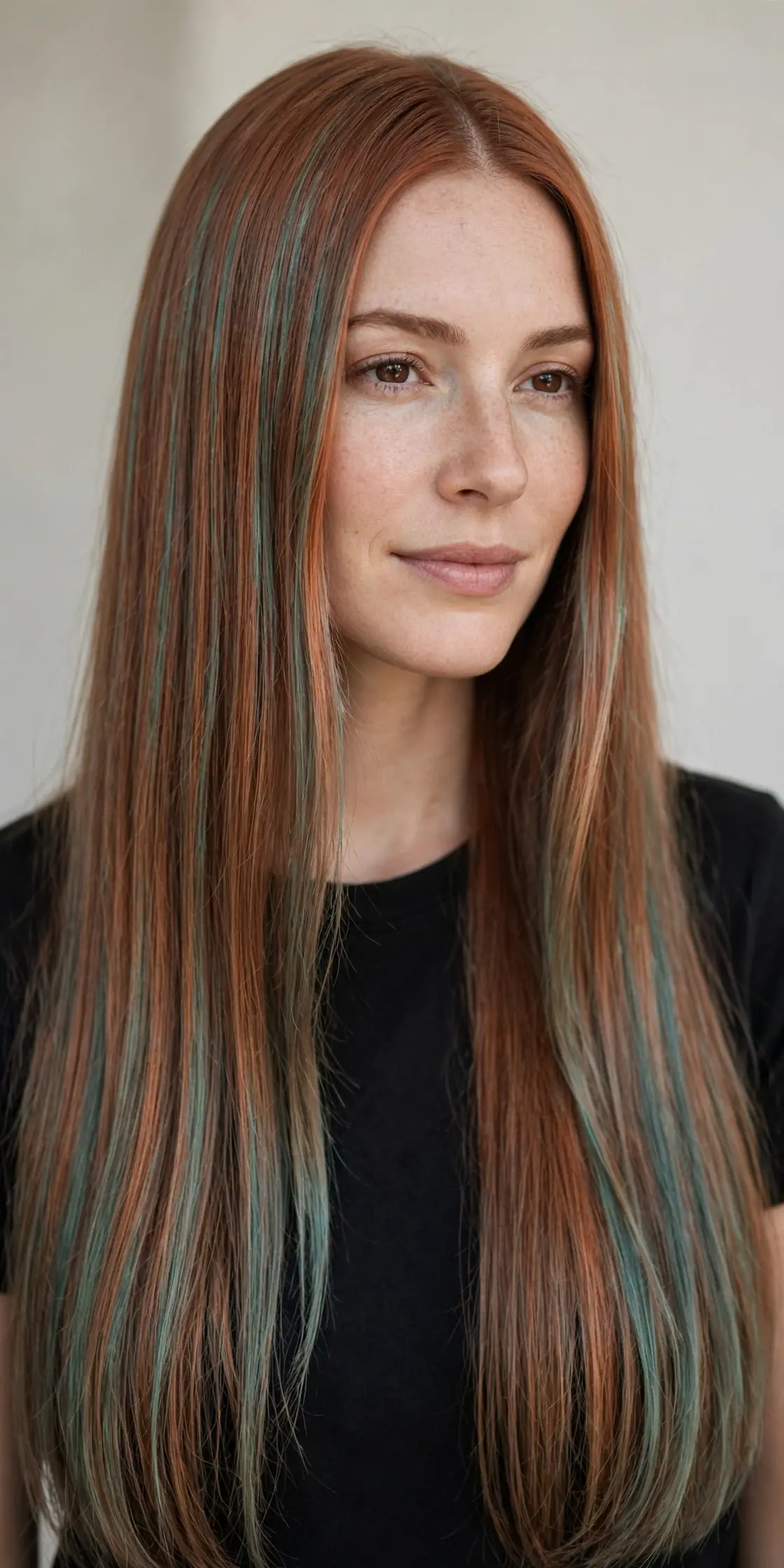
If copper has always felt a little too bright for you, these oxidized copper hair color ideas are the answer. Oxidized copper is the antiqued, patina-kissed cousin of cowboy copper hair color — the penny-bright copper you love, softened with smoky, weathered tones and a whisper of teal-green patina at the ends. The result reads as expensive and dimensional, and it flatters a wider range of skin tones than neon coppers because the muted, green-tinged finish calms down the warmth. In the next three minutes you will find 12 wearable ways to wear it, from an all-over antiqued copper to patina-tipped balayage, each with exact styling tips and the care routine that keeps the finish from going flat.
All-Over Oxidized Copper Hair Color
This is the purest way to wear the trend: one rich, antiqued copper shade from roots to ends, veiled with a smoky patina toner that mutes the brightness without killing the warmth. It suits fair to medium skin with neutral or warm undertones, and it is especially flattering if you have green, hazel, or amber eyes, because the greenish patina echo brings them forward. Fine to medium hair textures wear it best, since a single-process color keeps the hairline and part looking soft rather than chunky. The weathered finish does the heavy lifting for you: it reads expensive and editorial, hides regrowth better than bright coppers, and photographs beautifully in daylight because the muted tones never blow out into harsh orange.
- Apply a heat-protectant cream before any hot tools to keep the patina veil from turning brassy.
- Blow-dry with a round brush for a polished, light-catching finish that shows off the aged depth.
- Refresh shine weekly with a copper-depositing gloss to stop the smoky overlay from fading flat.
- Part your hair slightly off-center to soften the hairline and show the color’s dimension.
At your appointment, ask for a single-process copper base at a level 7 or 8 with an antiqued, smoky demi-permanent overlay — no chunky highlights, just a soft patina veil through the mid-lengths and ends. Bring reference photos that show muted, weathered copper rather than neon red, so your colorist calibrates the brightness correctly. At home, wash in cool water with a sulfate-free, color-safe shampoo and refresh the tone with a copper gloss mask every three to four weeks. Book a gloss and trim every eight weeks; because the color is all one shade, regrowth blends easily and the look grows out gracefully.
Verdigris-Tipped Copper Balayage
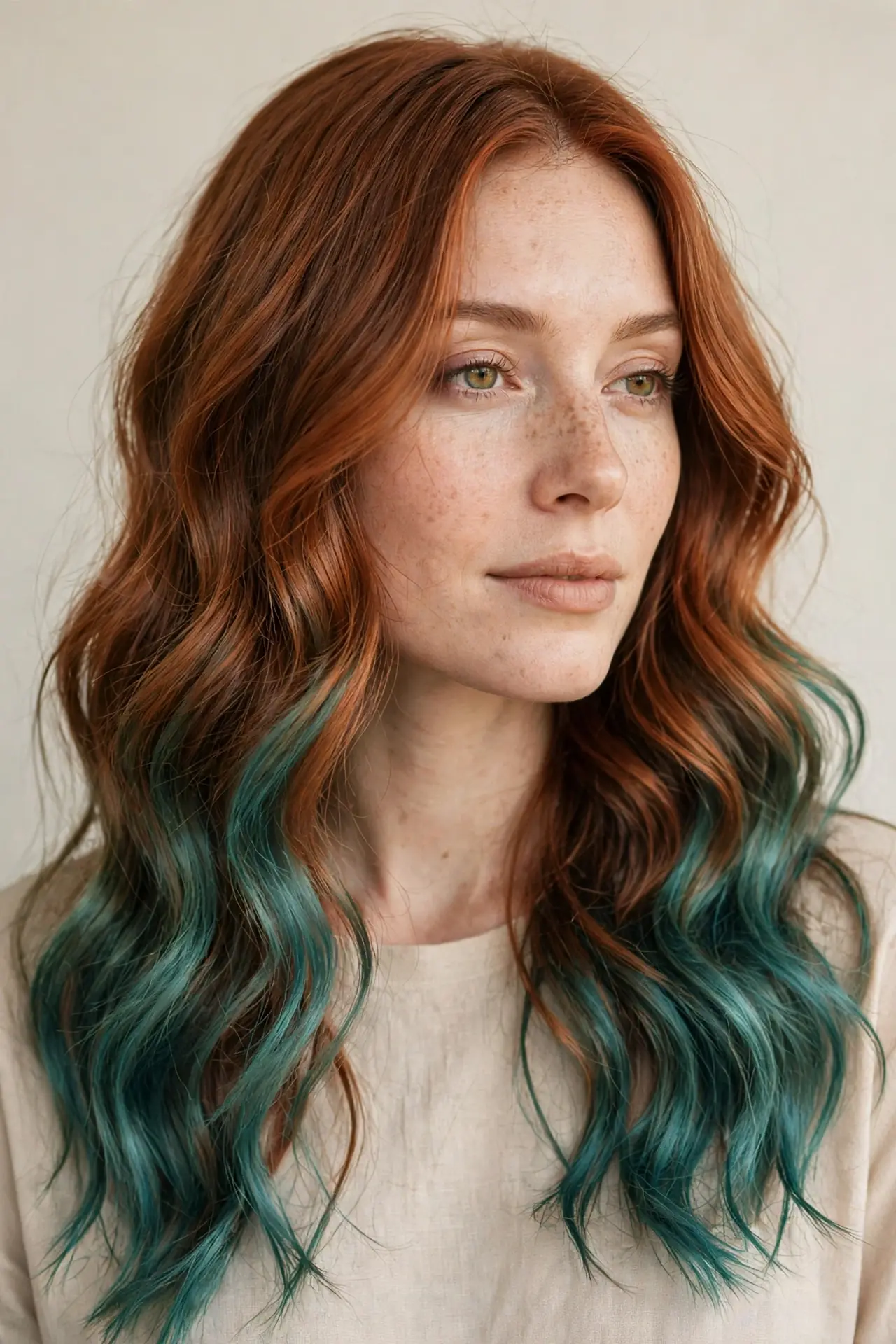
This look keeps a warm penny-copper base and hand-paints the mid-lengths lighter before dipping just the tips in verdigris — the green-teal tone that appears on aging copper metal. It suits medium to thick hair because there is enough length and density for the three-stage gradient to read clearly, and it is gorgeous on olive and deeper skin tones, where the teal tips cool down the warmth around the face. If you love copper but worry it washes you out, the green accent is the fix: it adds contrast, makes the copper look deeper, and gives long hair serious movement. Straight or wavy styles show the painted gradient best.
- Ask your stylist to keep the teal concentrated on the last two inches so the look stays wearable at work.
- Style in loose waves to reveal the gradient instead of hiding the tips in a ponytail.
- Use a teal-depositing conditioner once a month to keep the verdigris from washing to gray.
- Smooth a tiny amount of shine serum only through the ends so the painted pieces catch the light.
At the salon, ask for a warm copper base with hand-painted balayage through the mid-lengths, then a verdigris toner applied to the lightened ends only — tell them you want a patina finish, not mermaid teal. This is a partial-color service, so it costs less than a full head of foils and grows out softly with no harsh line. At home, wash two to three times a week in cool water, alternate your copper mask with the teal conditioner, and schedule a gloss and toner refresh every six to eight weeks. Trim the ends every ten weeks to keep the painted tips crisp instead of ragged.
Oxidized Copper Hair Color with Teal Patina Ends
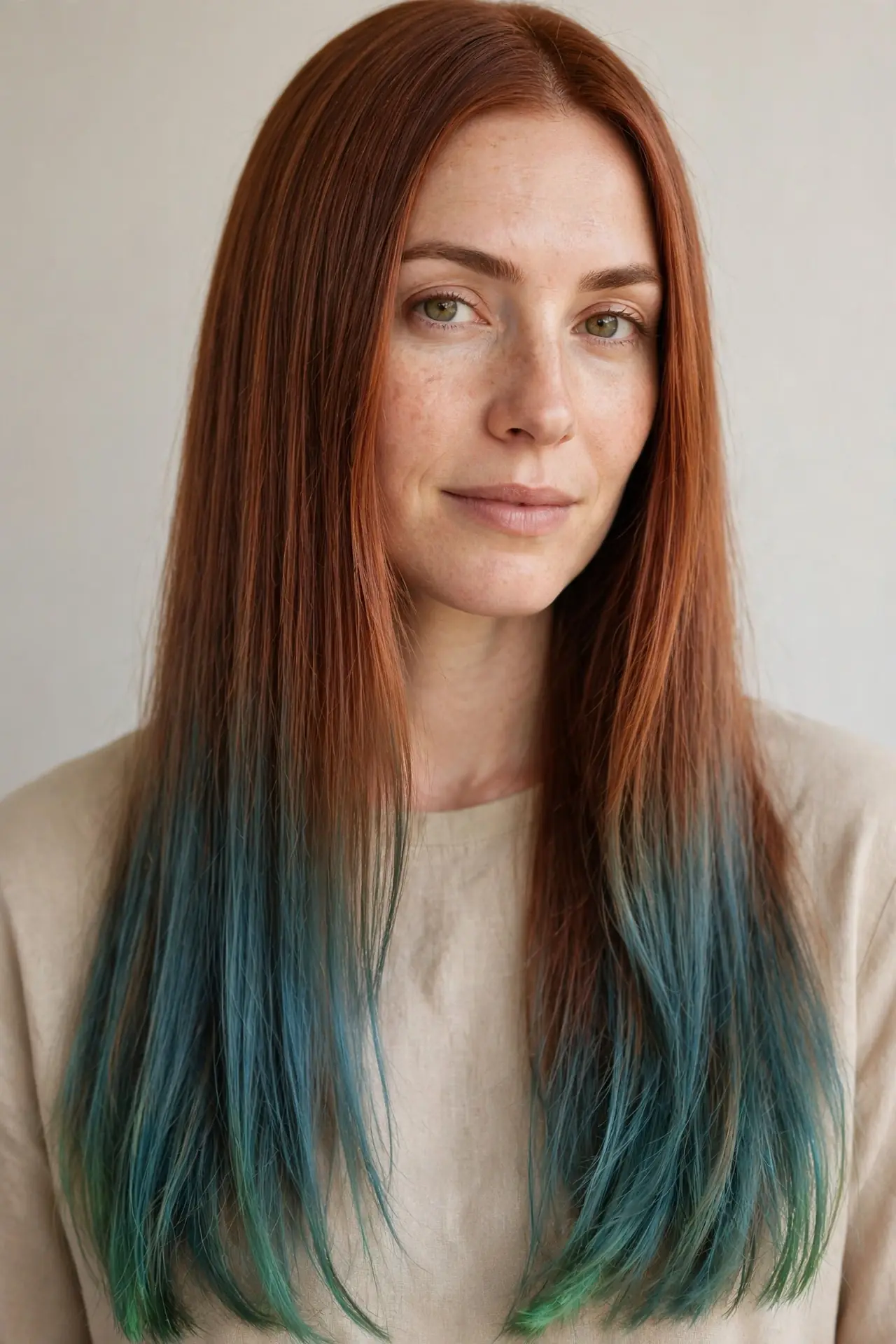
The most subtle entry on this list hides the patina where only movement reveals it: rich oxidized copper through the roots and lengths, with dusty teal painted into the very ends like the underside of a copper coin. It suits long hair best, because the color story unfolds as the hair swings, and it works on fine to medium textures since the ends are only toned, not heavily lightened. Conservative dressers love this one — from the front it reads as a sophisticated muted copper, and the teal only flashes when you turn or tie your hair up. It is also the smartest first step if you are curious about fashion tones but not ready to commit.
- Wear your hair down in soft bends on day one so you can see exactly where the patina lands.
- Try a low twisted bun for events; the tucked ends peek out in the most flattering way.
- Protect the ends with a leave-in cream before heat styling, since toned ends fade fastest.
- Refresh the teal with a color-depositing mask in a dusty shade, never a neon one.
Ask your colorist for your usual copper base with a “dusty teal patina” melted into the bottom inch of the hair — a toner, not a permanent dye, so it fades out in four to six weeks if you change your mind. Because only the ends carry the fashion tone, upkeep is minimal: book a gloss every six weeks to keep the copper fresh, and have the teal ends re-toned only when you miss them. At home, cool-water washes and a sulfate-free shampoo are non-negotiable for fashion tones, and a weekly bond-building treatment keeps the ends from going porous and drinking up the color unevenly.
Antiqued Copper Waves with Smoky Roots
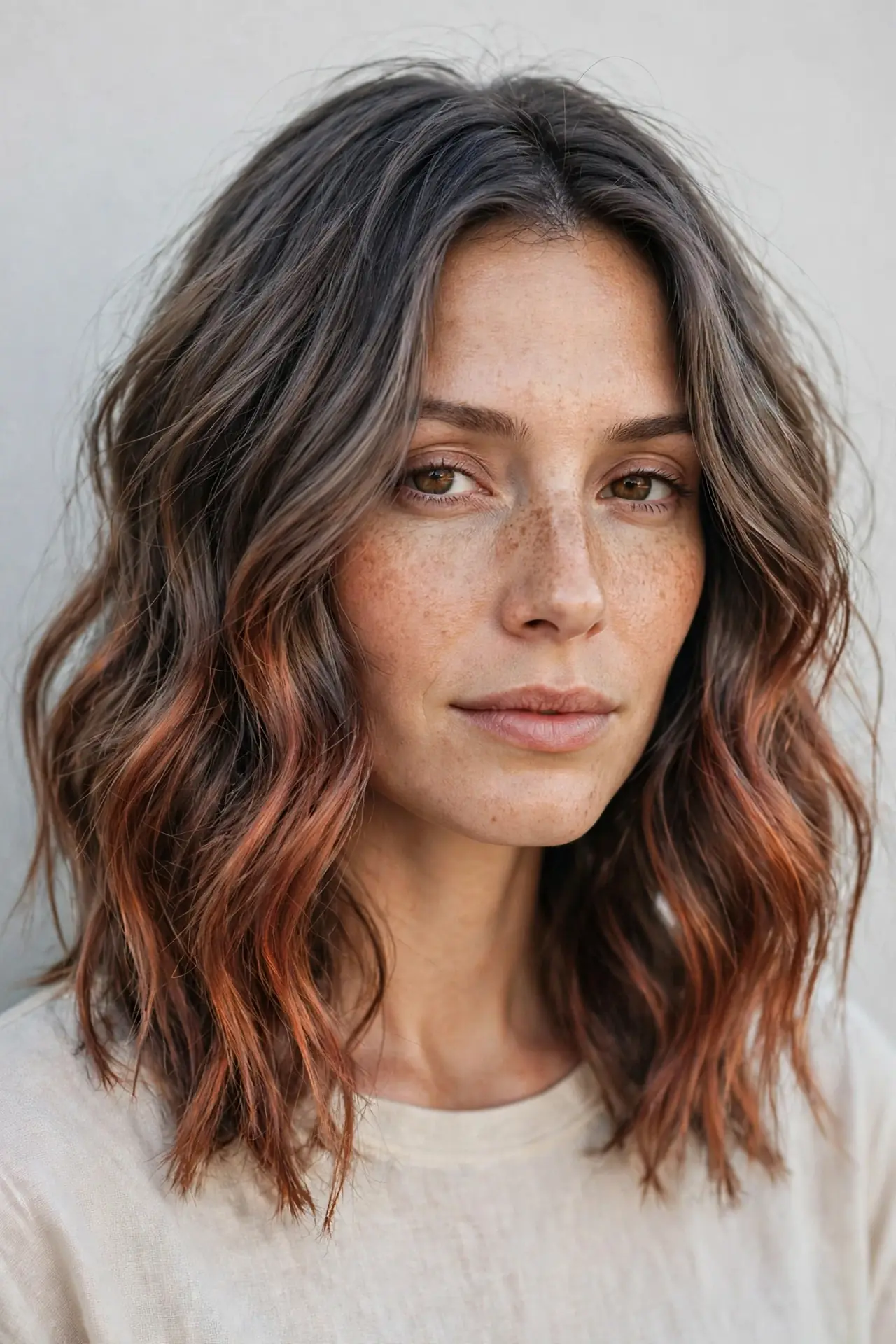
This is the low-maintenance hero of oxidized copper: a smoky, ashy root shadow that melts into antiqued copper through the lengths, worn in soft, touchable waves. It suits literally every face shape — the deeper root adds height and frames the face, which is especially flattering on round and square faces — and it works on medium to long hair of any texture. The smoky root is doing two jobs at once: it gives the copper a naturally grown-out look from day one, and it lets you stretch salon visits to ten or twelve weeks. If you have ever loved copper but hated the regrowth line, this is the version built for you.
- Style with a large-barrel iron, leaving the last inch straight for that effortless, undone wave.
- Run a wide-tooth comb through the waves to break them into soft, blended texture.
- Spritz texturizing spray at the roots to lift the smoky shadow and add airy volume.
- Sleep on a silk pillowcase to preserve the waves and reduce copper-fading friction.
At your appointment, ask for a root shadow one to two levels deeper than your copper with a smoky, cool-based toner, melted four to six inches down before it transitions to the antiqued copper. Bring a photo of the melt you want — “soft,” “diffused,” and “no line” are the words to use. At home, wash in lukewarm water and use dry shampoo at the roots between washes; the deeper root hides oil beautifully, so you can easily go three to four days. Book a gloss and root-shadow refresh every ten to twelve weeks, and trim every eight to keep the waves bouncy instead of stringy.
Oxidized Copper Lob with a Cool Patina Melt
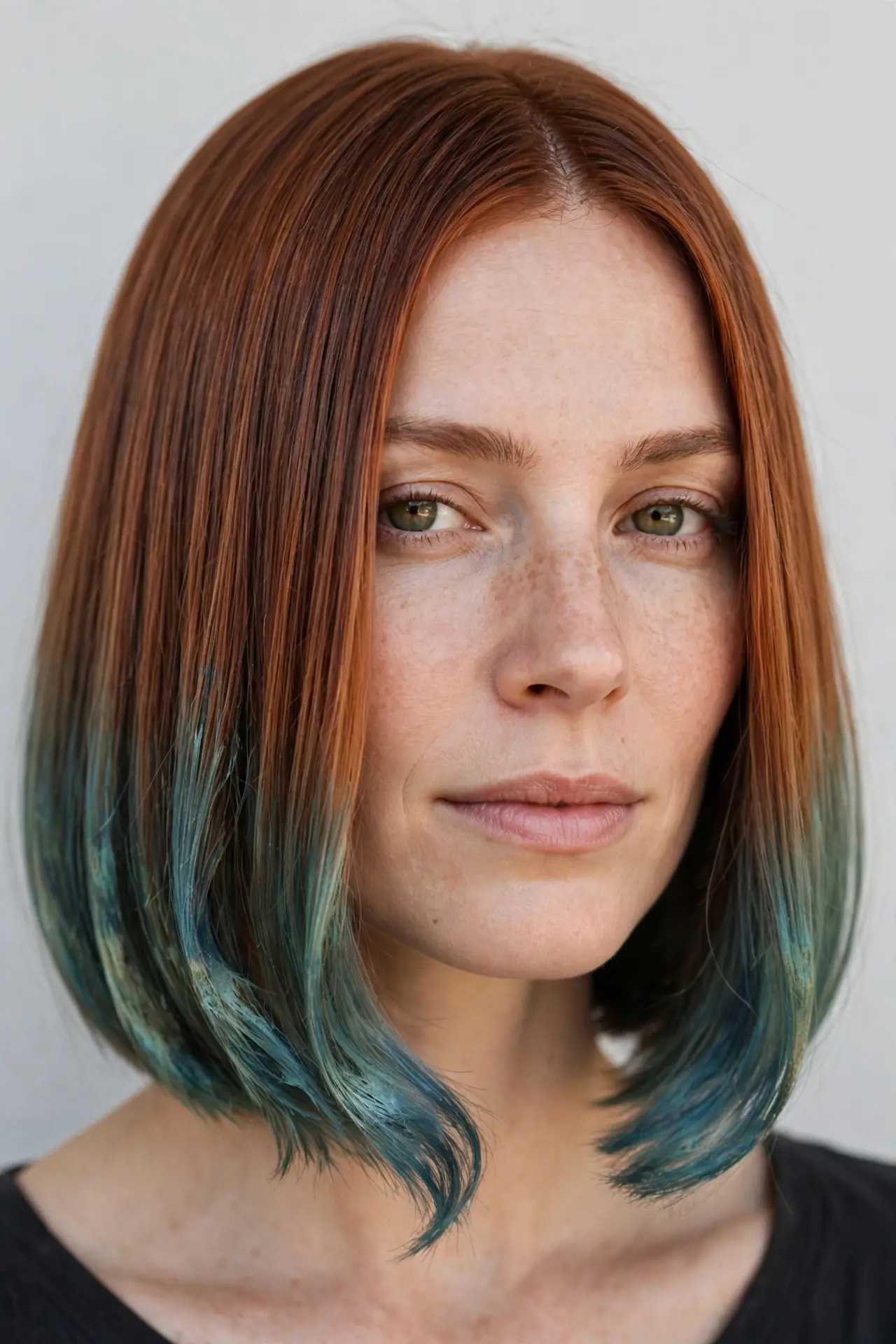
A chin-to-collarbone lob gets the full oxidized treatment here: warm copper at the roots flowing into a cool, smoky patina melt through the ends, with the bluntness of the cut making every tone shift razor-sharp. It suits fine to medium hair because the blunt perimeter creates instant fullness, and it flatters oval, long, and heart-shaped faces by adding width right at the jawline. The patina melt does something clever for the cut — the cooler ends look slightly shadowed, which makes the copper above them appear even richer. It is polished enough for the office and edgy enough for the weekend, all in one haircut.
- Blow-dry the lob straight with a paddle brush to make the patina melt look crisp and intentional.
- Flip the ends under slightly for a retro, expensive-looking finish.
- Add a deep side part when you want the color shift to look more dramatic.
- Tame flyaways with a pea-sized amount of smoothing cream, focusing on the cooler ends.
Ask your stylist for a blunt lob with minimal layering and a cool patina toner melted from the mid-lengths down — emphasize that you want the ends to read smoky-green, not gray. Because the cut is blunt, precision matters: book trims every six to eight weeks or the perimeter goes wispy and the color melt loses its punch. For everyday washing guidance, the dermatologist-backed hair-care tips from the American Academy of Dermatology at their everyday hair-care guide are a solid baseline — gentle shampooing, conditioning, and minimal heat keep both the cut and the patina finish in top shape. Refresh the melt with a gloss every six weeks.
Tarnished Copper Curls with Hidden Teal Peekaboo
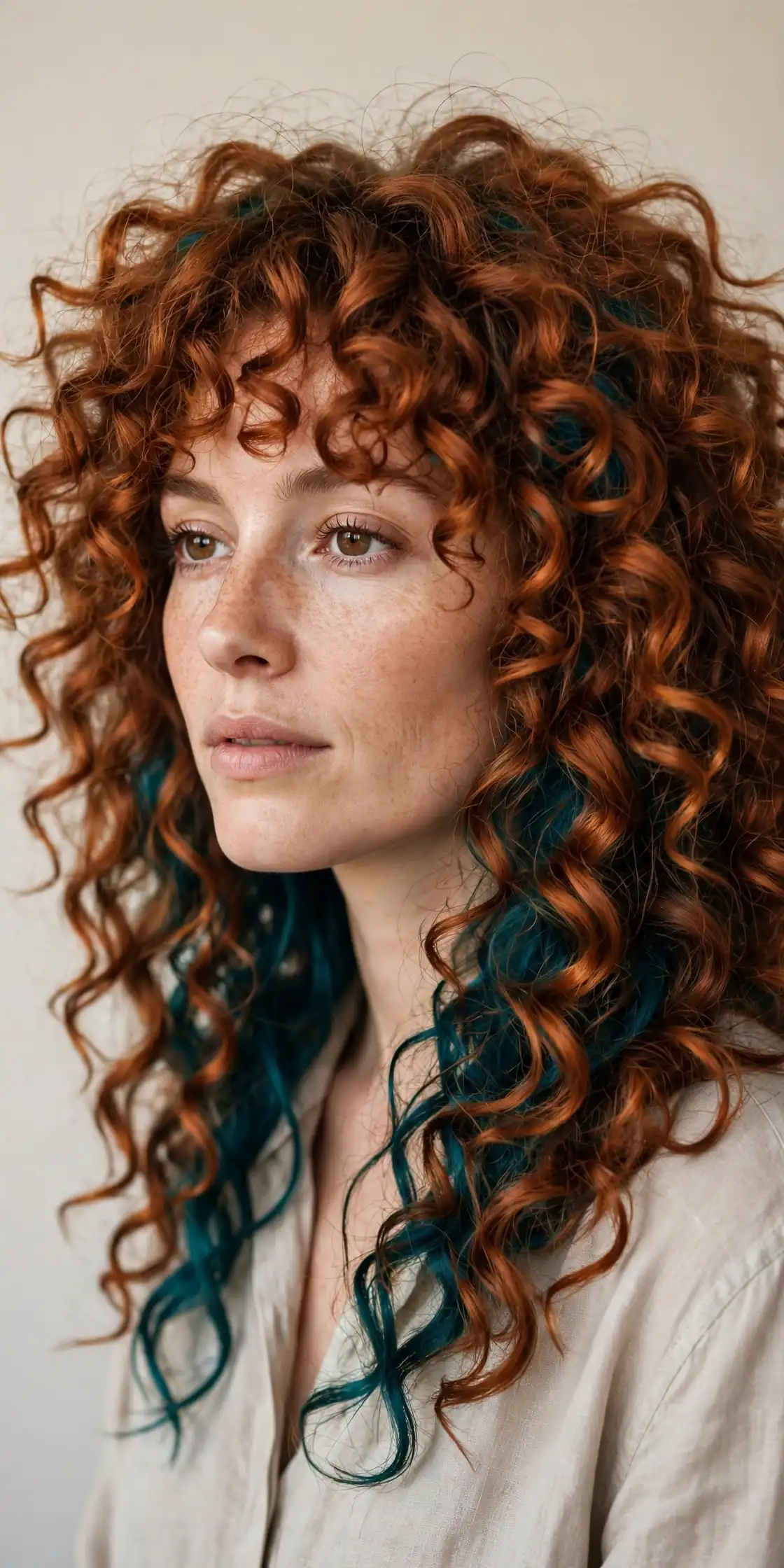
Curly girls get the most magical version of oxidized copper: rich tarnished copper over the canopy with hidden panels of deep teal tucked underneath, so the patina flashes only when your curls move. It suits curl types 2C through 3B best, where the curl pattern naturally separates and reveals the hidden color, and it is stunning on warm and deep skin tones because the teal underneath cools the overall warmth. The hidden placement is genius for commitment-phobes — wear your curls defined and the teal stays a secret; shake them out and the patina appears. It also means zero root maintenance on the fashion tone.
- Diffuse on low heat with your head flipped to encourage the hidden teal to peek through.
- Refresh second-day curls with a water-and-leave-in mist instead of re-washing.
- Scrunch a curl-defining cream upward to keep the canopy copper smooth and the panels distinct.
- Pineapple your hair at night in a satin scrunchie to protect both the curls and the color.
At the salon, ask for your copper base all over, then two to three hidden teal panels painted underneath the top layer — your colorist should place them where your part naturally opens. Tell them the teal should be a deep, tarnished shade, not bright aqua, so it reads as patina. At home, wash once or twice a week with a sulfate-free cleanser, deep-condition weekly, and refresh the teal panels with a color-depositing conditioner every three to four weeks. Gloss the copper canopy every eight weeks; the hidden panels can be re-toned on the same visit with no extra foiling time.
Patina-Glazed Copper Pixie
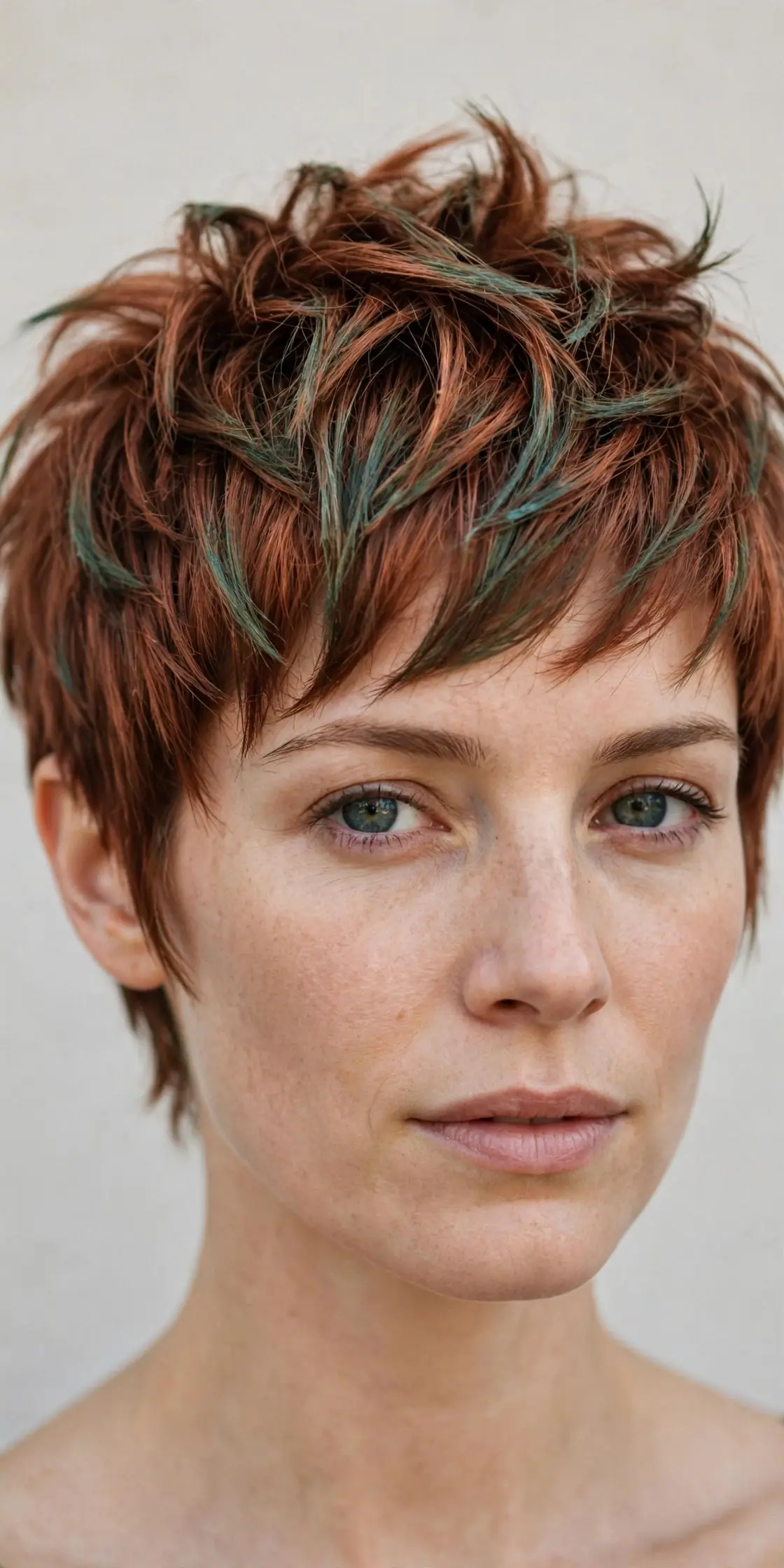
Short hair wears oxidized copper beautifully: a textured pixie in warm copper, finished with a patina glaze that settles into the piecey layers like tarnish in carved metal. It suits oval, heart, and diamond face shapes, where the cropped cut shows off cheekbones, and it is a dream for fine hair — the texture and the dimensional glaze create the illusion of twice the density. This is the boldest idea on the list and also one of the most flattering, because the muted, smoky finish keeps the copper from reading harsh against the skin the way bright red pixies sometimes do. Wash-and-go has never looked this intentional.
- Work a matte texture paste through dry hair to separate the layers and show the glaze.
- Push the fringe to one side for softness, or forward for an edgier finish.
- Refresh the shape with trims every four to six weeks — pixies lose their edge fast.
- Boost shine with a lightweight oil on the longer top pieces only.
Ask your stylist for a textured pixie with longer, piecey length on top and a patina glaze over your copper base — the glaze is a demi-permanent toner, so it adds the smoky dimension without further damage. Bring photos showing the exact ratio of copper to patina you want, since “oxidized” means different things to different colorists. At home, wash as often as you like with a gentle, color-safe shampoo; short hair fades fastest at the hairline, so a copper gloss mask once a week keeps it even. Book a glaze refresh with every other trim to keep the tarnished depth from washing out.
Burnished Copper Shag with Seafoam Highlights

The shag’s choppy layers are the perfect canvas for oxidized copper: a burnished, deep copper base broken up with fine seafoam-green highlights that mimic the lightest patina on aged metal. It suits thick, wavy, or coarse hair because the layers remove bulk while the highlights carve out visible texture, and it flatters long and oblong faces by adding width through the mid-lengths. The seafoam pieces should be fine and scattered — think sunlight hitting patina, not stripes. This is the most rock-and-roll idea on the list, and the green accents keep the deep copper from looking flat or one-dimensional in indoor lighting.
- Air-dry with a wave-enhancing cream to let the shag’s natural texture do the work.
- Twist random sections while damp to encourage piecey, separated waves.
- Use dry shampoo at the crown for gritty, lived-in volume that suits the cut.
- Define the seafoam pieces with a tiny dab of pomade so they catch the light.
Ask your stylist for a modern shag with razored layers and fine, hand-painted seafoam highlights scattered through the mid-lengths — emphasize “fine and blended,” because chunky pieces will read as streaks instead of patina. The cut needs reshaping every eight to ten weeks or the layers grow heavy and lose their bounce. At home, the seafoam highlights are the fragile part: wash in cool water, use a color-safe shampoo, and refresh them with a pastel-teal depositing conditioner monthly. Gloss the burnished copper base every eight weeks to keep it rich, and sleep with your hair loosely braided to protect the razored ends from frizzing overnight.
Oxidized Copper Blend for Gray Coverage

If you are blending gray, oxidized copper is one of the smartest color choices you can make: the antiqued, multi-tonal finish camouflages gray regrowth far better than flat, bright copper ever could. It suits anyone with thirty to sixty percent gray who wants coverage without the harsh line of permanent single-process color, and it works on all textures. The trick is a demi-permanent copper blend with smoky patina lowlights woven through — the lowlights mimic the shadow of natural gray, so new growth dissolves into the color instead of announcing itself. You get the warmth and richness of copper with half the maintenance of traditional gray coverage.
- Style with soft volume at the roots to blur the line where new growth meets color.
- Use a root touch-up powder in a copper shade between appointments for special events.
- Avoid flat-ironing the same section repeatedly, which fades demi-permanent blends fastest.
- Add a weekly gloss mask to keep the blend luminous instead of dull.
Ask your colorist for a demi-permanent copper blend with patina lowlights — say the words “gray blending, not gray coverage,” because the goal is a soft, diffused finish rather than opaque color. Bring a photo of the coverage level you want; some clients like a sheer veil, others want more saturation. At home, wash with a sulfate-free shampoo and cool water, and expect to refresh the blend every six to eight weeks — the grow-out is so soft that many clients stretch to ten. This is also the ideal moment to go slightly deeper than your old copper, since deeper shades cover gray more convincingly.
Deep Patina Copper Ombré on Long Hair
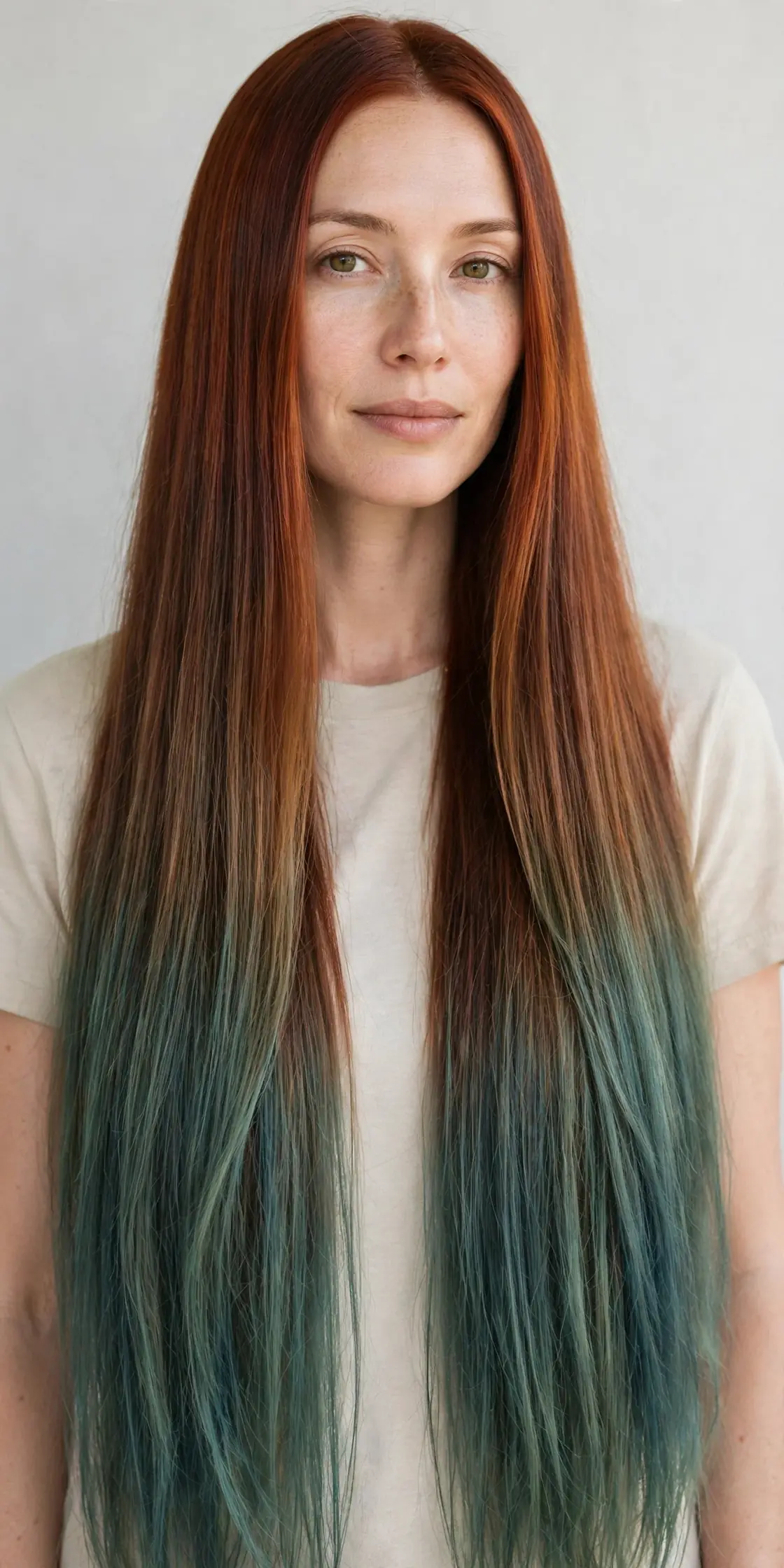
For maximum drama, this ombré runs from a deep, burnished copper at the roots all the way down to a fully patina-washed finish — smoky, green-tinged ends that look like the bottom of an ancient copper vessel. It suits long, thick hair because the gradient needs serious length to unfold gracefully, and it flatters warm and neutral skin tones, where the deep roots add richness around the face. The deep-to-patina fade is also incredibly forgiving: the darkest part sits at the roots, so regrowth is invisible, and the lightest part is at the ends, where trims regularly remove damage. Long-haired copper lovers, this is your statement look.
- Wear it straight occasionally to show off the full root-to-tip gradient.
- Braid it loosely for the gym; the woven texture makes the patina shift beautifully.
- Detangle from ends to roots with a wide-tooth comb to protect the lightened ends.
- Apply a bond-building treatment weekly, since the ends carry the most chemical work.
Ask your colorist for a deep copper base melted into a patina ombré — the transition should start around chin level and deepen toward the ends, with the final inches carrying the strongest smoky-teal tone. This is a multi-hour service, so book a consultation first and bring photos of both the root depth and the end tone you want. At home, treat the ends like the investment they are: cool-water washes, sulfate-free shampoo, a weekly bond builder, and trims every eight to ten weeks. Refresh the patina toner every six to eight weeks; the deep roots can go twelve weeks or more between touch-ups.
Copper Penny Money Piece with Verdigris Shadow Root

The money piece gets the oxidized treatment: bright penny-copper ribbons framing the face, set against a smoky verdigris shadow root that keeps the whole look grounded and modern. It suits anyone who wants the impact of copper without coloring their whole head — the face-framing pieces brighten your complexion and draw attention to your eyes, while the shadow root means you will never see a harsh regrowth line. Fine to medium hair wears it well because the placement does the work, not the density. It is also the fastest, most affordable idea on this list, often done in under two hours.
- Curl the money piece away from your face to make the penny copper pop.
- Tuck one side behind your ear to show off the contrast with the shadow root.
- Keep the front pieces bright with a copper-depositing mask every two weeks.
- Use a heat protectant on the lightened face-framing pieces every single time you style.
Ask your stylist for a verdigris-toned shadow root with two bright penny-copper money pieces — about an inch wide each — lightened and toned to a true copper, not orange. Emphasize that you want the shadow root smoky and diffused, melting into your natural base within three to four inches. At home, the money piece fades faster than the rest because it is the most lightened hair on your head, so cool water and minimal washing matter most here. Book a toner refresh for the front pieces every six weeks; the shadow root can be stretched to ten or twelve weeks before it needs attention.
Weekend-Ready Oxidized Copper Hair Color Blowout
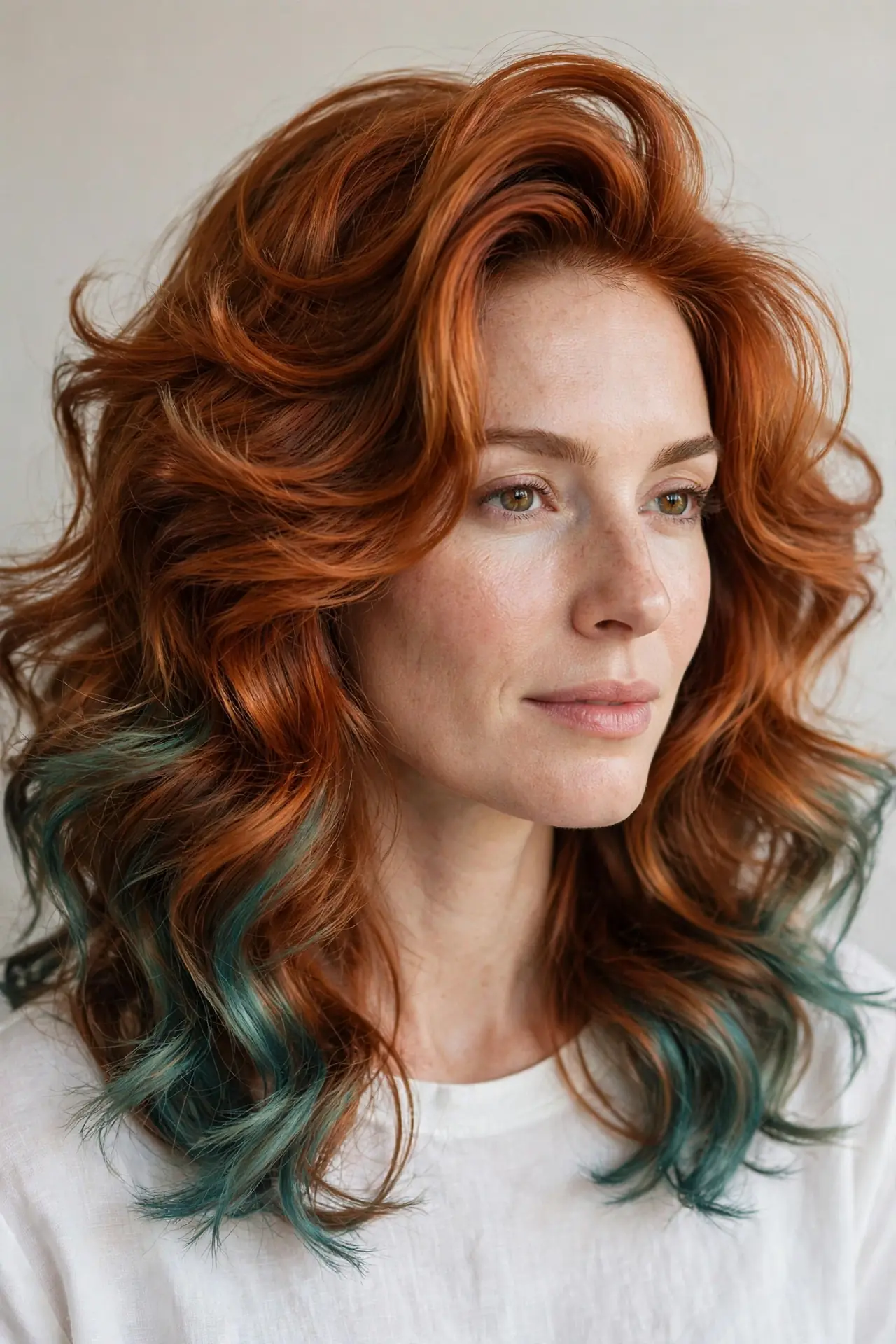
Some colors exist to be blow-dried, and oxidized copper is one of them: a bouncy, voluminous blowout takes the antiqued tones and makes them look lit from within, with the patina ends flicking out like polished metal. It suits any oxidized copper shade on medium to long hair, and it is the perfect styling choice for weddings, dinners, and photos, where movement and shine matter most. The blowout’s volume also solves the one weakness of muted coppers — in flat, indoor lighting they can look dull, but big, reflective bends throw light back into the color. Learn this blowout once and every copper shade you ever wear will look better.
- Apply a volumizing mousse at the roots and a smoothing cream through the ends before drying.
- Blow-dry in sections with a round brush, rolling the ends under for that bouncy flick.
- Set each section with a velcro roller while it cools to lock in maximum volume.
- Finish with a flexible-hold hairspray, never a stiff one, so the movement survives the night.
Ask your stylist to teach you the blowout during your next gloss appointment — most will happily walk you through the sectioning if you ask. For the at-home version, invest in a quality round brush and a dryer with a concentrator nozzle; the tools matter more than the products here. Wash the day before an event rather than the day of, since second-day hair holds a blowout longer, and always use a heat protectant. Keep the color itself fresh with a copper gloss every six to eight weeks, and the blowout will keep looking expensive on even the simplest oxidized shade.
Conclusion
Oxidized copper hair color ideas prove that copper does not have to shout to be stunning — the patina finish brings all the richness with a fraction of the maintenance, and there is a version here for every length, texture, and commitment level. If you loved the warmth here but want it brighter and bolder, explore cowboy copper balayage next, and if you are choosing a seasonal shade, our guide to fall hair colors for women over 50 pairs beautifully with these antiqued tones. Whichever of the 12 you choose, save your reference photos, ask your colorist for the patina by name, and give the gloss schedule a real chance — that smoky, aged finish only gets better when you maintain it properly.