21 Mudroom Built In Storage Ideas for a Tidy Entryway
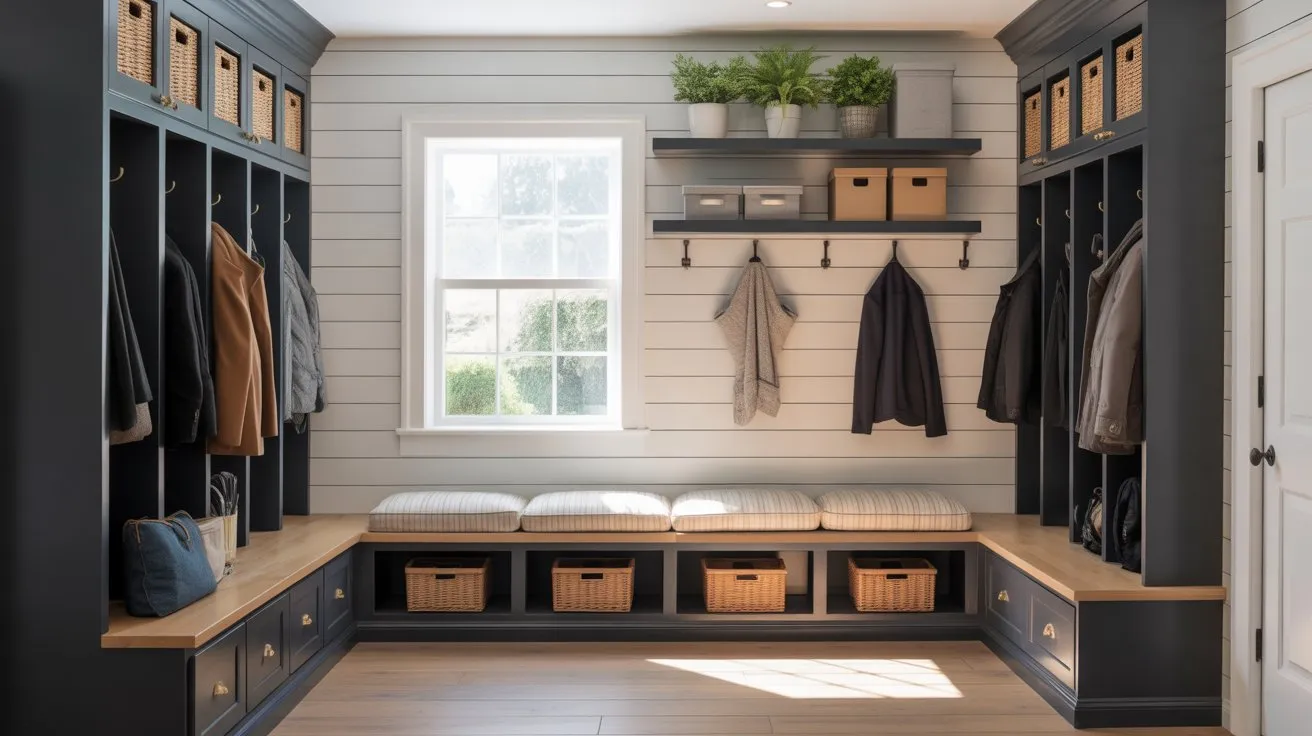
Mudroom built in storage ideas focus on creating an entryway that stays organized and easy to manage every day. Without a proper system, shoes, bags, and daily essentials can quickly turn into clutter. Built-in storage provides a structured solution by maximizing space and improving workflow. From benches and cubbies to cabinets and hooks, each element plays a role in keeping the area functional. These ideas highlight practical ways to design a mudroom that is efficient, clean, and suited for everyday use.
1. Floor-to-Ceiling Built-In Storage System
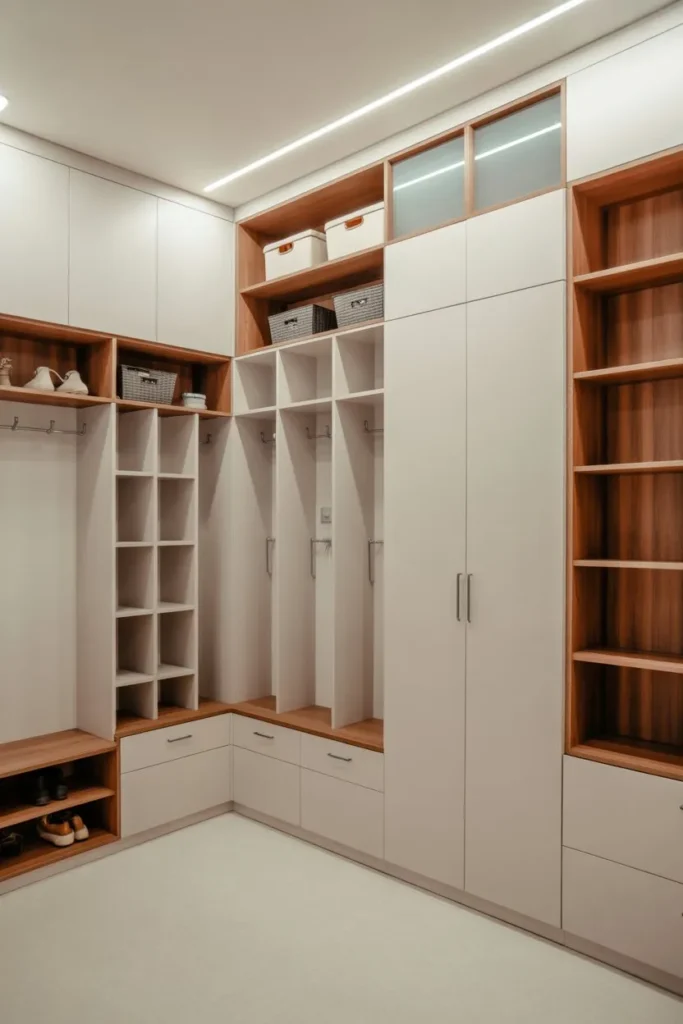
Floor-to-ceiling built-ins maximize vertical space, making them one of the most efficient storage solutions for a mudroom. This design allows you to store everything from daily essentials to seasonal items without cluttering the floor. Lower sections can be used for shoes and frequently accessed items, while upper compartments handle less-used storage.
This approach keeps the entryway visually clean while improving organization. It also creates a seamless, custom look that integrates with the architecture of the home, making the space feel intentional rather than added on.
2. Built-In Bench with Under-Seat Storage
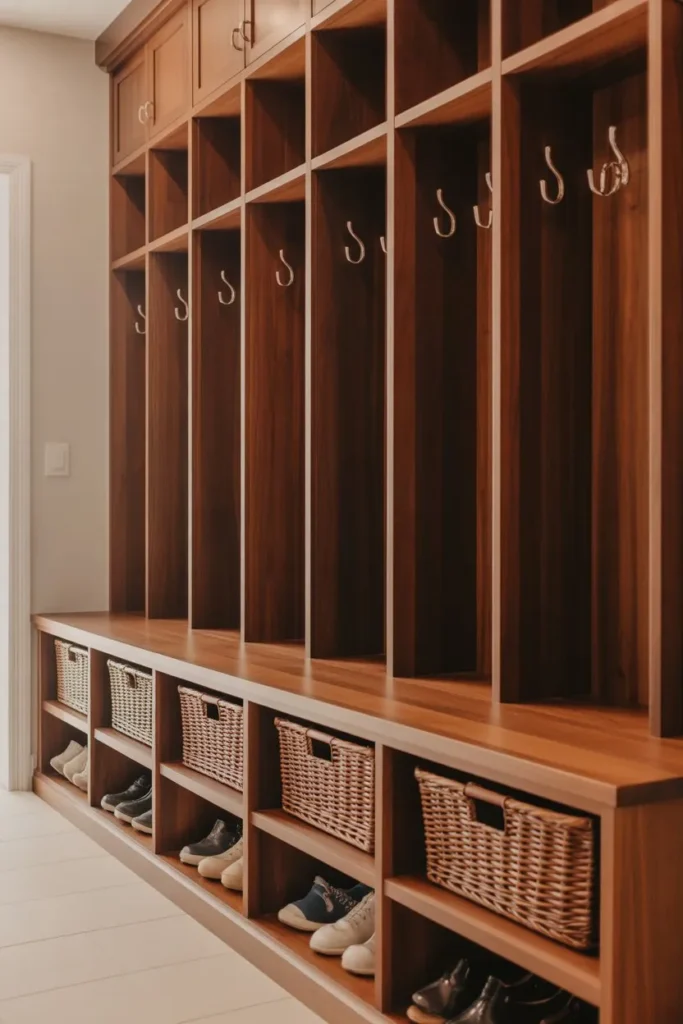
A built-in bench adds both seating and hidden storage, making it one of the most practical mudroom features. It provides a place to sit while putting on or removing shoes, while the space beneath can hold baskets, drawers, or pull-out compartments.
This design improves daily flow by combining multiple functions into one area. It also reduces clutter by keeping items out of sight, maintaining a clean and organized appearance.
3. Individual Locker-Style Built-Ins
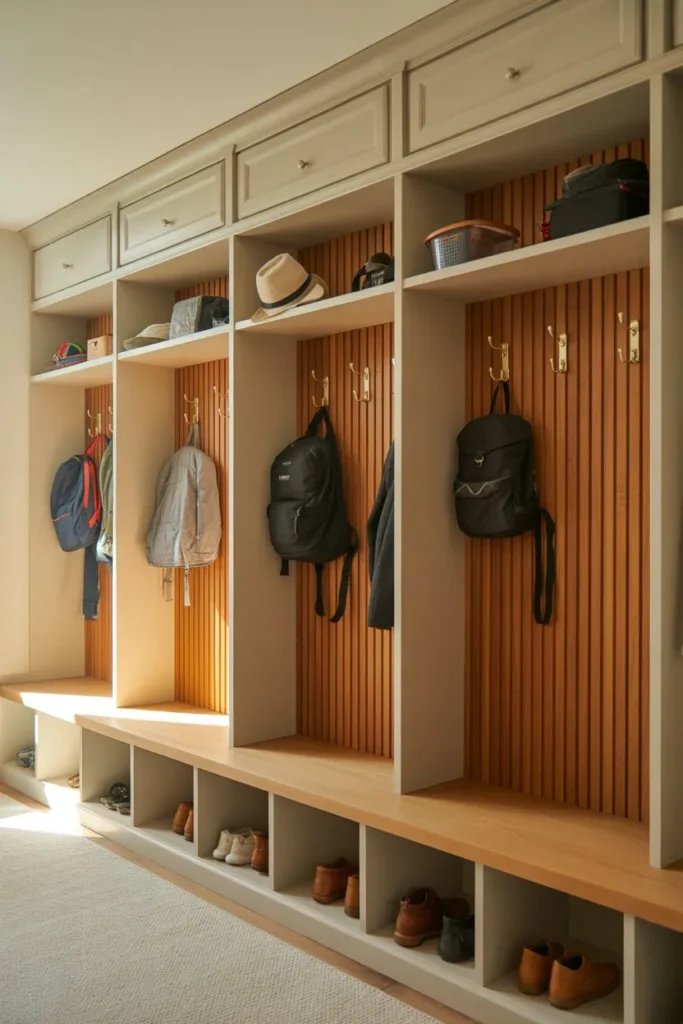
Locker-style built-ins create dedicated storage spaces for each person, making organization easier to maintain. Each section can include hooks, shelves, and compartments tailored to individual needs.
This system prevents overlap and keeps belongings separated, reducing clutter in shared spaces. It’s especially useful for families, as it simplifies daily routines and keeps the entryway structured.
4. Built-In Shelves with Basket Organization
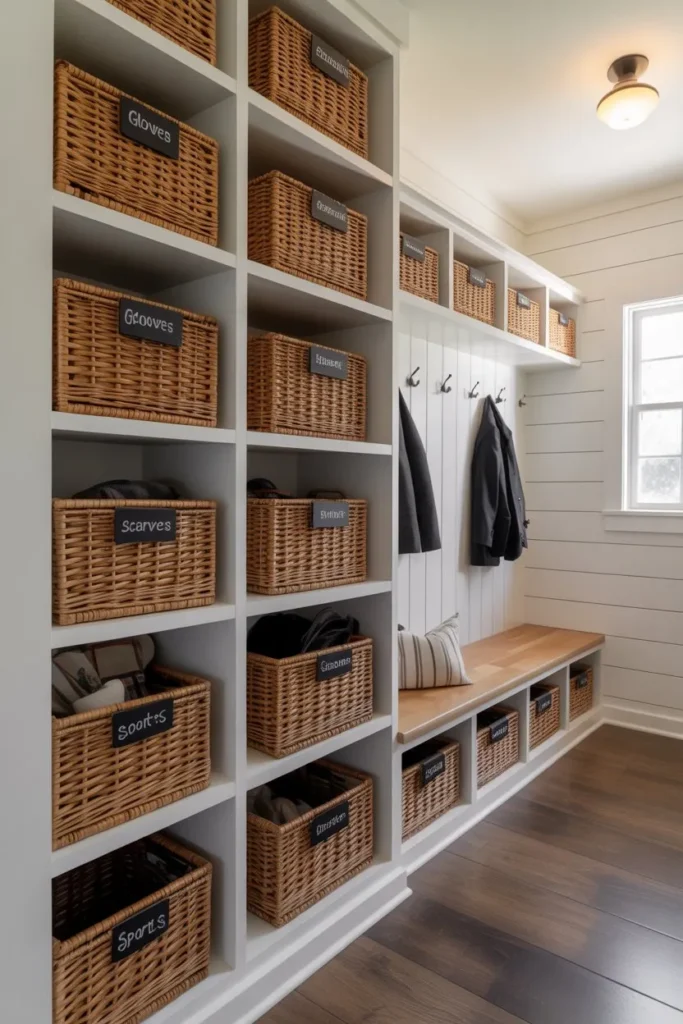
Built-in shelves combined with baskets provide flexible and accessible storage. Baskets help contain smaller items while maintaining a tidy appearance, making it easier to keep the space organized.
This setup allows for quick access while still controlling clutter. It also adds texture and warmth, enhancing the overall design without compromising functionality.
5. Built-In Cubbies for Shoes and Essentials
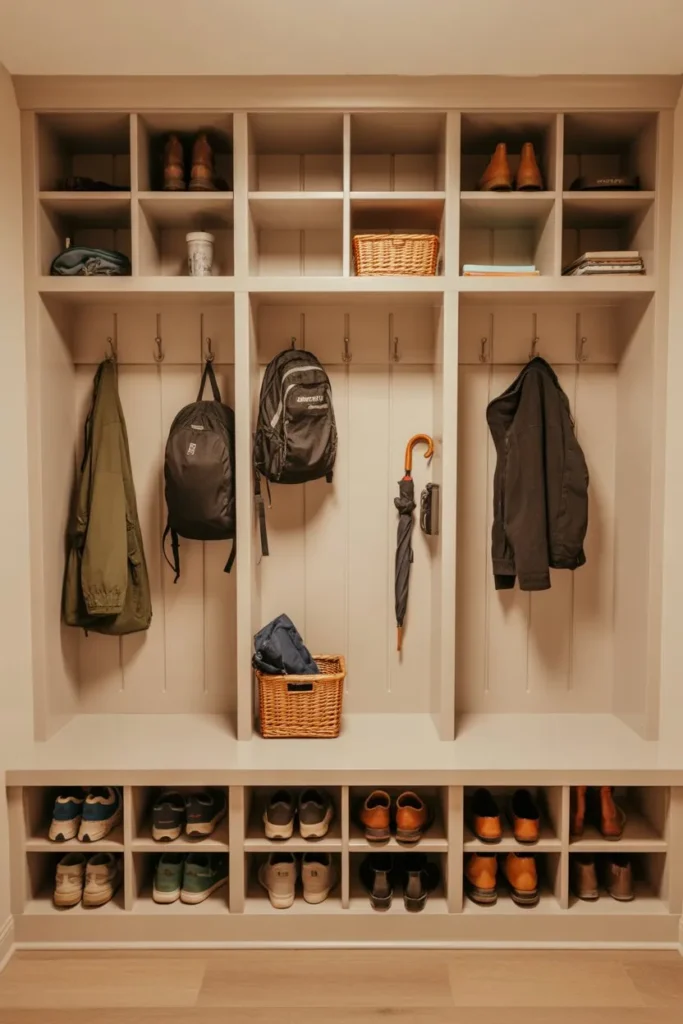
Cubbies are a simple yet highly effective built-in solution for organizing shoes and daily essentials. Each compartment keeps items separated, making it easy to find and store belongings quickly.
This layout improves efficiency and prevents clutter from spreading across the floor. It’s particularly useful in high-traffic households where organization needs to be quick and consistent.
6. Built-In Mudroom Cabinet System with Closed Storage
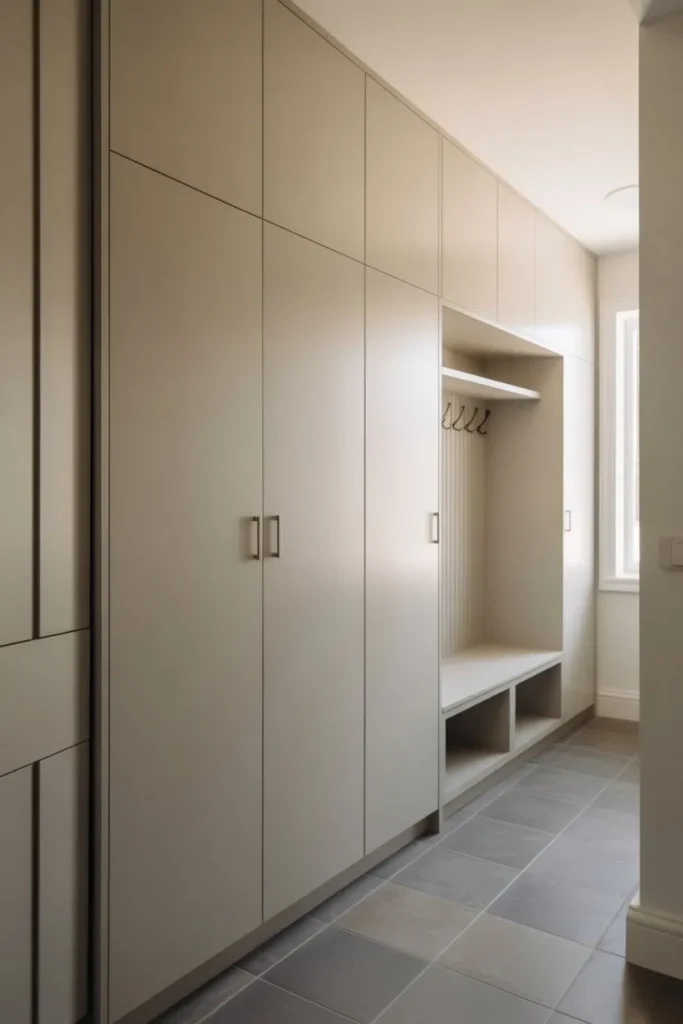
Closed cabinet systems are essential for maintaining a clean and clutter-free mudroom. Unlike open storage, they hide everyday mess such as shoes, bags, and seasonal gear, creating a more polished appearance. This is especially useful in entryways that are visible from main living areas.
Inside, cabinets can be customized with shelves, pull-outs, or dividers to maximize efficiency. This allows items to stay organized without sacrificing accessibility. The result is a space that looks tidy on the outside while remaining highly functional within.
7. Built-In Mudroom with Integrated Hooks Panel
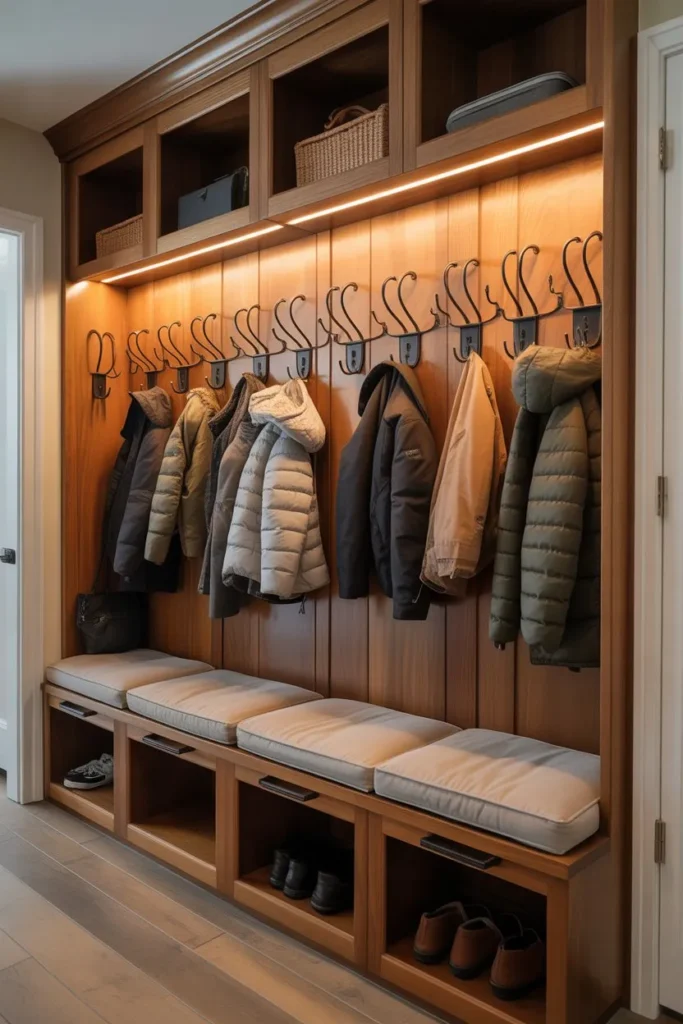
An integrated hook panel adds vertical functionality to built-in storage, making it easier to hang coats, bags, and accessories. Placing hooks at different heights allows both adults and children to use the system efficiently.
This setup improves daily workflow by keeping frequently used items within reach. When combined with a wood or paneled backing, it also enhances the farmhouse or modern aesthetic while maintaining durability.
8. Built-In Storage with Overhead Compartments
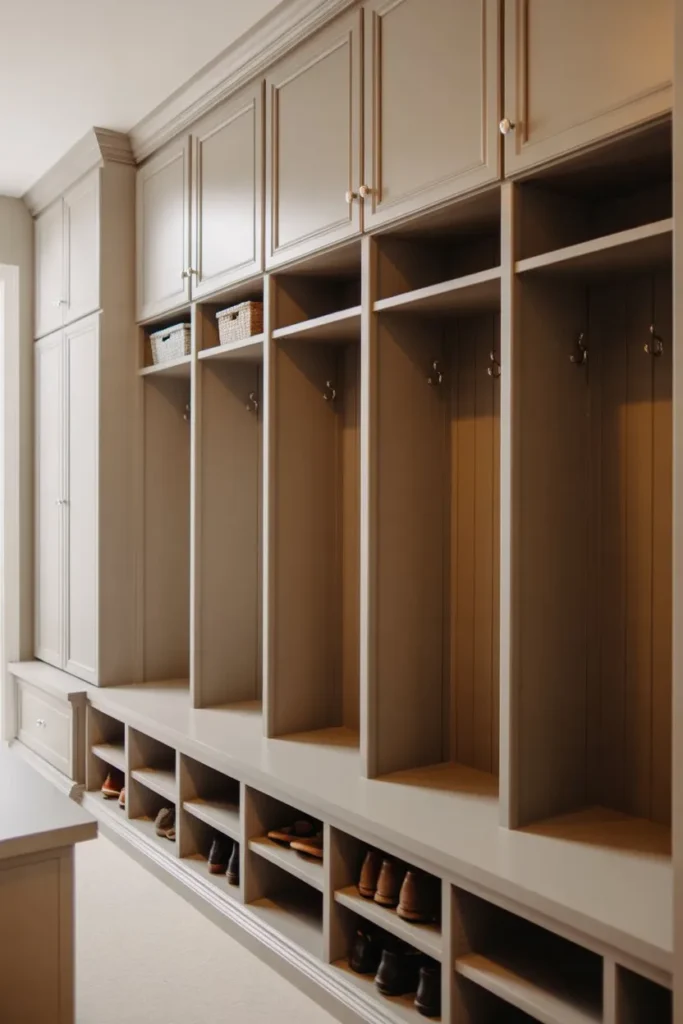
Overhead compartments are ideal for storing seasonal or less-used items, keeping the main area free from clutter. These upper sections make use of vertical space without interfering with daily accessibility.
This layered storage approach ensures that frequently used items remain at eye level, while bulkier or occasional items are stored above. It improves organization while maintaining a clean and structured layout.
9. Built-In Mudroom with Pull-Out Drawers
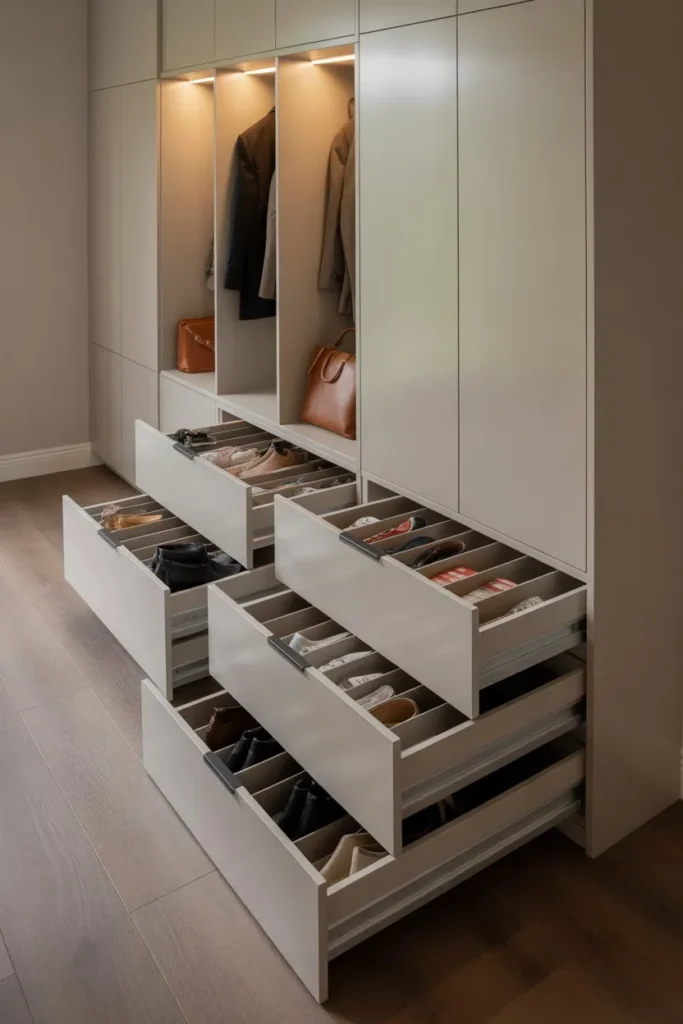
Pull-out drawers enhance accessibility by allowing you to reach items stored deeper within the unit. Instead of digging through shelves, drawers bring everything forward, making organization more efficient.
This is particularly useful for shoes, gloves, or smaller accessories that can easily become cluttered. It improves usability while keeping the overall design streamlined and easy to maintain.
10. Built-In Corner Storage Optimization
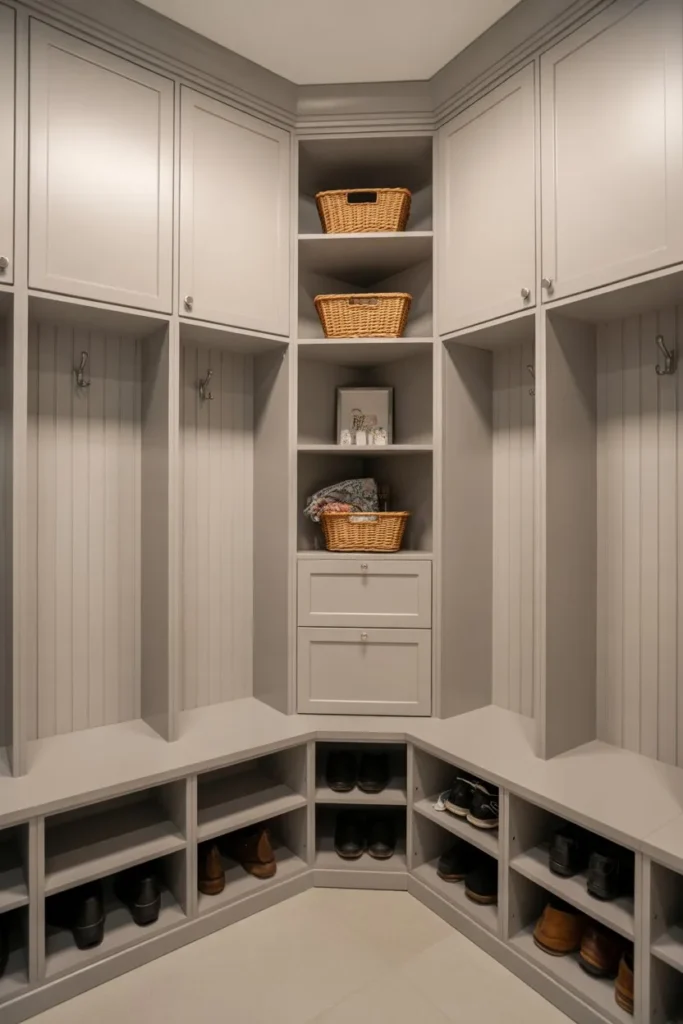
Corners are often underutilized, but built-in corner storage can significantly increase capacity without expanding the footprint. Custom shelving or angled cabinets make use of these areas effectively.
This approach is especially valuable in smaller mudrooms where space is limited. It ensures every part of the room contributes to storage, improving both functionality and layout efficiency.
11. Built-In Mudroom with Multi-Level Storage Zones
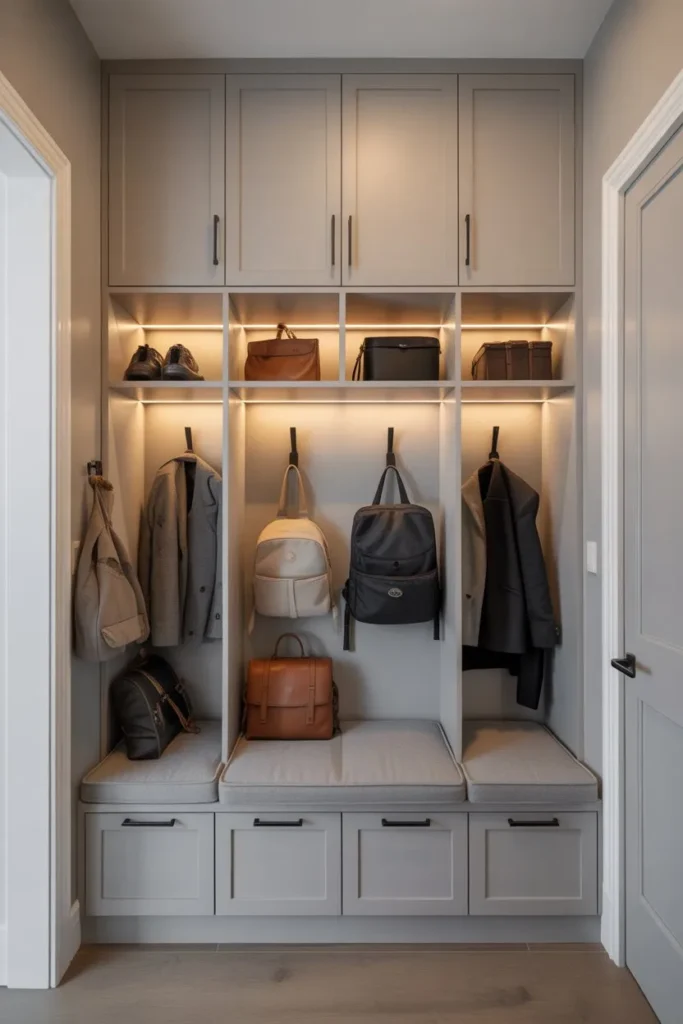
Multi-level built-in storage divides the mudroom into functional zones, improving organization and daily efficiency. Lower sections can handle shoes, mid-level areas store bags or frequently used items, while upper shelves accommodate seasonal storage. This structured approach ensures everything has a defined place.
By separating items based on usage frequency, the system reduces clutter and speeds up daily routines. It also makes the space easier to maintain over time, as each level serves a specific purpose without overlapping functions.
12. Built-In Mudroom with Ventilated Storage Design
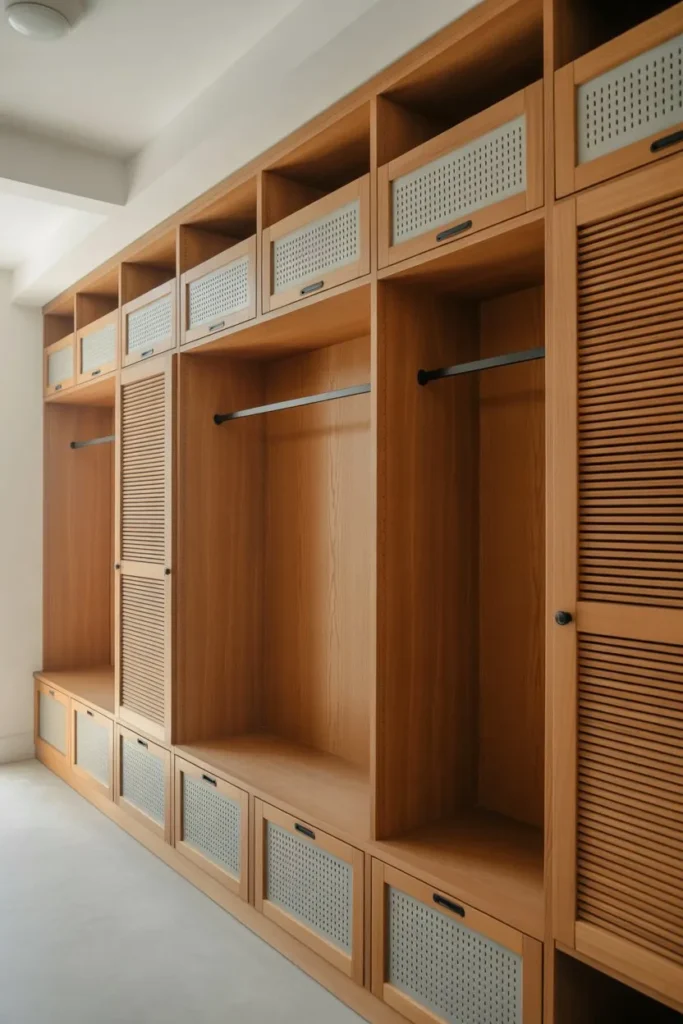
Ventilated storage is essential in mudrooms where shoes and outerwear may carry moisture. Slatted shelves or open-back panels allow airflow, preventing odors and moisture buildup inside compartments. This keeps the storage system hygienic and long-lasting.
This design is especially useful in regions with wet or muddy conditions. It improves durability while maintaining a clean environment. Combining ventilation with structured storage ensures both practicality and comfort in daily use.
13. Built-In Mudroom with Labeling System
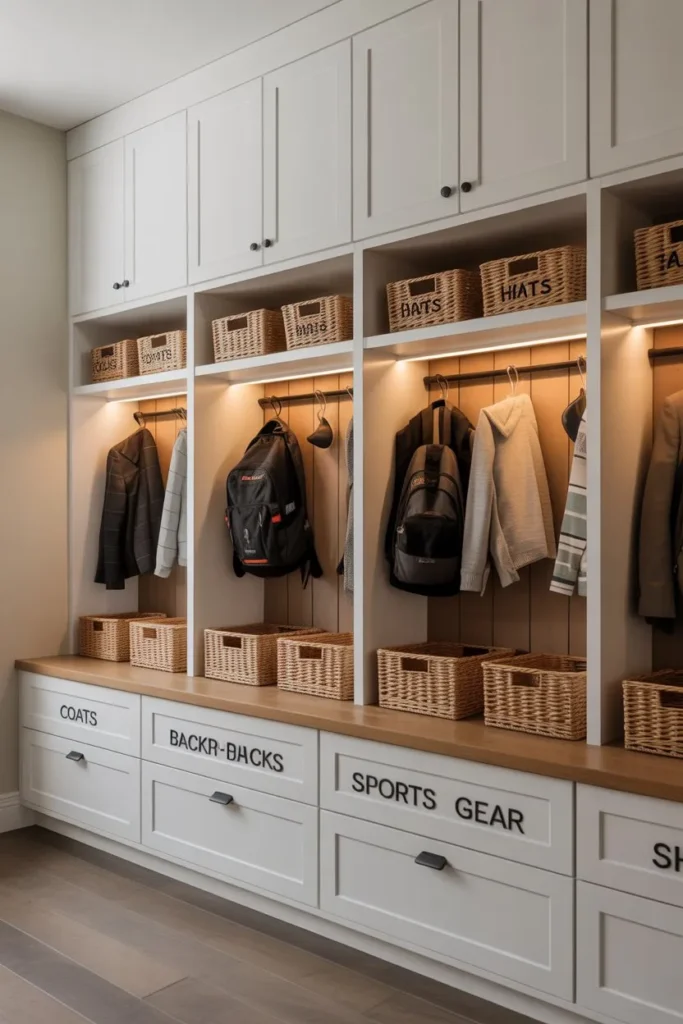
Labeling built-in sections helps maintain organization, especially in shared spaces. Each compartment can be assigned to a specific person or category, making it easier to return items to their proper place. This reduces confusion and prevents clutter from building up.
A clear labeling system also supports consistent habits, which is key for long-term organization. It ensures the storage system remains effective over time, even with frequent use by multiple household members.
14. Built-In Mudroom with Sliding Doors or Panels
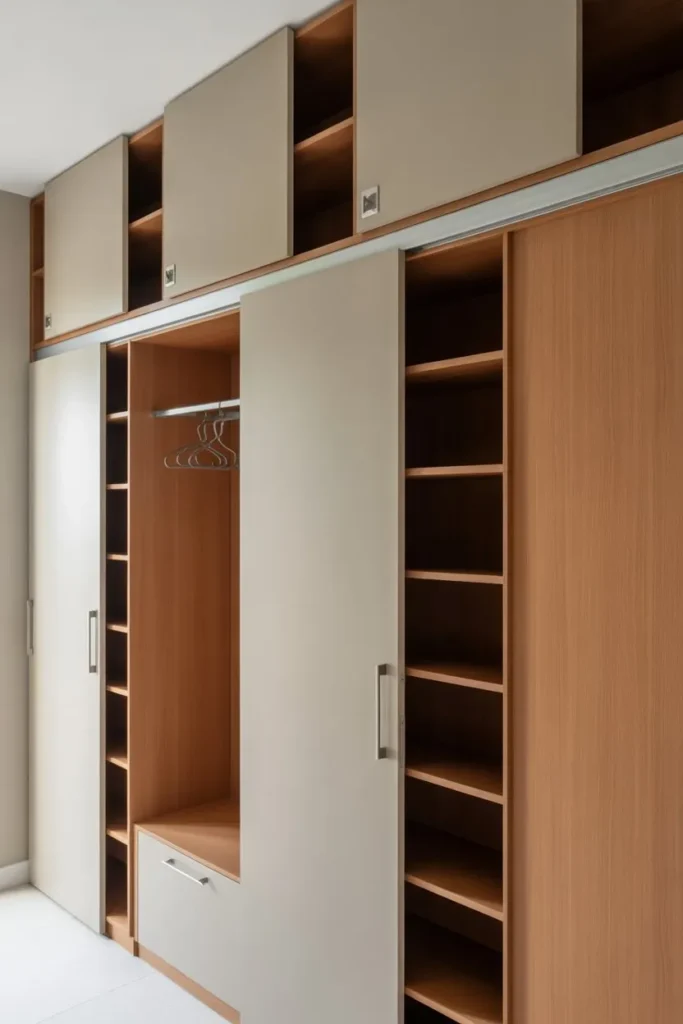
Sliding doors or panels provide a flexible way to conceal storage while maintaining accessibility. Unlike traditional doors, they do not require extra clearance space, making them ideal for compact mudrooms. This helps maintain a clean and uncluttered appearance.
They also allow sections to be hidden or revealed as needed, giving you control over how much of the storage is visible. This balance between openness and concealment enhances both functionality and design.
15. Built-In Mudroom with Integrated Lighting
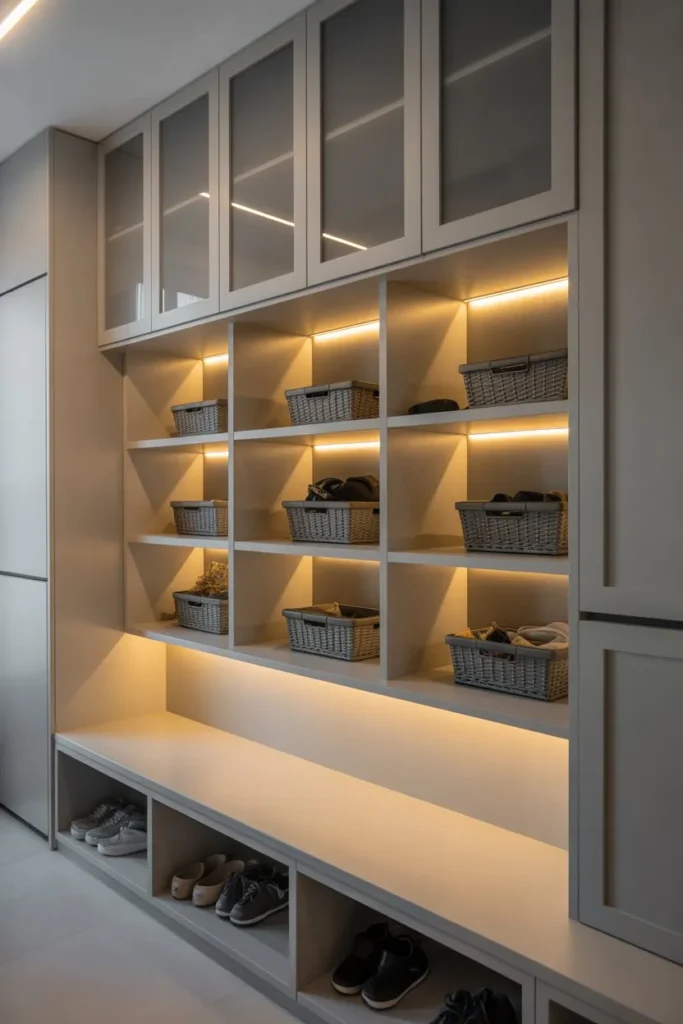
Integrated lighting improves both visibility and overall design quality. LED strips placed inside shelves or under cabinets ensure that items are easy to locate, even in low-light conditions. This makes daily routines more efficient.
Lighting also enhances the visual appeal of the storage system, highlighting organization and adding depth. A well-lit mudroom feels more inviting and functional, turning a purely practical space into a well-designed part of the home.
16. Built-In Mudroom with Integrated Charging Station
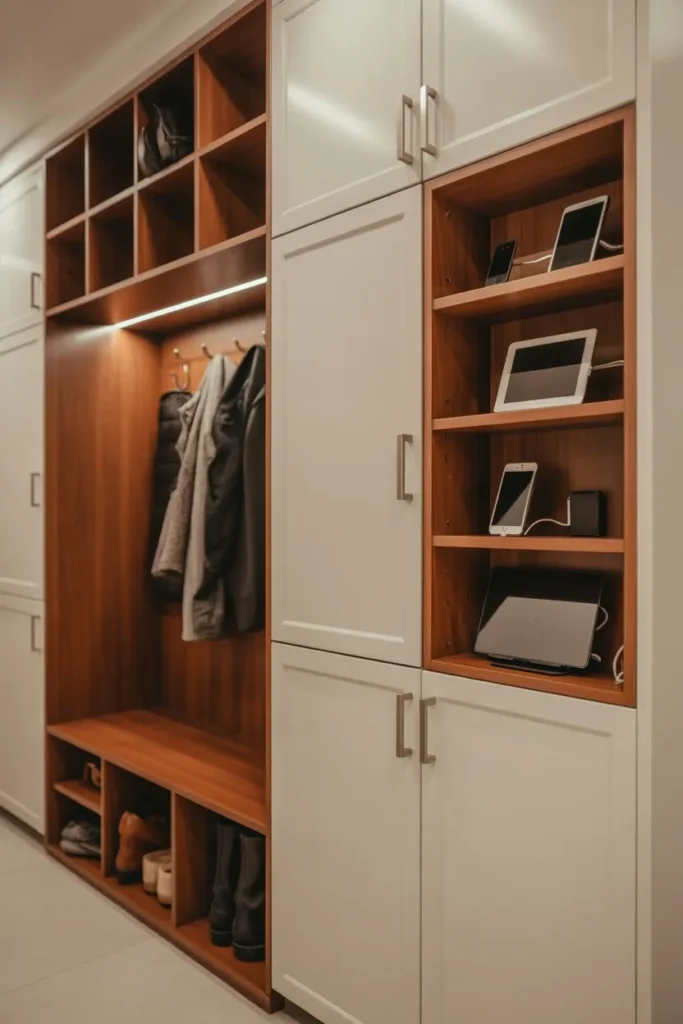
Adding a charging station within built-in storage transforms the mudroom into a functional daily hub. Phones, tablets, and small devices can be stored and charged in one dedicated area, reducing clutter in other parts of the home. This keeps essentials organized and easy to grab when leaving.
To maintain safety and organization, compartments should include cable management and proper spacing. This prevents tangling and overheating while keeping the area neat. Integrating this feature enhances practicality without compromising the clean look of the mudroom.
17. Built-In Mudroom with Mirror Integration
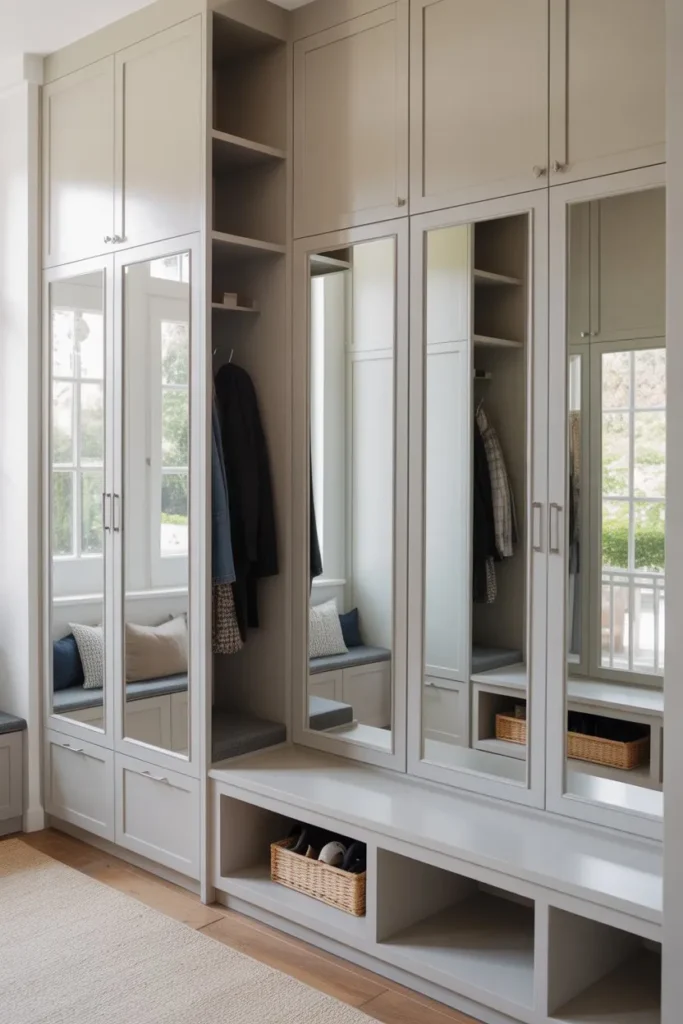
Incorporating a mirror into built-in storage adds both functionality and visual expansion. It allows for quick checks before leaving while reflecting light to make the space feel larger and brighter. This is especially useful in narrow or compact mudrooms.
Positioning the mirror strategically—near the exit or above a bench—ensures it becomes part of the natural flow. It enhances usability without taking up additional space, making it a practical design element.
18. Built-In Mudroom with Mixed Open and Closed Sections
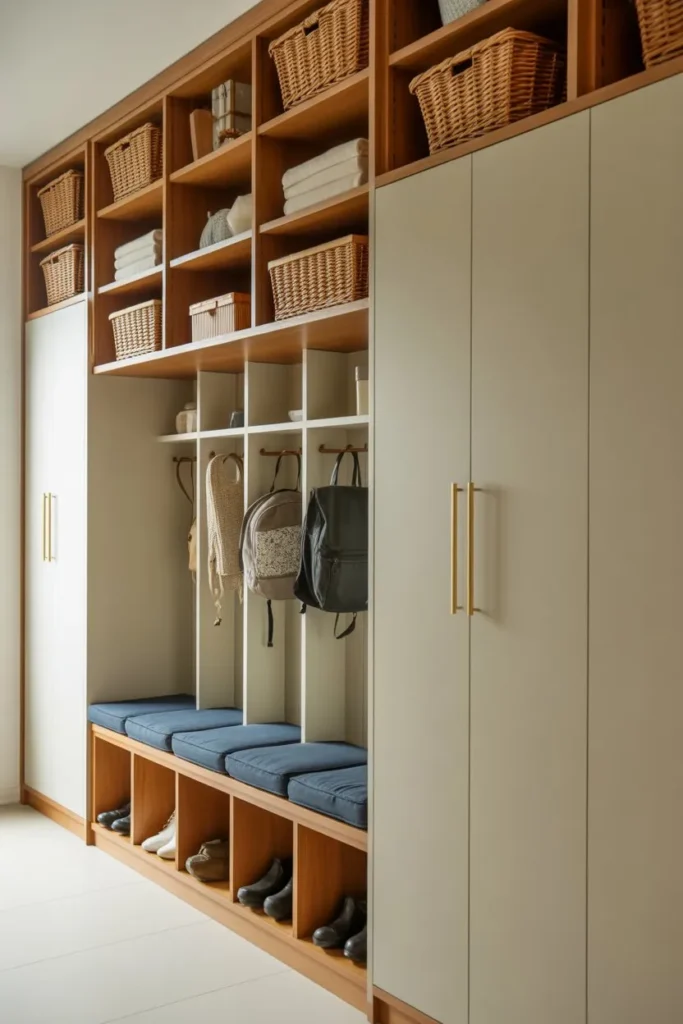
Combining open and closed storage creates a balanced system that supports both accessibility and visual cleanliness. Open sections allow quick access to daily essentials, while closed cabinets hide less attractive or bulky items. This prevents the space from looking cluttered.
The key is thoughtful placement—keeping frequently used items visible and storing occasional items out of sight. This approach maintains efficiency while ensuring the mudroom remains organized and visually appealing.
19. Built-In Mudroom with Durable Material Finishes
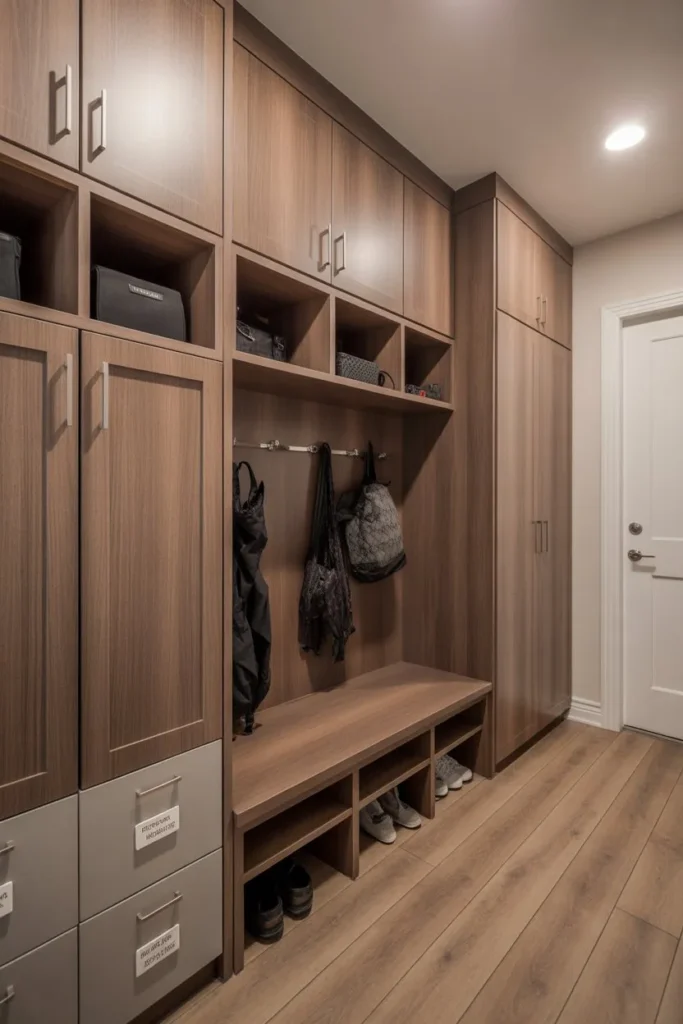
Durability is critical in a mudroom, as it handles constant wear from shoes, bags, and weather exposure. Using materials like sealed wood, laminate, or moisture-resistant finishes ensures long-term performance without frequent maintenance.
These finishes protect surfaces from damage while maintaining a clean appearance. Choosing materials that are both durable and visually consistent helps the storage system remain functional and attractive over time.
20. Built-In Mudroom with Compact Smart Layout
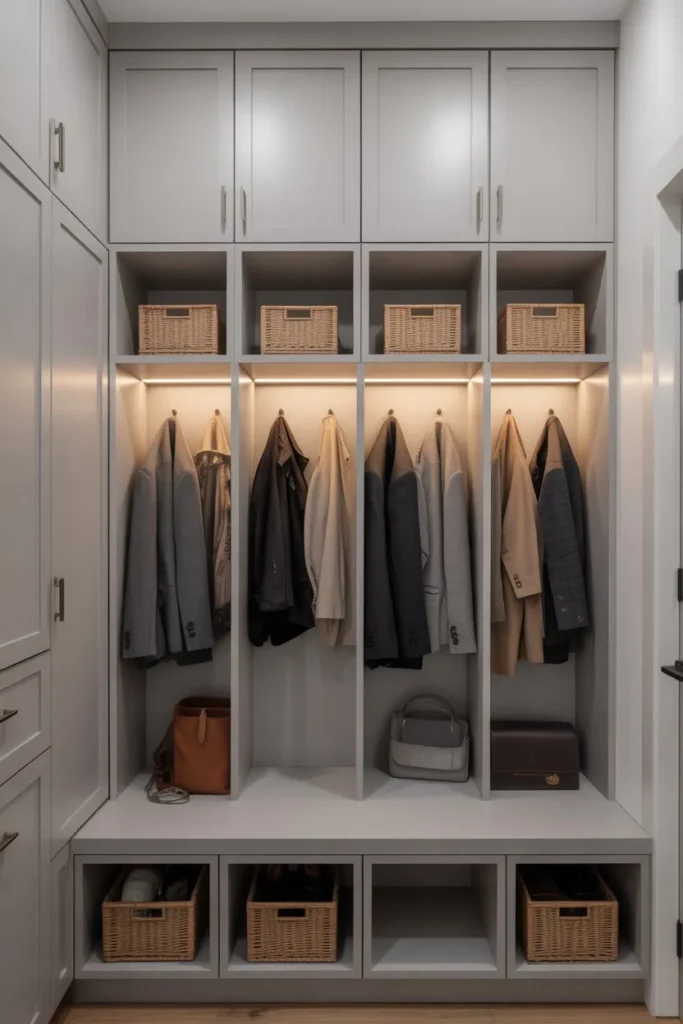
In smaller spaces, a compact built-in layout ensures maximum efficiency without overcrowding the room. Carefully planned storage zones and streamlined furniture allow every inch to be used effectively.
Keeping pathways clear and avoiding bulky elements improves movement and usability. This approach proves that even limited space can support a fully functional and organized mudroom when designed thoughtfully.
21. Fully Optimized Built-In Mudroom Storage System
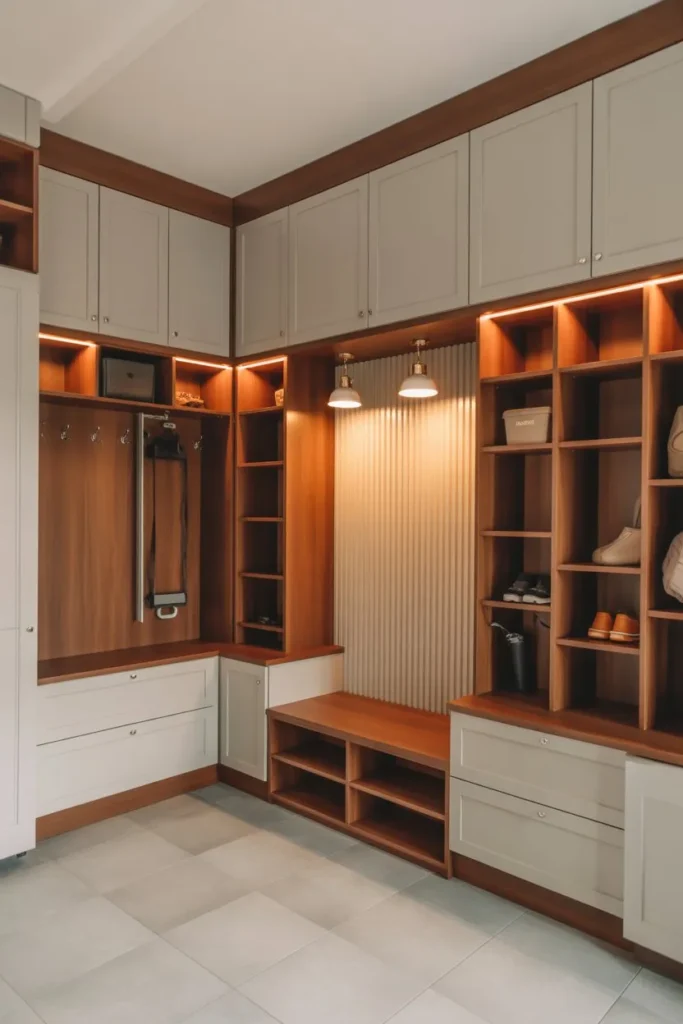
A fully optimized built-in system combines all key elements—shelving, hooks, drawers, and lighting—into one cohesive design. Each component serves a specific purpose, ensuring the space remains organized and easy to use daily.
When layout, materials, and functionality are aligned, the mudroom becomes efficient and visually clean. This holistic approach ensures long-term usability, making the entryway both practical and well-structured.
Conclusion
The best mudroom built in storage ideas combine efficiency, durability, and thoughtful design. By organizing items into clear zones and using smart storage solutions, you can create an entryway that remains tidy and easy to maintain. Small details like lighting, labeling, and material choice make a significant difference over time. With the right approach, your mudroom can become a highly functional and organized space that supports daily routines effortlessly.