27 Art Deco Living Room Ideas for a Bold Glam Look
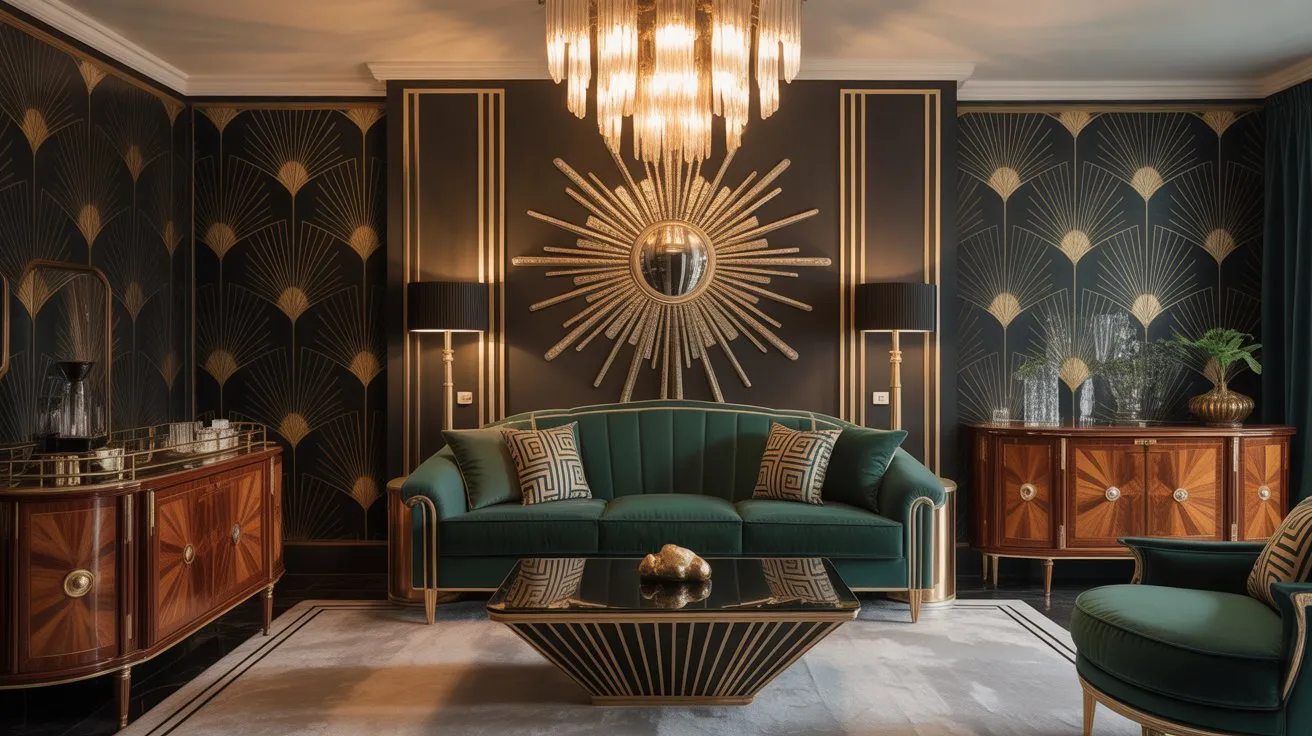
Art Deco living room ideas focus on bold design, rich materials, and a sense of timeless glamour. This style is known for its strong geometry, high contrast, and luxurious finishes that create a striking visual impact. Instead of minimal simplicity, Art Deco embraces statement pieces and structured layouts that feel both elegant and dramatic. From velvet textures to metallic accents, each element contributes to a cohesive and refined space. These ideas highlight practical ways to design a living room that feels bold, stylish, and perfectly balanced.
1. Bold Geometric Patterns as a Statement Feature
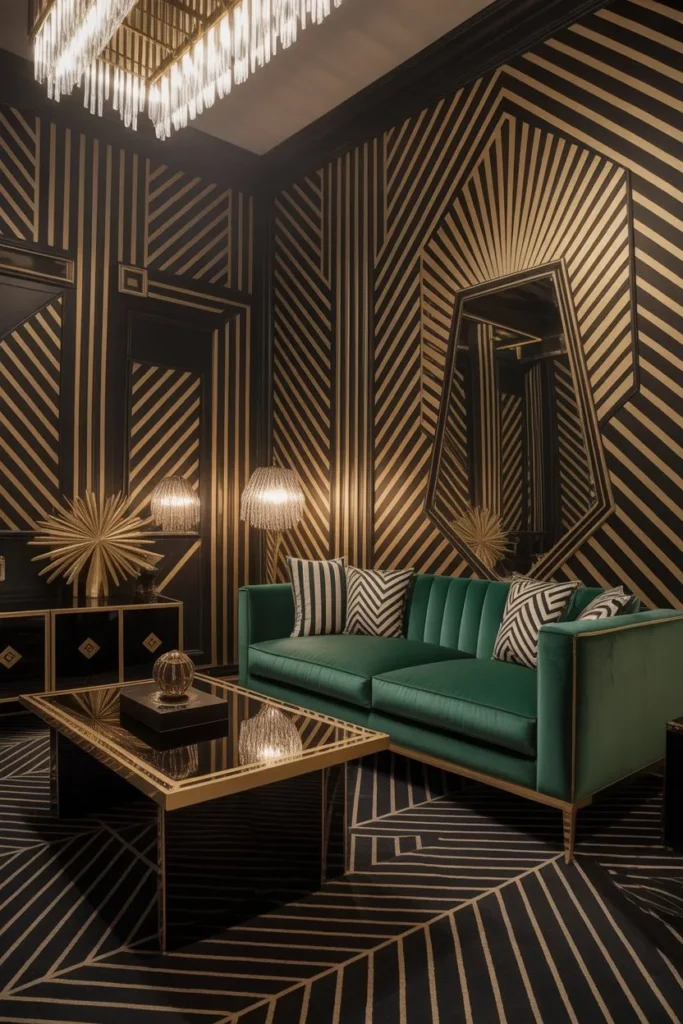
Geometric patterns are a defining element of Art Deco design, bringing structure and visual drama into the living room. Sharp lines, symmetrical shapes, and repeating motifs create a sense of order while adding bold personality. These patterns can be introduced through rugs, wallpaper, or upholstery to establish a strong foundation.
Using a controlled color palette—such as black, gold, or deep jewel tones—keeps the design cohesive while allowing the patterns to stand out. This approach ensures the room feels dynamic and luxurious without becoming visually overwhelming.
2. Velvet Furniture for Luxurious Texture
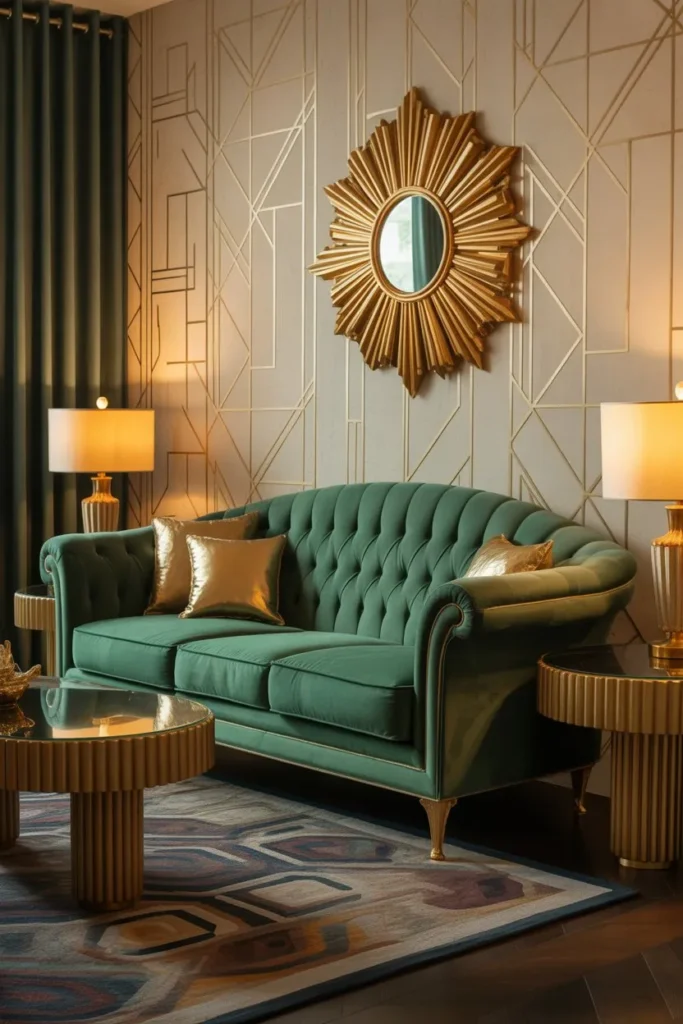
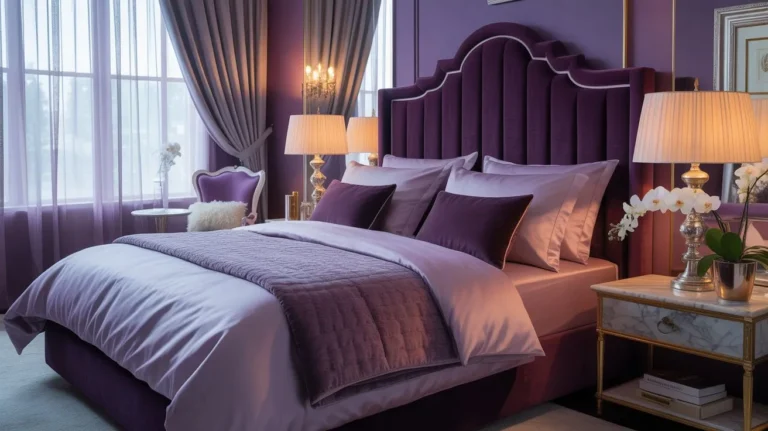
Velvet is a signature material in Art Deco interiors, known for its rich texture and luxurious feel. A velvet sofa or armchair instantly elevates the space, adding depth and softness while maintaining a glamorous aesthetic. Deep colors like emerald, navy, or burgundy enhance the overall richness.
The key is balancing texture with structure. Pairing velvet with sleek metallic accents or geometric shapes ensures the room feels refined rather than heavy. This combination creates a sophisticated and timeless look.
3. Gold Accents for Glamorous Contrast
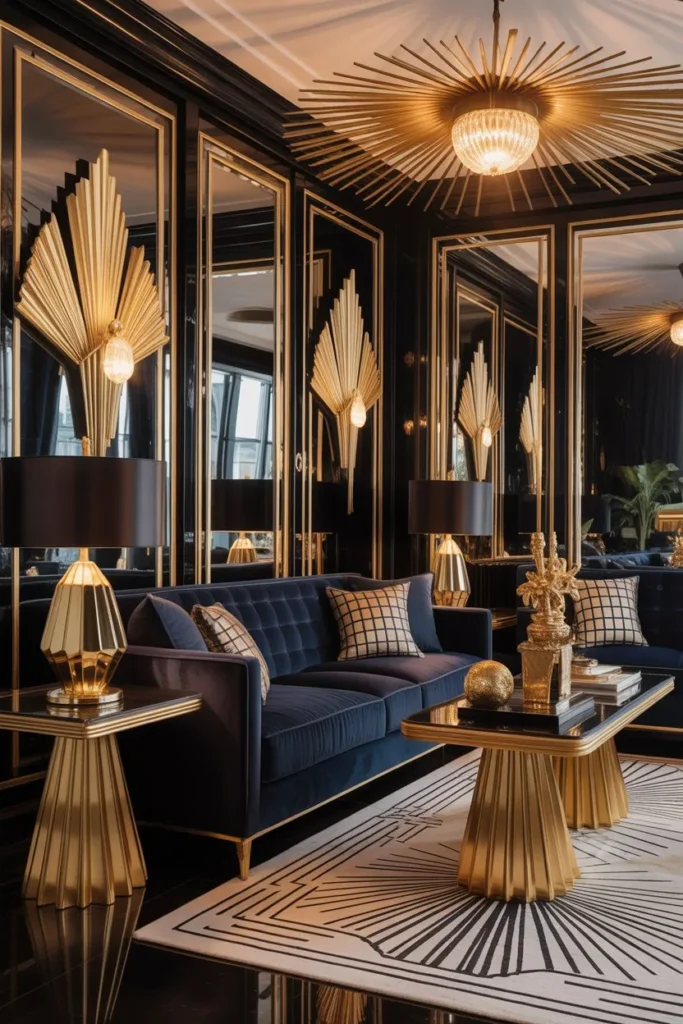
Gold accents bring a sense of elegance and luxury that defines Art Deco style. Used in lighting fixtures, furniture details, or decor, gold adds warmth and contrast against darker tones. It highlights key features without overpowering the design.
Moderation is important—strategic placement ensures the accents enhance rather than dominate. When combined with rich materials and bold shapes, gold elements create a cohesive and glamorous atmosphere.
4. Symmetrical Layout for Classic Art Deco Balance
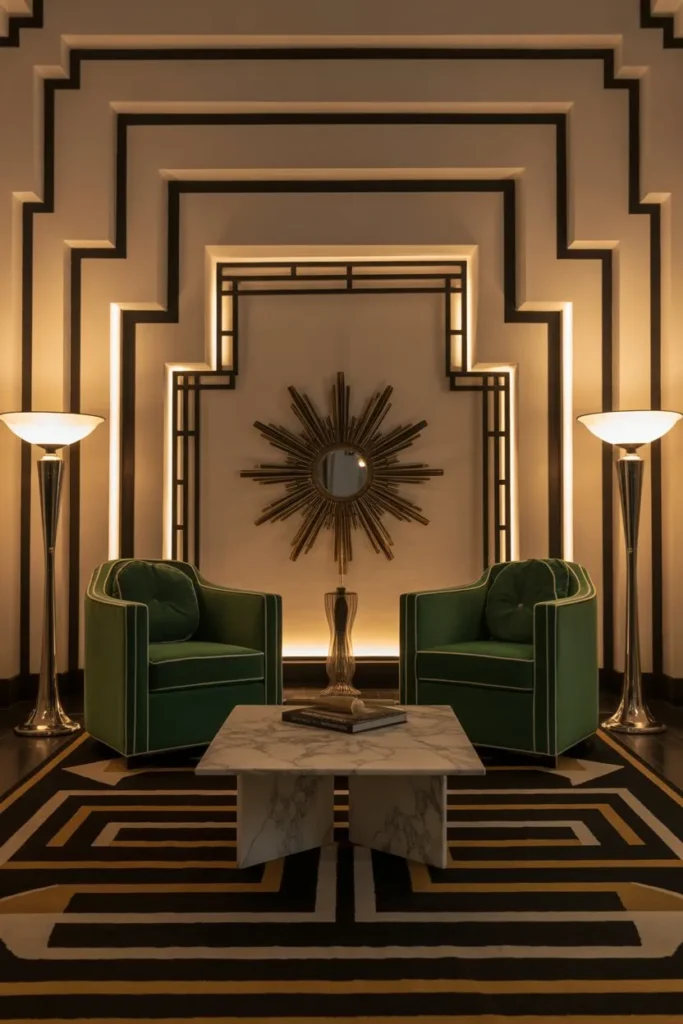
Symmetry plays a crucial role in Art Deco interiors, creating a sense of order and refinement. Arranging furniture evenly, aligning decor elements, and centering focal points establish a balanced and structured layout.
This approach enhances both aesthetics and functionality, making the space feel organized and intentional. It also reinforces the timeless elegance associated with Art Deco design.
5. Mirrored Surfaces for Light and Depth
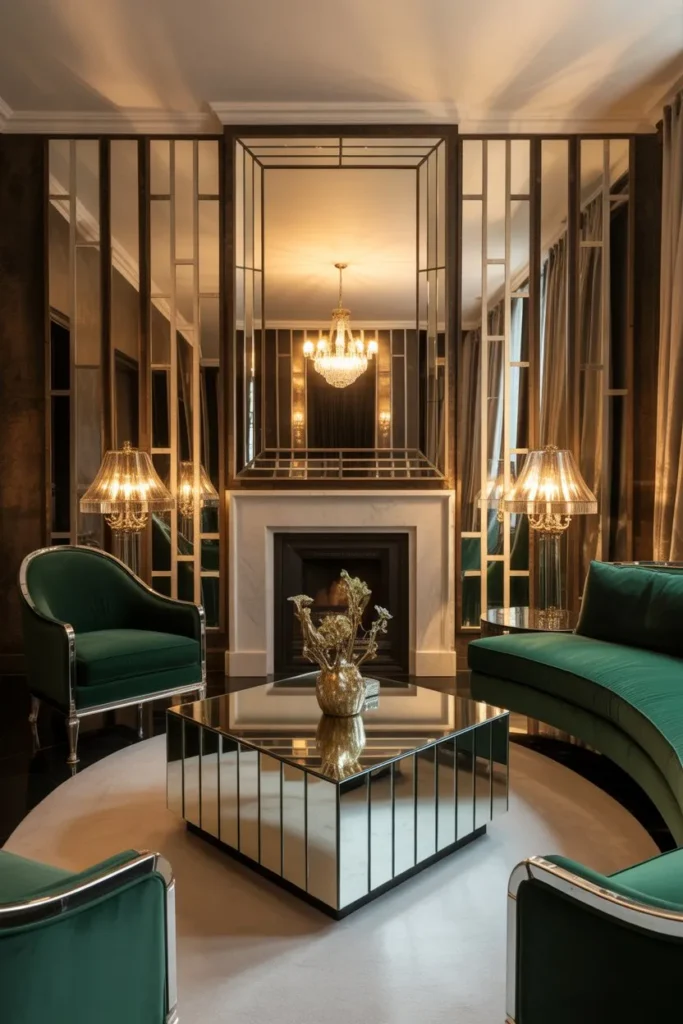
Mirrored surfaces are often used in Art Deco spaces to enhance light and create a sense of depth. Reflective furniture or decor amplifies brightness, making the room feel more open and dynamic.
These elements also contribute to the glamorous aesthetic by adding a polished finish. When used thoughtfully, mirrors enhance the overall design without creating visual clutter.
nterior
A black and white palette is a signature Art Deco approach that emphasizes contrast and structure. The sharp difference between light and dark creates a striking visual effect that feels both bold and refined. This combination enhances geometric elements and architectural lines, making the design more defined and impactful.
To avoid a flat look, textures and materials should be layered within the palette. Glossy finishes, soft fabrics, and metallic accents add depth while maintaining the monochrome scheme. This approach keeps the space dramatic yet balanced.
7. Statement Lighting with Sculptural Design
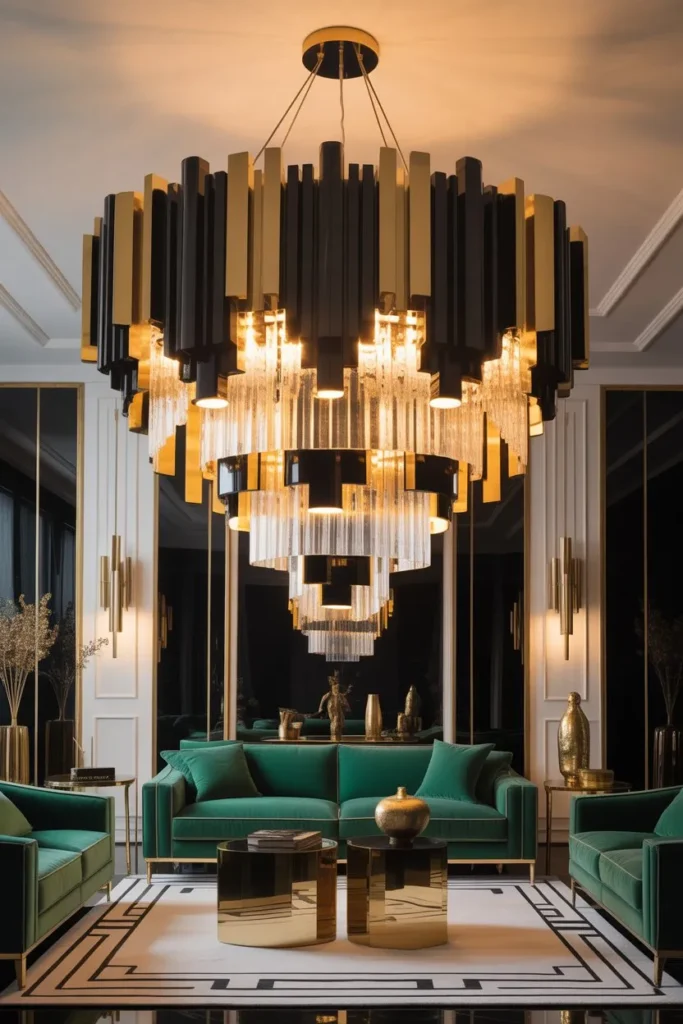
Lighting in an Art Deco living room is not just functional—it acts as a centerpiece. Sculptural chandeliers or bold light fixtures introduce strong shapes and reflective materials that enhance the overall glamour. These pieces often feature metal finishes and geometric forms that align with the style.
Proper placement is essential to maintain symmetry and balance. A well-chosen fixture draws attention while providing layered illumination. This combination ensures the room feels both dramatic and practical.
8. Glossy Surfaces for Reflective Elegance
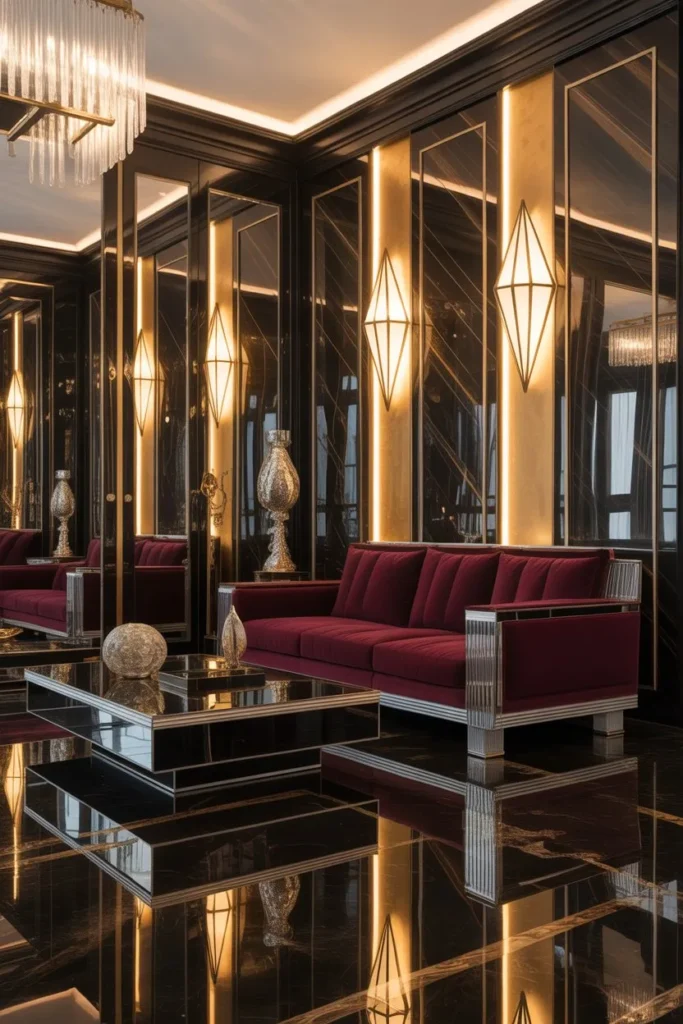
Glossy finishes add a polished and refined quality that is central to Art Deco interiors. Lacquered furniture, high-shine cabinetry, or reflective tables enhance light and create a sleek appearance. These surfaces contribute to the luxurious feel while emphasizing clean lines.
Balancing glossy elements with softer textures prevents the room from feeling overly rigid. This contrast ensures the design remains comfortable while maintaining its signature sophistication and visual depth.
9. Jewel Tone Color Palette for Rich Depth
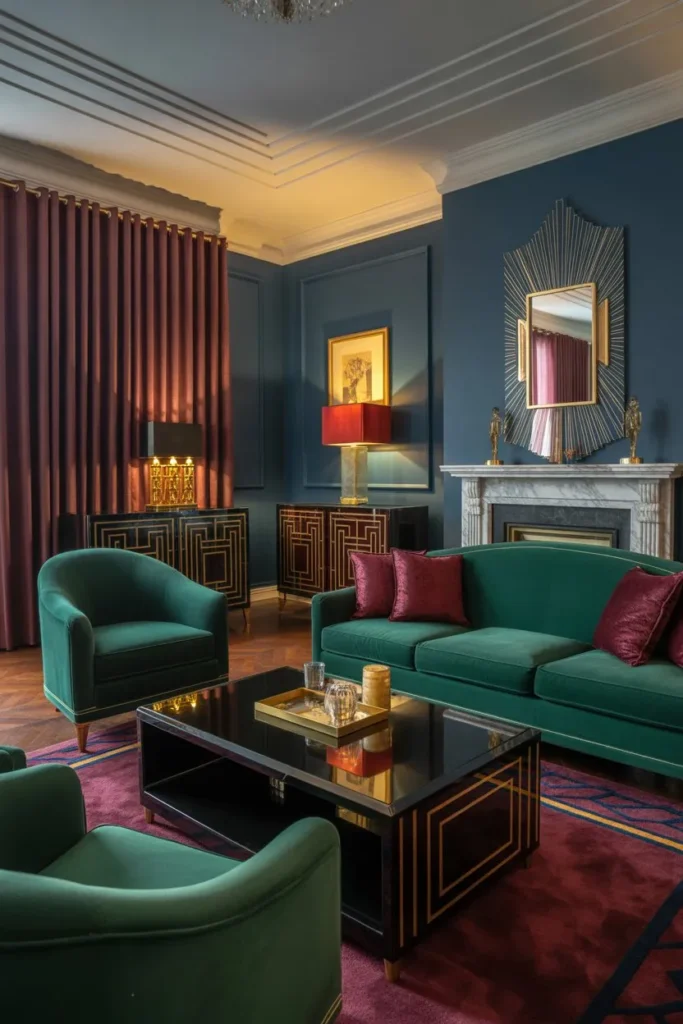
Jewel tones bring richness and intensity to an Art Deco living room. Colors like emerald green, deep navy, and burgundy create a dramatic and luxurious atmosphere that feels both bold and elegant. These tones work particularly well on statement furniture or accent walls.
When combined with metallic accents and structured forms, jewel tones enhance the overall depth of the design. This approach creates a layered environment that feels visually engaging without becoming overwhelming.
10. Curved Furniture for Soft Geometric Contrast
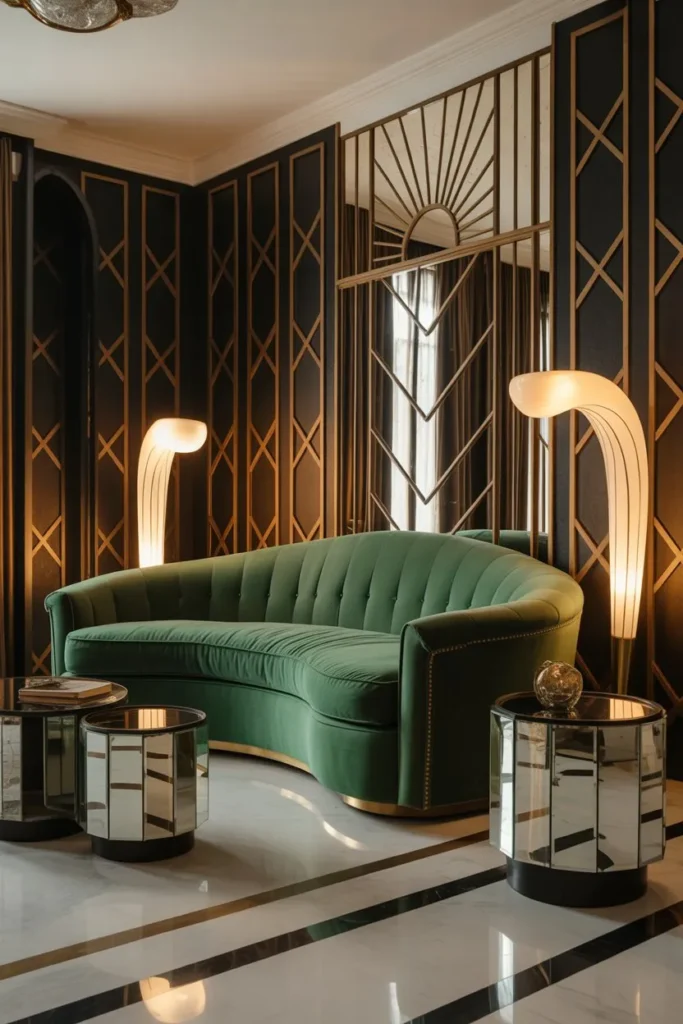
While Art Deco is known for sharp geometry, curved furniture introduces balance by softening the overall look. Rounded sofas, arched chairs, or circular tables add fluidity and prevent the space from feeling too rigid.
This contrast between straight lines and curves creates visual interest and enhances comfort. It allows the design to remain bold while still feeling approachable and functional for everyday use.
11. Metallic Layering for Depth and Shine
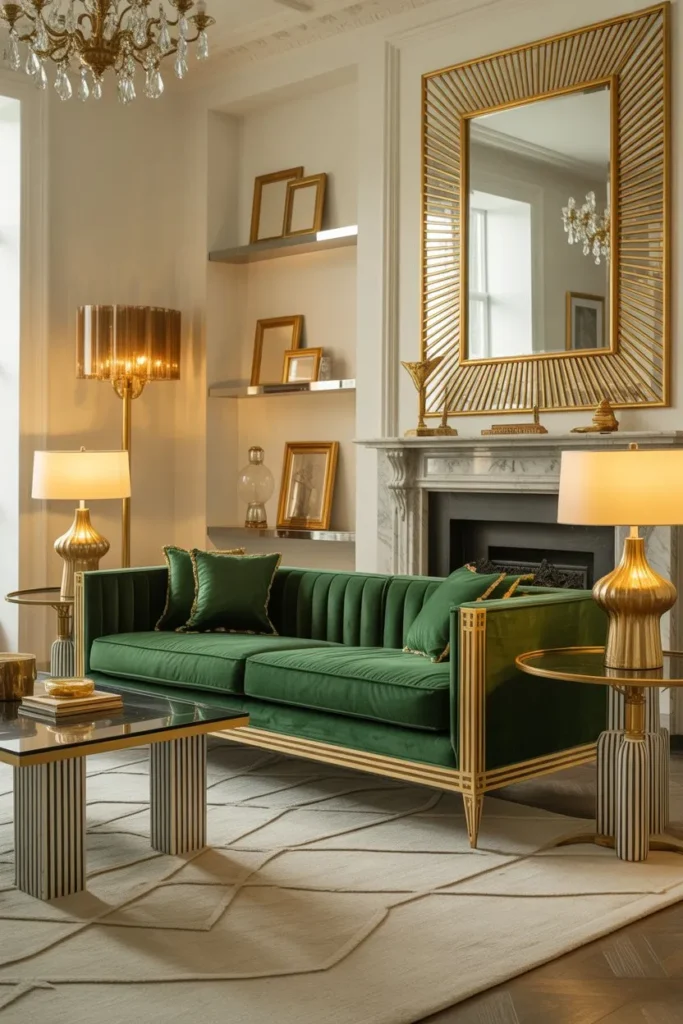
Layering different metallic finishes adds richness and depth to an Art Deco living room. Instead of relying on a single tone, combining gold, brass, and chrome creates visual variation while maintaining a cohesive luxurious feel. These metals reflect light differently, enhancing the overall brightness and sophistication of the space.
The key is balance—using one dominant metal and supporting it with subtle accents prevents the design from feeling chaotic. When paired with rich materials like velvet or marble, metallic layering elevates the room without overpowering its structure.
12. Marble Elements for Timeless Luxury
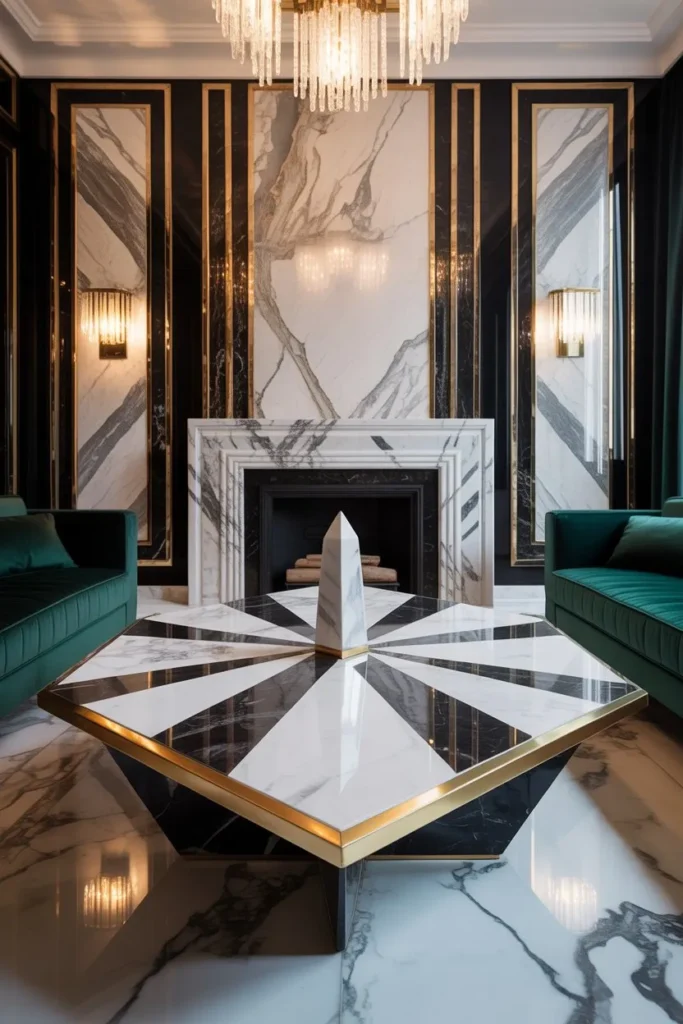
Marble is a classic material in Art Deco interiors, known for its elegant patterns and polished finish. Incorporating marble through coffee tables, side tables, or decorative surfaces adds a sense of permanence and sophistication. Its natural veining introduces subtle visual movement without disrupting the design.
To maintain balance, marble should be paired with warmer elements like wood or metallic accents. This combination prevents the space from feeling too cold while preserving its refined appearance. It’s a practical and timeless choice that enhances both durability and style.
13. Bold Accent Wall with Geometric Detailing
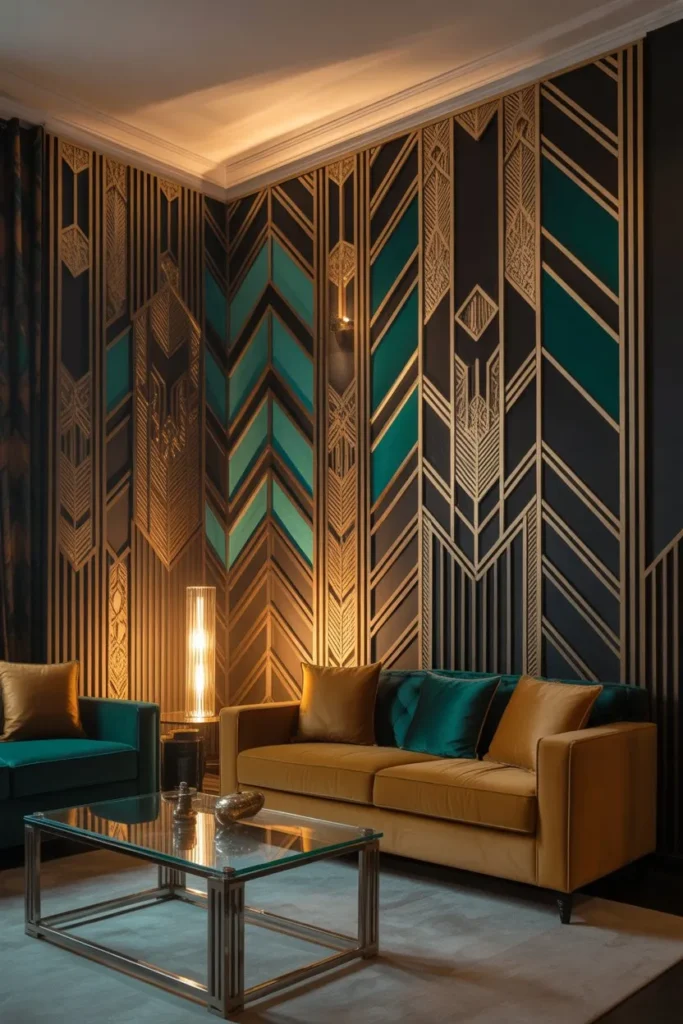
An accent wall with geometric detailing creates a strong focal point that defines the Art Deco aesthetic. Patterns such as arches, lines, or layered shapes add structure while drawing attention to a specific area of the room. This approach enhances depth without requiring excessive decor.
Keeping the color palette controlled ensures the design remains cohesive. Using contrasting tones or subtle metallic highlights can emphasize the pattern while maintaining elegance. This creates a bold yet balanced statement.
14. Glass and Metal Furniture Combination
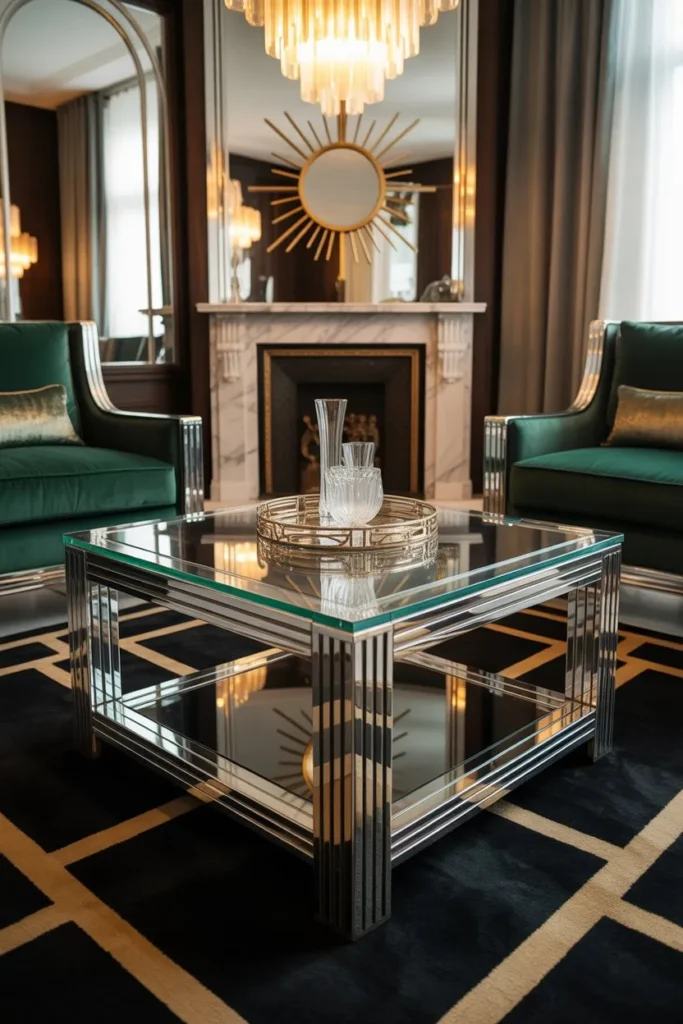
Glass combined with metal creates a light yet structured look that fits perfectly within Art Deco design. Glass surfaces keep the room feeling open, while metal frames introduce strong lines and reflective elements. This pairing balances transparency with boldness.
This type of furniture works well in both large and compact spaces, as it doesn’t visually clutter the room. It enhances the overall layout while maintaining a clean and sophisticated appearance.
15. Layered Lighting for Dramatic Atmosphere
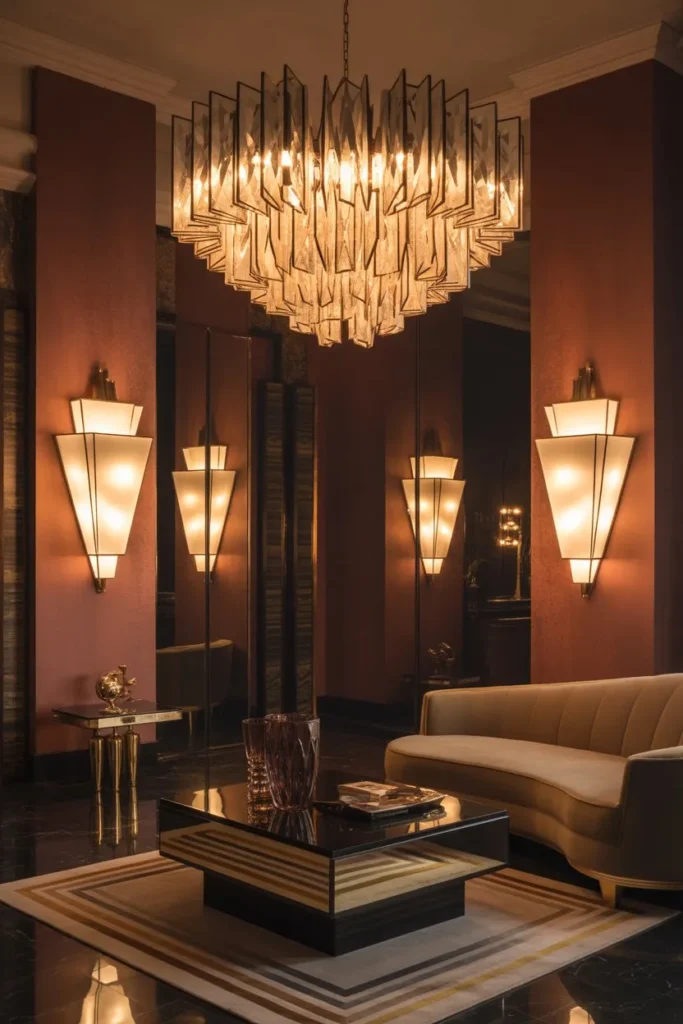
Deco interiors. Combining chandeliers, wall sconces, and accent lighting creates depth and highlights key design elements. This ensures the space feels dynamic rather than flat.
Warm lighting enhances metallic finishes and rich colors, making the room feel inviting while maintaining its bold character. Proper layering also improves functionality, ensuring each area is well-lit without losing the overall mood.
16. Vertical Line Detailing for Height Emphasis
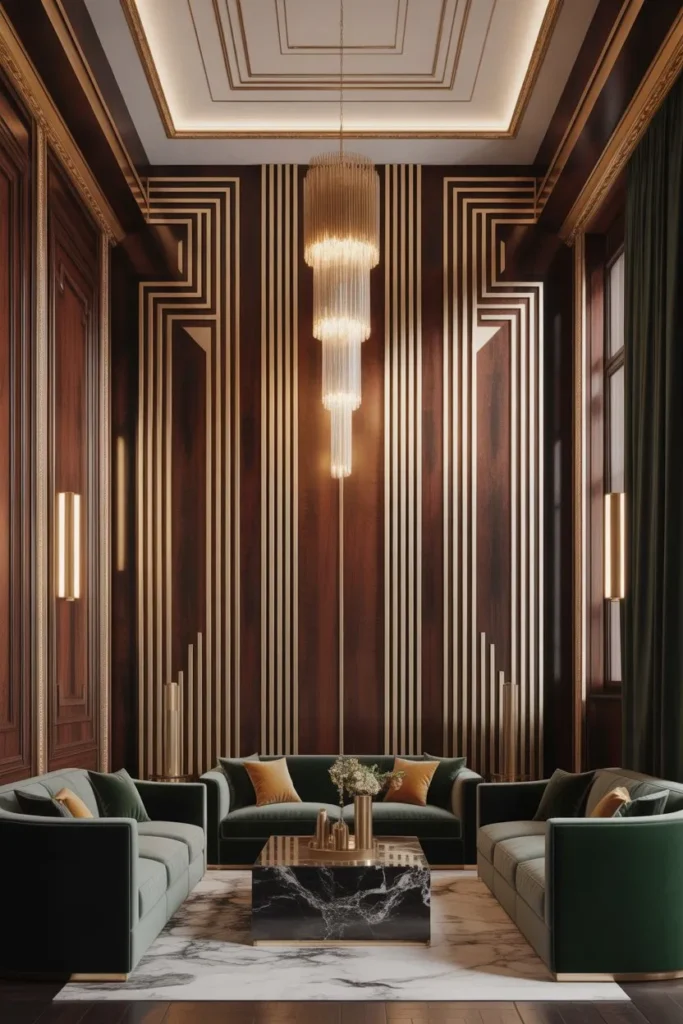
Vertical lines are a key Art Deco element used to emphasize height and elegance. Wall panels, fluted textures, or striped patterns draw the eye upward, making the room feel taller and more refined. This technique is especially effective in spaces with standard ceiling heights.
When combined with subtle metallic accents or contrasting tones, vertical detailing adds structure without overwhelming the space. It enhances architectural presence while maintaining the clean and bold aesthetic typical of Art Deco design.
17. Statement Coffee Table as a Focal Point
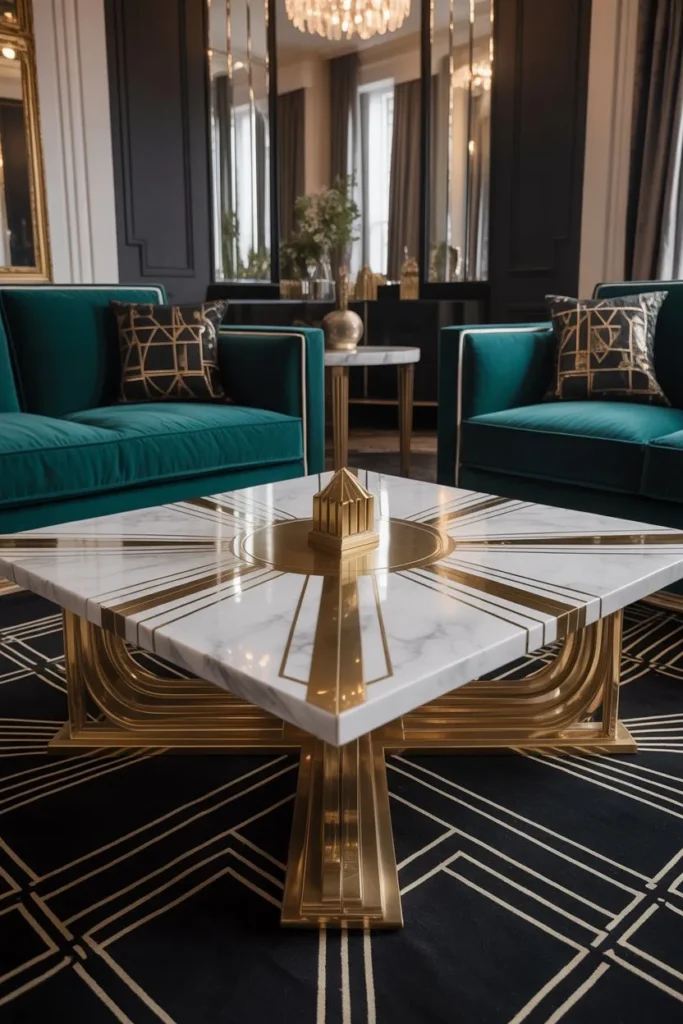
A statement coffee table anchors the seating area while reinforcing the Art Deco aesthetic. Designs featuring marble tops, geometric bases, or metallic finishes create a strong visual centerpiece. This piece ties together surrounding furniture and adds a layer of sophistication.
Proportion is essential—the table should complement the seating without dominating the space. When chosen thoughtfully, it enhances both function and style, making the living room feel cohesive and well-structured.
18. Bold Color Blocking for Visual Impact
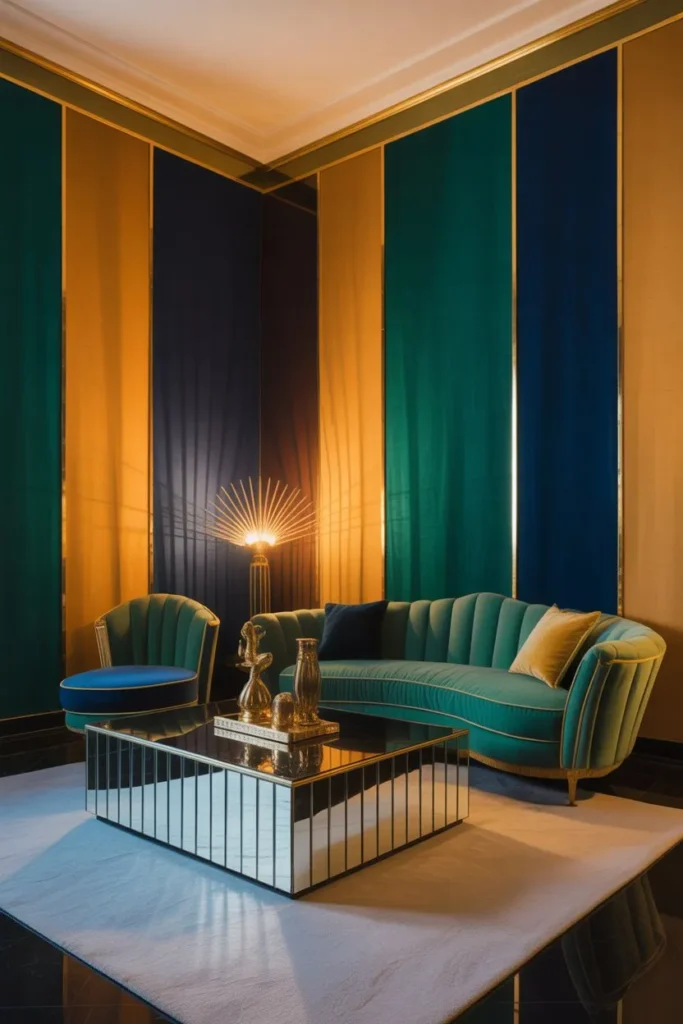
Color blocking introduces bold contrast by dividing walls or furniture into distinct sections of color. This technique highlights geometric structure while adding visual energy to the room. Deep tones paired with lighter accents create a striking yet controlled effect.
To maintain balance, the palette should remain limited and cohesive. This ensures the design feels intentional rather than chaotic. Color blocking is an effective way to add personality without relying on excessive decor.
19. Sculptural Decor for Artistic Expression
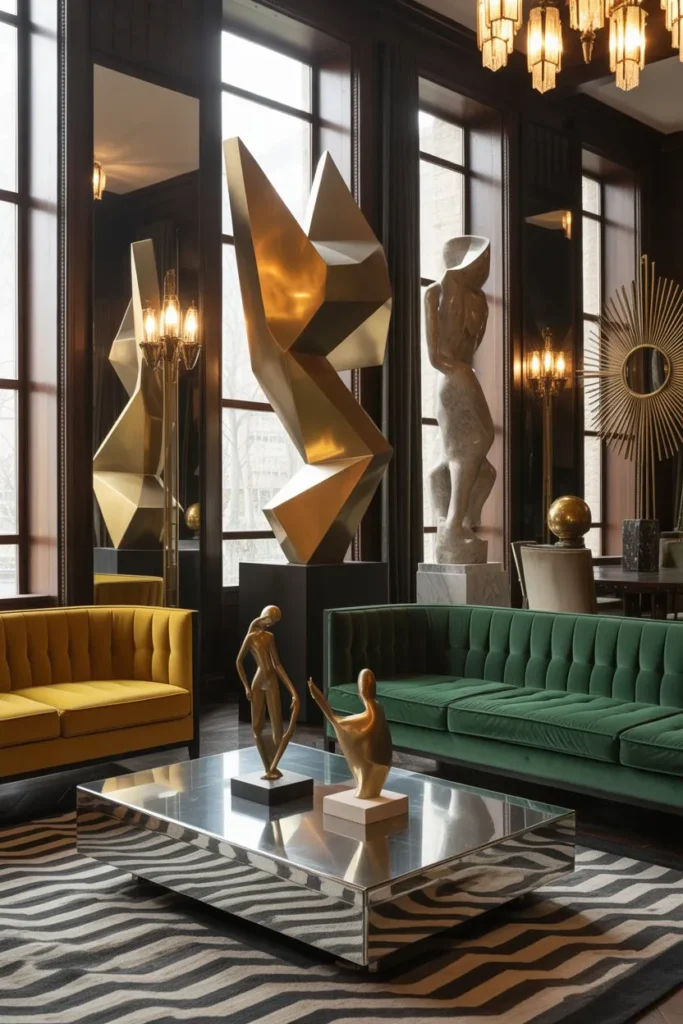
Sculptural decor introduces artistic elements that align with the bold nature of Art Deco design. Abstract forms, curved shapes, or geometric sculptures add depth and personality without cluttering the space. These pieces act as focal points that enhance visual interest.
Placement should be intentional, allowing each piece to stand out. When combined with structured furniture and clean lines, sculptural decor creates a layered and sophisticated environment that feels curated and refined.
20. Gloss and Matte Contrast for Texture Balance
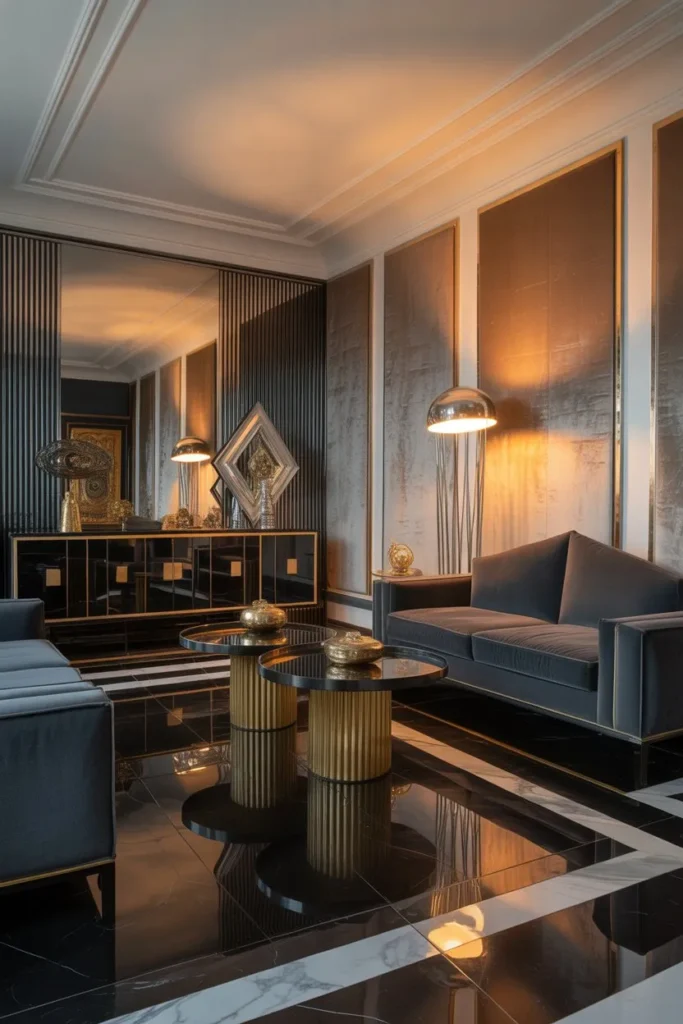
Combining glossy and matte finishes adds texture and depth, preventing the room from feeling flat. High-shine surfaces reflect light, while matte elements provide contrast and grounding. This interplay enhances the overall richness of the design.
Balancing these finishes ensures the space remains visually comfortable. Too much gloss can feel overwhelming, while too much matte can appear dull. The right mix creates a dynamic yet cohesive environment.
21. Defined Seating Zones for Structured Layout
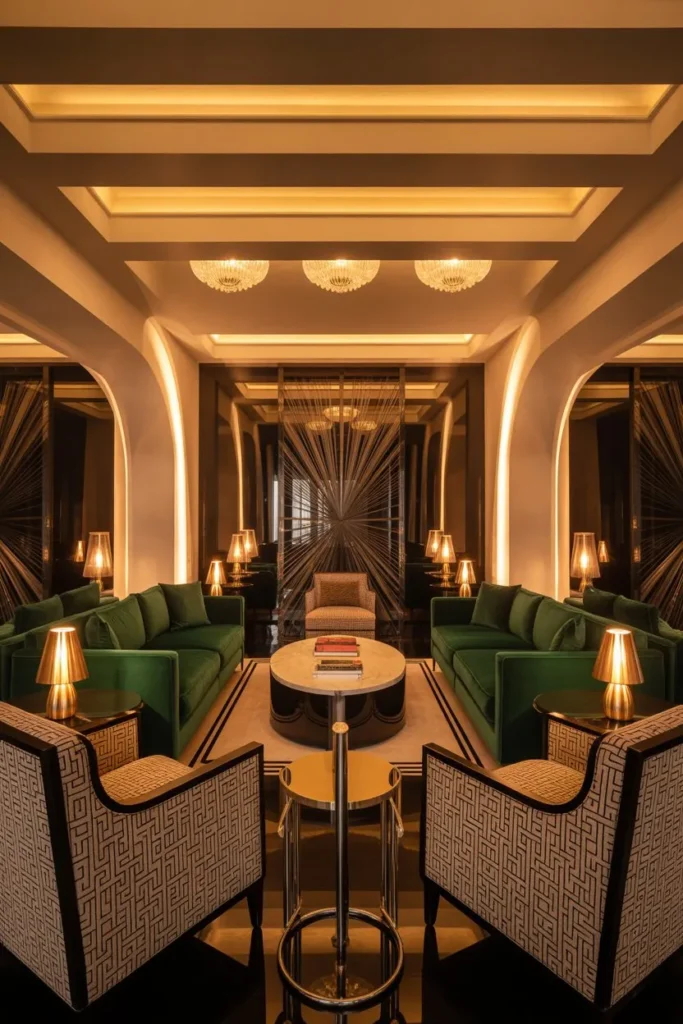
Defining seating zones helps organize the living room while reinforcing the structured nature of Art Deco design. Arranging furniture around a central point creates a clear and functional layout that supports both conversation and relaxation.
Using rugs, lighting, or furniture placement to define these zones enhances flow and balance. This approach ensures the space feels intentional and easy to navigate while maintaining its bold aesthetic.
22. Arched Shapes for Signature Art Deco Elegance
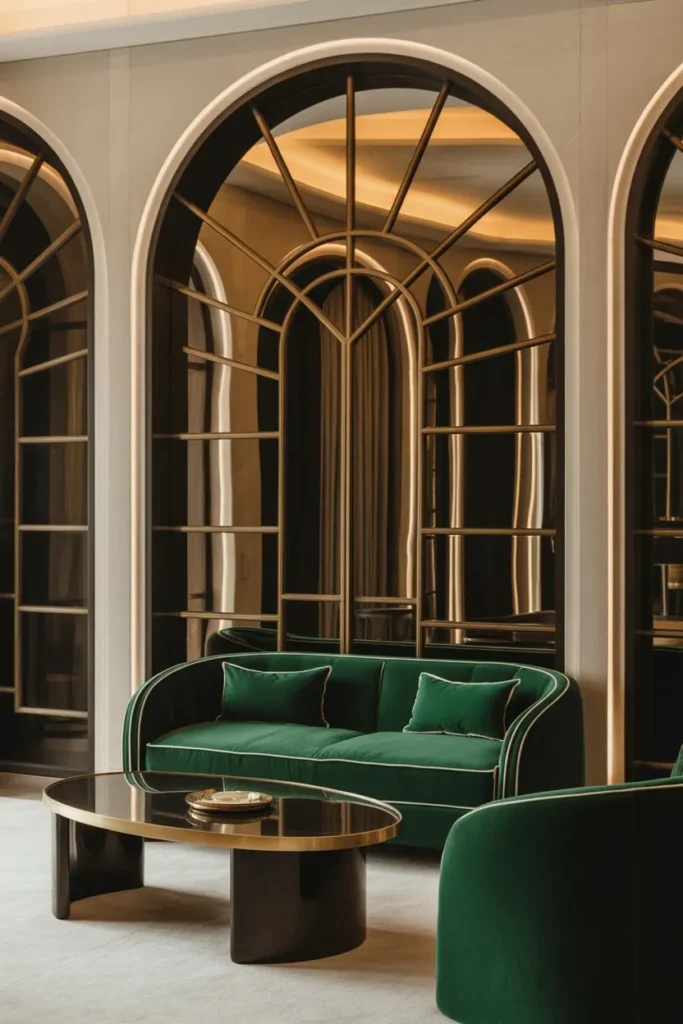
Arched shapes are a signature element in Art Deco interiors, adding softness while maintaining geometric structure. Incorporating arches through mirrors, doorways, or furniture introduces a graceful curve that balances sharp lines. This contrast enhances visual interest and gives the room a more refined character.
When paired with metallic finishes or bold materials, arches become a defining feature rather than just a subtle detail. They help soften the overall design while still maintaining the strong, structured aesthetic that defines Art Deco style.
23. Dark Wood Elements for Grounded Luxury
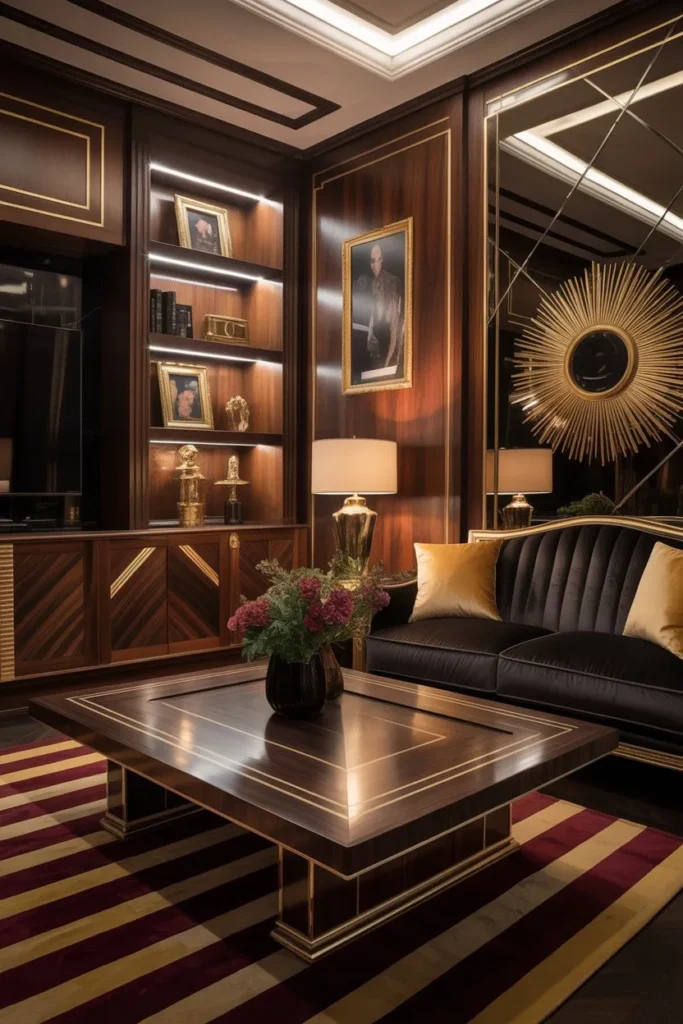
Dark wood adds depth and grounding to an Art Deco living room, balancing brighter metallic and glossy elements. Rich tones like walnut or mahogany create a sense of stability while enhancing the room’s luxurious feel. These materials bring warmth without compromising sophistication.
When combined with gold or brass accents, dark wood creates a refined contrast that feels timeless. It ensures the space remains visually balanced, preventing lighter or shinier elements from dominating the design.
24. High-Back Seating for Dramatic Presence
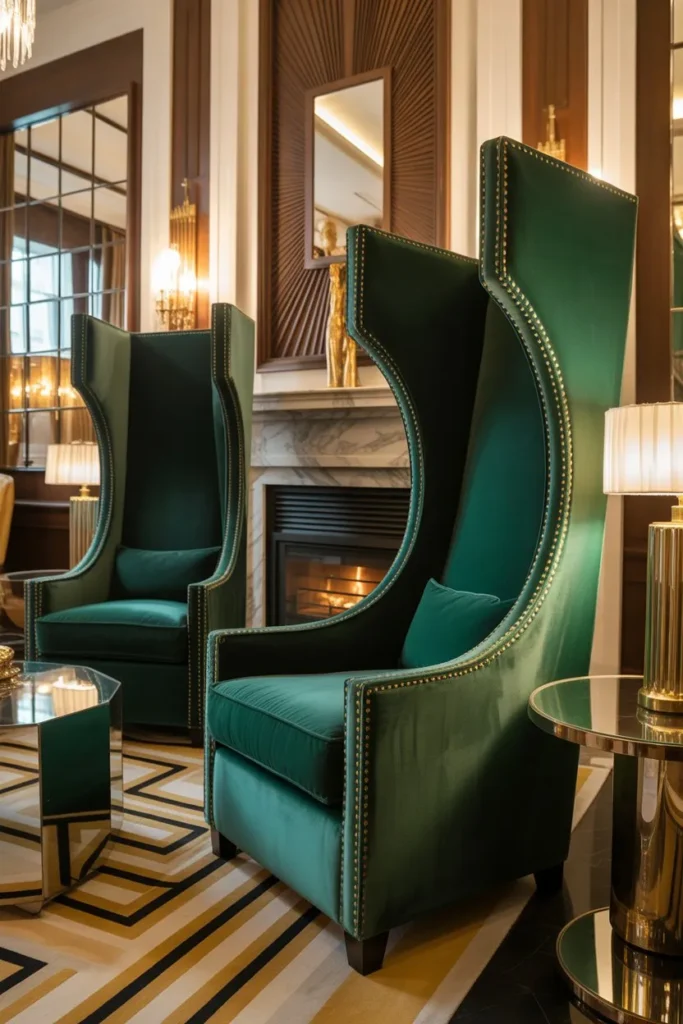
High-back chairs or sofas introduce vertical emphasis and a sense of grandeur. Their tall structure aligns with Art Deco’s focus on height and bold form, making them a strong visual statement within the room.
These pieces also enhance comfort by providing support while reinforcing the room’s dramatic style. When upholstered in rich fabrics like velvet, they add both texture and presence, elevating the overall design.
25. Patterned Flooring for Bold Foundation
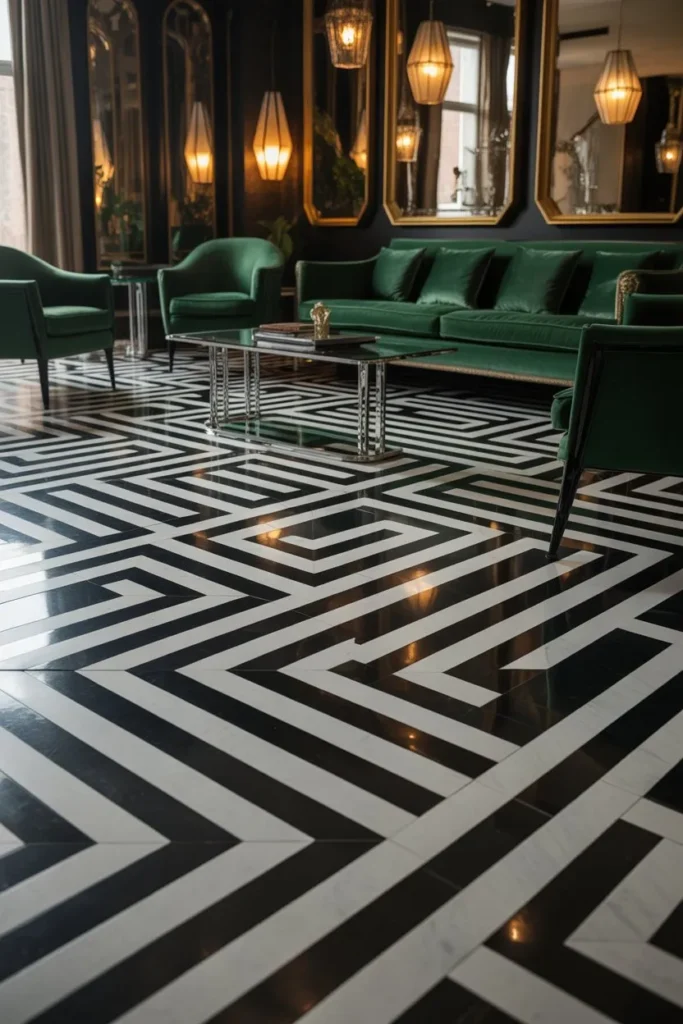
Patterned flooring creates a striking foundation that defines the entire space. Geometric tiles or parquet designs add movement and structure, reinforcing the Art Deco aesthetic from the ground up. This approach ensures the floor becomes an integral part of the design rather than a neutral background.
To maintain balance, other elements in the room should complement rather than compete with the flooring. This allows the pattern to stand out while keeping the overall look cohesive and elegant.
26. Mixed Materials for Layered Sophistication
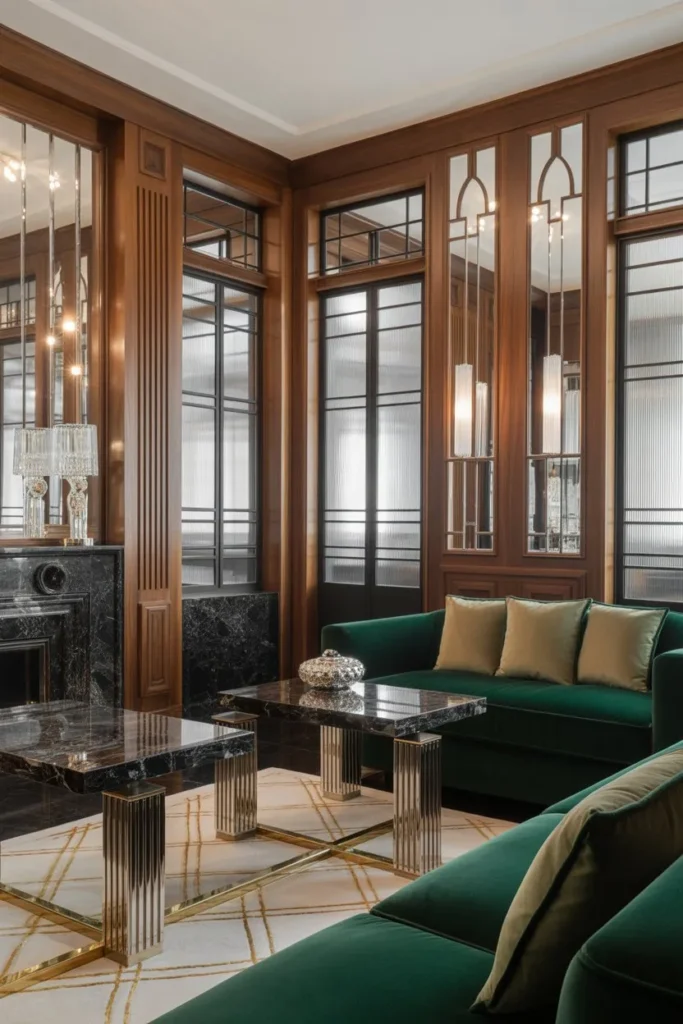
Art Deco design thrives on the combination of different materials to create depth and richness. Mixing wood, metal, glass, and marble introduces multiple textures that enhance visual interest without overwhelming the space. Each material contributes a unique quality.
The key is thoughtful integration—ensuring one material leads while others support. This layered approach creates a sophisticated environment that feels curated and balanced rather than chaotic.
27. Fully Balanced Art Deco Living Room Design
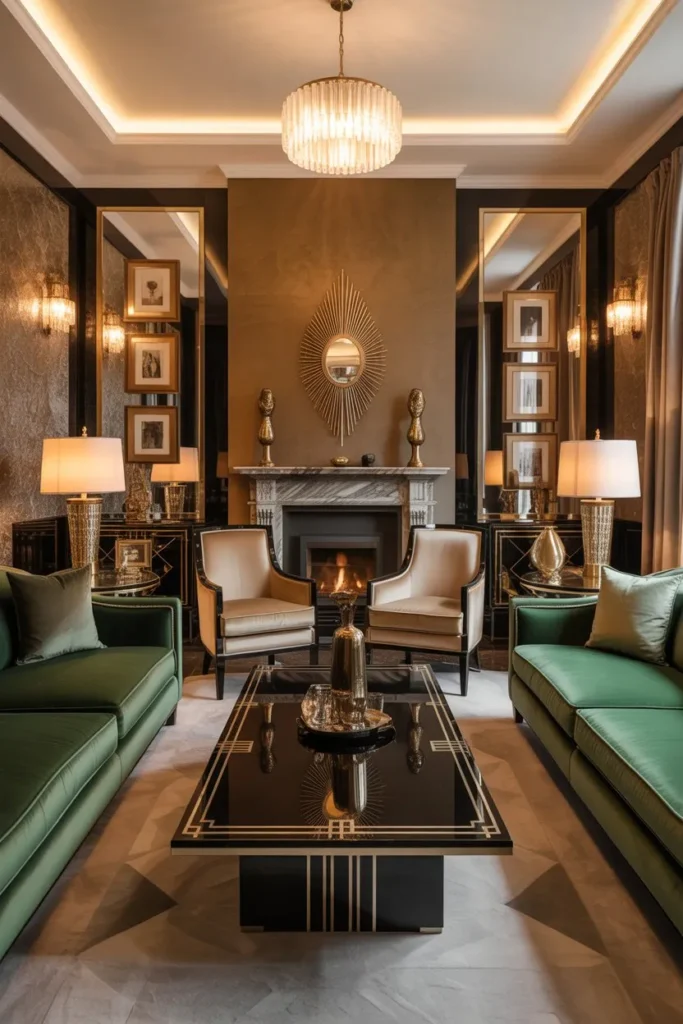
A fully realized Art Deco living room brings together geometry, materials, and lighting into a cohesive whole. Every element should support the overall design, from furniture placement to decorative accents. Balance is essential to maintain both drama and functionality.
When structure, contrast, and luxury are aligned, the space feels bold yet comfortable. This holistic approach ensures the living room remains timeless, visually striking, and practical for everyday use.
Conclusion
The best Art Deco living room ideas combine structure, contrast, and luxury to create a bold yet balanced space. By using geometric patterns, rich materials, and thoughtful lighting, you can achieve a design that feels both dramatic and functional. Small details like metallic accents and layered textures enhance the overall look. With the right approach, your living room can become a timeless and glamorous space that reflects the true essence of Art Deco style.