15 Long Narrow Bathroom Layout Ideas for Better Flow
Designing a long narrow bathroom can be challenging, especially when trying to balance functionality with a comfortable layout. Limited width often creates a cramped feeling, making smart planning essential. The right layout choices can improve movement, enhance visual space, and make the room feel more open and organized. From fixture placement to lighting and storage, every detail plays a role in creating better flow. These ideas focus on practical solutions that help transform a narrow bathroom into a space that feels efficient, modern, and easy to use.
1. Linear Layout with Clear Walkway
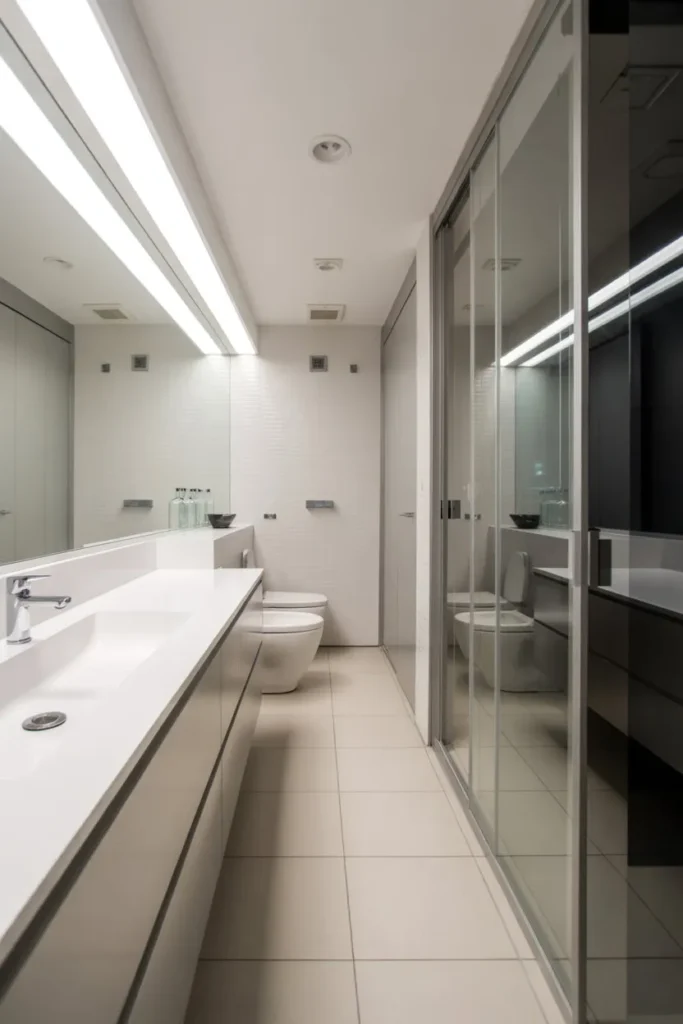
A linear layout is one of the most effective ways to handle a long narrow bathroom. Placing all major fixtures along one wall keeps the opposite side open, creating a clear walkway that improves movement.
This approach prevents the space from feeling cramped and allows better circulation. Keeping the pathway unobstructed makes the bathroom feel more functional and easier to navigate, especially in tight dimensions.
2. Floating Vanity to Create Visual Space
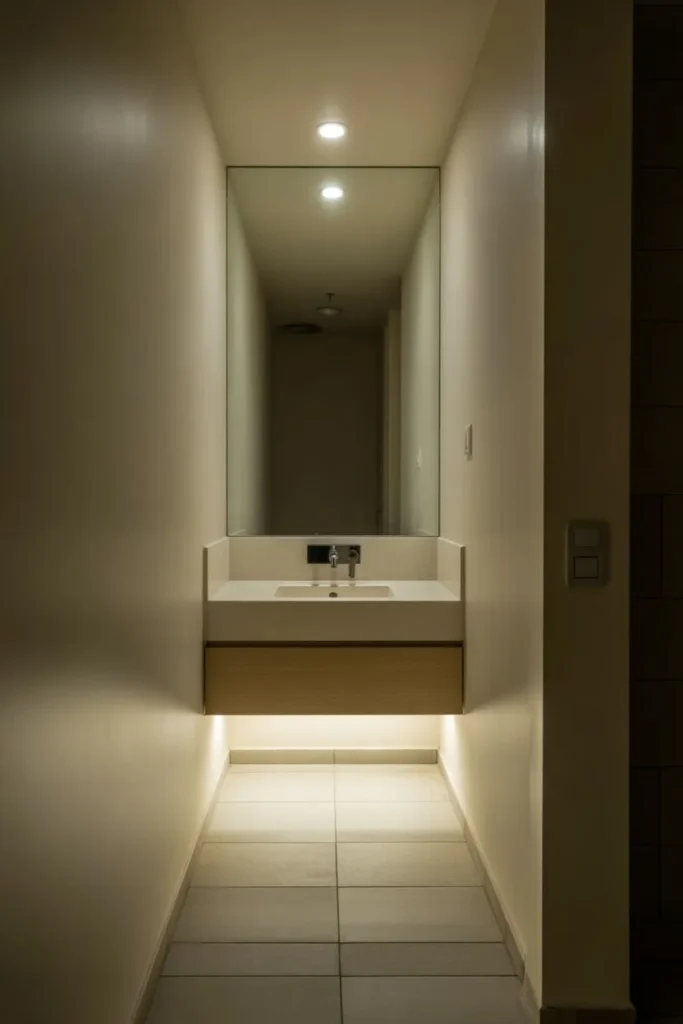
A floating vanity frees up floor space, which visually expands the room. In narrow layouts, seeing more of the floor creates the illusion of width and openness.
It also improves cleaning and maintenance while keeping the design modern. Choosing a slim-profile vanity ensures functionality without overwhelming the limited space.
3. Glass Shower Partition for Openness
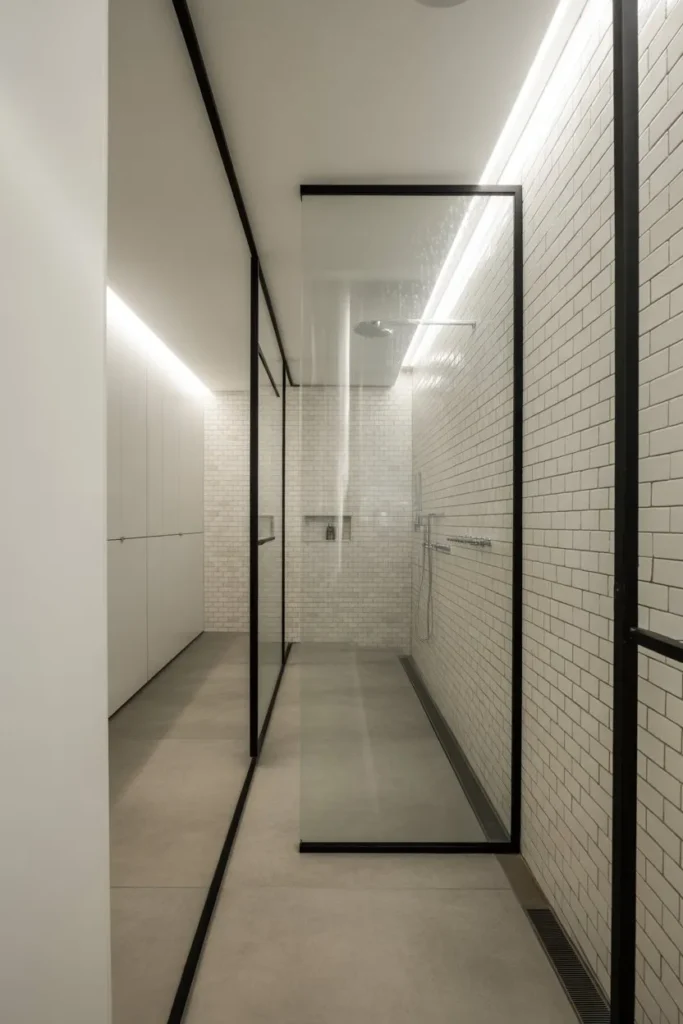
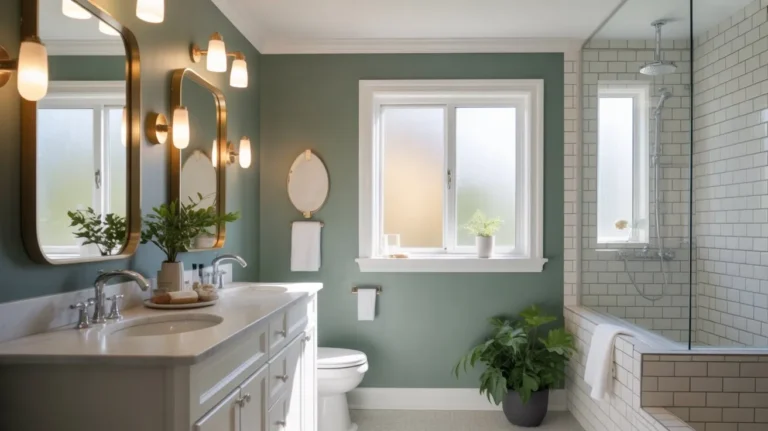
Replacing solid shower walls with glass partitions keeps the space visually open. It allows light to pass through, preventing the bathroom from feeling divided or smaller than it is.
This is especially effective in narrow layouts where visual continuity is important. A frameless design enhances the effect, making the room feel more spacious.
4. Vertical Storage to Save Floor Space
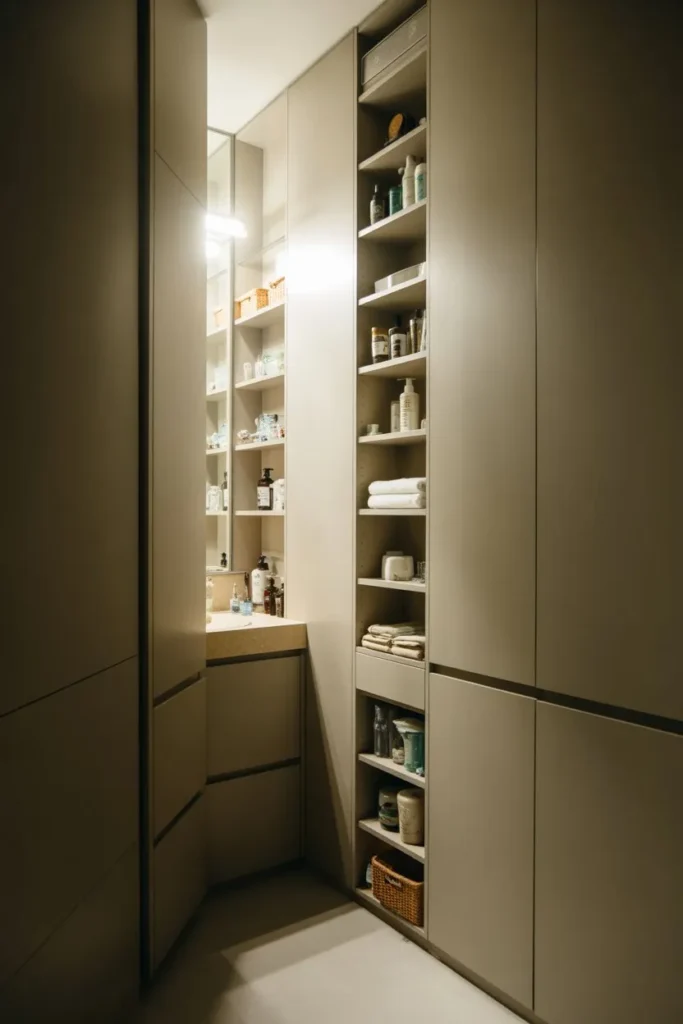
In a narrow bathroom, floor space is limited, so vertical storage becomes essential. Tall cabinets or wall-mounted shelves provide storage without crowding the walkway.
This keeps essentials organized while maintaining a clean layout. Proper placement ensures storage is accessible without interrupting movement.
5. Light Color Palette to Expand Space
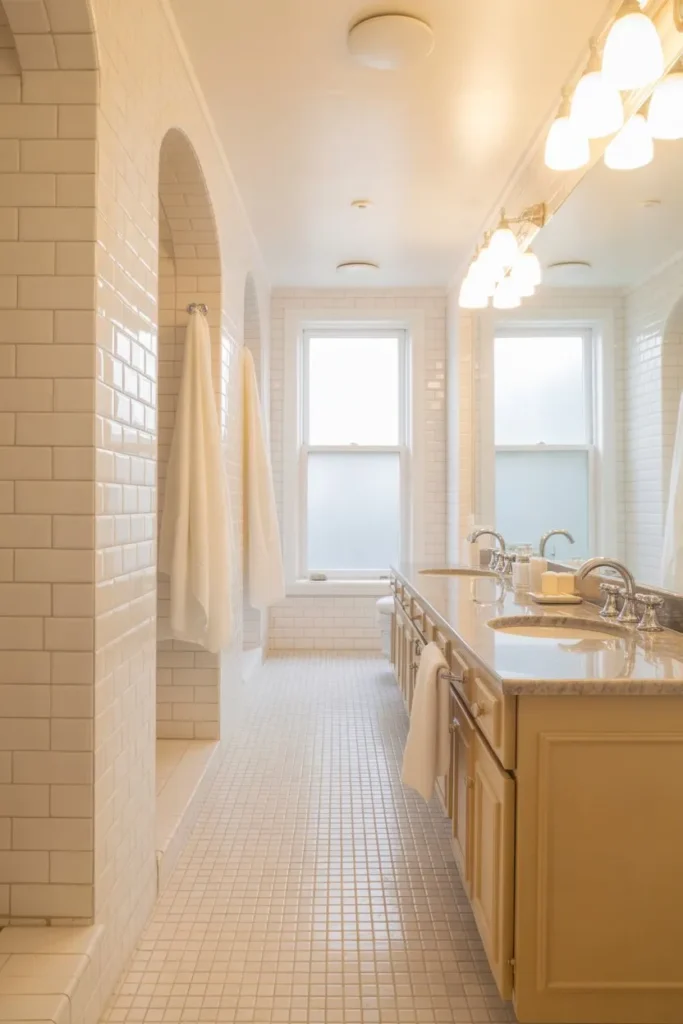
Light colors reflect more light, making a narrow bathroom feel wider and more open. Shades like white, cream, or soft gray help reduce the sense of confinement.
Combining this with good lighting enhances the effect, creating a space that feels brighter and more comfortable. This is one of the simplest yet most effective design strategies.
6. Zoning the Layout into Functional Sections
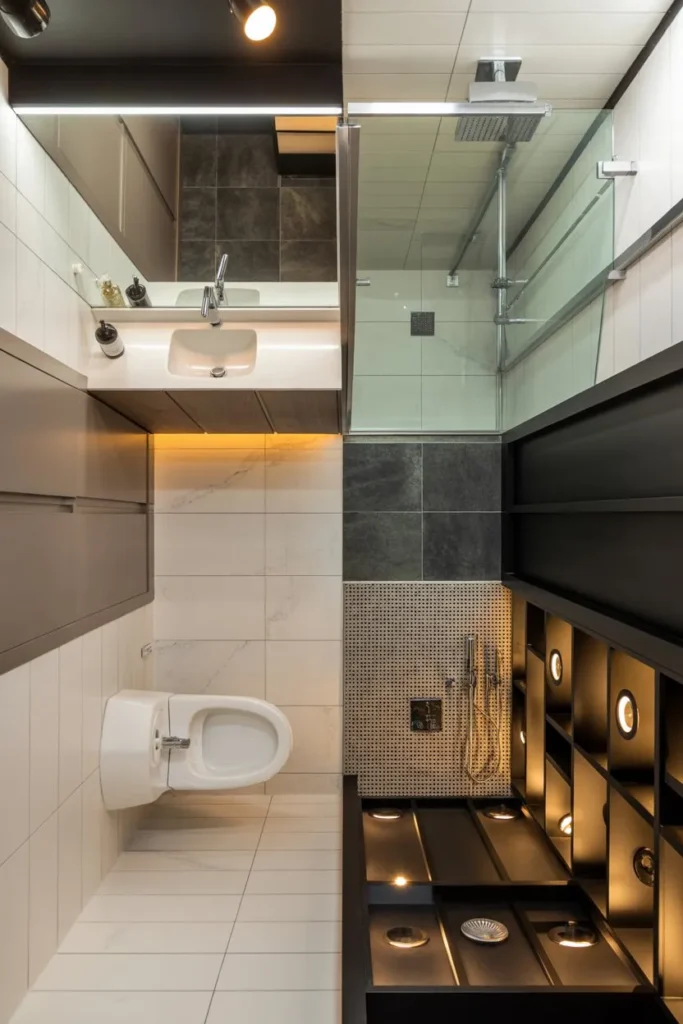
Instead of treating the bathroom as one continuous strip, divide it into clear functional zones—vanity, toilet, and shower. This creates structure and makes the space feel intentional rather than cramped.
You don’t need walls to achieve this. Use flooring changes, lighting shifts, or slight material variations to define each area. This improves flow because each section has a purpose, and visually it breaks the “tunnel effect” common in narrow bathrooms.
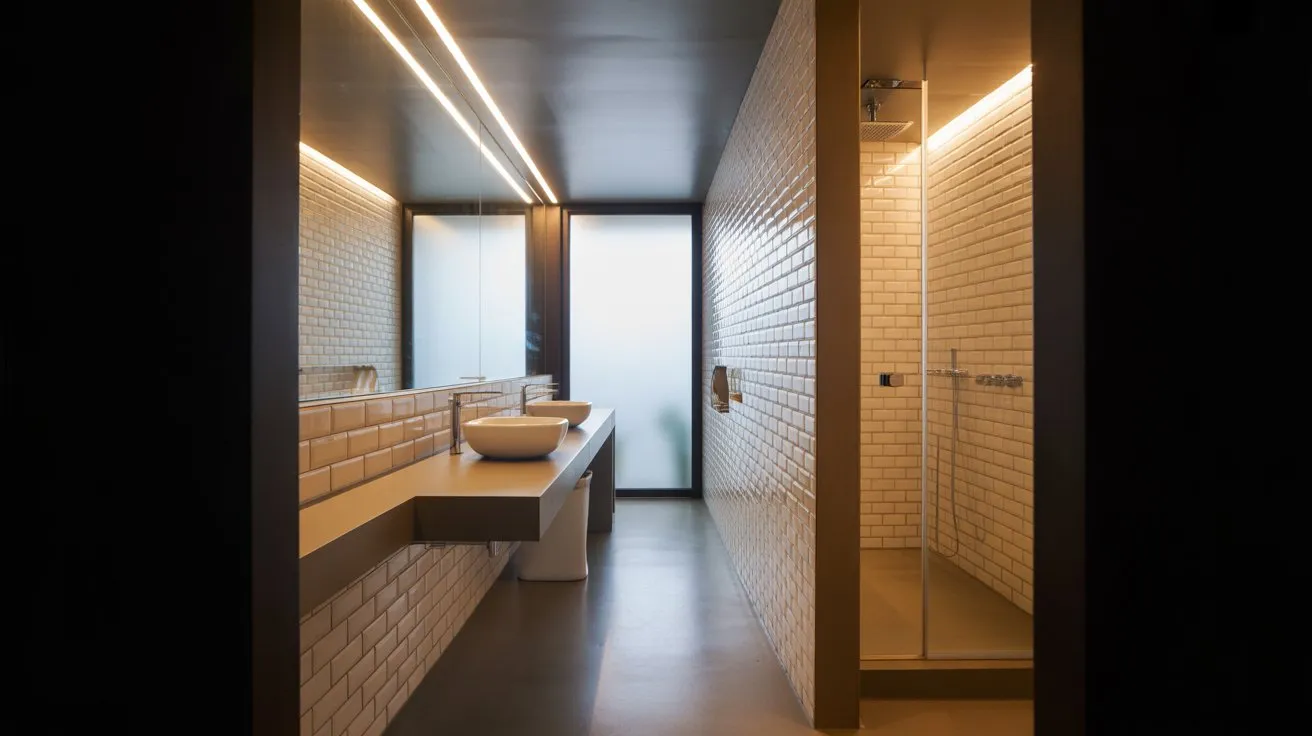
7. End-of-Room Shower Layout for Better Depth
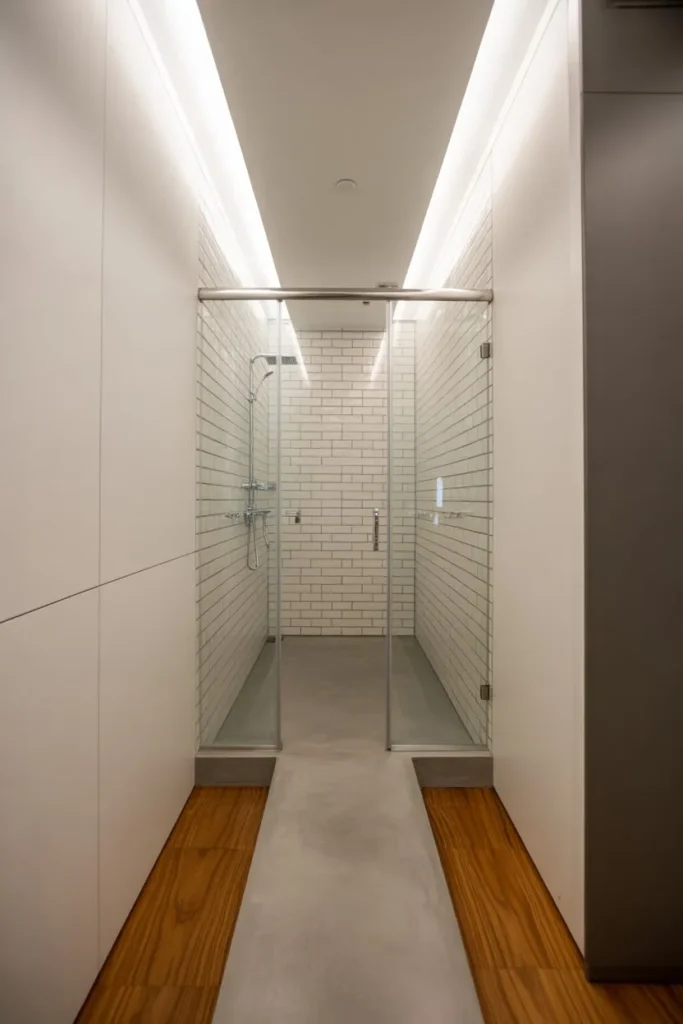
Placing the shower at the far end draws the eye forward, making the bathroom appear longer and more open. This layout naturally guides movement from entrance to end without interruptions.
Using a glass enclosure here is important—it keeps the view uninterrupted and enhances depth perception. This setup works particularly well in long spaces where you want to emphasize length without adding visual barriers.
8. Wall-Mounted Fixtures for Cleaner Flow
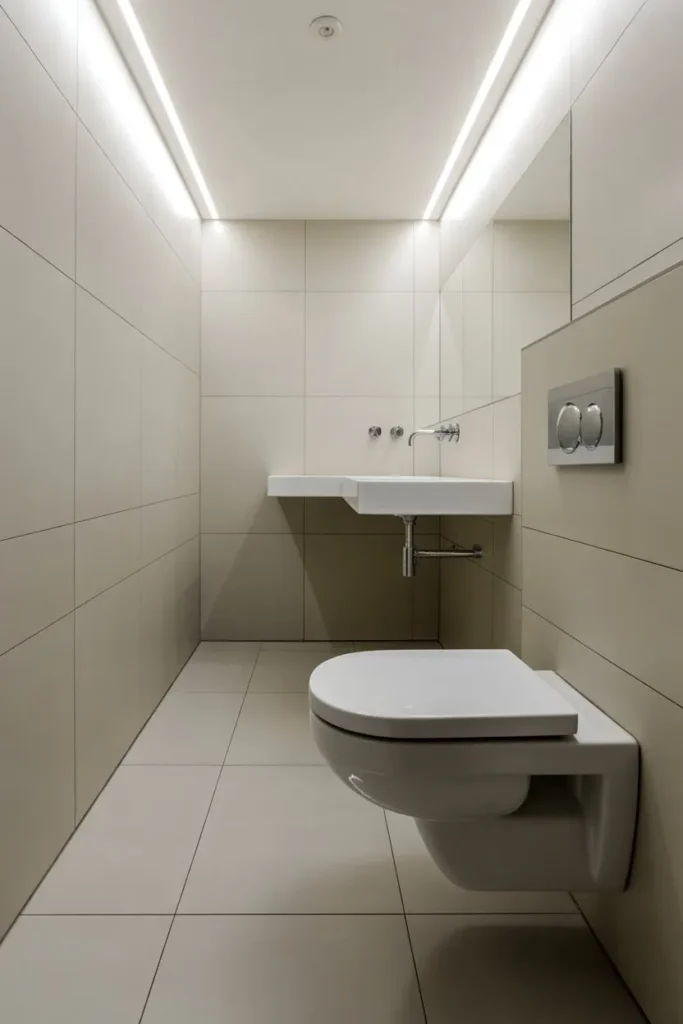
Wall-mounted fixtures reduce visual clutter by freeing up floor space. In narrow layouts, this makes a significant difference because the eye can travel uninterrupted across the floor.
This creates a cleaner, more modern look while also improving movement. It’s especially useful when trying to maintain both function and openness in a limited width.
9. Mirror Placement to Expand Visual Width
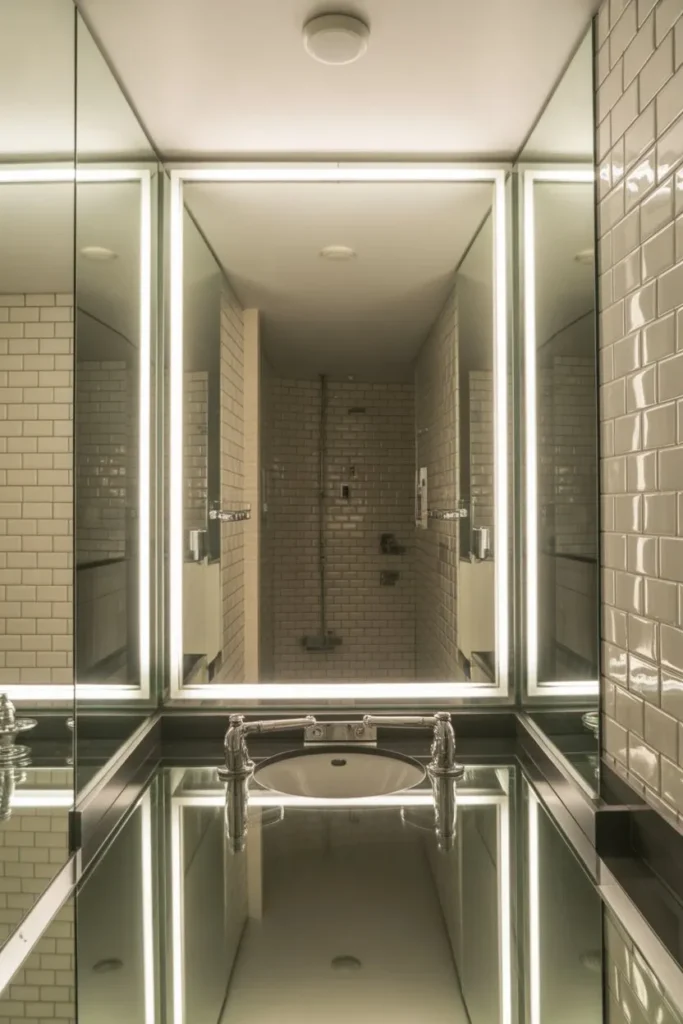
Mirrors are one of the most powerful tools for making a narrow bathroom feel wider. A large mirror reflects both light and space, doubling the visual width of the room.
Positioning it strategically—especially along the longer wall—helps break the tunnel-like feeling. This simple addition can dramatically improve how the space feels without changing the layout.
10. Sliding Door Entry for Space Efficiency
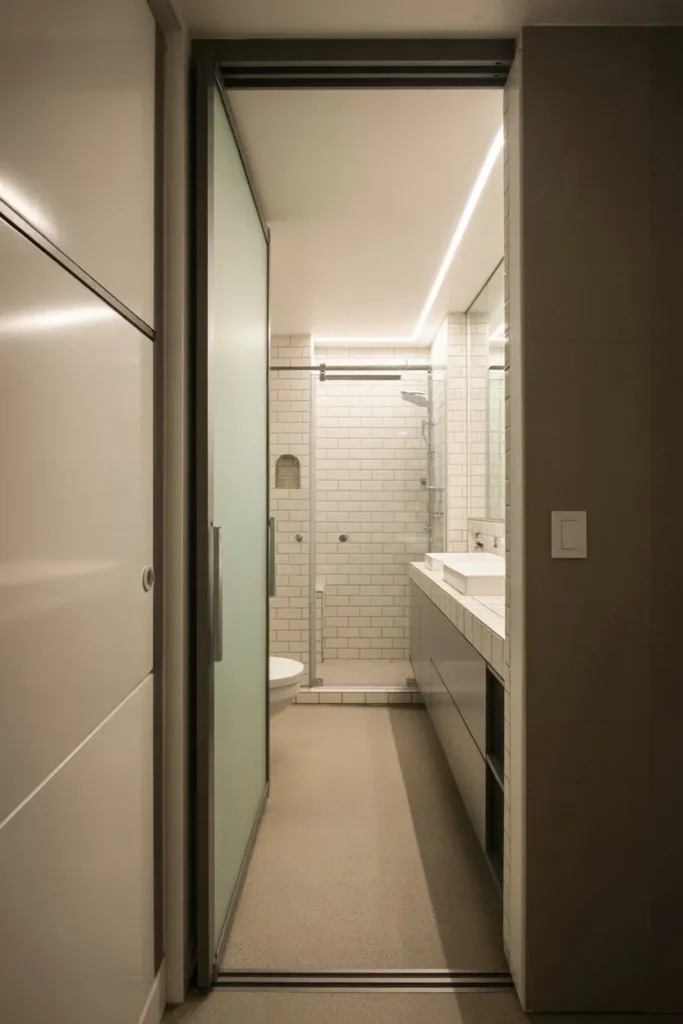
Traditional swing doors take up valuable space and can interrupt flow in narrow layouts. Switching to a sliding or pocket door eliminates this issue, allowing you to use the full width of the room.
This improves both functionality and layout flexibility. It also makes the entrance feel more seamless, enhancing the overall flow of the bathroom.
11. Layered Lighting to Break the Tunnel Effect
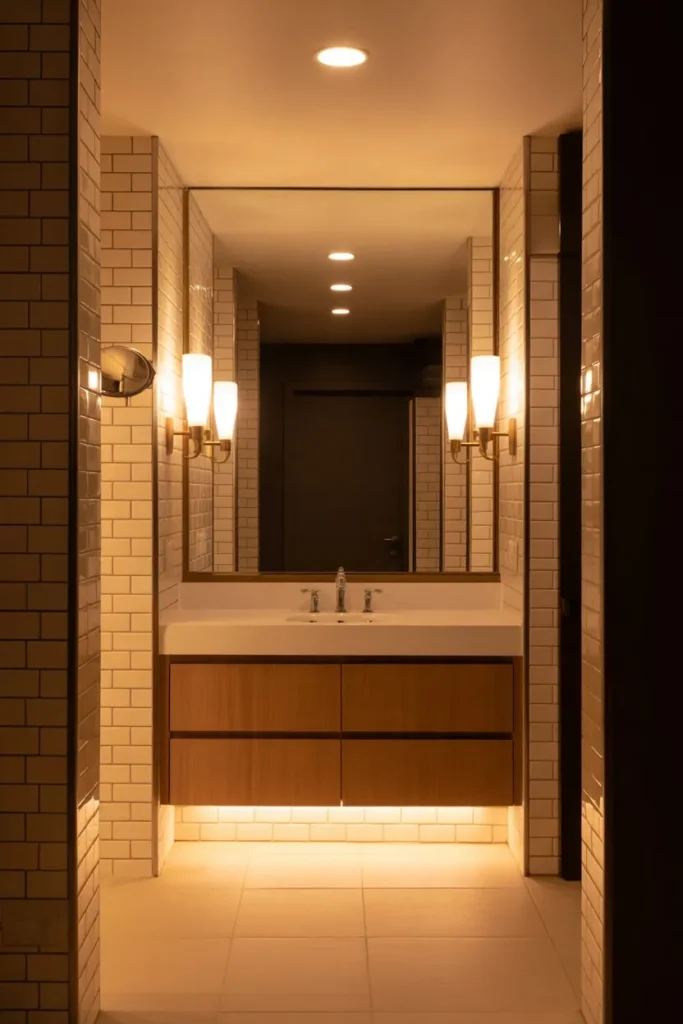
A long narrow bathroom often feels like a tunnel if lighting is flat. Using layered lighting—overhead for general use, wall lights for balance, and LED accents for depth—breaks that effect.
Distributing light along the length of the room prevents dark zones and visually “widens” the space. Warm tones also soften hard lines, making the bathroom feel more comfortable rather than rigid.
12. Horizontal Tile Layout to Visually Widen Space
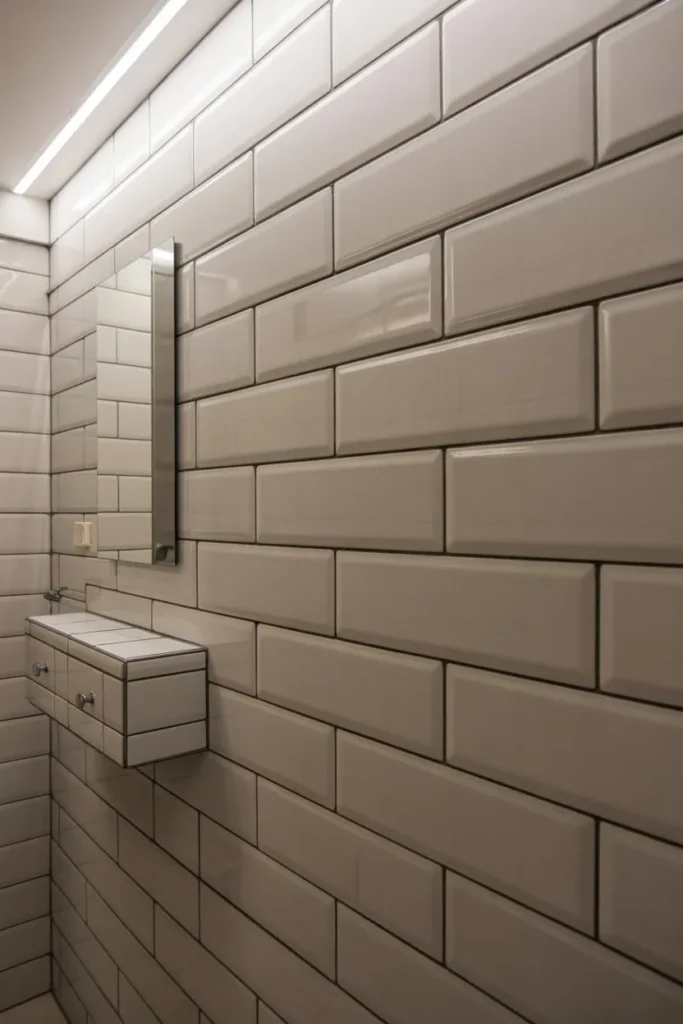
Tile direction plays a major role in how the space is perceived. Laying tiles horizontally draws the eye sideways, making the room feel wider than it actually is.
This is a simple but highly effective visual trick. Keeping grout lines subtle ensures the pattern enhances the space without becoming distracting.
13. Consistent Material Palette for Seamless Flow
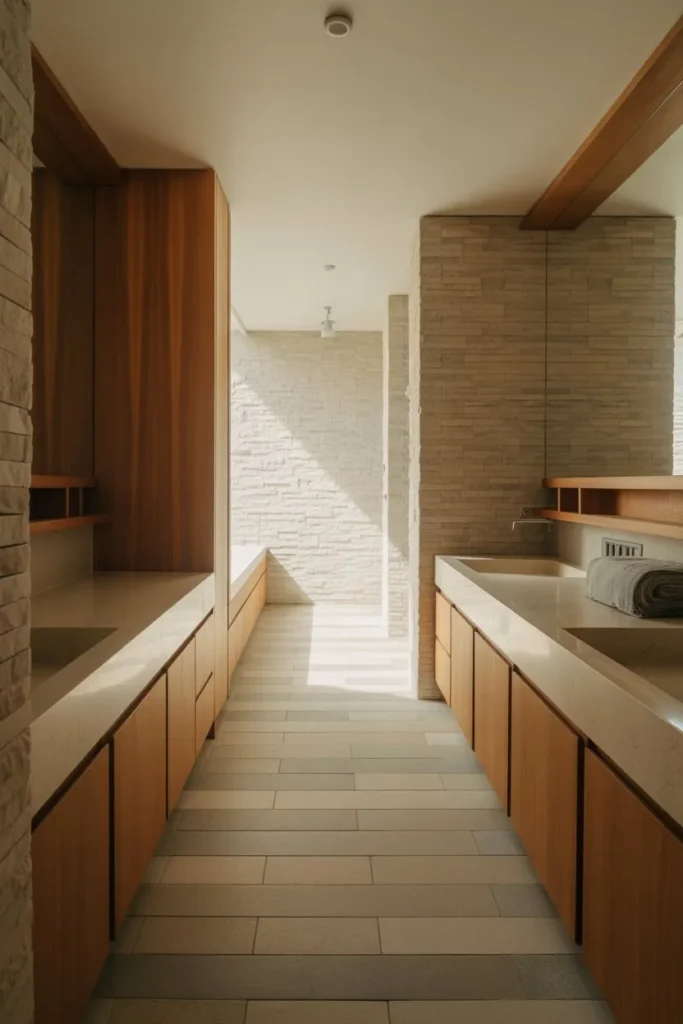
Using too many materials can break visual flow and make a narrow bathroom feel segmented. Keeping a consistent palette—such as one wood tone, one tile style, and neutral colors—creates continuity.
This makes the room feel more cohesive and less cluttered. A seamless design allows the eye to move freely, which enhances the perception of space.
14. Recessed Niches for Smart Storage
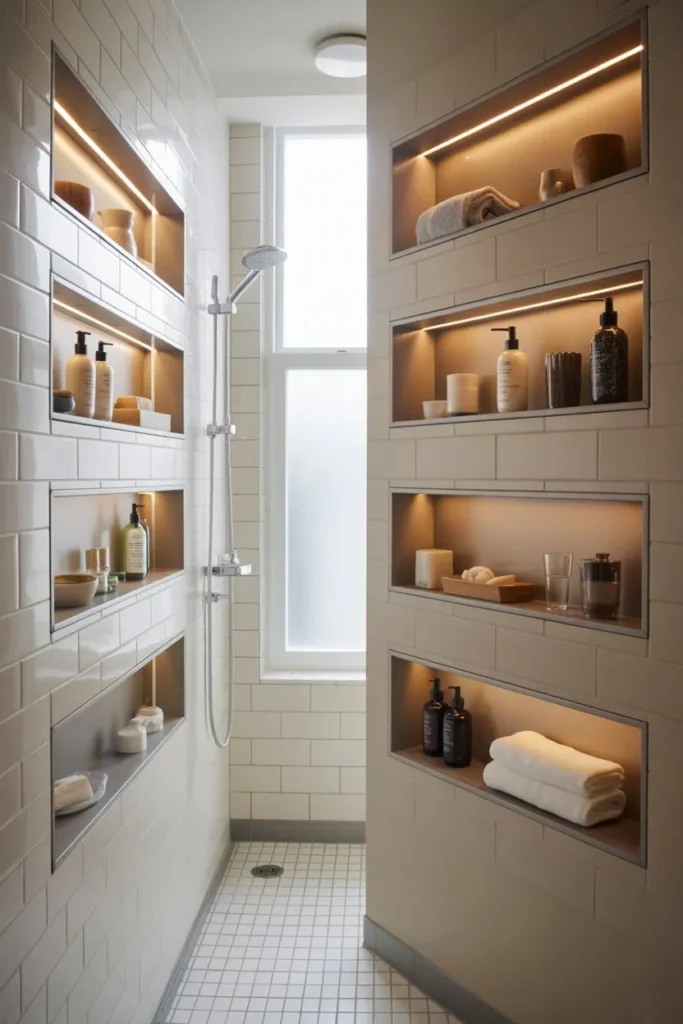
Recessed niches provide storage without taking up physical space. Built into walls, they hold essentials while keeping the layout clean and unobstructed.
This is especially useful in showers or near vanities where storage is needed but space is limited. It’s a subtle solution that improves both function and aesthetics.
15. Fully Optimized Long Narrow Bathroom Layout
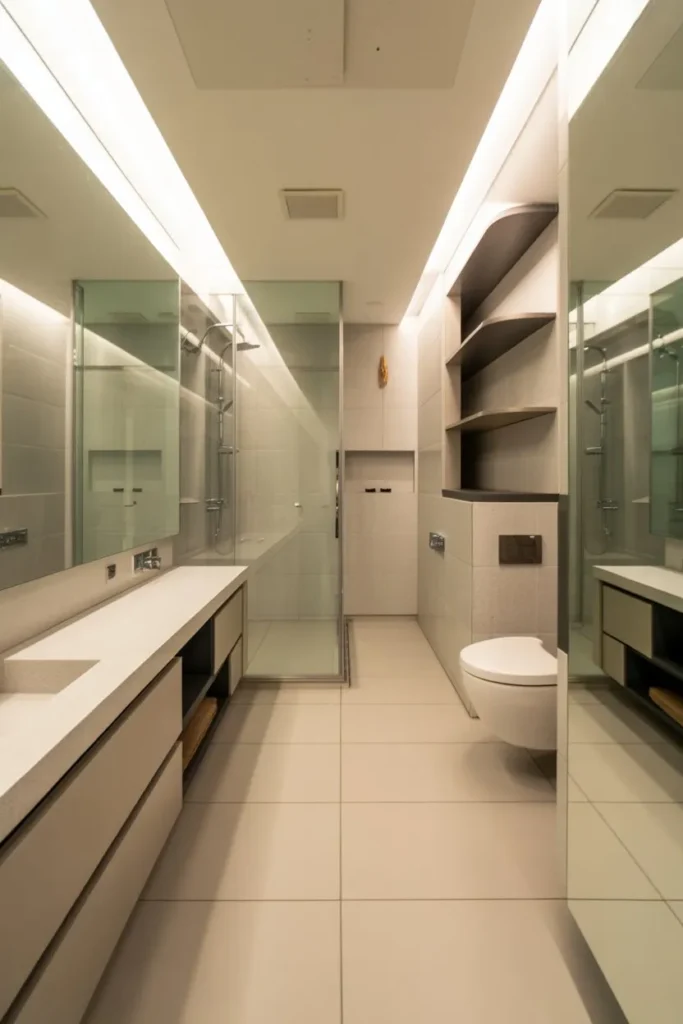
The best long narrow bathroom layouts combine multiple strategies—clear flow, minimal obstruction, smart storage, and balanced lighting. Every element should be placed intentionally to support movement and usability.
When layout, materials, and lighting work together, the space feels larger, more functional, and visually comfortable. This holistic approach transforms a challenging layout into an efficient and well-designed bathroom.
Conclusion
The best long narrow bathroom layout ideas focus on improving flow, maximizing space, and reducing visual clutter. By using smart placement, efficient storage, and thoughtful lighting, even the narrowest bathrooms can feel more open and functional. Small changes like wall-mounted fixtures or better lighting distribution can have a big impact. With the right approach, a long narrow bathroom can become a well-organized and visually comfortable space that works efficiently every day.