Laundry room layout ideas are essential for creating a space that is not only functional but also easy to use on a daily basis. A well-planned layout can reduce clutter, improve workflow, and make even small spaces feel more efficient. Whether you’re working with a compact laundry corner or a larger dedicated room, the right arrangement of appliances, storage, and work areas can make a significant difference. These ideas focus on practical solutions that help you design a space that works smarter and feels more organized.
1. Side-by-Side Washer Dryer with Counter Layout
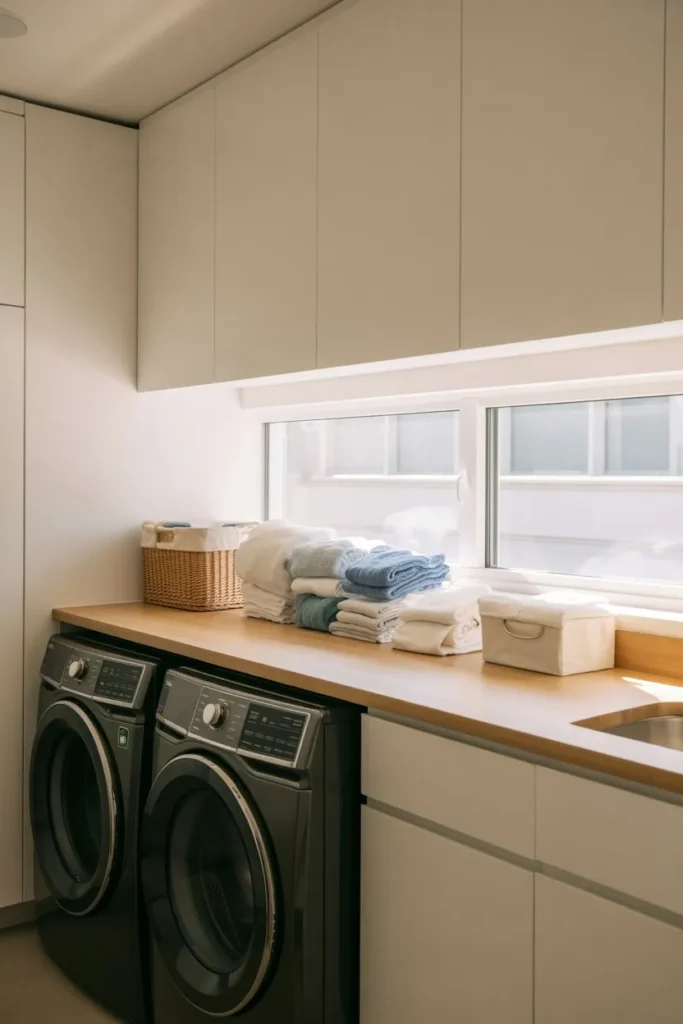
A side-by-side washer and dryer layout creates one of the most efficient workflows because every task happens in a straight line. Placing a continuous countertop above both machines turns otherwise wasted space into a highly functional folding and sorting area. This reduces the need to carry clothes across the room, saving time and effort.
For best results, keep the counter depth aligned with the machines and maintain enough side clearance for ventilation and maintenance. This layout works particularly well in medium-sized rooms where horizontal space is available, allowing you to combine washing, drying, and folding into a single uninterrupted zone.
2. Stacked Washer Dryer for Vertical Efficiency
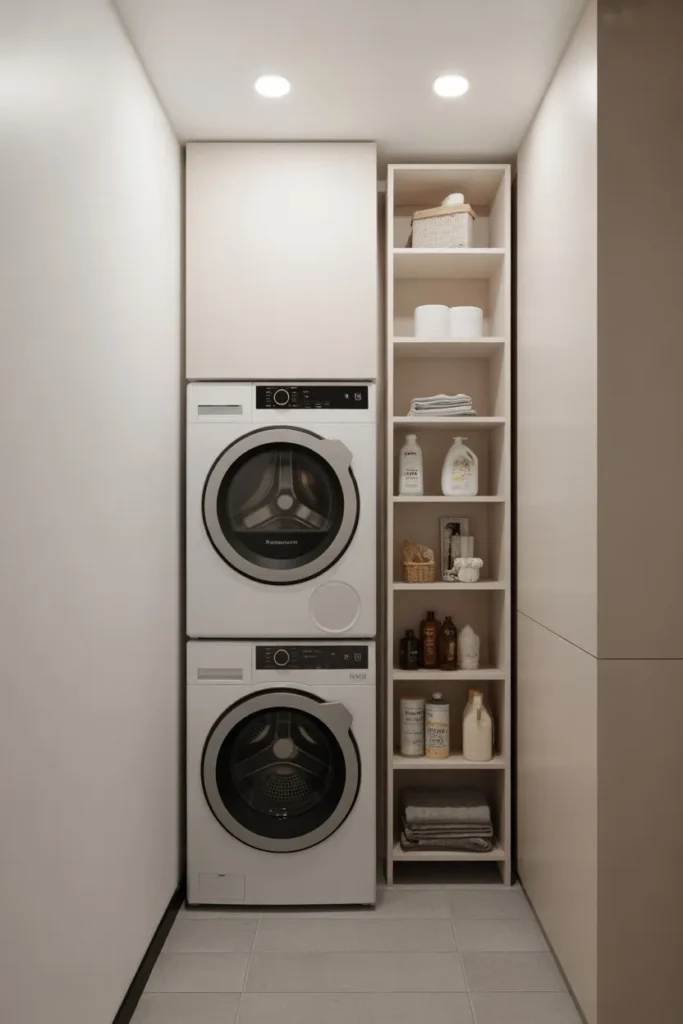
Stacking the washer and dryer is one of the most practical solutions when floor space is limited. By going vertical, you free up room for additional features like a storage cabinet, folding surface, or even a utility sink. This makes the entire layout more flexible and functional.
The key is accessibility—placing detergents and everyday items at mid-level heights ensures ease of use. This layout works best in compact spaces where every inch matters, allowing you to maintain functionality without overcrowding the room.
3. L-Shaped Laundry Layout for Zoned Workflow
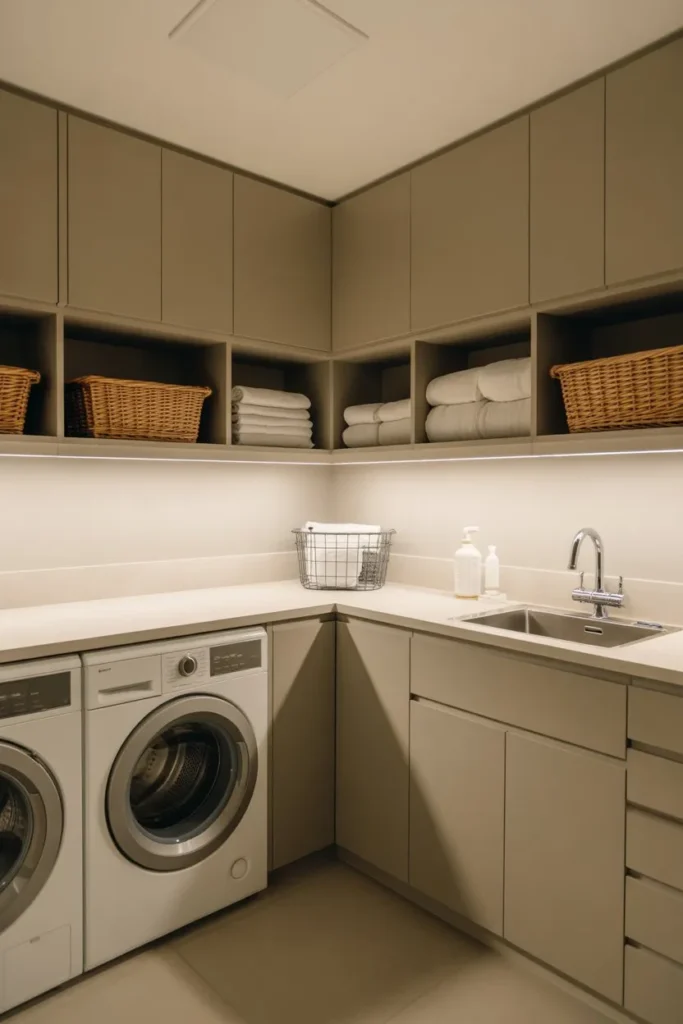
An L-shaped layout helps organize the laundry room into clear functional zones, making daily tasks more structured and efficient. One side can be dedicated to washing and drying, while the other supports folding, storage, or cleaning tasks.
This separation reduces overlap between activities, especially in shared spaces. It also improves movement flow by preventing congestion around a single area. Keeping the corner open and uncluttered is essential to maintain a smooth transition between zones and avoid making the space feel tight.
4. Laundry Room with Dedicated Folding Station
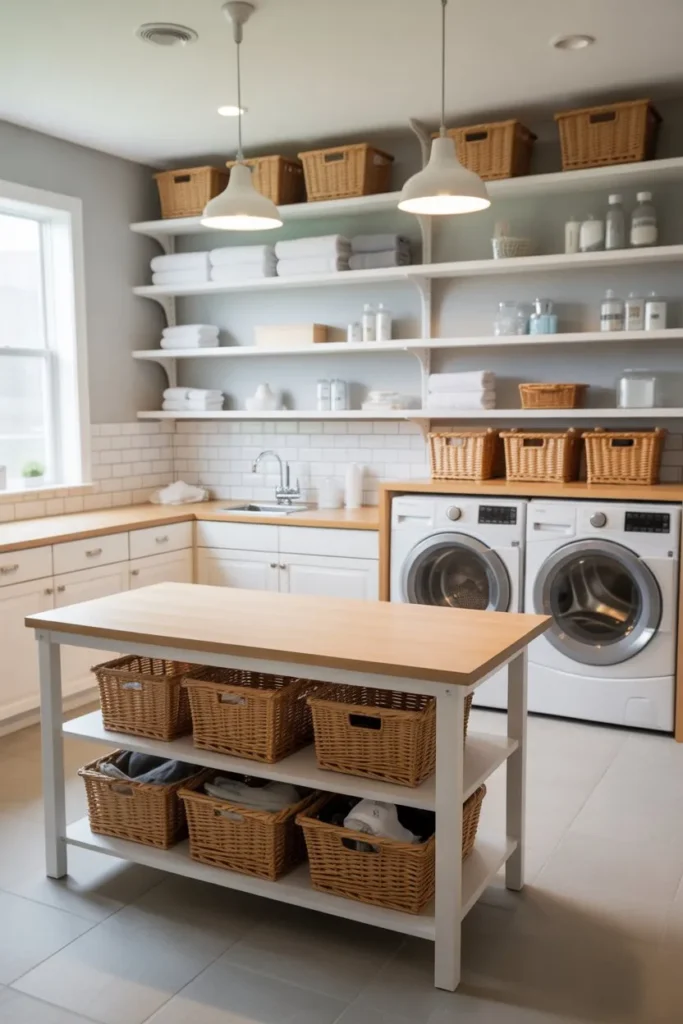
A dedicated folding station transforms the laundry process by giving it a clear, organized workflow. Instead of moving clothes to another room, everything stays within the same space, improving efficiency and reducing clutter.
Positioning the folding area close to the dryer minimizes unnecessary steps. Adding shelves or cabinets above keeps essentials like baskets and detergents within easy reach. This setup is especially useful for larger households where laundry volume is higher and organization becomes critical.
5. Narrow Galley Laundry Layout
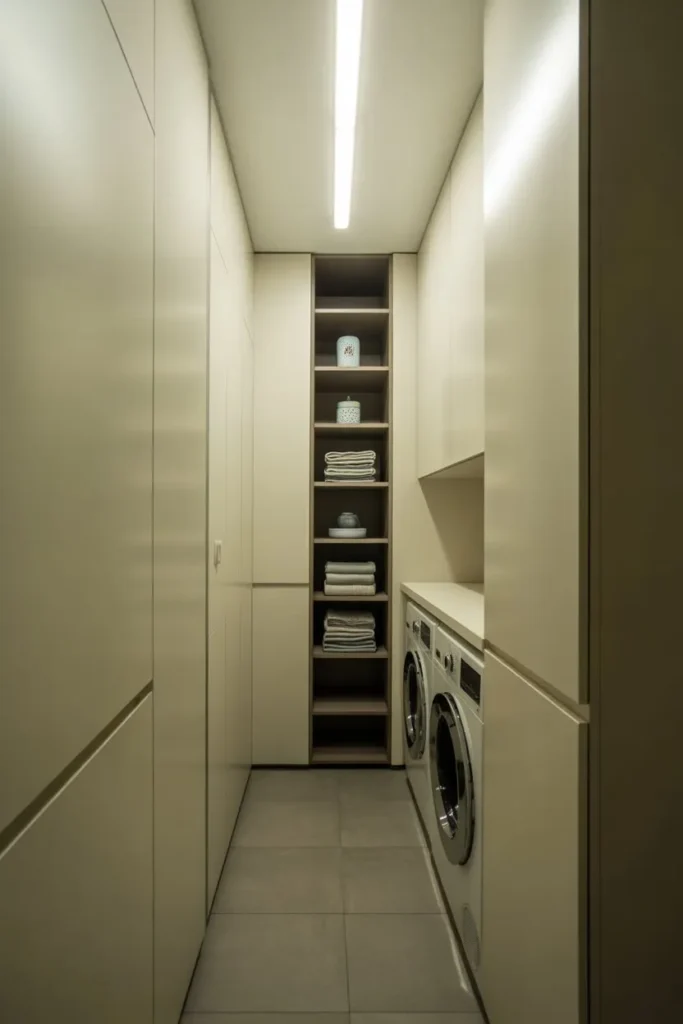
A galley layout is ideal for narrow rooms where width is limited but length can be utilized effectively. Placing machines on one side and storage or shelving on the opposite side creates a balanced and highly functional arrangement.
Maintaining proper walkway clearance—ideally around 30 to 36 inches—is crucial to ensure comfortable movement. This layout keeps everything within arm’s reach while maximizing efficiency, making it one of the most practical solutions for compact laundry spaces.
6. U-Shaped Laundry Layout for Maximum Efficiency
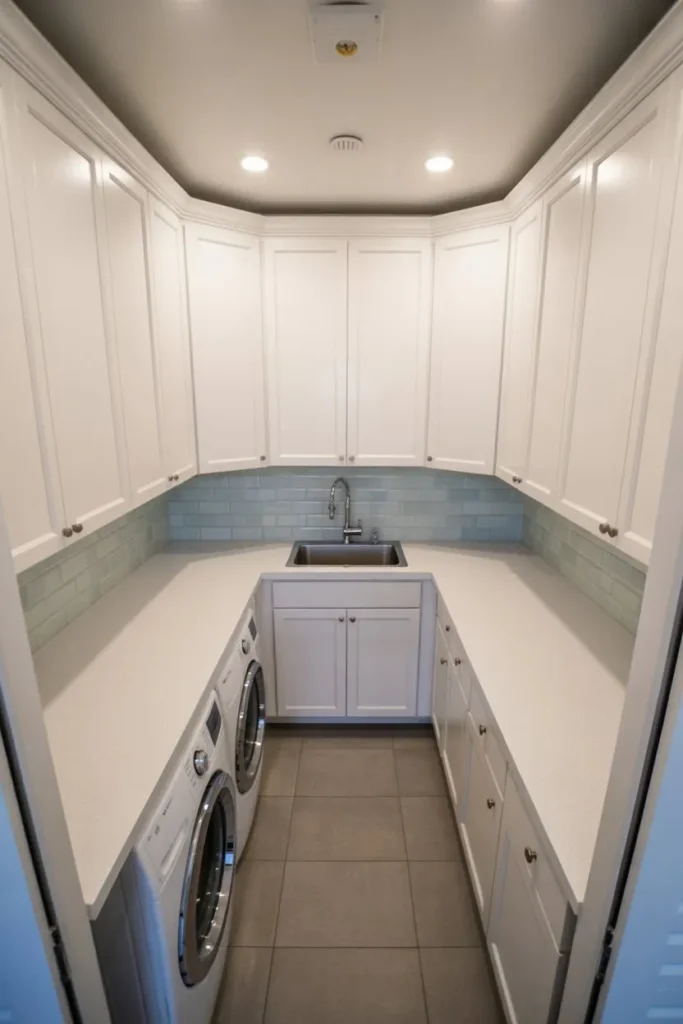
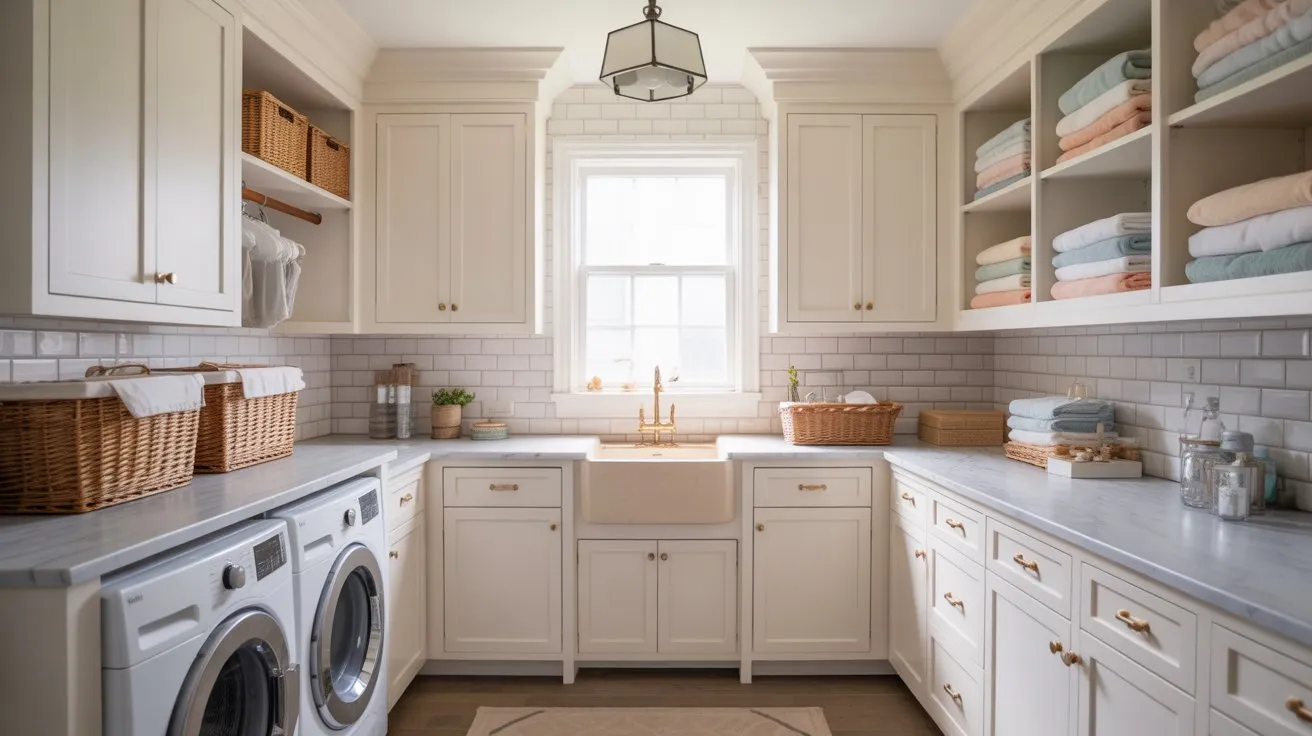
A U-shaped layout is one of the most efficient ways to organize a laundry room because it surrounds you with everything you need within arm’s reach. Washing, drying, folding, and storage all happen in a compact triangle, minimizing unnecessary movement.
This layout works best in slightly wider rooms where three walls can be utilized without making the space feel cramped. Keeping the center area clear is essential so you can move freely between zones. When designed correctly, this setup creates a highly functional workspace that supports a smooth and continuous workflow.
7. Laundry Room with Sink Integration Layout
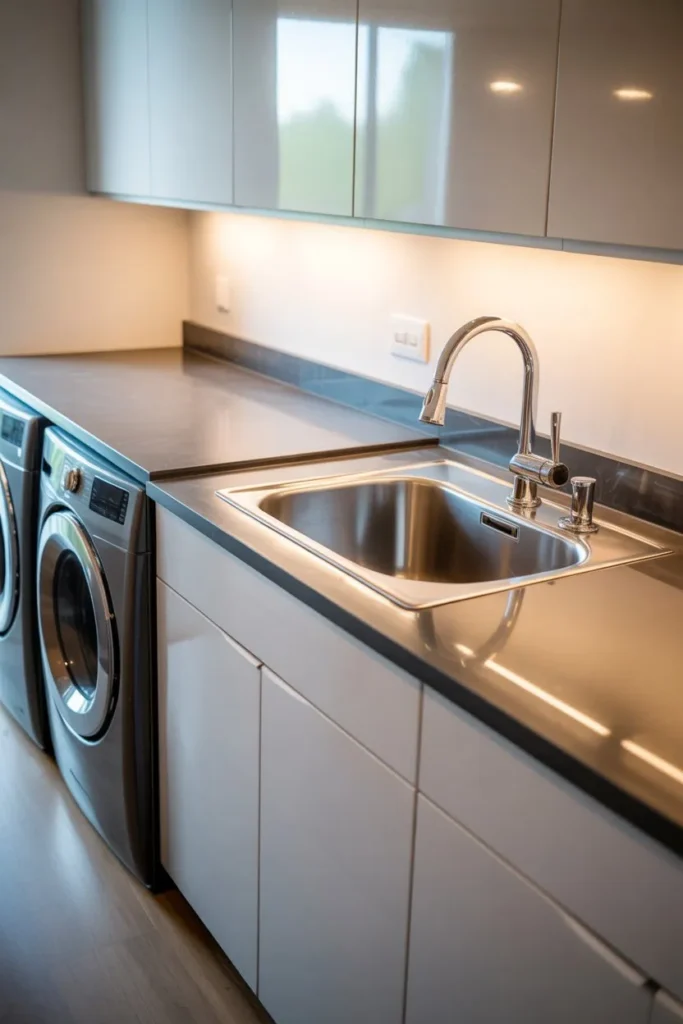
Adding a sink directly into the layout significantly improves functionality, especially for hand-washing, stain treatment, or cleaning tasks. Positioning it next to the washer creates a logical sequence—rinse, treat, then wash—without unnecessary movement.
To make the most of this layout, include counter space around the sink for temporary use and storage below for cleaning supplies. This setup turns the laundry room into a more versatile utility space rather than just a washing area.
8. Laundry Room with Overhead Cabinet Layout
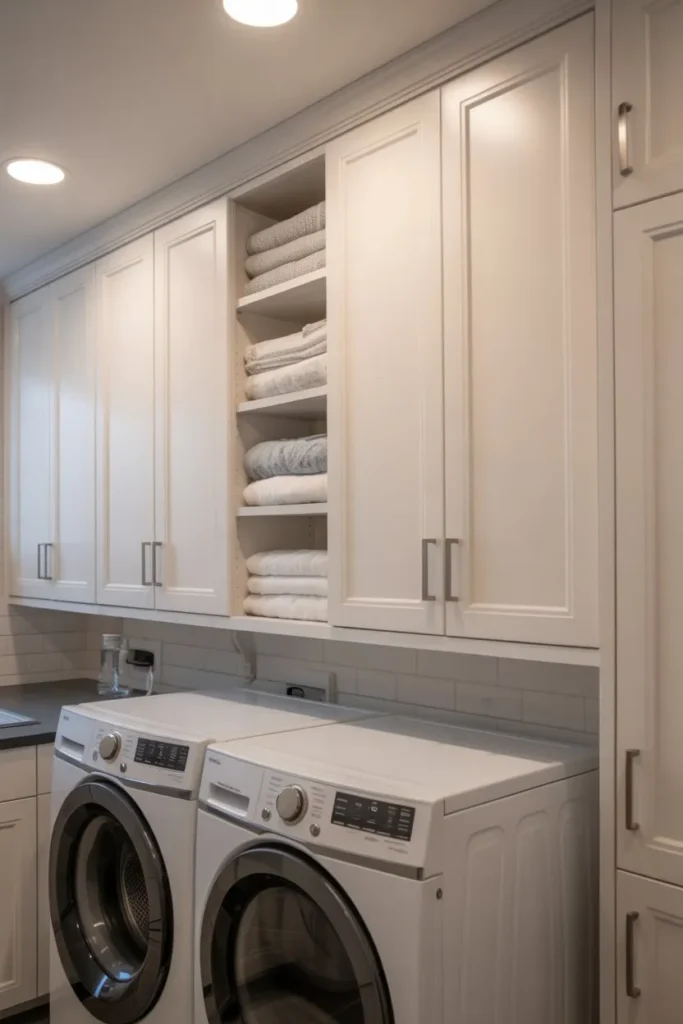
Using overhead cabinets is one of the most effective ways to maximize vertical space in a laundry room. This layout keeps frequently used items accessible while maintaining a clean and uncluttered appearance below.
To avoid the space feeling heavy, balance closed cabinets with lighter elements like open shelving or neutral finishes. Proper height placement is important—items should be easy to reach without disrupting workflow. This approach helps keep the room organized without sacrificing usability.
9. Laundry Room with Island Layout for Large Spaces
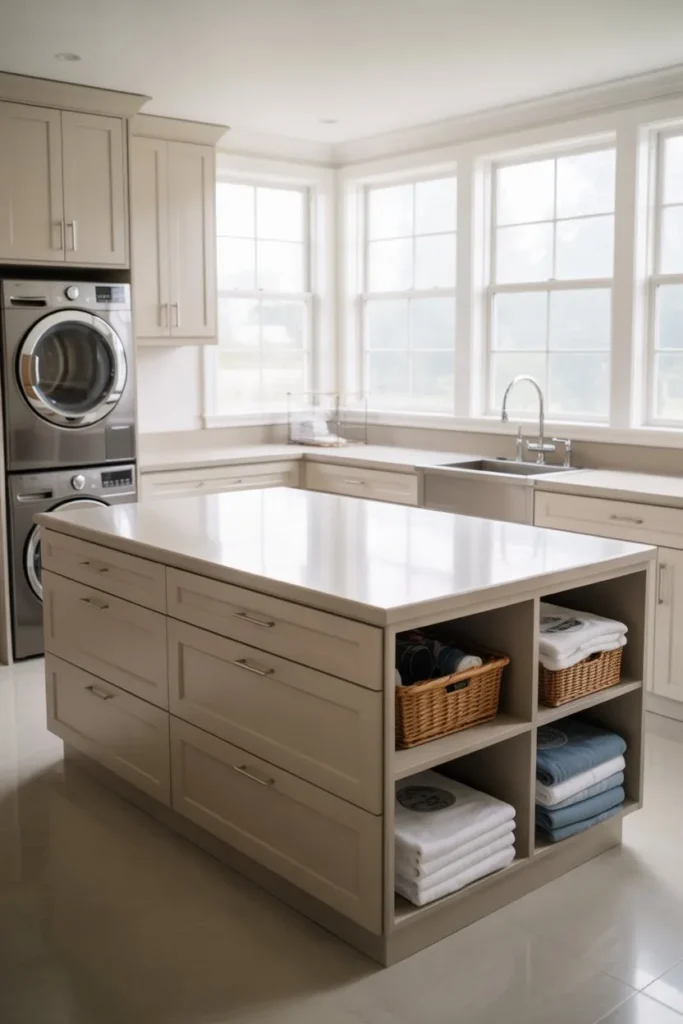
In larger laundry rooms, adding a central island can dramatically improve efficiency. The island serves as a dedicated folding, sorting, and organizing station while also providing additional storage.
This layout works best when there is enough clearance around all sides of the island—at least 36 to 42 inches—to maintain smooth movement. It transforms the laundry room into a more structured workspace, similar to a kitchen, where each function has a defined area.
10. Laundry Room with Hidden Appliance Layout
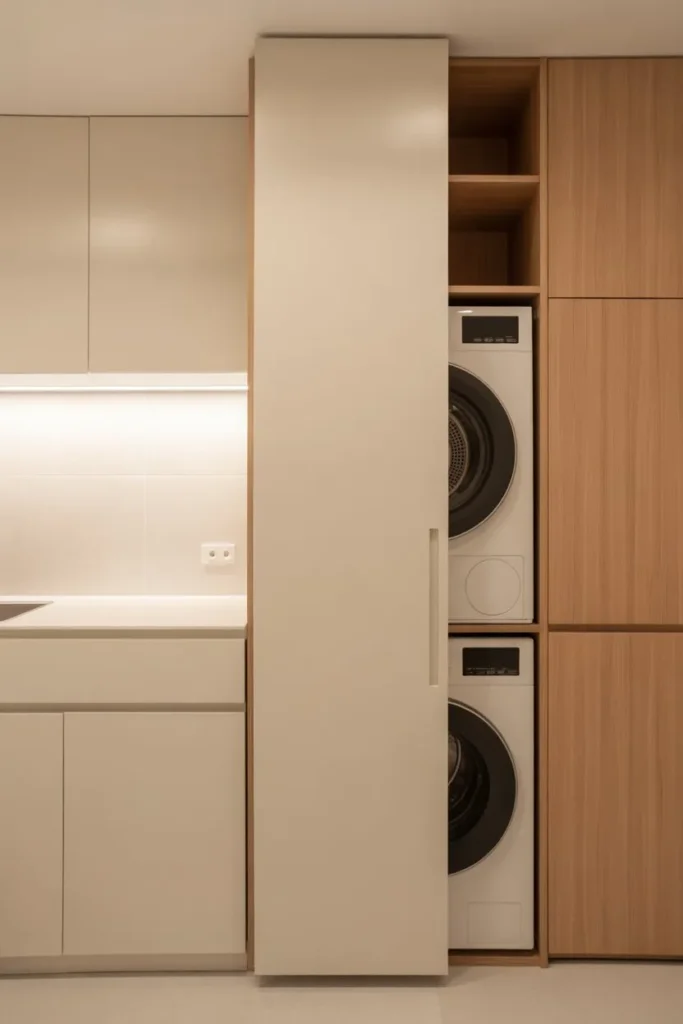
Hiding appliances behind cabinet doors creates a clean and streamlined look, especially in open-concept homes or multi-purpose spaces. This layout is ideal when the laundry area is part of a kitchen, hallway, or shared zone.
Beyond aesthetics, it also reduces visual clutter and noise. The key is ensuring proper ventilation and easy access when needed. This approach allows the laundry space to blend seamlessly into the overall design while still remaining fully functional.
11. Laundry Room with Zoned Workflow Layout
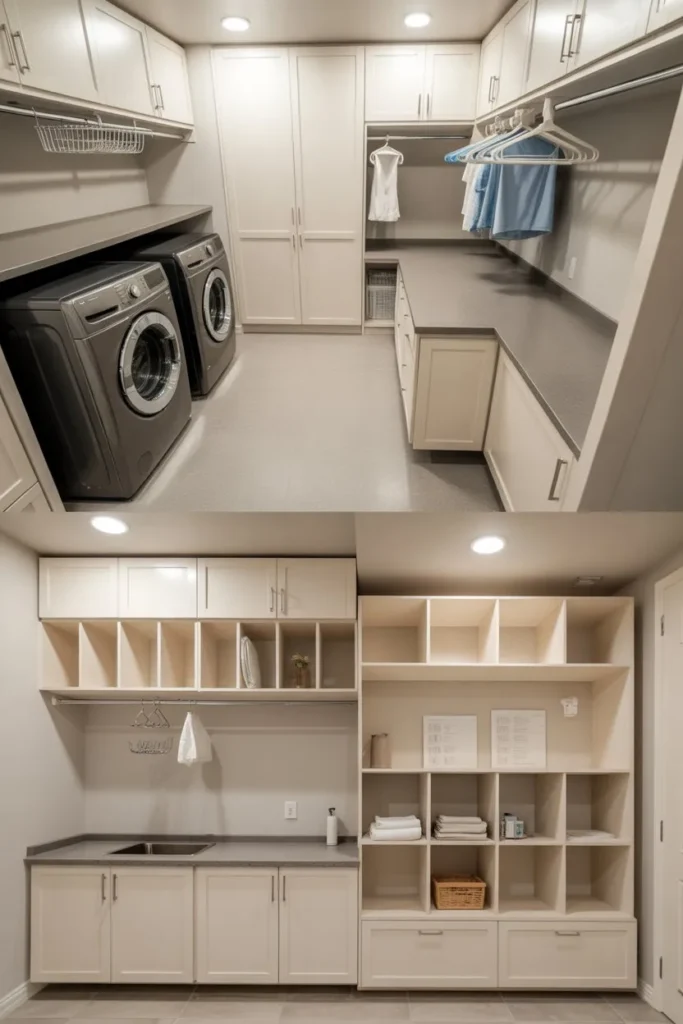
A zoned layout is one of the most effective ways to bring structure into a laundry room. Instead of placing everything randomly, divide the space into clear sections—washing, drying, folding, and storage. Each zone should flow logically into the next to reduce unnecessary movement.
For example, the washer should sit near the sink (if available), followed by the dryer, and then a folding area. Storage should be placed within reach of these zones rather than in isolated corners. This structured approach improves efficiency, especially in busy households where multiple tasks happen at the same time.
12. Laundry Room with Pull-Out Storage Layout
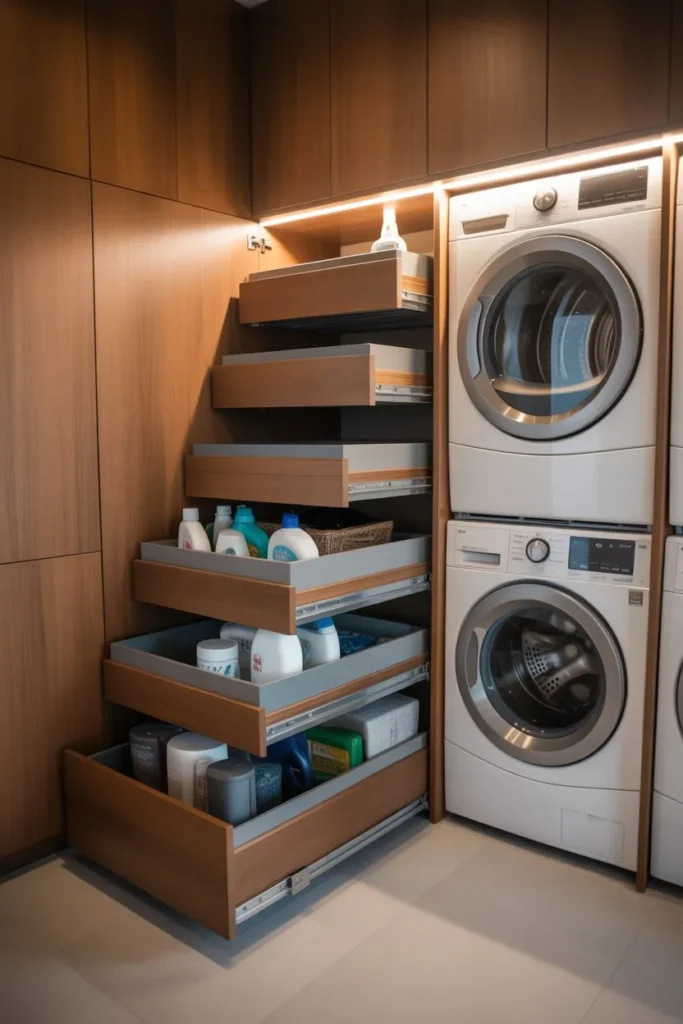
Pull-out storage systems make a huge difference in tight layouts by improving accessibility without increasing footprint. Narrow gaps between machines or cabinets can be transformed into highly functional storage zones for detergents, cleaning supplies, or small tools.
This layout reduces clutter on countertops and ensures everything has a designated place. The key advantage is visibility—you can see and access items instantly without digging through deep shelves. It’s a small upgrade that significantly improves everyday usability.
13. Laundry Room with Mudroom Combo Layout
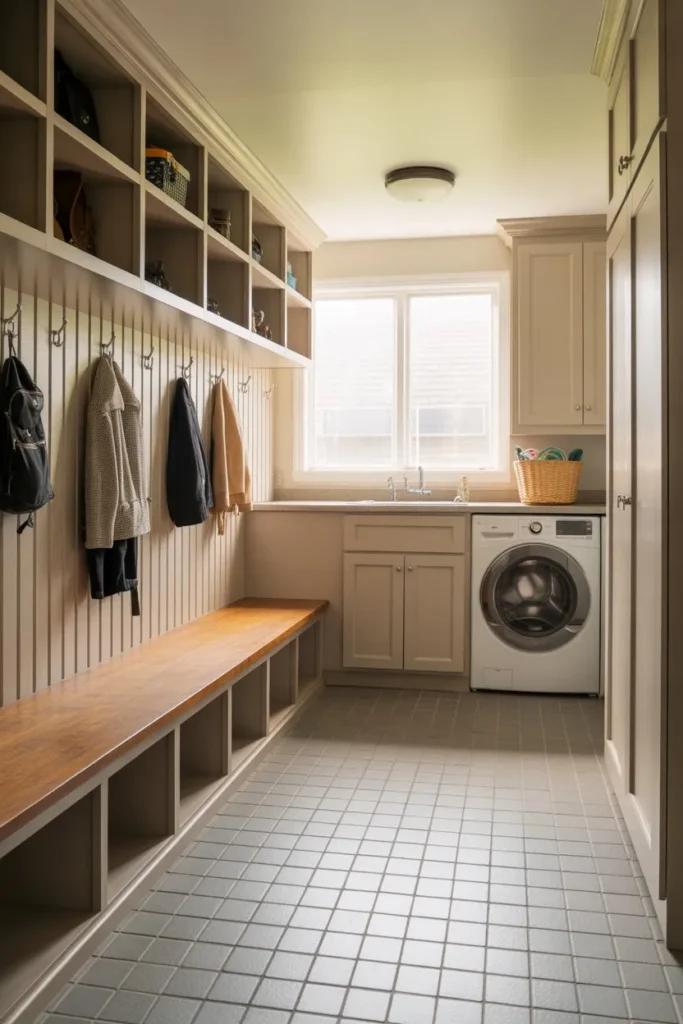
Combining a laundry room with a mudroom is one of the smartest layout ideas for maximizing utility. This setup allows you to handle laundry, storage, and entryway organization in a single, efficient space.
Placing hooks, benches, and storage near the entrance keeps clutter contained, while the laundry area remains functional for washing tasks. This layout is especially useful for families, as it creates a central zone for daily routines without spreading mess throughout the house.
14. Laundry Room with Corner Utilization Layout
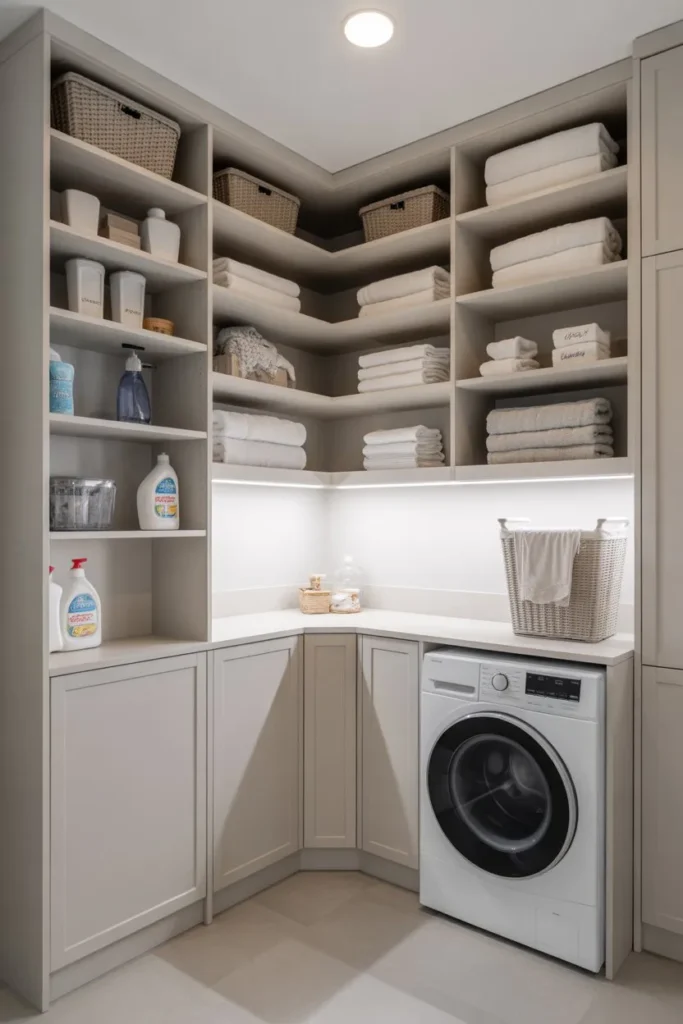
Corners are often wasted in poor layouts, but using them effectively can significantly improve storage capacity. Installing corner shelves, cabinets, or even a small sink helps utilize every inch of the room.
This approach is particularly useful in compact laundry rooms where maximizing space is essential. By turning unused corners into functional zones, you create a more efficient and organized layout without expanding the room.
15. Laundry Room with Sliding Door Access Layout
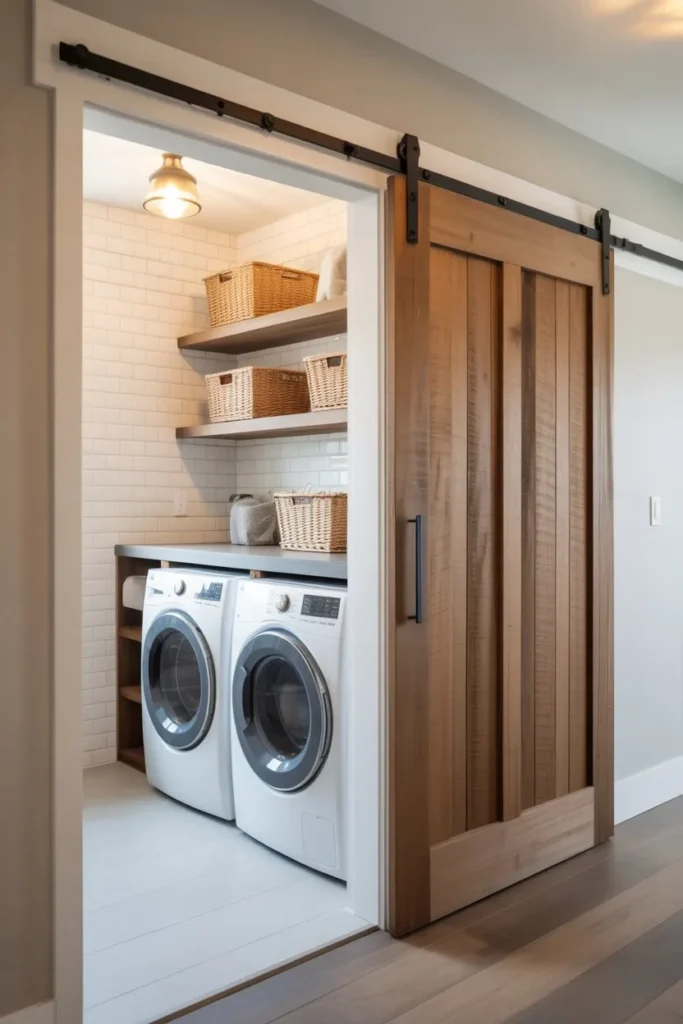
Traditional doors can take up valuable space and restrict movement in smaller laundry rooms. Replacing them with sliding or pocket doors improves accessibility while freeing up floor area.
This layout allows you to position appliances or storage closer to the entrance without worrying about door clearance. It’s a simple change that enhances both functionality and flow, especially in tight or narrow spaces.
16. Laundry Room with Multi-Level Counter Layout
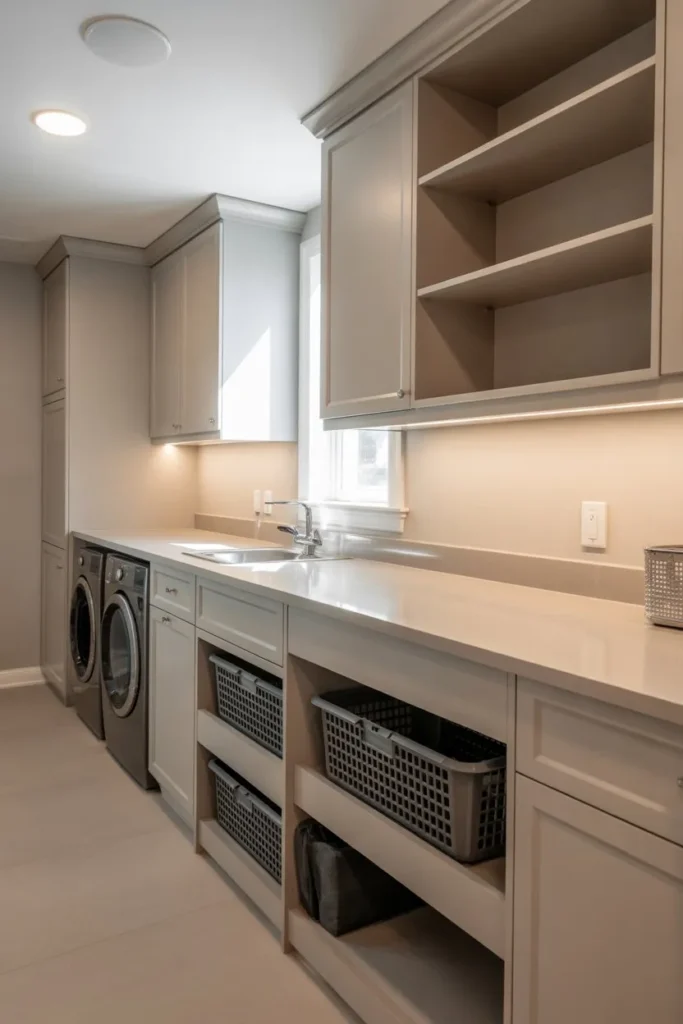
Multi-level counters add flexibility to your layout by creating different working heights for different tasks. A higher surface can be used for folding, while a lower section can support sorting or handling heavier items.
This setup improves ergonomics and reduces strain during repetitive tasks. It also allows multiple users to work comfortably at the same time. By adapting the layout to real usage needs, this design makes the laundry room more practical and user-friendly.
17. Laundry Room with Open Shelf + Closed Cabinet Balance
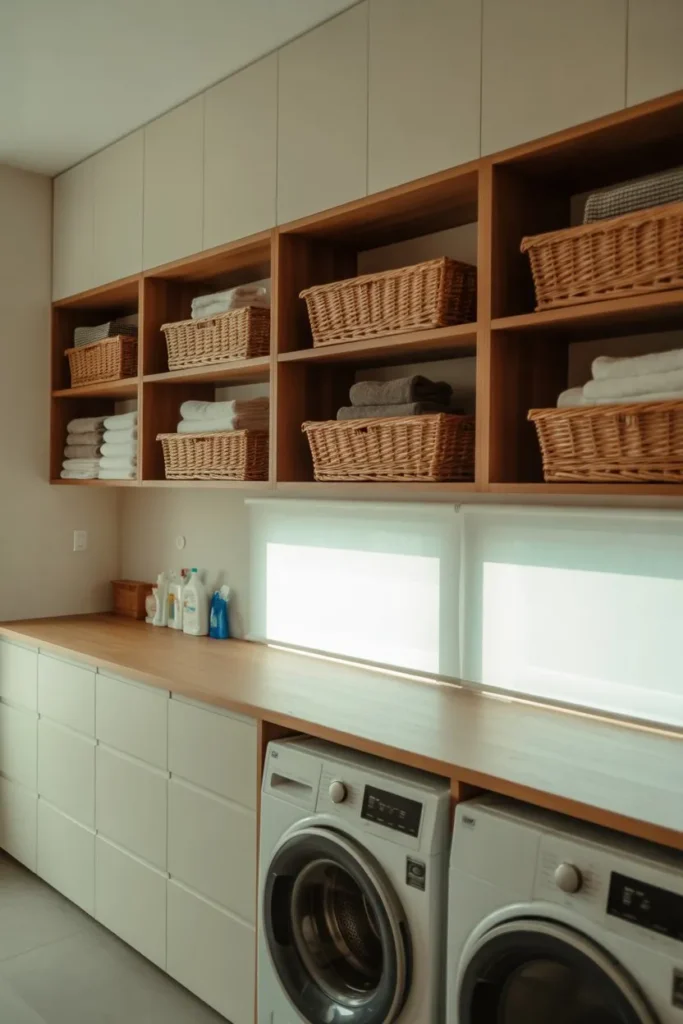
A balanced combination of open shelving and closed cabinets creates both accessibility and visual control. Open shelves keep everyday items within reach, while closed cabinets hide bulk storage and reduce visual clutter.
The key is placement—frequently used items should be on open shelves at eye level, while less-used supplies stay behind closed doors. This layout keeps the space practical without looking messy, making it easier to maintain a clean and organized environment over time.
18. Laundry Room with Under-Counter Appliance Layout
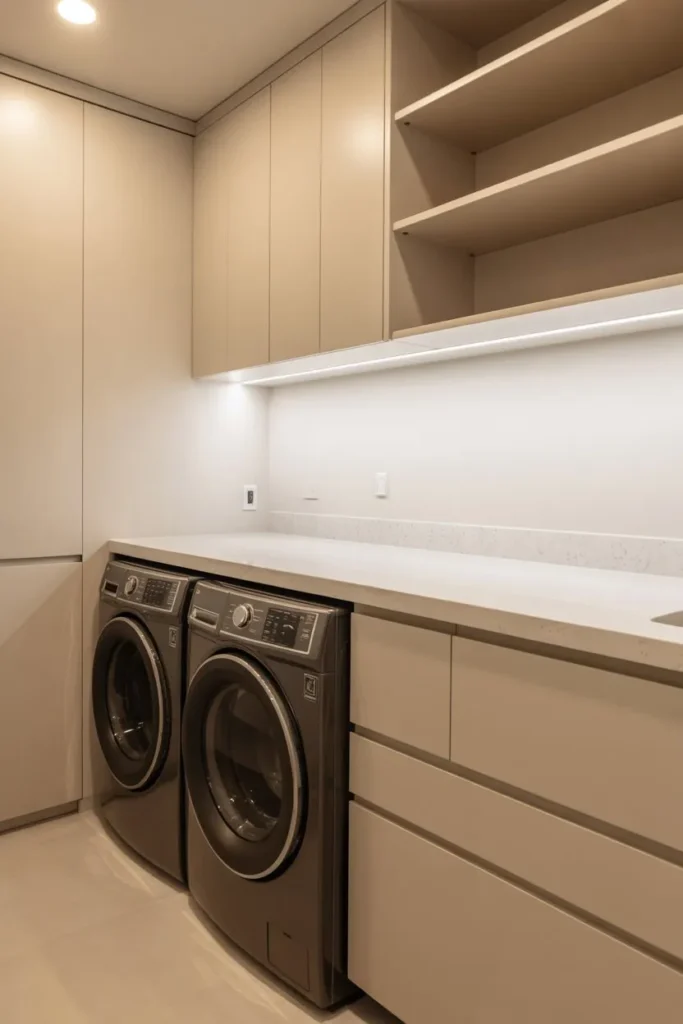
Placing appliances under a continuous counter creates a clean, uninterrupted work surface that improves both function and appearance. This layout allows you to handle washing, drying, and folding in one compact zone.
It also helps maintain a streamlined look, especially in modern homes where minimal design is preferred. The counter above becomes a central workspace, reducing the need to move between areas and making daily tasks more efficient.
19. Laundry Room with Dedicated Hanging Area Layout
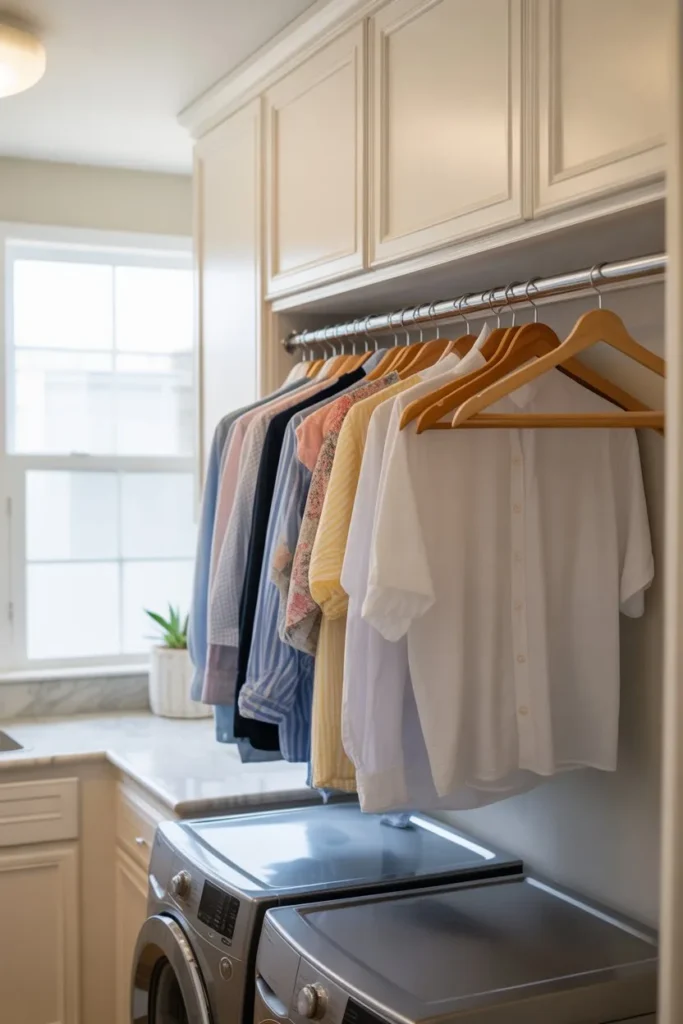
Including a hanging area is essential for a complete and efficient laundry layout. It provides a designated space for air-drying clothes, reducing the need to use other rooms or temporary setups.
Positioning the rod near the washer or sink makes the process more convenient. This layout improves workflow by keeping all laundry-related tasks in one place, making the room more functional and organized.
20. Laundry Room with Compact All-in-One Layout
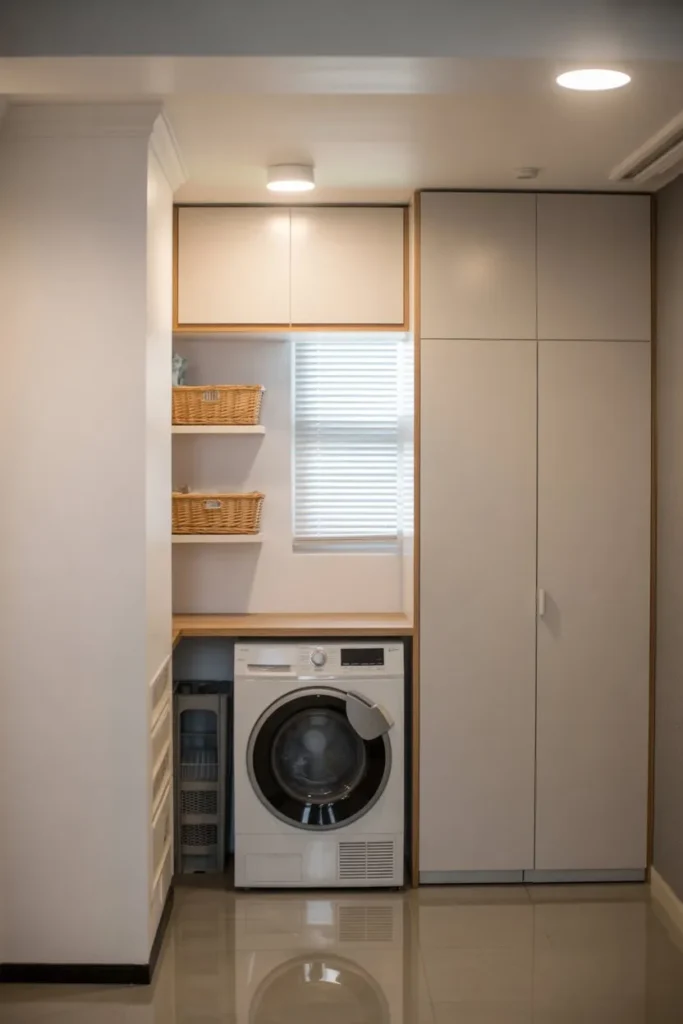
In very small spaces, an all-in-one washer-dryer unit can simplify the layout significantly. This setup reduces the number of appliances while still maintaining functionality, making it ideal for apartments or tight areas.
The extra space can then be used for storage or a small work surface. This layout focuses on simplicity and efficiency, ensuring the room remains functional without feeling overcrowded.
21. Fully Optimized Laundry Room Layout
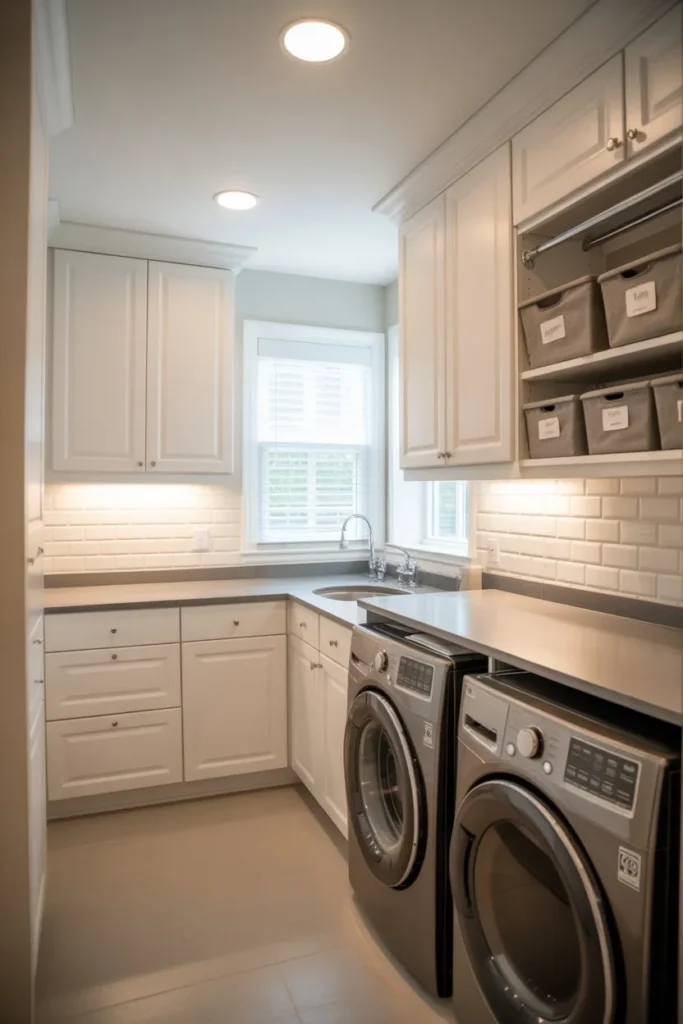
A fully optimized layout combines all essential elements—efficient workflow, smart storage, proper spacing, and functional zones. Each component should be placed with intention, ensuring that movement is smooth and tasks flow naturally from one step to the next.
The goal is to create a space where everything has a purpose and nothing feels out of place. When designed correctly, the laundry room becomes more than just a utility area—it becomes an organized, efficient workspace that supports daily routines effortlessly.
Conclusion
The best laundry room layout ideas focus on efficiency, organization, and smart use of space. By combining proper appliance placement, effective storage solutions, and clear workflow zones, you can create a space that supports your daily routine with ease. Small design improvements can have a big impact when planned correctly. With the right layout, your laundry room can become a functional, organized, and stress-free environment.