12 Waterfall Layers Haircuts
Introduction
If your hair falls flat no matter how much you style it, waterfall layers haircuts could be the transformation you have been waiting for. These cascading cuts stack feather-soft layers so each one melts into the next, giving you movement, bounce, and shape without losing a single inch of length. Unlike choppy shag cuts, waterfall layers are seamless and polished, flattering nearly every face shape and texture. They also take layered hairstyles for medium hair to a whole new level of red-carpet elegance. Below are 12 wearable versions — long and dramatic, shoulder-skimming, curly, fine, and thick — with honest advice on what to ask your stylist for.
Classic Long Waterfall Layers
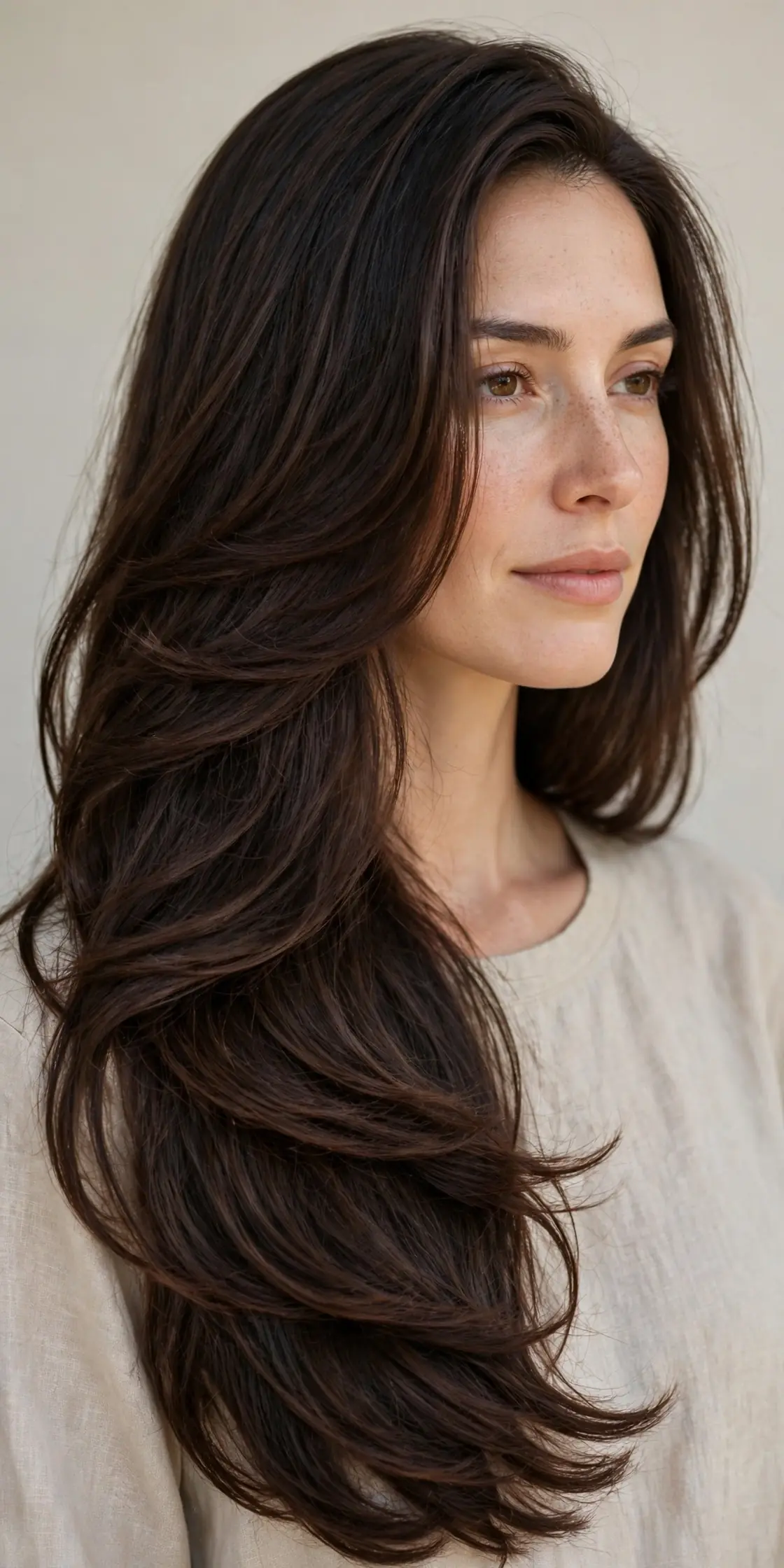
This is the signature waterfall look — long, seamless layers beginning at the collarbone and tumbling down your back. Each layer is cut slightly shorter than the one beneath it, so your hair never sits in one heavy block; instead, it swings and moves every time you turn your head. It suits almost every face shape: the longest face-framing pieces start at or below the chin, lengthening round faces and softening strong jawlines. Medium to thick hair carries it best, though sleek straight hair wears it beautifully too. If your hair is very fine, your stylist can concentrate the layering at the ends to keep a full perimeter.
- Ask for blended layers that begin at the collarbone, not the chin, to protect fullness.
- Blow-dry with a large round brush, flicking the ends outward for that signature waterfall flip.
- Smooth a pea-sized amount of serum through the mid-lengths and ends while hair is damp.
- Refresh second-day hair by curling just the face-framing pieces away from your face.
At the salon, ask for long, blended layers with the shortest pieces no higher than your collarbone — say “waterfall, not shag,” so your stylist keeps everything seamless rather than choppy. Styling at home is simple: rough-dry until about 80 percent dry, then finish with a round brush for polish, or scrunch in a light mousse and air-dry for soft waves. A shine spray on the ends makes the layers catch the light like moving water. Book trims every 10 to 12 weeks so the ends never thin out, and use a weekly deep-conditioning mask to keep long layers silky and split-end free. Sleeping on a silk pillowcase reduces friction, so the layers stay smooth and tangle-free.
Waterfall Layers with Curtain Bangs
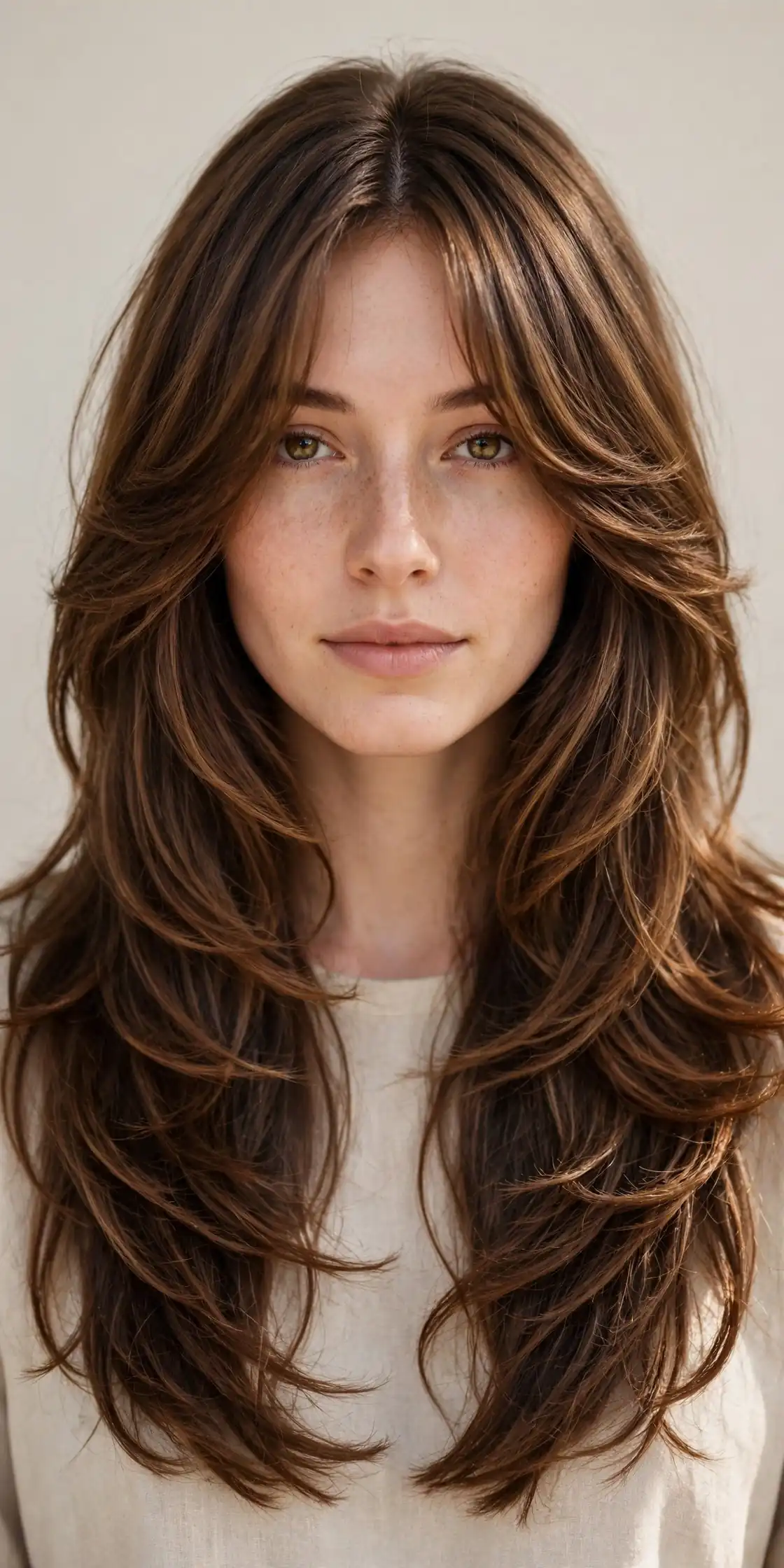
Curtain bangs and waterfall layers were made for each other. The bangs part softly in the middle and melt into the cascading layers at your cheekbones, framing your face from every angle. This pairing suits round, square, and oval faces, since the diagonal lines of the bangs slim wider cheeks and soften a strong jaw. It works on straight, wavy, and loosely curled textures, and thicker hair carries the bangs beautifully since there is plenty of density to share. If your hair is fine, ask for wispy curtain bangs so your lengths stay full. The result is romantic and endlessly wearable — the kind of cut that looks good air-dried or fully styled.
- Part bangs down the middle and blow-dry them forward with a small round brush.
- Roll the bangs away from your face on a velcro roller while they cool for lasting lift.
- Trim the bangs every six to eight weeks so they never fall into your eyes.
- Tuck one side behind your ear for an easy, asymmetrical everyday look.
Ask your stylist for curtain bangs whose longest pieces blend directly into your face-framing layers — nothing blunt or disconnected. Style the bangs first while they are damp, since they dry fastest and set in whatever shape they dry in. When you reach for hot tools, protect your hair first: the American Academy of Dermatology advises limiting heat styling and always using a heat protectant before blow-drying or flat-ironing. A light texturizing spray adds airy separation, and a silk pillowcase keeps the bangs smooth overnight. Book a quick bang trim between full appointments to keep the whole style looking intentional.
Shoulder-Length Waterfall Haircut

Who says waterfall layers need waist-length hair? This shoulder-skimming version delivers all the cascade and movement in a practical, swingy length that never feels heavy. Layers start at the chin and flow just past the shoulders — wonderfully flattering for round faces, since the vertical lines elongate. It is a dream cut for fine to medium hair, because the stacked layers create the illusion of density and bounce that one-length cuts simply cannot. Oval and heart-shaped faces wear it beautifully too. If you are growing out a bob or want long-hair drama without the upkeep, this is your sweet spot — polished for the office, playful for the weekend.
- Ask for layers that begin at the chin so the cascade stays visible at this length.
- Create soft bends with a flat iron, alternating the direction for natural movement.
- Boost volume by blow-drying the roots upward with a medium round brush.
- Finish with a flexible-hold hairspray to keep the layers separated all day.
Tell your stylist you want a shoulder-length cut with waterfall layering through the mid-lengths and ends — not a blunt bob with a few layers on top. At home, this length styles in under fifteen minutes: a quick round-brush blowout or a few flat-iron bends is all it takes. A volumizing mousse at the roots keeps the crown from falling flat. Schedule trims every eight to ten weeks to maintain the shape; this cut grows out gracefully into a long layered style, so you can stretch appointments while deciding whether to grow it longer. A lightweight shine mist on dry hair adds that final polished touch before you head out the door.
Cascading Waterfall Layers for Curly Hair
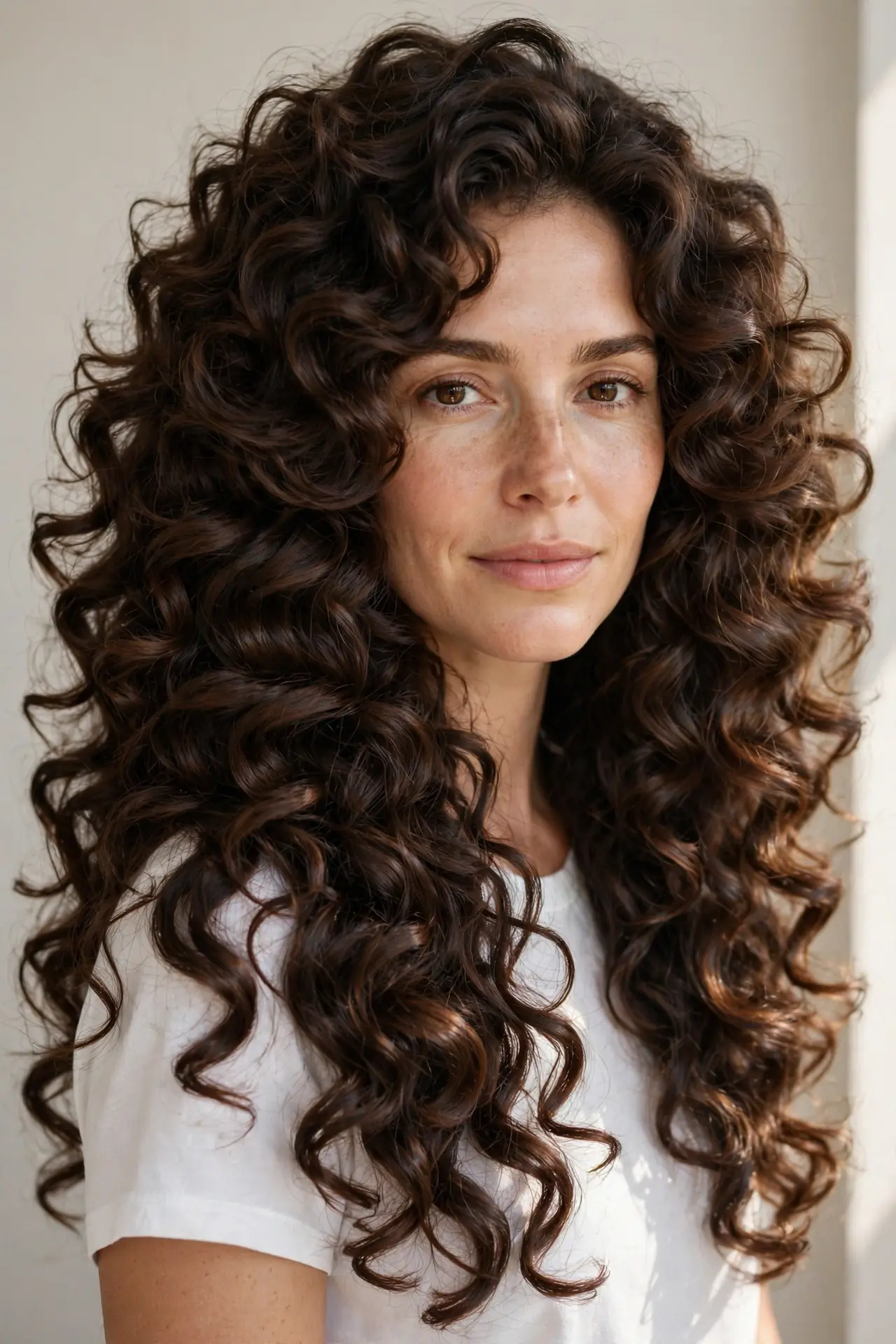
Curly hair and waterfall layers are a match made in heaven. Long, rounded layers let each curl spring up to its natural shape instead of being dragged down by weight, which means more definition, more bounce, and no dreaded triangle silhouette. It suits curl types from loose 2C waves to tight 3C coils, and flatters every face shape — shorter pieces up top for lift, longer ones below for length. If your curls tend to expand outward, ask for layers that are longer on the sides to keep the shape elongated. The cascade effect is gorgeous on curls, since each layer catches the light differently.
- Request a dry cut or curl-by-curl cutting so each layer lands exactly right.
- Scrunch curl cream into soaking-wet hair, then diffuse on low heat for definition.
- Pineapple your hair at night to protect the layers while you sleep.
- Refresh flattened curls by misting with water and re-scrunching with a dab of gel.
At the salon, bring photos and be specific: you want long, cascading layers cut into your curl pattern, never razor-thinned, which can cause frizz. Your at-home routine matters as much as the cut — hydrate with leave-in conditioner, define with cream or gel, and diffuse or air-dry hands-free. Trims every 12 to 16 weeks keep the shape intact; curly layers grow out softly, so you will not see harsh lines between appointments. Between cuts, a monthly deep-conditioning treatment keeps every layer bouncy and frizz-free. Resist the urge to brush dry curls — finger-detangling with conditioner in the shower protects the layer definition you paid for.
Weightless Layers for Fine Hair

Fine hair can look limp and stringy with the wrong cut — but the right waterfall layering does the opposite. By removing hidden weight through the mid-lengths while keeping the perimeter full, this version gives fine hair the illusion of density and movement it usually lacks. It suits straight and slightly wavy fine hair best, and it flatters oval, heart, and long face shapes by adding width where you want it. The key is restraint: a few well-placed long layers create swing without sacrificing thickness. If your hair is fine but dense, this cut is pure magic — light, bouncy, and full of life.
- Ask for long, minimal layers and a blunt-ish perimeter to fake thickness.
- Apply volumizing mousse to damp roots before blow-drying for lasting lift.
- Blow-dry upside down for two minutes to build volume at the crown.
- Sprinkle dry shampoo at the roots on day two to keep the layers airy.
Tell your stylist you want “invisible” or interior layers — weight removed from inside the cut without visible layer lines. Avoid razors and heavy thinning shears, which can make fine ends look frayed. Style with lightweight products only; heavy oils and creams will collapse the layers. A root-lifting spray plus a round-brush blowout gives you that bouncy waterfall movement in minutes. Trim every eight weeks to keep the ends looking thick and healthy — fine hair shows damage fastest, and fresh ends make the whole cut look fuller. Use a volumizing shampoo and skip heavy conditioners at the roots, since buildup flattens fine layers fast.
Waterfall Layers with Face-Framing Highlights
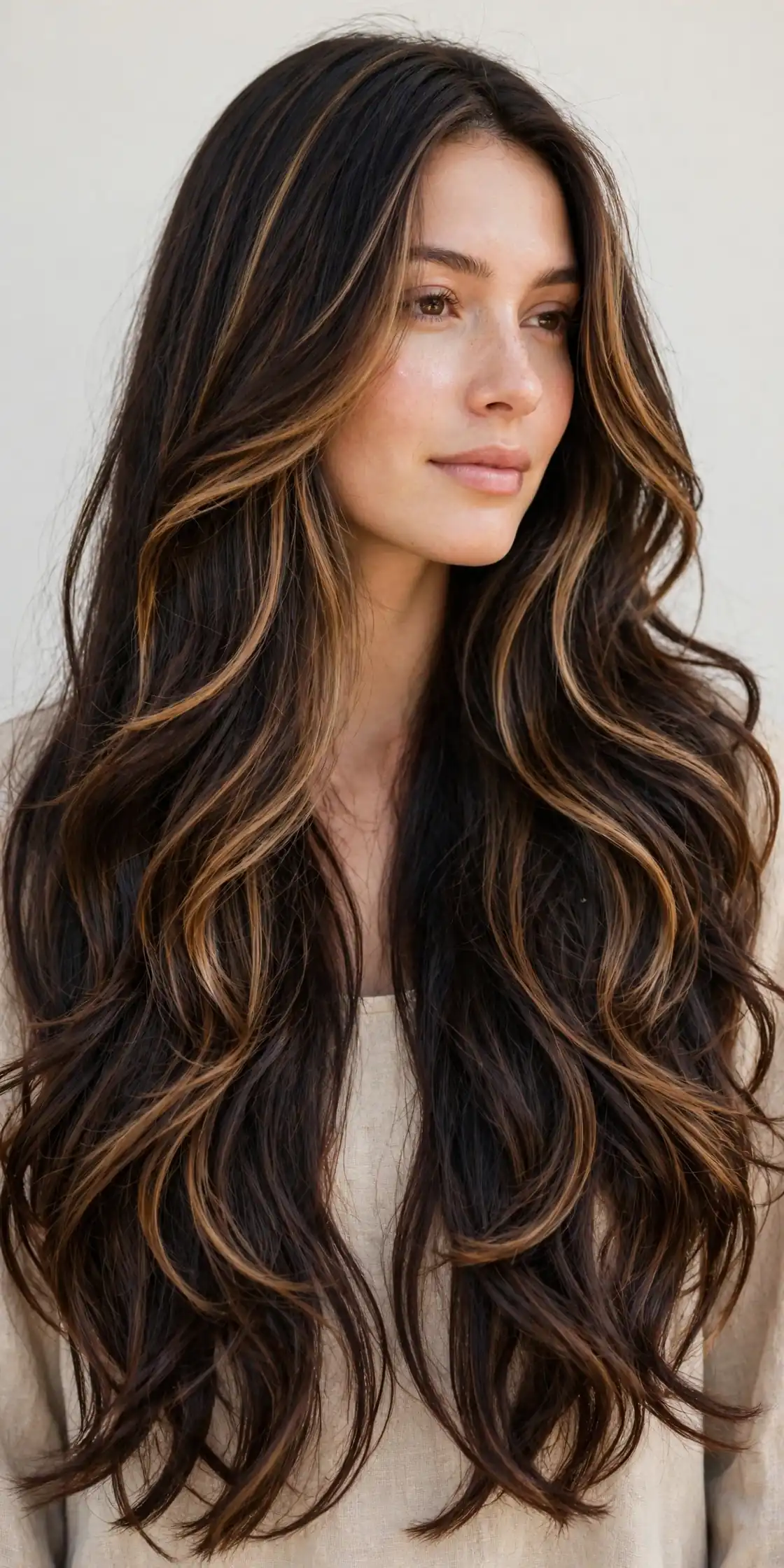
Color takes waterfall layers from beautiful to breathtaking. Strategically placed face-framing highlights — sometimes called a money piece — trace the cascading layers around your face, making every layer pop with dimension. This works on brunettes, blondes, and redheads alike; caramel and honey tones melt gorgeously into brown bases, while babylights brighten blonde layers. Wavy and straight textures show off the color best, since the smooth surface reflects light and makes each highlight glow. It suits every face shape because the brightness draws the eye exactly where you want it. If you have never colored your hair, this is the gentlest entry point.
- Ask for balayage or babylights concentrated on the face-framing layers.
- Use a color-safe, sulfate-free shampoo to keep the highlights vibrant.
- Apply a weekly glossing treatment to maintain shine between salon visits.
- Style with loose waves to show off the dimensional color in the layers.
At your color appointment, ask for hand-painted highlights that follow your layers — foils placed only on the pieces that frame your face and cascade down. Keep the base close to your natural color for soft grow-out. At home, wash less often and always with lukewarm water, since hot water fades color faster. A purple shampoo once a week keeps blonde highlights bright, while a clear gloss revives brunette tones. Refresh the highlights and trim the layers at the same appointment every 10 to 12 weeks. A heat protectant is non-negotiable on colored layers, since hot tools fade fresh highlights faster than anything else.
Waterfall Layered Haircuts with Side-Swept Bangs
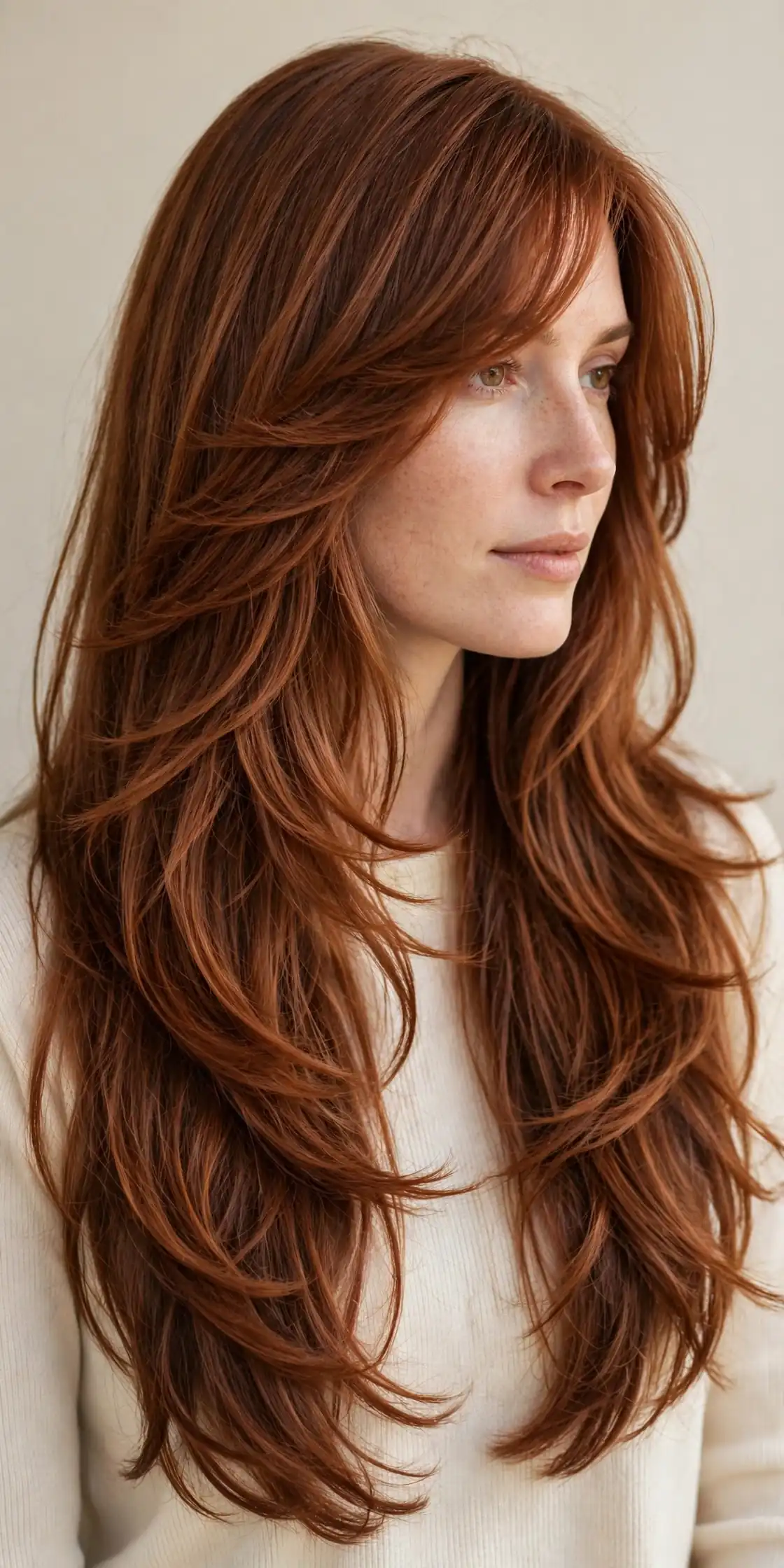
Side-swept bangs add a touch of effortless old-Hollywood glamour to waterfall layers. Swept diagonally across the forehead, they create a beautiful asymmetric line that flows right into the cascading layers — no harsh disconnect, just one smooth waterfall of hair. This pairing is especially flattering for square and round faces, since the diagonal sweep breaks up width and softens angles. It works beautifully on medium to thick hair in straight or wavy textures, and it is perfect if you want forehead coverage without committing to full bangs. The result feels polished and feminine, with a hint of red-carpet drama every time you move.
- Sweep bangs to your preferred side while damp so they train in that direction.
- Blow-dry the bangs with a round brush, curving them away from your face.
- Blend the bangs into the layers by styling them with the same round-brush flick.
- Pin the bangs back with a pretty clip on days you want them off your face.
Ask your stylist for long side-swept bangs that start at the cheekbone and melt into your shortest layer — nothing shorter than your cheekbones, or they will not sweep properly. Style them immediately after washing while they are still damp, since bangs set quickly. A tiny flat-iron pass tames cowlicks, and a light hairspray mist holds the sweep. Trim the bangs every six to eight weeks; the layers themselves need attention only every 10 to 12 weeks. Growing them out is painless — they simply become another face-framing layer. Keep a mini flat iron handy for quick touch-ups — one smooth pass in the morning sets the sweep for the entire day.
The Long Bob Waterfall

The lob gets the waterfall treatment in this collarbone-grazing cut — all the movement of long layers, none of the maintenance. Interior layering keeps the silhouette sleek while the ends flick and swing with every step. It is one of the most flattering choices for round faces, because the length below the chin elongates, and the layers add width-free volume. Fine to medium hair wears it best; very thick hair may need extra debulking so the shape does not widen at the bottom. If you love waterfall layers but live a low-maintenance life, this polished lob delivers the look in a wash-and-go package.
- Ask for a lob that grazes the collarbone with invisible interior layering.
- Create effortless bends by waving random sections with a flat iron.
- Tuck one side behind your ear to show off the layered shape.
- Mist with a texturizing spray for piece-y, lived-in movement.
Tell your stylist you want length at the collarbone with waterfall-style layers carved into the interior — the outline should stay clean while the inside moves. Styling takes minutes: air-dry with a wave-enhancing cream, or add a few flat-iron bends for polish. Because the shape is precise, book trims every six to eight weeks to keep the perimeter sharp and the layers bouncy. The grow-out is graceful — skip one appointment and you are heading toward the shoulder-length version above, with no awkward phase. A pea-sized drop of smoothing oil on the ends gives the lob that expensive, salon-fresh finish every single day.
Debulked Layers for Thick Hair

Thick hair is a blessing — until it turns into a heavy, shapeless curtain. This version of waterfall layers is all about strategic weight removal: long cascading layers carved through the interior so your hair moves instead of sitting like a helmet. It suits coarse, dense, straight, wavy, or curly hair, and it flatters every face shape because the stylist can place the layers exactly where bulk needs to disappear. The difference is dramatic: hair that took an hour to blow-dry suddenly styles in twenty minutes. If your hairdresser reaches for thinning shears with relief, this cut was made for you.
- Ask for weight removal through the interior, not just shorter layers on top.
- Apply a smoothing cream to damp hair to tame bulk before blow-drying.
- Blow-dry in sections with a paddle brush for a sleek, swingy finish.
- Sleep on a silk pillowcase to keep thick layers smooth and frizz-free.
Be clear at the salon: you want the bulk taken out while keeping your length — ask for long layers with the weight removed underneath, and make sure your stylist does not over-thin the ends, which causes frizz. At home, section your hair for blow-drying; thick hair styled in one go never dries evenly. A smoothing serum on the ends keeps the cascade polished. Trim every 10 to 12 weeks to maintain the shape — thick hair grows out well, but the layers lose their swing as the weight returns. Detangle wet hair with a wide-tooth comb, since thick hair is most fragile when fully saturated.
Cascading Layers with a Blunt Perimeter

This is the cool-girl hybrid: a sharp, blunt bottom edge with waterfall layers hidden through the interior for secret movement. From the front, your hair looks thick, sleek, and one-length; from the side and back, the cascading layers create movement and texture that a truly blunt cut never could. It suits straight and slightly wavy hair best, since the contrast shows most on smooth textures, and it flatters oval and square faces with its clean, strong lines. If you love blunt-cut thickness but find it boring, this gives you the best of both worlds — fullness at the ends, waterfall flow everywhere else.
- Ask for a blunt perimeter with long interior layers carved underneath.
- Blow-dry sleek with a paddle brush to show off the sharp bottom edge.
- Run a flat iron over the ends for a glass-like, polished finish.
- Flip your part occasionally to keep the crown from lying flat.
Ask your stylist to keep the outline blunt and even while building the waterfall layers strictly inside the cut — the magic is invisible from the front. This style demands healthy ends, since a blunt perimeter shows damage instantly — use a heat protectant every time you style. Styling is straightforward: a sleek blowout or flat-iron pass is all it needs. Trim every eight weeks to keep the edge crisp — a blunt perimeter grows out into softness fast, so stay on schedule. Run a shine serum through the mid-lengths before events — light reflecting off the blunt edge looks incredibly luxurious.
Effortless Layers for Wavy Hair

If you were blessed with natural waves, waterfall layers will make you wonder why you ever fought them. The cascading layers enhance your wave pattern instead of weighing it down, creating that coveted beachy texture with almost zero effort. This suits 2A to 2B waves best, and it flatters every face shape because the waves themselves do the face-framing work. It is the ultimate low-maintenance cut — air-dry and go — yet looks intentionally styled. Fine wavy hair gains body, thick wavy hair loses bulk, and everyone gets movement. This is the haircut for women who want polish in ten minutes flat.
- Scrunch a wave-enhancing cream into damp hair and air-dry for natural texture.
- Twist random sections while damp to encourage more defined waves.
- Diffuse on low heat for five minutes when you want extra volume.
- Break up the waves with your fingers — never a brush — to avoid frizz.
Ask your stylist for long layers that follow and enhance your natural wave pattern, with face-framing pieces cut to your cheekbones. The less you do at home, the better this cut looks: wash, scrunch in product, and let the air do the work. A sea-salt spray adds gritty texture on second-day hair, and a silk scrunchie protects the waves overnight. Trim every 10 to 12 weeks to keep the ends from thinning — wavy layers grow out beautifully, so maintenance is wonderfully forgiving. A light-hold mousse scrunched into dry hair on day two revives the waves without weighing the layers down.
Extra-Long Cascading Waterfall Layers

For the length-obsessed, this is waterfall layering at its most dramatic — hair flowing past the waist with layers cascading like an actual waterfall. The U-shaped hemline keeps the ends looking thick while the layers create breathtaking movement, so very long hair never looks like a flat curtain. It suits thick, healthy hair best, though fine hair can wear it too if the layers stay long and minimal. Every face shape works here, since the extreme length frames and flatters everything beautifully. Fair warning: this is a real commitment, but the payoff is hair that turns heads in every single room you enter.
- Ask for a U-shaped hemline with long cascading layers through the lengths.
- Detangle gently from the ends upward with a wide-tooth comb to prevent breakage.
- Braid loosely at night to protect the layers and wake up with soft waves.
- Apply a leave-in conditioner to the ends daily to keep them hydrated.
Tell your stylist you want to keep every inch while adding waterfall layers that start no higher than your chest — the goal is movement, not shorter hair. At home, treat your lengths like delicate fabric: gentle detangling, minimal heat, and regular deep-conditioning masks. Dust the ends every 12 weeks — a micro-trim that removes splits without losing length. The grow-out is the easiest of all: the layers simply get longer and more dramatic with time, so this cut practically maintains itself. Invest in a quality leave-in treatment with heat protection — very long hair endures more daily stress than you realize.
Conclusion
Whatever your texture or length, there is a version of waterfall layers haircuts that will make your hair look fuller, lighter, and more alive. The magic of this cut is its forgiveness — awkward grow-out phases, flat roots, and heavy ends all disappear inside the cascade. Book a consultation with reference photos from this list and ask your stylist which version suits your face shape and density. If you fell in love with the curly variation, you will adore our guide to long curly haircuts with layers for women, and the medium-length looks pair beautifully with textured modern medium cuts. Your best hair days are the ones where the cut does the work for you — and waterfall layers do exactly that. glass-hair-styling-ideas For a softer, undone finish, our 12 Untamed Wave Hairstyles show how to wear waves without the polish.

One Comment