12 Chin Length Bob Ideas for Fine Hair
Introduction
If your fine hair always seems to lie flat no matter what you try, a chin length bob for fine hair might be the change you’ve been waiting for. Cutting to chin length removes the weight that drags thin strands down, so ends look thicker and the whole style holds more shape and bounce. Below you’ll get 12 tailored bob ideas for delicate hair — from blunt one-length cuts to softly layered versions — plus styling tips, salon wording, and maintenance advice. For more inspiration, browse our roundup of short bob hairstyles for thin fine hair and round faces to see how short cuts flatter delicate strands.
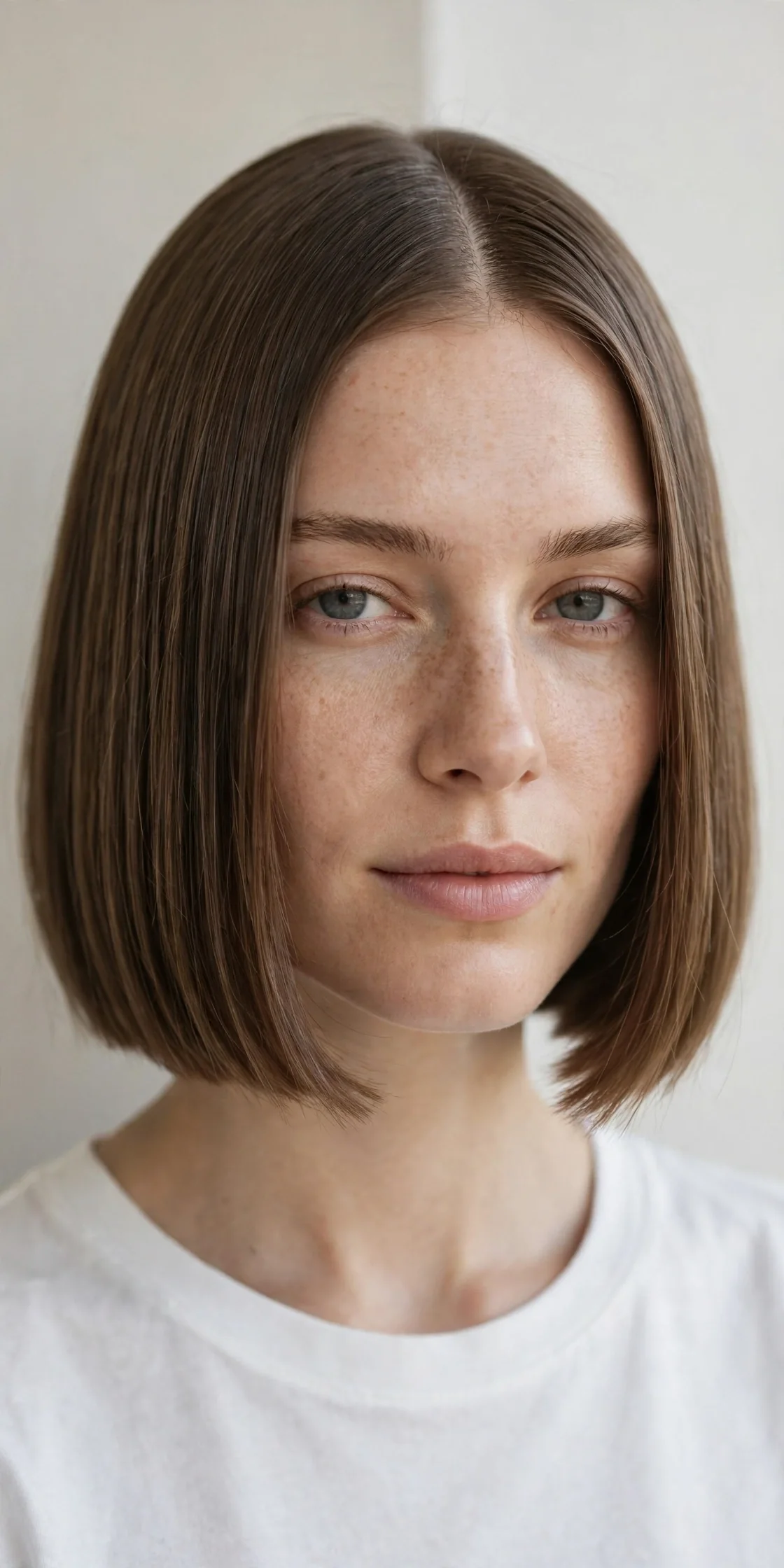
The Classic Blunt Chin Length Bob for Fine Hair
Nothing fakes fullness quite like a blunt perimeter, which is why the classic blunt chin bob remains a top pick when you want a chin length bob for fine hair that looks thicker instantly. Because every strand ends at exactly the same point, the bottom edge reads dense and solid rather than wispy and trailing. This cut suits nearly every face shape: on round faces it creates the illusion of length when worn straight with a middle part, while on oval and long faces it adds welcome width right at the jawline. It works beautifully on naturally straight or slightly wavy fine hair, and the lack of layers keeps daily styling wonderfully simple. If your hair is so fine that layers tend to disappear anyway, the blunt version gives you the boldest, most polished finish.
- Blow-dry hair straight downward using a paddle brush to sharpen the perimeter.
- Apply a pea-sized amount of smoothing cream to tame flyaways without heaviness.
- Create a crisp middle part to make the blunt edge look deliberate and sleek.
- Flat-iron the last two inches with slight inward curve for a tucked, dense edge.
Ask your stylist for a one-length bob that ends right at the chin with zero layers and a razor-sharp baseline. At home, shampoo with a lightweight volumizing line, then blow-dry upside down briefly before finishing with the paddle brush to lift the roots. Book a trim every five to six weeks to keep the line crisp. If you ever grow it out, the blunt edge transitions smoothly into a lob with almost no awkward stage.
The Chin Length Bob for Fine Hair with Feathered Layers

When you want movement without losing density, feathered layers through the mid-lengths give you the best of both worlds. This version of a chin length bob for fine hair keeps the bottom edge nearly full while soft, wispy layers through the top and sides create airy motion that stops the cut from looking blocky. It flatters heart and square faces especially well, since the feathering softens a strong jawline and adds fullness around the temples. The layers are long and blended — nothing choppy — so they catch light at different angles and create the illusion of depth. If your fine hair tends to separate into thin strings, these soft layers help strands clump into fuller-looking ribbons instead.
- Blow-dry with a round brush, lifting sections at the crown for gentle height.
- Apply a volumizing mousse to damp roots before styling to plump the base.
- Scrunch a light texturizing spray into the mid-lengths for soft definition.
- Tuck one side behind the ear to show off the feathered pieces.
Tell your stylist you want long, blended surface layers with the perimeter kept thick at the chin, and ask for the layers to be point-cut rather than sliced so they stay soft. At home, refresh second-day hair by flipping your head and blasting roots with cool air — the layers spring right back. A lightweight dry shampoo at the crown between washes keeps the feathering airy instead of limp. Trim every six to eight weeks, asking the stylist to clean up the baseline first and only re-dust the layers, which keeps the whole shape feeling light without thinning the ends.
The Textured Chin Bob with Side-Swept Fringe

A side-swept fringe changes the whole energy of a chin bob, sweeping attention across the face while the textured ends keep fine hair from falling flat. The fringe adds volume exactly where fine hair often looks thinnest — around the forehead and temples — while the textured perimeter gives the ends a lived-in softness. This cut is lovely on round and oval faces because the diagonal line of the fringe draws the eye across rather than down, and the chin-skimming length keeps everything balanced. It suits straight to wavy fine hair, and the fringe grows out gracefully, blending into face-framing pieces. The overall effect is feminine and effortless, like hair that just happens to fall perfectly.
- Blow-dry the fringe across the forehead, then sweep it to the side while warm.
- Apply a dime-sized amount of styling paste to the ends for piecey texture.
- Tease the crown lightly with a fine comb for lasting lift at the roots.
- Flip the part to the opposite side on day two for instant root volume.
Ask your stylist for a chin-length bob with a long side-swept fringe starting around the cheekbone and soft texture cut into the ends with thinning shears used sparingly. Style the fringe by blow-drying it in the opposite direction first — this builds a natural bend — then sweeping it into place. Mist with a flexible hairspray to hold the sweep without stiffness. Trim the fringe every four weeks between full haircuts to keep it out of your eyes, and ask the stylist to re-texturize the ends every other visit so the perimeter never gets bulky or heavy-looking.
The Inverted Chin-Length Bob with Graduated Back
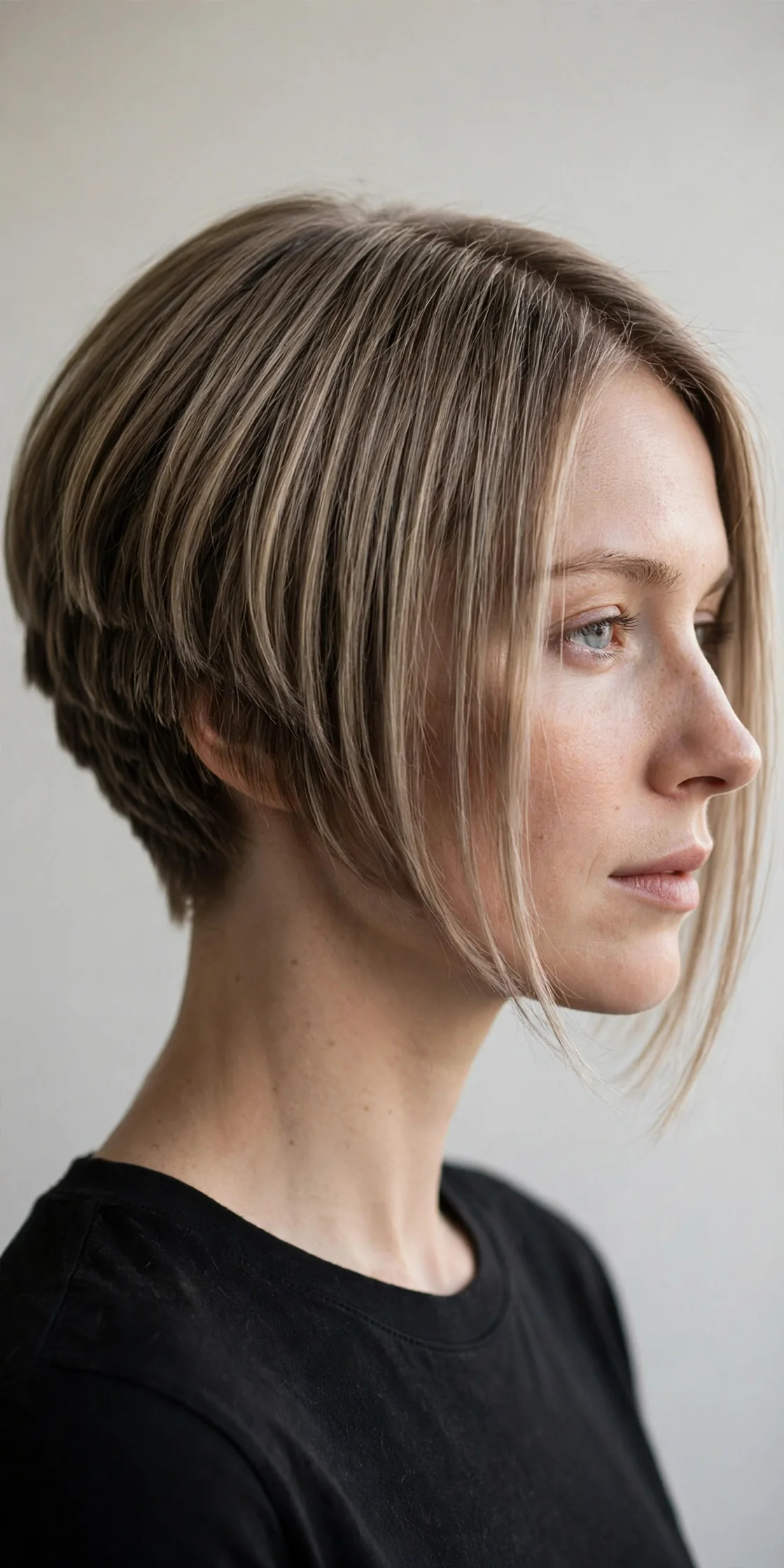
The inverted bob brings drama and automatic fullness to fine hair, with a stacked, graduated back that shortens toward the nape and flows into longer chin-skimming fronts. That graduation creates built-in volume exactly where fine hair needs it most — at the back of the crown — while the longer front pieces frame the face elegantly. It flatters round faces because the angled line draws the eye downward, and it gives oval faces a chic architectural edge. For fine hair, the stacked layers underneath act like a hidden support system, propping up the top layers so they look dramatically thicker. It is the boldest choice on this list, but the payoff in volume is unmatched.
- Blow-dry the back upward and forward to emphasize the stacked graduation.
- Apply a root-lifting spray to damp hair before drying for maximum back fullness.
- Smooth the longer front pieces with a flat brush so they contrast the stacked back.
- Pin one front piece behind the ear to show off the dramatic angle.
Ask your stylist for an inverted bob with graduated stacking at the back that releases into front pieces ending right at the chin, keeping the nape neatly tapered. For at-home styling, rough-dry the hair about eighty percent before refining with a brush, so you don’t flatten the stack. A touch of volumizing powder at the crown back lasts all day without stiffness. Trim every five to six weeks, since the graduated back loses its shape quickly; between cuts, the longer fronts keep the growing nape looking intentional rather than messy.
The Sleek One-Length Chin Bob with Deep Side Part

Sometimes simplicity wins, and the sleek one-length bob with a deep side part proves it. Cutting every hair to one level at the chin creates a graphic, polished line that makes fine hair look decisively thicker, while the deep side part pumps instant volume into the crown. This is a wonderful choice for fine, straight hair that behaves well, and it suits square and oblong faces because the diagonal part softens strong angles. The sleek finish reflects light along a single smooth plane, which reads as density — shiny, unbroken hair always looks thicker than frizzy, separated strands. Wear it tucked behind one ear for a fashion-forward asymmetric moment, or loose for classic polish.
- Blow-dry with a flat paddle brush, directing hair down and slightly forward.
- Apply a silicone-free smoothing serum to damp mid-lengths before drying.
- Create the deep side part while hair is damp so it sets naturally.
- Glide a flat iron over the surface once for a mirror-shine finish.
Ask your stylist for a true one-length cut ending precisely at the chin with a deep side part designed into the crown, no layers at all. For daily styling, the trick is drying the roots in the direction of the part — never fight the natural growth pattern or you’ll lose the volume. Use a boar-bristle brush for the final smoothing pass to distribute natural oils down the shaft, which boosts shine without product weight. Trim every six weeks to keep the baseline razor-crisp; this style only looks expensive when the ends are immaculate.
The Wispy Layered Chin Bob with Curtain Bangs

Curtain bangs paired with wispy layers make a chin bob feel soft, romantic, and fuller than it has any right to be. The curtain bangs open across the forehead like a soft frame, adding density around the face where fine hair can look sparse, while the wispy layers throughout the bob create feathery movement that catches light beautifully. This combination flatters nearly every face shape — the parted bangs balance round faces, soften square jaws, and slim wider foreheads. It’s ideal for fine hair with a slight natural wave, since the layers enhance that texture instead of fighting it. The overall mood is breezy and French-girl effortless.
- Blow-dry curtain bangs with a small round brush, curving each side outward.
- Apply a lightweight heat protectant before any hot styling to prevent breakage.
- Spritz a salt spray into the layers for beachy, airy texture.
- Pinch small sections of the ends with fingers to separate wispy pieces.
Ask your stylist for chin-length layers that are long and wispy rather than choppy, with curtain bangs cut to part at the center and taper down to the cheekbones. Style the bangs by drying them forward first, then splitting them — this prevents an unwanted cowlick gap. Because this cut relies on airy texture, avoid heavy oils that collapse the layers; a mist of dry texture spray on day two revives everything. Trim every six to seven weeks, and have the stylist re-shape the curtain bangs slightly each visit since they grow faster than the rest of the cut.
The Choppy Chin Bob with Piecey Texture

For fine hair that can handle a little edge, the choppy chin bob delivers attitude and the illusion of thickness through deliberate piecey texture. Shorter, jagged layers cut into the ends create separate pieces that stack visually, so the eye reads many points of movement instead of one thin curtain. This cut loves oval and heart-shaped faces, where the choppiness adds playful width, and it works best on fine hair with a bit of natural wave or bend. It’s the wash-and-go hero of this list — the intentional messiness means less precision styling, and slightly undone always looks fuller than over-smoothed on fine hair.
- Towel-dry hair, then scrunch a texturizing cream into the ends while damp.
- Diffuse on low heat to encourage the natural wave and piece separation.
- Pinch individual ends with a tiny amount of wax to define separate pieces.
- Shake the crown upside down to loosen the texture before heading out.
Ask your stylist for a chin-length bob with choppy, point-cut layers through the bottom third and a deliberately uneven perimeter. When choosing styling products for fine, fragile strands, look for dermatologist-backed hair care guidance such as the resources from the American Academy of Dermatology, which explain how gentle handling prevents breakage in delicate hair. At home, this is a low-maintenance cut: air-dry whenever possible, and only touch up with heat once the texture is set. Trim every six weeks, since choppy ends grow out into unevenness faster than blunt ones; ask the stylist to re-carve the texture each time rather than simply taking length off.
The Rounded Chin Bob with Soft Undercut
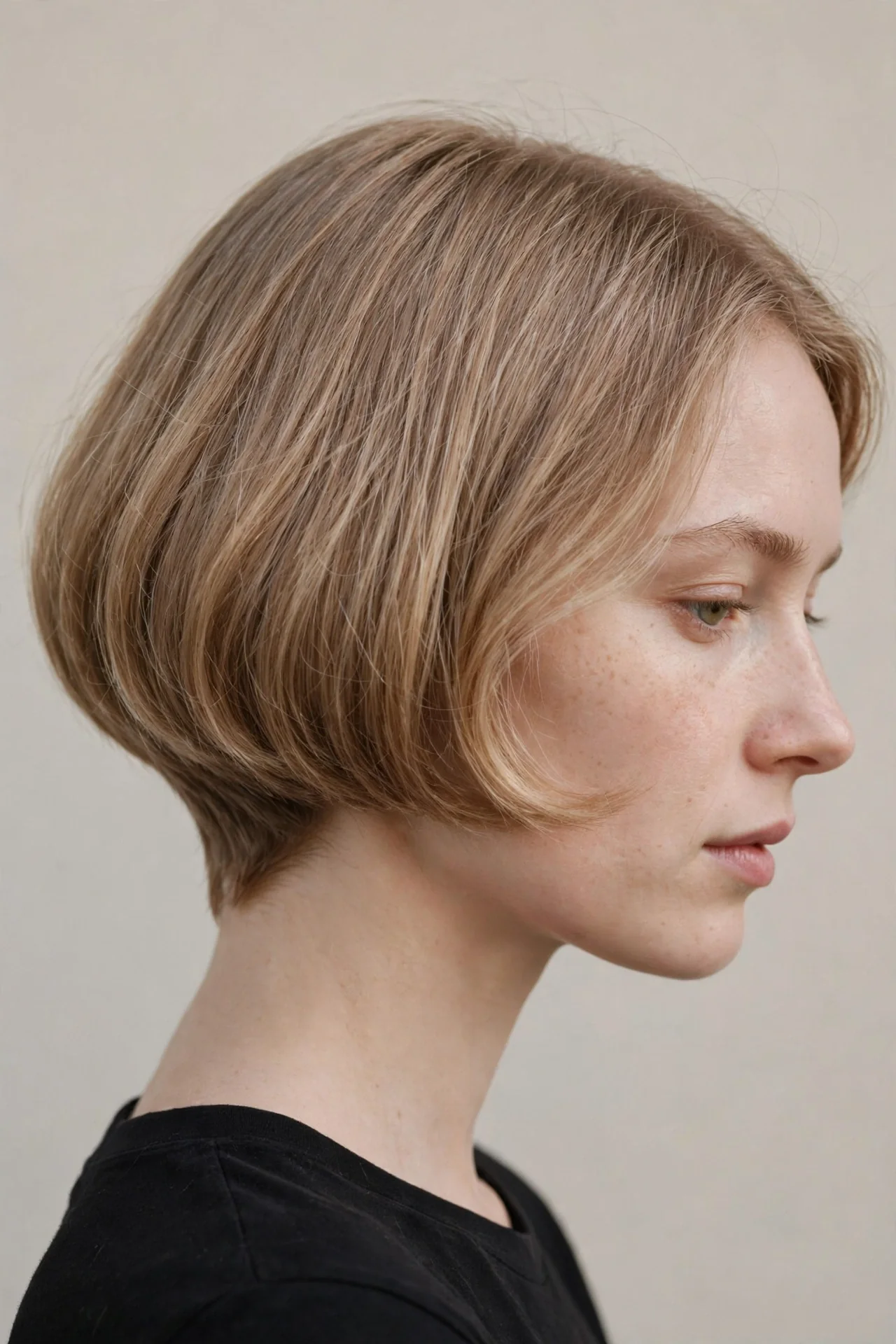
A hidden soft undercut is the secret weapon for fine hair that wants volume without visible layers. By removing a small amount of bulk underneath at the nape, the stylist lets the top layer drape fuller and rounder, creating a beautifully rounded silhouette at chin level. The exterior looks like a classic rounded chin bob — full, curved, and polished — while the interior engineering does all the heavy lifting. It suits round faces wonderfully because the rounded shape mirrors the face without clinging, and it’s a dream for fine, dense-but-delicate hair that puffs out at the sides. Nobody knows the undercut is there; they just notice how full your bob looks.
- Blow-dry with a large round brush, rolling the ends under for the rounded shape.
- Apply a volumizing foam to roots, focusing on the crown and sides.
- Smooth the top layer over the undercut to keep the secret invisible.
- Finish with a cool shot of air to lock the curved silhouette in place.
Ask your stylist for a rounded chin bob with a discreet soft undercut at the nape — not a shaved design, just removed weight — and a full, curved exterior. At home, styling stays simple because the shape is built into the cut: focus on lifting roots and rounding the ends, and the undercut prevents the sides from mushrooming. A pea-sized amount of smoothing balm keeps the surface glossy. Trim every five to six weeks; ask the stylist to tidy the undercut each visit so it never grows out visibly, which would ruin the illusion.
The Chin Bob with Face-Framing Highlights

Color can be just as powerful as cutting when it comes to faking fullness, and face-framing highlights on a chin bob do double duty. Strategically placed lighter pieces around the face catch the light and create visible dimension, so the eye perceives depth and thickness that a single flat color can’t deliver. Keep the base color close to your natural shade and let the highlights be one to two levels lighter for the most believable fullness. This approach flatters every face shape since the brightness draws attention to the eyes and cheekbones, and it works on any fine hair texture. The chin length keeps the color placement precise — with less hair, every highlight placement counts.
- Blow-dry with the face-framing pieces curving slightly away from the face.
- Apply a color-safe leave-in conditioner to protect highlighted strands.
- Use a glossing spray on the front sections to maximize light reflection.
- Tuck both sides behind the ears to let the highlights peek through.
Ask your colorist for soft, blended face-framing highlights — natural-looking lightness one to two levels above your base — plus a chin-length bob cut to maximize the dimension. At home, wash with a sulfate-free color-safe shampoo and deep-condition weekly, since fine highlighted hair is more prone to dryness. Trim every six weeks and refresh the highlights every eight to ten weeks; fine hair shows regrowth quickly around the face, so a toner touch-up between sessions keeps everything seamless.
The A-Line Chin Bob with Angled Fronts
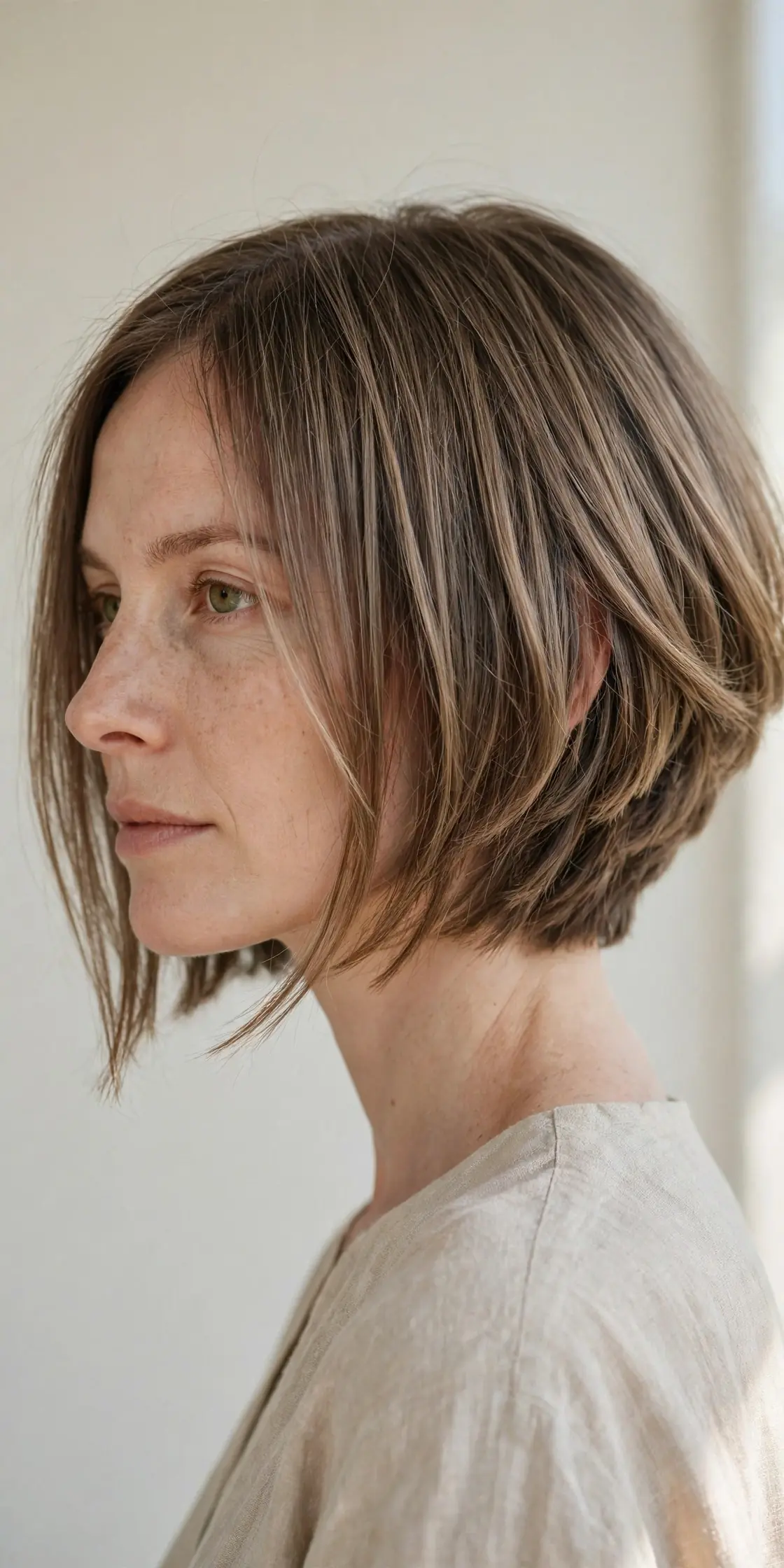
The A-line chin bob brings elegant structure to fine hair, with the back sitting just above the chin and the fronts angling down to kiss the chin or slightly below. That forward slope creates a sleek, elongating line that flatters round and square faces by drawing the eye down, while the shorter stacked back keeps volume high where fine hair flattens. It’s a sophisticated, boardroom-ready cut that still has enough shape to look full rather than severe. Fine, straight hair shows off the angle best, since the clean diagonal line reads as intentional and sharp. If you love a cut with architecture, this one delivers.
- Blow-dry the front sections forward and under to emphasize the angled line.
- Apply a smoothing lotion to damp hair for a sleek, frizz-free finish.
- Create a center or slightly off-center part to showcase the symmetry of the angle.
- Run a flat iron once down the front pieces to sharpen the A-line.
Ask your stylist for an A-line bob with the back cut just above the chin, graduating longer toward the front, keeping the perimeter crisp. Daily styling is straightforward: dry the hair forward and smooth, letting the angle do the visual work. Avoid adding layers, which would break the clean line and thin the angled fronts. Trim every five weeks to maintain the angle — this cut’s precision is its whole appeal, and even half an inch of growth blurs the line. Between cuts, the longer fronts keep everything looking deliberate as the back grows.
The Tousled Chin Bob with Subtle Waves

Subtle waves are fine hair’s best friend, adding instant width and texture that straight fine hair simply can’t muster on its own. This tousled chin bob uses soft, loose waves through the mid-lengths to create a halo of movement, making the hair look significantly thicker while keeping the length at an easy chin skim. It flatters round faces by adding width at the right spot without puffiness, and suits oblong faces by breaking up length. The waves work on naturally wavy fine hair with minimal effort, and on straight fine hair they’re easily achieved with a curling wand or overnight braids. The finish is relaxed and modern — polished without trying too hard.
- Wrap one-inch sections around a one-inch curling wand, leaving the ends out.
- Apply a heat protectant spray before curling to shield delicate strands.
- Tousle the waves with your fingers — never brush them out — for soft texture.
- Mist a flexible-hold spray to keep the waves touchable all day.
Ask your stylist for a chin-length bob with long, subtle layers that support waves, cut slightly textured at the ends so they flip naturally. To style, curl away from the face on each side, then let the curls cool completely before tousling — this sets the wave so it survives the day. Second-day hair often looks even better, so refresh with dry shampoo at the roots and re-curl only the front pieces. Trim every six to eight weeks; waves camouflage regrowth well, making this one of the lowest-maintenance bobs on this list.
The Chin Bob with Tapered Nape and Full Crown

For the ultimate volume illusion, pair a tapered nape with a full, rounded crown and watch fine hair transform. The nape is cut close and tapered so there’s no straggly thinness at the bottom, while the crown is left full and layered to build height that fine hair rarely achieves on its own. This contrast — slim at the neck, full on top — creates the most dramatic fullness of any chin bob. It suits oval and long faces beautifully, since the crown volume balances proportions, and it works on fine hair of any texture. The shape is classic and neat, making it ideal if you want a professional cut that still delivers serious body.
- Blow-dry the crown with a round brush, lifting each section straight up.
- Apply a thickening spray to the crown before drying for extra body.
- Smooth the tapered nape flat with a small brush for clean contrast.
- Backcomb the crown lightly, then smooth the top layer over it for hidden lift.
Ask your stylist for a chin bob with a closely tapered nape and a full, layered crown, keeping the front pieces at chin length for balance. At home, the styling payoff comes from always drying the crown upward — gravity is fine hair’s enemy, so fight it section by section. A dusting of volumizing powder at the crown lasts longer than spray on very fine hair. Trim every five to six weeks, since the tapered nape grows out fastest; keeping it neat is what preserves the whole silhouette, so don’t stretch appointments on this one.
Conclusion
A chin length bob for fine hair is one of the smartest moves you can make for thin strands — it removes the weight that pulls hair flat, creates a denser-looking baseline, and opens up styling options from sleek to tousled. Whether you choose the blunt classic, the stacked inverted version, or the soft feathered take, keep the perimeter full and the roots lifted, and your hair will look noticeably thicker day after day, wash after wash. To compare lengths before you commit, see our guide to hairstyles for thin fine hair, and the related chin length bob hairstyles with bangs shows how fringe transforms this exact cut — then bring your favorite idea to your stylist.


3 Comments