12 Natural Hairstyles
Introduction
There is something powerful about wearing your hair exactly as it grows. These 12 natural hairstyles are all about celebrating your curls, coils, and waves — not hiding them, stretching them out, or tucking them away. If you have ever wondered how to make wash-and-go hair truly defined, how to get a twist-out with real bounce, or how to wear a big beautiful afro with confidence, this guide answers all of that in the next few minutes. Every idea below works with your natural texture, from loose 2C waves to tight 4C coils, and each one comes with practical styling tips you can use at home today. And when the weather turns harsh or you need a rest for your strands, you can always pair these texture-first looks with 12 protective hairstyles for natural hair for extra care.
Wash-and-Go Natural Curls
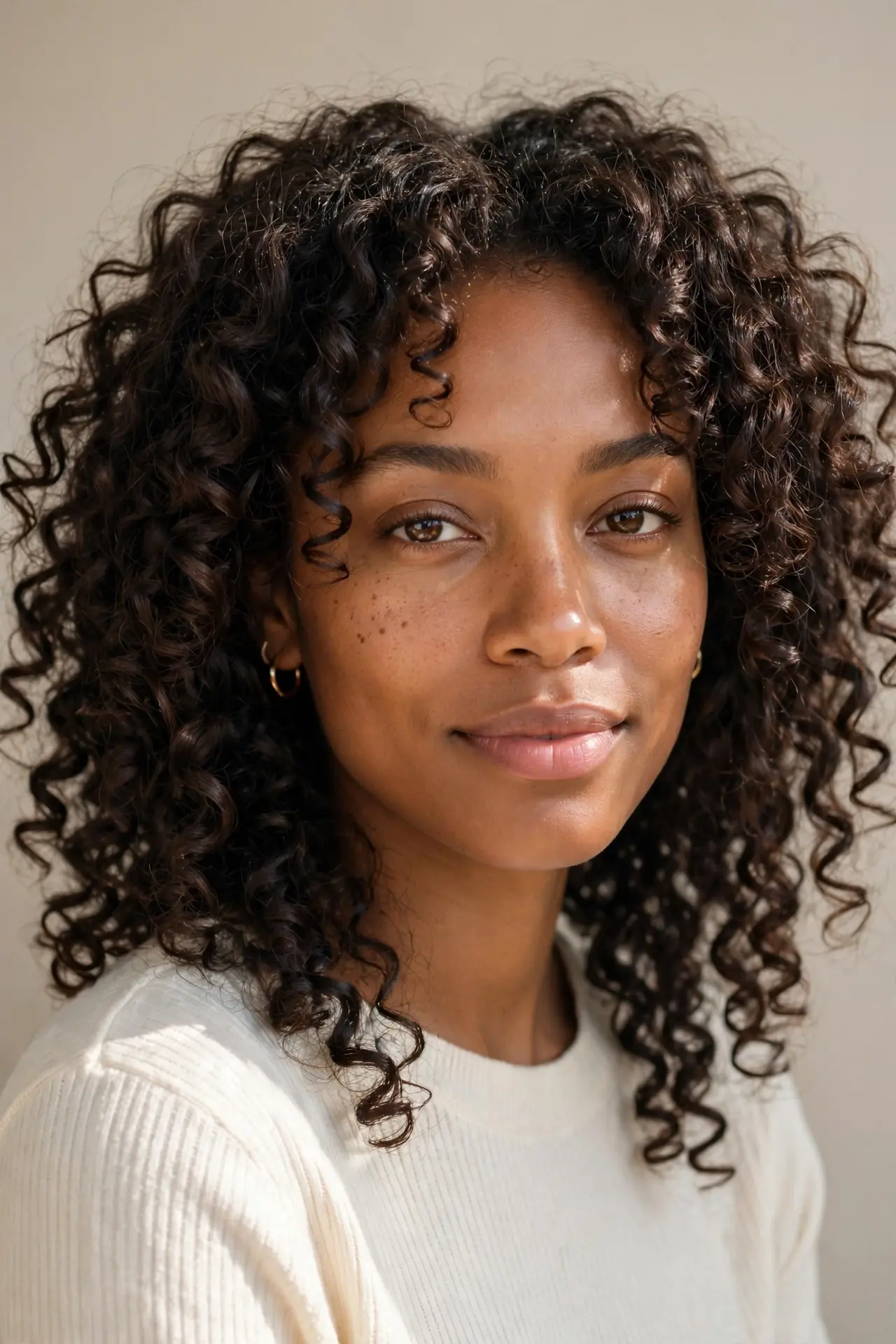
Few things look as effortless and radiant as a wash-and-go that actually worked. This style suits almost every face shape because the natural volume balances your features — oval and round faces especially benefit from the lift at the crown, while longer faces can let the curls fall a little fuller at the sides. It shines brightest on type 3A to 3C curls and even looser 2C waves, where each curl clump gets to do its own thing. What makes it so flattering is the honesty of it: defined curls framing your face look soft, approachable, and full of life, and the shine of freshly styled natural hair catches the light in a way no blowout can. It is also wonderfully low-commitment — you are working with your texture, not against it, so there is no flat iron damage and no daily heat restyling.
- Apply your leave-in and gel to soaking wet hair in sections.
- Rake each section downward with your fingers, then smooth the ends.
- Shake your head gently at the roots to encourage curl separation.
- Diffuse on low heat or air-dry completely before touching the cast.
The practical routine is simple once you nail the order. Ask your stylist for a curly cut on dry hair so the layers fall naturally when your curls spring up — a wet cut often surprises you with shrinkage. At home, clarify monthly with a gentle sulfate-free clarifying shampoo, then deep condition weekly to keep curls hydrated and defined. A leave-in conditioner followed by a curl-defining cream and a hard-hold gel is the classic three-step that locks clumps in place; scrunch out the gel cast once fully dry for soft, touchable curls. Refresh on day two or three by misting with water and smoothing a dab of cream over frizzy sections rather than rewetting the whole head. Trim every 8 to 12 weeks to keep ends from tangling and breaking, since split ends make wash-and-gos look fuzzy instead of defined.
Twist-Out Curls with Maximum Definition
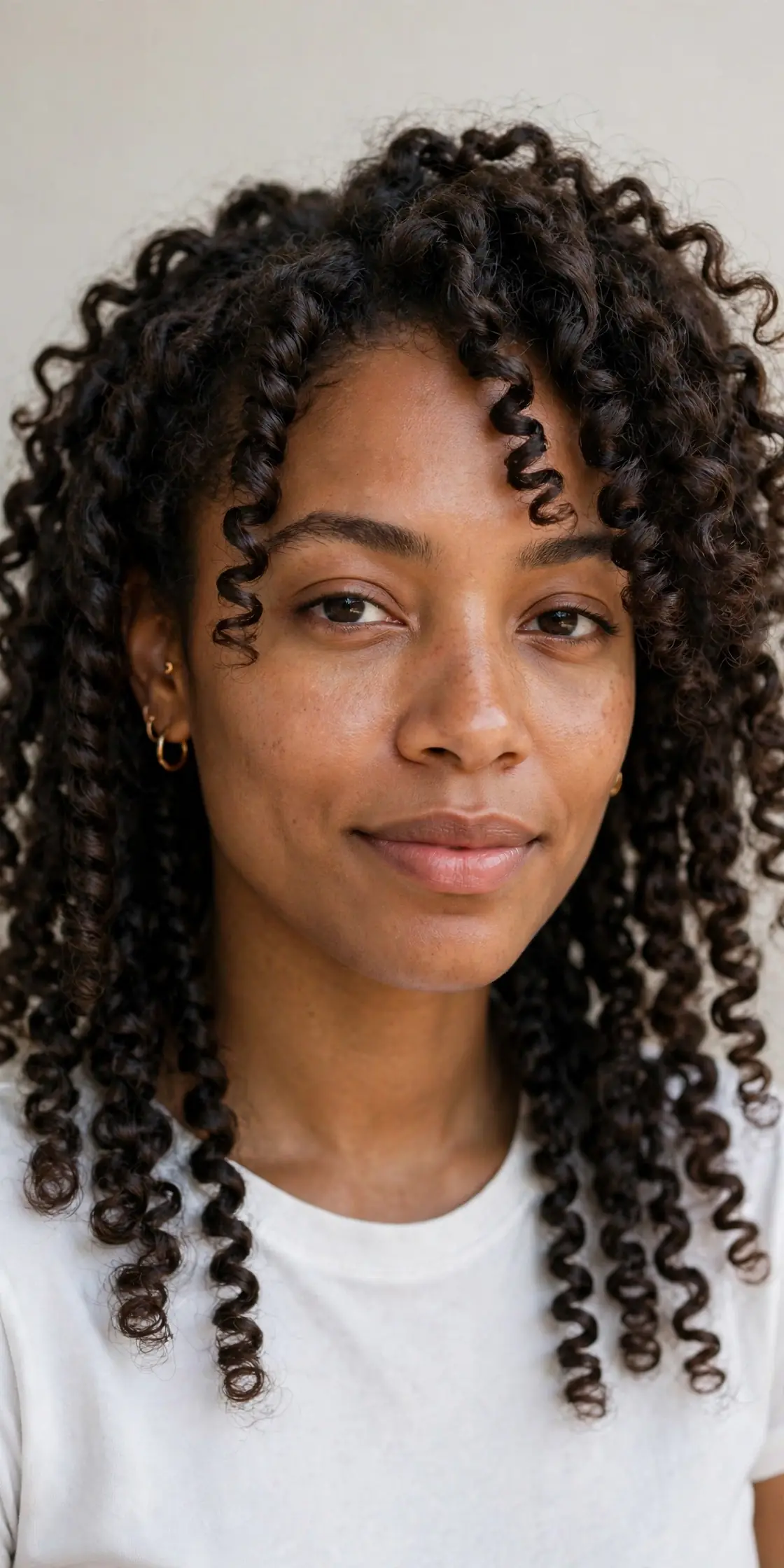
A twist-out gives you the best of both worlds: the control of twisted hair and the freedom of loose curls. This look flatters square and heart-shaped faces beautifully because the widening volume at the ends softens a strong jawline, while oval faces can wear it at any length. It is a standout on 3C to 4A textures, where two-strand twists set into springy, defined spirals — but 3B curls get a gorgeous loose version too. The magic is in the definition: every strand has a place, yet the overall effect is big, romantic, and full of movement. It reads intentional and polished, which makes it one of the most office-and-occasion-friendly ways to wear your natural texture out.
- Twist on damp, stretched hair using a light butter or cream.
- Keep twists small and even for tighter, longer-lasting definition.
- Let twists dry completely — overnight is safest — before unraveling.
- Unravel each twist by pulling the ends apart, never downward.
For the how-to, start on freshly washed, conditioned hair and stretch it lightly — a few loose braids under a hooded dryer for 15 minutes, or a gentle tension blow-dry, keeps 4A-4C hair from tangling during twisting. Ask your stylist for layers that support the silhouette you want: shorter top layers create that rounded, bouncy shape. Use a creamy twist butter rather than a heavy grease so the hair stays pliable, and twist in the direction your hair naturally wants to go to avoid frizz. At night, gather the twist-out into a loose pineapple on top of your head with a satin scrunchie and sleep on a satin pillowcase — it preserves definition for four to seven days. Redo a few flattened twists each morning with a touch of water and cream, and schedule a trim every 10 to 12 weeks to keep the ends clean and the curls popping.
Defined Braid-Out Waves
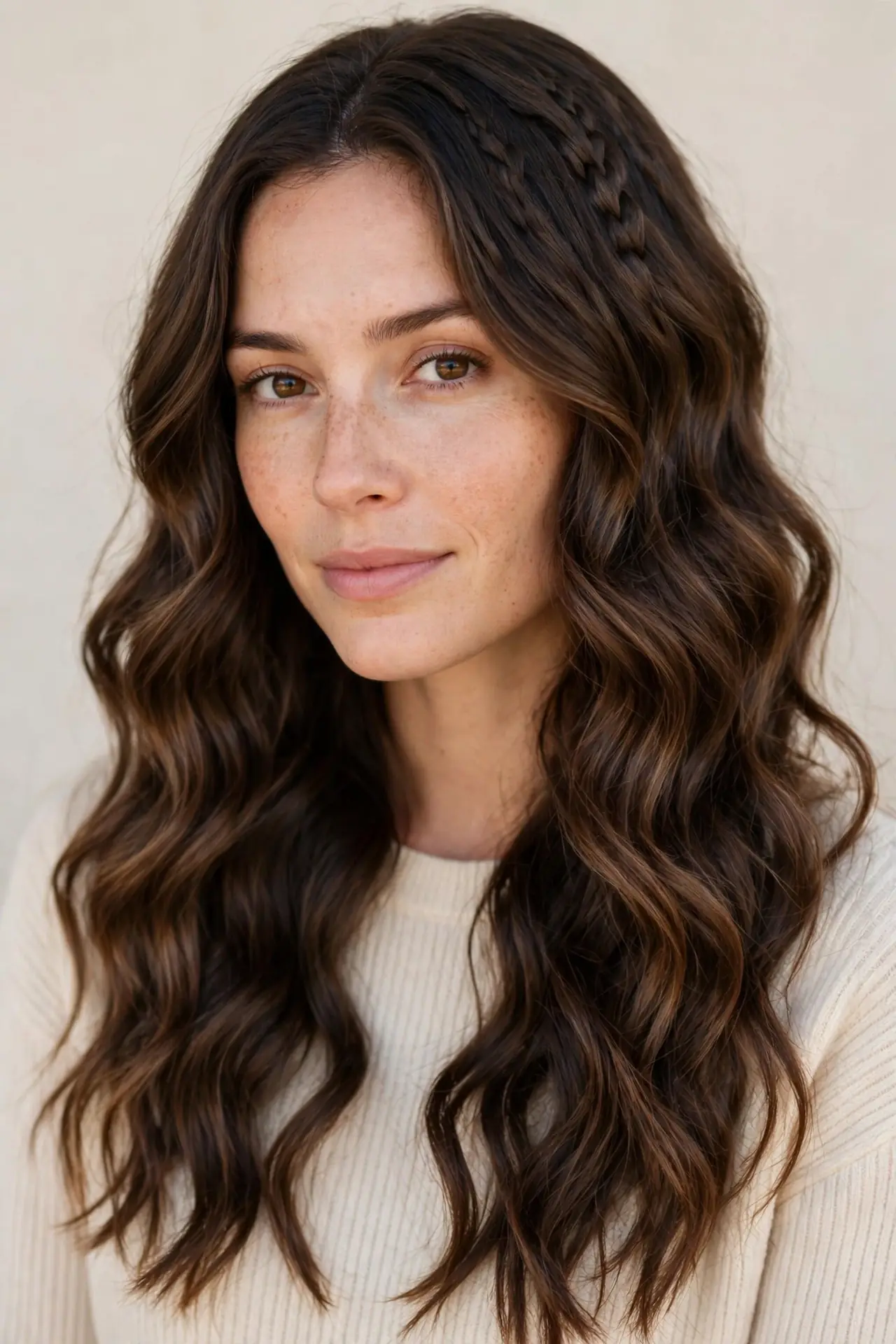
If your texture sits on the wavy-to-loose-curly side of the spectrum, a braid-out creates the kind of soft, touchable waves people usually pay a salon to fake. It is especially flattering on long and oval face shapes because the elongated wave pattern draws the eye downward gracefully, and it adds body to finer textures that can fall flat in a plain wash-and-go. Women with 2C to 3A hair get the most natural-looking results — the waves look like they just happened. There is a beachy, romantic quality to this style that makes it perfect for dates, weekends, and photos; it moves when you move, and it never looks stiff or overdone.
- Braid damp hair in 6 to 10 even plaits for a balanced wave.
- Apply a light mousse or foam before braiding for lasting hold.
- Undo braids only when hair is 100 percent dry to avoid frizz.
- Fluff from the roots with your fingers, not a brush.
The routine starts in the shower: wash, condition, and detangle thoroughly, then divide damp hair into sections and braid each one with a little foam or light holding mousse worked through first. Ask your stylist for long layers if your hair is one length — layers stop the braid-out from looking like a triangle and let the waves stack beautifully. Smaller braids give tighter waves; bigger braids give loose, flowing ones, so you can tune the look to the occasion. Sleep in the braids for the most defined result, and in the morning undo them gently, separate each braid into two or three pieces, and fluff the roots for volume. A light oil smoothed over the ends adds shine without weighing waves down. This style usually lasts two to four days, and you can revive it nightly by re-braiding into two loose plaits.
Bouncy Coils with a Finger-Curl Finish
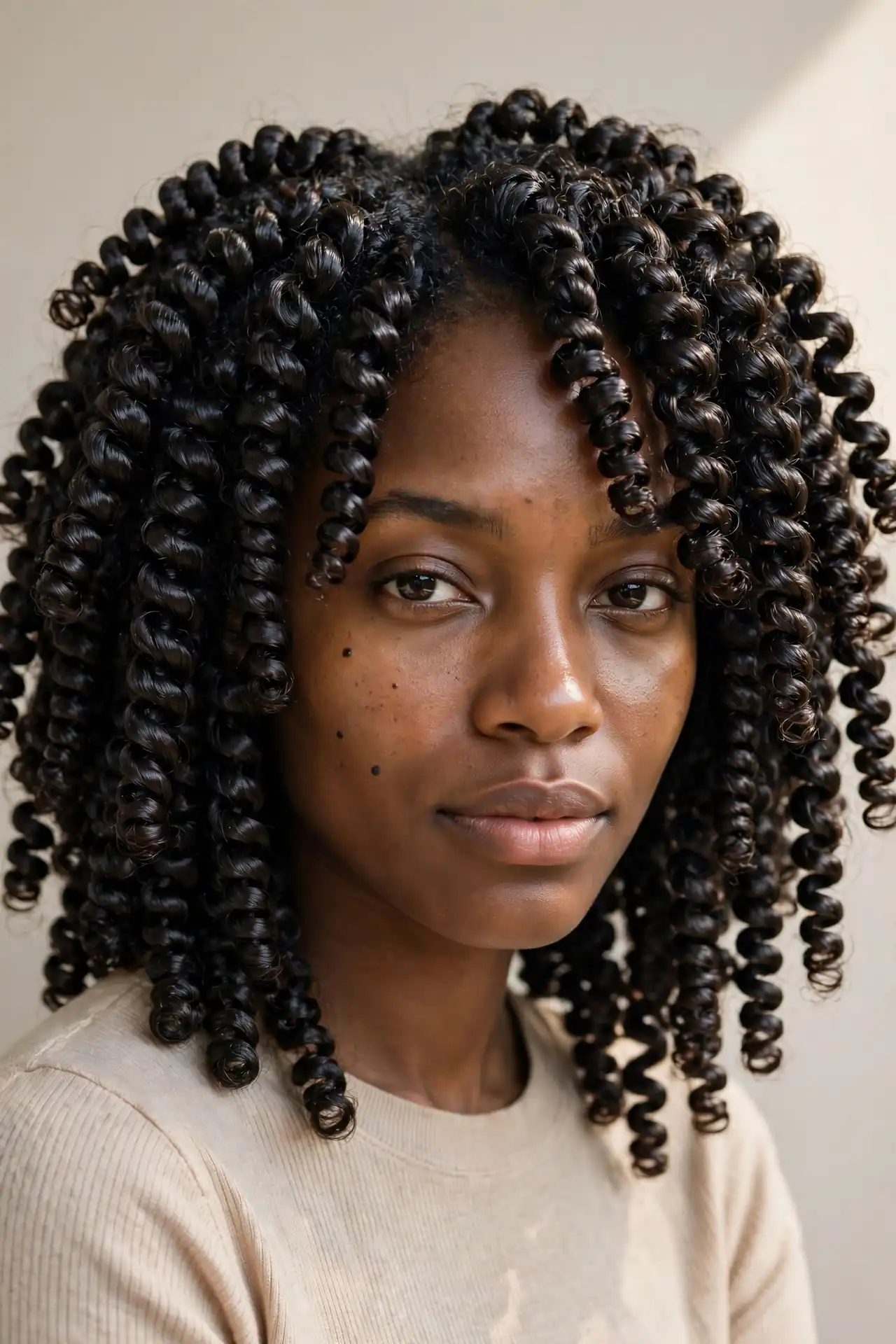
For 4B and 4C textures, finger-coiled coils are the ultimate celebration of your natural pattern — tight, springy, sculptural, and utterly striking. This style suits round and oval faces wonderfully because the compact coil pattern creates structure and height without overwhelming your features, and it adds gorgeous dimension to shorter cuts. The flattering secret is the definition: when every coil is visible and shining, the look reads luxurious and intentional rather than “undone,” which is unfair but real — definition is what turns heads. It is also one of the most protective ways to wear your texture loose, since each coil keeps its neighbors from tangling.
- Work on small sections of damp hair with a curling custard.
- Twirl each section around your finger from root to tip.
- Smooth the very ends last so they seal into the coil.
- Sit under a hooded dryer or diffuse to set the coils fully.
Practically speaking, this is a weekend style — give yourself an hour or two. Wash, deep condition, and detangle first; dry, rough 4C hair will frizz the moment you let go of a section, so keep a spray bottle handy. Ask your stylist to shape the overall silhouette while your hair is dry and coiled, because wet 4C hair can shrink by more than half its length. A curling custard or strong-hold gel with a bit of slip works best; avoid heavy butters at the styling stage since they can loosen the coil. Once dry, you can pick the roots gently for volume without disturbing the coil definition. At night, pineapple the hair and cover with a satin bonnet; mist lightly with water each morning and smooth individual coils between your fingers. Expect three to five great days, then wear it as a beautiful stretched-out style afterward.
Big Picked-Out Natural Hair
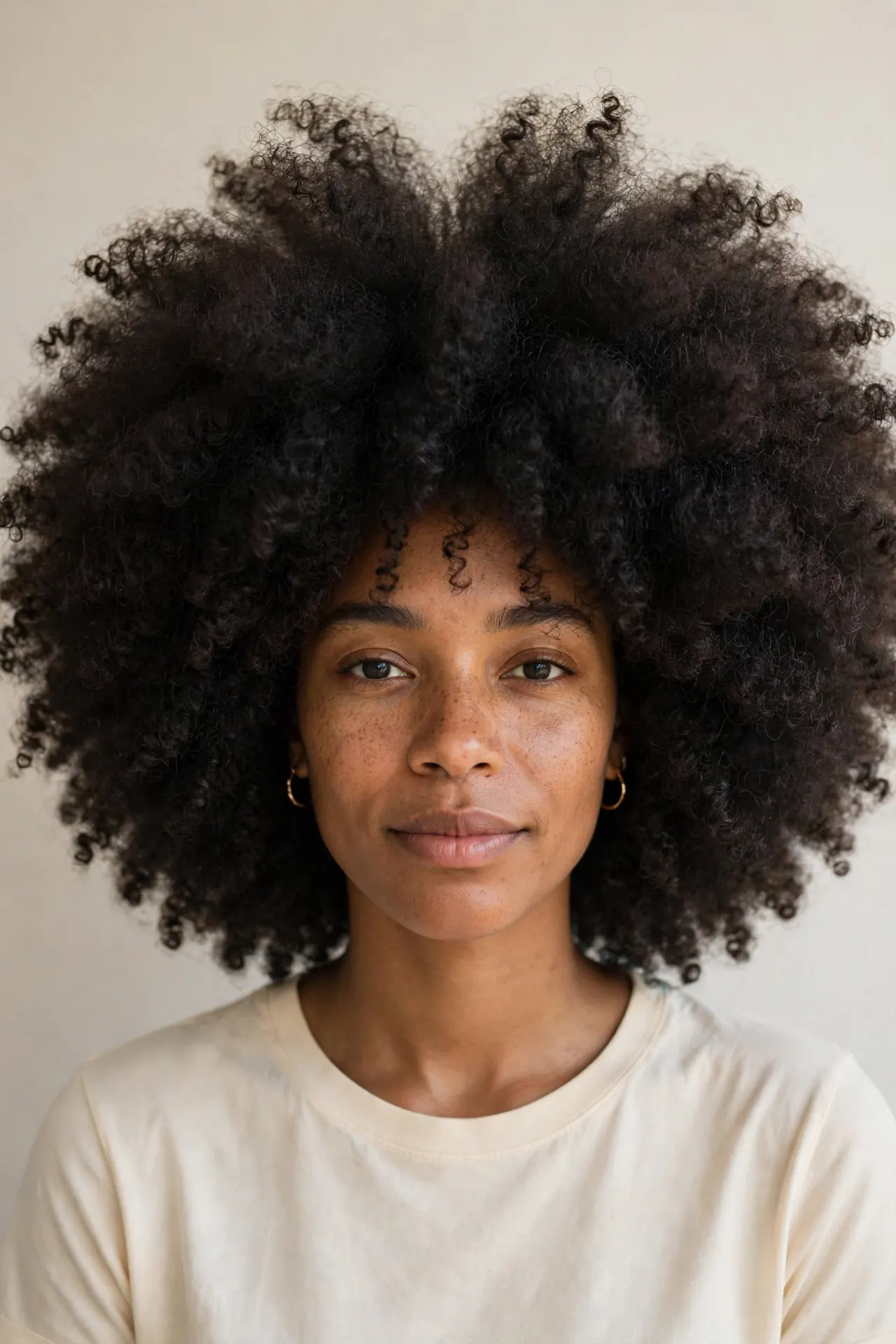
Sometimes the most stunning choice is the simplest: your hair, big, free, and unapologetically full. A picked-out afro flatters every face shape when the shape is right — round faces benefit from height at the crown, square faces from a little fullness at the sides, and long faces from width rather than towering height. It works across 3C to 4C textures, with tighter coils giving that iconic perfectly rounded cloud and looser curls creating a softer halo. There is a regal, joyful energy to a big afro that no other style carries; it is a statement of confidence that never goes out of fashion, and it photographs like a dream.
- Start with stretched, fully dry hair to avoid breakage while picking.
- Lift from the roots with an afro pick, not from the ends down.
- Pick in small sections, shaking each one out as you go.
- Seal the style with a light mist of oil for shine and separation.
The how-to is all about prep. Wash, deep condition, and stretch your hair first — braid-outs, banding, or a tension blow-dry on low heat all work — because picking fully shrunken hair causes tangles and breakage. Ask your stylist for a rounded shape cut on dry, stretched hair so the silhouette is even all the way around; one-length afros can look bottom-heavy without shaping. Work section by section with a wide-tooth afro pick, starting at the roots and lifting upward, and do not over-pick the same section or you will create frizz. A tiny bit of oil on your hands while shaping adds sheen and keeps the hair from feeling dry. To maintain, re-pick the roots every morning and sleep with your hair in a few loose twists or a satin bonnet; the style can last a full week with daily root touch-ups.
High Puff with Maximum Volume
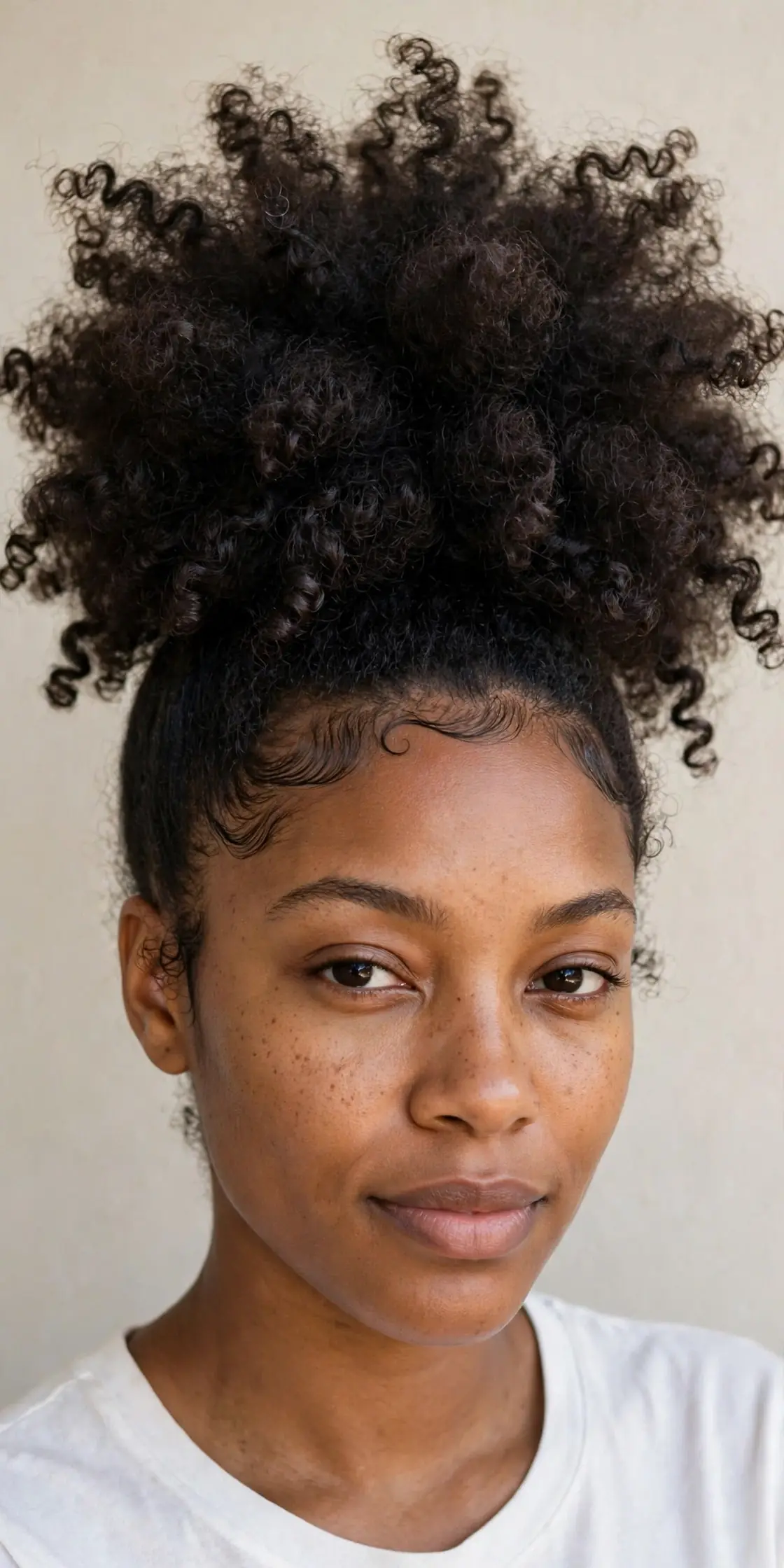
The high puff is the crown jewel of natural styling: all your gorgeous texture swept up into one glorious cloud on top of your head. It flatters oval, round, and heart-shaped faces by drawing the eye upward and elongating the neck, and it is incredibly versatile — sleek edges with a big puff looks polished, while a looser, fluffier puff reads playful and fun. This style works for 3A through 4C textures; tighter coils give the roundest, most dramatic puff, while looser curls create a softer, cascading shape. It is the ultimate quick style that looks like it took an hour, which makes it perfect for busy mornings, workouts, and everything in between.
- Gather hair with a stretchy headband or two satin scrunchies, not a tight elastic.
- Leave the front edges soft and free for a natural hairline finish.
- Fluff and shape the puff with your fingers until it is evenly round.
- Lay edges with a small brush and edge control for a polished frame.
To build it, start with day-two or day-three hair — a fresh wash-and-go or twist-out actually puffs better once it has a little lived-in texture. Tip your head forward, gather the hair, and secure it high; two headbands crossed over each other hold thick hair without tension headaches. Ask your stylist to keep the perimeter shaped so the puff sits full and round rather than lopsided — uneven density shows in a puff. Smooth the base with a boar-bristle brush on dampened hair, but leave the puff itself untouched by brushes to protect definition. For lasting wear, pineapple the puff at night under a satin scarf; it refreshes in two minutes each morning with a light mist and finger fluffing. Trim every 10 to 12 weeks so the ends stay full — thin, wispy ends make a puff look deflated.
The Tapered TWA
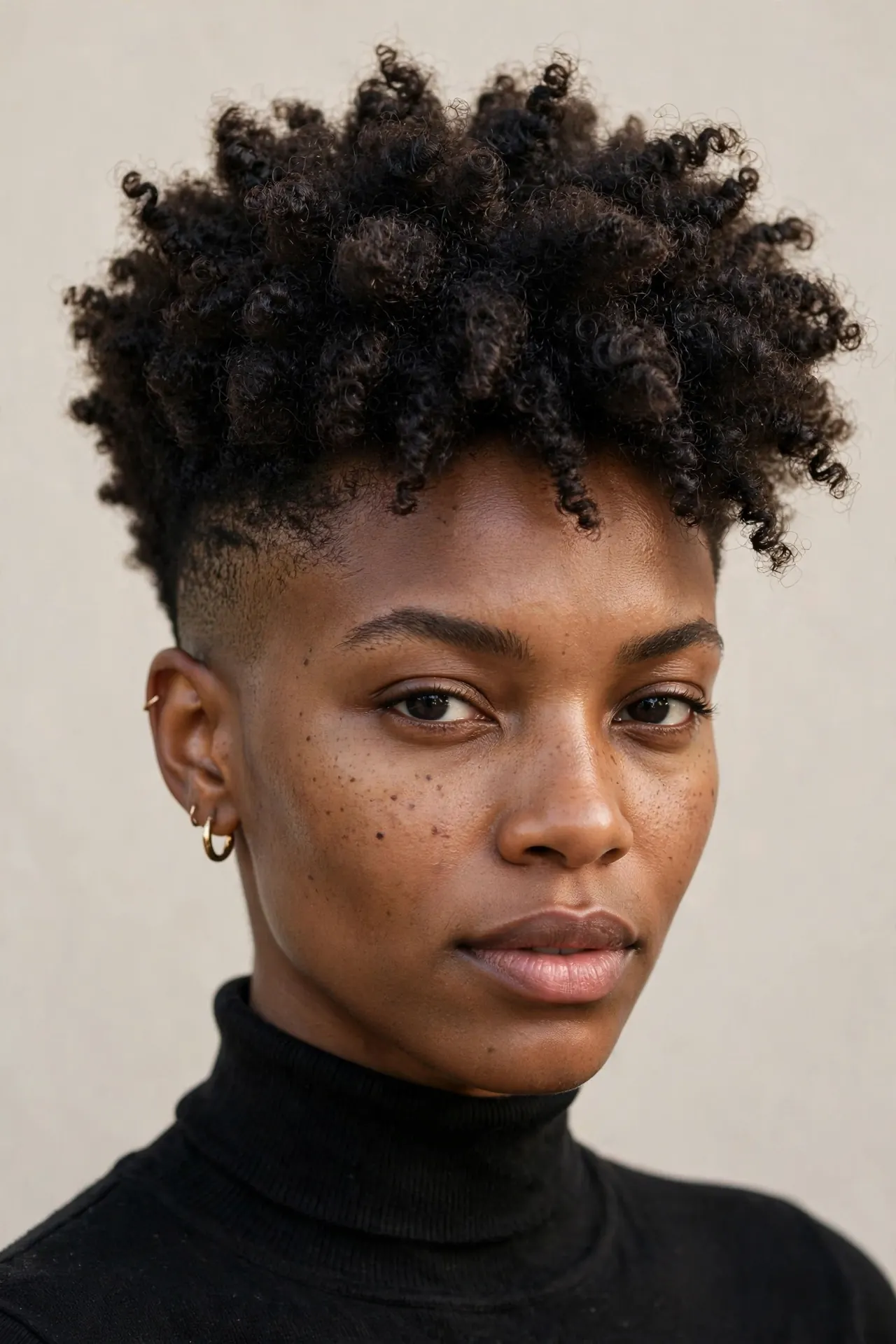
The tapered TWA — teeny weeny afro with faded, shorter sides and a fuller top — is one of the chicest short natural styles you can wear. It flatters oval, heart, and diamond face shapes especially well because the close sides slim the face while the textured top adds height and personality, and it gives round faces beautiful structure. This cut is made for 4B and 4C coils, where the tight pattern creates that crisp, sculptural contrast between the tapered sides and the coily crown. It is bold, modern, and incredibly easy to live with — the wash-and-wear simplicity of a TWA with the edge of a precision fade.
- Define the top with a sponge or finger coils on damp hair.
- Keep the tapered sides clean with a soft brush and light oil.
- Moisturize the crown daily — short coils dry out faster than you think.
- Refresh the shape with a line-up every 2 to 3 weeks.
Ask your barber or stylist specifically for a taper (not a full fade, unless that is the look you want) with enough length left on top to show your coil pattern — about one to two inches works beautifully. Bring a reference photo, because “tapered TWA” can mean different things to different stylists. At home, the routine is delightfully short: wash weekly, condition well, and style the top with a curling cream or sponge on damp hair. The sides need the most maintenance — a lineup every two to three weeks keeps it sharp, and you can do touch-ups at home with clippers if you are comfortable. Because short hair shows dryness quickly, seal moisture in with a light oil after every wash; a healthy sheen is what makes this cut look expensive rather than neglected.
Curly Shag with Natural Layers
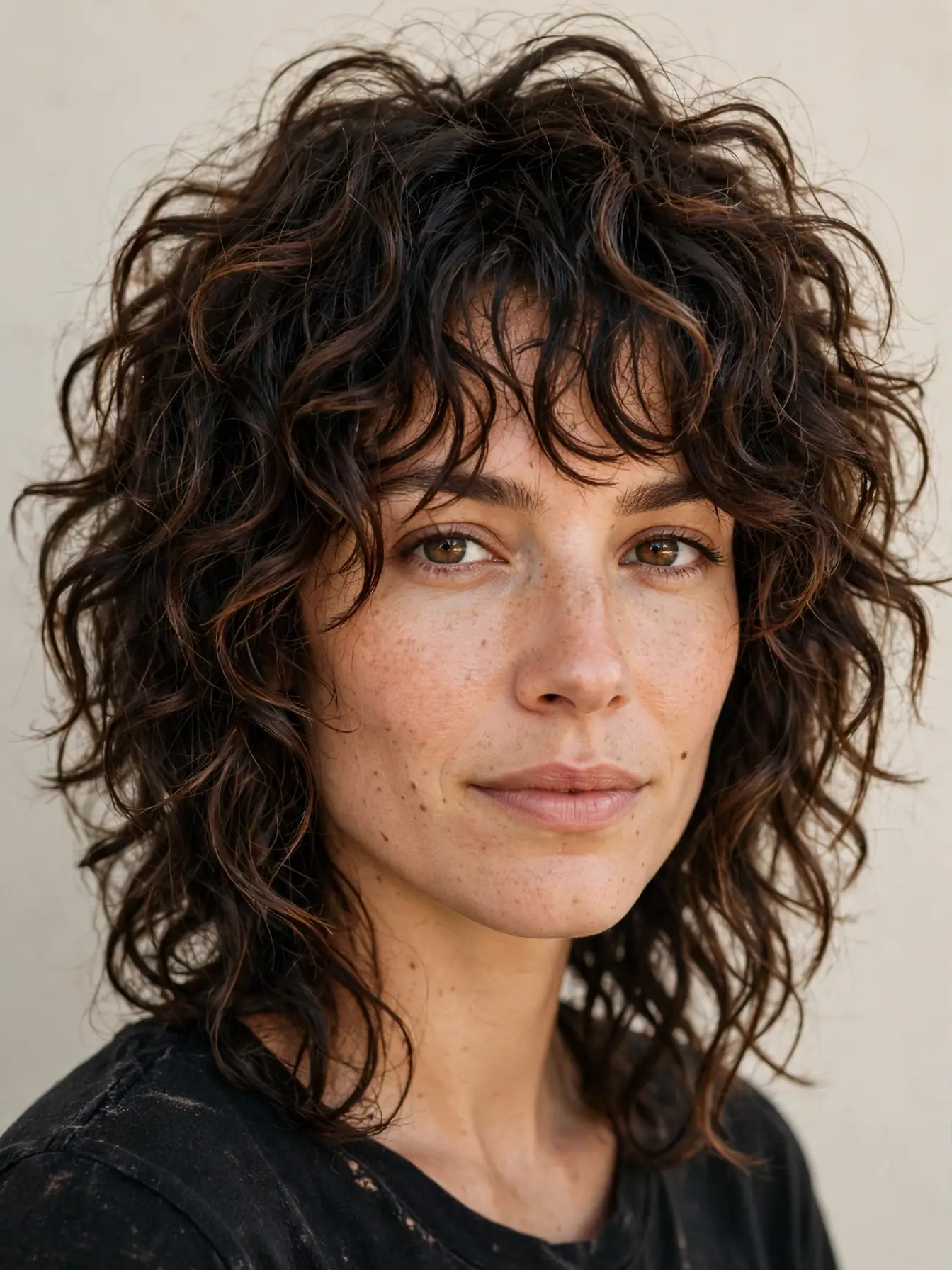
The curly shag brings rock-and-roll attitude to natural texture: choppy layers, face-framing pieces, and curls with room to misbehave. It suits oval, long, and heart-shaped faces beautifully because the layered fringe and side pieces soften the forehead and cheekbones, and the volume through the mid-lengths balances longer face shapes. Type 3A to 3C curls are the sweet spot — the layers let each curl spring to its own length, creating that perfectly undone, lived-in shape. What makes it so flattering is the movement: this cut never sits still, and it makes fine or medium-density curls look twice as full.
- Style with a diffuser, scrunching upward to encourage the layered shape.
- Apply product in sections, focusing on the mid-lengths and ends.
- Break up the top layer once dry for that piecey shag texture.
- Pineapple loosely at night to protect the fringe pieces.
Ask your stylist for a dry curly cut with lots of internal layering and a soft, curly fringe — the fringe is what makes it a shag rather than just layered curls. Long layers through the back keep the silhouette from going triangular. At home, a curl cream plus a light gel gives hold without crunch, and diffusing upside down builds the volume this cut needs. The fringe will need the most attention: refresh it with a water mist and a finger coil each morning, since curls around the face frizz first. Because the shag relies on its shape, book a trim every 8 to 10 weeks — grown-out layers lose the choppy attitude that defines the style. For reliable technique guidance on caring for curly hair, the American Academy of Dermatology’s hair care guidance is a trustworthy place to double-check your routine.
Curly Bob: A Short Natural Hairstyle
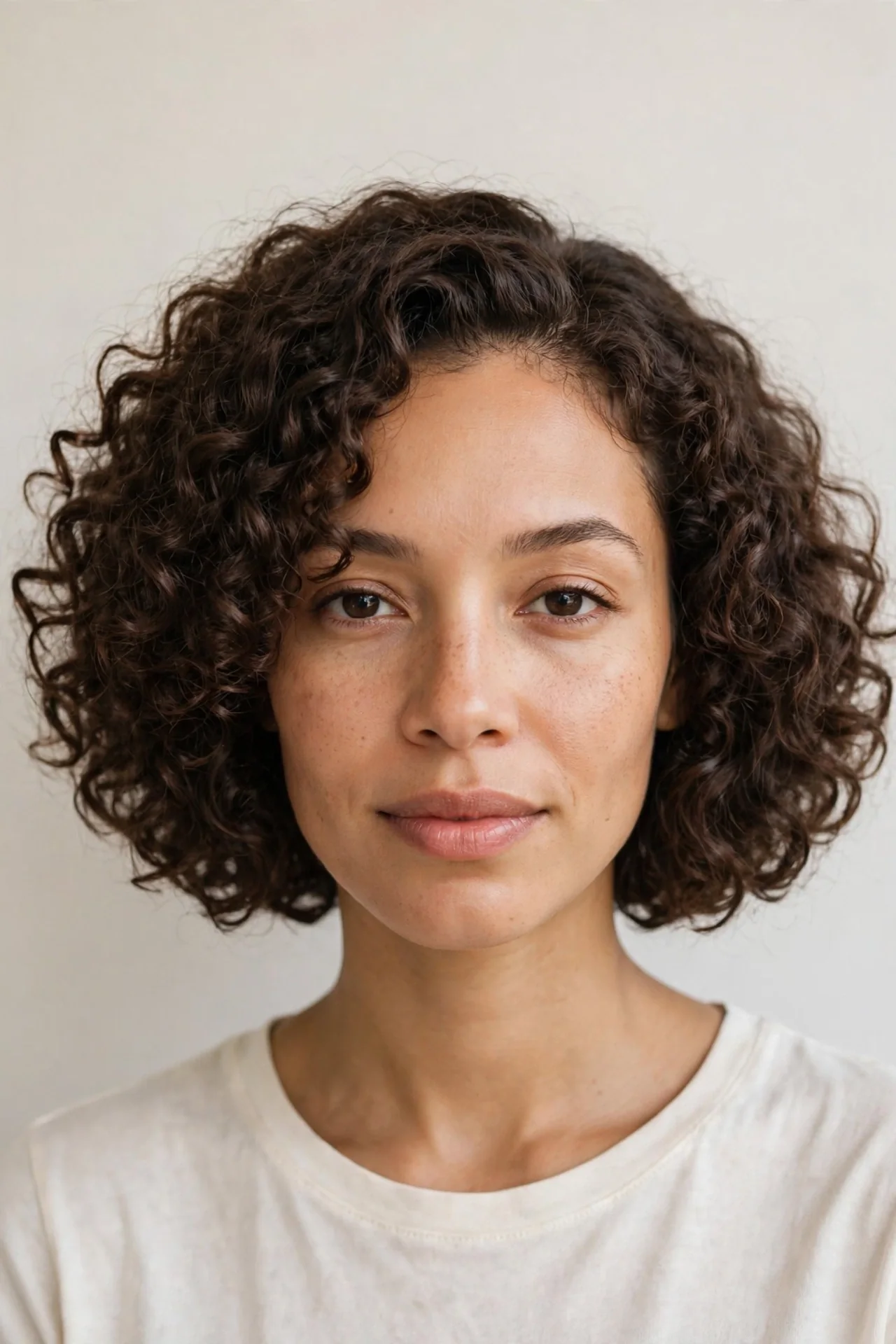
A curly bob is pure sophistication — chin-to-shoulder length, bouncy, and endlessly wearable. It flatters round faces by adding length and slimming the cheeks, suits oval faces at almost any bob length, and gives square faces softness around the jawline. This style loves 3A to 3C curls, where the curl pattern creates natural body that straight bobs can only dream of, and it works beautifully on medium to thick density. The flattering magic is the shape: a well-cut curly bob frames the face like a portrait, highlighting your eyes and cheekbones while the curls do all the talking.
- Diffuse with your head tilted to build volume at the roots.
- Clip the roots while drying for extra lift that lasts all day.
- Separate curls gently once dry — never brush a curly bob.
- Tuck one side behind the ear for an instant asymmetric update.
The key to this cut is getting it done dry: ask your stylist for a curly bob cut on dry, styled hair so every curl is placed at its true length — wet cuts on curly hair are how bobs end up shockingly short. Request slightly longer pieces in front to frame the face and a rounded back that sits above the shoulders. At home, wash and condition with curl-friendly, sulfate-free products, then style in sections with leave-in, cream, and gel. Pineapple the bob at night in two loose top puffs to protect the shape, and refresh in the morning with a water-and-cream mist on frizzy areas only. Because bobs show growth quickly, plan a trim every 6 to 8 weeks to keep the silhouette crisp and the curls springy.
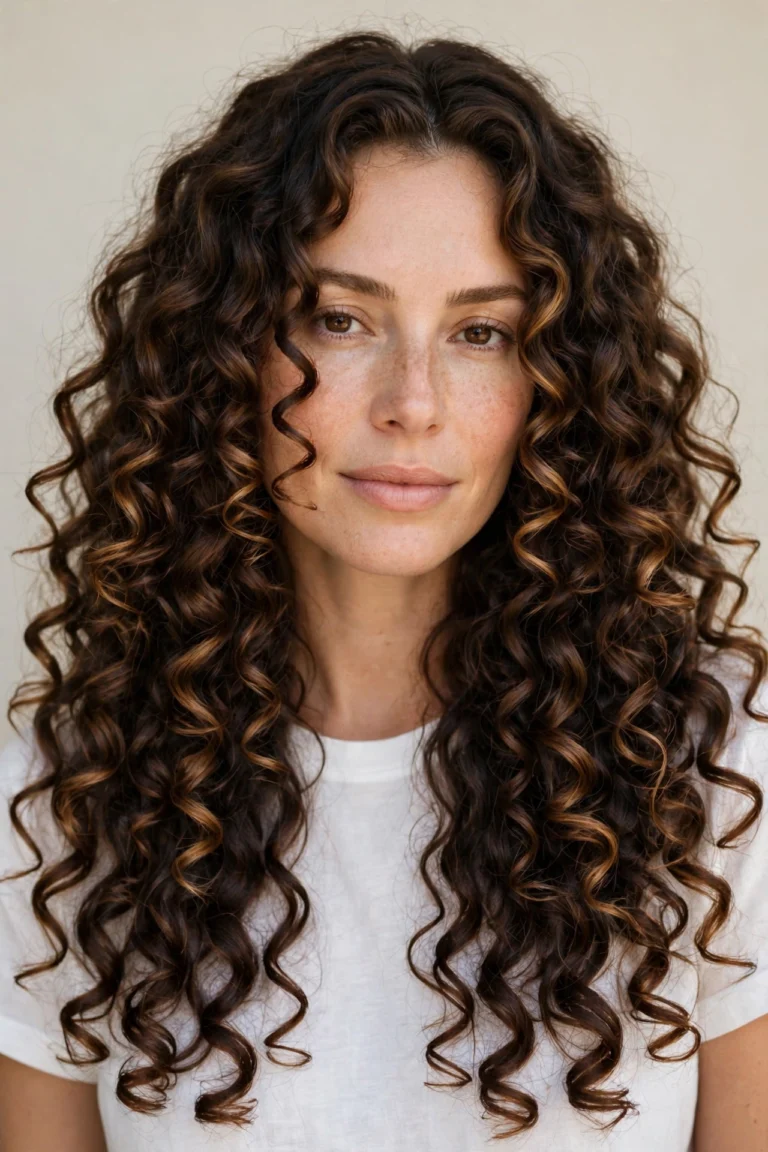
Long Layered Curls, Free and Flowing
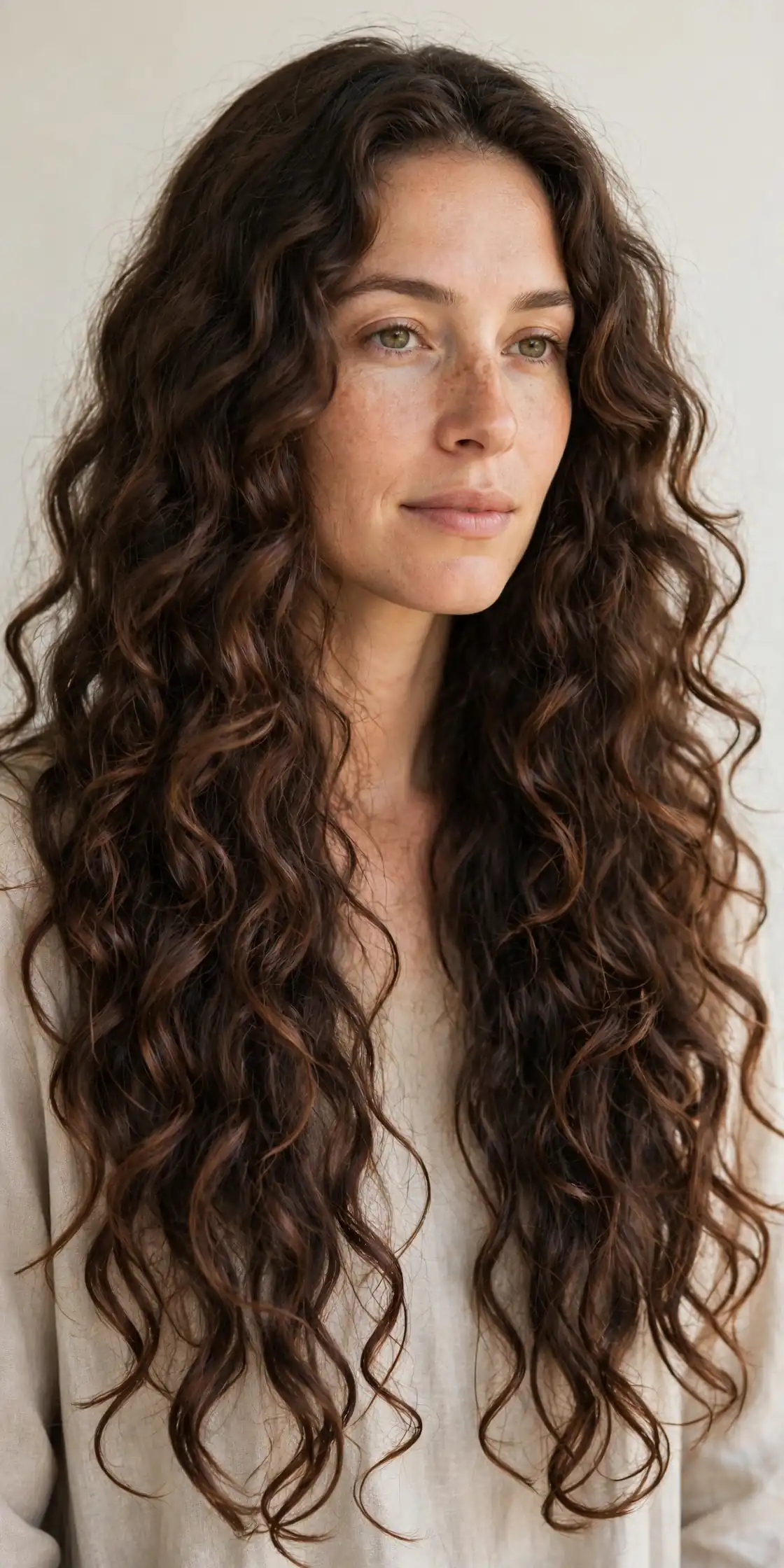
There is nothing quite like long, layered natural curls worn completely free — it is the mermaid hair of the natural world. This style flatters long and oval faces by adding width and movement at the sides, and the layers keep it from dragging down rounder faces. It is ideal for 2C to 3B textures with the length to show off the layering; tighter 4-type textures can absolutely wear it long too, with the gorgeous bonus of dramatic shrinkage-to-length reveals. The flattering secret is the layers: they remove bulk where you do not want it and add bounce where you do, so long curls look light and touchable instead of heavy.
- Detangle in the shower with conditioner and a wide-tooth comb, never dry.
- Apply styling products in 4 to 6 sections for even coverage.
- Scrunch upward and diffuse in sections to dry long curls evenly.
- Sleep in a high loose pineapple or two braids to protect the length.
Growing and keeping long natural curls is a commitment, so ask your stylist for long, blended layers cut dry — and ask them to dust the ends (a micro-trim) every visit rather than taking length. Deep condition every single wash day without exception; long hair is old hair at the ends and needs the moisture. Protective nighttime habits matter enormously here: a satin bonnet or pineapple every night prevents the tangling that leads to breakage and lost length. When the ends start to look thin or the curls lose their spring, that is your signal for a real trim — usually every 10 to 12 weeks. And if you ever want to give your ends a seasonal break without hiding your texture, our winter protective hairstyles for women pair perfectly with long natural hair.
Curly Pixie Crop with Texture
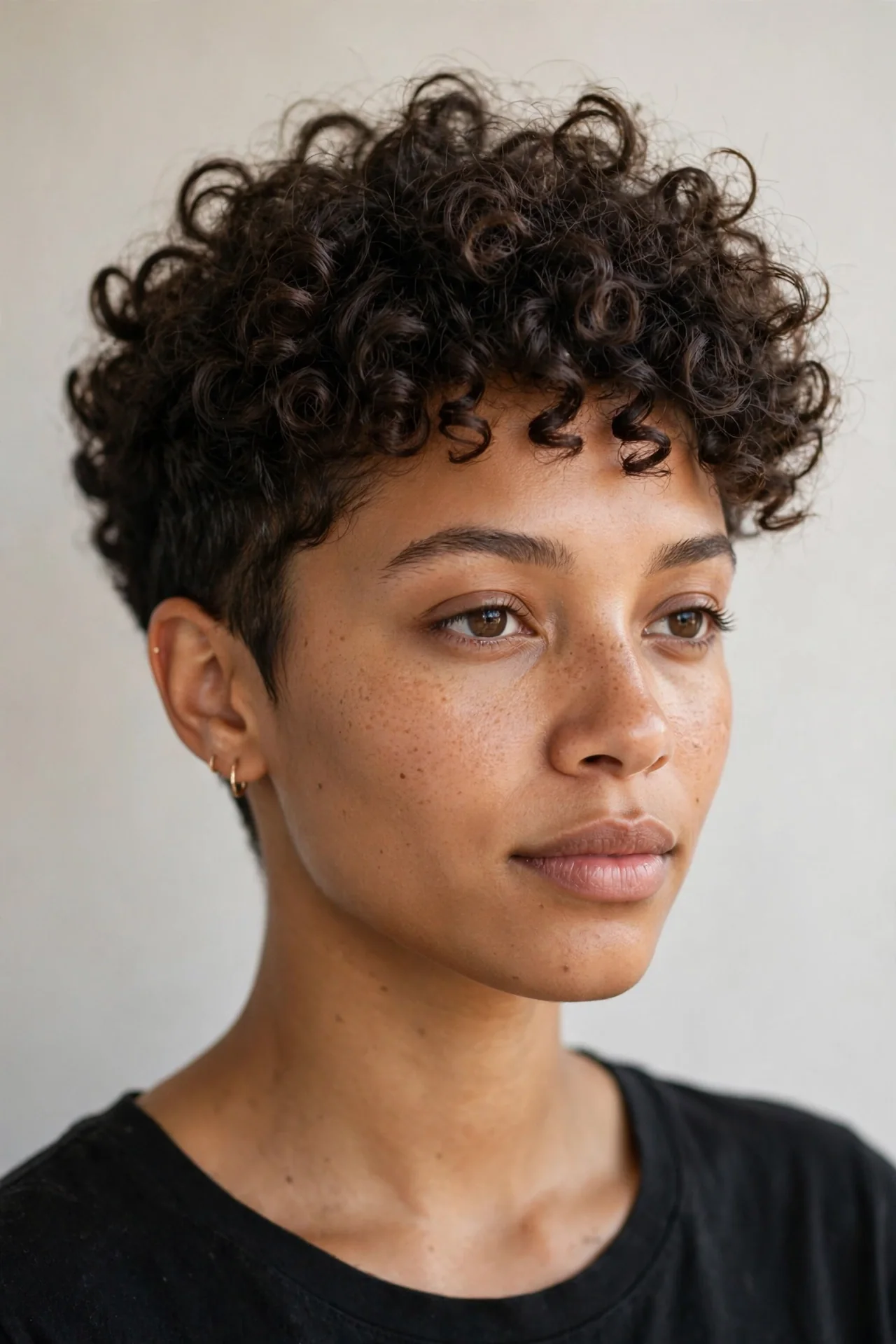
The curly pixie is for the woman who wants to make an entrance: short, textured, and full of personality. It flatters oval, heart, and diamond face shapes by opening up the face and spotlighting your eyes, cheekbones, and jawline — and on petite features it looks especially striking. Type 3A to 3C curls create the ideal pixie texture, with enough curl to give the top playful volume while the sides stay neat. What makes it so flattering is the confidence it projects: a curly pixie says you know exactly who you are, and the texture keeps it soft and feminine rather than severe.
- Define the top curls with a small amount of curl cream on damp hair.
- Use a diffuser on low speed to set the shape without frizz.
- Smooth the sides with a light pomade for contrast against the textured top.
- Fluff the crown with your fingers for height once fully dry.
Ask your stylist for a pixie with length left through the top and crown — at least two to three inches — so your curls have room to form, with the sides and back tapered or softly faded for contrast. This is a precision cut, so find someone experienced with curly hair and bring photos of the exact shape you want. The at-home routine is the fastest of any style here: wash, condition, apply a dab of curl cream, diffuse for five minutes, and go. The trade-off is maintenance — book a shape-up every 4 to 6 weeks, because a pixie loses its edge fast as it grows. Between cuts, a little pomade on the sides keeps everything looking intentional, and sleeping on a satin pillowcase preserves the top texture beautifully.
Diffused Wash-and-Go with Big Volume
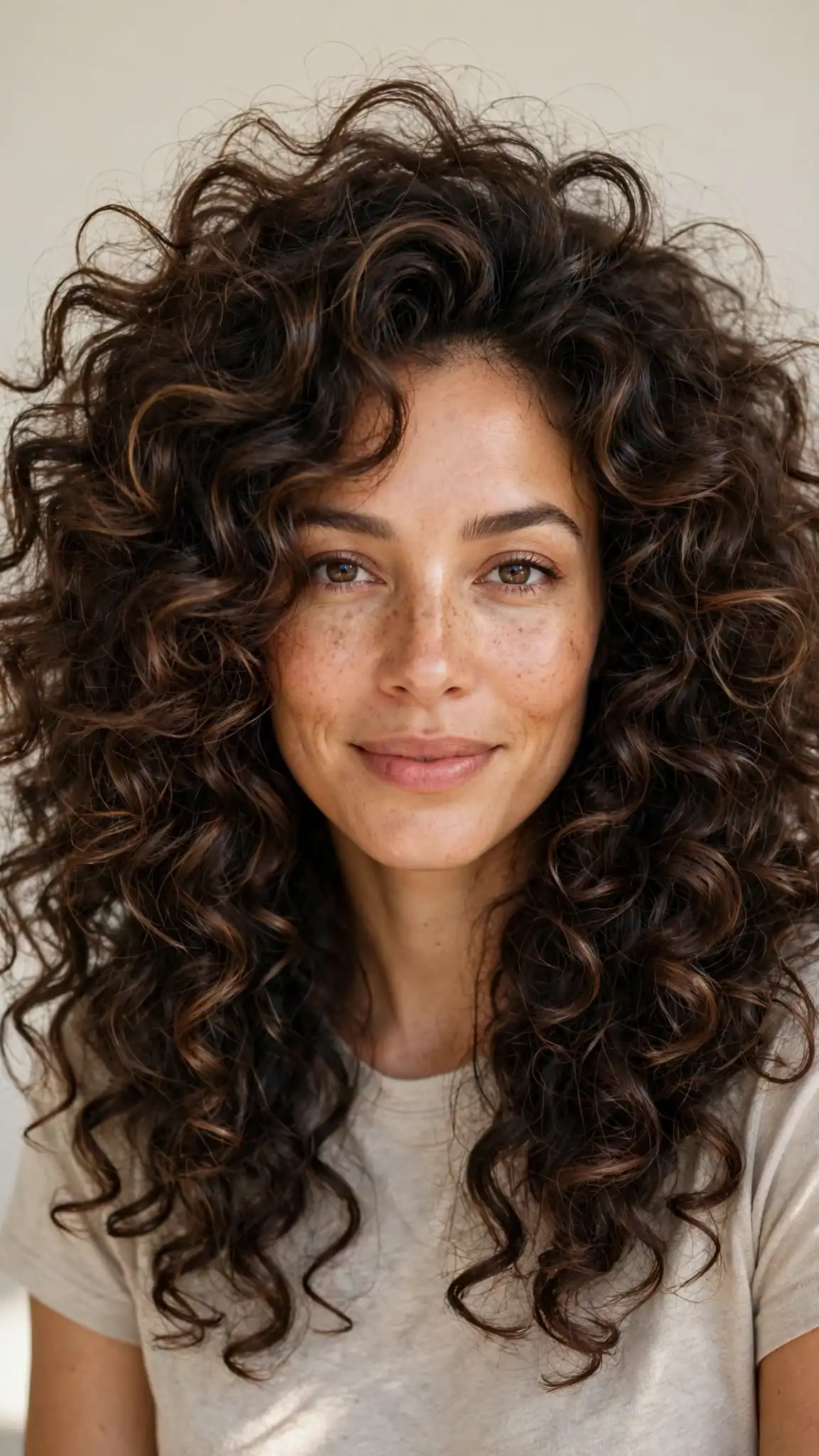
This is the wash-and-go’s glamorous older sister: all the definition of a wash-and-go with twice the volume, thanks to the diffuser. It flatters every face shape because you control exactly where the fullness goes — more at the crown for round faces, more at the sides for long faces — and it gives finer 2C to 3B textures the body they often crave. The look is big, bouncy, and red-carpet ready while still being 100 percent your natural texture. If you have ever felt your wash-and-go falls a little flat by midday, this is the upgrade that fixes it.
- Flip your head upside down and diffuse the roots first for lift.
- Use medium heat and low speed to dry without blowing curls apart.
- Hover-diffuse the lengths, then pixie-diffuse the ends for definition.
- Finish with a cool shot and gently shake the roots for extra fullness.
The technique matters more than the products here. After applying your usual leave-in, cream, and gel to soaking wet hair, start diffusing immediately — do not air-dry first, or you lose the volume window. Ask your stylist for layers that support big volume, especially shorter pieces around the crown that lift the whole style. Work in sections: hover the diffuser around each section without touching it until a cast forms, then gently pixie-diffuse (scooping curls into the diffuser bowl) to finish. Once fully dry and cool, scrunch out the crunch and shake at the roots — this is where the magic volume appears. The style typically lasts two to three days; refresh by misting the roots with water, re-diffusing for two minutes, and fluffing. Trim every 8 to 12 weeks to keep the shape full rather than straggly.
Conclusion
Your natural texture is not a starting point to fix — it is the finished look, and these 12 natural hairstyles prove it. Whether you fall in love with the simplicity of a wash-and-go, the bounce of a twist-out, the drama of a big picked-out afro, or the edge of a tapered TWA, the most flattering style will always be the one that lets your real pattern shine. Start with the idea that matches your texture and lifestyle, give the routine two or three wash days to click, and do not be afraid to adjust the products until your curls behave exactly how you want. And remember, celebrating your texture does not mean you can never switch it up — our trendy braided hairstyles for Black women are there whenever you want a bold braided moment between your natural styles.