13 Traditional Dining Room Ideas for a Timeless Elegant Look
Traditional dining room ideas focus on creating a space that feels elegant, balanced, and timeless. Instead of following trends, this style relies on classic elements like rich wood furniture, symmetrical layouts, and refined details that stand the test of time. A well-designed traditional dining room combines comfort with formality, making it suitable for both everyday meals and special gatherings. These ideas highlight practical ways to build a space that looks sophisticated while maintaining warmth and functionality.
1. Rich Wood Dining Table as the Centerpiece
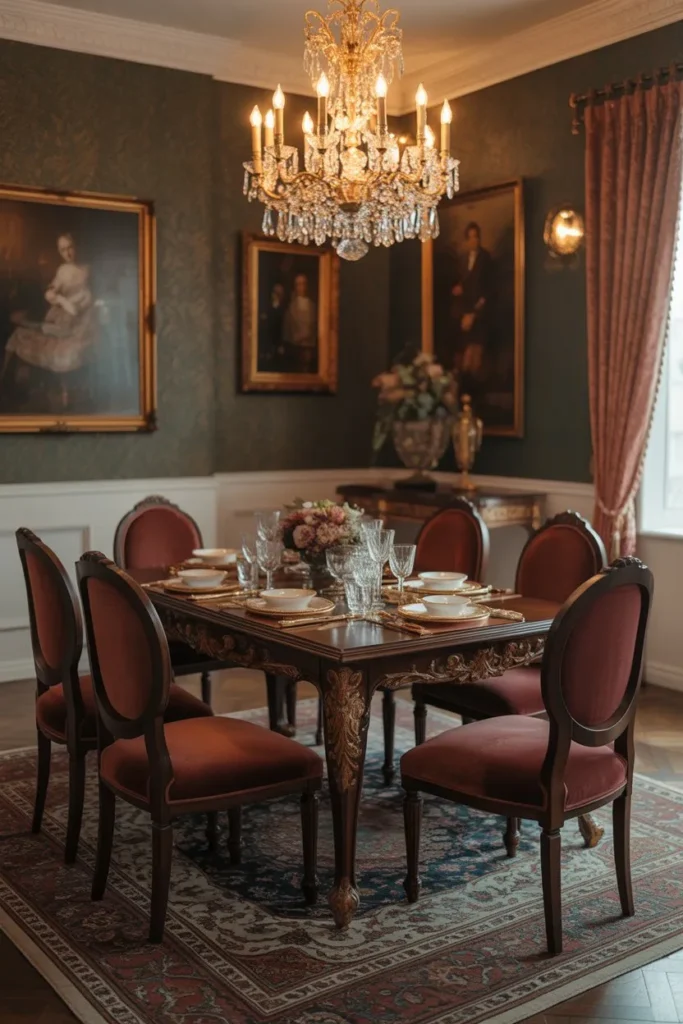
A rich wood dining table is the defining element of a traditional dining room, bringing warmth, depth, and a sense of heritage. Dark woods like mahogany, walnut, or cherry create a strong visual anchor while showcasing craftsmanship through carved details and polished finishes. This type of table not only adds visual weight but also establishes a formal and timeless tone that sets the foundation for the entire space.
To maintain balance, the surrounding elements should complement rather than compete with the table. Upholstered chairs, classic rugs, and warm lighting enhance its presence while keeping the room cohesive. This approach ensures the dining area feels refined and inviting while maintaining long-term design relevance.
2. Symmetrical Layout for Formal Elegance
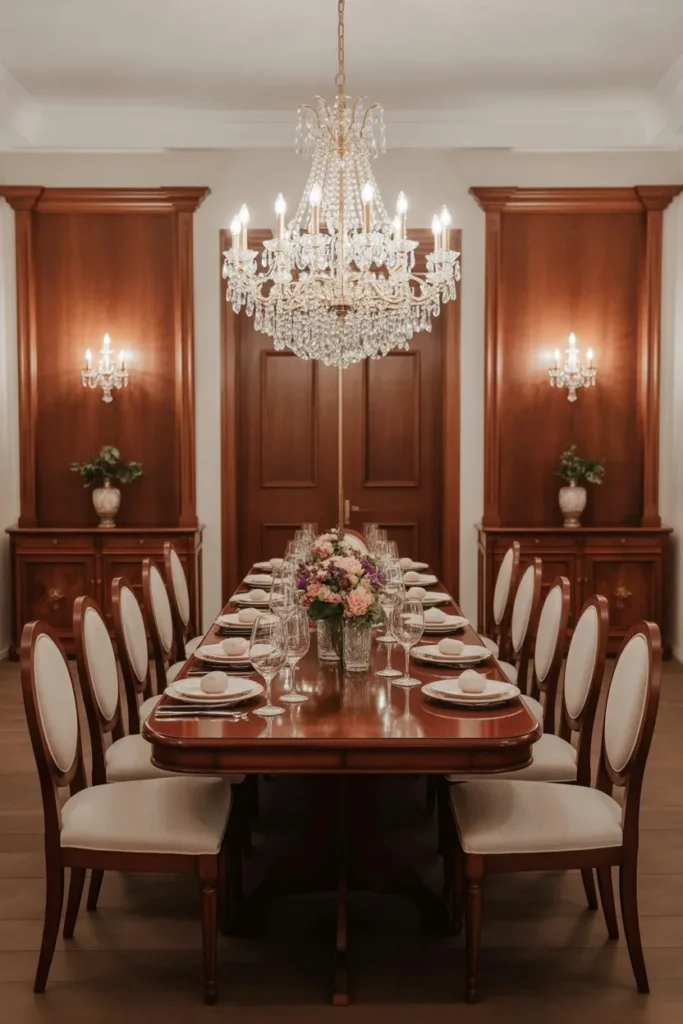
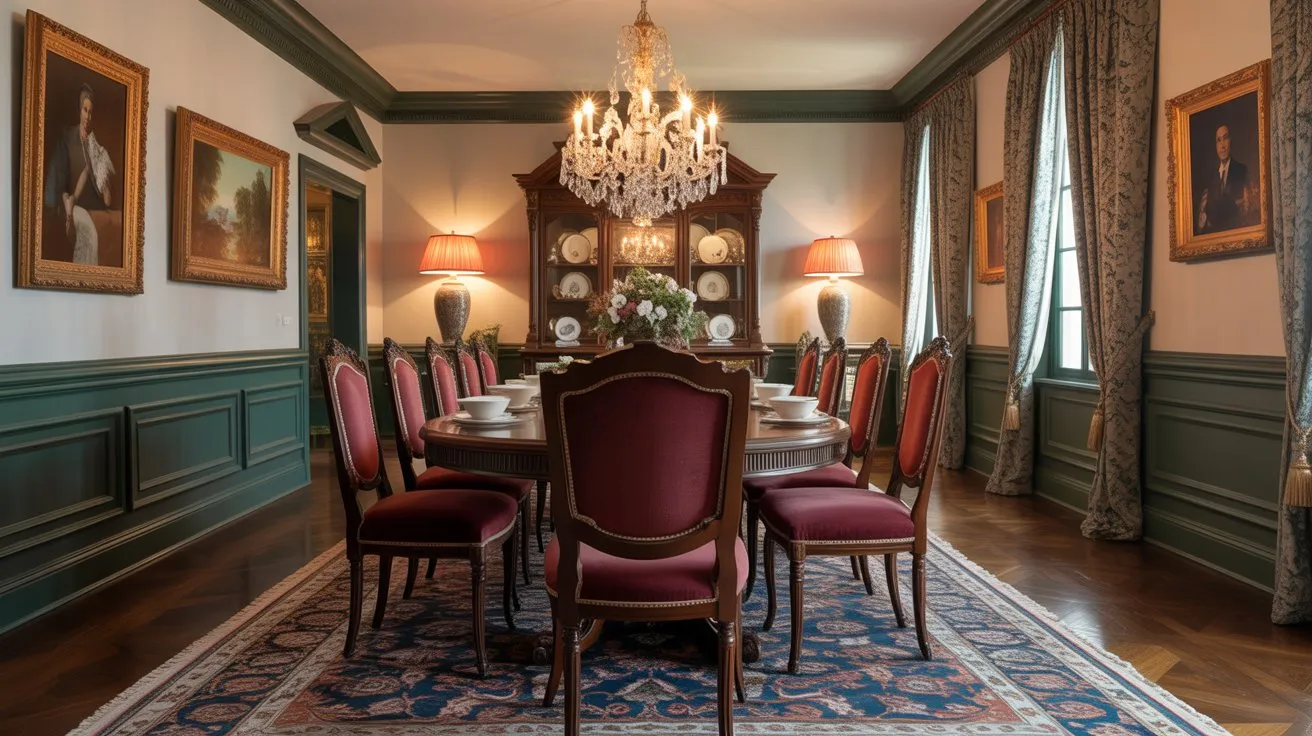
Symmetry is essential in traditional dining room design because it creates order, structure, and visual harmony. Positioning the dining table centrally under a chandelier, aligning chairs evenly, and balancing decor elements on either side of the room establishes a sense of formality. This arrangement naturally guides the eye and reinforces a polished, well-organized environment.
Beyond aesthetics, symmetry also improves functionality by making the layout intuitive and comfortable for movement. It ensures equal spacing and balance, which is especially important in formal dining settings. This structured approach helps the room feel timeless rather than trend-driven.
3. Classic Chandelier as a Statement Feature
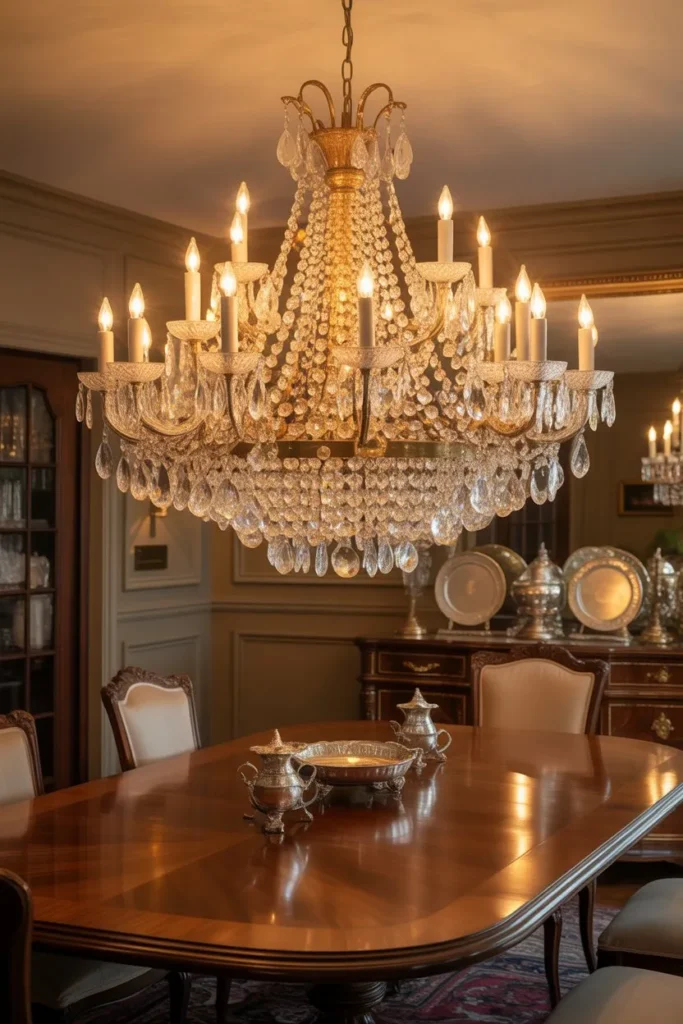
A classic chandelier serves as both a functional light source and a decorative centerpiece in traditional dining rooms. Crystal or metal designs reflect light beautifully, adding sparkle and depth while enhancing the room’s overall elegance. Its placement directly above the dining table ensures focused illumination for dining while also defining the central area.
Choosing the right size and style is crucial to maintain proportion. A well-scaled chandelier complements the table without overpowering it. Warm lighting further enhances the atmosphere, creating a welcoming environment that feels refined and suitable for both everyday meals and formal gatherings.
4. Neutral Color Palette with Warm Undertones
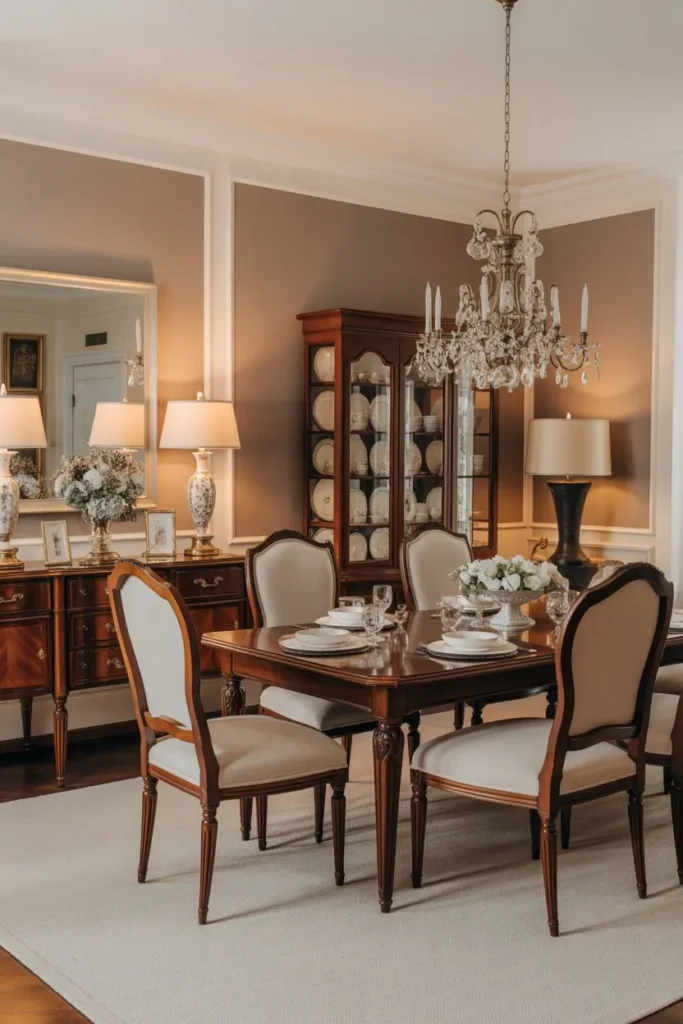
A neutral color palette forms the foundation of a traditional dining room by creating a calm and cohesive backdrop. Warm undertones like cream, beige, and soft taupe enhance the richness of wood furniture while maintaining a balanced and inviting atmosphere. These colors help unify different elements, allowing textures and materials to stand out without overwhelming the space.
This palette also offers flexibility for layering decor such as curtains, rugs, and upholstery. Subtle variations in tone add depth while keeping the overall design timeless. The result is a space that feels elegant, comfortable, and visually consistent across different lighting conditions.
5. Upholstered Chairs for Comfort and Refinement
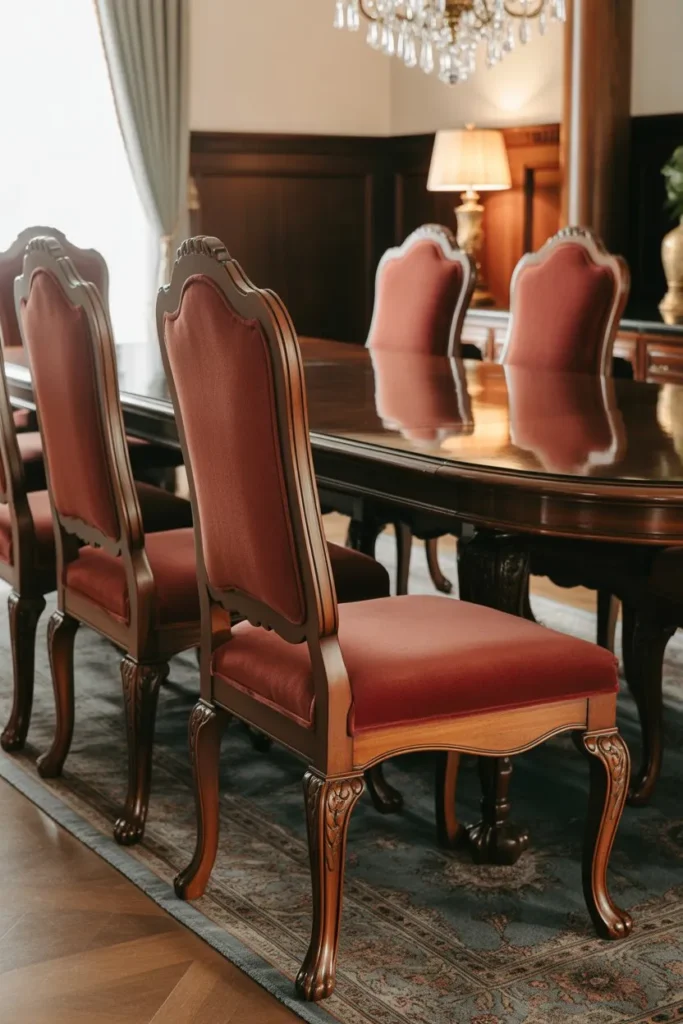
Upholstered dining chairs bring both comfort and sophistication to a traditional dining room. The combination of soft fabric and structured wooden frames creates a balanced look that feels both inviting and formal. Fabrics in neutral tones or subtle patterns enhance the classic aesthetic while maintaining visual harmony.
These chairs also improve the dining experience by providing support during longer meals. Their presence softens the overall design, preventing the room from feeling too rigid. When paired with a solid wood table, they contribute to a cohesive and timeless interior that prioritizes both style and usability.
6. Decorative Wall Molding for Classic Detail
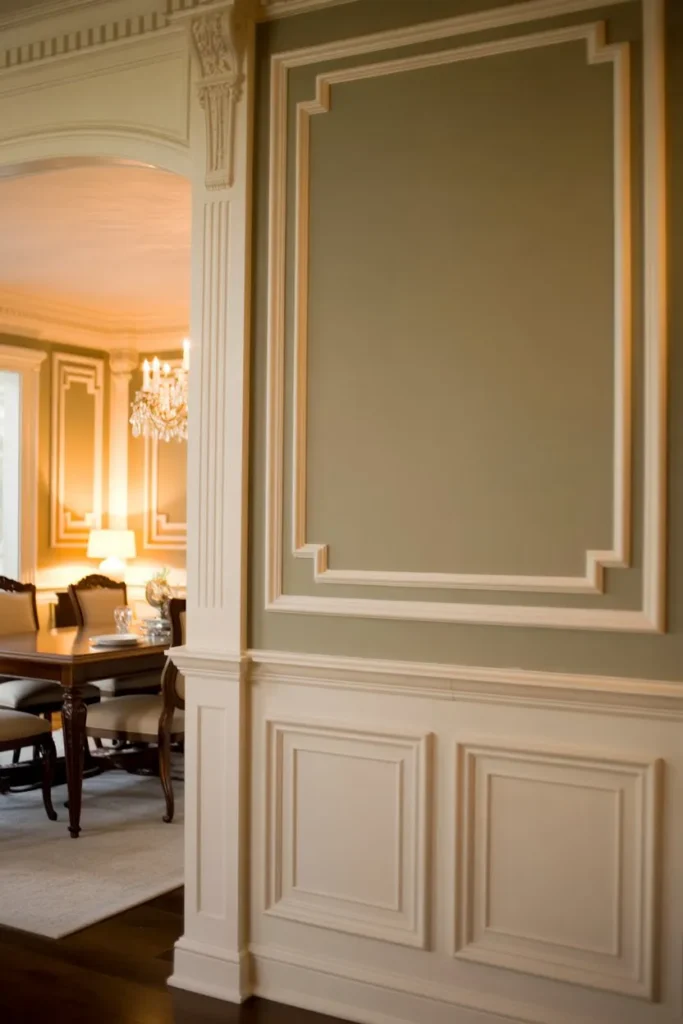
Wall molding is a defining feature in traditional dining rooms, adding architectural depth and refined detail. Elements like wainscoting or panel molding break up flat walls and create a layered, sophisticated look. This detailing enhances the overall structure of the room, making it feel more polished and complete without relying on excessive decor.
Painted in neutral tones, molding blends seamlessly with the walls while still adding visual interest. It also frames artwork or mirrors beautifully, reinforcing symmetry. This classic feature ensures the room maintains a timeless character that doesn’t rely on trends.
7. Traditional Rug to Anchor the Dining Space
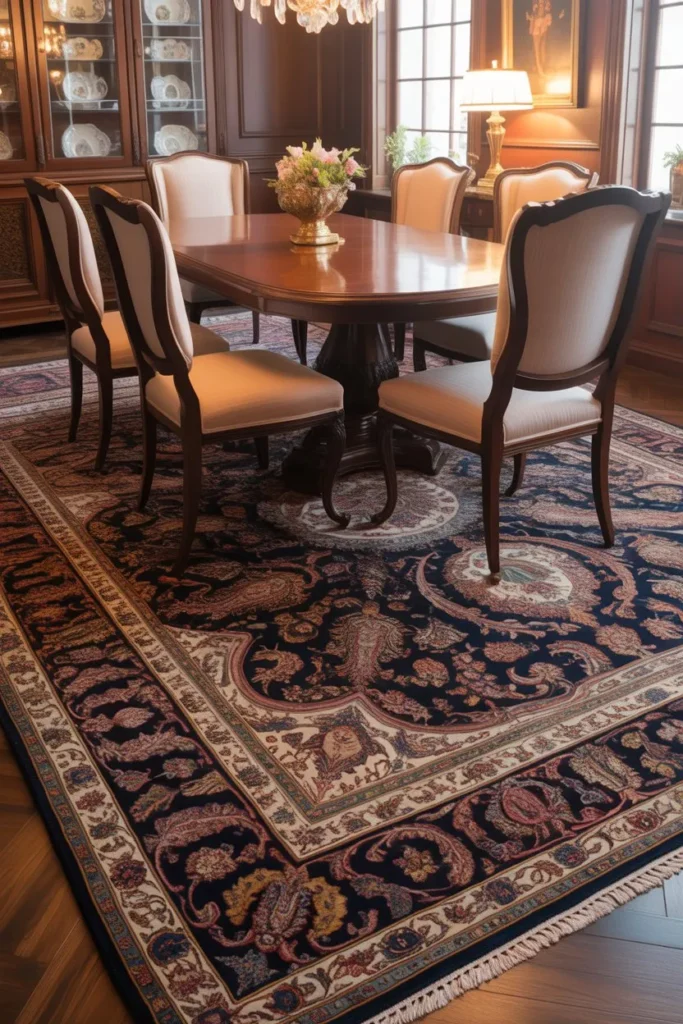
A traditional rug helps define the dining area while adding warmth and texture. Patterns such as Persian or oriental designs introduce depth without overwhelming the space, especially when paired with neutral furniture. The rug acts as a visual anchor, connecting the table and chairs into one cohesive unit.
Choosing the right size is essential—the rug should extend beyond the chairs to maintain balance. This ensures comfort and prevents disruption when chairs are moved. A well-chosen rug enhances both aesthetics and practicality in the dining room.
8. Classic Sideboard for Storage and Display
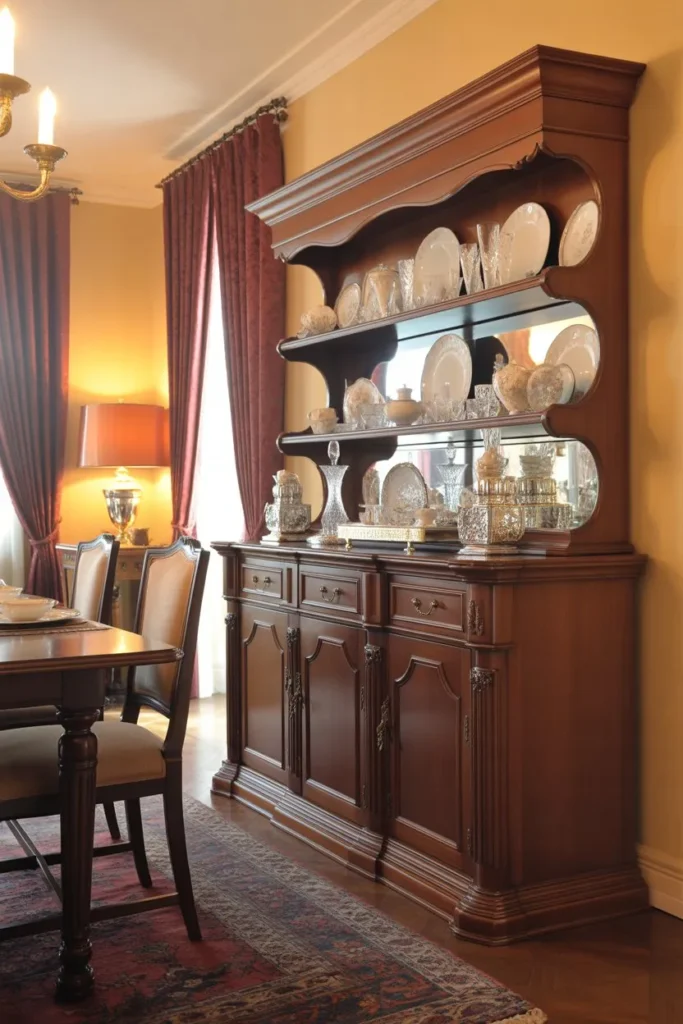
A sideboard adds both function and elegance to a traditional dining room. Typically crafted from wood, it provides storage for tableware while offering a surface for decorative elements like vases, lamps, or artwork. This piece enhances the room’s structure by introducing another layer of design.
Positioned against a wall, the sideboard helps balance the layout and reinforces symmetry. It also supports entertaining by keeping essentials within reach. Its combination of practicality and visual appeal makes it a staple in traditional interiors.
9. Layered Curtains for Soft Elegance
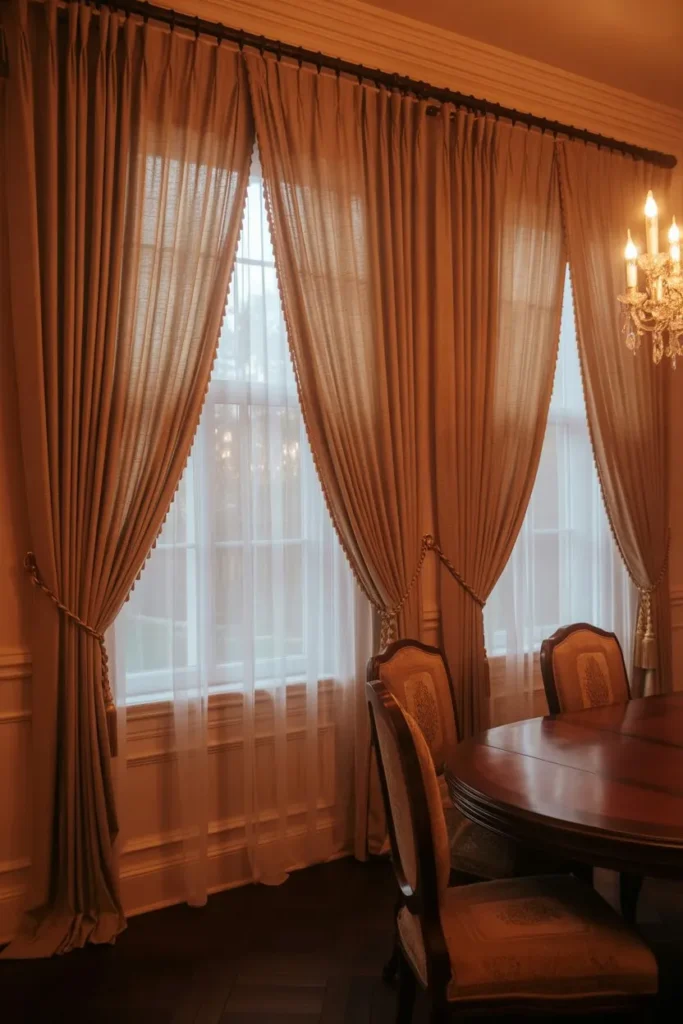
Layered curtains add softness and depth to a traditional dining room. Combining sheer fabrics with heavier drapes allows control over light while enhancing the room’s elegance. The fabric texture contributes to the overall warmth and richness of the space.
Choosing colors that complement the existing palette ensures cohesion. Floor-length curtains also emphasize height, making the room feel more grand. This detail adds a refined finishing touch without overwhelming the design.
10. Antique or Vintage Accents for Character
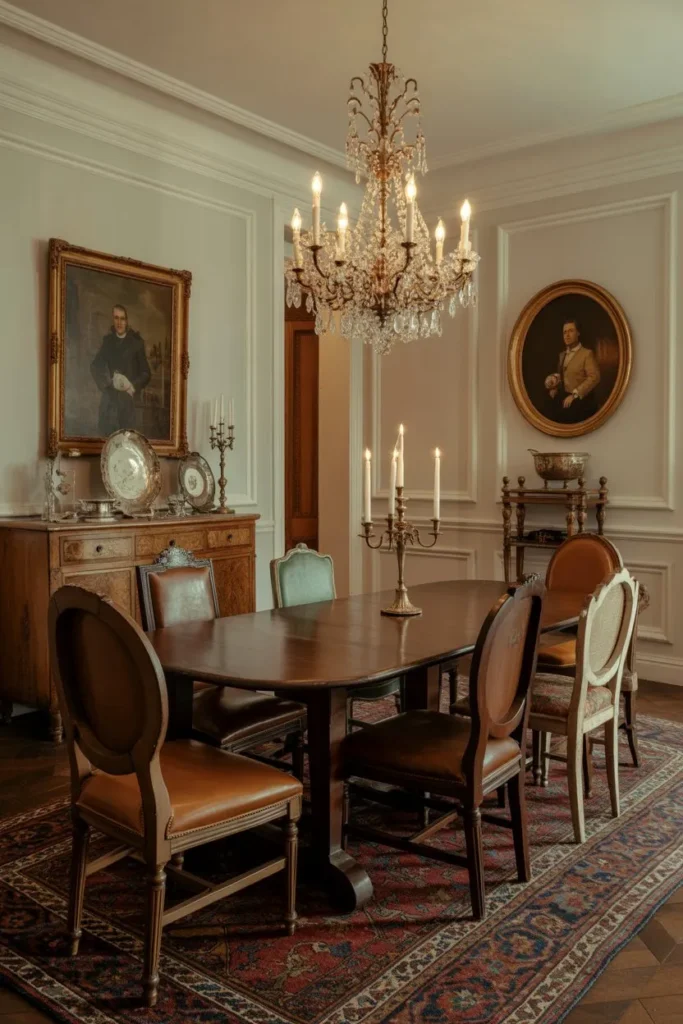
Incorporating antique or vintage elements adds authenticity and character to a traditional dining room. Items like aged mirrors, classic artwork, or decorative objects create a sense of history and depth that modern pieces often lack. These details help the space feel more personal and layered.
The key is moderation—selecting a few meaningful pieces rather than overcrowding the room. When integrated thoughtfully, vintage accents enhance the timeless quality of the design while maintaining balance and elegance.
11. Elegant Table Centerpiece for Visual Focus
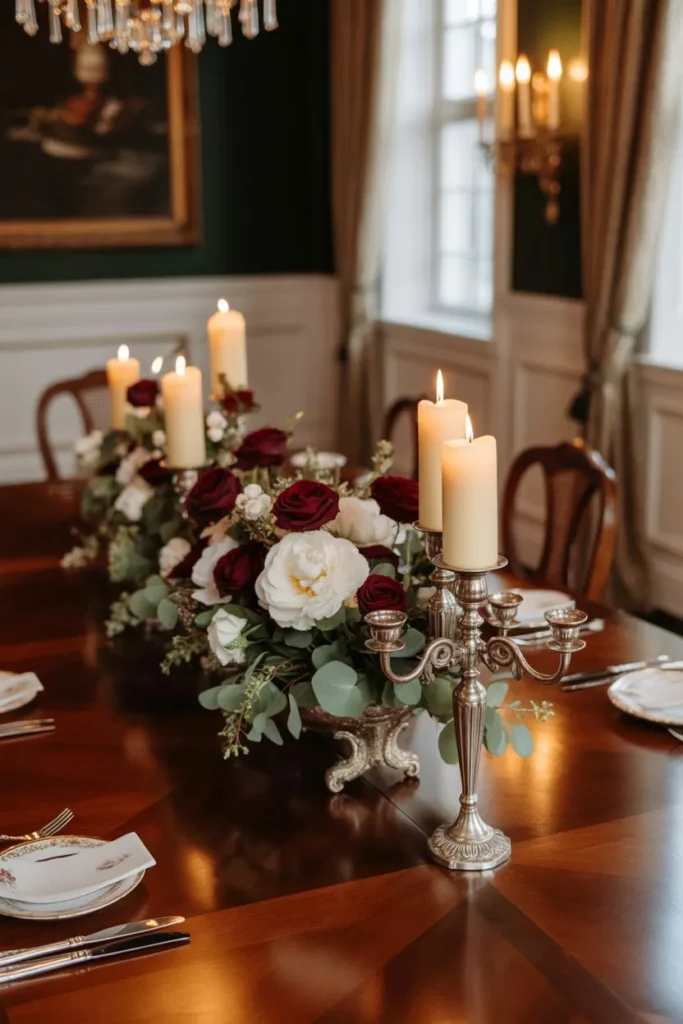
A well-designed centerpiece adds a focal point to the dining table while enhancing the overall elegance of the room. Traditional centerpieces often include floral arrangements, candles, or decorative bowls that reflect the room’s color palette and style. These elements bring life and detail without overpowering the table’s natural beauty.
The key is proportion—keeping the centerpiece balanced so it doesn’t obstruct conversation or feel excessive. A thoughtfully chosen arrangement enhances the dining experience while maintaining the room’s refined and timeless character.
12. Wood and Metal Combination for Subtle Contrast
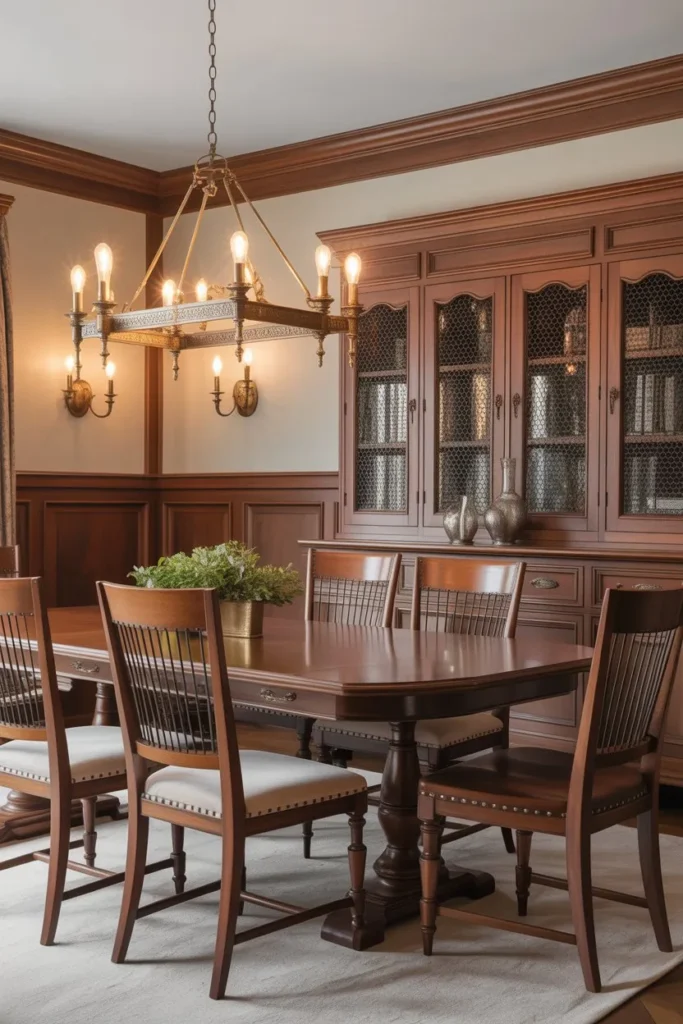
Combining wood with metal accents introduces subtle contrast while maintaining a traditional aesthetic. Brass, bronze, or gold finishes work particularly well with warm wood tones, adding a touch of refinement without disrupting the classic look. This pairing enhances visual interest while keeping the overall design cohesive.
Metal elements can be incorporated through lighting fixtures, hardware, or decorative accessories. When used carefully, they elevate the space without overpowering the natural warmth of wood, creating a balanced and elegant environment.
13. Fully Balanced Traditional Dining Room Design
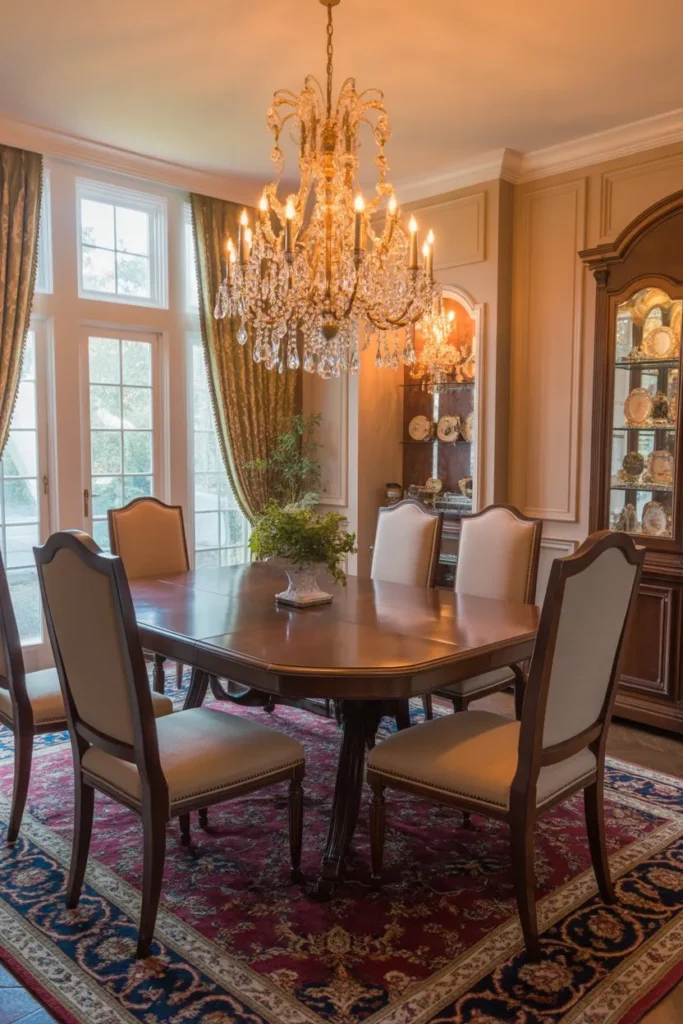
A successful traditional dining room is built on balance, where every element works together harmoniously. Furniture, lighting, color palette, and decor should complement each other without any single feature dominating the space. This creates a cohesive environment that feels both elegant and comfortable.
When symmetry, materials, and proportions are aligned, the room achieves a timeless appeal that remains relevant over time. This holistic approach ensures the dining room is not only visually pleasing but also practical for everyday use and special occasions.
Conclusion
The best traditional dining room ideas are built on balance, quality materials, and thoughtful design. By combining classic furniture, warm color palettes, and subtle decorative details, you can create a space that feels both elegant and inviting. Small elements like lighting and layout play a key role in achieving a cohesive look. With the right approach, a traditional dining room can remain stylish, functional, and timeless for years to come.