23 Brown Kitchen Cabinets Ideas for a Warm Stylish Look
Brown kitchen cabinets ideas bring warmth, depth, and a timeless appeal to any kitchen design. Whether you prefer light, medium, or dark tones, brown cabinetry offers versatility that works across modern, classic, and transitional styles. The key is balancing materials, lighting, and layout to create a space that feels both functional and visually appealing. These ideas focus on practical design strategies that help you achieve a kitchen that is stylish, comfortable, and easy to maintain for everyday use.
1. Dark Brown Cabinets with Light Countertops
Dark brown cabinets create depth and richness, making the kitchen feel grounded and sophisticated. When paired with light countertops like quartz or marble, the contrast prevents the space from feeling too heavy. This balance helps highlight the cabinetry while maintaining brightness across the room. It also allows natural and artificial light to reflect more effectively, making the kitchen feel more open despite darker tones.
This combination works especially well in modern and transitional kitchens where clean contrast is key. Light surfaces also make maintenance easier by showing fewer marks compared to darker countertops. Adding subtle metallic hardware enhances the overall look without overpowering the natural warmth of brown cabinetry.
2. Medium Brown Cabinets with Neutral Backsplash
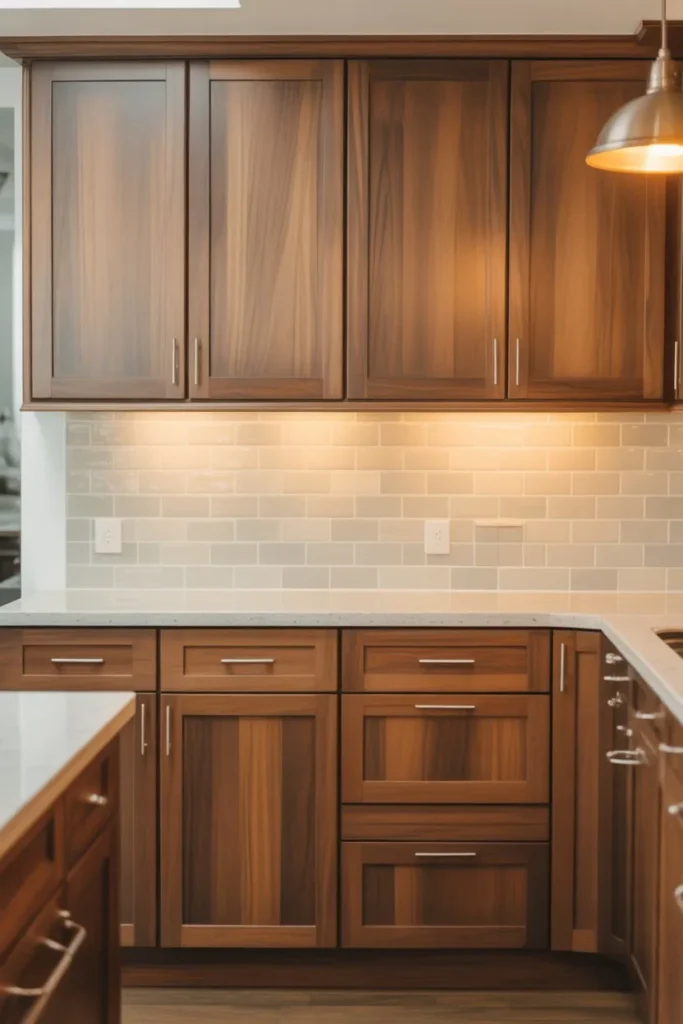
Medium brown cabinets offer a balanced tone that feels warm without being too dark. Pairing them with a neutral backsplash—such as beige, cream, or soft gray—creates a cohesive and calming design. This approach keeps the focus on texture rather than strong contrast, resulting in a softer overall aesthetic. It works particularly well in kitchens that aim for a relaxed, inviting atmosphere.
Neutral backsplashes also provide flexibility, allowing you to update other elements without changing the core design. The subtle contrast between cabinetry and wall surfaces helps maintain visual interest while keeping the space clean and uncluttered. This makes the kitchen both stylish and easy to adapt over time.
3. Brown Cabinets with Matte Finish for Modern Look
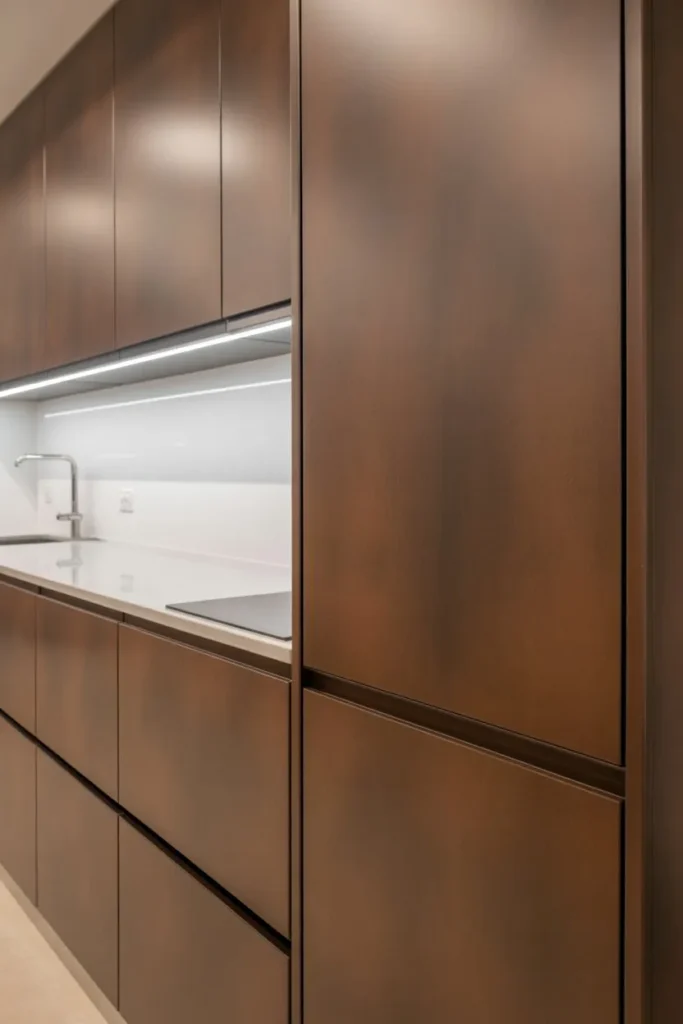
A matte finish enhances the natural tone of brown cabinets by reducing shine and emphasizing texture. This creates a modern, understated look that feels clean and refined. Matte surfaces also help hide fingerprints and smudges, making them practical for everyday use. The overall effect is a kitchen that looks polished without appearing overly glossy or artificial.
This style works well in minimalist kitchens where simplicity is key. Pairing matte cabinets with subtle lighting and clean lines ensures the design remains cohesive. It also allows other elements, like countertops or hardware, to stand out without competing with reflective surfaces.
4. Two-Tone Brown Cabinets for Layered Design
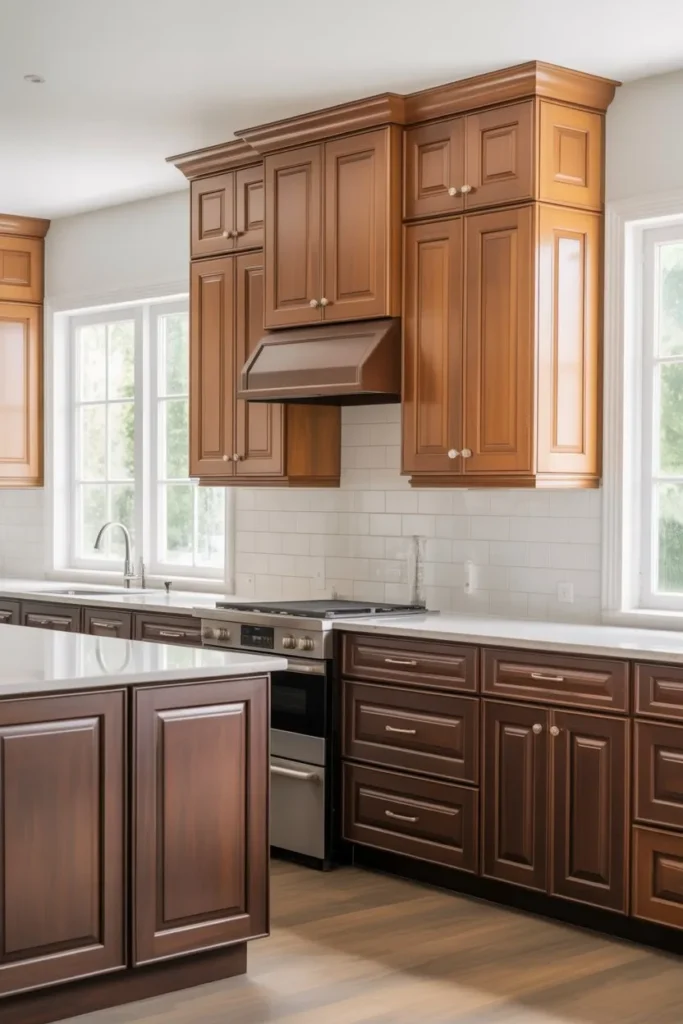
Using two shades of brown adds depth and dimension to the kitchen. Lighter tones on upper cabinets keep the space feeling open, while darker tones below ground the design. This layered approach prevents the kitchen from feeling flat or overly uniform. It also helps visually organize the layout, making it easier to distinguish different functional areas.
The key to success with two-tone cabinetry is maintaining consistent undertones. When both shades complement each other, the overall look feels intentional and balanced. This approach works well in both modern and classic kitchens, offering flexibility in design.
5. Brown Cabinets with Open Shelving Mix
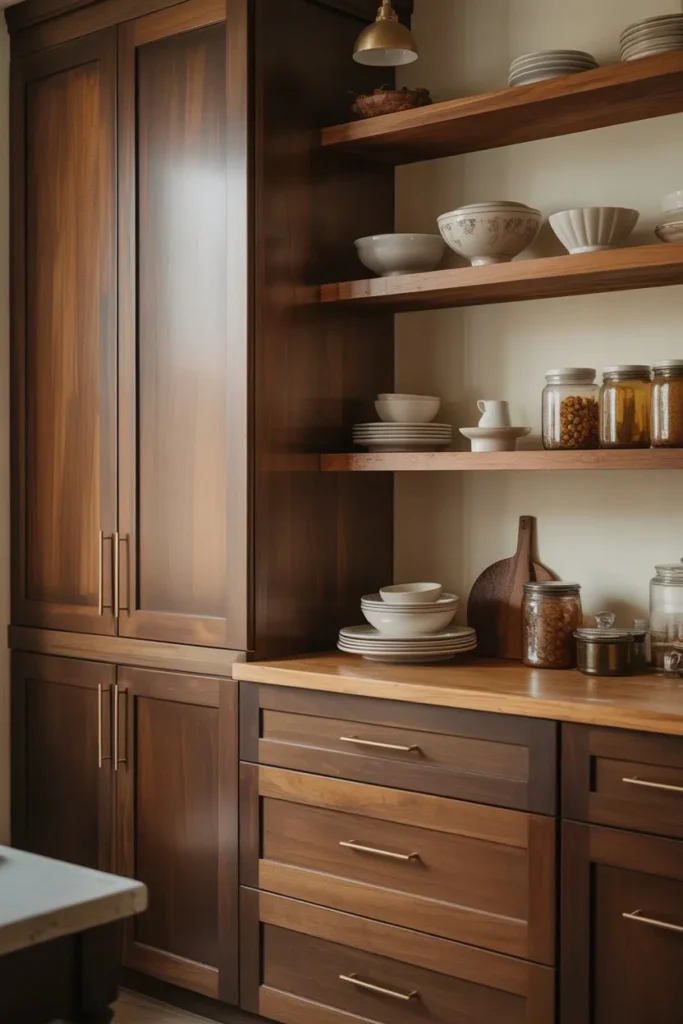
Combining brown cabinets with open shelving creates a more dynamic and approachable kitchen design. Open shelves break up the visual weight of full cabinetry, making the space feel lighter and more open. They also provide an opportunity to display everyday items in a stylish way.
This mix works particularly well in kitchens that aim for a warm, lived-in feel. Keeping shelves organized is important to maintain a clean appearance. When styled thoughtfully, this combination balances functionality with visual interest, making the kitchen both practical and inviting.
6. Brown Cabinets with White and Wood Balance
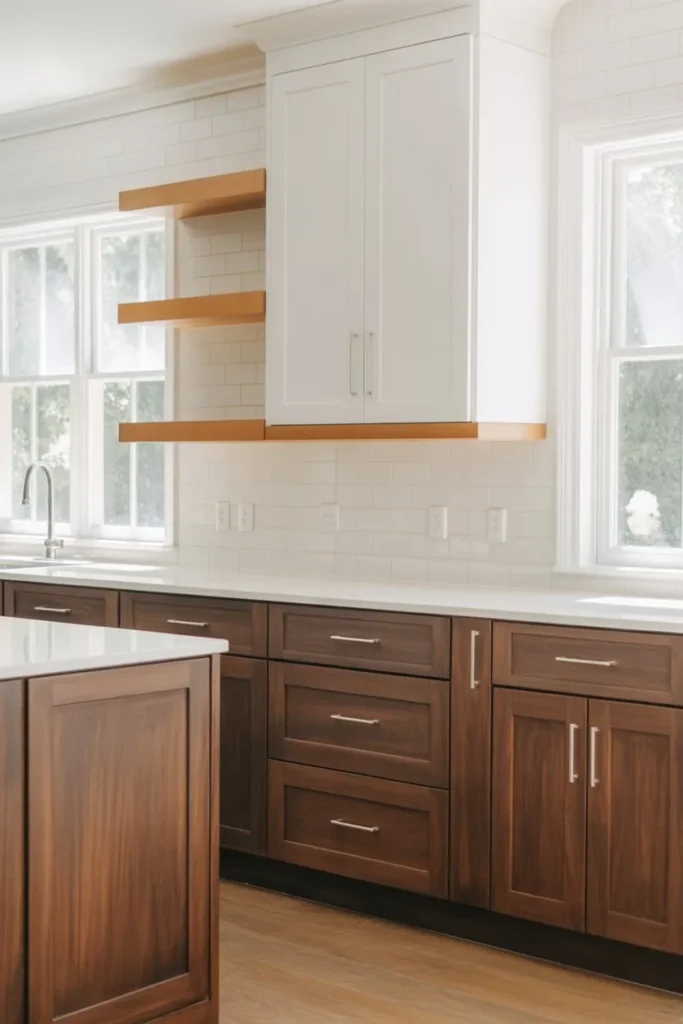
Brown cabinets paired with white elements create a balanced and timeless kitchen design. White surfaces reflect light and prevent the richness of brown from feeling too heavy, while wood tones maintain warmth and depth. This combination works especially well in kitchens where you want both brightness and character. It keeps the space visually open while still grounded in natural materials.
Using white for upper cabinets and brown for lower sections is a common strategy that enhances visual flow. It draws the eye upward while keeping the base strong and stable. Adding subtle wood accents or textures helps unify the palette, ensuring the kitchen feels cohesive rather than divided.
7. Brown Cabinets with Gold Hardware Accents
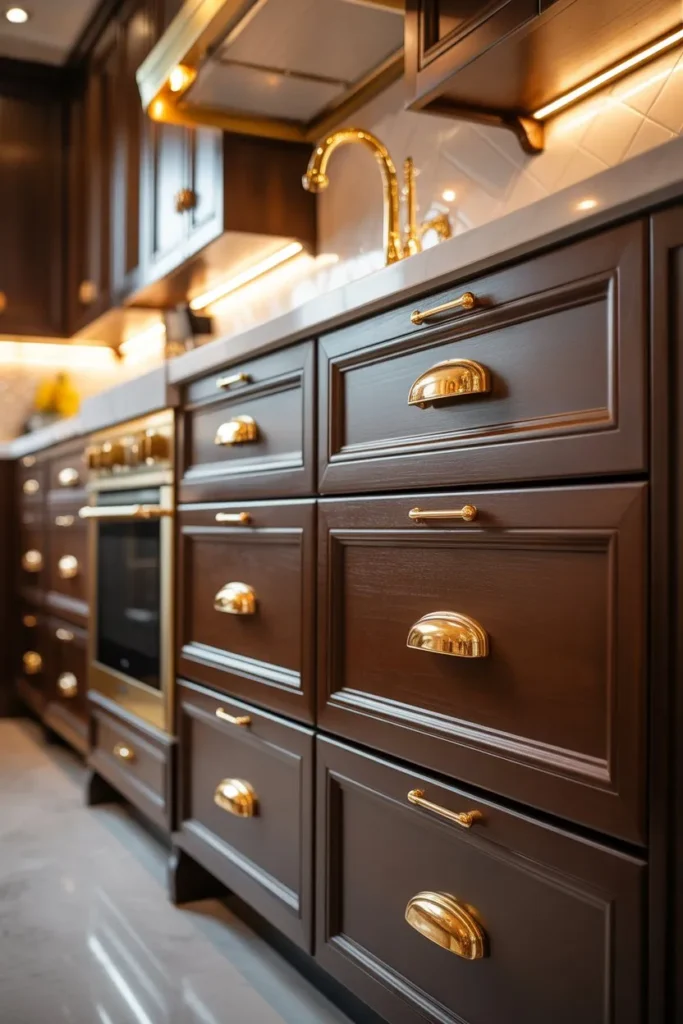
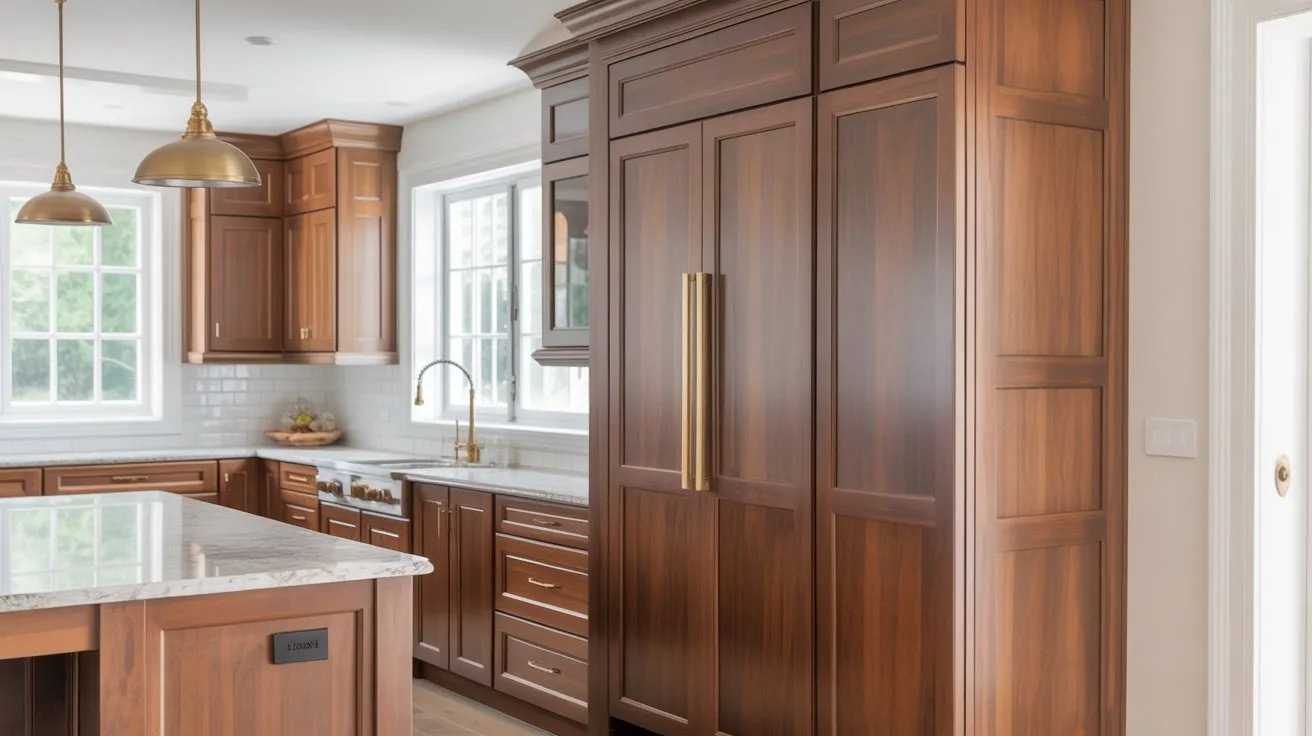
Gold hardware adds a refined and slightly luxurious touch to brown kitchen cabinets. The warmth of gold complements the richness of brown, creating a cohesive and elegant look without feeling overpowering. Small details like handles, faucets, or light fixtures can significantly elevate the overall design.
This pairing works particularly well in kitchens that aim for a modern yet sophisticated aesthetic. The contrast between matte or wood finishes and metallic accents adds visual interest. Keeping the rest of the palette neutral ensures the hardware stands out while maintaining balance across the space.
8. Brown Cabinets with Stone Countertops
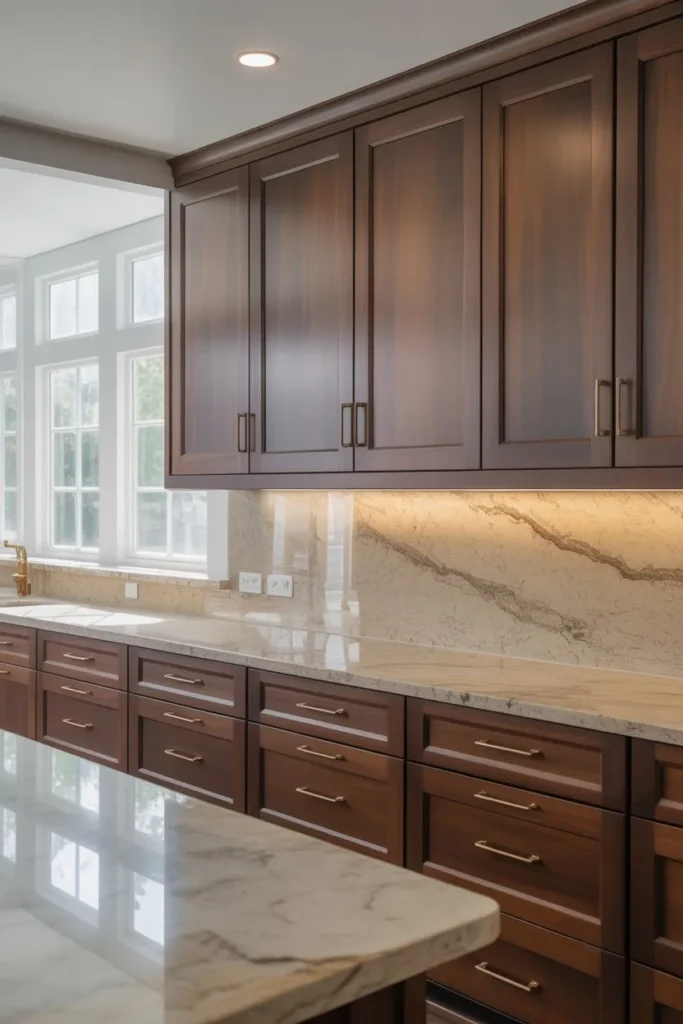
Stone countertops such as marble or granite pair beautifully with brown cabinets by introducing contrast and durability. The natural patterns in stone surfaces add visual texture, preventing the design from feeling flat. This combination balances warmth and sophistication, making the kitchen feel both functional and stylish.
Stone surfaces also offer long-term practicality, as they are resistant to heat and wear. Choosing lighter tones can brighten the space, while darker stones create a more dramatic effect. This flexibility allows the design to adapt to different styles while maintaining a strong, cohesive look.
9. Brown Cabinets with Warm Ambient Lighting
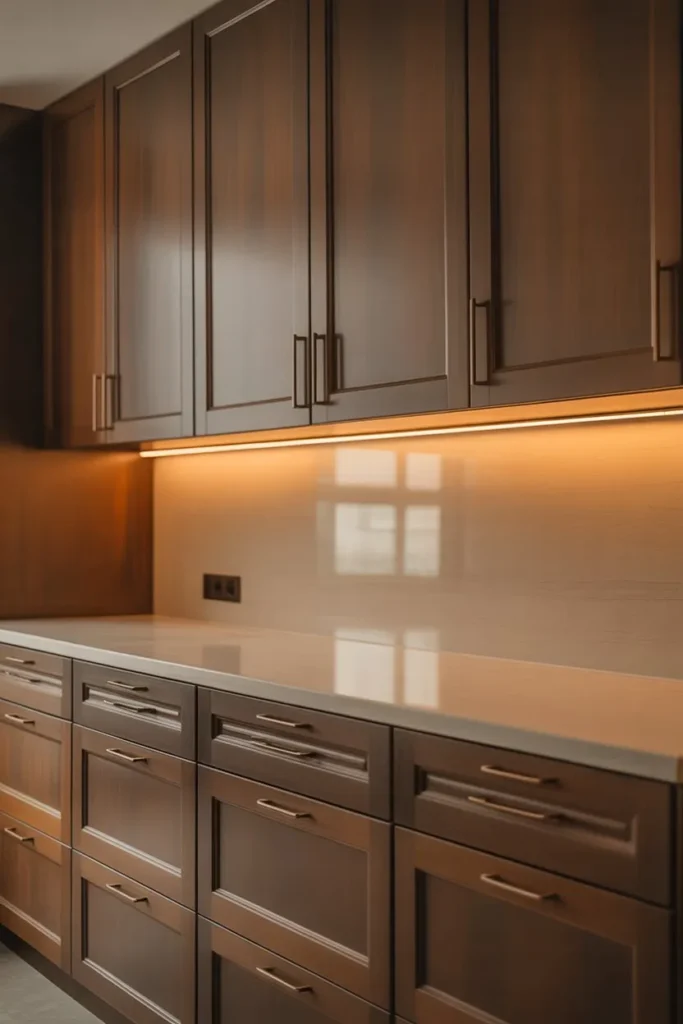
Lighting plays a crucial role in enhancing the appearance of brown cabinets. Warm ambient lighting highlights the natural tones, making the kitchen feel more inviting and comfortable. Under-cabinet lighting is particularly effective, as it adds depth and improves visibility for daily tasks.
This approach ensures the kitchen maintains its warmth throughout the day and evening. Soft lighting reduces harsh shadows and creates a more relaxed atmosphere. When combined with layered lighting sources, it enhances both functionality and visual appeal.
10. Brown Cabinets with Vertical Grain Texture
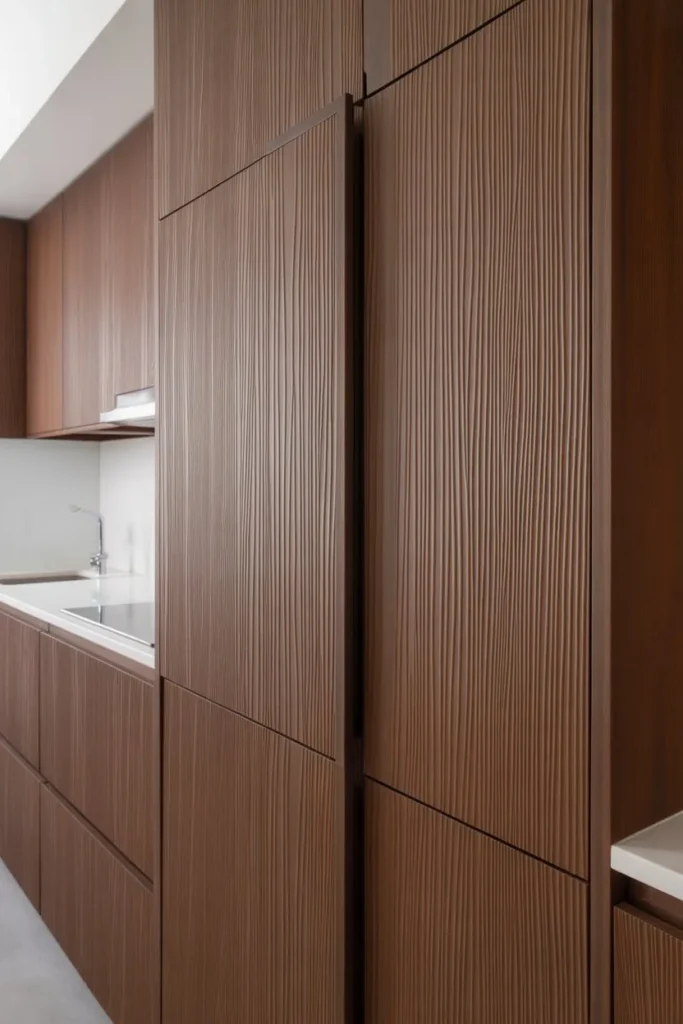
Vertical wood grain introduces subtle movement and modernity to brown cabinets. It draws the eye upward, making the kitchen appear taller and more refined. This detail adds interest without relying on bold colors or heavy contrast.
This style works particularly well in contemporary kitchens where clean lines and minimal design are important. The natural texture of wood becomes a key design feature, allowing the cabinets to stand out while maintaining simplicity and elegance.
11. Brown Cabinets with Full-Height Design for Seamless Look
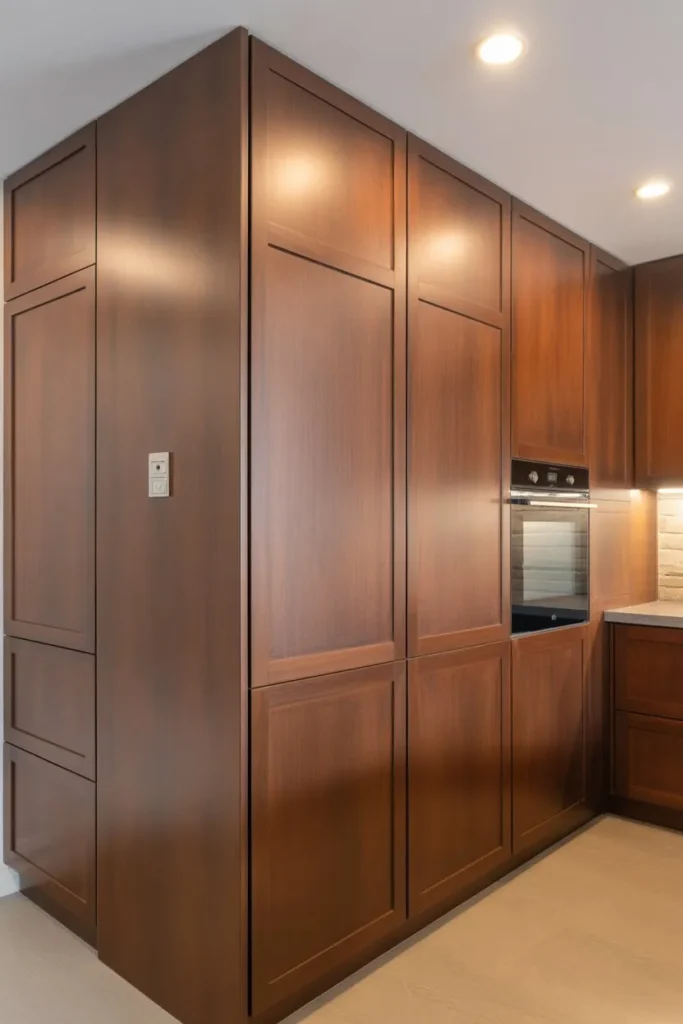
Full-height brown cabinets create a seamless and cohesive kitchen design by extending cabinetry all the way to the ceiling. This eliminates unused space above cabinets, which often collects dust and disrupts visual flow. The result is a cleaner, more refined look that feels intentional and well-designed.
This approach also maximizes storage, making it ideal for both small and large kitchens. Keeping the cabinet color consistent throughout enhances the sense of continuity, while integrated handles or minimal hardware maintain a sleek and modern aesthetic.
12. Brown Cabinets with Glass Front Elements
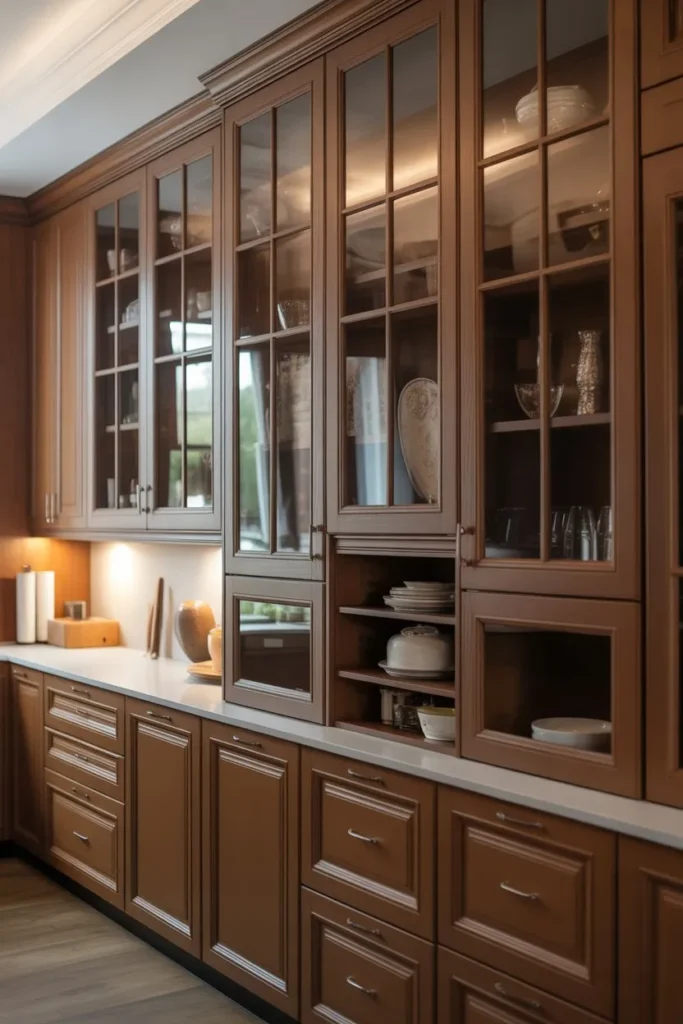
Adding glass-front cabinets helps break up the visual weight of solid brown cabinetry. The transparency introduces lightness while still maintaining the overall design theme. It also provides an opportunity to display dishes or decor in a controlled and stylish way.
This combination works best when used selectively, rather than across all cabinets. It creates contrast and adds dimension without overwhelming the space. Proper lighting inside glass cabinets can further enhance their visual impact.
13. Brown Cabinets with Open Layout Integration
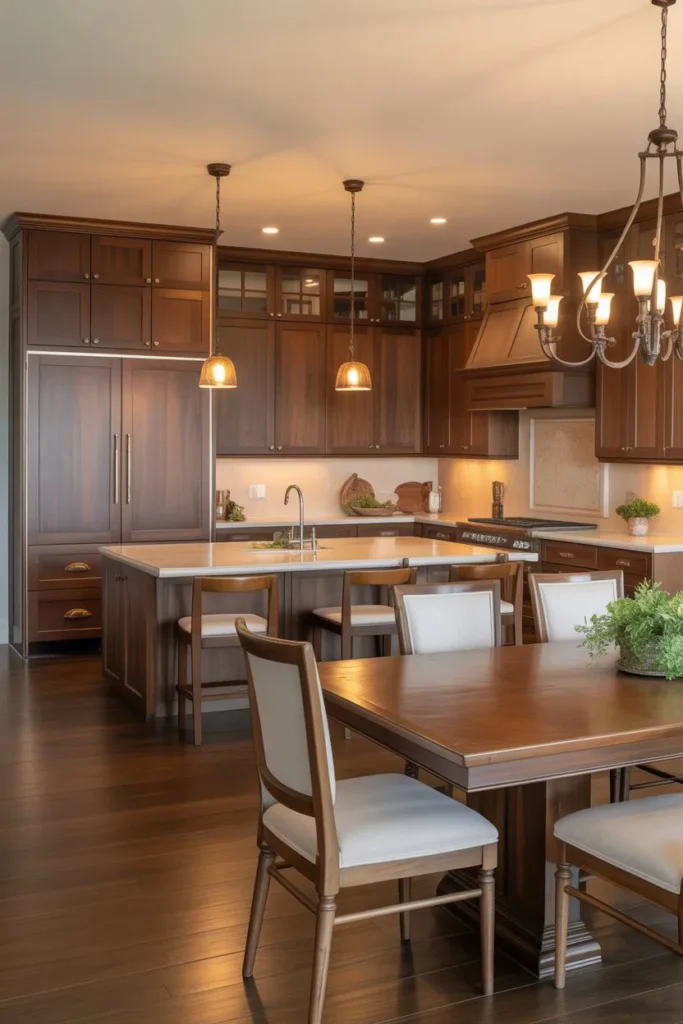
In open-plan homes, brown cabinets should integrate smoothly with surrounding spaces. Using consistent tones and materials ensures the kitchen feels connected to the dining or living area rather than isolated. This creates a more cohesive and visually pleasing environment.
The key is maintaining balance—too much contrast can break the flow, while consistent design elements help unify the space. This approach enhances both functionality and aesthetics in modern homes.
14. Brown Cabinets with Mixed Material Accents
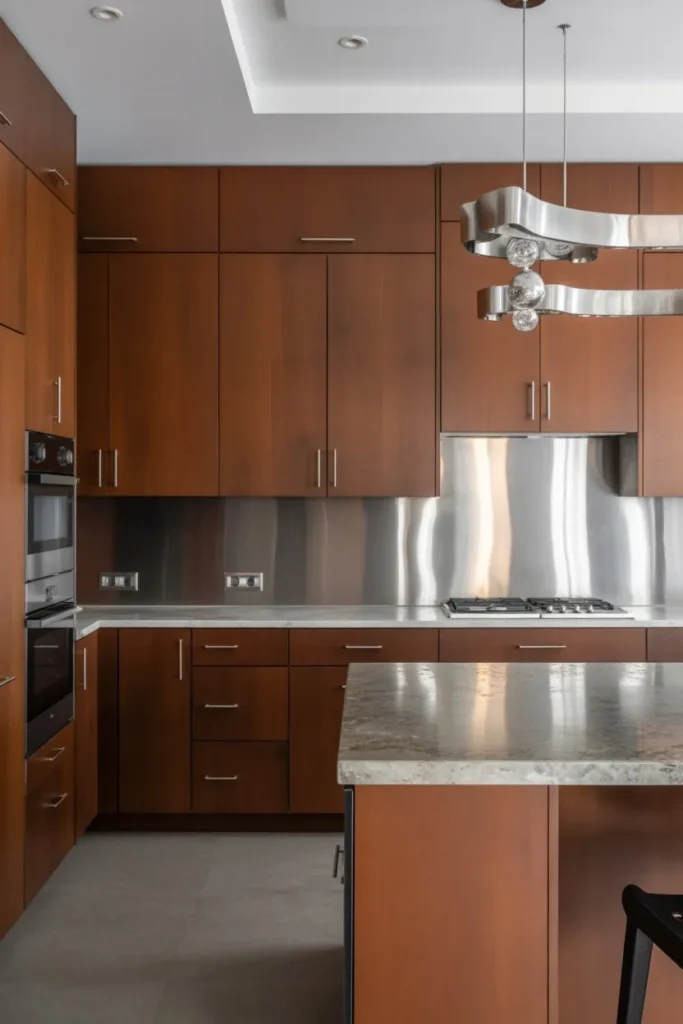
Combining brown cabinets with materials like metal, stone, or glass adds depth and variety to the kitchen. These elements introduce contrast and prevent the design from feeling too uniform. Each material contributes its own texture and visual interest.
The key is moderation—wood should remain the dominant feature, while other materials support the overall look. This layered approach creates a more dynamic and modern kitchen design.
15. Brown Cabinets with Island as Central Feature
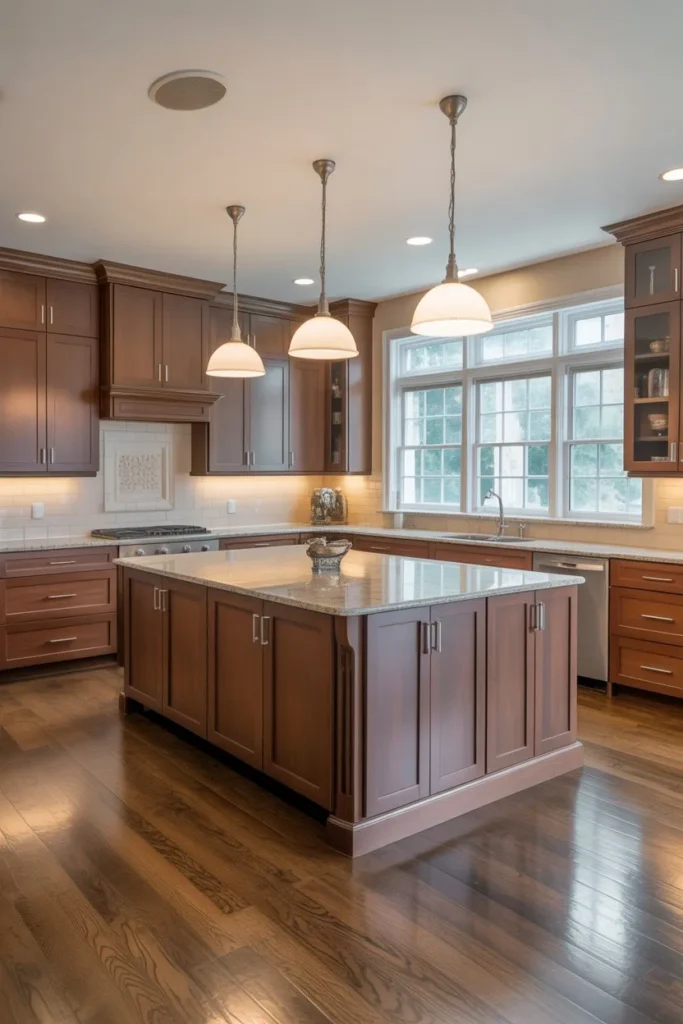
A kitchen island paired with brown cabinets creates a strong focal point that enhances both function and design. It provides additional workspace, storage, and often seating, making it a central hub of activity.
Using a slightly different tone or material for the island can add contrast while maintaining harmony. This approach helps define the layout and improves overall usability in the kitchen.
16. Brown Cabinets with Black Accents for Modern Contrast
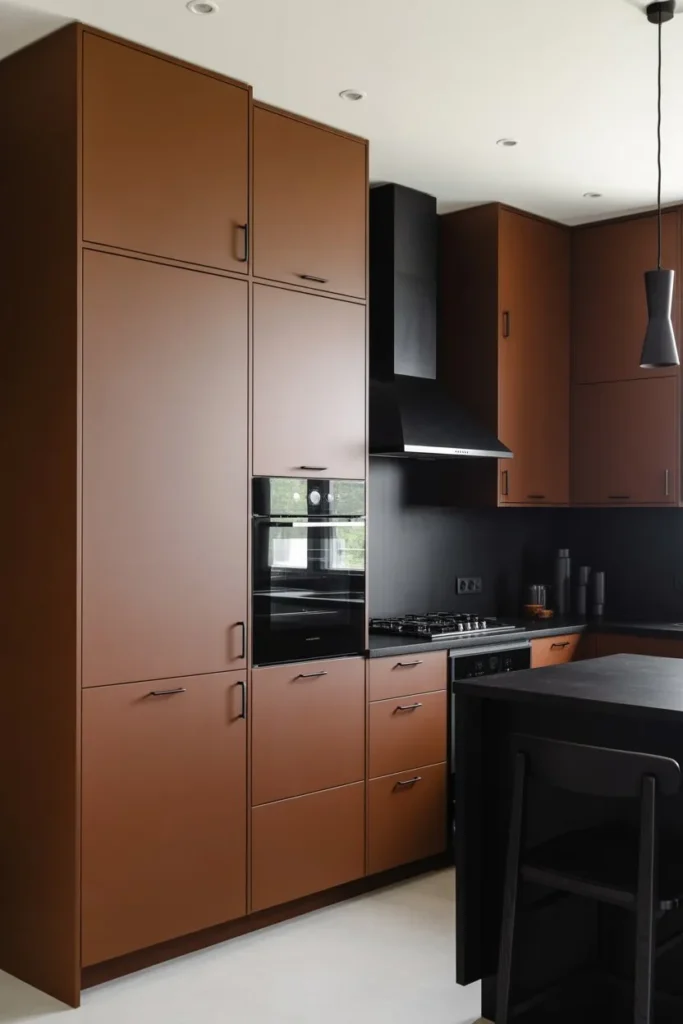
Brown cabinets paired with black accents create a bold yet balanced contrast that feels modern and refined. Elements like black handles, faucets, or lighting fixtures add definition without overpowering the natural warmth of wood tones. This combination sharpens the overall design while maintaining a grounded feel.
The contrast works best when used selectively to avoid making the space feel too dark. Keeping countertops or walls lighter helps balance the palette. This approach results in a kitchen that feels contemporary while still warm and inviting.
17. Brown Cabinets with Soft Beige Walls for Warm Harmony
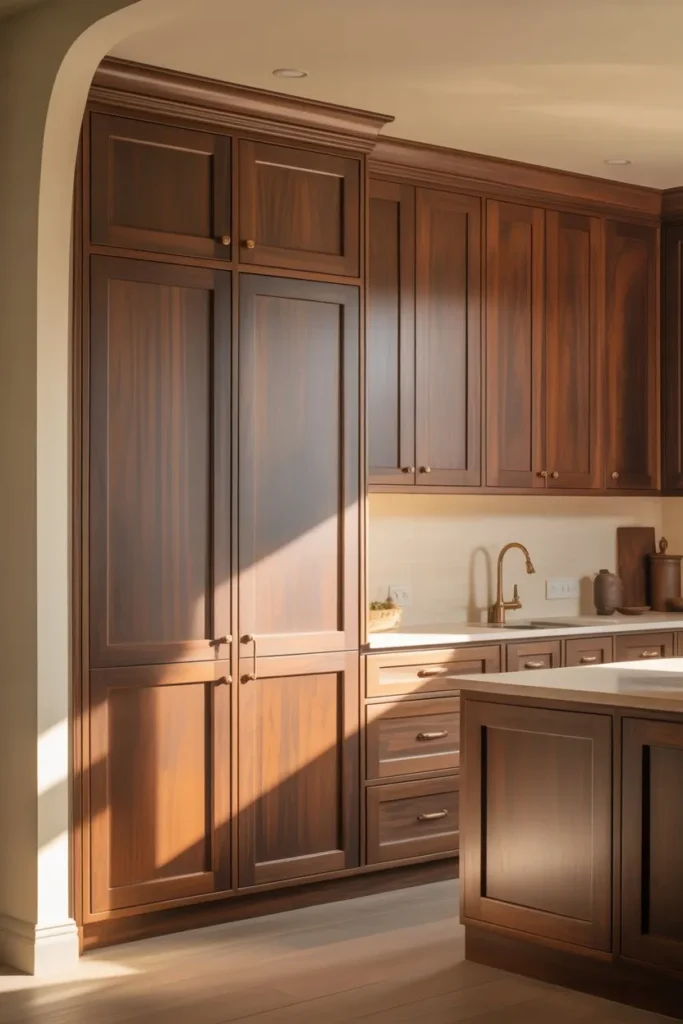
Pairing brown cabinets with beige walls creates a warm and harmonious color scheme. Both tones share similar undertones, allowing them to blend naturally without strong contrast. This results in a calming and cohesive environment that feels comfortable and welcoming.
This approach is ideal for those who prefer a softer, more subtle aesthetic. Adding layered lighting and natural textures enhances the warmth, ensuring the space feels inviting throughout the day.
18. Brown Cabinets with Industrial Touches
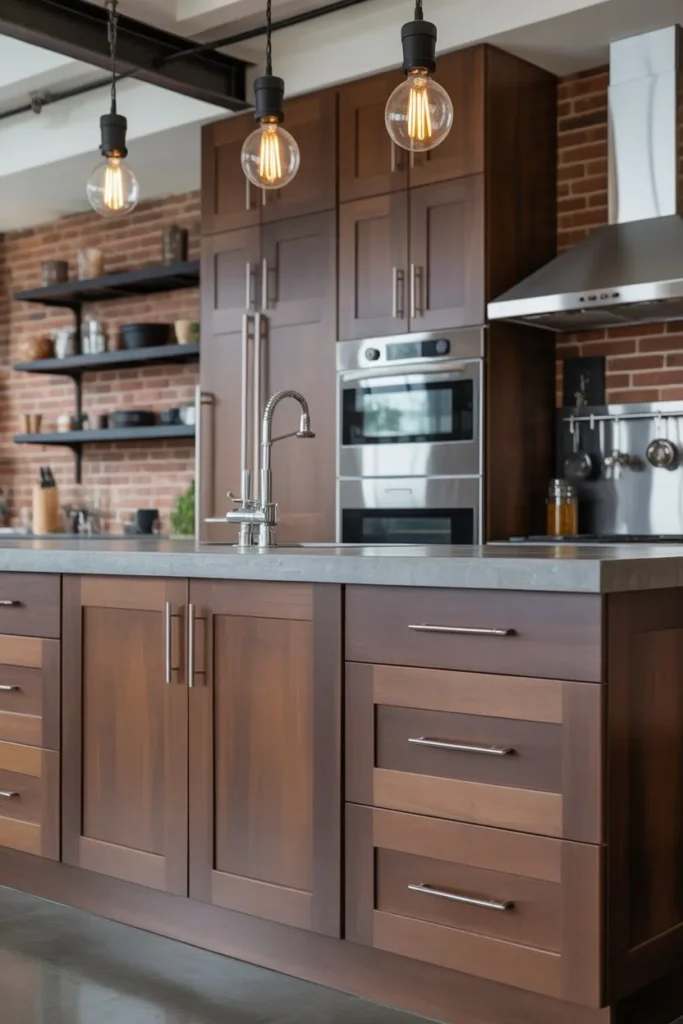
Adding industrial elements introduces a raw, modern edge to brown cabinetry. Features like metal fixtures, exposed lighting, or concrete surfaces create contrast against the natural warmth of wood. This combination adds character and depth without losing functionality.
The balance between warm wood and cool industrial materials keeps the design interesting. It’s a great option for kitchens that aim to feel modern but not overly polished.
19. Brown Cabinets with Minimal Handleless Design
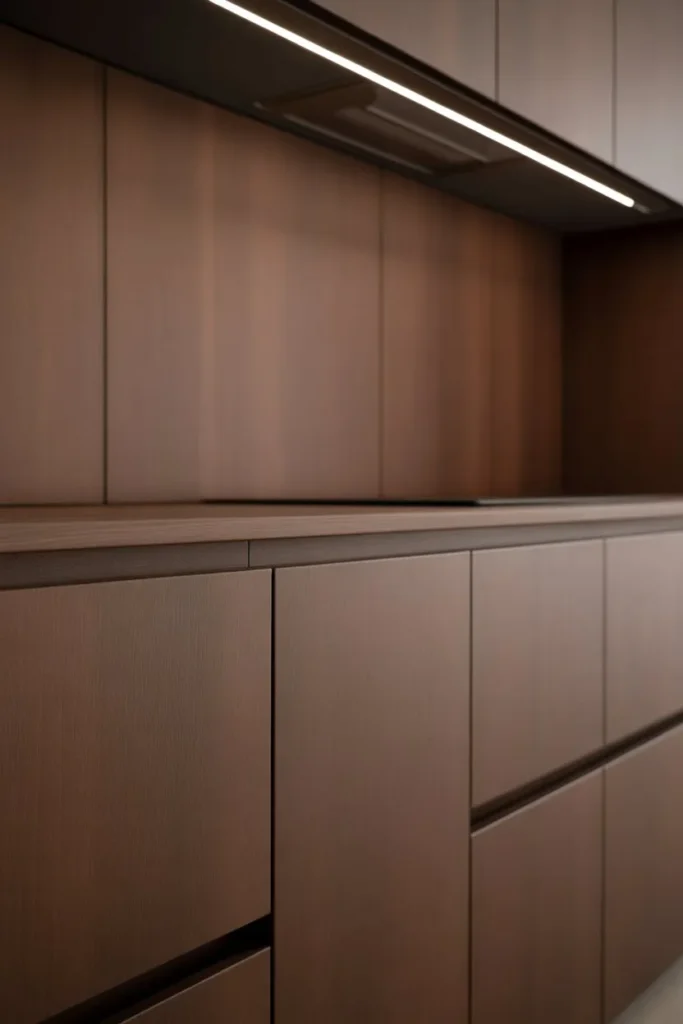
Handleless brown cabinets create a smooth and seamless appearance that emphasizes clean lines. By removing visible hardware, the focus shifts entirely to the material and finish of the cabinets. This enhances the modern feel of the kitchen while maintaining simplicity.
This design also improves ease of cleaning and contributes to a clutter-free look. It works especially well in minimalist kitchens where every detail is intentional and refined.
20. Brown Cabinets with Bright Backsplash Contrast
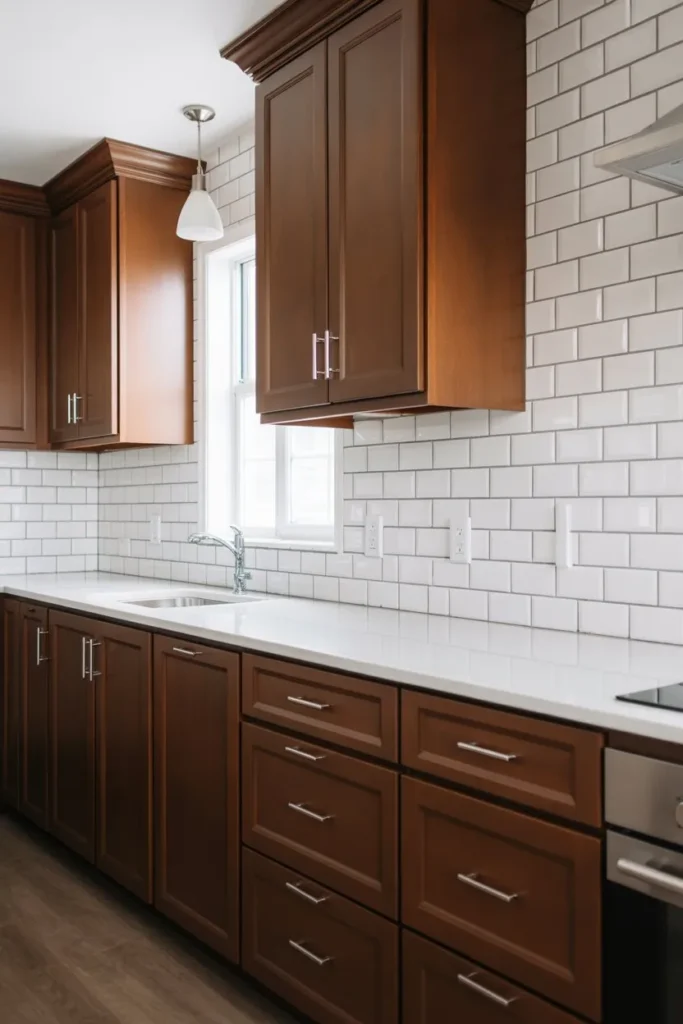
A bright backsplash adds contrast and visual interest to brown cabinets. Light or patterned tiles can break up the darker tones and bring energy into the space without overwhelming it. This creates a balanced design that feels both warm and dynamic.
Choosing a backsplash with subtle texture or pattern enhances the overall look while keeping it cohesive. This is an easy way to refresh the kitchen without changing major elements.
21. Brown Cabinets with Layered Lighting Design
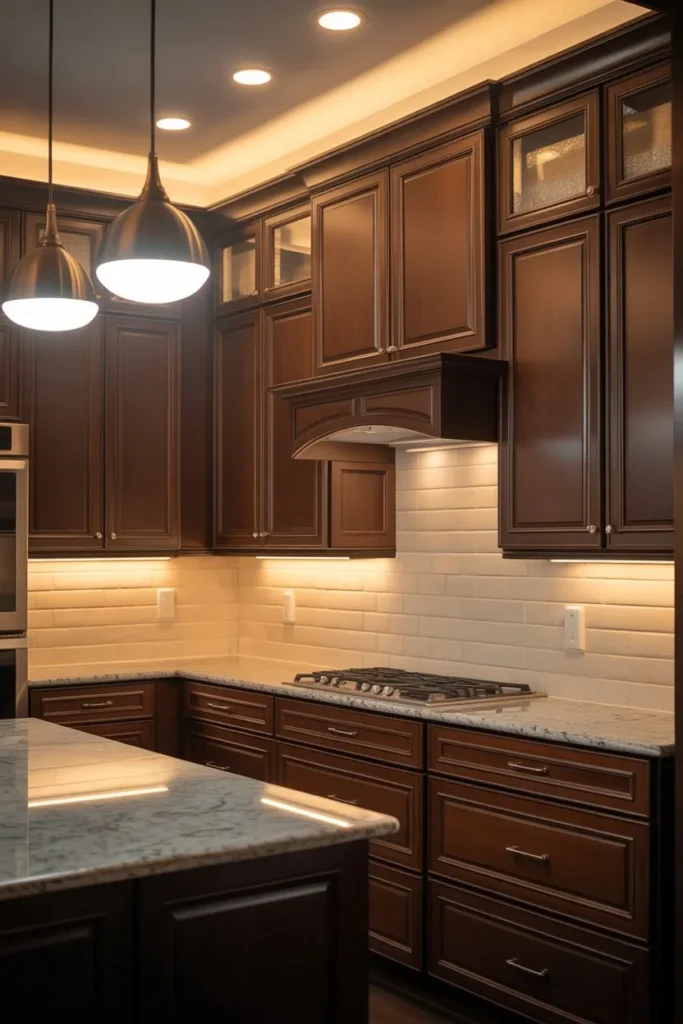
Layered lighting enhances both functionality and atmosphere in a kitchen with brown cabinets. Combining overhead lights, under-cabinet lighting, and ambient sources ensures the space is well-lit and visually appealing.
Warm lighting highlights the richness of brown tones, making the kitchen feel cozy and inviting. This approach also improves usability by ensuring all work areas are properly illuminated.
22. Brown Cabinets with Compact Smart Layout
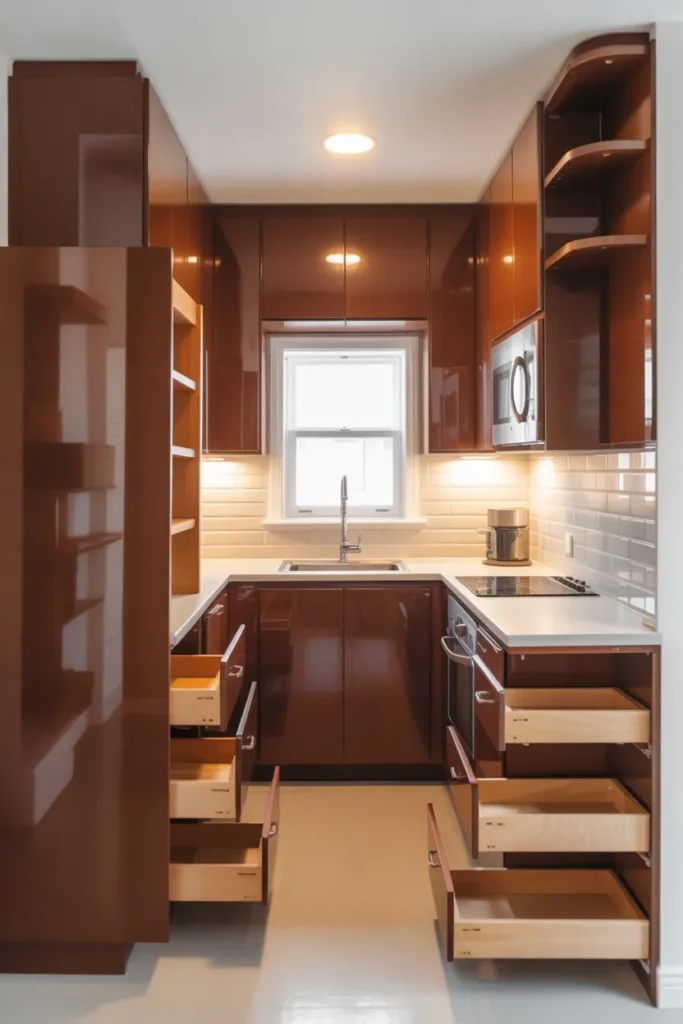
In smaller kitchens, brown cabinets can still work beautifully when paired with a smart layout. Efficient storage solutions and clear pathways ensure the space remains functional and easy to navigate.
Using lighter countertops and proper lighting prevents the room from feeling cramped. This approach proves that even compact kitchens can feel stylish and practical with the right design choices.
23. Fully Balanced Brown Kitchen Cabinet Design
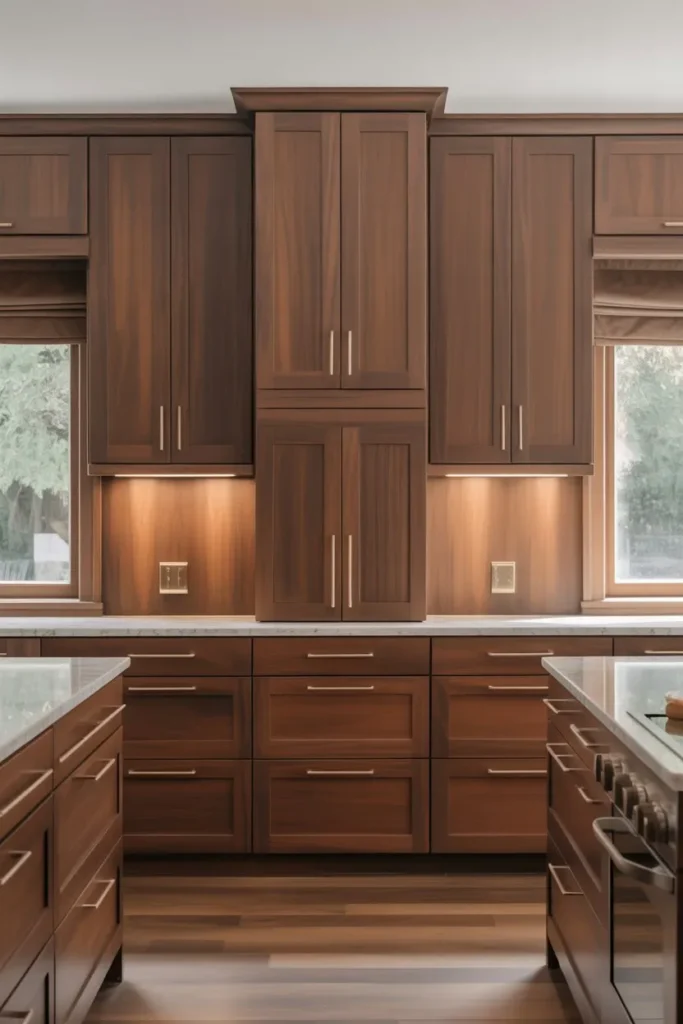
The most successful brown kitchen designs focus on balance—tone, lighting, materials, and layout all working together. No single element should dominate the space, ensuring a cohesive and comfortable environment.
When everything is aligned, the kitchen feels warm, functional, and visually refined. This holistic approach ensures the design remains timeless and practical for everyday use.
Conclusion
The best brown kitchen cabinets ideas focus on balance, warmth, and functionality. By combining the right tones, materials, and lighting, you can create a space that feels both modern and inviting. Small design choices, like hardware or layout adjustments, can make a significant impact over time. With the right approach, brown cabinets can transform your kitchen into a stylish and practical space that stands the test of time.