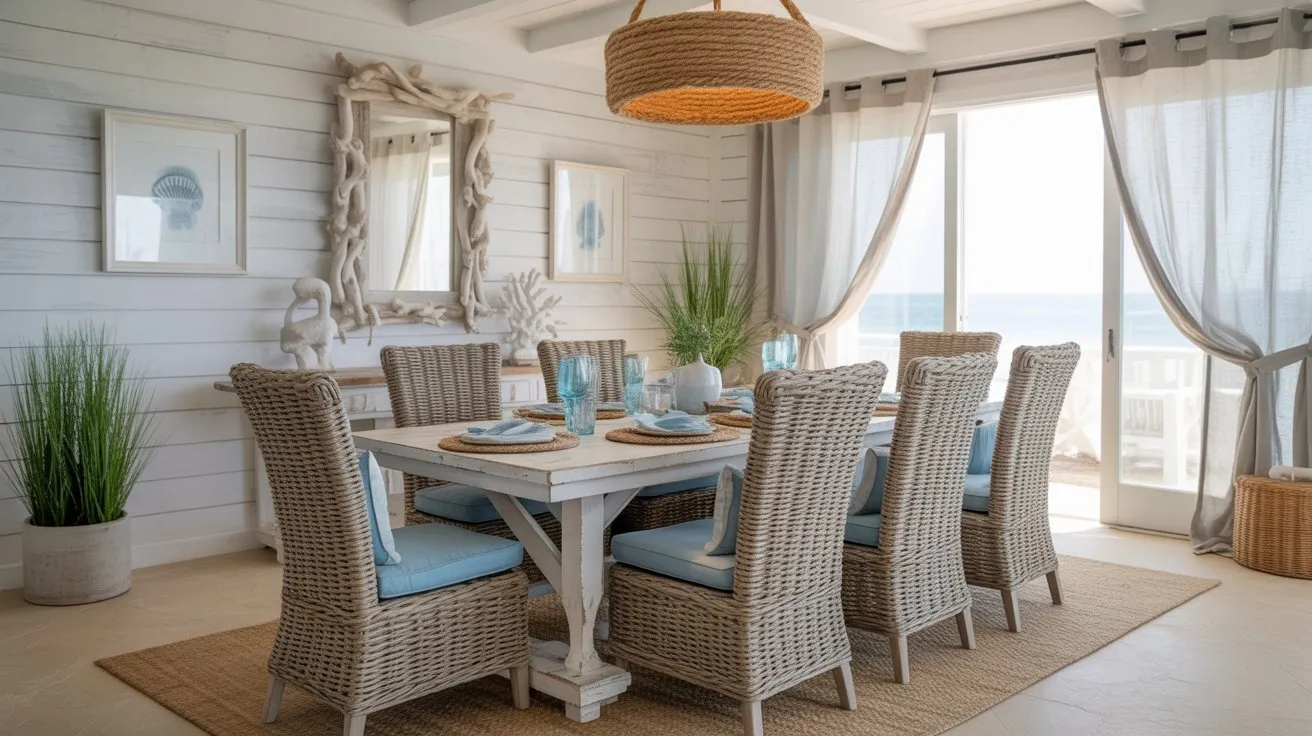
Coastal dining room ideas focus on creating a space that feels light, open, and effortlessly relaxing. Inspired by the natural beauty of the seaside, this style emphasizes soft colors, natural materials, and a strong connection to light and air. Whether you live near the coast or simply want to bring that calm atmosphere into your home, the right design choices can transform your dining area. These ideas will help you create a balanced space that feels both stylish and comfortable for everyday living.
1. Soft White Coastal Dining Room with Natural Light
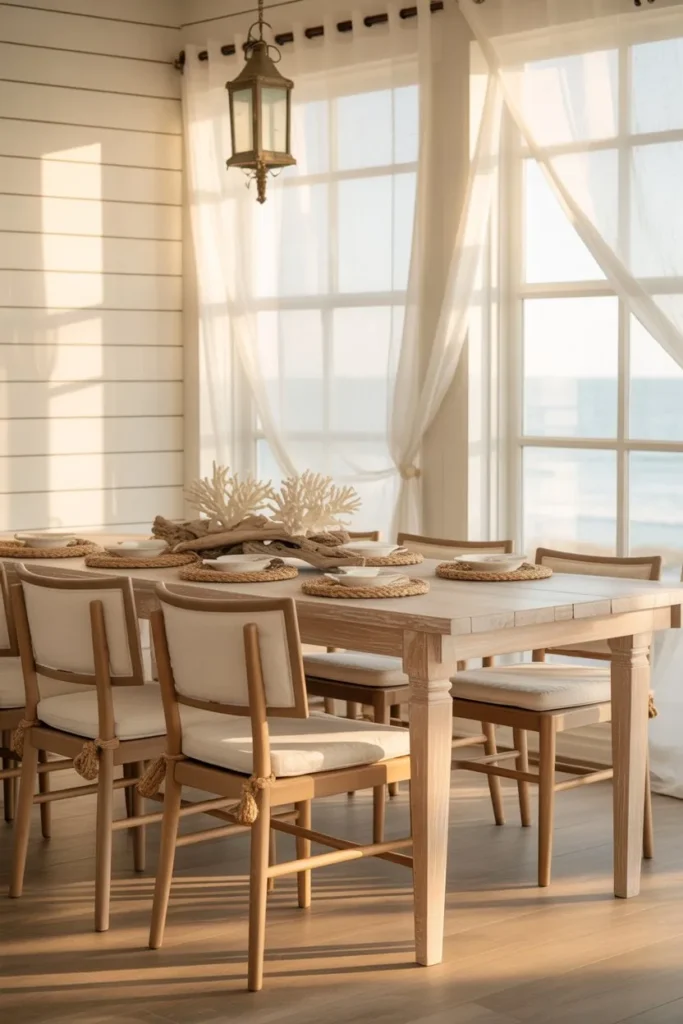
A soft white palette is one of the most effective coastal dining room ideas for creating a light and breezy atmosphere. White reflects natural light, making the space feel open, clean, and connected to the outdoors. This is especially important in coastal-inspired interiors where brightness plays a key role.
To avoid a sterile look, layer textures like linen upholstery, light wood finishes, and woven accents. Sheer curtains allow sunlight to filter through gently, enhancing the airy feel. This combination creates a calm and inviting dining space that feels effortlessly relaxed yet refined.
2. Coastal Dining Room with Blue and Sand Color Palette
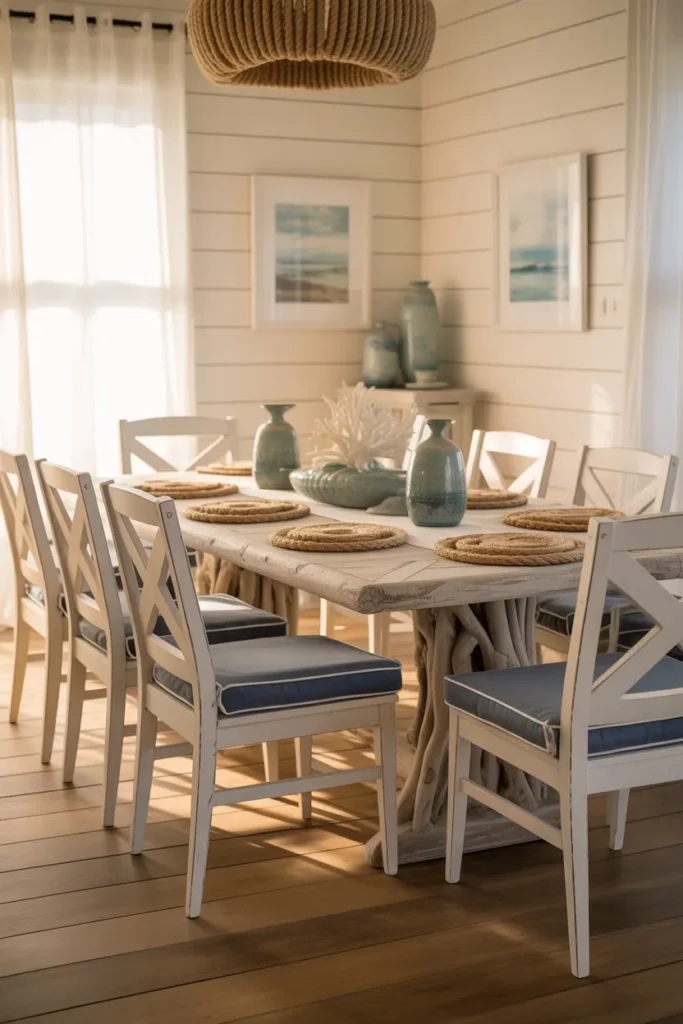
A blue and sand palette is a signature approach in coastal dining room ideas, inspired directly by the ocean and shoreline. Soft blues mimic water tones, while sandy neutrals ground the space, creating a balanced and soothing environment.
The key is subtlety—avoid overly saturated colors and instead opt for muted tones that feel natural. Pairing these colors with organic materials like wood and linen enhances authenticity, making the space feel connected to a coastal setting without looking themed.
3. Coastal Dining Room with Woven and Rattan Elements
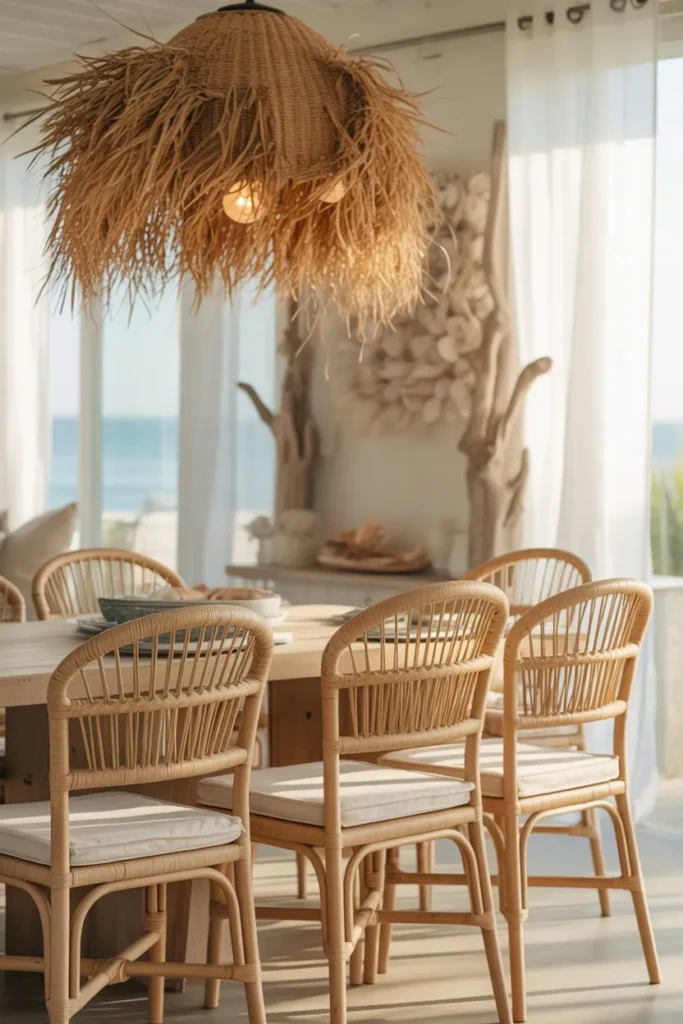
Natural textures are essential in coastal dining room ideas, and rattan or woven elements add warmth and character. These materials introduce a relaxed, beach-inspired feel while maintaining visual interest.
Using rattan chairs or a woven pendant light creates a focal point without overpowering the space. These elements work best when paired with soft, neutral tones, ensuring the overall design remains light and breathable.
4. Minimal Coastal Dining Room with Clean Lines
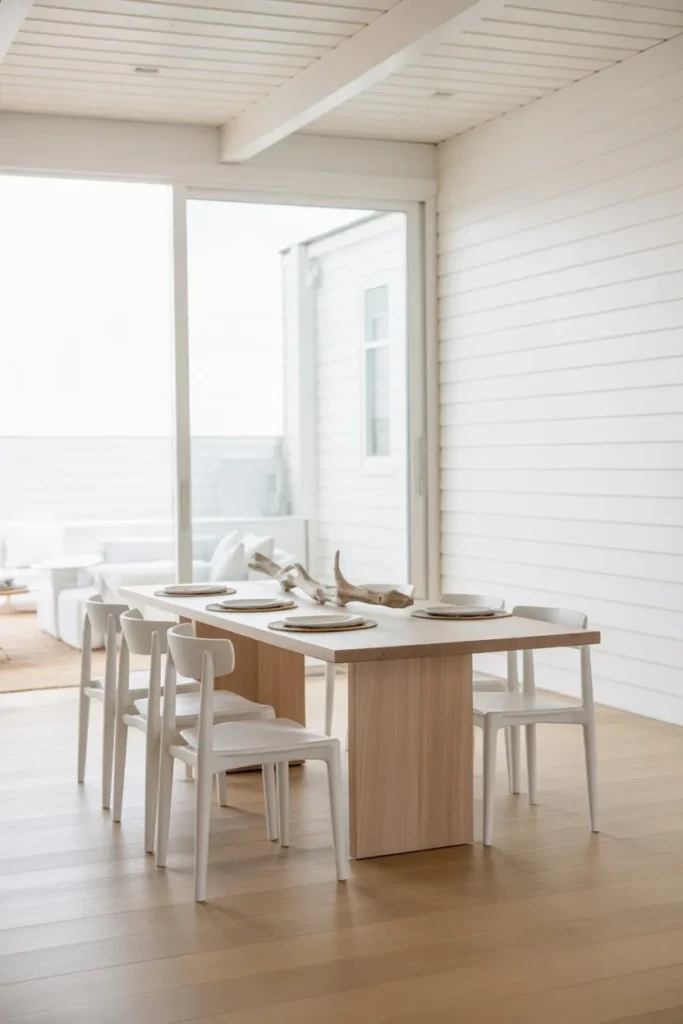
A minimal approach is perfect for modern coastal dining room ideas, focusing on simplicity and functionality. Clean lines and uncluttered surfaces create a calm environment that feels both contemporary and relaxed.
The goal is to use fewer elements but choose them carefully. High-quality materials and thoughtful placement ensure the space feels intentional rather than empty. This style works well in modern homes where less is more.
5. Coastal Dining Room with Statement Lighting Fixture
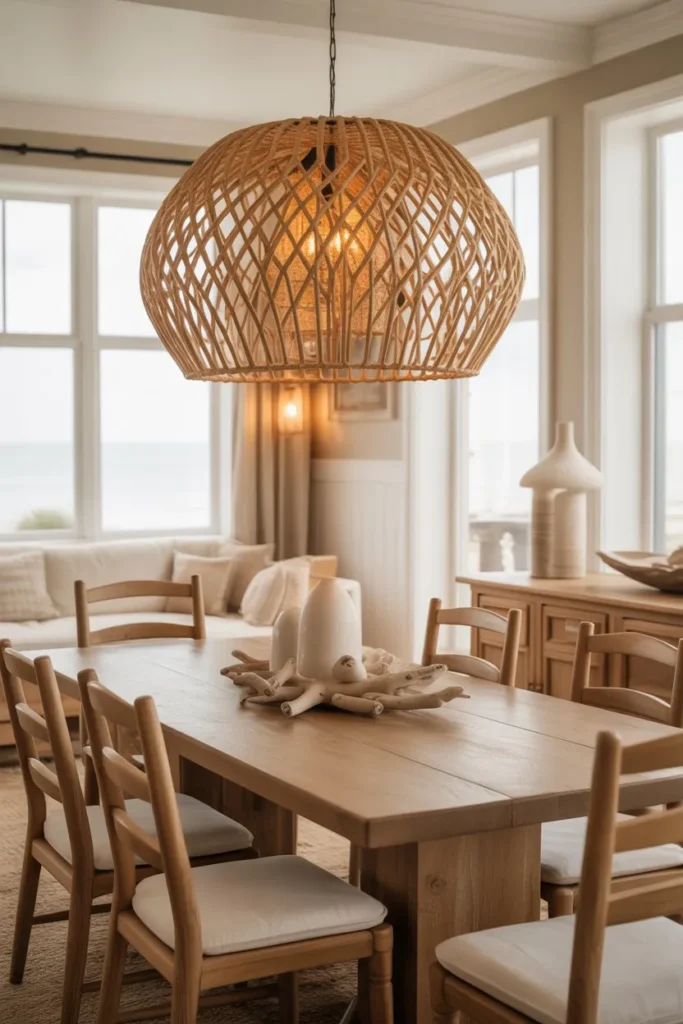
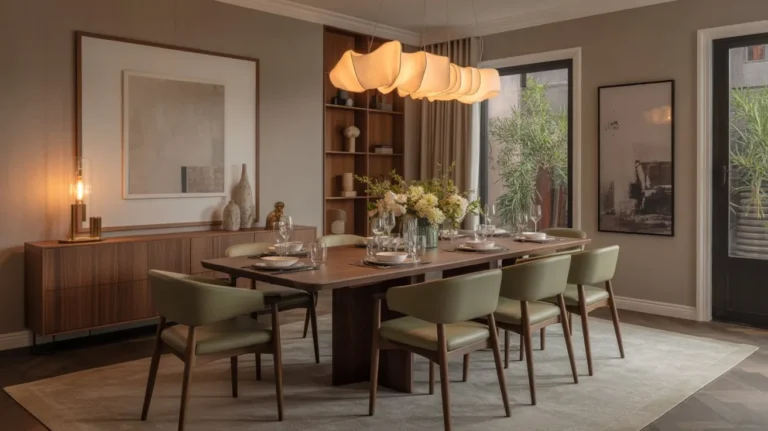
Lighting plays a central role in coastal dining room ideas, and a statement fixture can define the entire space. A large woven pendant or soft, organic light fixture adds texture while anchoring the dining area.
Positioning the light correctly above the table ensures both functionality and visual balance. Warm lighting enhances the relaxed coastal feel, making the space more inviting for everyday use and gatherings.
6. Coastal Dining Room with Open Concept Layout
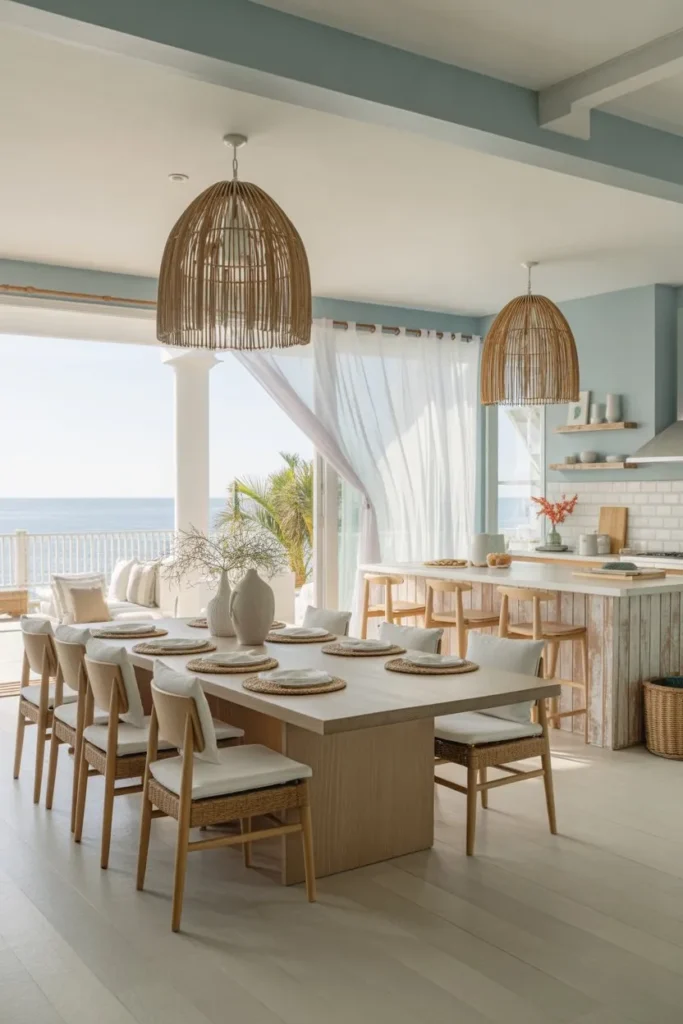
An open concept layout enhances the airy quality of coastal dining room ideas by removing visual barriers. Connecting the dining area with the kitchen or living space creates a seamless flow that feels spacious and inviting.
Consistency in materials and colors is key to making this layout work. Keeping a cohesive palette ensures the space feels unified rather than fragmented. This approach is ideal for modern coastal homes where openness and light are essential.
7. Coastal Dining Room with Weathered Wood Finishes
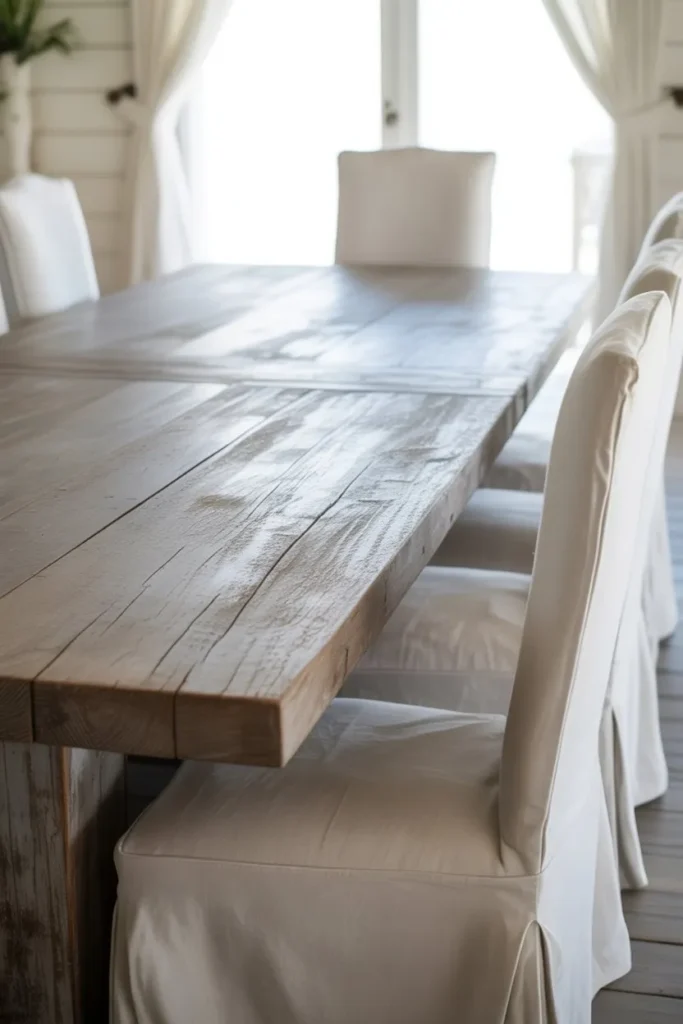
Weathered wood is a defining element in authentic coastal dining room ideas because it reflects the natural aging process seen in seaside environments. A slightly distressed or washed wood finish adds character without making the space feel heavy.
This approach works best when balanced with lighter elements such as white walls, linen seating, or soft neutral textiles. The contrast prevents the room from feeling rustic or dark, instead maintaining a breezy and relaxed atmosphere. It’s important to avoid overly polished finishes—coastal design thrives on imperfection and subtle texture, which makes the space feel lived-in and naturally inviting.
8. Coastal Dining Room with Large Windows and Light Flow
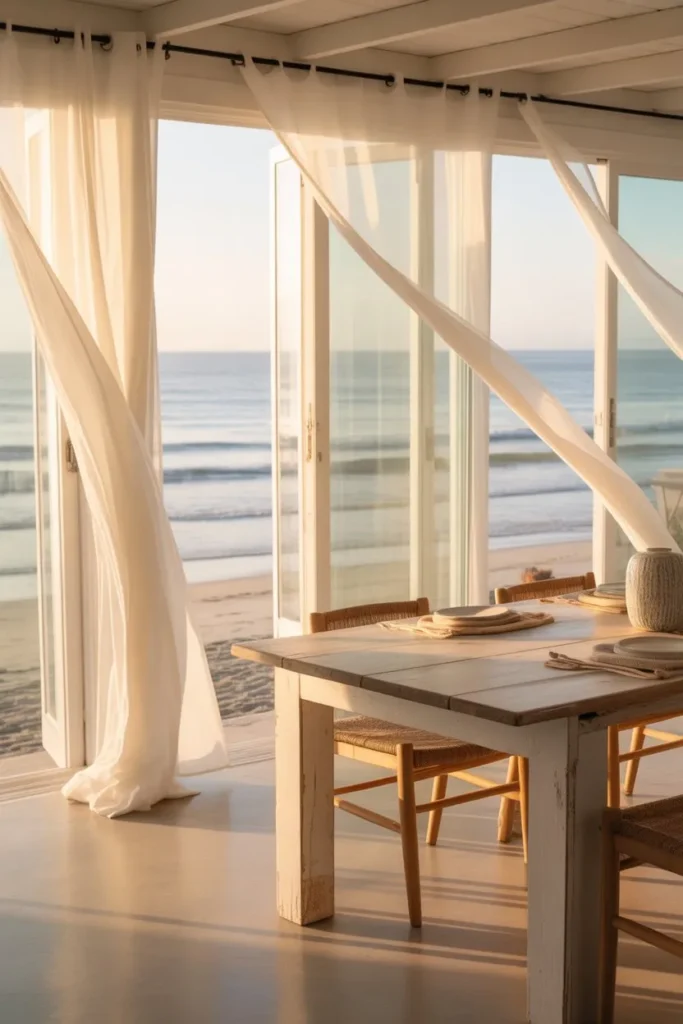
Natural light is the foundation of successful coastal dining room ideas, and large windows play a crucial role in achieving that light, breezy feel. The goal is to maximize daylight while minimizing visual barriers that block it.
Sheer curtains or no window treatments at all allow sunlight to flow freely, enhancing the sense of openness. Positioning the dining table near the window not only improves lighting for meals but also creates a stronger connection with the outdoors. This layout transforms the dining experience, making it feel more relaxed, spacious, and naturally uplifting.
9. Coastal Dining Room with Soft Layered Textiles
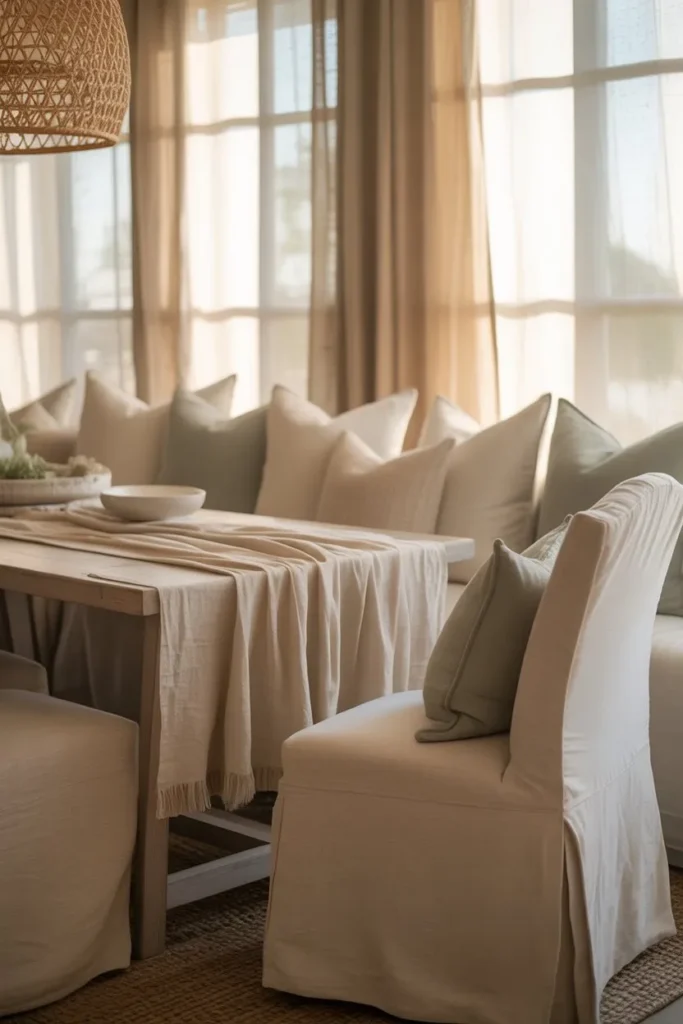
Layering textiles is essential in coastal dining room ideas to add comfort and visual softness without disrupting the airy aesthetic. Materials like linen, cotton, and light weaves introduce texture while maintaining breathability.
A linen table runner, upholstered seating, or subtle cushions can make the space feel more inviting without adding bulk. The key is to keep fabrics light and natural, avoiding heavy or overly structured materials. This approach ensures the dining room feels comfortable and relaxed while still looking refined and thoughtfully designed.
10. Coastal Dining Room with Glass and Reflective Elements
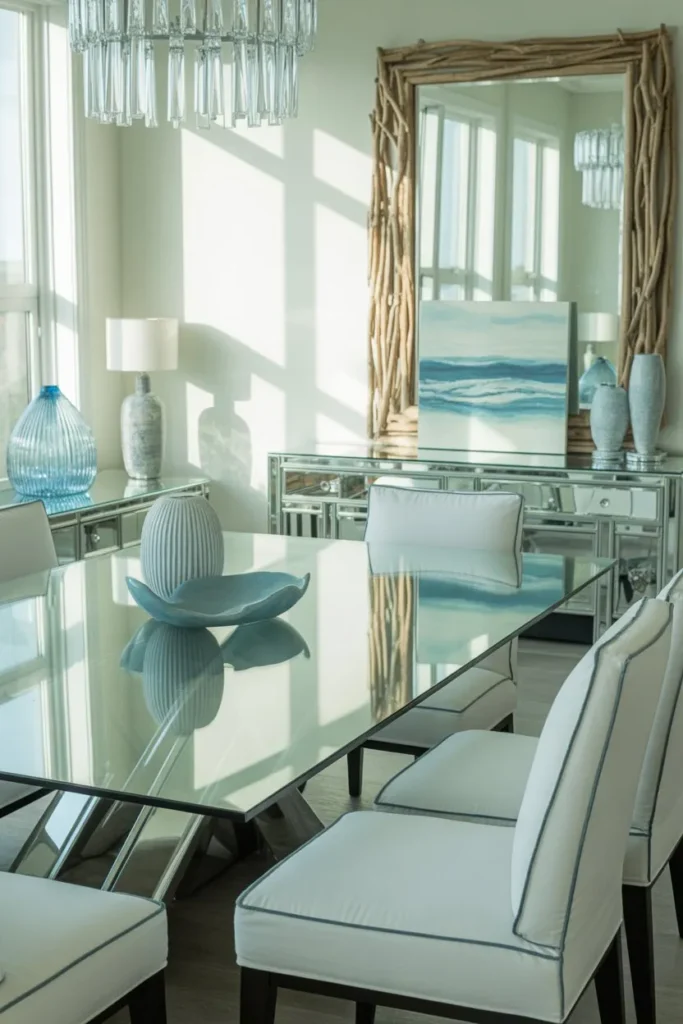
Glass and reflective surfaces enhance coastal dining room ideas by amplifying light and creating a sense of openness. A glass dining table, for example, reduces visual weight and allows the room to feel less crowded.
Mirrors or subtle reflective decor can further distribute natural light, making the space feel brighter and more expansive. This technique is especially effective in smaller dining areas where maintaining an airy feel is essential. It helps achieve a clean, modern coastal look without relying on excessive decoration.
11. Coastal Dining Room with Subtle Nautical Accents
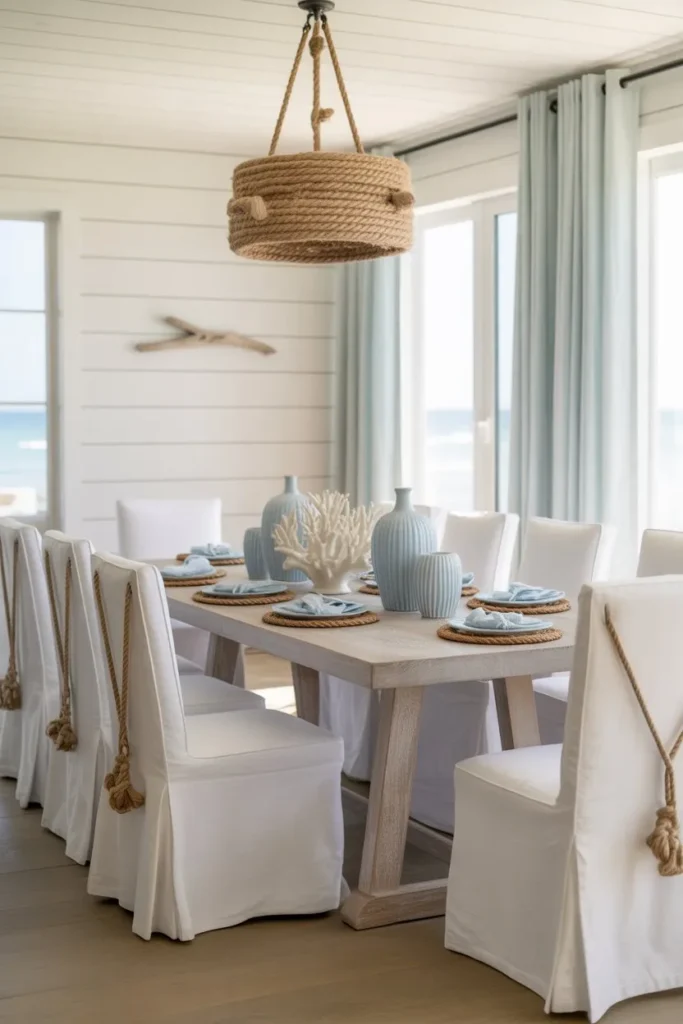
Nautical elements can enhance coastal dining room ideas when used sparingly and thoughtfully. Instead of obvious themed decor, focus on subtle references like rope textures, soft blue accents, or marine-inspired shapes.
The goal is to suggest a coastal influence without turning the space into a themed environment. Keeping these accents minimal ensures the room remains elegant and modern while still reflecting a seaside inspiration.
12. Coastal Dining Room with Light Oak and Neutral Palette
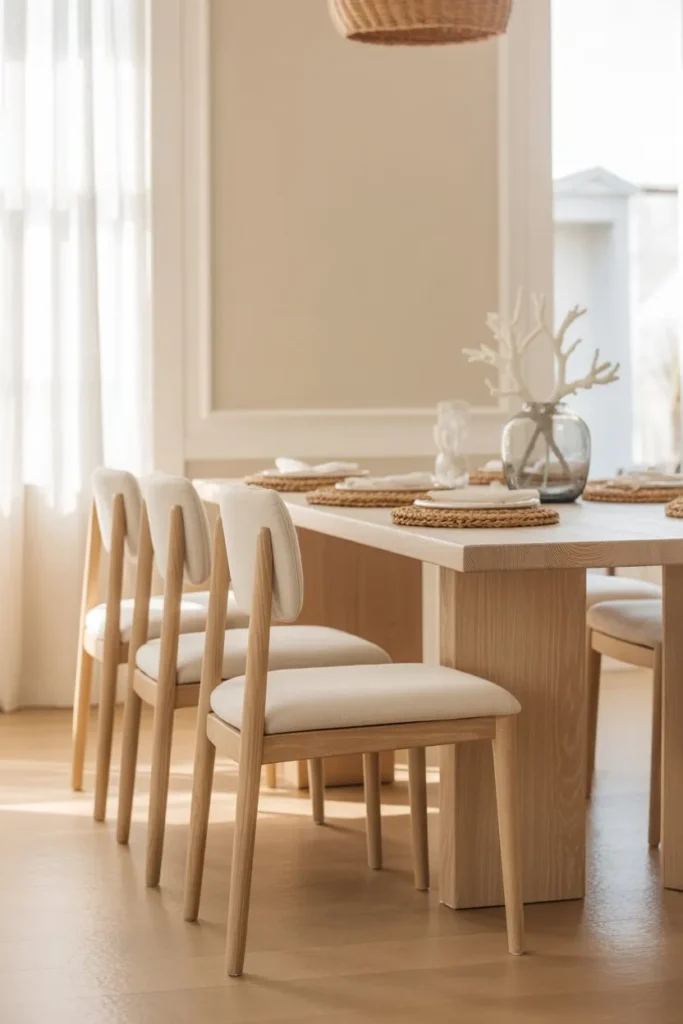
Light oak is one of the most versatile materials in coastal dining room ideas, offering warmth without heaviness. Its natural tone complements neutral palettes, helping create a soft and balanced environment.
Pairing light oak furniture with white, beige, and soft gray tones enhances the airy feel while maintaining visual harmony. This combination is ideal for achieving a modern coastal look that feels both fresh and timeless, making it suitable for long-term design without frequent updates.
13. Coastal Dining Room with Indoor–Outdoor Connection
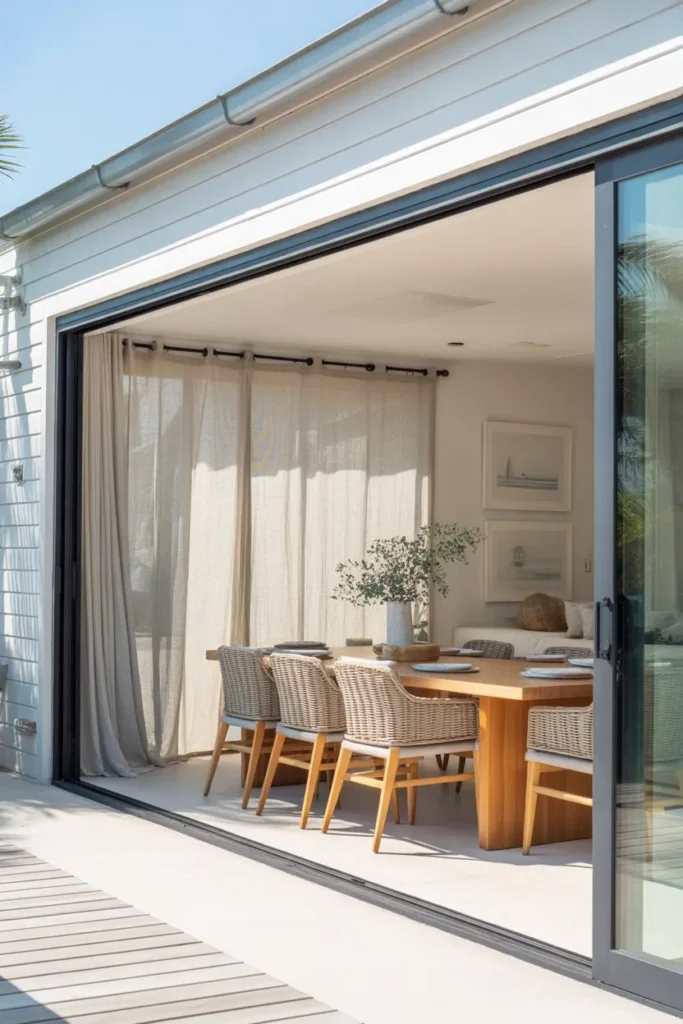
One of the most impactful coastal dining room ideas is creating a strong indoor–outdoor connection. Sliding glass doors or large openings allow natural light, fresh air, and even views to become part of the dining experience.
Positioning the dining table near this transition zone enhances both function and atmosphere. It makes the space feel larger and more relaxed, while also improving ventilation. This layout is especially valuable in coastal homes, where the goal is to blur the boundary between interior comfort and outdoor freshness.
14. Coastal Dining Room with Layered Neutral Tones
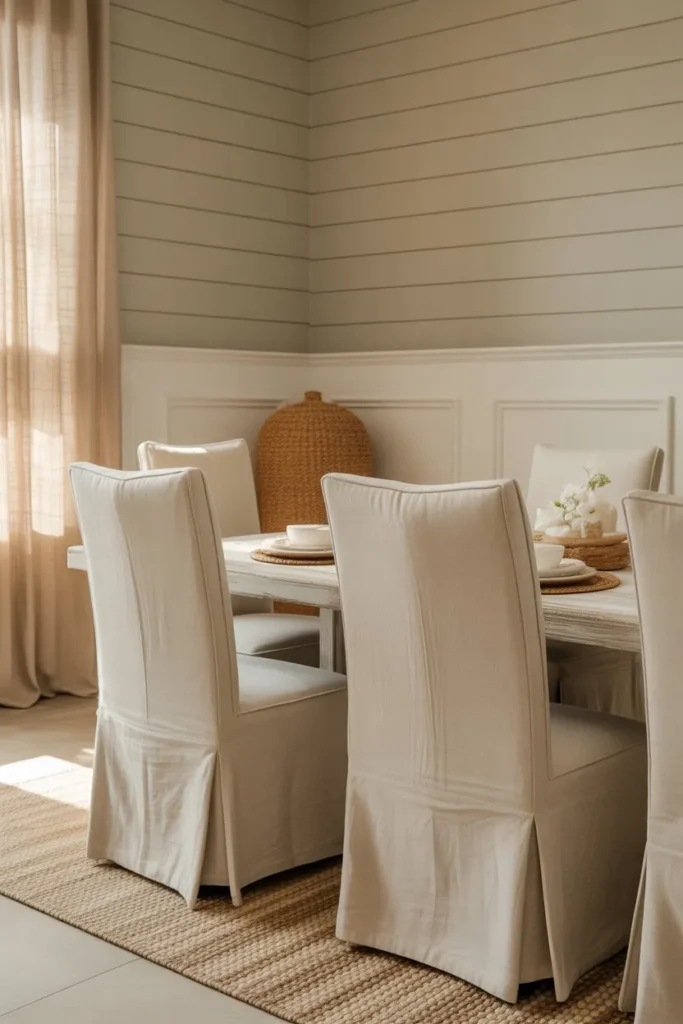
Layering neutrals is one of the most refined coastal dining room ideas because it builds depth without relying on bold color. Instead of a flat white space, combining shades like cream, sand, taupe, and soft gray creates subtle contrast.
The success of this approach depends on texture variation—linen, wood, and soft fabrics work together to create a visually rich environment. This ensures the room feels warm and inviting while still maintaining that light, breezy coastal aesthetic.
15. Coastal Dining Room with Statement Artwork
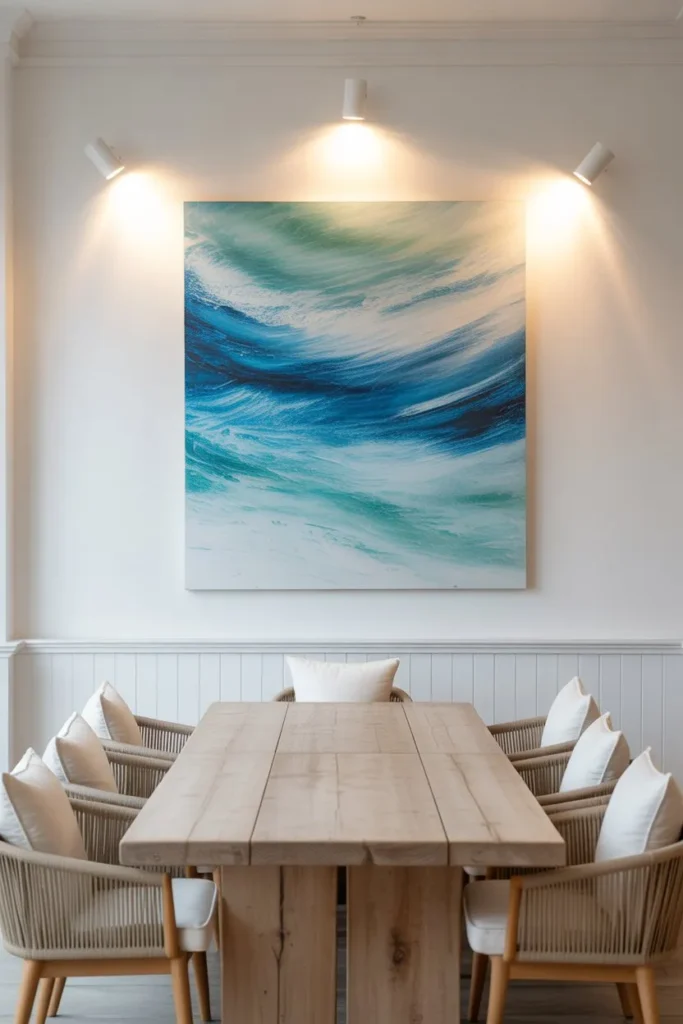
Artwork can act as a focal point in coastal dining room ideas when used thoughtfully. A large ocean-inspired piece or abstract coastal palette introduces personality without overwhelming the space.
The key is placement and scale—art should feel integrated into the design, not like an afterthought. Using directional lighting enhances its presence while keeping the rest of the room balanced. This approach allows you to add character while maintaining a clean and modern coastal feel.
16. Coastal Dining Room with Bench Seating
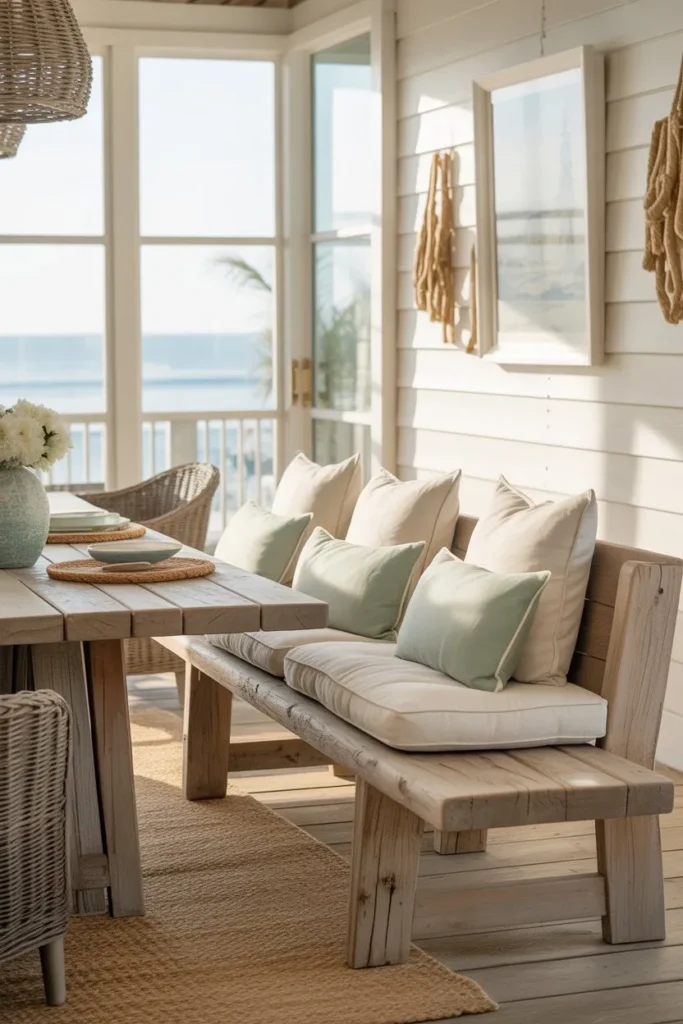
Bench seating adds a relaxed and practical element to coastal dining room ideas. It reduces visual clutter compared to multiple chairs and creates a more casual, communal dining experience.
This setup is especially useful in smaller spaces, where maximizing seating without overcrowding is important. Adding light cushions keeps the look comfortable while maintaining the breezy aesthetic. It’s a functional choice that enhances both usability and style.
17. Coastal Dining Room with Soft Blue Accent Layers
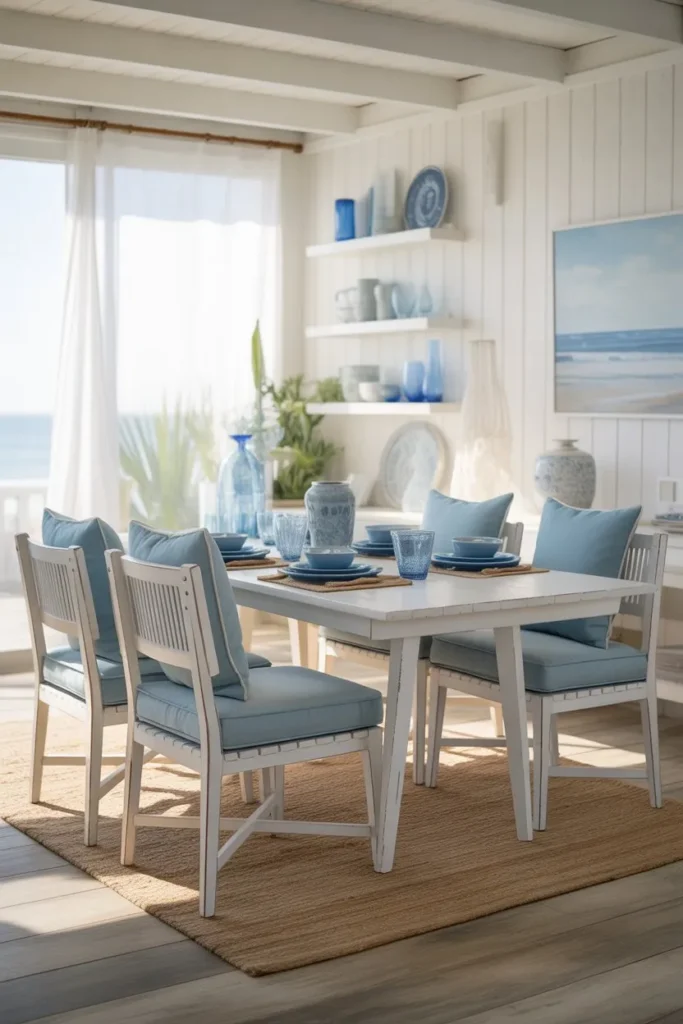
Soft blue accents are a subtle yet effective way to reinforce coastal dining room ideas. Instead of dominating the space, these tones should appear in small layers—such as cushions, tableware, or decor pieces.
This approach maintains the light and airy feel while adding a gentle connection to ocean-inspired colors. It ensures the design remains sophisticated rather than overly themed, making it suitable for long-term styling.
18. Coastal Dining Room with Light Flooring Continuity
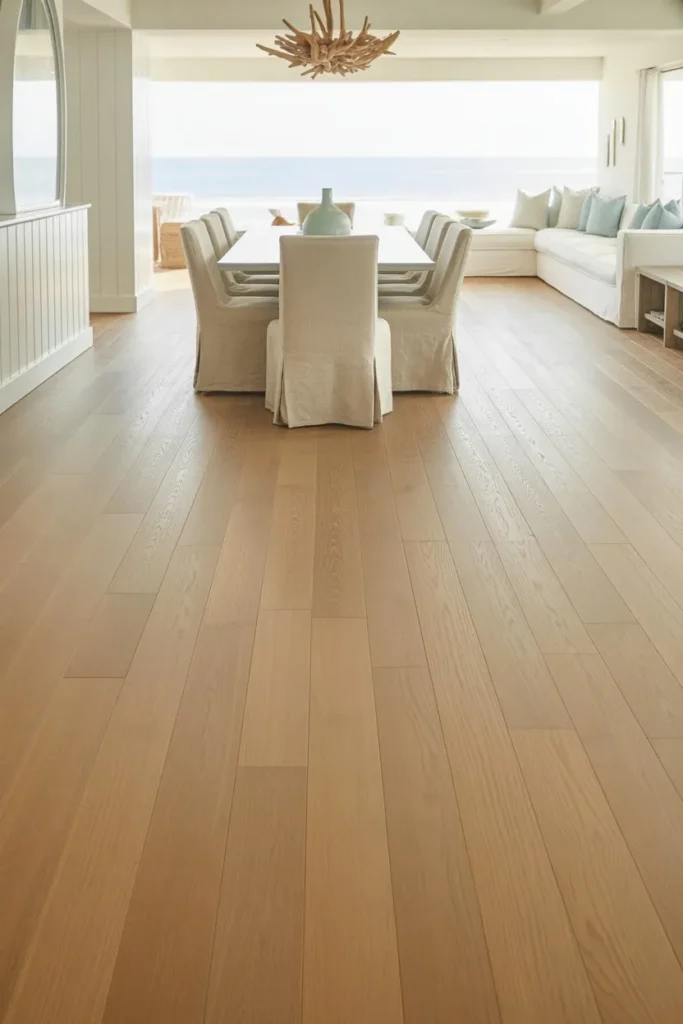
Flooring plays a critical role in coastal dining room ideas, especially in open layouts. Light wood or neutral flooring helps maintain visual continuity, making the space feel larger and more cohesive.
Avoiding heavy or dark flooring ensures the room retains its airy quality. Continuous flooring between connected areas further enhances the open and relaxed feel that defines coastal interiors.
19. Coastal Dining Room with Simple Table Styling
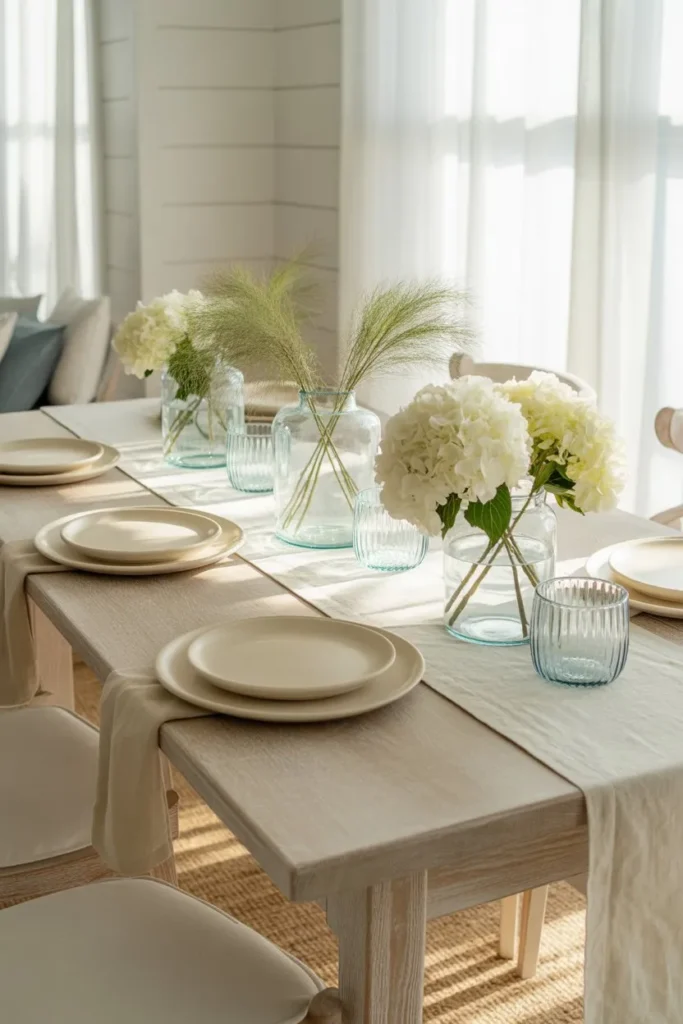
Table styling should remain simple in coastal dining room ideas to preserve the uncluttered, breezy look. Over-decorating the table can disrupt the light and open atmosphere.
Using a few carefully chosen elements—like a linen runner, ceramic pieces, or glass vases—keeps the design intentional and balanced. This approach ensures the table remains functional while still looking elegant and inviting.
20. Coastal Dining Room with Layered Lighting Strategy
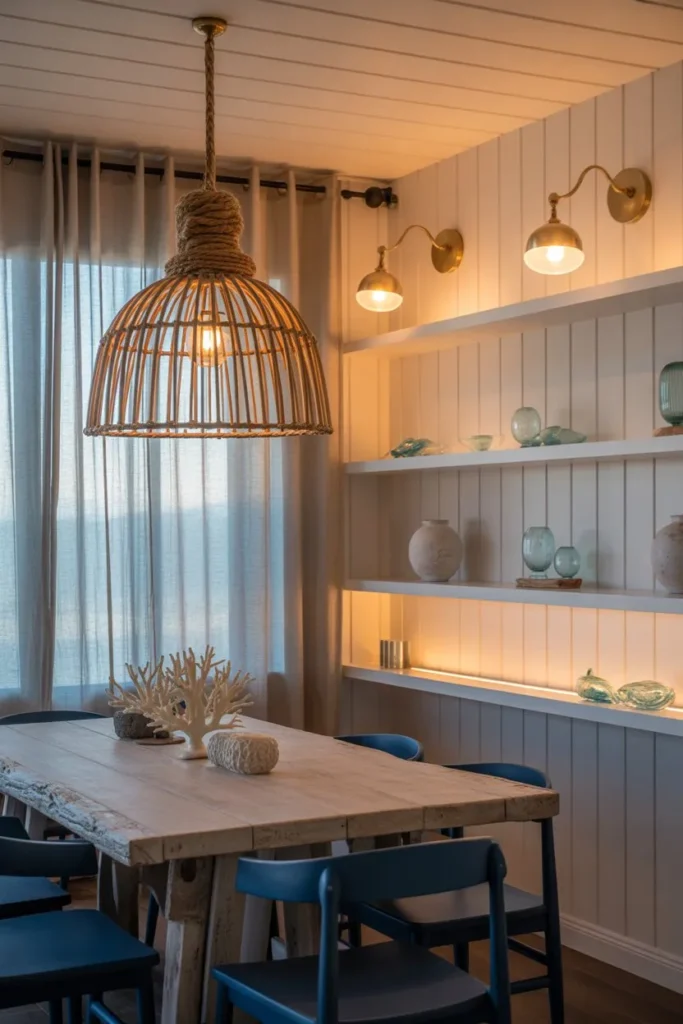
Lighting is essential in achieving successful coastal dining room ideas. A layered approach—combining ambient, task, and accent lighting—ensures the space feels both functional and atmospheric.
A central pendant defines the dining area, while additional lighting softens shadows and enhances warmth during evening use. Choosing warm, diffused light helps maintain the relaxed coastal mood even after sunset.
21. Fully Balanced Coastal Dining Room Design
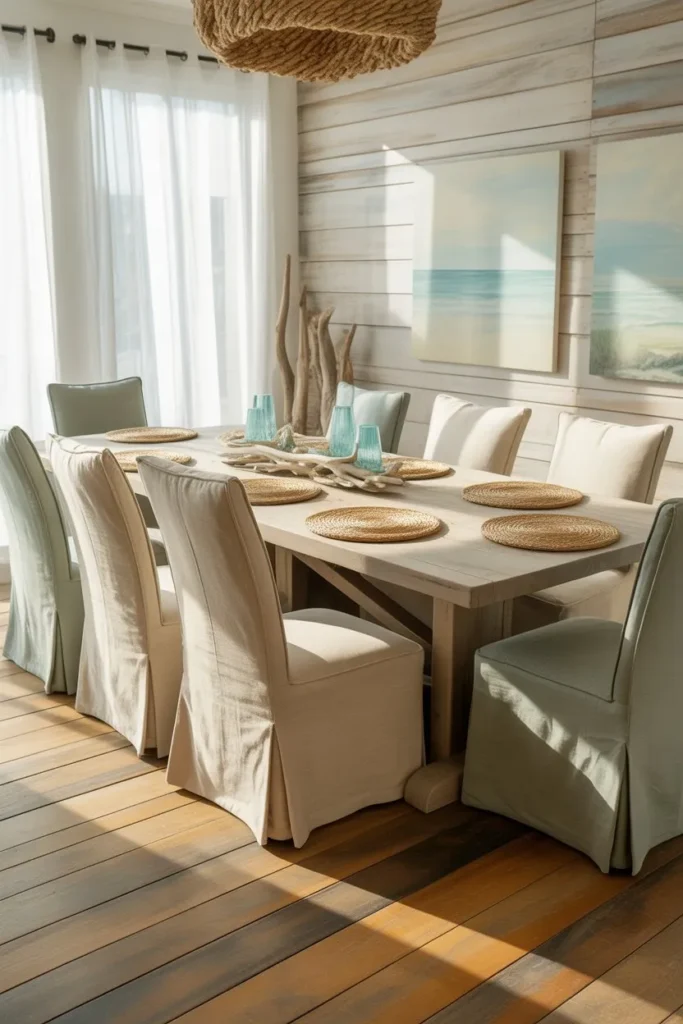
The most successful coastal dining room ideas come down to balance—light, texture, layout, and functionality working together seamlessly. No single element should overpower the space; instead, everything should contribute to a cohesive design.
By combining natural materials, soft colors, and thoughtful lighting, you create a dining room that feels both stylish and comfortable. This holistic approach ensures the space remains timeless, functional, and aligned with the relaxed coastal lifestyle.
Conclusion
The best coastal dining room ideas are built around simplicity, light, and natural elements. By focusing on balance, texture, and thoughtful layout, you can create a space that feels both functional and inviting. Small details, like lighting and material choices, play a big role in achieving the overall look. With the right approach, your dining room can become a calm and stylish environment that reflects the relaxed essence of coastal living.