Haircuts for Long Hair: 14 Gorgeous Styles to Refresh Your Look
Introduction
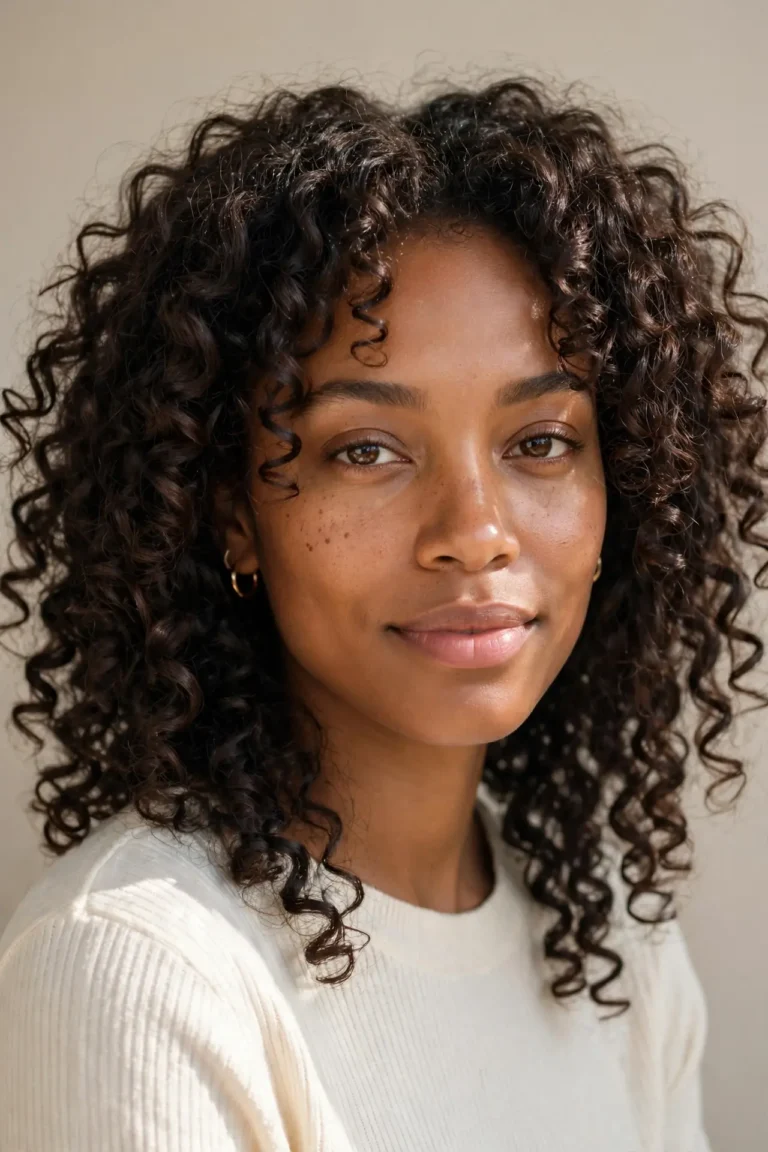
Long hair gives you so many styling possibilities, but finding a haircut that adds movement without sacrificing your length can be tricky. Haircuts for Long Hair can completely refresh your look with the right layers, face-framing pieces, or soft changes around the ends.
Whether your hair is straight, wavy, thick, or fine, a well-planned cut can make it easier to manage while giving it a more polished shape. You do not always need to remove several inches to see a noticeable difference. Sometimes, a few carefully placed layers or a softer face frame are enough to make long hair look fuller, lighter, and more modern. In my experience, the best long hairstyles are the ones that work with your natural texture instead of fighting it every morning.
Long Layers with Face-Framing Pieces
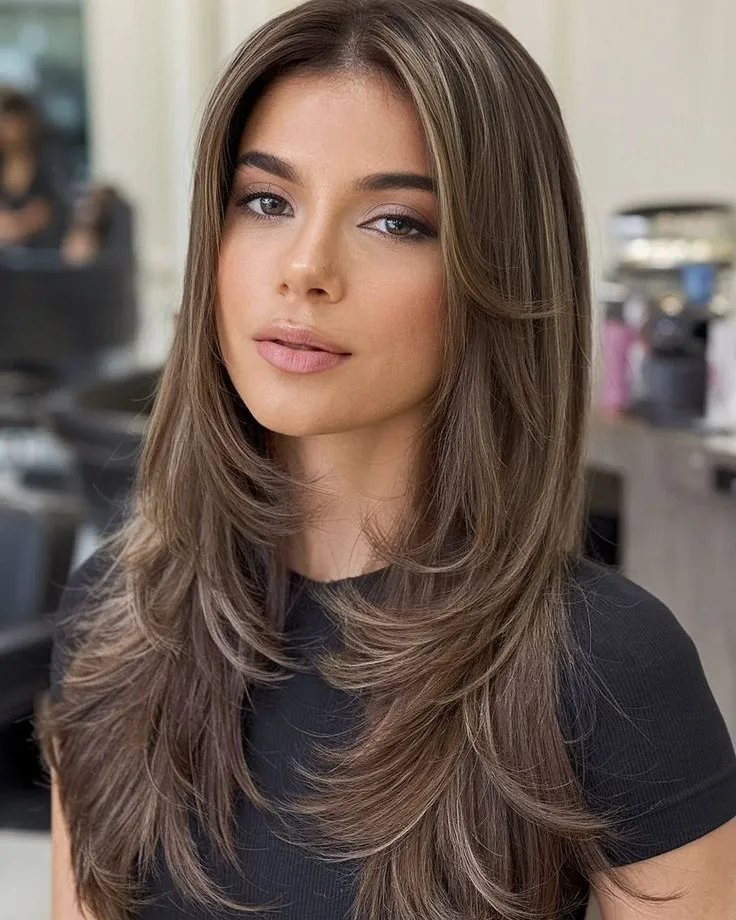
Long layers are one of the easiest ways to refresh very long hair without making the haircut feel dramatically shorter. The layers create movement through the lengths while leaving enough hair at the bottom to maintain a full, healthy-looking shape. Adding face-framing pieces gives the front of the haircut extra softness and draws attention toward the eyes and cheekbones. The exact starting point can be customized depending on your features and preferred style. In my experience, blended layers tend to look especially natural because they create movement without producing an overly choppy appearance.
For a versatile everyday haircut, ask your stylist to keep the longest length intact while gradually adding layers through the mid-lengths and around the face. If your hair is naturally wavy, the layers can help your texture move more freely instead of becoming weighed down. Straight hair can also benefit from the shape because the different lengths add visual dimension. Style the hair with loose waves for a soft finish or keep it sleek for a cleaner appearance. A lightweight smoothing serum through the ends can help maintain shine and keep the layered shape looking polished.
Butterfly Layers for Long Hair
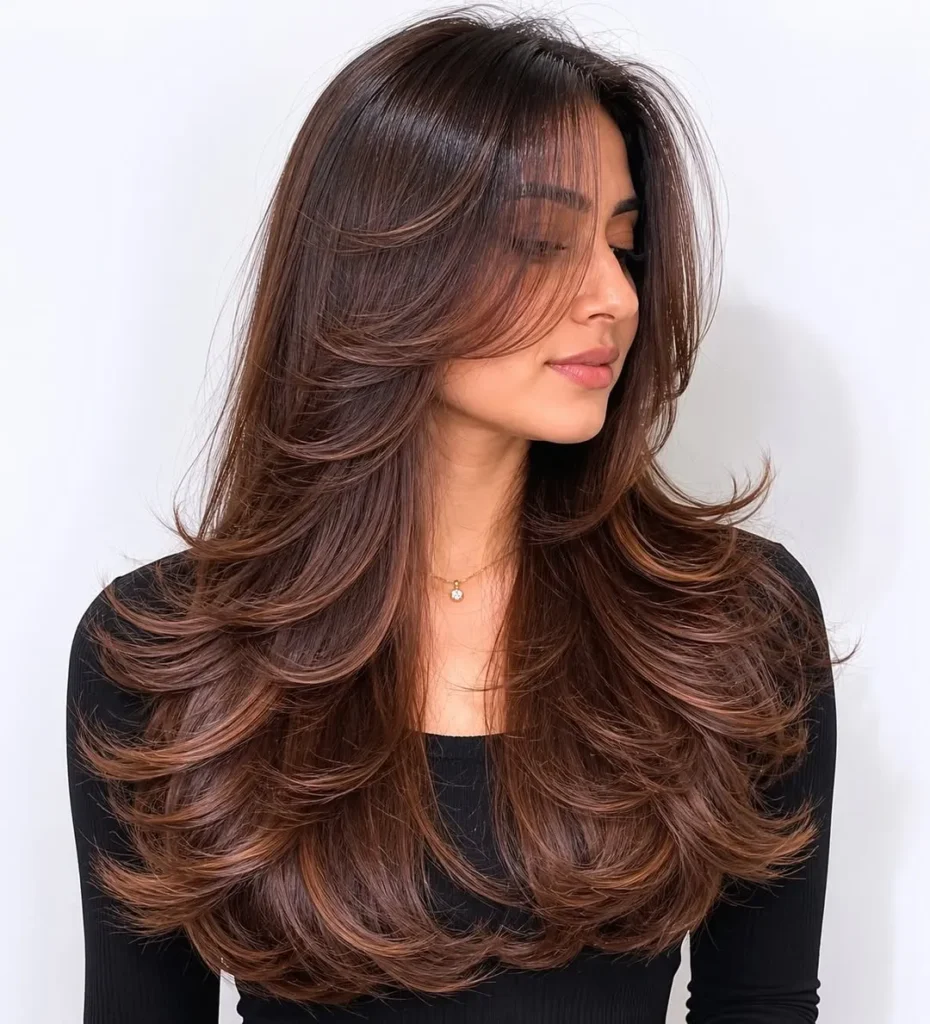
Butterfly layers are a beautiful choice when you want long hair to feel lighter and more voluminous without giving up its length. The haircut combines shorter layers around the face with longer layers underneath, creating a flowing shape that resembles the movement of butterfly wings. The shorter sections provide lift and softness near the face, while the longer layers maintain fullness toward the ends. This makes the style particularly attractive on medium or thick hair. I’ve noticed that the haircut looks especially impressive when styled with a round brush because each layer naturally curves and moves independently.
Fall Hair Ideas 2026: 17 Trendy Looks to Try This Season
When requesting butterfly layers, be clear about how much shorter you want the front sections to be. A softer version can provide movement without creating a dramatic difference between the layers, while more pronounced layers create a fuller, bouncier appearance. For styling, use a round brush to direct the front pieces away from the face and shape the longer layers underneath. Large rollers can also create volume with less direct heat. Once finished, gently separate the sections with your fingers rather than brushing them flat. This keeps the haircut airy, flowing, and naturally dimensional.
Long U-Shaped Haircut for Fuller Ends
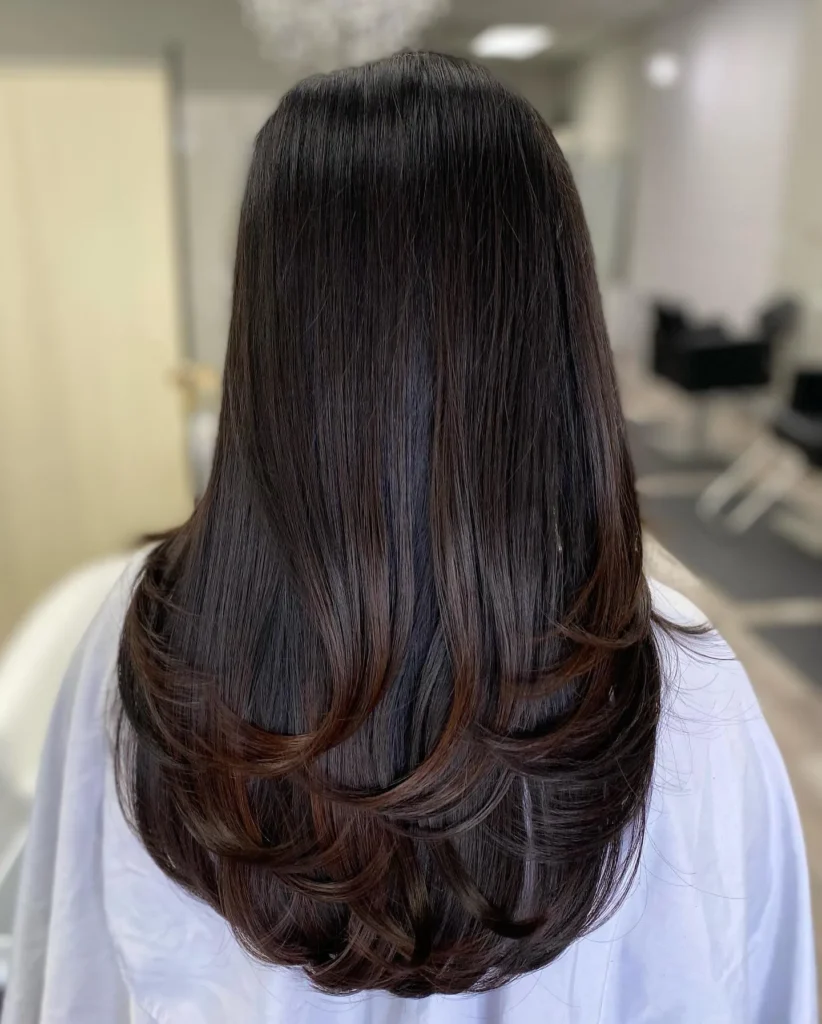
A U-shaped haircut is ideal if you love the appearance of long, full hair but want a more intentional shape than a completely straight perimeter. Instead of ending at one horizontal line, the hair gradually curves downward toward the center of the back, allowing the sides to appear slightly shorter while the middle retains maximum length. This creates a soft, flowing silhouette that works beautifully when the hair is worn down. It can also provide enough structure to make very long hair feel freshly cut without introducing numerous layers throughout the hairstyle.
If maintaining fullness is your priority, ask for a subtle U shape rather than excessive layering through the lower sections. Your stylist can adjust the depth of the curve according to your hair density and overall length. Fine hair often benefits from keeping the perimeter relatively strong, while thicker hair may handle additional internal layers for movement. Wear the style straight to emphasize the clean curve or add loose waves for a softer appearance. Regular trims can also help keep the ends looking healthy and defined, especially when you are intentionally growing your hair very long.
Long V-Cut for Dramatic Shape
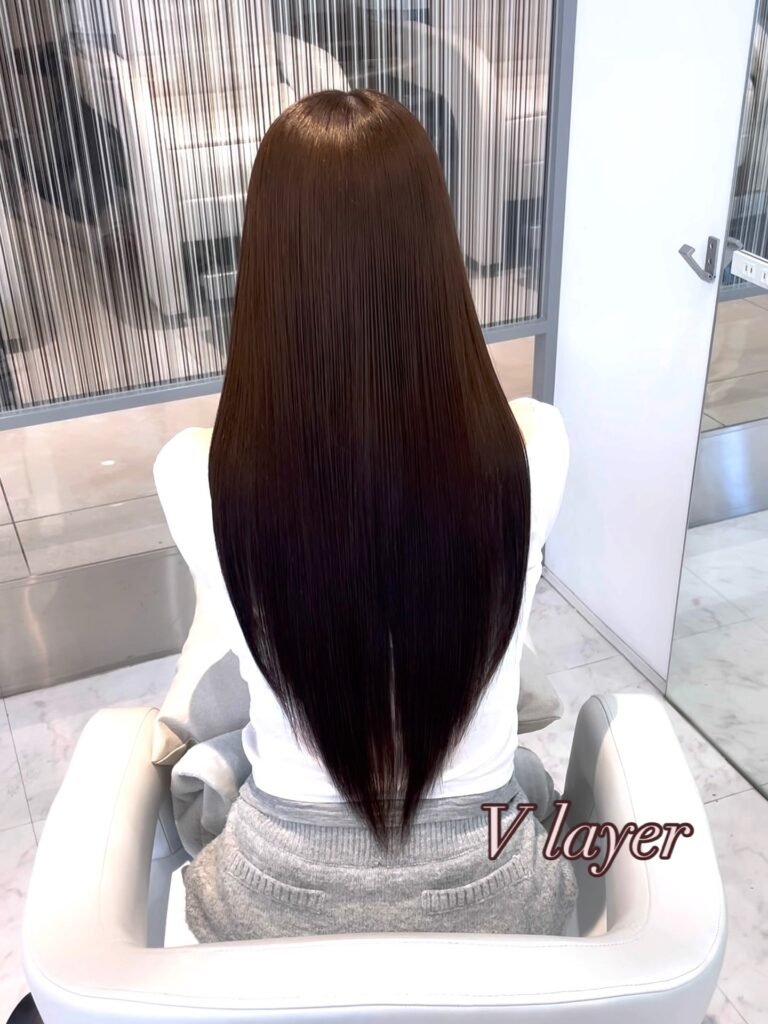
A V-cut gives very long hair a more dramatic silhouette while keeping the center-back length beautifully extended. The sides gradually become shorter toward the front, creating a pointed shape that becomes especially noticeable when the hair is worn down. This haircut can add visual movement to otherwise heavy-looking lengths without removing the overall impression of long hair. It works particularly well for thick or medium-density hair, where the extra length can support the shape. I’ve noticed that soft waves make the V formation even more noticeable because the movement naturally follows the descending lines.
Before choosing a deep V, consider how you normally wear your hair because the shape is most visible when the lengths are left loose. If you prefer a softer appearance, ask for a shallow V with blended layers instead of a sharply pointed perimeter. Your stylist can also adjust the shape according to your hair density and how much fullness you want through the ends. Straight styling will emphasize the clean outline, while loose curls create a more romantic effect. Regular trims are useful for keeping the point balanced and preventing split ends from making the shape look uneven.
Feathered Long Layers for Soft Movement
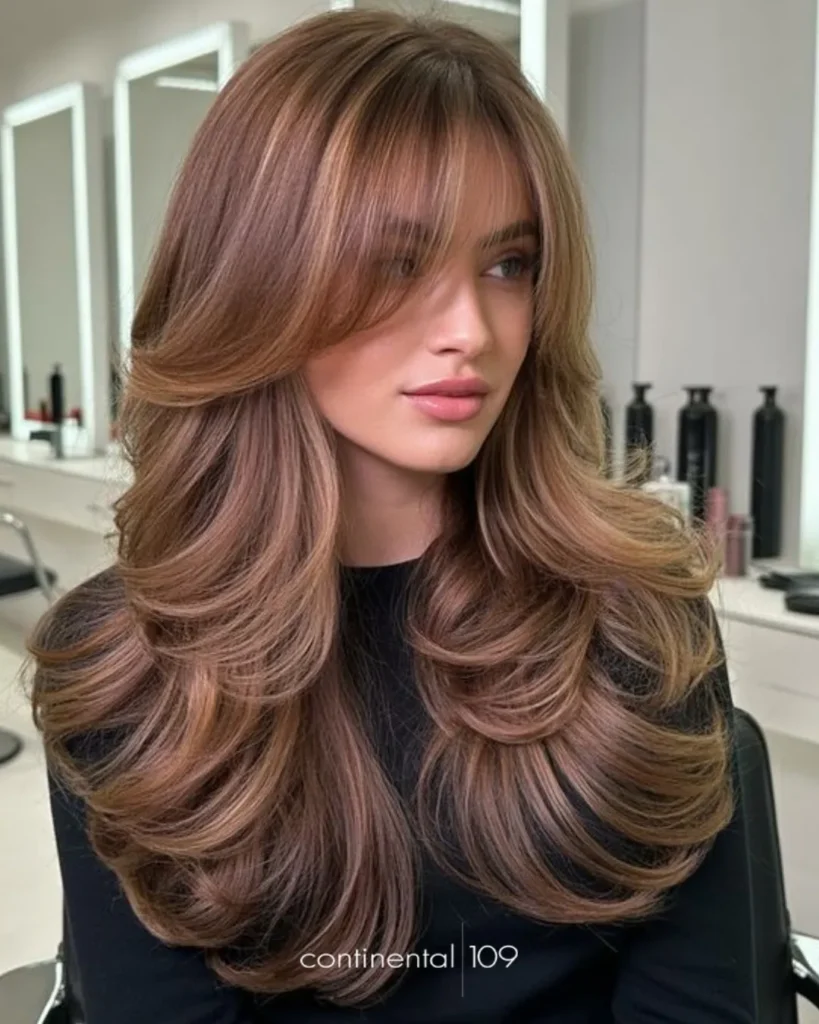
Feathered layers give long hair a softer, lighter appearance without creating the sharply defined steps that some heavily layered cuts can produce. The ends are gently tapered and blended, allowing the hair to move naturally when you walk or style it. Face-framing sections can flow seamlessly into the rest of the haircut, creating a flattering shape around the cheeks and jawline. This approach works particularly well if your long hair feels heavy but you still want to preserve substantial length. The result is feminine, flexible, and easy to adapt to both polished and relaxed styling.
For the most natural finish, ask your stylist for long, blended feathering rather than extremely short layers. This is especially important if your hair is fine, since removing too much weight can make the ends appear thinner. Medium or thick hair can generally support more movement through the lengths. A round-brush blowout can bring out the feathered shape by directing the ends away from the face. You can also create loose waves for a softer finish. A lightweight leave-in conditioner or smoothing cream helps keep the feathered ends looking controlled, shiny, and healthy.
Long Blunt Cut for Maximum Fullness
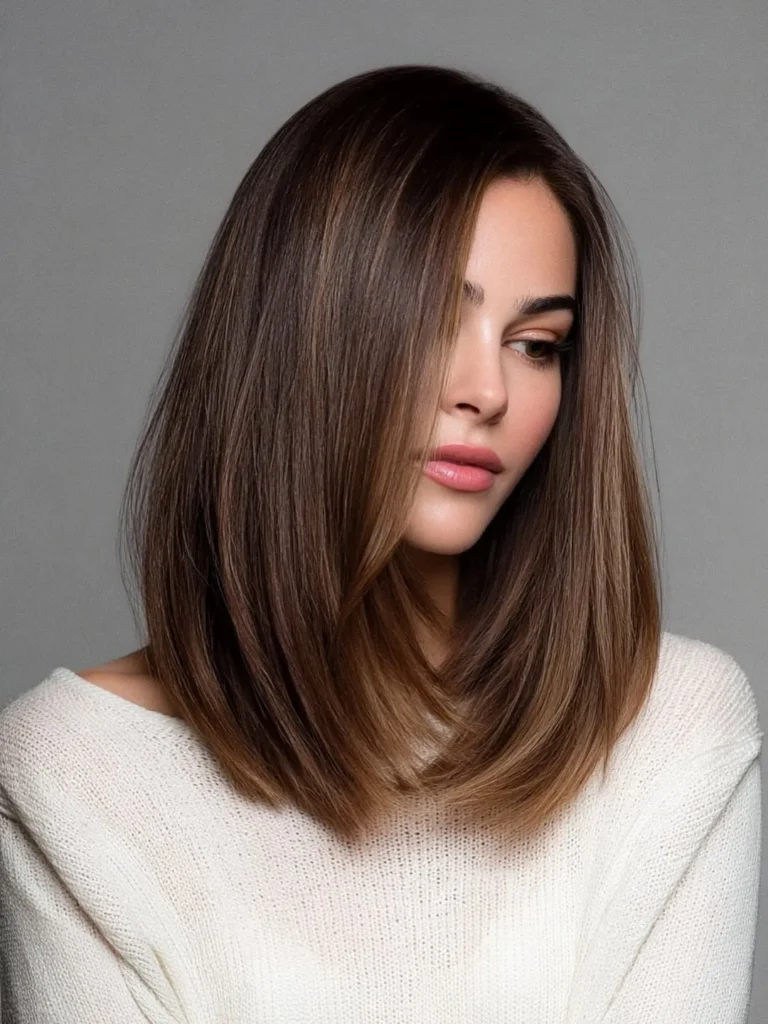
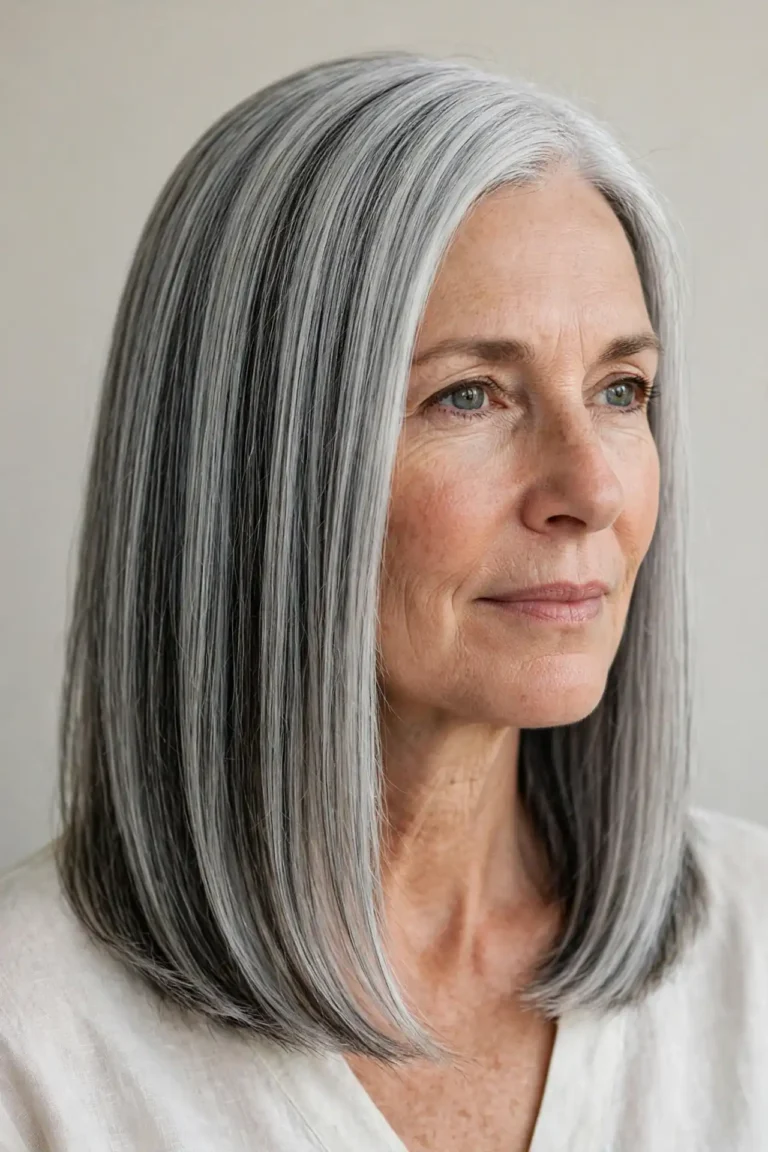
A long blunt cut is a great option when your main goal is making your hair look as full and substantial as possible. Instead of adding multiple layers, the ends are kept at a similar length to create a strong, clean perimeter. This can make fine or medium-density hair appear visually thicker, especially when the strands are styled straight and smooth. The simplicity of the cut also gives it a modern quality that does not depend on elaborate styling. In my experience, a fresh blunt trim can make long hair look noticeably healthier even without changing the overall length.
When asking for this haircut, explain that maintaining fullness through the ends is more important to you than creating lots of movement. Your stylist can keep the perimeter strong while making only tiny adjustments where needed to remove damaged ends. For everyday styling, use a heat protectant before blow-drying and gently polish the lengths with a flat iron if you want an ultra-sleek result. You can also add loose waves when you want more movement, although the clean perimeter will remain visible. Regular trims help preserve the strong shape and keep the ends looking neat and healthy.
Long Curtain Layers for Face-Framing Volume
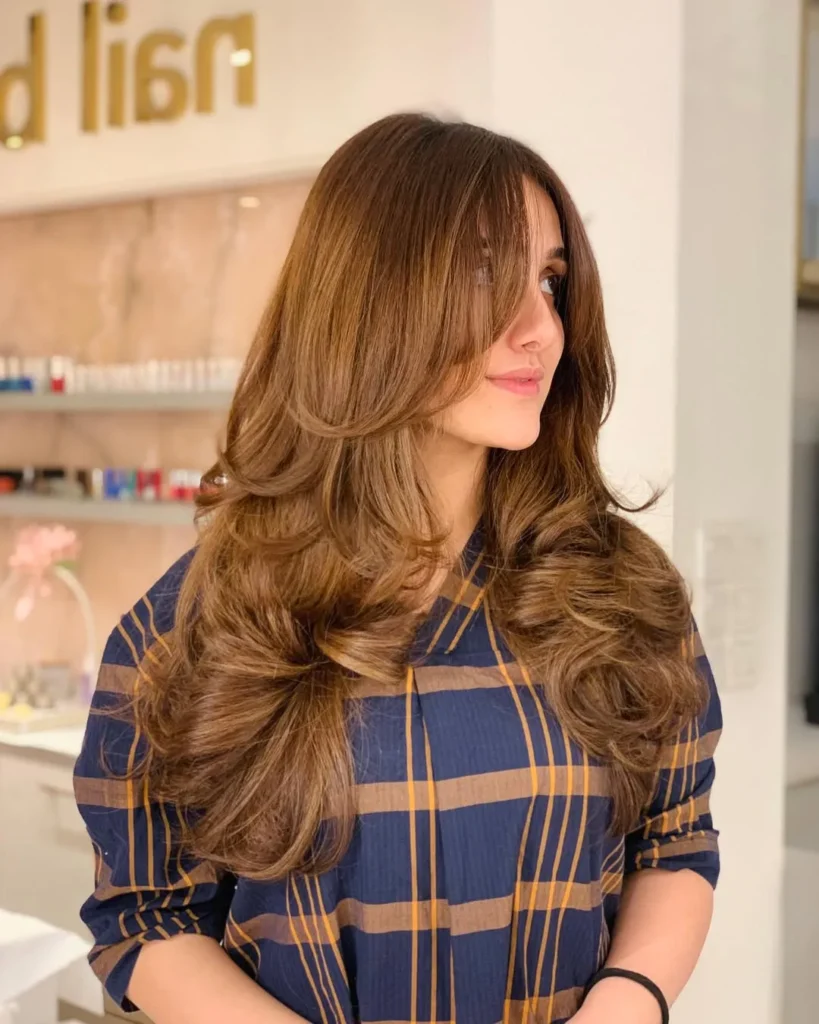
Long curtain layers are a beautiful alternative to traditional bangs when you want more movement around your face but still want to keep your hair long. The shorter sections begin around the cheekbones or jawline and gradually blend into the longer lengths, creating a soft frame without an obvious break in the haircut. This shape works especially well with a center part because the front pieces naturally sweep away from the face. I’ve noticed that longer curtain layers are also easier to manage than short bangs because they can be tucked behind the ears or blended into loose hairstyles.
When requesting this cut, ask your stylist to create a gradual transition between the shortest face-framing pieces and your longest layers. This keeps the haircut looking cohesive and prevents the front from appearing disconnected. Straight hair can showcase the clean layering beautifully, while waves add extra softness and volume. Use a round brush to direct the front sections away from your face during a blowout, or create relaxed bends with a curling tool. A lightweight styling cream can help control flyaways while maintaining natural movement. The result is flattering, versatile, and easy to style.
Long Choppy Layers for Textured Volume
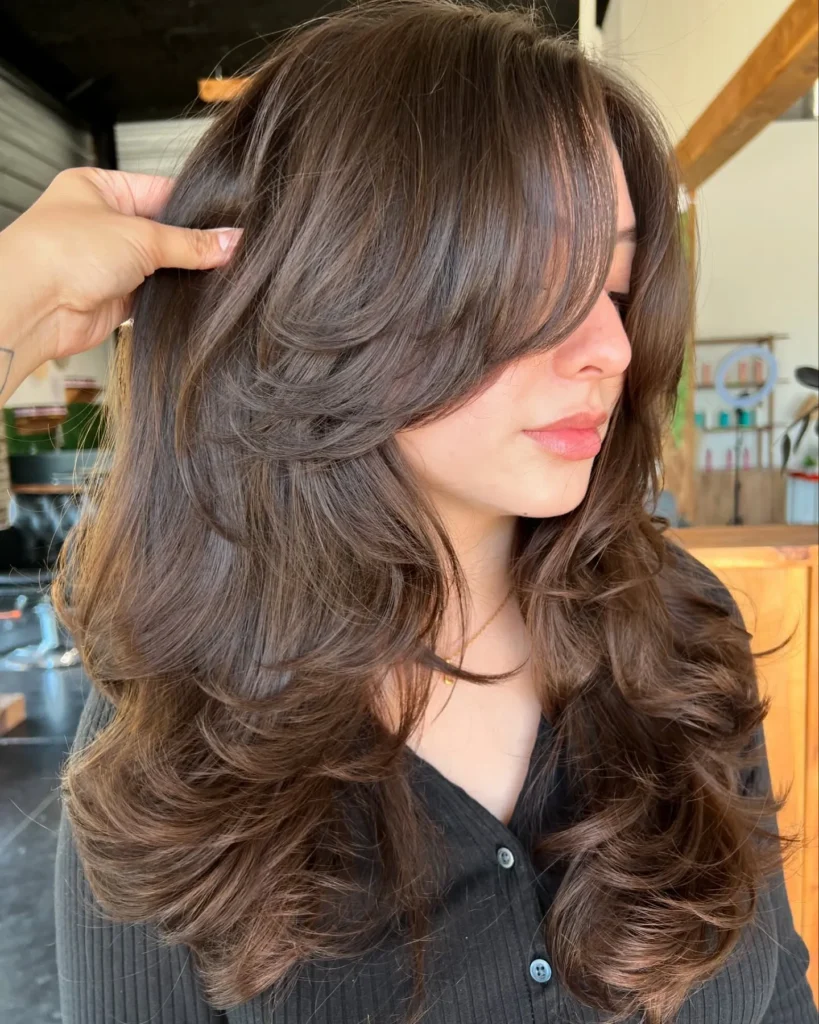
Choppy layers can give long hair a more energetic shape when a traditional layered haircut feels too predictable. Instead of creating perfectly uniform transitions, the lengths vary slightly to produce texture and movement throughout the hairstyle. This approach can be particularly useful for thick hair because strategically placed layers help remove some of the heaviness while keeping the overall length. The finished cut does not have to look messy or extreme; blended choppy layers can still appear polished while providing a more relaxed personality. In my experience, subtle texture usually creates the most wearable result for everyday styling.
Ask your stylist to keep the choppy effect blended rather than creating harsh, disconnected sections. The amount of texture should also depend on your hair density, since fine hair may need fewer layers to maintain fullness. Once cut, loose waves are an easy way to showcase the different lengths and create additional volume. Apply a small amount of texture spray through the mid-lengths and ends, then gently scrunch or separate the sections with your fingers. Avoid applying too much product because excessive texture can make the ends feel dry or stiff instead of soft and touchable.
Long Layers with Wispy Ends
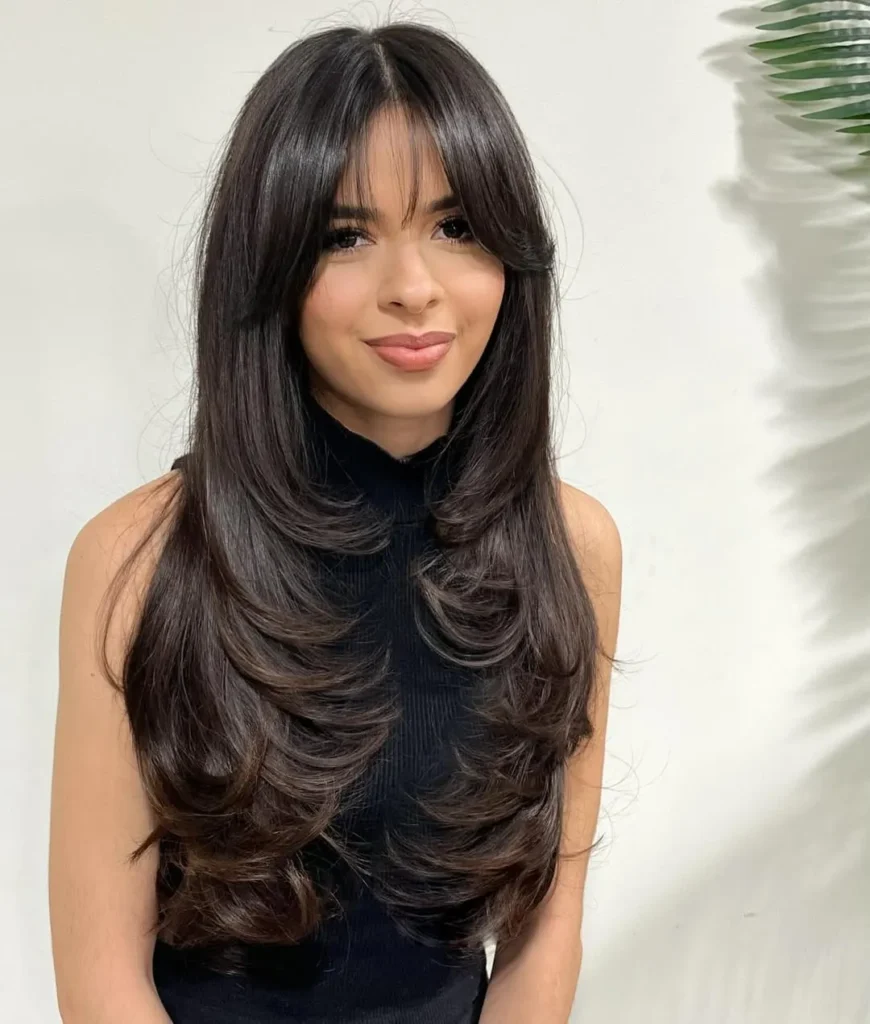
Wispy ends can give long hair a lighter, softer appearance while preserving the length you love. Rather than creating a thick, heavy perimeter, the ends are delicately blended to allow individual strands to move more freely. This can work especially well when long hair feels bulky or lacks movement through the lower sections. Long layers can be added above the perimeter to create additional shape without making the haircut look heavily layered. The finished appearance is soft and flowing, particularly when the hair is styled with loose waves or a gentle blowout that lets the ends move naturally.
Because wispy ends remove some visual weight, the technique should be adjusted according to your hair density. If your hair is already fine, too much tapering can make the bottom appear sparse, so a more conservative approach may be better. For thicker hair, slightly lighter ends can create a more balanced silhouette. Use a moisturizing leave-in conditioner to keep the ends smooth and prevent them from looking dry. When styling, avoid excessive heat and finish with a small amount of lightweight serum. This keeps the haircut airy while maintaining the healthy shine that makes long hair look its best.
Long Wolf Cut for Modern Texture
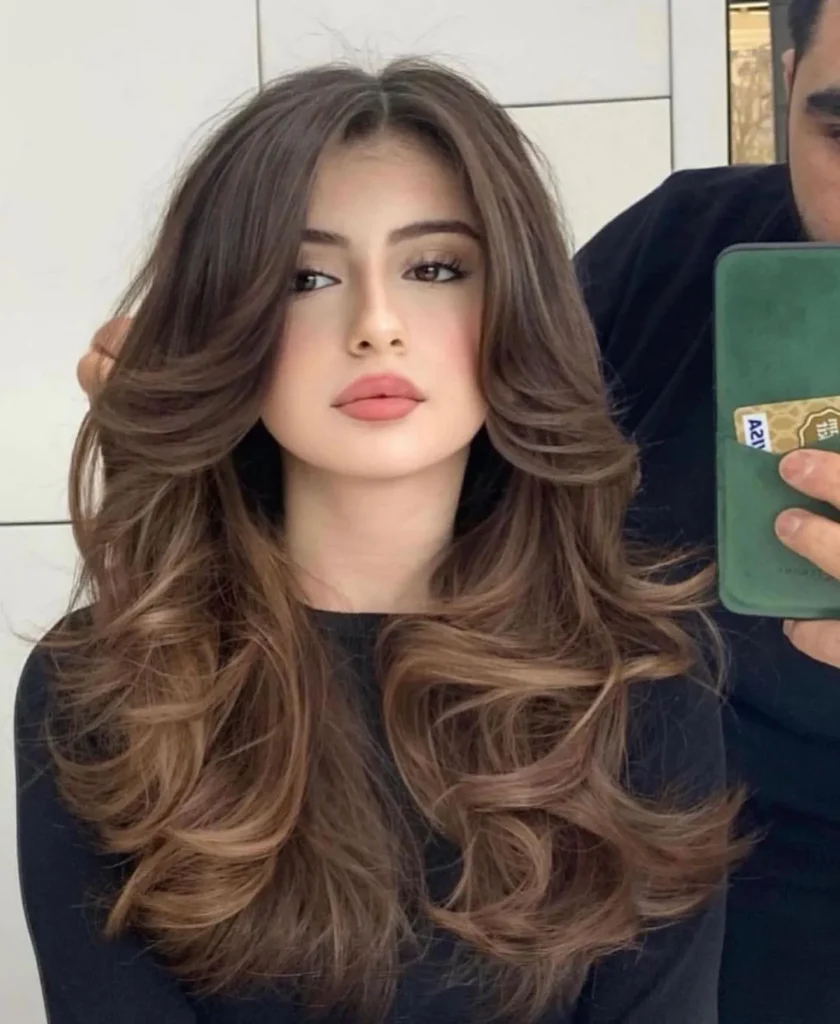
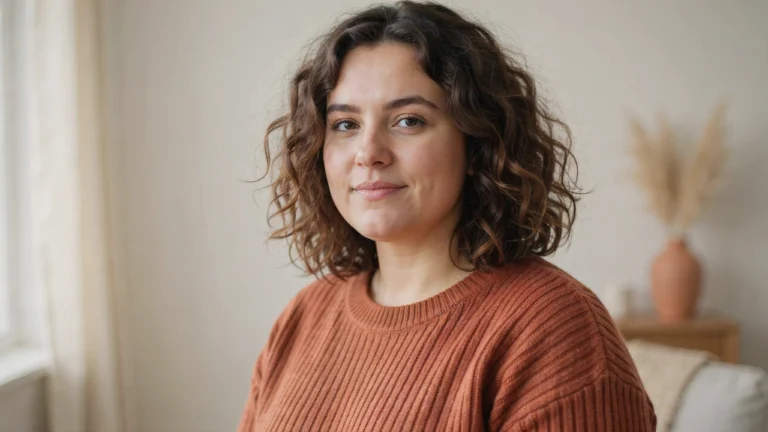
A long wolf cut combines the movement of heavily layered hair with enough length to keep the overall style flowing. The shorter layers around the crown create lift and texture, while the longer sections underneath maintain the dramatic length. This makes the haircut a good option when you want something more expressive than traditional long layers. Naturally wavy or curly hair can make the shape especially lively because the texture naturally separates the layers. In my experience, asking for a softer version of the wolf cut makes it much easier to wear and maintain every day.
Before choosing this haircut, consider how much crown volume and texture you actually want because the shape can be customized significantly. A softer long wolf cut uses blended layers rather than extremely short sections, creating movement without making the hair difficult to control. Styling is simple when you work with your natural texture: apply mousse or curl cream to damp hair, then air-dry or diffuse. For straighter hair, loose bends can highlight the different layers. Finish by gently separating the sections with your fingers to keep the result textured, airy, and intentionally undone.
Long Hair with Invisible Layers
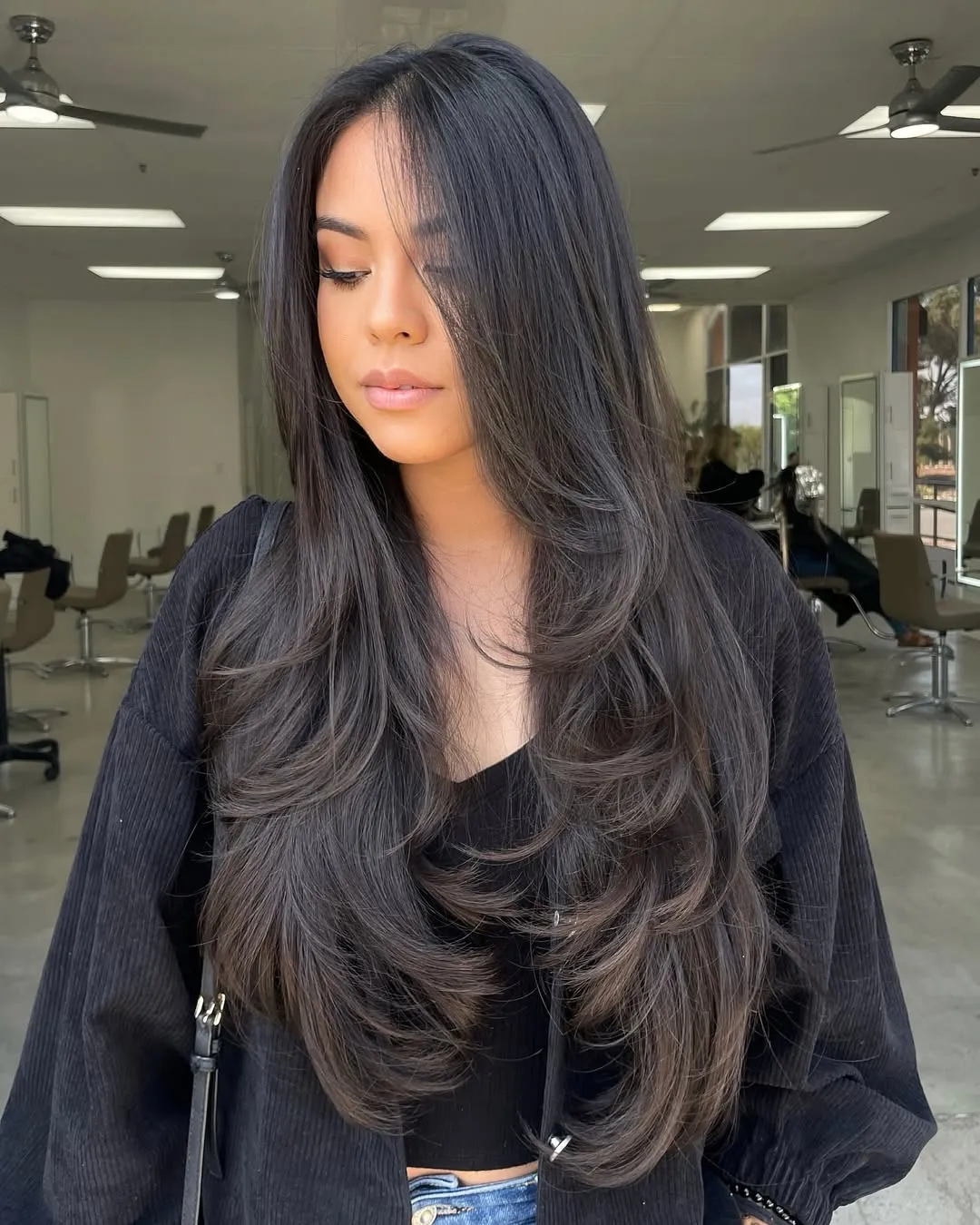
Invisible layers are perfect when you want long hair to move more naturally without creating an obviously layered appearance. Instead of dramatically changing the outer silhouette, the layers are placed internally to remove some weight and encourage movement between the sections. This approach can be especially helpful for thick hair that feels heavy but still needs to look full and polished. The result is subtle enough that someone may simply notice that your hair looks healthier and more fluid without immediately seeing why. It is a practical choice for anyone who loves the appearance of long, smooth hair.
The technique should be customized carefully because the goal is movement without sacrificing the fullness of the outer shape. Ask your stylist to remove weight internally while keeping the perimeter strong and blended. This can make styling easier because the hair has more natural flexibility and does not feel as dense through the middle. You can wear the finished haircut straight for a sleek appearance or add loose waves for more visible movement. Regular conditioning is important because healthy, smooth strands help the subtle layering remain polished. The result is understated, versatile, and easy to maintain.
Long Hair with Soft S-Curve Layers
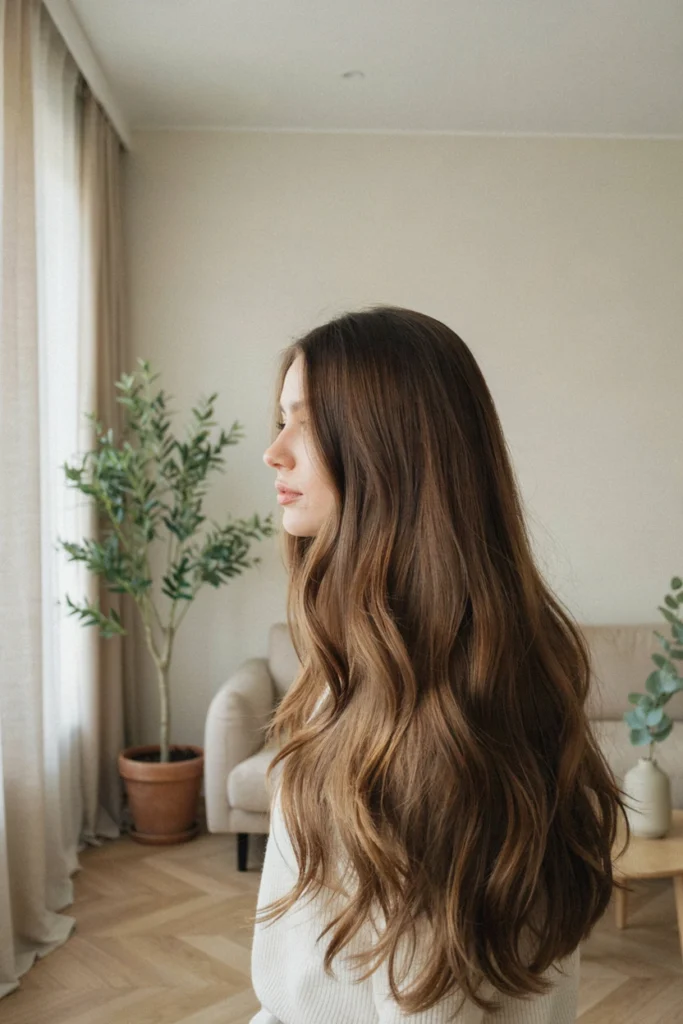
S-curve layers create a flowing shape that makes long hair appear more dynamic without introducing extremely short sections. The layers follow a gentle curved pattern through the lengths, allowing the hair to move naturally while maintaining substantial length. This can be especially flattering on thick hair because the carefully placed sections help distribute weight without making the ends appear thin. The face-framing pieces can also be customized to begin around the cheekbones or jawline. In my experience, this type of layering looks particularly beautiful when paired with loose waves because the curves in the haircut become more visible.
When asking for this style, explain that you want movement through the lengths but still want the haircut to feel long and full. Your stylist can adjust the depth of the layers according to your hair density and natural texture. For styling, use a large curling tool to create relaxed waves, alternating the direction of each section for a softer finish. If your hair already has natural waves, a lightweight curl cream may be enough to define the shape. Finish with a small amount of smoothing serum through the ends to keep the flowing layers polished and healthy-looking.
Long Layered Cut with Side-Swept Bangs
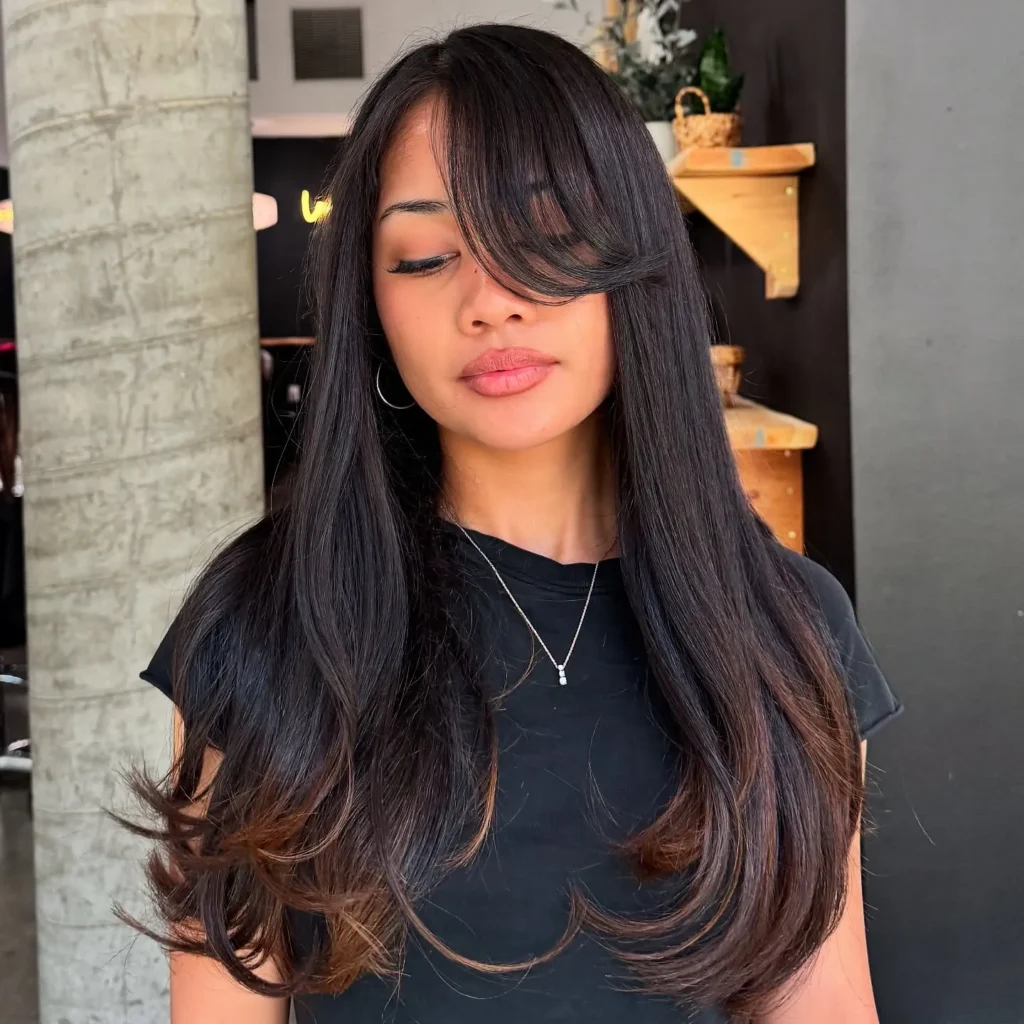
Side-swept bangs can refresh long hair while creating a softer, more romantic frame around the face. Unlike blunt bangs, the longer diagonal shape blends naturally into surrounding layers and can be swept away when you want a more open appearance. A side part adds extra volume near the roots and helps the fringe fall naturally across the forehead. This haircut works particularly well with long layers because the bangs do not look disconnected from the rest of the style. I’ve noticed that longer side-swept bangs can also be easier to grow out because they transition gradually into the surrounding hair.
For a wearable version, ask your stylist to keep the shorter part of the fringe long enough to blend smoothly toward the temples and cheekbones. This creates a gradual transition rather than a harsh separation between the bangs and the rest of the haircut. Blow-dry the fringe with a round brush, directing it away from the face before allowing it to cool into place. You can then add loose waves through the lengths for extra movement. If your hair becomes oily around the forehead quickly, a small amount of dry shampoo at the roots can help refresh the style between washes.
Long Rounded Layers for Thick Hair
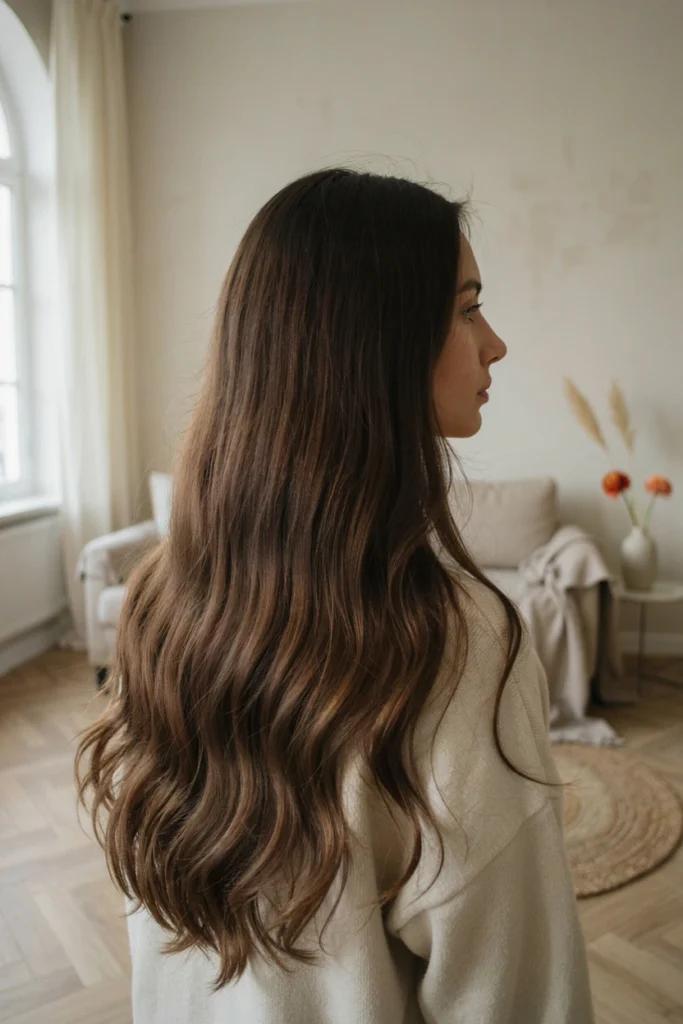
Rounded layers are an excellent choice when thick, long hair feels heavy but you still want to maintain a full and healthy appearance. Instead of removing large amounts of hair through aggressive thinning, the layers are shaped gradually to distribute weight while creating a smooth, rounded silhouette. The longest sections remain substantial, so the haircut still looks rich through the ends. Face-framing pieces can provide additional movement around the front without making the overall style feel overly layered. In my experience, this approach can make thick hair much easier to style while keeping the fullness that makes long hair beautiful.
The amount of layering should depend on your natural density, because very thick hair can usually handle more movement than fine hair. Ask your stylist to create blended layers that follow the natural fall of your hair rather than removing too much from one area. A blowout with a round brush can emphasize the curved shape and create soft volume, while loose waves provide a more relaxed finish. Use a lightweight smoothing product through the mid-lengths and ends to control frizz without flattening the roots. Regular trims will also help maintain the rounded shape and keep the ends looking healthy.
Conclusion
Long hair does not need a dramatic chop to feel completely refreshed. The right layers, shape, texture, or face-framing details can add movement, volume, softness, and personality while preserving the length you love. Whether you prefer a polished blunt cut, flowing butterfly layers, a dramatic V-cut, or subtle invisible layers, choose a style that works with your natural texture and daily routine. Save your favorite haircuts for long hair on Pinterest, take your inspiration photos to your stylist, and start with the change that feels most natural to you. Even a small adjustment can make long hair look healthier, fresher, and beautifully updated.