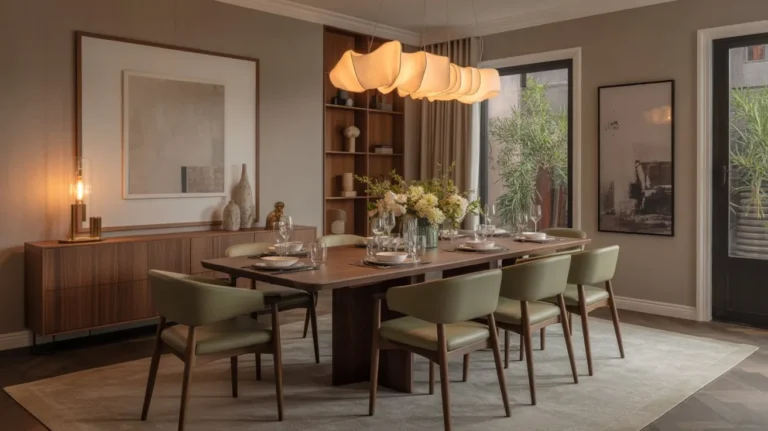
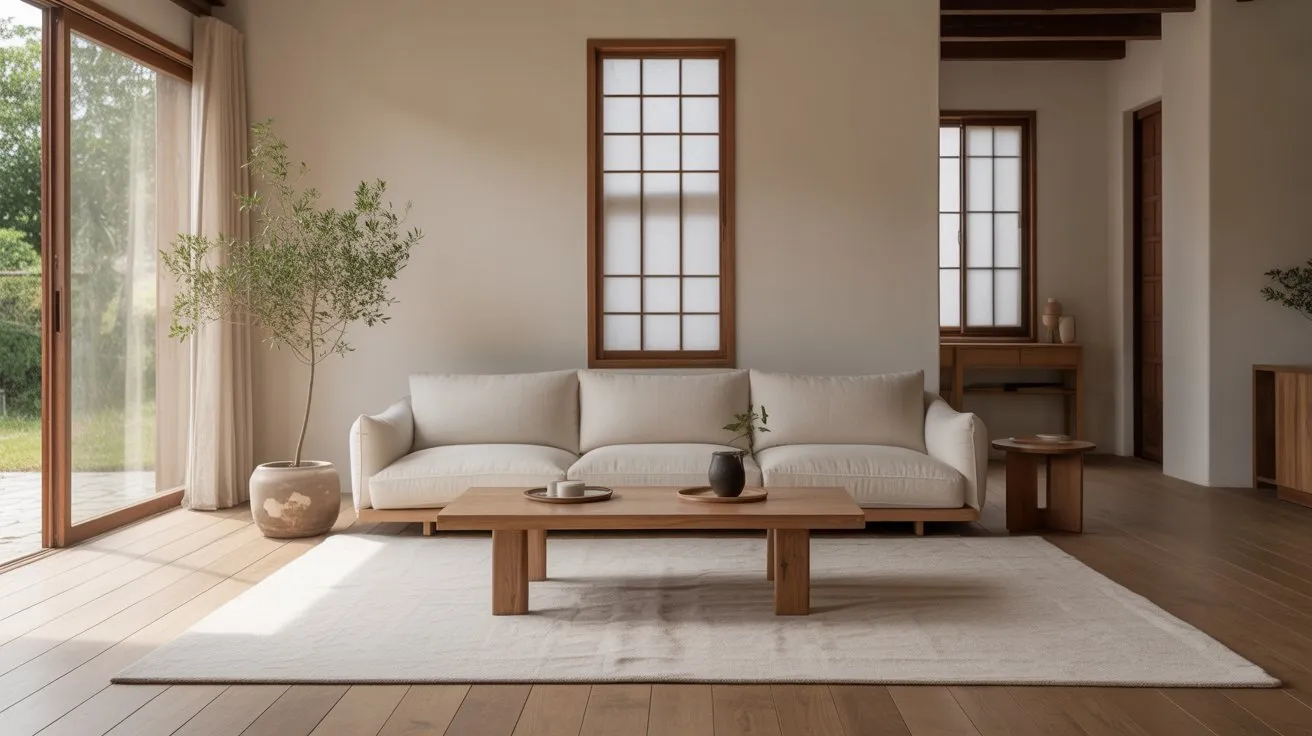
Japandi living room ideas combine the simplicity of Japanese design with the warmth of Scandinavian style, creating a space that feels calm, functional, and inviting. This design approach focuses on minimalism, natural materials, and thoughtful layout choices that reduce clutter and enhance comfort. Instead of filling the room with unnecessary items, Japandi emphasizes balance and intention. Whether you’re designing a small space or a larger living area, these ideas help create a peaceful environment that feels modern yet timeless.
1. Neutral Base with Warm Wood Balance
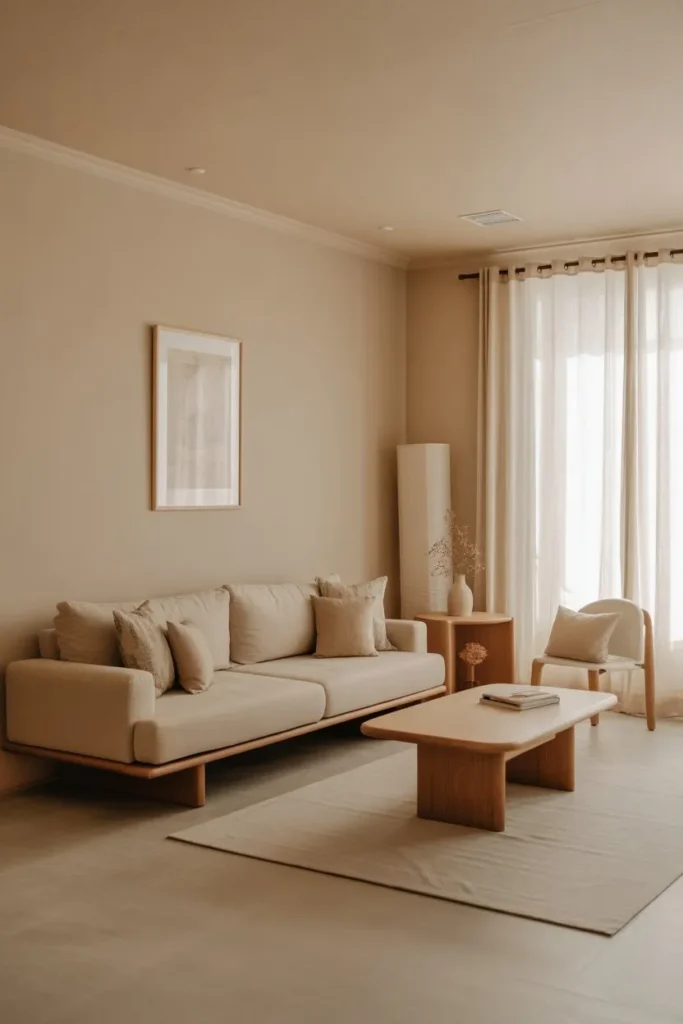
Japandi style starts with a neutral base that feels calm and uncluttered. Soft beige, off-white, and muted gray tones create a quiet backdrop, while light wood introduces warmth to prevent the space from feeling cold.
The balance between these elements is key—too much white can feel sterile, while too much wood can feel heavy. Keeping furniture simple and low-profile enhances openness, making the room feel grounded and peaceful.
2. Low Furniture Layout for Grounded Feel
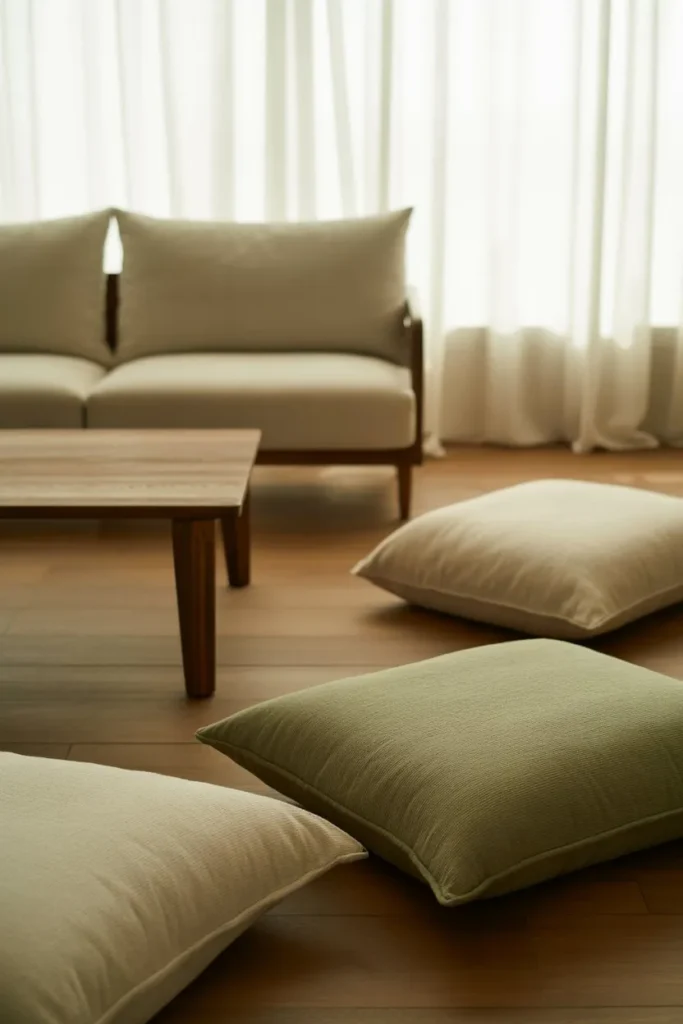
Low furniture is a defining element of Japandi interiors because it visually lowers the center of gravity in the room. This creates a grounded, relaxed environment that feels closer to nature and less structured.
It also helps make ceilings appear higher, which is especially useful in smaller spaces. Keeping sightlines open further enhances the feeling of calm and spaciousness.
3. Japandi Living Room with Soft Layered Textures
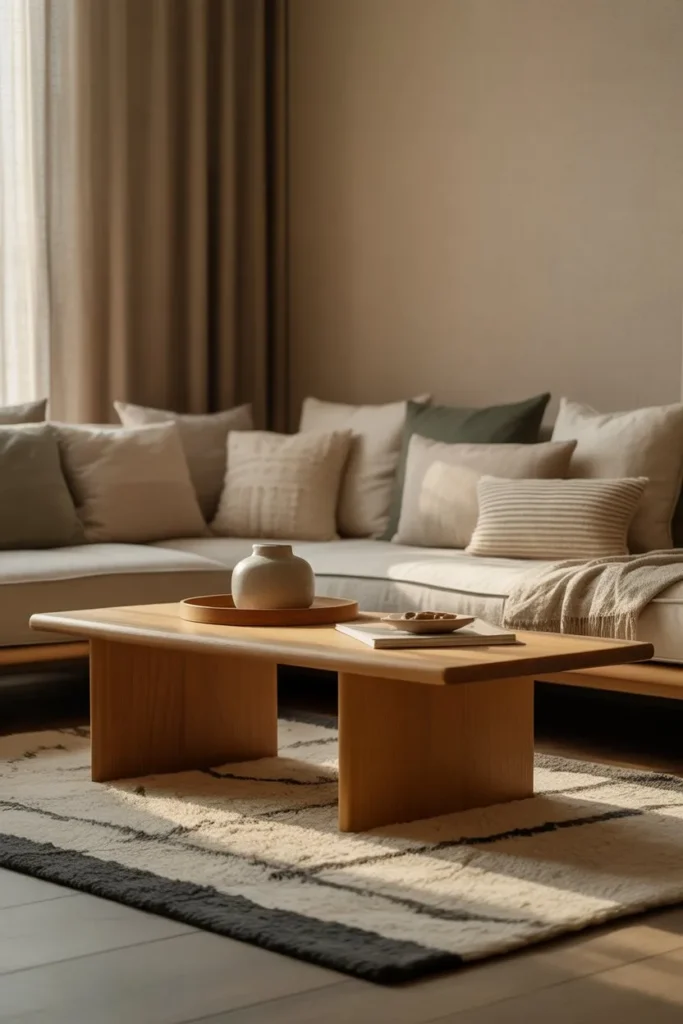
Minimal doesn’t mean empty—Japandi relies heavily on texture to create depth. Linen cushions, wool rugs, and natural fabrics add softness without cluttering the space.
The goal is to make the room feel comfortable and lived-in while maintaining simplicity. Each texture should feel intentional, contributing to a balanced and calming environment.
4. Clean Lines with Functional Furniture
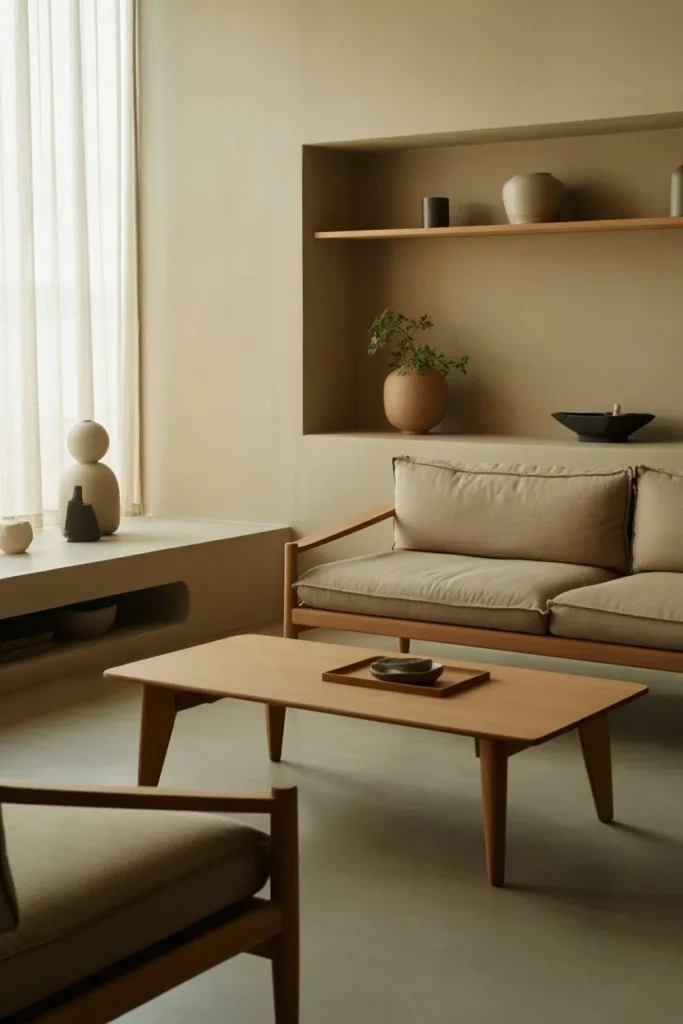
Furniture in Japandi design should be both simple and functional. Clean lines and uncluttered shapes create a sense of order, while each piece serves a clear purpose.
Avoid decorative excess—focus on quality over quantity. This approach ensures the room feels intentional and easy to maintain, which is central to Japandi philosophy.
5. Natural Light as a Key Design Element
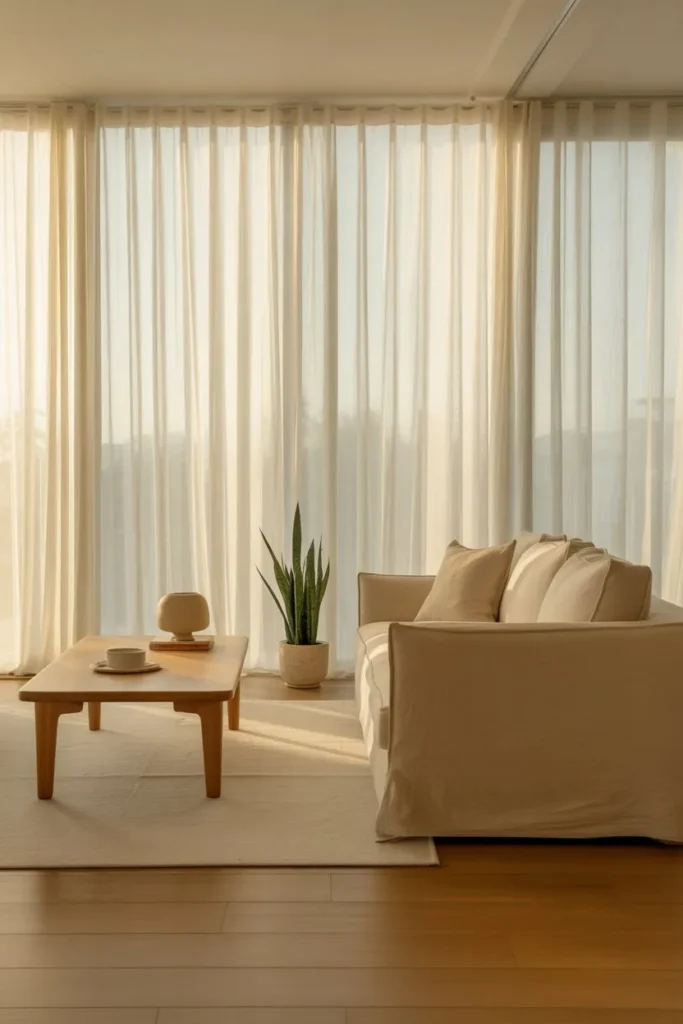
Natural light plays a central role in Japandi interiors. Large windows and light, sheer curtains allow sunlight to flow freely, enhancing the soft, neutral palette.
This reduces the need for heavy artificial lighting during the day and helps the room feel more connected to the outside environment. A well-lit space naturally feels more open and calming.
6. Japandi Contrast with Dark Wood Accents
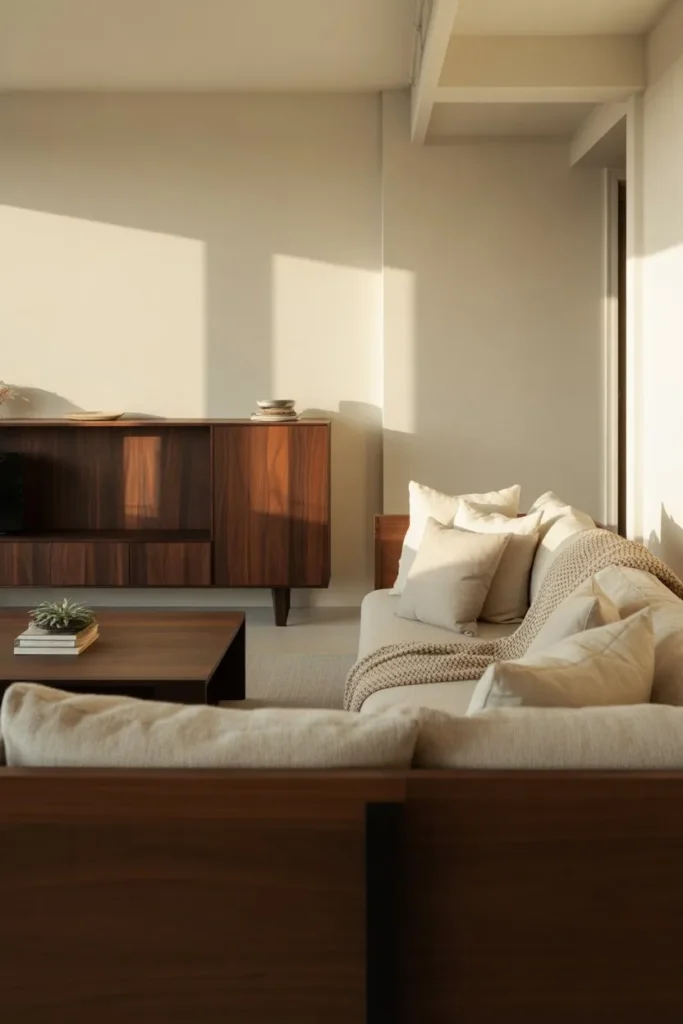
While Japandi leans toward light tones, introducing dark wood accents adds depth and prevents the space from feeling flat. The key is controlled contrast—dark elements should be used sparingly to anchor the room without overpowering it.
For example, a dark coffee table or shelving unit can ground the layout, especially when surrounded by lighter tones. This contrast creates visual structure while still maintaining the calm, minimal aesthetic that defines Japandi interiors.
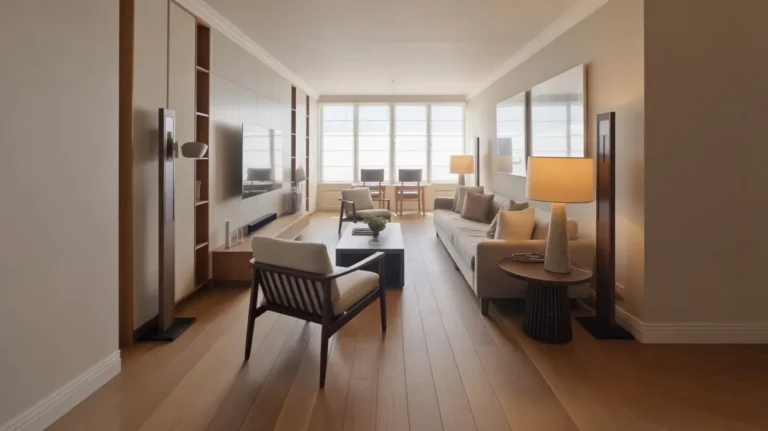
7. Japandi Living Room with Open Space Flow
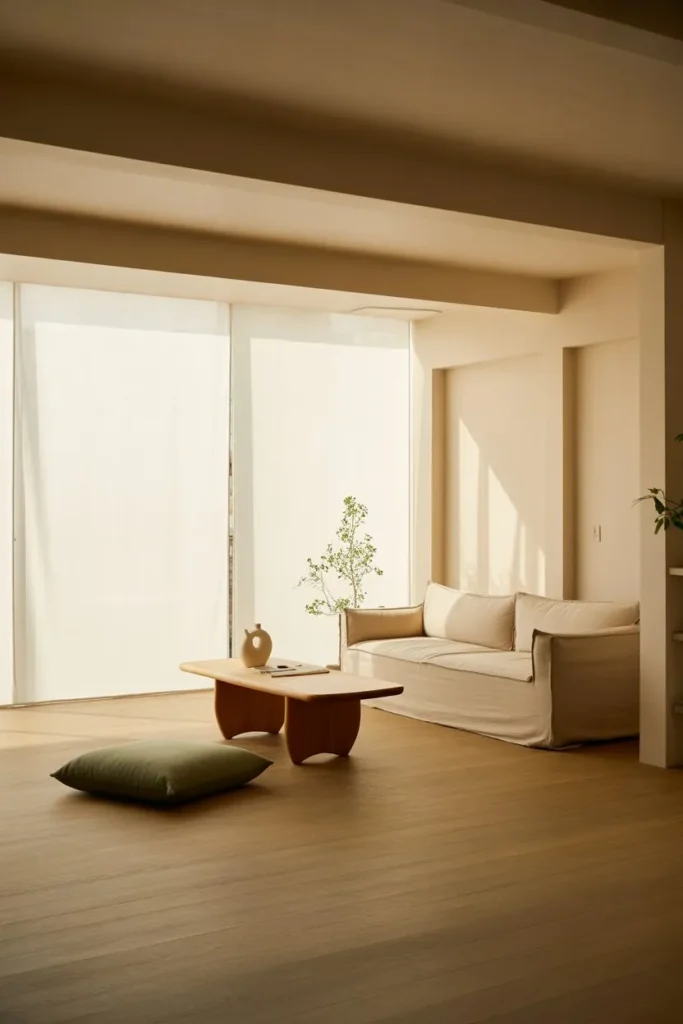
Open space is not empty space—it’s intentional. One of the most important Japandi principles is allowing room to breathe by avoiding unnecessary furniture or decor.
Keeping pathways clear and furniture spaced thoughtfully improves movement and makes the room feel larger. This layout also reduces visual noise, helping create a more peaceful and uncluttered environment that supports relaxation.
8. Japandi Living Room with Earth Tone Palette
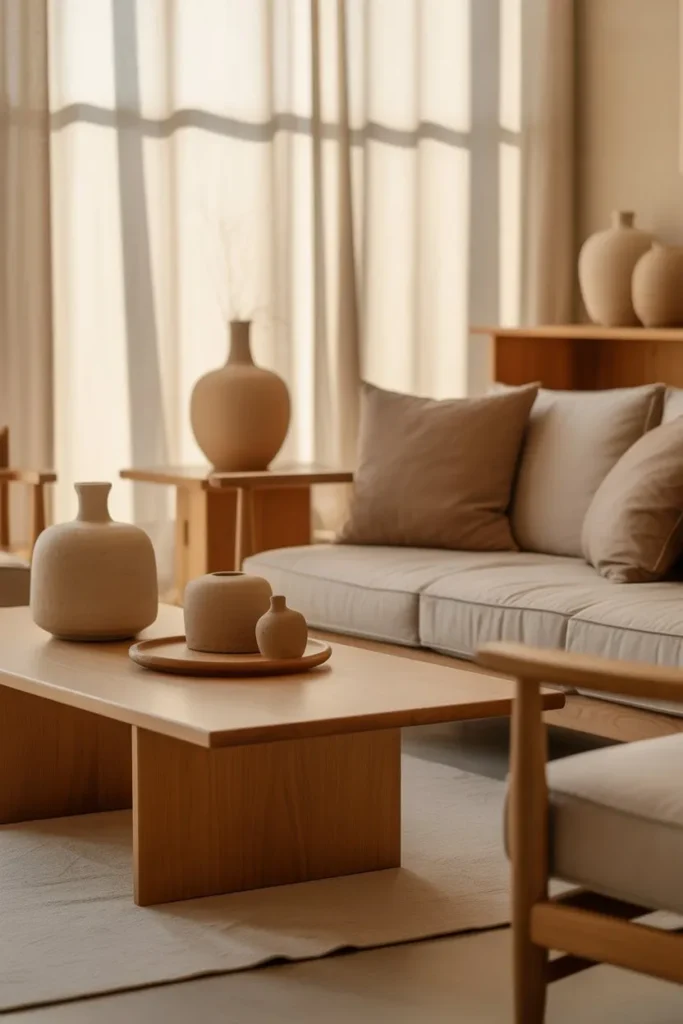
Earth tones bring warmth and subtle richness into a Japandi space without breaking its calm aesthetic. Shades like clay, taupe, sand, and muted brown create a grounded atmosphere that feels natural and timeless.
These tones work best when layered gently rather than used in strong contrast. Combining them with natural materials enhances the organic feel, making the space more connected to nature while maintaining simplicity.
9. Japandi Living Room with Statement Minimal Decor
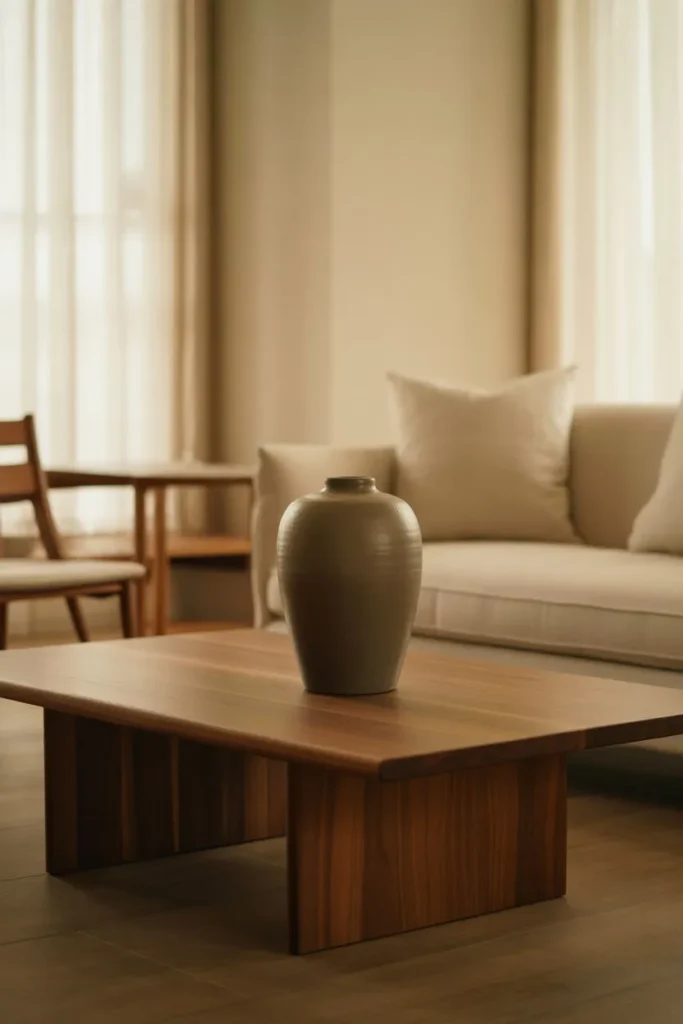
Instead of filling the room with multiple decorative items, Japandi focuses on one or two meaningful pieces. A large ceramic vase, a simple artwork, or a handcrafted object can act as a focal point.
This approach reduces clutter while still adding character. The idea is to let each item stand out, giving the room a curated and intentional feel rather than a crowded one.
10. Japandi Living Room with Mixed Natural Materials
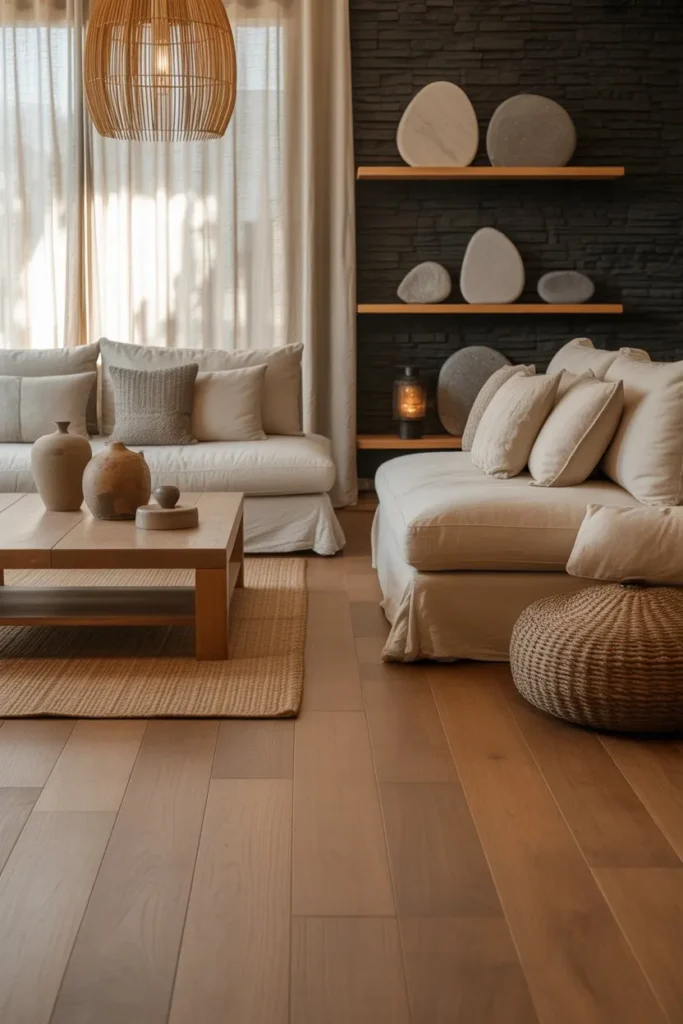
Material layering is what gives Japandi its depth. Combining wood, linen, stone, and ceramics creates a tactile experience that feels warm and organic.
The key is harmony—materials should complement each other rather than compete. Keeping finishes matte and natural helps maintain the understated elegance of the space while ensuring it feels comfortable and livable.
11. Japandi Living Room with Layered Lighting Strategy
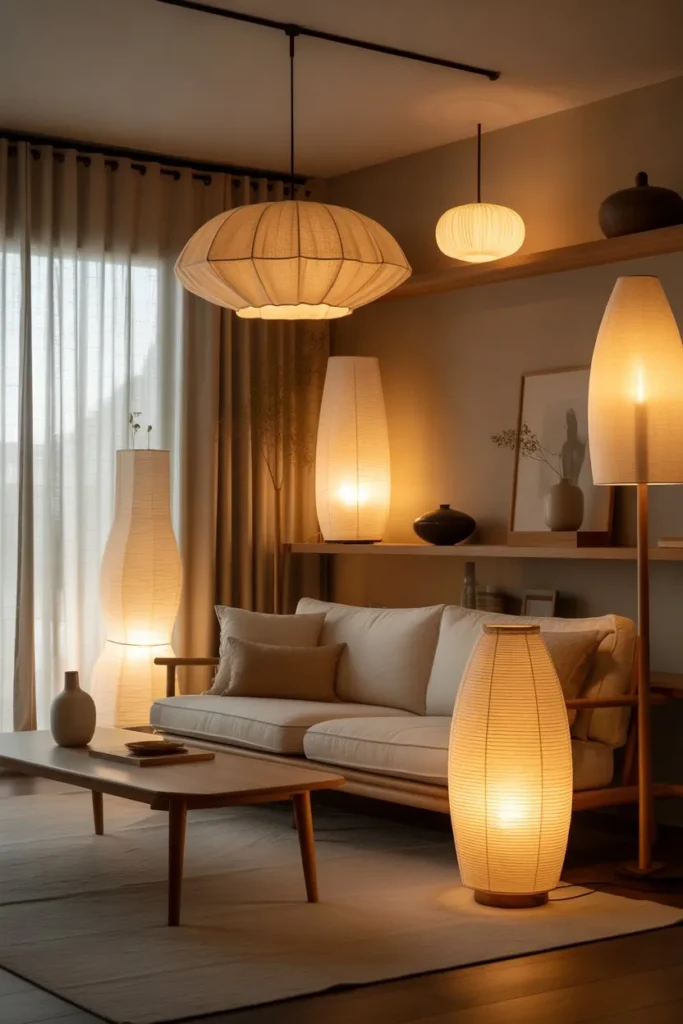
Lighting in Japandi design is never harsh or overly bright—it’s layered, soft, and intentional. Instead of relying on a single overhead light, combining ambient lighting (ceiling), task lighting (floor or table lamps), and subtle accent lighting creates a calm and adaptable environment.
Warm light tones enhance the natural materials and bring out the richness of wood and textiles. This setup allows the room to shift mood throughout the day—brighter for daytime use and softer for evening relaxation—while maintaining the overall minimal aesthetic.
12. Japandi Living Room with Functional Zoning
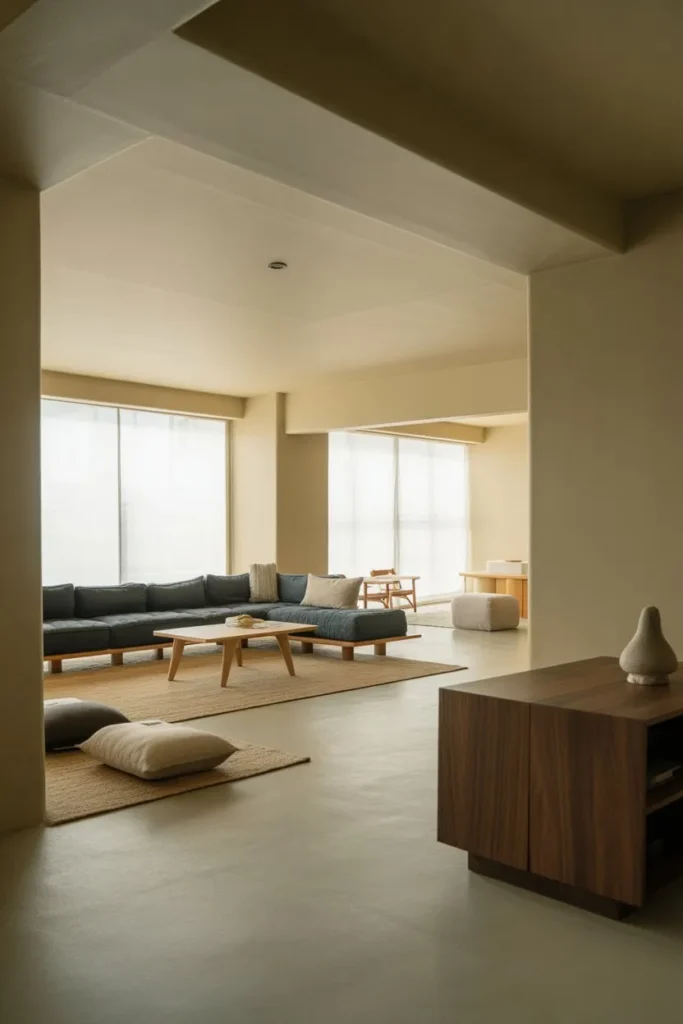
Even in minimal spaces, zoning is essential. A Japandi living room should feel organized without using physical dividers. Instead, use furniture placement, rugs, or lighting to subtly define areas such as seating, reading, or relaxation zones.
For example, a rug can anchor the seating area, while a floor lamp can define a reading corner. This approach keeps the layout structured while preserving openness, making the room feel both functional and calm.
13. Japandi Living Room with Balanced Negative Space
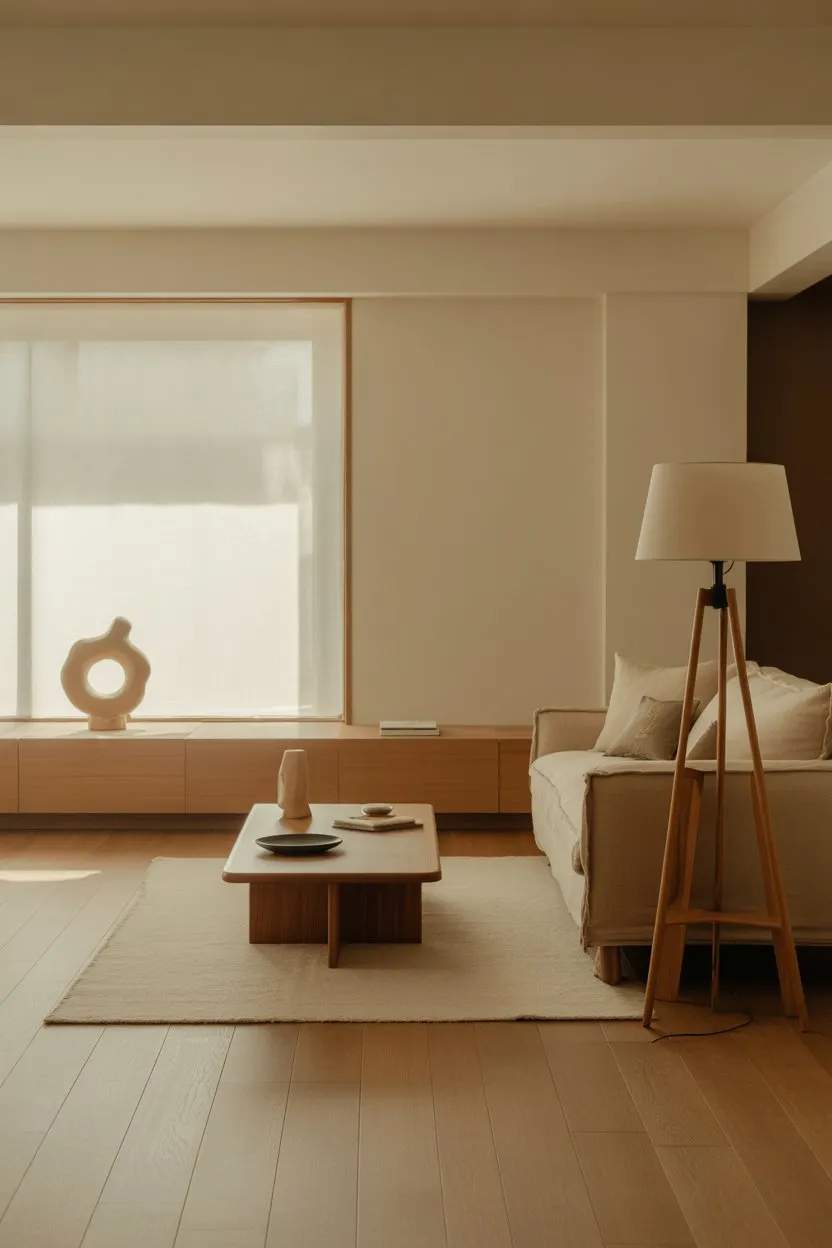
Negative space is one of the most important elements in Japandi interiors. Leaving areas intentionally empty allows the eye to rest and enhances the overall sense of calm.
This doesn’t mean removing essential furniture—it means avoiding overcrowding. Every item should have purpose and enough space around it. This balance creates a peaceful environment that feels uncluttered and visually light.
14. Japandi Living Room with Soft Minimal Window Treatments
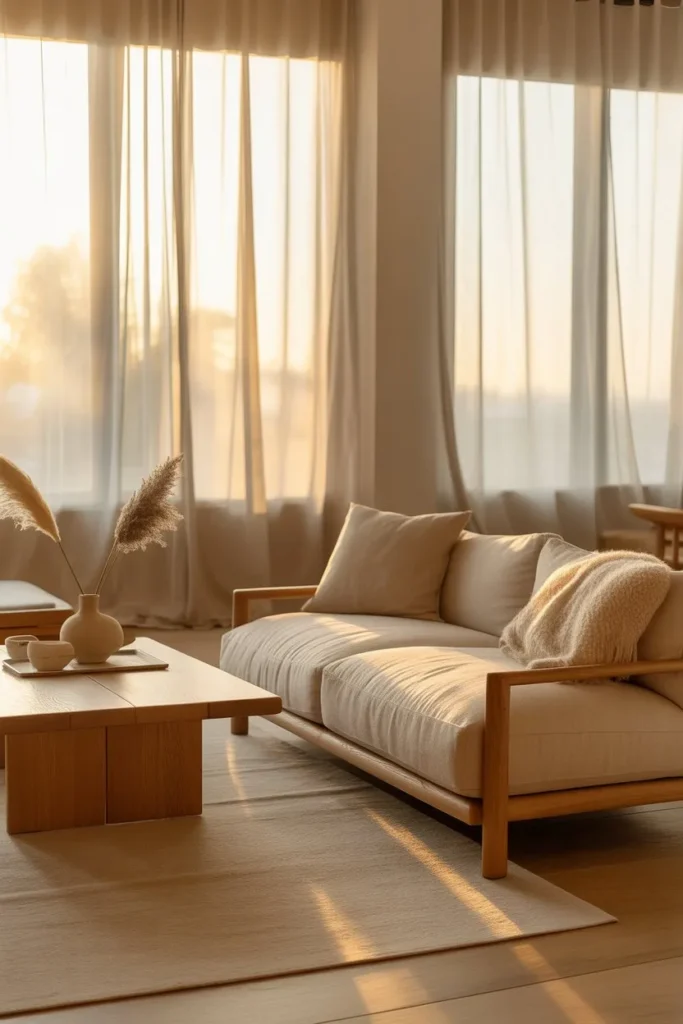
Window treatments in Japandi design should enhance light, not block it. Sheer curtains or simple blinds allow natural light to filter through while maintaining privacy.
Heavy drapes or bold patterns can disrupt the calm atmosphere, so it’s better to keep materials light and neutral. This ensures the room remains bright, airy, and connected to the outside environment.
15. Japandi Living Room with Low Visual Clutter Storage
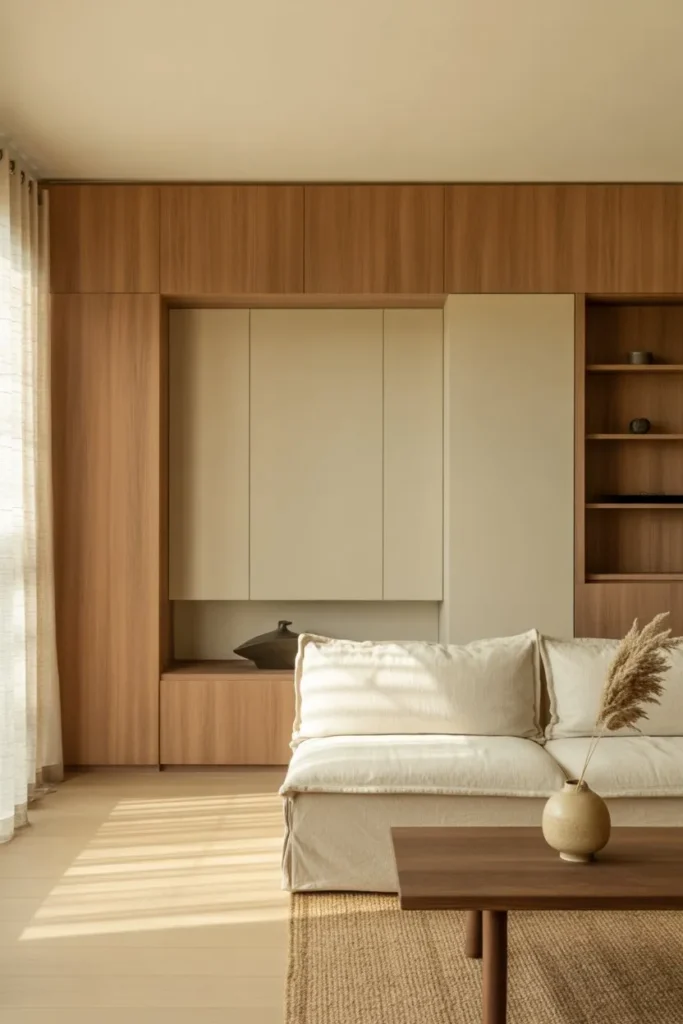
Storage in Japandi spaces should be subtle and integrated. Closed cabinets, hidden compartments, or low-profile units help keep surfaces clean and uncluttered.
The goal is to reduce visual noise—items should be stored out of sight unless they serve a clear purpose. This approach makes the room easier to maintain and supports the calm, minimal aesthetic over time.
16. Japandi Living Room with Soft Curves and Organic Shapes
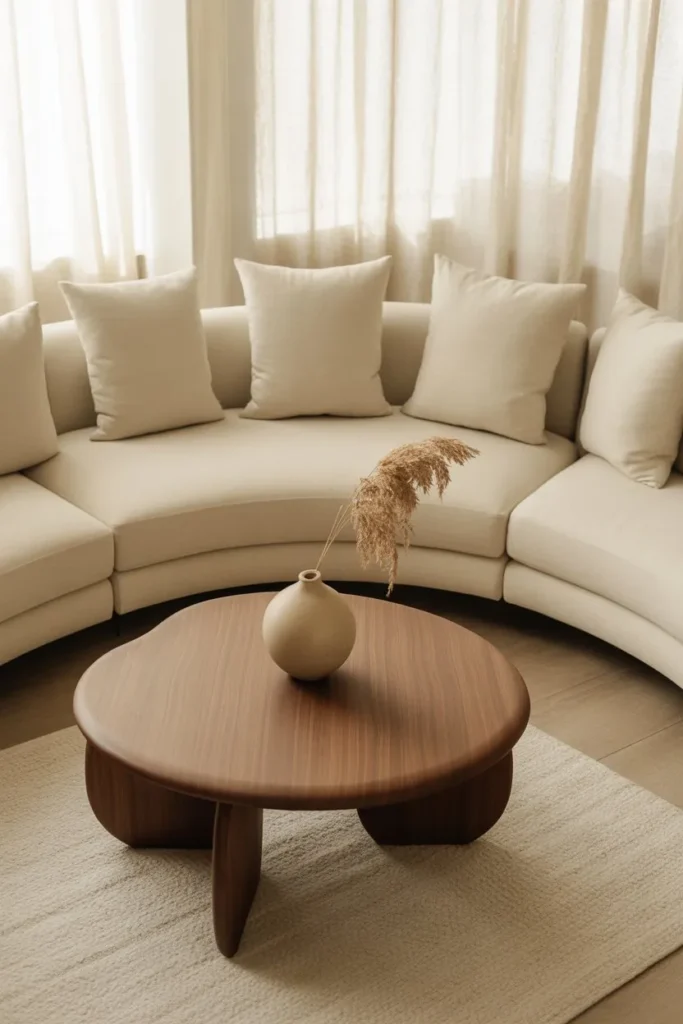
While Japandi is known for clean lines, introducing subtle curves prevents the space from feeling too rigid. Rounded coffee tables, curved sofas, or soft-edged decor create a more natural and relaxed environment.
These organic shapes mimic forms found in nature, which aligns with Japandi’s philosophy of calm living. The key is balance—pair curves with simple structures so the room remains minimal but feels more inviting and less strict.
17. Japandi Living Room with Muted Accent Colors
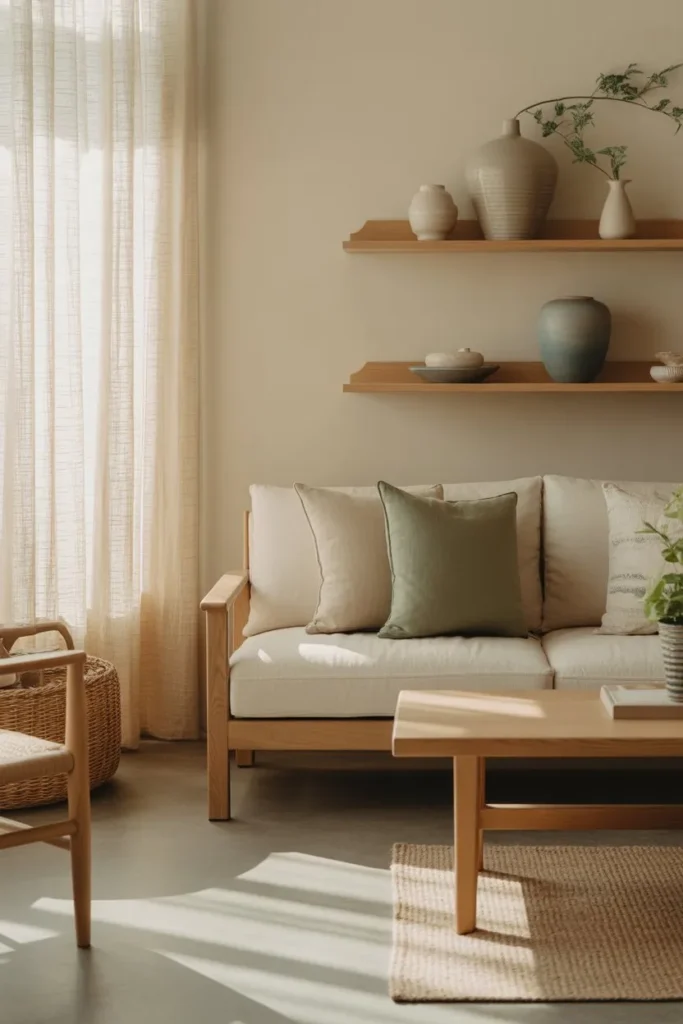
Japandi interiors don’t rely on bold color, but that doesn’t mean they must be completely neutral. Introducing muted accents like sage green, dusty blue, or soft terracotta adds subtle personality without breaking the calm aesthetic.
These colors should appear in small, controlled areas—such as cushions, art, or a single furniture piece. This keeps the palette cohesive while adding just enough variation to avoid monotony.
18. Japandi Living Room with Handcrafted Decor Elements
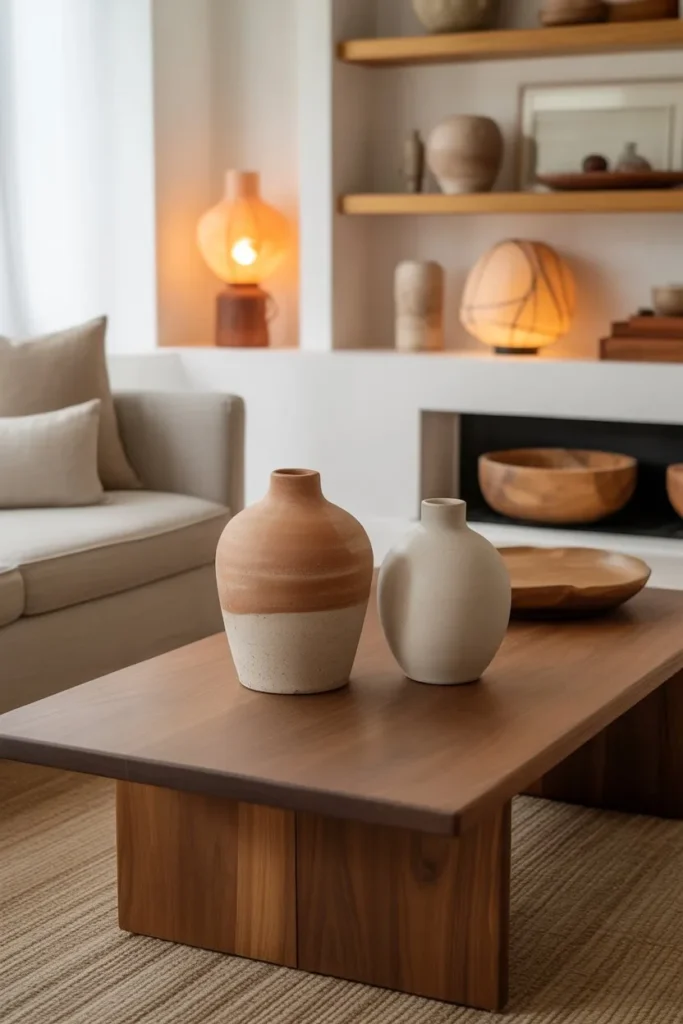
Handcrafted items bring authenticity and character into a Japandi space. Instead of mass-produced decor, choosing ceramics, handmade vases, or artisanal pieces adds depth and meaning.
Each item should feel intentional and limited in number. This approach aligns with the idea of quality over quantity, ensuring the space feels personal while still maintaining its minimalist foundation.
19. Fully Balanced Japandi Living Room Design
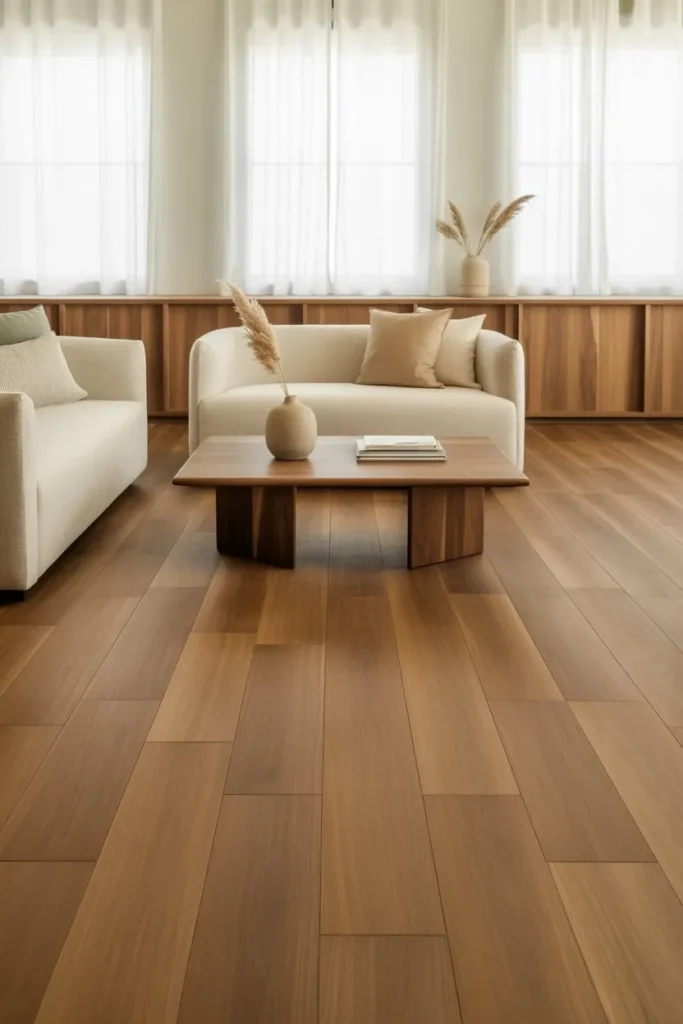
A successful Japandi living room is not about individual elements—it’s about how everything works together. Neutral tones, natural materials, soft lighting, and clean layout must all be balanced carefully.
Nothing should feel excessive or out of place. When done right, the space feels calm, functional, and visually harmonious. This balance is what defines Japandi—simple, warm, and thoughtfully designed for everyday living.
Conclusion
The best Japandi living room ideas are built on balance, simplicity, and natural elements. By focusing on clean layouts, soft lighting, and carefully chosen materials, you can create a space that feels both functional and relaxing. Small details, like texture and color control, play an important role in maintaining the overall aesthetic. With the right approach, your living room can become a calm and stylish space that supports everyday comfort and mindful living.