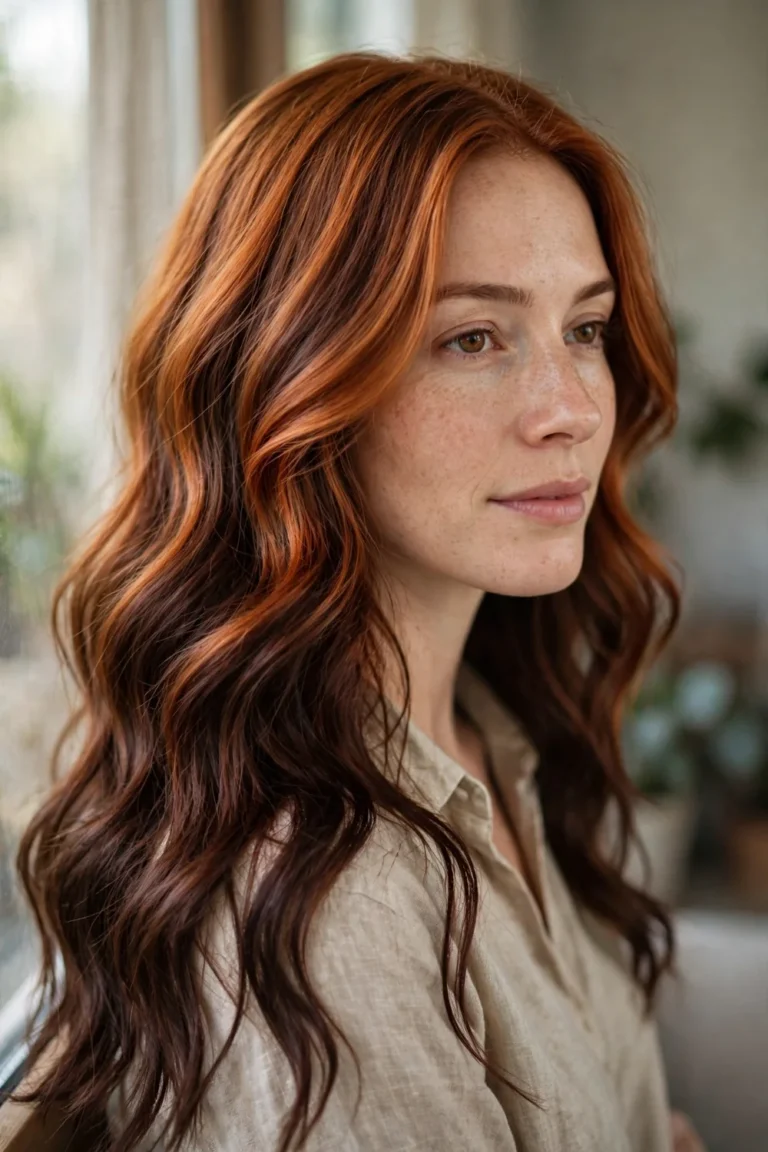
12 Hairstyles for Fine Wavy Hair

Introduction
If your waves fall flat by noon, you are not alone — the best hairstyles for fine wavy hair work with your natural bend instead of fighting it, adding lift at the roots and movement through the ends without weighing a single strand down. In the next few minutes you will find 12 cuts designed to make fine hair look fuller, from airy bobs to soft shags and cropped pixies. If you have loved our guide to hairstyles for thin fine hair, consider this your wavy companion — same volume-first thinking, tailored to your texture.
Layered Wavy Bob for Fine Hair
A layered wavy bob is the most reliable starting point when you want fullness without fuss. Cut to sit between your chin and jaw, it removes the heavy, dragging weight that makes fine waves look stringy, while short, blended layers through the crown encourage your natural pattern to spring up. It suits oval, heart, and slightly square faces because the waves soften angles and the layers create width where fine hair often looks narrow. Because the perimeter stays fairly full, your ends look thicker than a heavily thinned cut would allow, and the overall silhouette reads bouncy rather than flat.
- Apply a pea-sized amount of lightweight mousse to damp roots only
- Scrunch your waves gently upward with your palms to encourage definition
- Diffuse on low heat until just dry, then let the last bit air-dry
- Flip your part to the opposite side for instant extra lift
Ask your stylist for a bob with soft, internal layers — never razor-thinned ends, which can make fine hair look wispy. At home, refresh second-day waves with a light water mist and a quick scrunch rather than rewetting everything. A trim every six to eight weeks keeps the shape buoyant, because once this cut grows past the jaw it starts to pull down again. If your waves are looser, a small-barrel tong on just two or three front pieces can restore polish in under five minutes.
Textured Lob with Soft Waves

The textured lob gives you length without the limpness that often comes with it. Sitting at or just above your shoulders, this longer bob keeps enough weight for your waves to form properly, while textured ends prevent that solid, triangular shape. It is flattering for round and long faces alike, since the waves break up the sides and add gentle width or softness where you need it. For fine wavy hair, the magic is in the balance: blunt enough to look thick, broken up enough to move. You can wear it centre-parted for symmetry or swept to one side for a more relaxed feel.
- Spray a salt-free texture spray through your mid-lengths for grip
- Twist small sections while damp and let them set as they dry
- Avoid heavy oils on your roots — keep them for the very ends only
- Sleep with your hair in a loose top knot to preserve the wave
Tell your stylist you want a lob with textured, piecey ends and minimal layering through the back so you keep your density. At home, wash with a volumising shampoo and condition only from mid-lengths down. The American Academy of Dermatology’s dermatologist tips for healthy hair remind you to apply shampoo to your scalp and conditioner mainly to your ends — advice that matters even more when fine hair is easily weighed down. Book trims every eight to ten weeks to keep the ends looking full.
Wavy Pixie Cut for Fine Hair
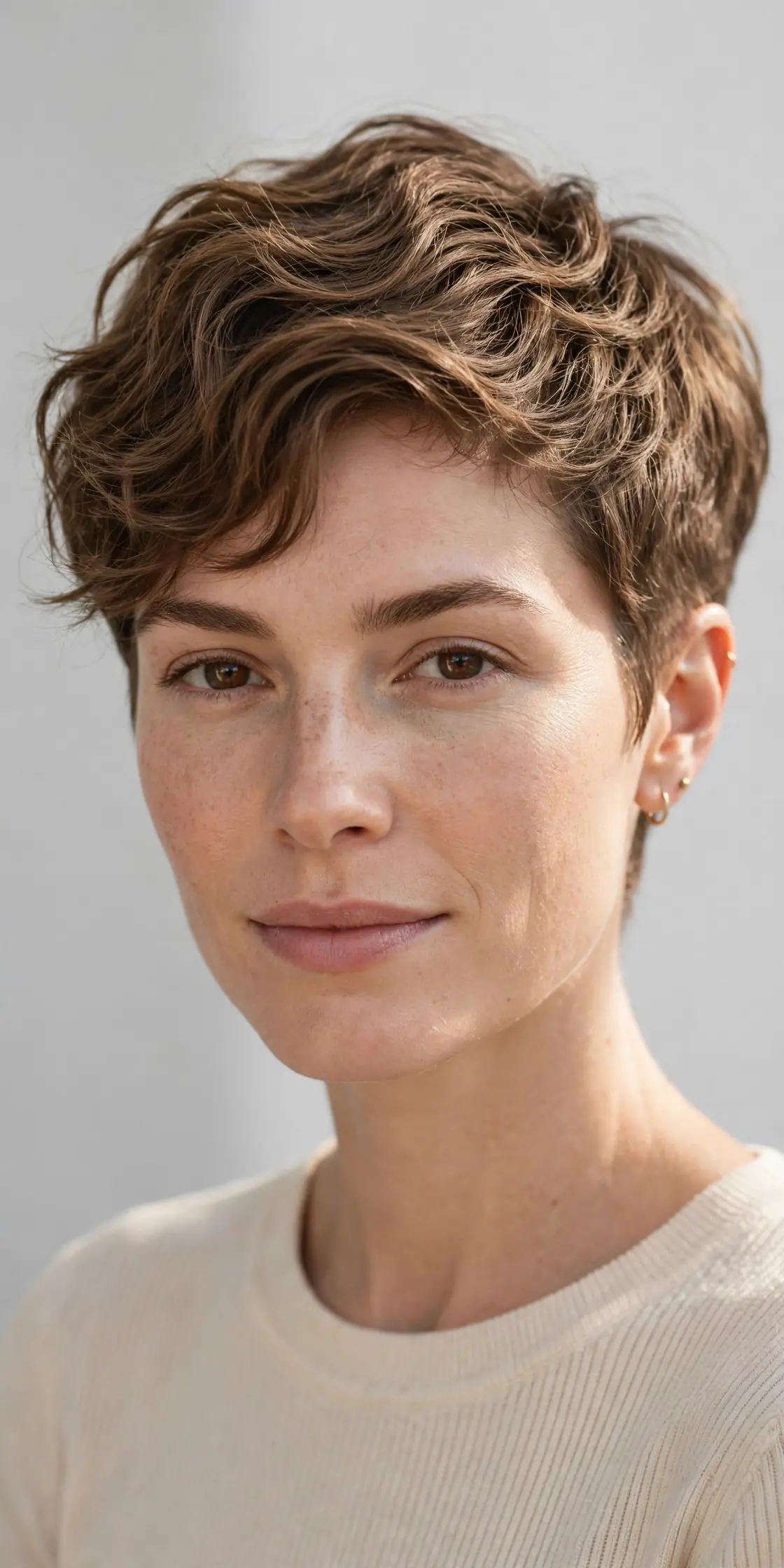
A wavy pixie proves short can look abundant. By keeping the sides and back neatly tapered while leaving length and texture on top, you concentrate all your volume where it shows most. Your natural wave becomes the styling — it adds height, breaks up the surface, and stops fine hair from lying flat against your scalp. This cut loves oval, heart, and petite faces, and it is a brilliant option if your longer lengths always looked thin no matter what you tried. It is bold, fresh, and surprisingly low-maintenance once you learn a two-minute routine.
- Work a fingertip of matte styling paste through dry hair for separation
- Push the top forward, then back, to find your most flattering direction
- Use a tiny round brush and dryer only if you need extra crown lift
- Keep the nape clean between cuts with a quick salon tidy if offered
Ask for a pixie with a soft, textured top and disconnected but blended sides — and show photos, because pixie lengths vary widely. If you have enjoyed pixie cuts for thin wavy hair, this version leans a little longer on top for more styling options. You will need trims every four to six weeks to hold the shape, but daily styling is minimal. Grow-out is forgiving too, since the wavy top softens every stage as it lengthens into a crop, then a bob.
Shoulder-Length Shag with Curtain Bangs

The modern shag was practically made for fine waves. Feathered layers throughout, a soft fringe that parts in the middle, and lots of movement through the ends give you that effortless, lived-in fullness thicker hair types get naturally. Curtain bangs frame your eyes and cheekbones, drawing attention to your face while the layers do the volume work. This style suits most face shapes, especially long and oval, because the fringe shortens the face visually and the waves add width at the sides. It also grows out beautifully, which suits you if salon visits are infrequent.
- Apply volumising foam and blow-dry your bangs forward, then split them
- Diffuse your layers while tipping your head side to side for lift
- Pinch individual waves with a little texturising spray to define them
- Refresh your fringe with dry shampoo before it looks oily, not after
Ask your stylist for a shag with layers starting around your cheekbones and curtain bangs that graze your brows at the centre and lengthen at the edges. Be clear you want fullness, not thinning — the layers should be cut with scissors and point-cutting, not heavily razored. At home, this cut rewards air-drying more than almost any other. Trim every eight weeks to keep the fringe in shape, though the body of the cut can happily stretch to ten.
Blunt Cut Lob with Beach Waves

If layers make you nervous, a blunt lob with styled beach waves offers fullness through illusion. A straight, unlayered perimeter makes your ends look as thick as possible — a clever trick for fine hair — while loose, undone waves through the mid-lengths stop it looking severe. It works especially well if your natural wave is on the looser side, because you are enhancing a pattern rather than creating one from scratch. Square and round faces benefit from the length past the chin, which elongates, while the waves keep everything soft and modern.
- Prep damp hair with a heat protectant and a light volumising spray
- Create waves with a large-barrel tong, alternating directions as you go
- Leave the last inch of each section straight for a modern finish
- Brush through once with your fingers, never a brush, to soften
Request a one-length lob with perhaps a whisper of internal layering only if your hair feels bulky at the ends. Because there are no layers to hide behind, the quality of the blunt line matters, so choose a stylist confident with precision cutting. At home you can alternate between wearing it naturally wavy and tong-enhanced. The blunt edge needs refreshing every seven to nine weeks; once the ends start to feather, the thick-hair illusion fades. A weekly lightweight clarifying wash helps prevent product build-up.
Choppy Shoulder Cut with Face-Framing Layers

Choppy texture plus face-framing layers gives fine waves instant personality. The choppiness — short, varied ends cut throughout — creates shadow and depth, so your hair catches light differently and looks more abundant. Longer layers around your face open up your features and can be tucked, pinned, or swept back, giving you styling versatility from a single cut. It is particularly kind to round and heart-shaped faces, since the front layers contour like a soft curtain. Shoulder length keeps it versatile enough for ponytails while still short enough to stay bouncy.
- Scrunch a curl-enhancing cream the size of a coin through damp hair
- Part your hair slightly off-centre to maximise crown volume
- Clip your roots up while air-drying if your top layer falls flat
- Define your front layers with a quick twist around a warm tong
Ask for choppy, point-cut ends and face-framing layers starting at your chin or cheekbones, depending on where you want the focus. Warn your stylist that fine hair shows every cut mark, so the choppiness should be soft, not jagged. At home, this style thrives on minimal handling — the more you touch it while drying, the more frizz you create. Plan trims every eight weeks. As it grows, it transitions gracefully into a layered lob, so you get two looks from one appointment.
Long Layered Waves with Feathered Ends
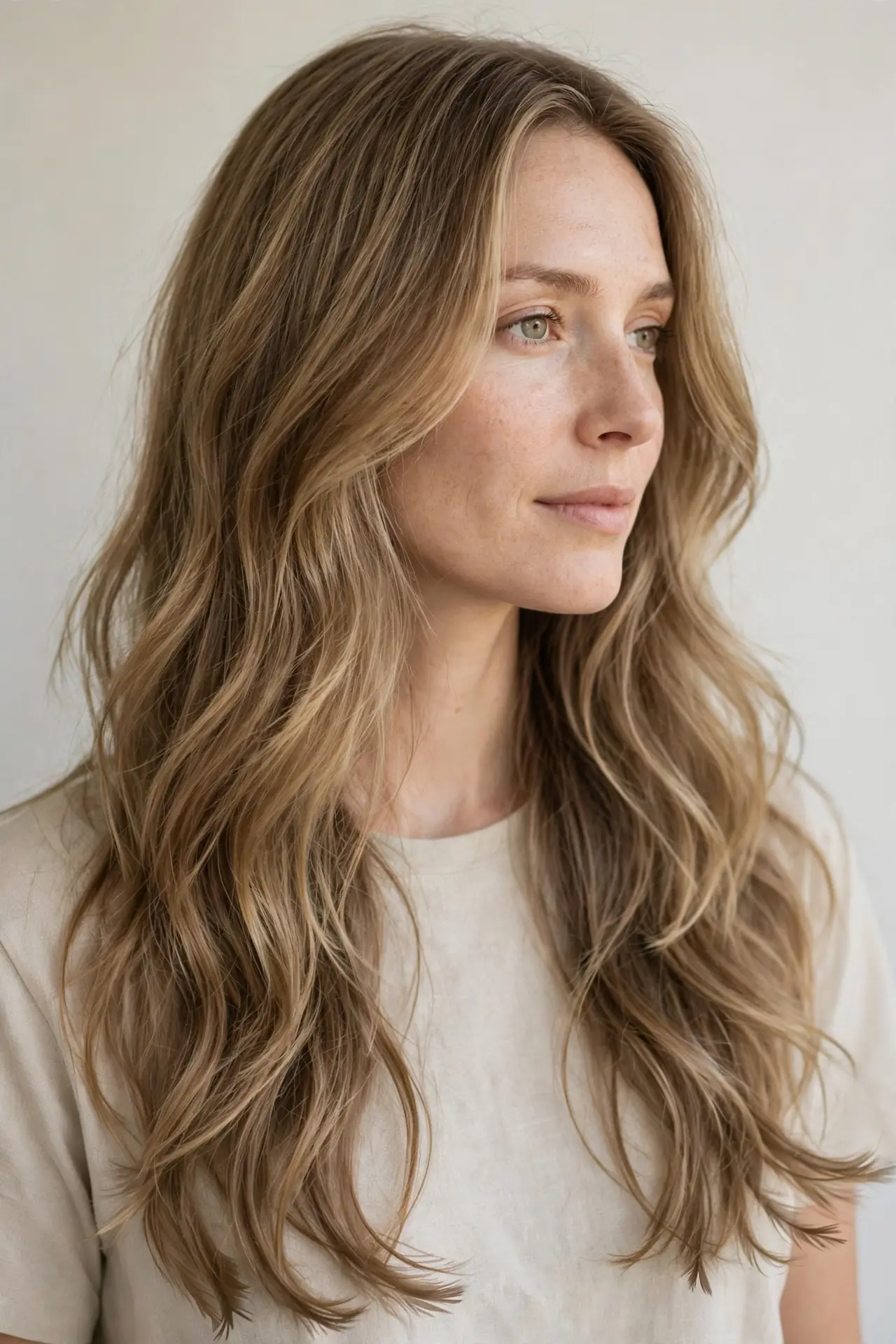
You can keep your length — you just need the right layering strategy. Long layered waves for fine hair use long, feathered layers concentrated through the last few inches, so you remove dragging weight without sacrificing the fullness of your perimeter. Your waves get room to form and bounce, and the feathering stops the ends looking like a solid curtain. This option suits you if your hair is fine but you have a fair amount of it, and it flatters long and oval faces by adding movement at the sides rather than length at the bottom.
- Apply leave-in conditioner sparingly and only below your shoulders
- Plop your waves in a soft cotton T-shirt for ten minutes after washing
- Braid your hair loosely overnight for consistent, gentle waves
- Use a silk or satin pillowcase to reduce friction and frizz
Ask your stylist for long layers with feathered ends and absolutely no thinning shears through the mid-lengths. Bring reference photos showing where you want the shortest layer to begin — usually around the collarbone for this look. At home, handle your lengths gently, detangling with a wide-tooth comb in the shower while conditioner is in. Trims every ten to twelve weeks are usually enough if you are growing, with a light dusting of the ends to keep the feathering fresh and prevent split ends travelling up.
Wavy Bob with Side Part and Root Lift

Sometimes the cut is classic and the transformation is in the styling. A simple wavy bob worn with a deep side part instantly looks fuller, because sweeping all your hair to one side stacks it at the roots and creates height you cannot get from a centre part. The waves add texture, the asymmetry adds interest, and the whole effect is polished enough for work yet soft enough for weekends. It suits round and square faces particularly well, as the diagonal line of the part and the sweep of hair across the forehead break up symmetry in a flattering way.
- Create your side part while hair is wet so it sets in place
- Blow-dry your roots upward and over in the direction of the sweep
- Spritz a root-lift spray at the parting and massage it in
- Tuck the lighter side behind your ear to sharpen the contrast
Ask for a classic one-length or lightly layered bob ending between your chin and shoulders, depending on your neck length and preference. Tell your stylist you plan to wear a side part, so they can check the cut falls correctly in that direction. At home, experiment with which side gives you more natural lift — most people have a stronger growth pattern on one side. Refresh the style by re-flipping the part and misting the roots. Trim every six to eight weeks to keep the line crisp.
French-Inspired Wavy Bob

The French bob is chic, undone, and ideal for fine waves. Cut shorter — typically at the jaw or even cheekbone — and usually paired with a soft, wispy fringe, it relies on your natural texture for its charm rather than sleek styling. The shorter length means less weight pulling your waves down, so fine hair looks springier and fuller. It flatters oval and heart-shaped faces beautifully and gives petite features lovely proportion. If you love a low-effort routine with a high-fashion feel, this is your cut: a little tousling and you are done.
- Let your hair air-dry almost completely before touching it
- Scrunch in a tiny amount of lightweight styling cream for definition
- Trim your fringe little and often rather than letting it overgrow
- Embrace a little frizz — it is part of this look’s relaxed charm
Ask your stylist for a jaw-length French bob with a soft fringe and natural, lived-in edges — not a blunt, geometric version, which demands constant styling on fine hair. Check the fringe length carefully in the chair, since wavy hair springs up as it dries and can end up shorter than expected. At home, less is more: over-styling kills the effortless effect. Book fringe trims every three to four weeks (many salons offer them free between cuts) and a full reshape every seven weeks.
Tousled Midi Cut with Invisible Layers

The midi cut — between shoulders and chest — with invisible layers is the quiet achiever for fine wavy hair. Invisible or internal layers remove bulk and encourage wave from within, without any obvious steps or shelves on the surface, so your hair simply looks like a better version of itself. The tousled finish keeps it current and hides the fact that fine hair rarely stays perfectly neat. It suits almost every face shape and is a safe, elegant choice if you want change you can explain in the office on Monday.
- Apply a volumising mousse and rough-dry with your fingers only
- Twist your hair into two loose buns while it cools for soft waves
- Finish with a light dry texture spray shaken through the ends
- Avoid re-brushing during the day — revive waves with a scrunch instead
Ask for internal layers that support your wave pattern while keeping the outer line strong, and show your stylist how your hair dries naturally if possible — a dry cut or a cut finished dry can help them place layers accurately. At home, this cut is forgiving of skipped washes if you use dry shampoo at the roots the night before. Trims every eight to ten weeks maintain the internal structure. Because nothing looks drastically layered, grow-out is seamless and low-stress.
Wavy Crop with Tapered Nape

A wavy crop with a tapered nape is neat, modern, and full of texture where it counts. The back and sides are cut close and tapered cleanly at the neckline, while the top and fringe keep enough length for your waves to show. Removing all that lower bulk makes the top look thicker by comparison, and the silhouette is sharp without being harsh. It is a wonderful choice in warmer climates or if you are tired of hair sitting on your neck, and it flatters oval, oblong, and angular faces by adding softness on top.
- Smooth a small amount of lightweight pomade over the top for shine
- Direct the fringe forward or to the side depending on your mood
- Keep the tapered nape tidy with trims every four to five weeks
- Use a soft brush on the sides to keep them lying smoothly
Ask your stylist for a crop with a softly tapered, natural nape — not a hard fade, unless you want an edgier result — and length on top that works with your wave, usually a few inches. Discuss how your fringe will sit, since a wavy crop can be worn forward, swept, or textured upward. Daily styling takes two minutes, making this ideal for busy mornings. If you later want to grow it out, the top length transitions into a pixie and then a short bob with only minor reshaping.
Soft A-Line Bob for Fine Wavy Hair

Our final pick, the soft A-line bob for fine wavy hair, angles gently from shorter at the back to longer at the front, giving you built-in shape and the illusion of density at the nape. The forward length frames your face and elongates your neck, while your waves soften the angle so it never looks severe. It is a classic for a reason: it photographs beautifully, suits round, square, and heart faces, and makes fine hair look deliberately styled even on minimal-effort days. The stacked back also lifts naturally, solving the flat-crown problem many fine-haired readers know well.
- Blow-dry the back sections under with a small round brush for shape
- Let the longer front pieces air-dry to keep their natural wave
- Apply a light shine spray from a distance to avoid weighing hair down
- Angle your head forward when diffusing to boost back volume
Ask for a gentle A-line — longer in front by an inch or two — with soft layering at the back for lift rather than heavy stacking, which can look dated. Imagine this as the shorter, sharper sister of the classic long bob. At home, protect the shape by sleeping with your hair loose or in a very soft scrunchie. Trim every six to eight weeks, because the angle is the first thing to disappear as the back grows out.
Conclusion
Your fine waves are not a limitation — they are the texture these cuts were designed around. Whether you chose the spring of a layered bob, the ease of a shag, or the polish of an A-line, the principle is the same: less weight, smart layers, and lightweight styling that lifts rather than coats. Start with the idea closest to the length you already love, show your stylist the photo, and give your new shape two washes to settle before you judge it. For more volume-first inspiration, revisit our shaggy bob hairstyles for thin fine hair — and enjoy hair that finally moves the way you always wanted it to.