12 ’90s Supermodel Haircut Ideas
Introduction
Nothing says glamour quite like the hair of the ’90s supermodel era — those bouncy, full-bodied blowouts that made Linda, Cindy, Naomi, and Christy look like they walked out of a perfume commercial at all times. If you’ve been hunting for 90s supermodel haircut ideas that actually work on real hair, you’re in the right place. The secret isn’t just length — it’s shape: big rounded layers, face-framing pieces, curtain bangs, and ends that flick and bounce instead of hanging flat. These twelve ideas capture that larger-than-life volume while fitting modern life, whether your hair is fine, thick, straight, or wavy. Think of this as your stylist’s wish list — and if you love layered movement generally, our guide to layered hairstyles for medium hair pairs beautifully with these cuts.
The Iconic ’90s Supermodel Blowout Cut
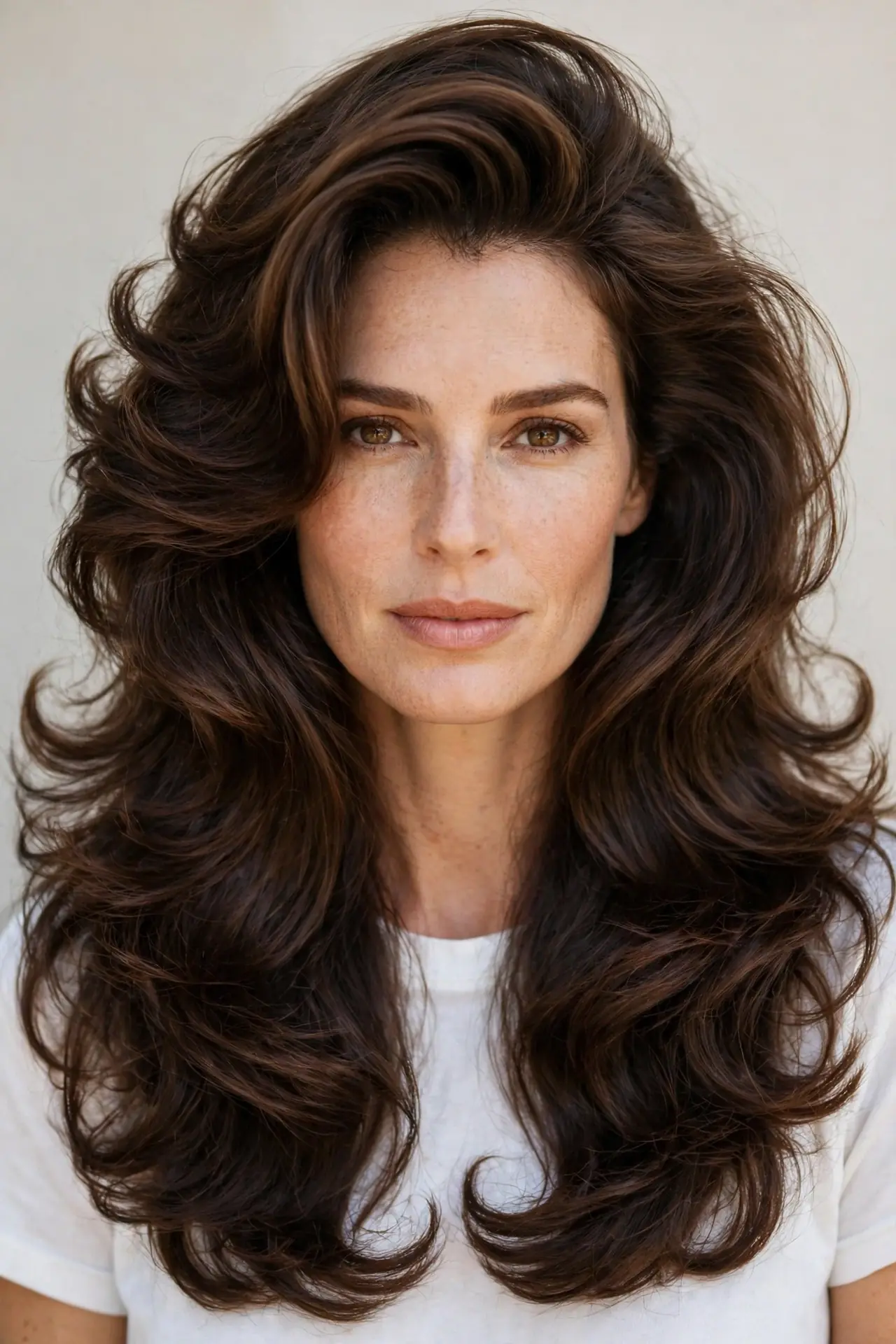
This is the look that defined an entire decade — long, rounded layers blown out so every strand curves with body and movement. Your stylist builds the shape with layers that start around the cheekbones and graduate down through the ends, so the hair flicks outward and bounces instead of lying flat against your head. It suits almost every face shape because the face-framing pieces can be adjusted — shorter for round faces that want elongation, softer for square jawlines. Fine to medium hair gains the illusion of thickness, while naturally thick hair gets sculpted into something with shape rather than bulk. The round-brush finish gives straight hair that swishy supermodel sway and amplifies natural wave beautifully.
- Blow-dry sections with a large round brush, rolling ends outward for bounce.
- Apply a lightweight volumizing mousse to damp roots before styling.
- Tuck front layers behind your ears briefly, then release for soft framing.
- Finish with a cool blast of air to lock the shape in place.
Ask your stylist for long rounded layers with the shortest face-framing pieces hitting at chin level and the rest blended through the ends. At home, a big round brush and a blow-dryer with a nozzle attachment are your best friends — section damp hair, lift each section up and over the brush, and roll the ends under for that signature curve. Use a heat protectant every single time, since this look depends on hot tools; the American Academy of Dermatology is a solid reference for expert-backed hair-care basics. Trim every eight to ten weeks to keep the layers crisp, and know that this cut grows out gracefully into soft long layers.
Bouncy ’90s Supermodel Curtain-Bang Layers
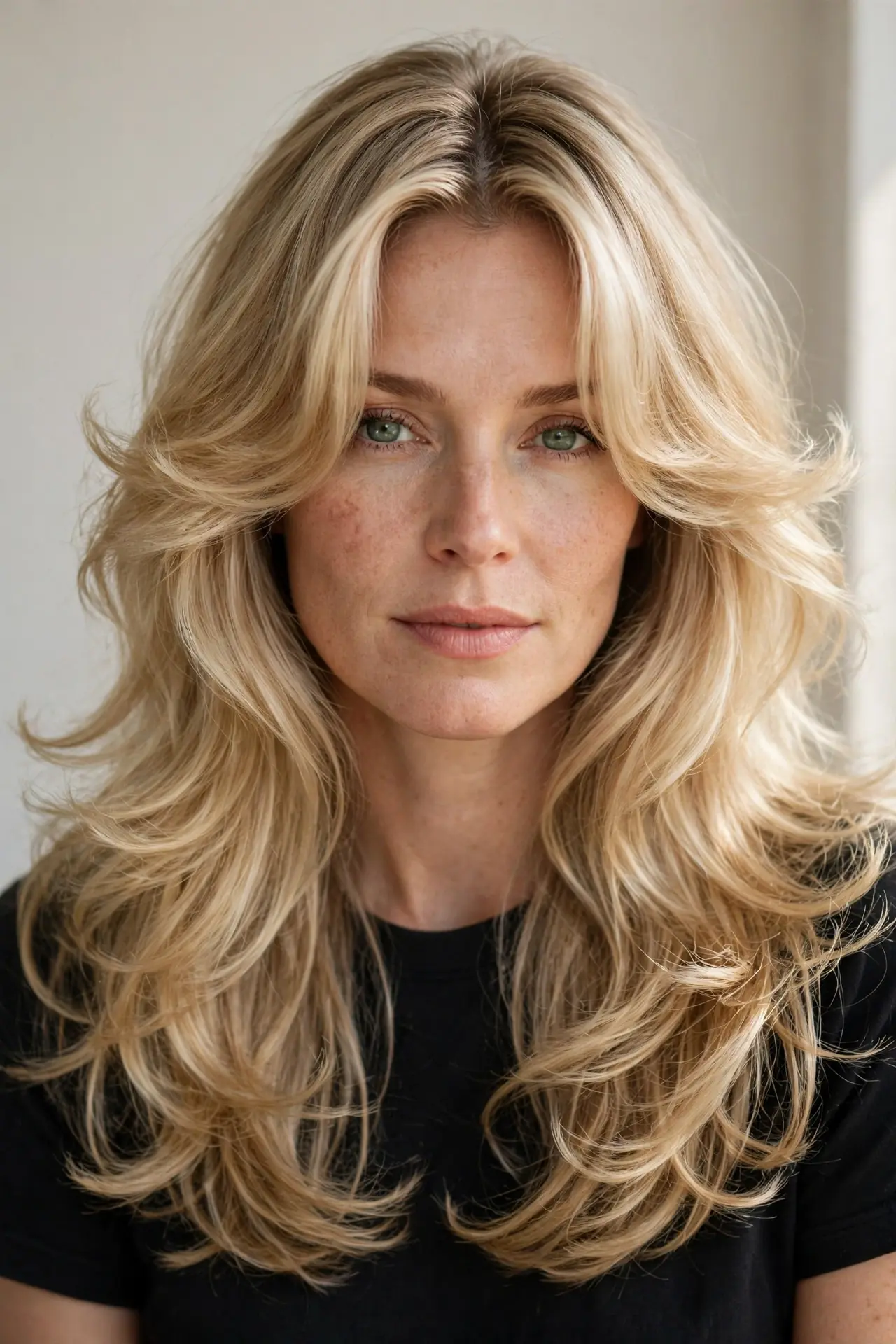
Curtain bangs were the ’90s supermodel’s secret weapon — a center-parted fringe that sweeps open like curtains to frame your eyes and cheekbones. Paired with long, bouncy layers, they give you that off-duty-model polish even on days you barely style your hair. This cut flatters oval, round, and heart-shaped faces especially well, because the parted fringe visually narrows the forehead and draws attention to the eyes. It works on fine hair that needs the illusion of fullness and on thick hair that needs its weight broken up. If you wear your hair in a ponytail often, you’ll love how the curtain pieces fall out to soften the whole look, and they blend into your layers as they grow, so upkeep stays low-key.
- Part damp bangs down the middle, then blow-dry each side outward.
- Apply a pea-sized smoothing cream to tame frizz on the fringe.
- Wrap curtain pieces around a medium round brush for bend.
- Refresh second-day bangs with dry shampoo at the roots.
Ask your stylist for curtain bangs that start around the cheekbones and blend into long layers through the back. The fringe should be longest at the temples so it melts seamlessly into the rest of your hair. At home, style the bangs first while they’re damp — they’re short and set fastest — using a small round brush or even just your fingers and the dryer. A light texturizing spray keeps the layers airy. Trim the fringe every four to six weeks if you want it precise, or let it grow into face-framing layers for an effortless, low-maintenance transition that still looks styled.
’90s Flip Layers for Long Hair with Movement
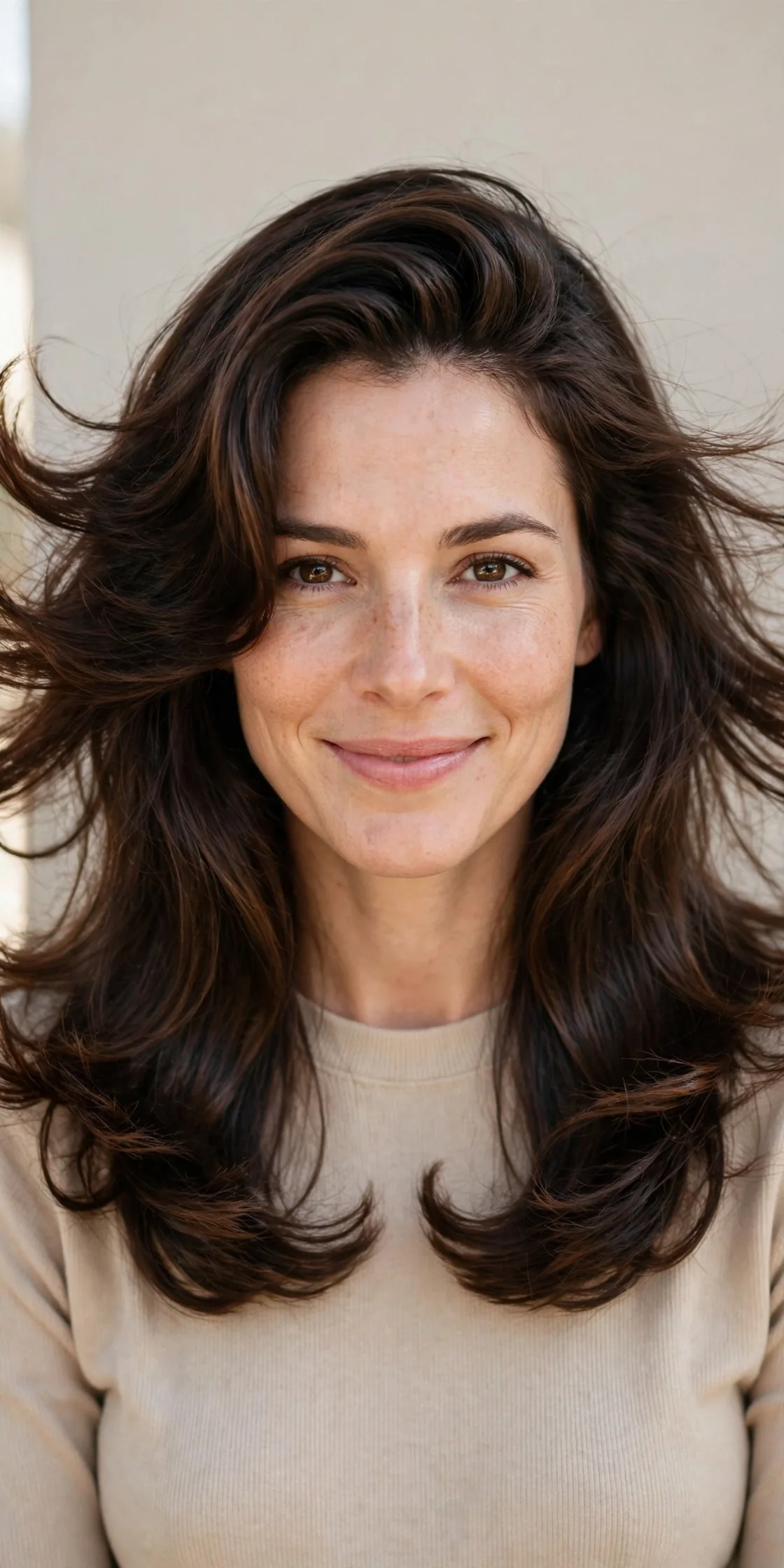
The flip is back, and honestly it never should have left. This cut layers long hair so the ends kick outward in that playful, swinging motion the ’90s runways were famous for. It is a dream for straight to slightly wavy hair, because the layered ends naturally want to flick — you get movement without curling a single strand. Round and square faces benefit most, since the outward flick at the jawline creates the illusion of width and softness. If your hair is fine, ask for slightly blunter ends so it doesn’t look wispy; if it’s thick, the layers remove just enough weight for the flips to bounce. This is also one of the easiest supermodel cuts to wear to the office — polished, bouncy, and completely professional.
- Blow-dry with a round brush, rolling ends outward instead of under.
- Apply a light-hold mousse to damp ends for lasting flick.
- Set flipped sections with large Velcro rollers while you finish makeup.
- Mist with flexible hairspray to keep the swing without stiffness.
Ask your stylist for long layers with the bottom two inches texturized so the ends flip naturally. Bring a reference photo of the ’90s flick — stylists know exactly what you mean. At home, the trick is drying the ends outward rather than under, and a flicked-under-versus-outward demo from your stylist during the appointment helps enormously. Large Velcro rollers are the lazy-girl secret here: roll the bottom sections outward, blast with heat, and let them cool while you do your makeup. Trim every ten to twelve weeks; the flip grows out into soft layers, so it stays wearable between appointments.
The Voluminous ’90s Round-Brush Lob
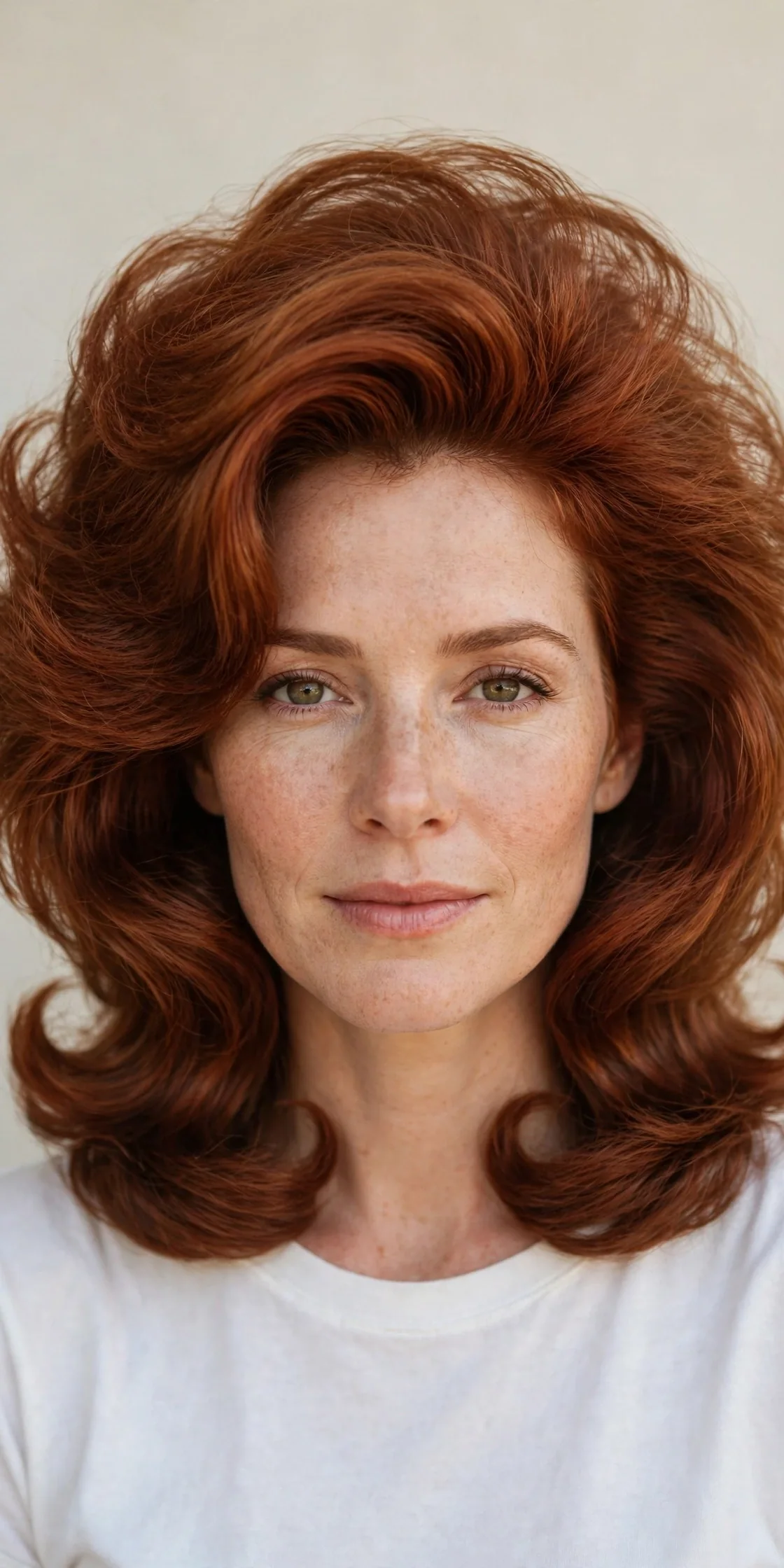
The lob gets the full supermodel treatment here — collarbone-grazing length blown out with enormous rounded volume, the way it looked on every ’90s cover shoot. Shorter than the classic long blowout but just as bouncy, this cut is perfect if you want drama without committing to waist-length hair. It suits oval, long, and heart-shaped faces, and the volume on top visually shortens longer face shapes in the most flattering way. Medium to thick hair holds this shape best, though fine hair can absolutely wear it with the right volumizing products. The rounded ends tuck beautifully behind the ears for a sleeker daytime look, then release into full bombshell volume for evenings.
- Blow-dry upside down first, then smooth with a round brush.
- Apply root-lifting spray to damp roots for maximum height.
- Tuck ends under with the brush for that rounded ’90s curve.
- Tease the crown lightly, then smooth the top layer over it.
Ask your stylist for a collarbone-length lob with rounded, graduated layers and textured ends. The shape should be slightly shorter in the back to encourage that forward-swinging volume. At home, Velcro rollers on the top sections while the hair cools give you the lift this cut is all about. A volumizing powder at the roots on day two revives the shape fast. Trim every six to eight weeks to keep the silhouette crisp, and if you ever want to push the volume further, our telenovela-inspired voluminous hairstyles are full of big-hair styling tricks that work beautifully on this length too.
Face-Framing ’90s Supermodel Layers with Bouncy Curls
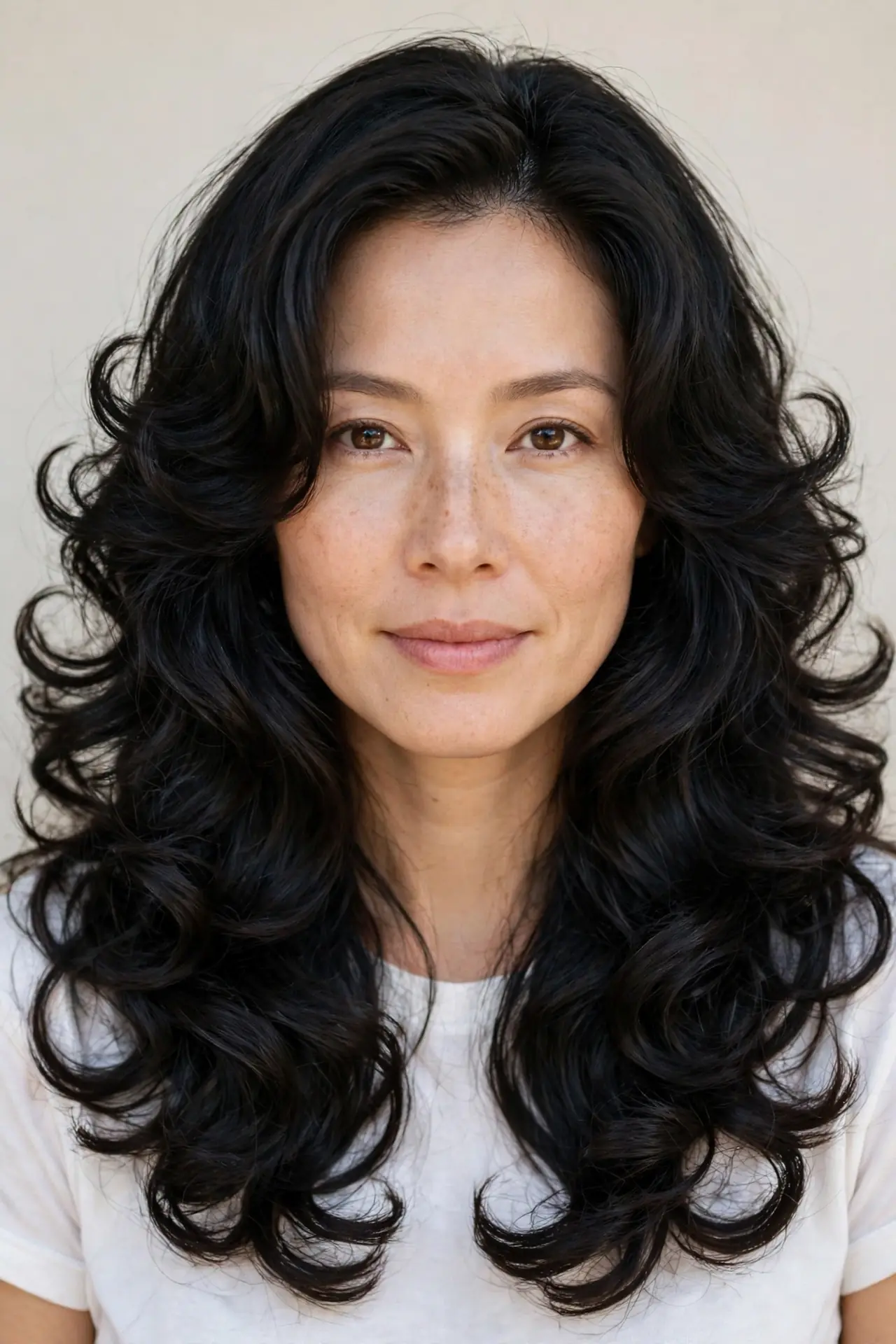
Some supermodel cuts are all about the curl — soft, bouncy, brushed-out curls that start at the cheekbones and tumble down in glossy waves. The face-framing layers are the star here, cut to curl away from the face and open up your features. This is a wonderful choice for round and square faces, because the vertical curl pattern adds length and softness, and it works beautifully on naturally wavy or curly hair that wants more polish. Straight hair can absolutely wear it too — you’ll just do the curling yourself with a large iron. The key is brushing the curls out after they cool, so you get that fluffy, touchable ’90s volume instead of tight ringlets.
- Curl large sections away from the face with a 1.5-inch iron.
- Pin curls to cool completely, then brush out for softness.
- Apply a shine serum to lengths before curling for gloss.
- Flip your part to the opposite side for instant root volume.
Ask your stylist for long layers with the face-framing pieces cut to sit at cheekbone and jaw level, so they curl open around your face. At home, curl everything away from the face, let each curl cool in your palm or pin it, then brush through with a paddle brush for that signature fluffy finish. A flexible-hold hairspray keeps the bounce without crunch. If your hair is naturally curly, ask for dry-cut layers shaped to your curl pattern. Trim every eight to twelve weeks, and note that this cut grows out into beautiful long layers, so missed appointments won’t ruin the shape.
The ’90s Chunky Layer Cut with Flicked Ends
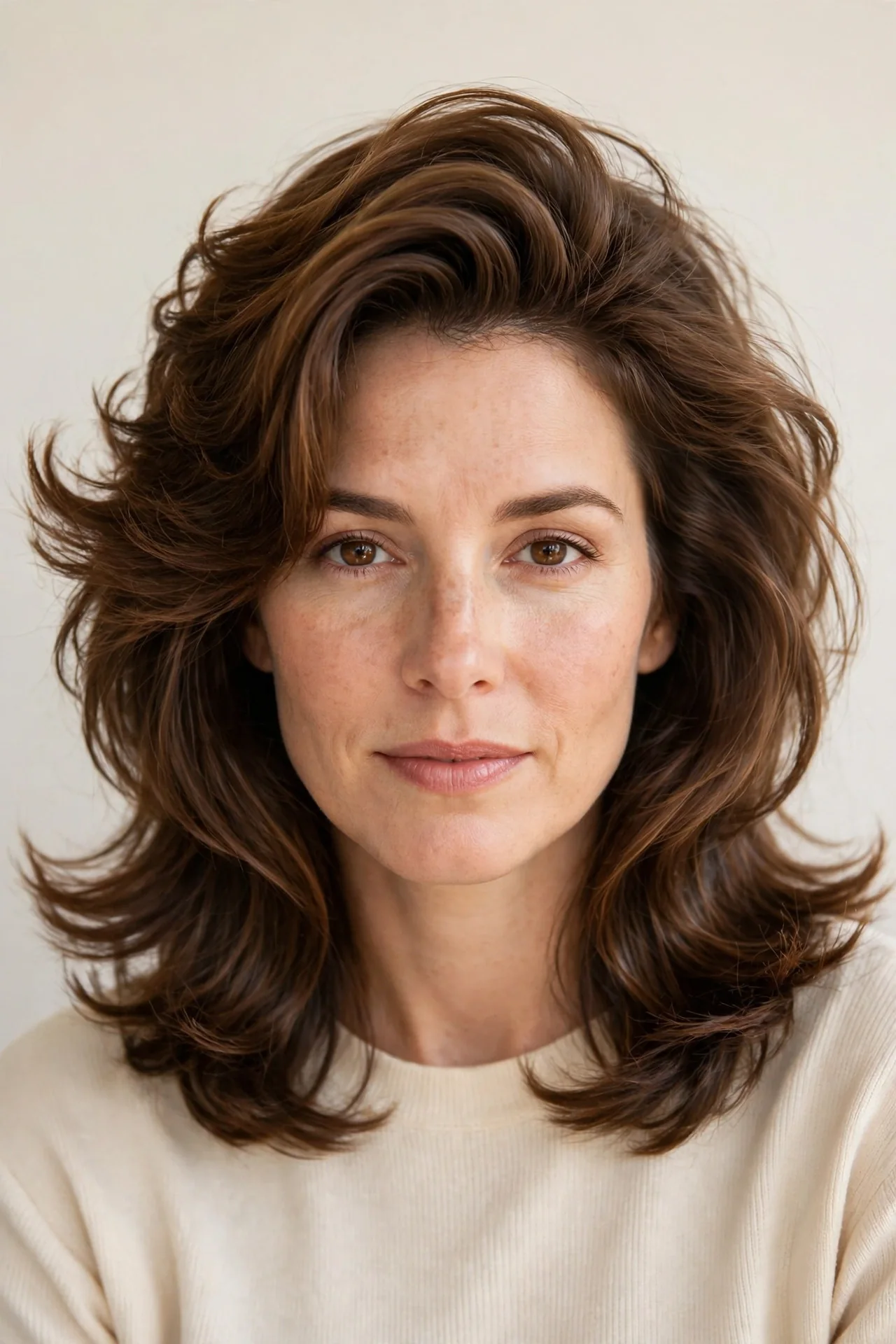
Before layers went invisible and seamless, the ’90s loved them chunky and visible — distinct, piecey layers that flick out at the ends with attitude. This cut has edge and personality while still reading glamorous, thanks to the glossy blowout finish. It suits oval and long faces beautifully, because the horizontal layer lines add the illusion of width, and it is a great match for thick hair that needs its density broken into movable pieces. Fine hair can wear it too if the layers stay long and chunky rather than over-texturized. It’s your middle ground: shag energy with supermodel shine.
- Blow-dry layers in alternating directions for piecey separation.
- Apply a texturizing cream to ends, twisting small sections apart.
- Flick the ends outward with a flat iron for definition.
- Scrunch a light wax into the mid-lengths for lived-in texture.
Ask your stylist for visible, chunky layers through the mid-lengths and ends, with minimal thinning so each layer reads as its own piece. At home, a flat iron is your best tool — flick the ends outward in alternating directions for that piecey ’90s separation. A dab of texturizing cream keeps the pieces defined without looking greasy. Trim every eight weeks to keep the chunky layers from going shaggy, and if you ever want to soften the look, the layers grow out into a classic long-layered cut. Bring a photo so your stylist nails the chunky-to-polished ratio, and push the flick harder for evenings — this cut rewards extra drama.
Feathered ’90s Bangs with Long Supermodel Layers
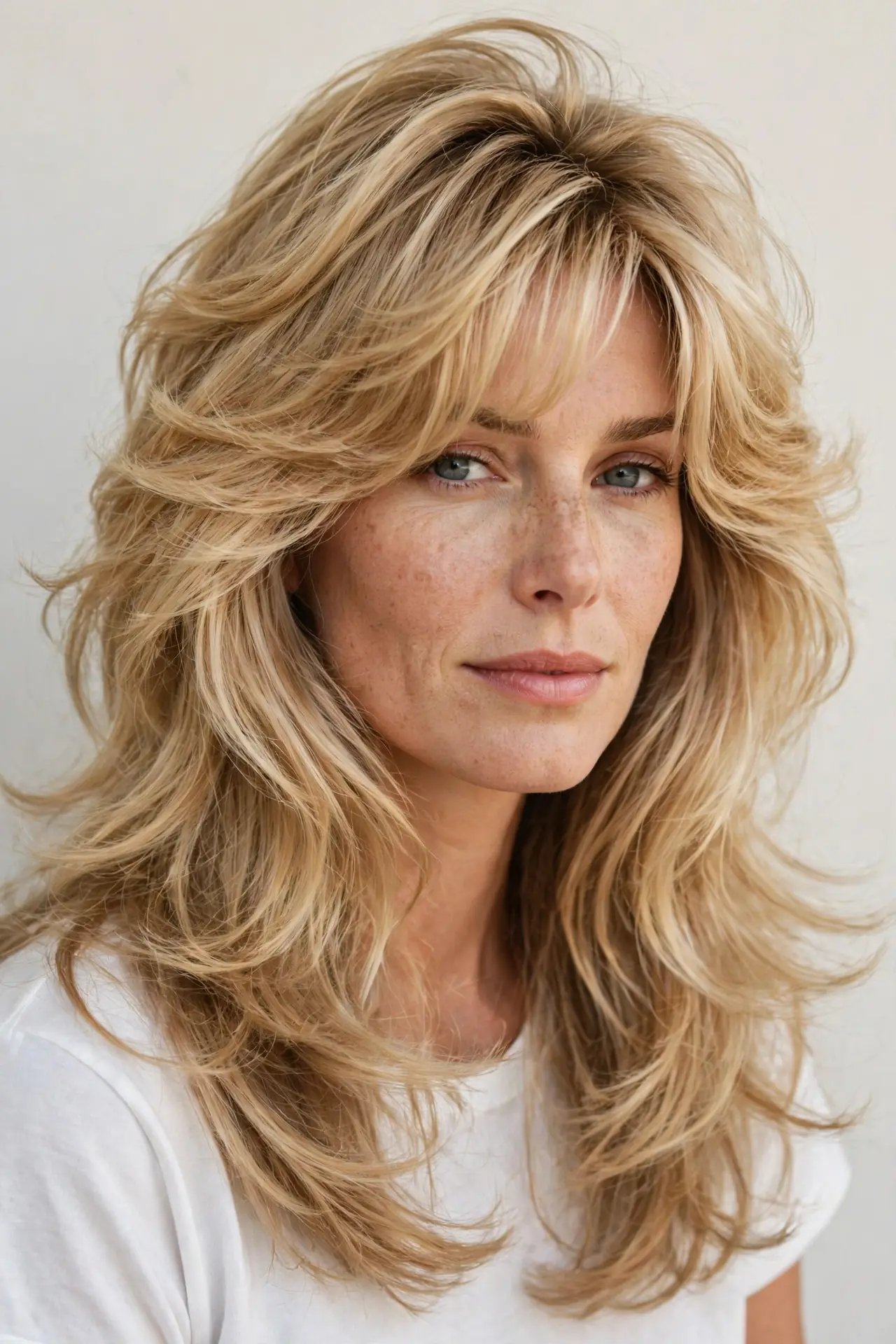
Feathering was the ’90s blowout’s best friend — soft, wispy, airy ends that move like, well, feathers. Paired with long supermodel layers, feathered bangs give you the softest possible frame around your face. This cut is especially lovely on heart-shaped and square faces, because the wispy fringe softens a wider forehead and strong jawline without hiding your features. It works on straight and wavy textures alike, and fine hair loves feathering because the wispy ends remove bulk without removing length. If full bangs feel like too much commitment, feathered bangs are the gentlest entry point — they blend into your layers so quickly you’ll forget they’re bangs at all.
- Blow-dry bangs forward and down with a small round brush.
- Apply a light smoothing serum to keep feathered ends sleek.
- Sweep bangs to each side while damp for a parted finish.
- Trim the fringe yourself between appointments with sharp shears.
Ask your stylist for soft, feathered bangs that blend into long layers — the fringe should be wispy at the ends rather than blunt. At home, dry the bangs first and direct them forward, then sweep to the side for that airy parted look. A tiny bit of smoothing serum keeps the feathered ends from frizzing. Because wispy bangs grow fast, plan a fringe trim every three to four weeks — many salons do these free between cuts. They grow out seamlessly into face-framing layers, so there’s no awkward phase. If the fringe starts sitting flat, a quick blast of dry shampoo at the roots brings back the airy lift that makes feathering so pretty.
The Big-Volume ’90s Shag Blowout
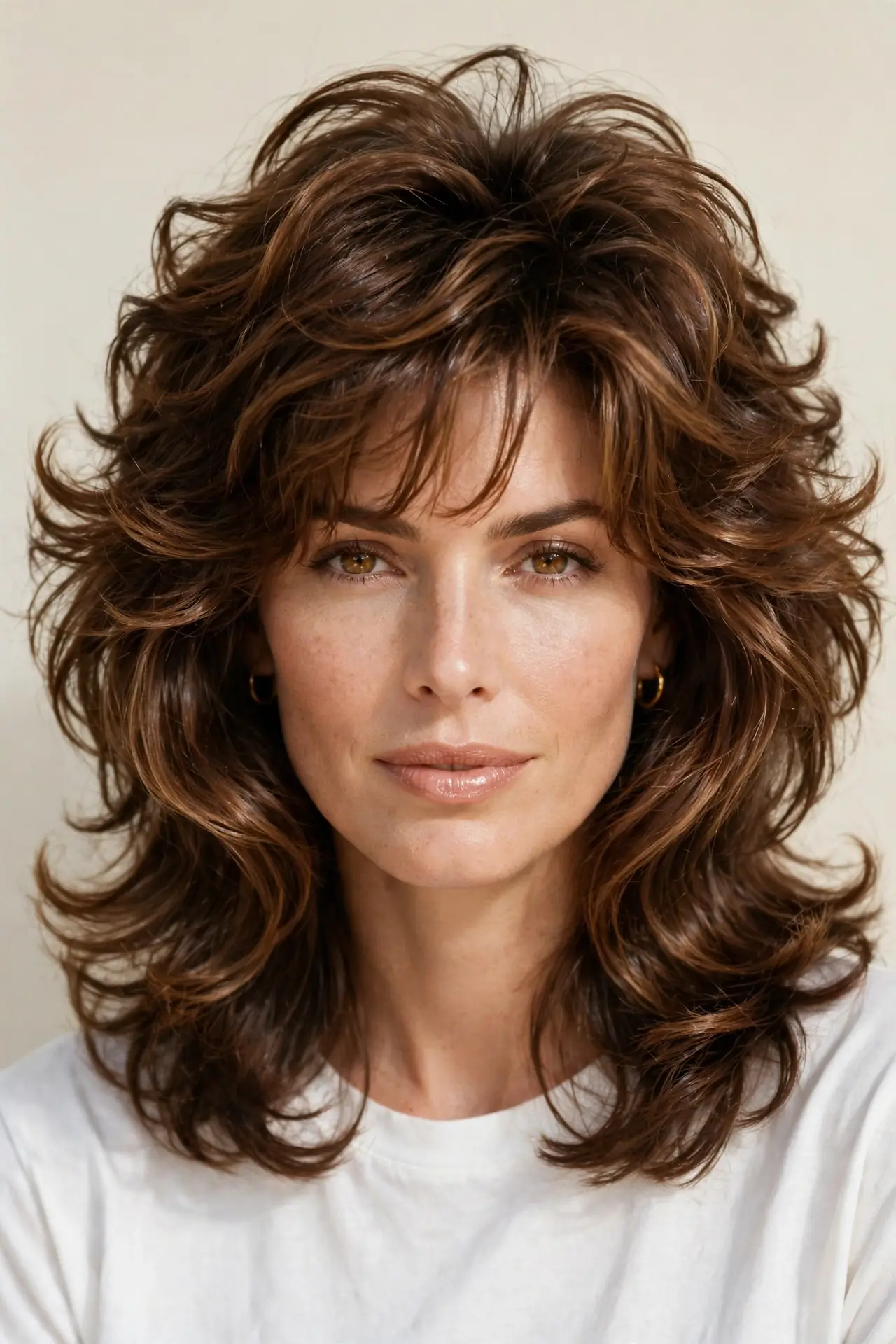
The shag went supermodel in the ’90s — choppier layers up top melting into bouncy, full ends, all blown out to glossy perfection. It’s the most rock-and-roll entry on this list, but the blowout finish keeps it firmly in glamorous territory. This cut is a gift for thick, wavy, or curly hair, because the short-to-long layering removes weight exactly where it causes triangle-shape bulk. Oval and round faces wear it well, with the crown volume adding flattering height. Fine hair can join in if the layers stay longer and the texture stays soft rather than razor-sharp. If your hair has natural wave, this cut practically styles itself — the layers are doing all the work.
- Scrunch a curl-enhancing cream into damp layers for texture.
- Diffuse on medium heat, lifting roots for shaggy volume.
- Twist random pieces around your finger for piecey definition.
- Shake the roots upside down, then arrange with your fingers.
Ask your stylist for a shag with shorter crown layers and longer bouncy ends, finished with a round-brush blowout for the supermodel gloss. If your hair is curly, ask for a dry cut so the layers land exactly where your curls live. At home, this is a wash-and-go friendly cut — scrunch in product, diffuse, and go. A texturizing spray adds grit on day two. Trim every eight to ten weeks to keep the crown layers from collapsing, and enjoy one of the most forgiving grow-outs on this list, since shags just get cooler as they grow — it’s a cut that truly improves with a little lived-in length.
Sleek-Volume ’90s Supermodel Side-Part Blowout
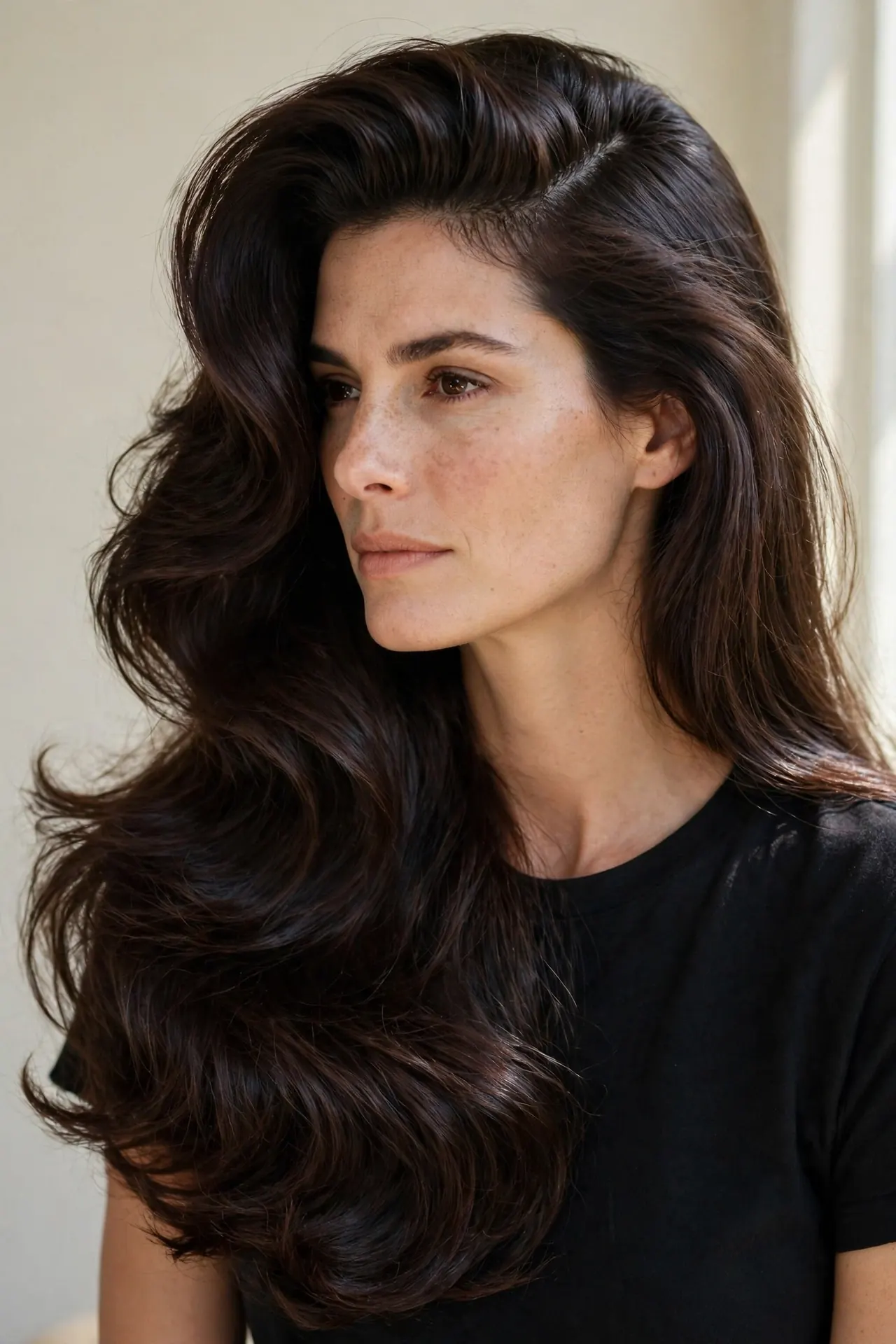
The deep side part was pure ’90s power dressing for hair — sweeping everything to one side for instant drama, volume, and that come-hither curtain of hair over one eye. This cut pairs long layers with a dramatic part, so the heavy side falls in a glossy sheet while the lighter side stays tucked and sleek. It flatters nearly every face shape, and it’s particularly magic on round faces, where the diagonal line slims and elongates. Straight and slightly wavy hair show off the sleek-versus-voluminous contrast best. A cowlick at your natural part actually works with this cut — the deep part gives it somewhere intentional to go.
- Create the deep part on damp hair, then blow-dry to set it.
- Smooth the heavy side over a large round brush for swoop.
- Tuck the light side behind your ear with a smoothing cream.
- Switch the part weekly to keep roots from going flat.
Ask your stylist for long, blended layers and a consultation on where your deepest flattering part sits — usually above the arch of one eyebrow. At home, set the part while hair is damp so it holds; blow-dry the heavy side up and over for maximum lift at the roots. A shine spray on the heavy side gives that glassy supermodel finish. Trim every eight to twelve weeks, and flip the part to the other side occasionally — it refreshes the volume and gives your roots a break from being trained one way. It’s also the fastest way to fake a whole new haircut without losing any length.
Long ’90s Waves with Face-Framing Layers
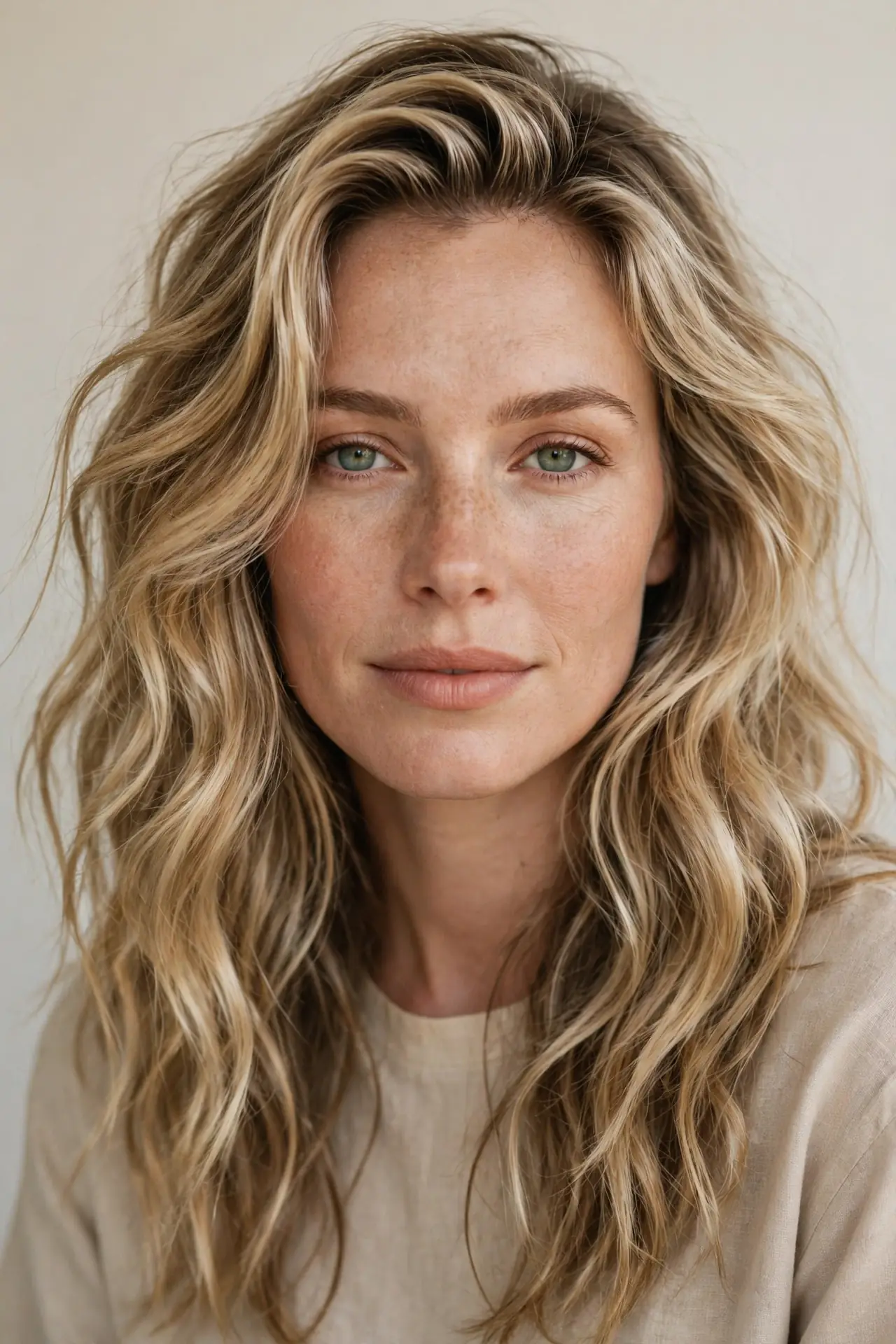
Not every ’90s supermodel moment was about the blowout — some of the most memorable looks were long, loose, touchable waves with face-framing layers doing all the talking. This cut keeps your length while carving soft layers around the face, so waves fall in that effortless, just-back-from-the-beach rhythm. It’s universally flattering but especially kind to long and oval faces, where the face-framing pieces break up length beautifully. Naturally wavy hair is the ideal canvas, though straight hair can fake it with a large-barrel iron. Thick hair gets welcome lightness; fine hair gets movement that makes it look fuller than it is.
- Braid damp hair loosely overnight for heat-free waves.
- Apply sea-salt spray to damp lengths, then scrunch upward.
- Wrap random sections around a large iron, leaving ends straight.
- Rake fingers through waves instead of brushing for separation.
Ask your stylist for long layers with the face-framing pieces starting at the lips and blending down — the framing is what makes this cut, so don’t let them skip it. At home, loose overnight braids are the easiest wave method, or use a large-barrel iron on alternating sections for a more polished finish. A light sea-salt spray adds that beachy texture the ’90s loved. Trim every ten to twelve weeks; the layers keep their shape well, and this is one of the most grow-out-friendly cuts here. A quick upside-down shake and a mist of texturizing spray revives afternoon-flat waves.
Big ’90s Layers for Thick, Heavy Hair
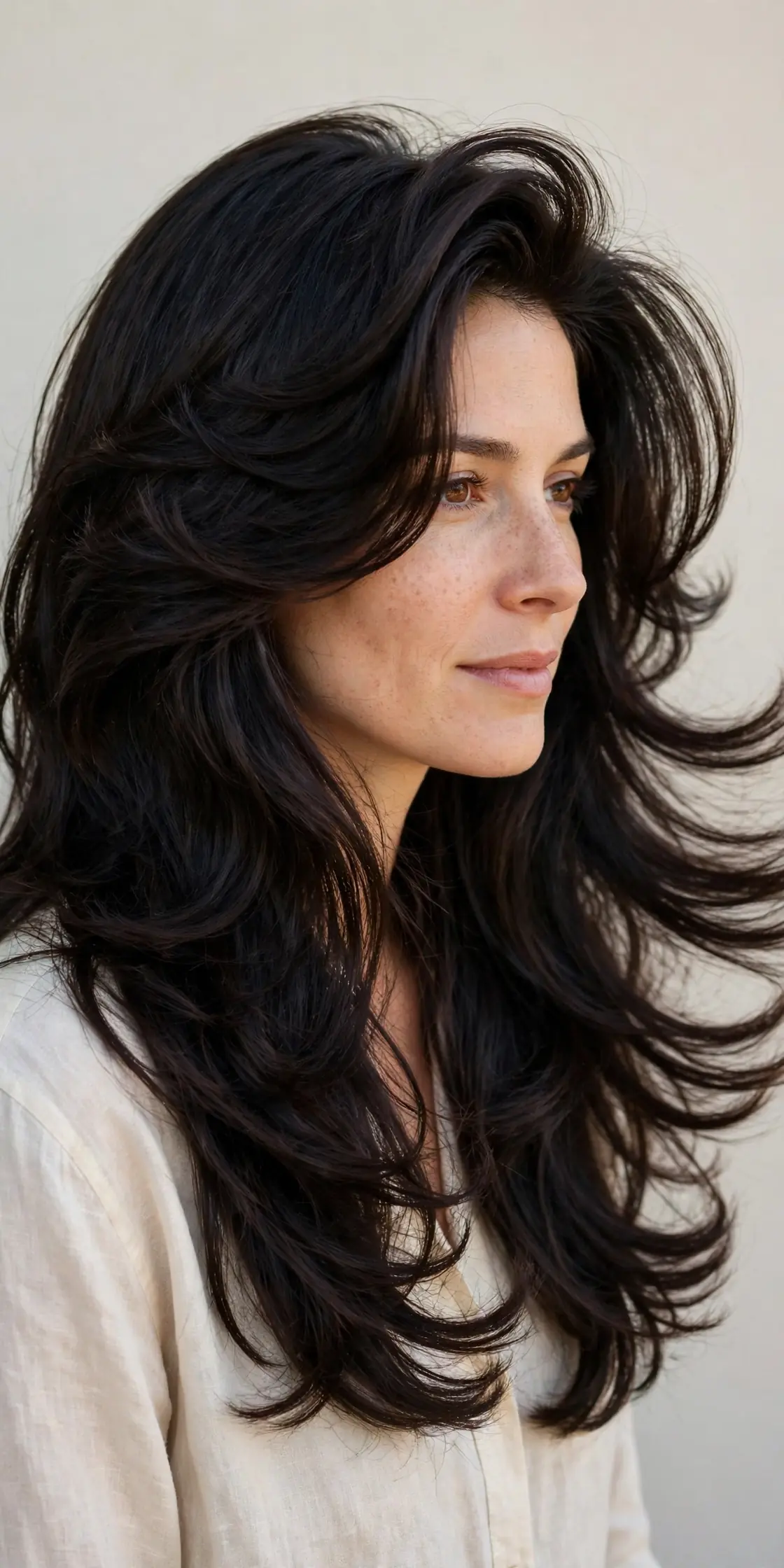
If your hair is thick enough to break ponytail holders, the ’90s supermodel playbook was written for you. Big, bold layers carve weight out of heavy hair so it moves, swings, and holds a blowout instead of sitting in one immovable mass. This cut flatters round and square faces especially, because the cascading layers draw the eye downward and soften strong lines. The layers also solve the classic thick-hair triangle problem, removing bulk from the sides while keeping fullness where you want it. Fine-haired readers should ask for a gentler version — it’s engineered for density and can remove too much from thin hair.
- Blow-dry in sections, lifting each layer away from the head.
- Apply a smoothing cream to tame the thickest sections.
- Use a paddle brush first, then a round brush for polish.
- Sleep in a loose topknot to preserve the blowout overnight.
Ask your stylist for bold, long layers with internal thinning to remove weight without sacrificing the perimeter — bring honesty about how much styling time you’ll actually do. At home, always blow-dry in sections; thick hair air-dried looks fine, but sectioned blow-drying is what unlocks the supermodel swing. A smoothing cream or light oil keeps the layers sleek. Trim every eight to ten weeks to keep the layers from turning into a shelf, and enjoy the fact that this cut actually gets better as it grows, since longer layers mean more swing. If the grow-out ever feels heavy, a mid-appointment thinning session buys you another month of bounce.
Soft ’90s Supermodel Curls with Curtain Framing
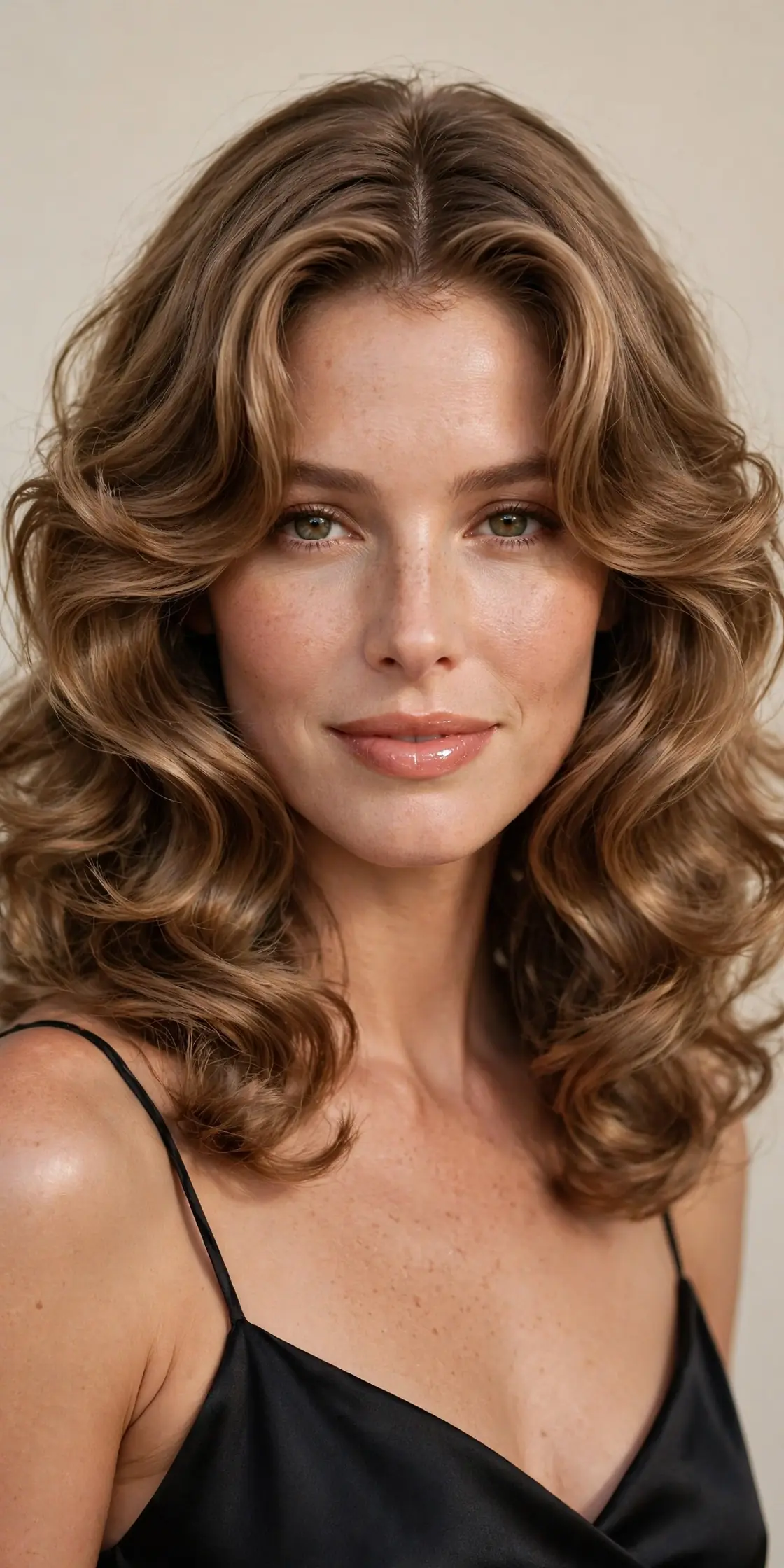
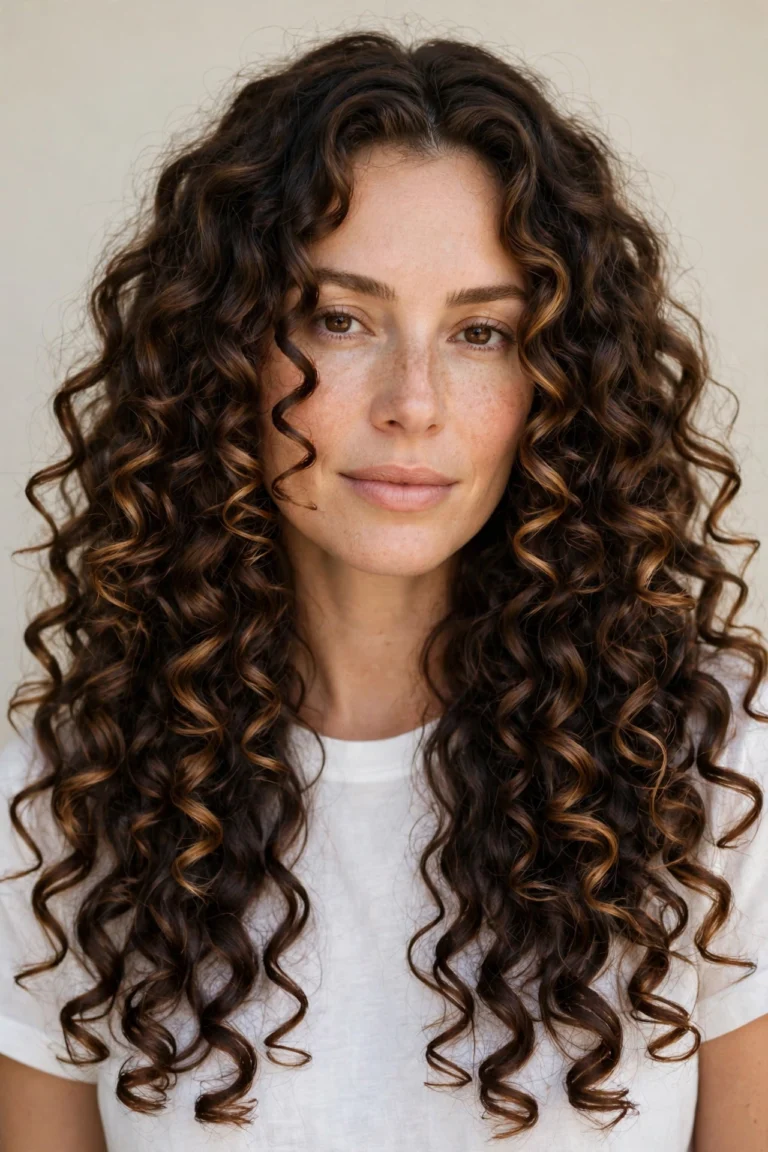
We close with the softest take on the era — romantic, brushed-out curls paired with curtain framing that opens around the face like a spotlight. This cut suits oval, heart, and long faces beautifully, with the curtain pieces shortening the visual length of the face and the curls adding flattering width. It works on naturally curly and wavy hair with minimal effort, and straight hair can achieve it with hot rollers or a large iron. If your hair is fine, the curls create the illusion of density; if it’s thick, ask your stylist to thin the interior so the curls bounce instead of puff.
- Set damp hair in hot rollers, rolling sections away from the face.
- Apply a heat protectant and a curl-defining cream before styling.
- Brush curls out gently once fully cool for softness.
- Mist the curtain pieces separately so they stay piecey.
Ask your stylist for long layers with curtain pieces cut from the cheekbones down, so the framing melts into the curls. At home, hot rollers are the authentic ’90s method — roll away from the face, let them cool completely, then brush out for that fluffy finish. A large-barrel iron works too; just remember to let each curl cool before touching it. Trim every eight to twelve weeks, and this romantic cut grows out into soft, face-framing layers that still look intentional months later. For special occasions, pin one side back with a simple clip — the asymmetry is very ’90s supermodel off-duty.
Conclusion
These 90s supermodel haircut ideas prove that big, bouncy, face-framing hair never really goes out of style — it just waits for its comeback. Whether you choose the iconic blowout, playful flipped ends, or soft romantic curls, the formula stays the same: layers with purpose, volume with intention, and ends that move. Bring your favorite idea (and a photo) to your next appointment, and don’t be shy about asking your stylist to tailor the face-framing pieces to your features. If your hair leans curly, you’ll also love our long curly haircuts with layers for women for even more layered inspiration. Now go book that blowout — your supermodel era starts the moment you sit in the chair.