Introduction
Designing a sage green living room is an intentional choice to bring the soothing essence of nature indoors. As a muted, earthy hue, sage acts as a sophisticated neutral that bridges the gap between vibrant color and understated elegance. Whether you are aiming for a rustic farmhouse charm or a sleek, contemporary retreat, this versatile shade adapts beautifully to various lighting and architectural styles. These 27 curated ideas demonstrate how to layer textures and tones to achieve a restorative atmosphere that promotes relaxation and a seamless modern flow.
1. Soft Linen Scandinavian Retreat
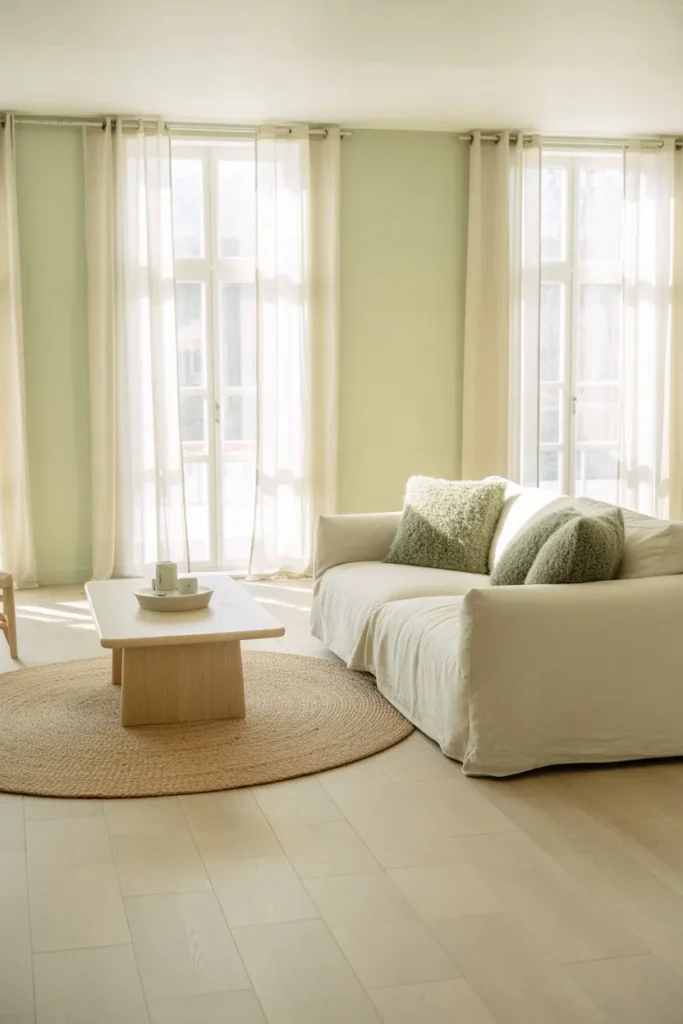
A Scandinavian approach to the sage green living room focuses on “hygge” and the power of light, muted tones. By pairing desaturated green walls with pale woods, you create a space that feels expansive yet incredibly grounded. The use of natural materials like linen and jute adds a tactile warmth that prevents the cool green undertones from feeling too stark. This layout is perfect for smaller apartments, as the light color palette maximizes the sense of space while providing a serene, nature-inspired backdrop for daily relaxation and quiet contemplation.
2. Velvet Elegance with Gold Accents
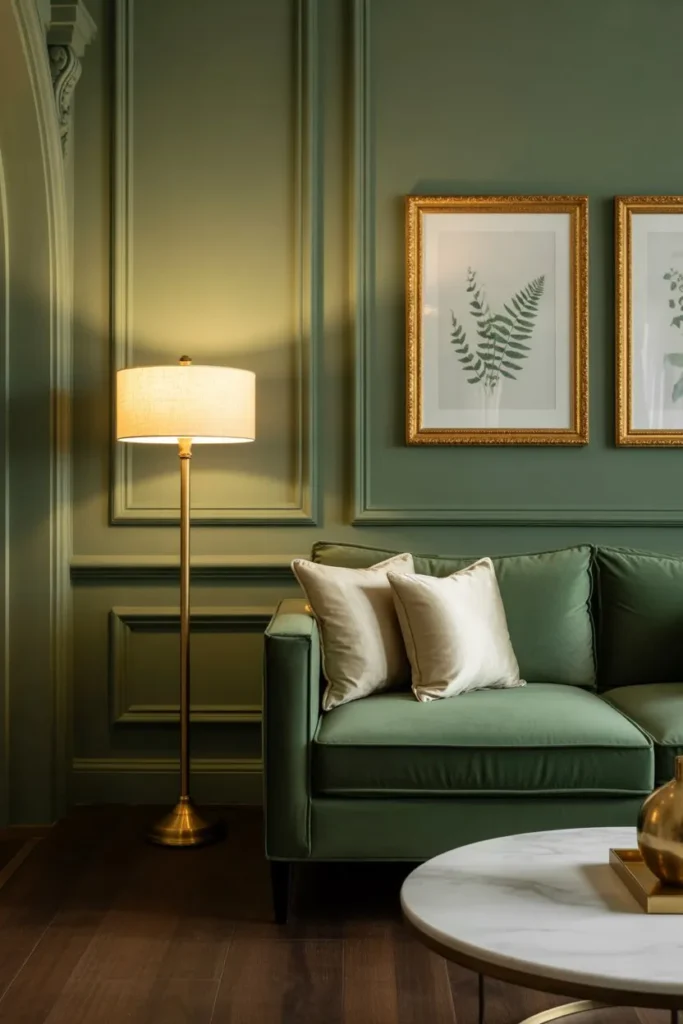
For those seeking a touch of luxury, a sage green living room paired with metallic accents offers a high-end, boutique aesthetic. The muted green serves as a calming base that allows opulent materials like velvet and brass to shine without feeling overwhelming. Incorporating dark wood floors adds a sense of history and weight to the design, making it feel like a private, upscale lounge. This style is ideal for evening-centric spaces where soft lighting can highlight the shimmer of gold against the matte green walls for a truly grand atmosphere.
3. Rustic Farmhouse Shiplap Charm
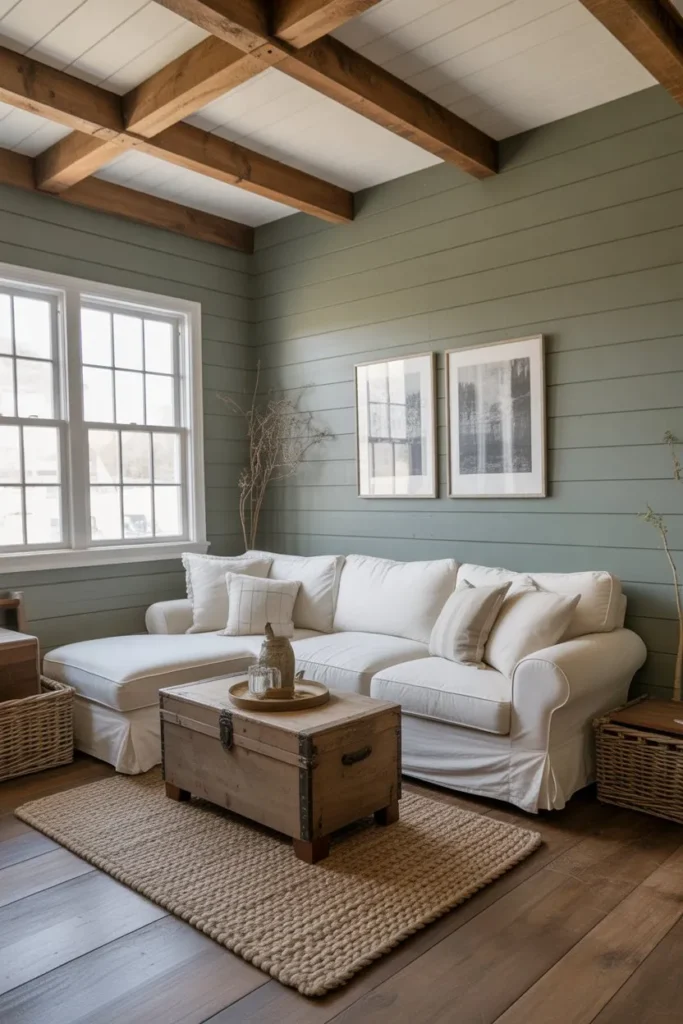
Bringing a rustic vibe to your home often starts with a sage green living room that emphasizes natural, rugged textures. Sage is the perfect companion for reclaimed timber and shiplap, as it echoes the colors of the countryside. The use of white slipcovers keeps the room feeling fresh and clean, while the various woven elements provide a “shabby chic” comfort that encourages a barefoot lifestyle. This design focuses on durability and warmth, ensuring the living area remains the cozy, heart-filled center of a busy family home.
4. Modern Industrial Concrete Fusion
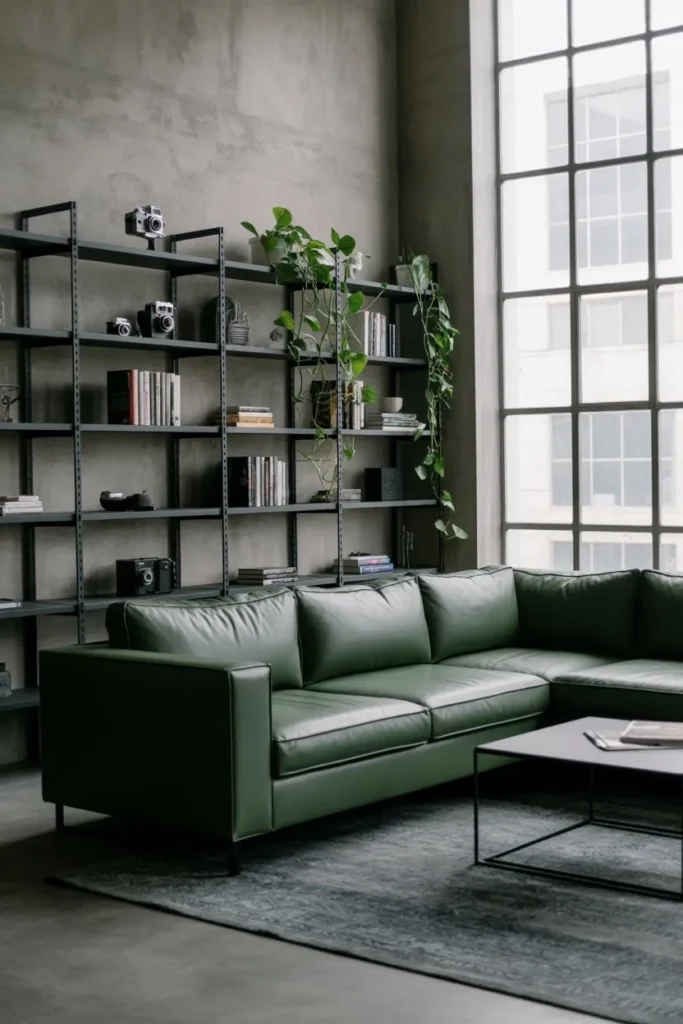
An industrial sage green living room proves that earthy tones can work perfectly within a gritty, urban context. The soft green of the sofa provides a necessary organic contrast to the cold, hard surfaces of concrete and steel. This balance makes the large open-plan space feel more habitable and less like a sterile gallery. By adding plenty of indoor plants, you bridge the gap between the industrial architecture and the natural color palette, creating a sophisticated environment that feels architectural, strong, and surprisingly cozy.
5. Coastal Heather and Sage Haven
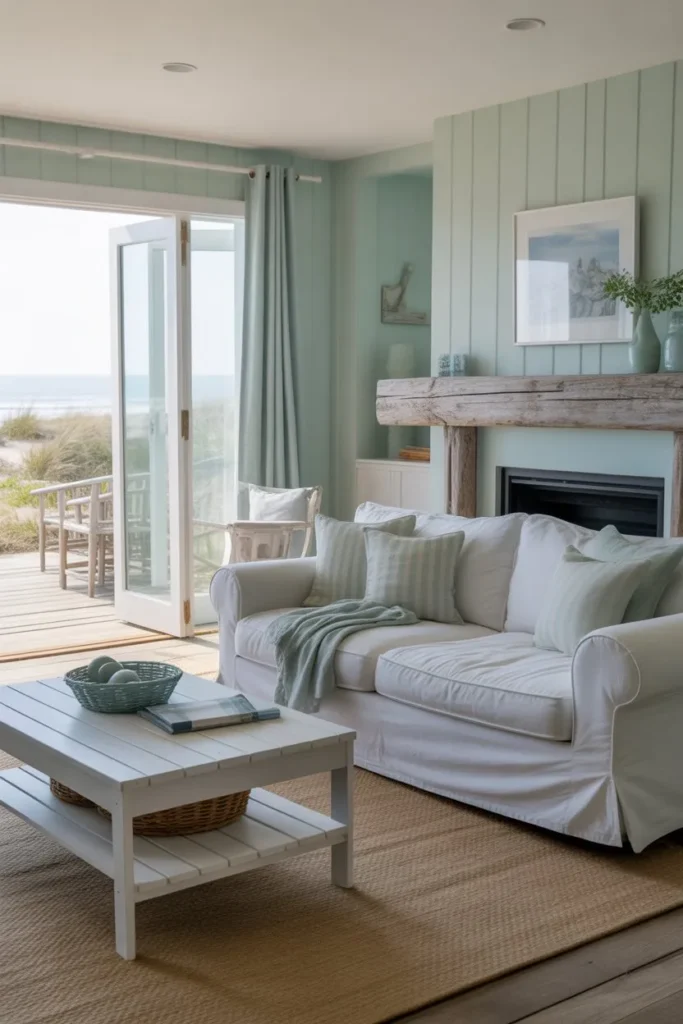
The sage green living room takes on a refreshing, salt-tinged quality when moved to a coastal setting. Instead of traditional navy, sage offers a softer connection to the sea-grass and dunes found outside the window. Pairing the green with light blues and heather tones creates a palette that mimics the transition from land to sea. This design prioritizes a relaxed, airy atmosphere where the colors of the interior and exterior merge, providing a tranquil sanctuary that feels as vast and calming as the ocean.
6. Mid-Century Modern Teak Suite
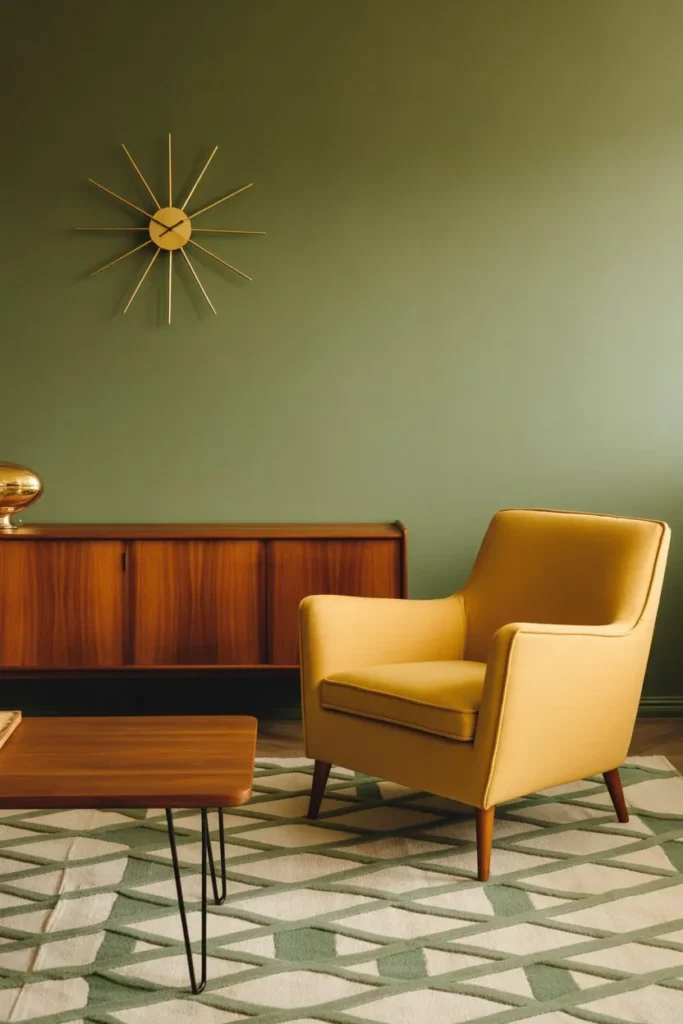
A sage green living room serves as an excellent backdrop for the warm orange tones of teak and walnut wood found in mid-century furniture. The green provides a cool, complementary base that makes the wood grain “pop.” Using a geometric rug helps tie the various retro colors together, creating a look that is intellectual and curated. This design is perfect for those who appreciate the precision of 20th-century architecture but want a color palette that feels updated, fresh, and deeply connected to a modern aesthetic.
7. Bohemian Jungle with Terracotta
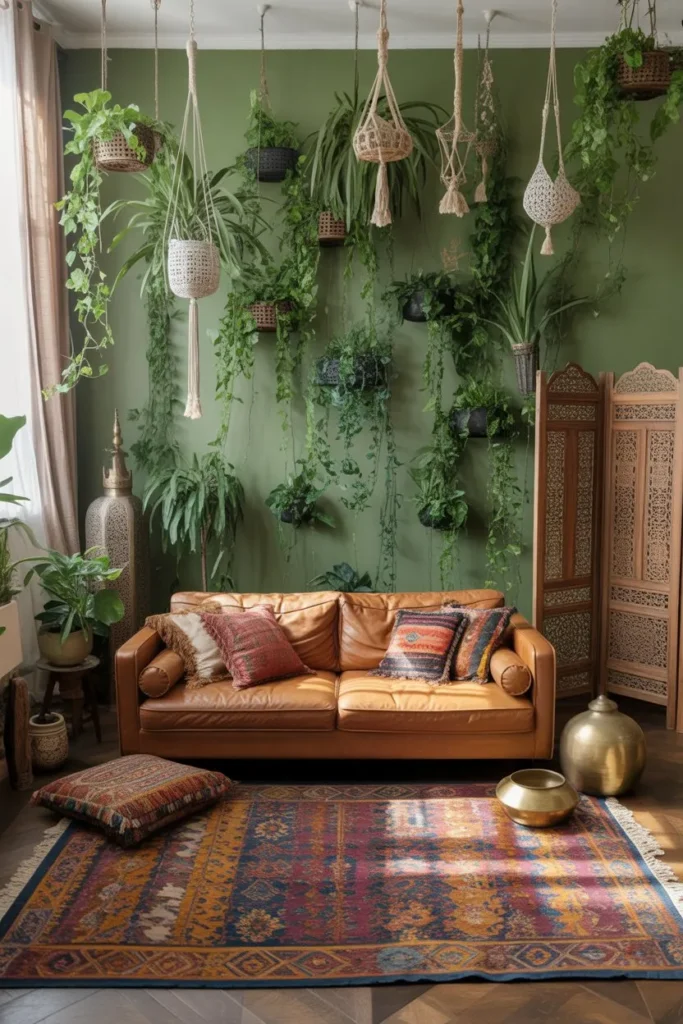
The bohemian sage green living room is a celebration of life and global exploration. By using sage as a neutral wall color, you provide a calm canvas for a “maximalist” collection of plants and textiles. The warmth of terracotta leather balances the coolness of the green, creating an earthy, sun-drenched vibe. This style is all about personal expression and texture, where the architectural flow is defined by the arrangement of rugs and cushions rather than walls, making it a dynamic and creative retreat.
8. Minimalist Japanese Zen Garden
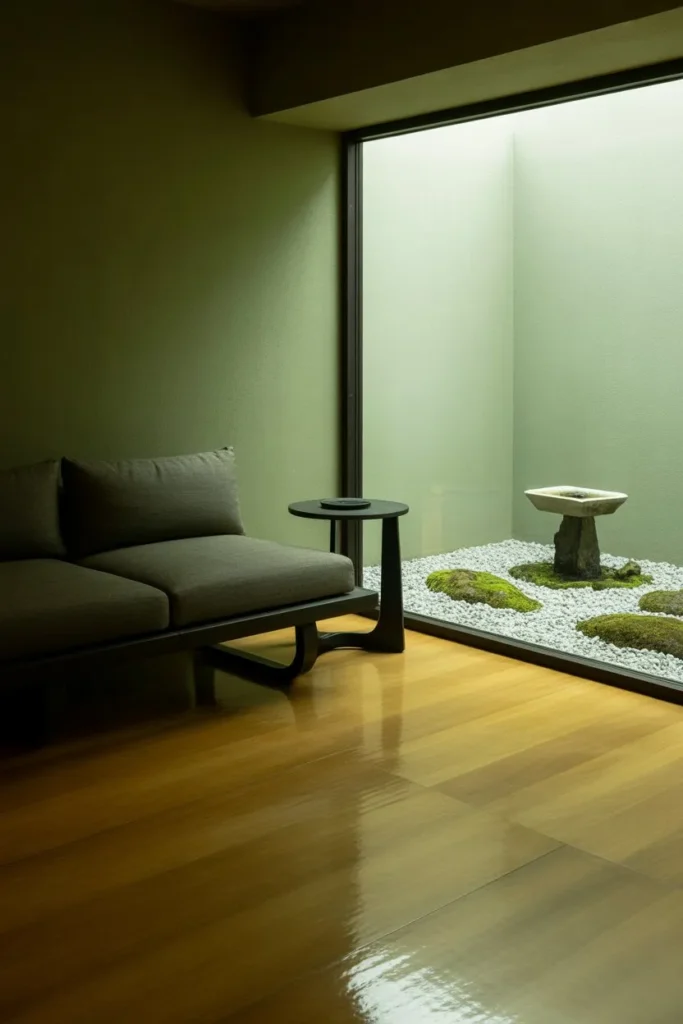
The sage green living room finds its most meditative expression in Zen-inspired design. By using a very desaturated, matte version of sage, the walls seem to recede, creating a quiet “void” that promotes mindfulness. The inclusion of bamboo and stone elements reinforces the connection to nature, making the indoor space feel like an extension of a garden. This design is ideal for those seeking a sanctuary from the busy modern world, focusing on absolute simplicity and the peaceful flow of natural light.
9. Victorian Moody Botanicals
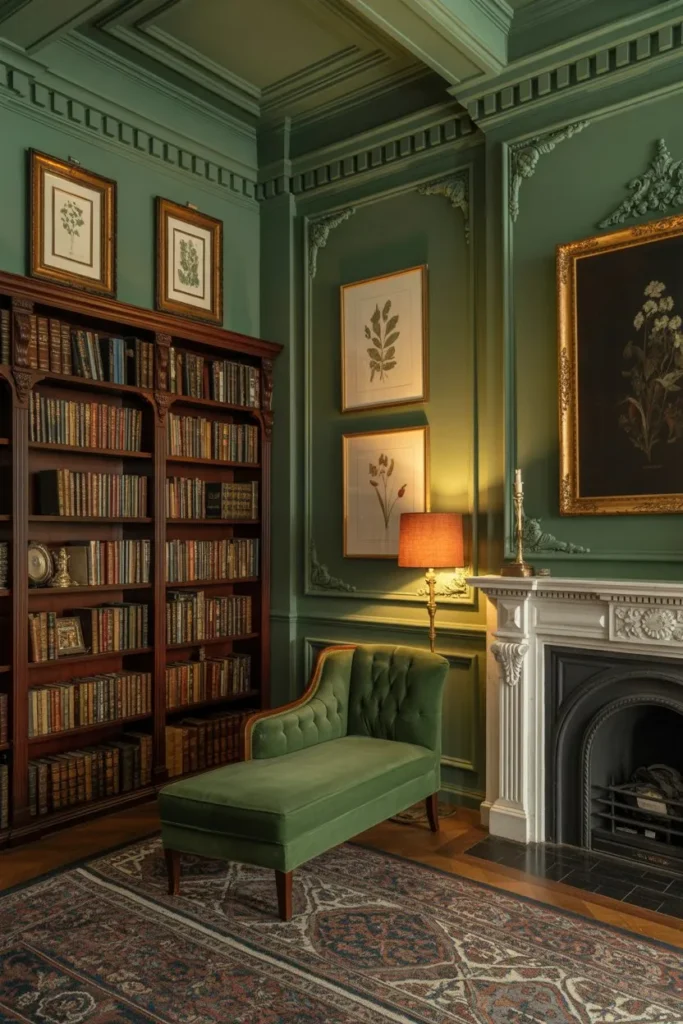
Infusing a sense of history into a home often involves a sage green living room that leans into darker, moodier tones. Sage works perfectly with traditional Victorian elements like mahogany and marble, providing a sophisticated bridge between old-world opulence and modern calm. The use of botanical prints and dark green velvet creates a “library” feel that is both studious and cozy. This approach treats the living room as a curated gallery of history, where the tiered architectural details are highlighted by the soft, earthy wall color.
10. Contemporary Glass and Slate Suite
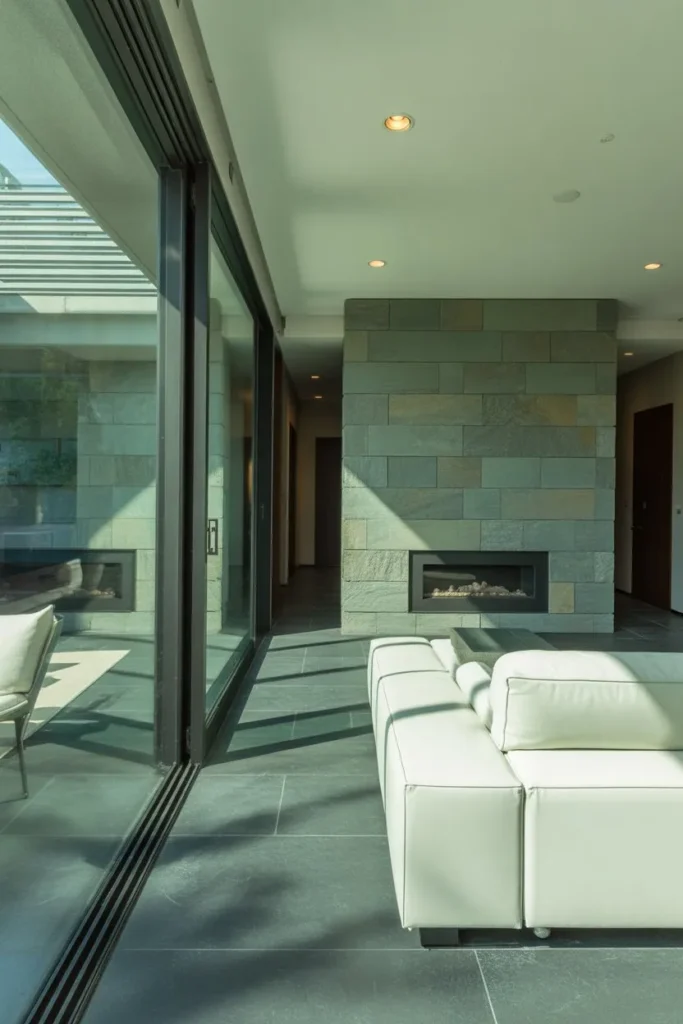
In a luxury contemporary home, the sage green living room uses materials like stone and slate to define the space. A sage green stone fireplace becomes the literal heart of the room, providing a natural focal point within a glass-walled environment. The contrast between the cold slate and the white leather creates a high-tech gallery vibe that is softened by the organic color of the stone. This design is for those who value transparency and modern materials, creating a grand space that feels connected to the landscape.
11. Art Deco Emerald and Mint Fusion
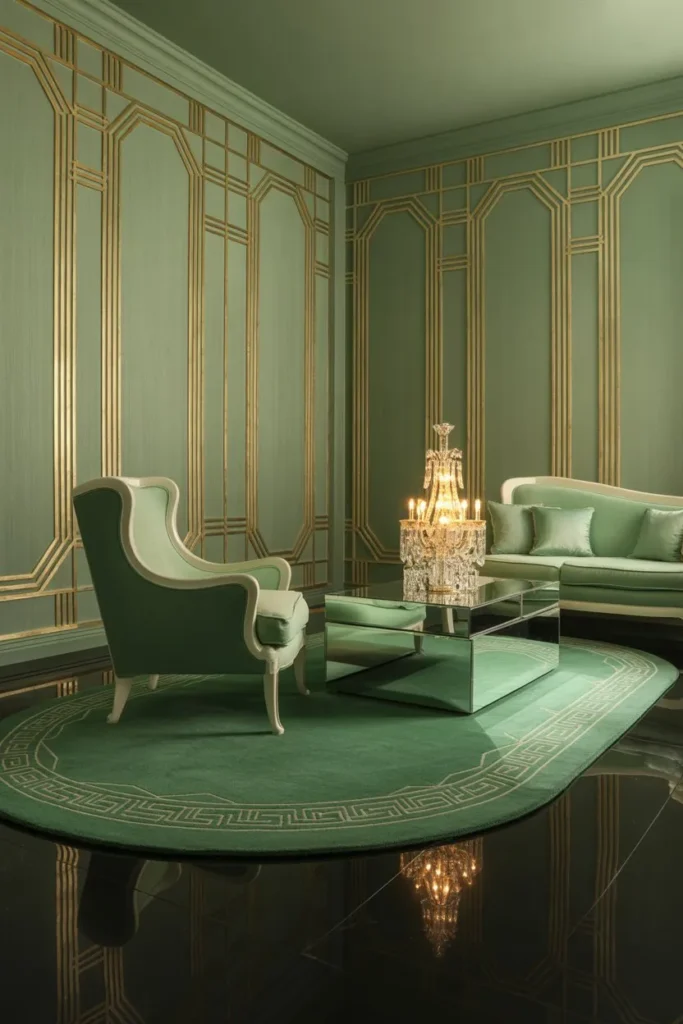
An Art Deco approach to the sage green living room emphasizes vertical lines and shimmering surfaces. By layering different shades of green—from mint to sage to emerald—you create a rich, monochromatic depth that feels incredibly expensive. Gold accents and mirrors reflect light throughout the room, ensuring the different tiers of the design are visible even in low light. This theatrical design is perfect for hosting evening parties, providing a sophisticated and stylish backdrop for a high-fashion social life within a modern home.
12. Desert Modern Adobe Retreat
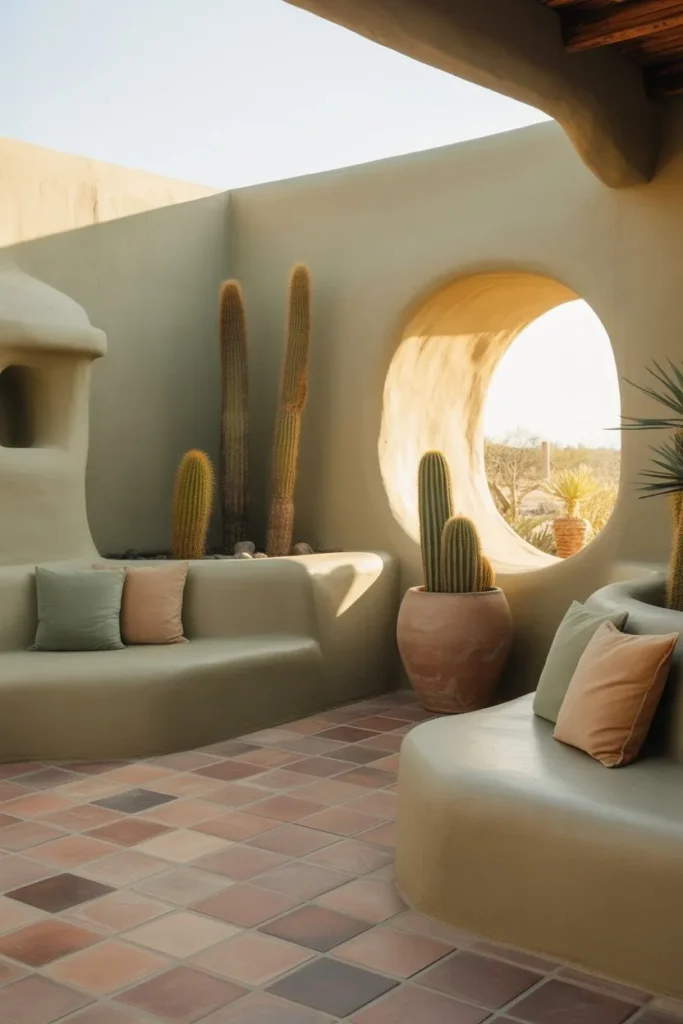
The sage green living room takes on a sculptural quality in a desert modern home. Instead of traditional paint, smooth plaster in a sage hue mimics the colors of desert succulents and shadows. The combination with terracotta tiles creates a warm, earthy palette that feels perfectly balanced against the hot sun. This design relies on organic shapes and built-in furniture to create a space that feels like it was carved directly from the earth, offering a cool and calm sanctuary in a dry climate.
13. Traditional English Library Drop
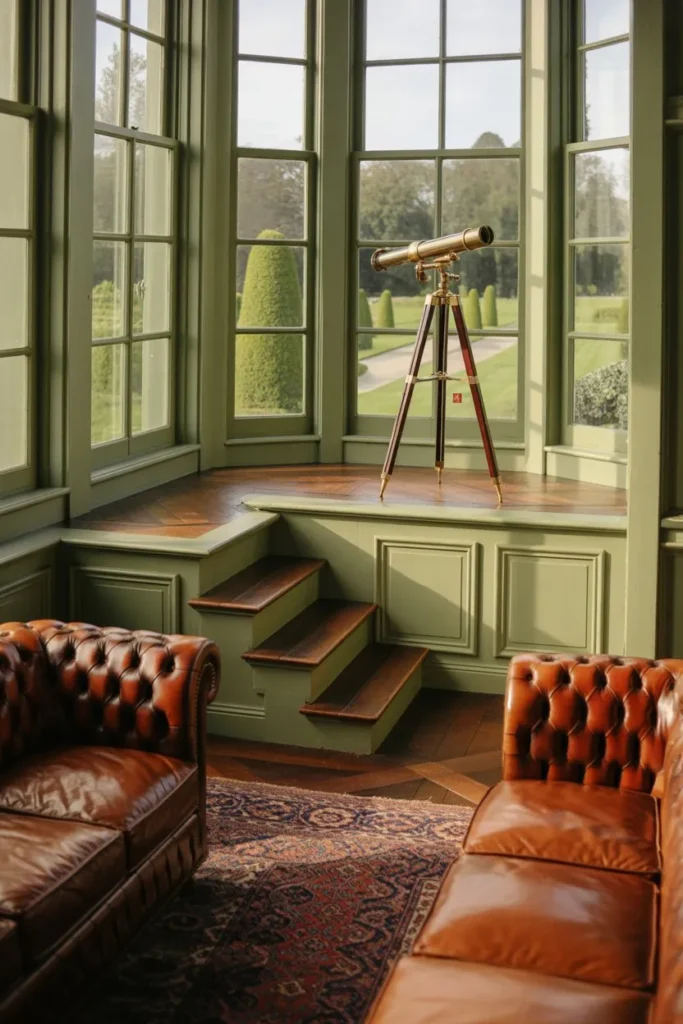
Traditional homes benefit from a sage green living room by creating a space that feels formal yet comfortable. The sage wainscoting provides a sense of structure and history, while the leather Chesterfield sofas add a layer of rugged luxury. Using a split-level or tiered layout allows for a “picket” of privacy for reading near the window. This design mimics the grand English estates of the past, providing a sense of scale and history that makes the home feel permanent and storied.
14. Modern Craftsman Built-in Nook
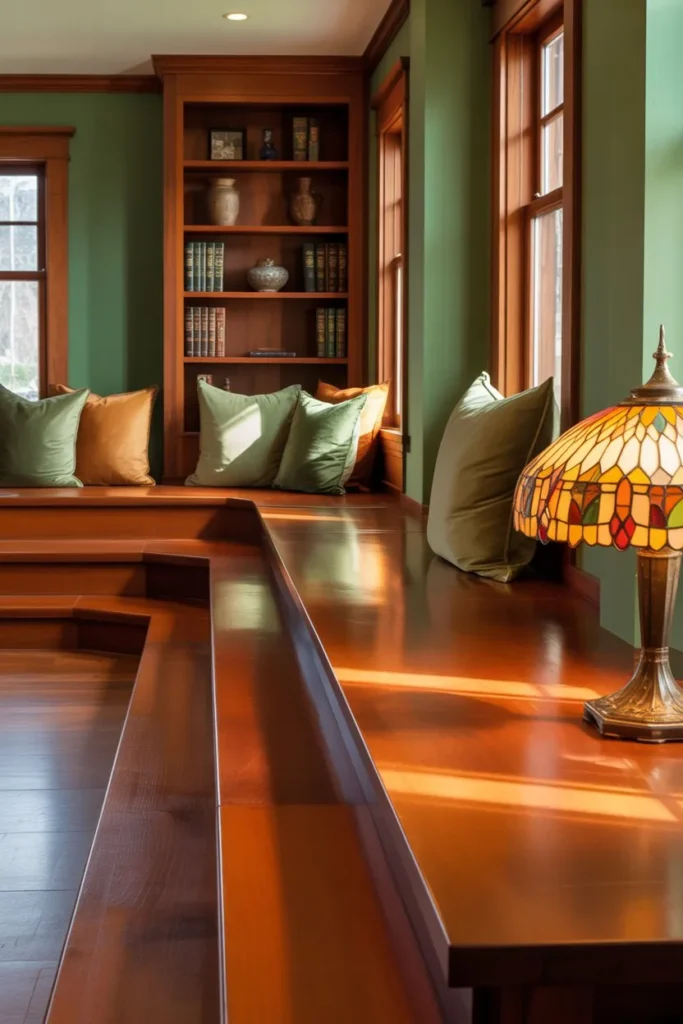
The Craftsman style is known for its woodwork, and a sage green living room provides the perfect backdrop for custom cherry or oak cabinetry. Sage green is a natural partner for the warm tones of wood, echoing the forest environments that inspired the Craftsman movement. Built-in nooks and window seats maximize the functionality of the space, creating a sense of “handmade” luxury. This design is for those who value craft and detail, ensuring the living area feels grounded, artisanal, and incredibly cozy for the whole family.
15. California Cool Sunken Lounge
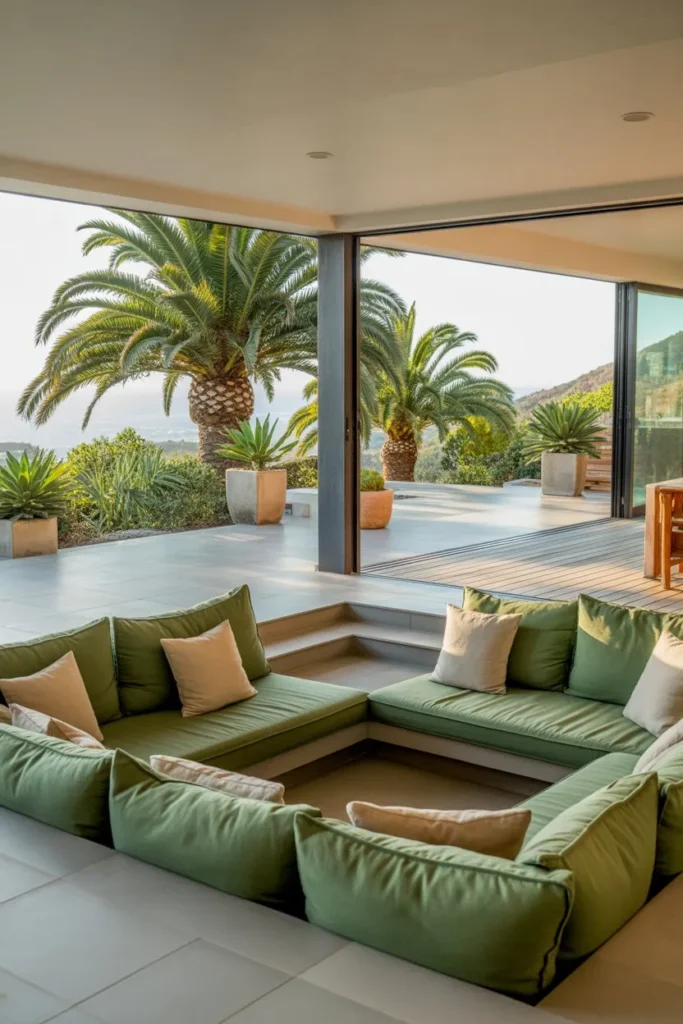
The California Cool aesthetic is all about blurring the lines between nature and the home, making a sage green living room the perfect choice. By using sage for the large sunken seating area, you connect the interior furniture to the greenery of the outdoor landscape. Retractable glass walls allow for a fluid modern flow, where the living room becomes an extension of the patio. This design is about a relaxed, outdoor-oriented lifestyle, where the colors and materials are chosen to celebrate the sun and the breeze.
16. Eclectic Maximalist Treasure Pit
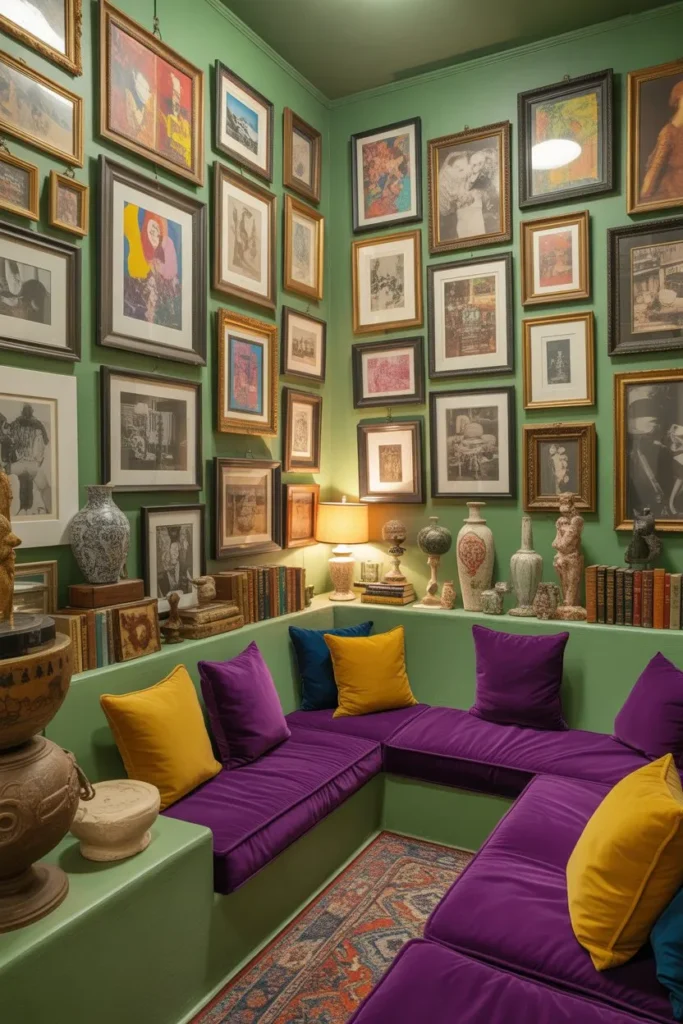
Maximalism loves a sage green living room because it provides a calm, neutral foundation for a “more is more” approach. The sage walls act as a quiet anchor for clashing colors and busy patterns, ensuring the room feels curated rather than chaotic. Using the architectural tiers to display art and sculptures creates a dynamic, gallery-like feeling. This design is a celebration of a lifetime of collecting, where the soft green wall color provides the perfect frame for a vibrant and eclectic personal history.
17. Brutalist Loft with Sage Softness
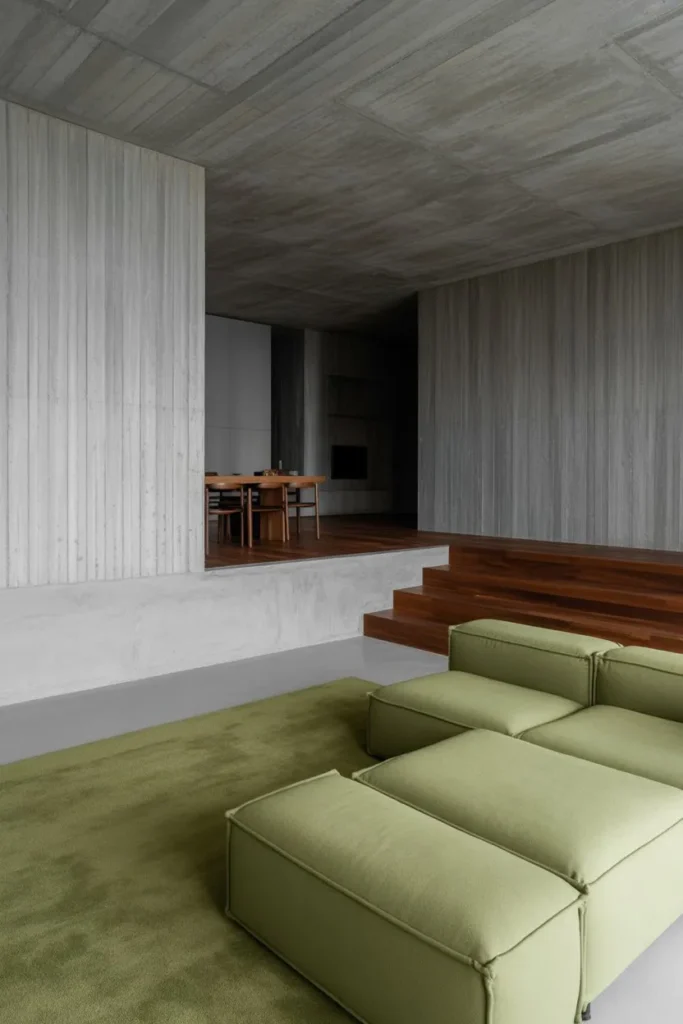
Brutalist architecture can often feel cold, but a sage green living room within a concrete loft can feel surprisingly inviting. By introducing large-scale sage textiles, you provide a visual and tactile “softness” that balances the hard concrete. This height difference between the lounging and dining zones clearly defines the space without the need for restrictive walls. The simplicity of the design highlights the honesty of the materials, creating a balanced, modern flow that feels both architectural and human-centered in its scale.
18. Mediterranean Sage and Terracotta Lounge
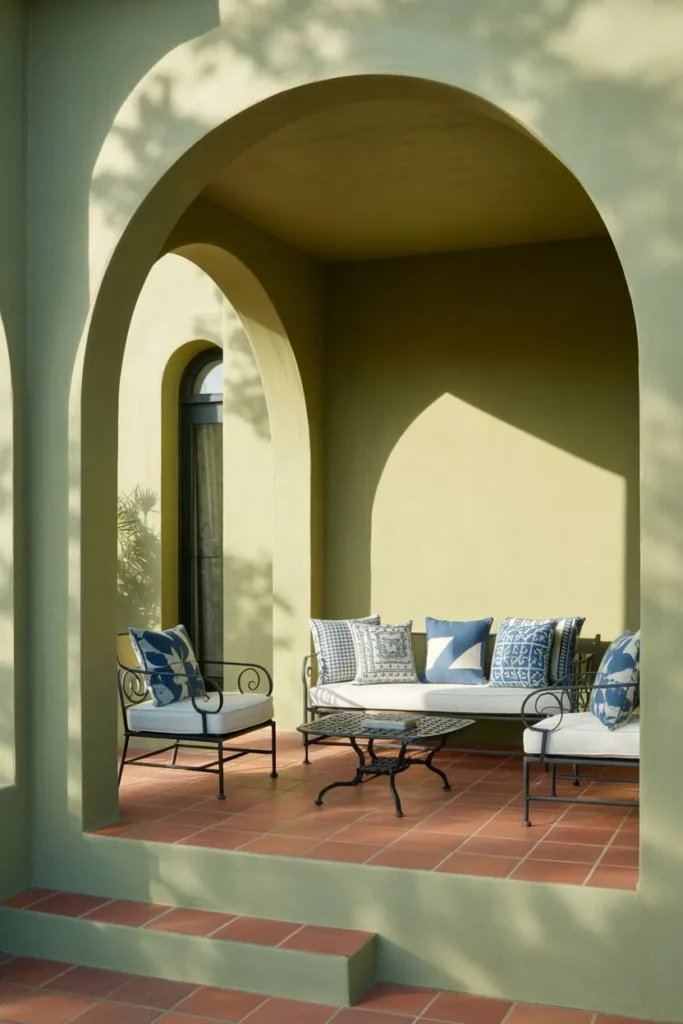
Embrace a permanent vacation vibe with a sage green living room inspired by the Mediterranean coast. The use of sage on the walls provides a cool contrast to the warmth of the terracotta floors. Arched doorways and open transitions encourage airflow, making the room feel breezy even in the summer heat. By keeping the furniture lightweight and the colors natural, the space remains flexible and open, capturing the relaxed, sun-drenched lifestyle of a coastal villa brought into a contemporary, tiered home setting.
19. High-Tech Cinema Tier with Sage Lighting
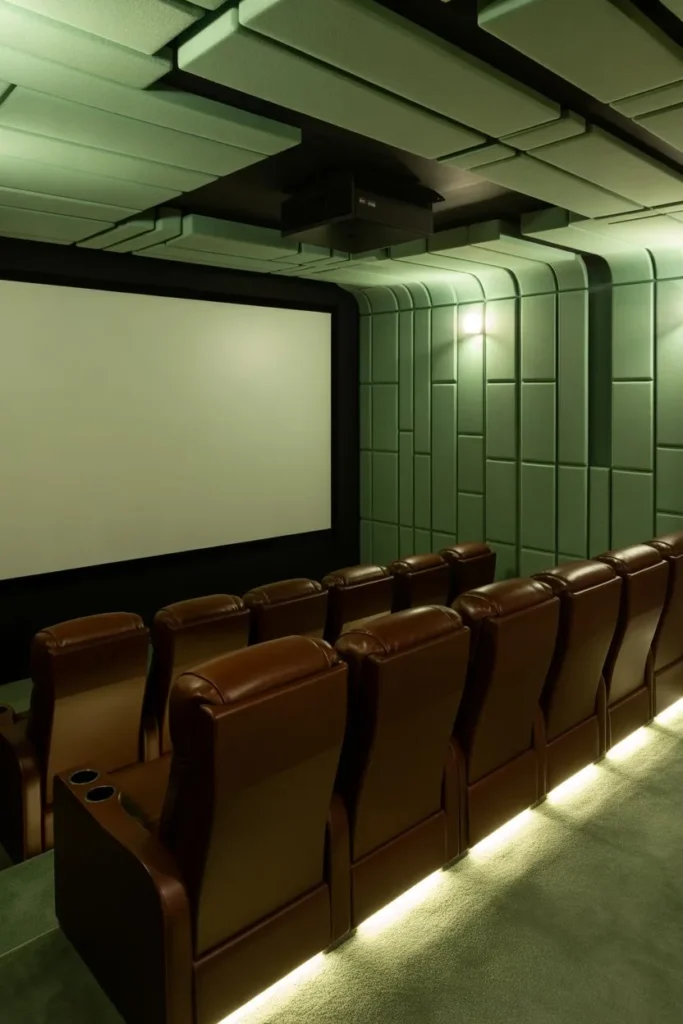
For movie enthusiasts, a sage green living room can serve as the ultimate foundation for a home cinema. Sage green acoustic panels provide a sophisticated alternative to standard black or grey, improving the sound quality while adding a soft color to the walls. Tiered flooring ensures that every seat has a perfect view of the screen. Using soft green LED lighting along the steps provides safety and atmosphere without creating glare, making this multi-level room the most functional and popular destination in the modern home.
20. Soft Pastel Memphis Design Room
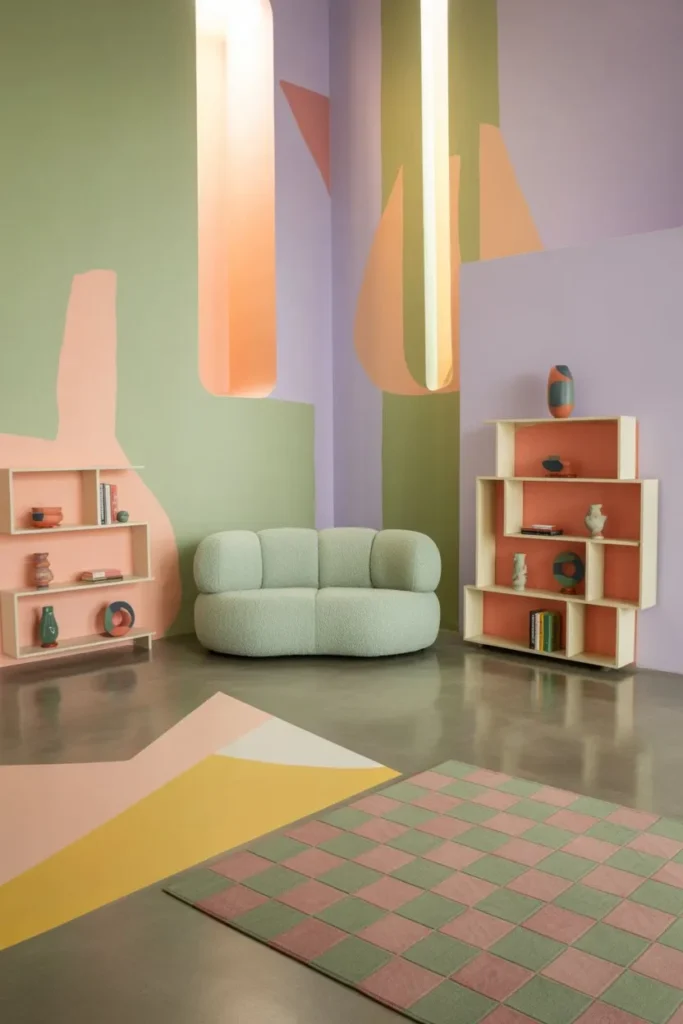
The Memphis design movement is about breaking rules, making it perfect for a quirky sage green living room. By using sage alongside other soft pastels like lavender and mint, the room becomes a giant, livable art installation. The different heights of the floor provide a playground for unusual furniture shapes and clashing patterns that somehow work together. This design is high-energy and joyful, proving that a nature-inspired color like sage can be used in a way that is modern, fun, and entirely unexpected.
21. Luxury Penthouse White and Sage
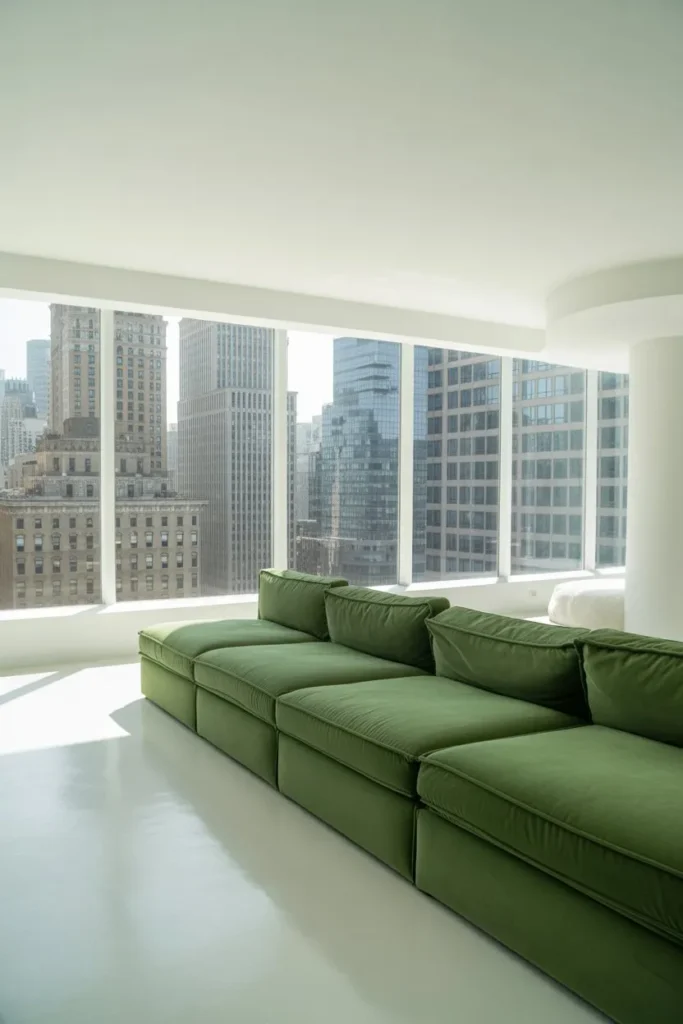
A monochromatic white and sage green living room is the height of urban luxury. In a penthouse setting, the absence of distracting colors directs all attention to the architectural lines and the sprawling city views. The sage green sectional becomes the primary “island” of comfort and color in a sea of white. This subtle shift in color and texture alerts the brain to the change in zone, creating a seamless but sophisticated transition that feels like living in a bright, airy cloud above the city.
22. Mid-Century Geometric Wood Panel Suite
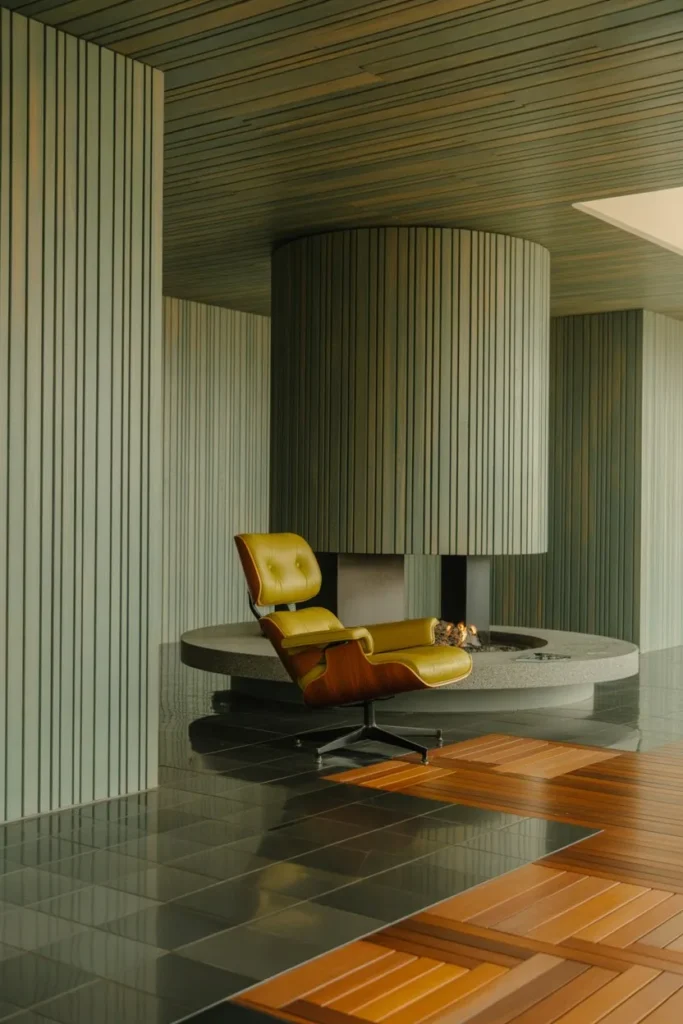
Wood paneling adds an incredible sense of continuity to a sage green living room. By painting vertical slats in a sage hue, you visually knit the levels of the room together, creating a cozy “envelope” of color. The geometric precision of the wood contrasts beautifully with the organic shape of the furniture. This design relies on a rich material palette of teak and slate to ground the room, ensuring that the architectural tiers feel like a deliberate and high-end choice that honors classic 1960s design.
23. Contemporary Sunken Fire Pit
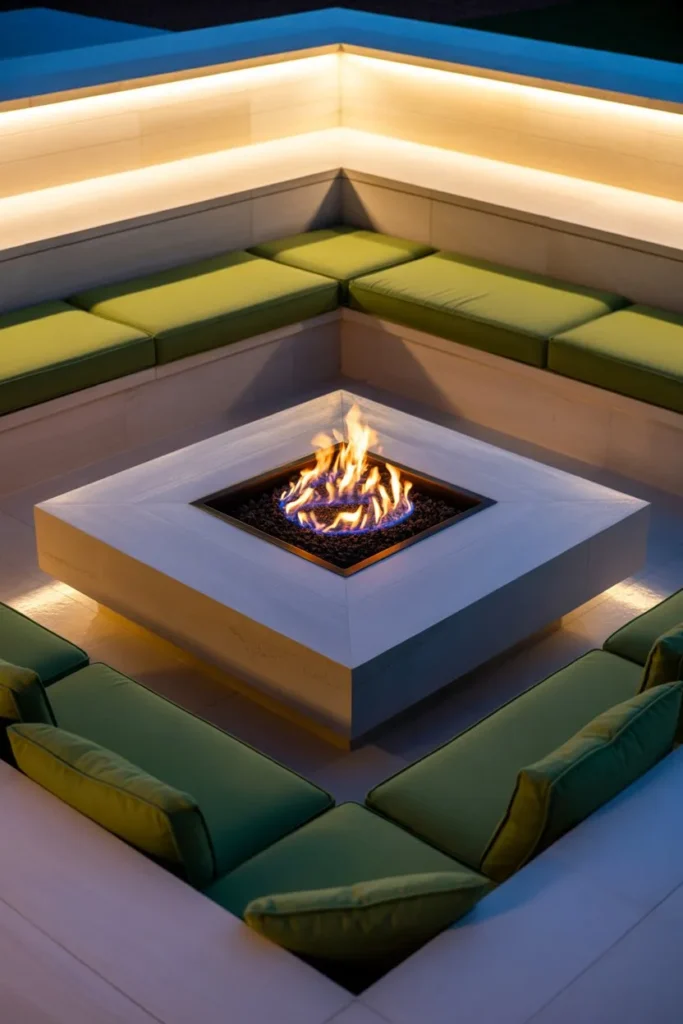
The final idea for a sage green living room is the ultimate social hub: the integrated fire pit. By building a gas fire directly into the center of a sunken lounge with sage cushions, you create a literal and figurative focal point for the home. Polished limestone and minimalist benches keep the look clean and contemporary. This design is about the ancient tradition of gathering around a fire, updated for a modern aesthetic where the architecture and the calming sage color provide the atmosphere for conversation.
24. Urban Jungle Sunroom Transition
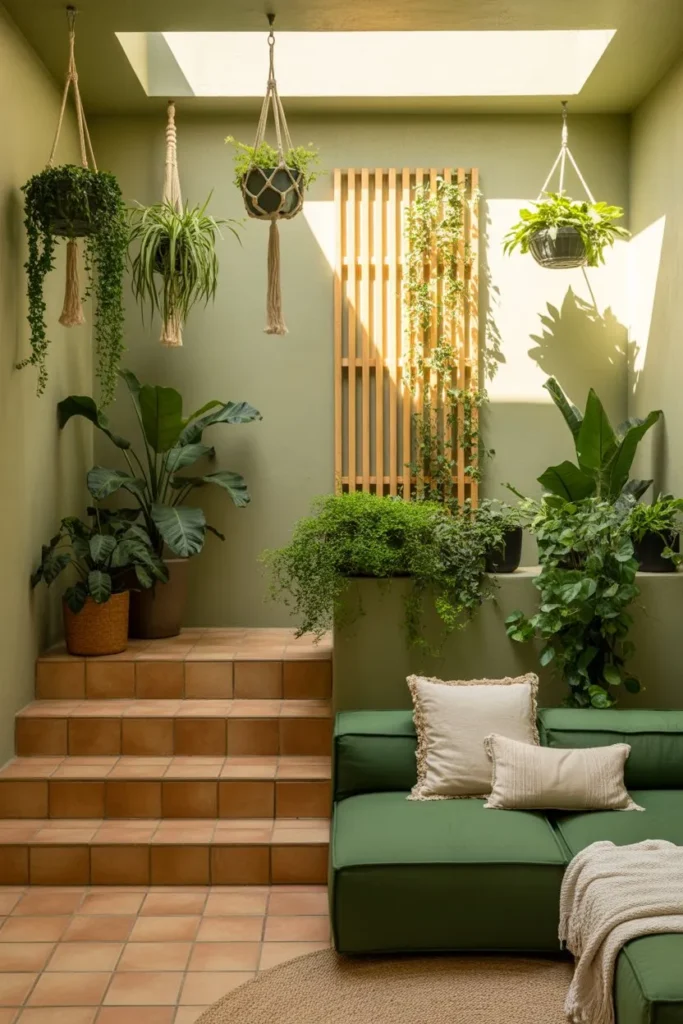
Turning your sage green living room into a botanical sanctuary bridges the gap between architecture and nature. The sage walls perfectly complement the lush greenery of the plants, creating a seamless “forest” feeling indoors. The change in floor height allows for a tiered plant display, where taller palms sit on the lower level and trailing vines hang from above. This creates a stunning visual focal point that acts as a natural air purifier, making the sunken area feel like a secret garden hidden within an urban home.
25. Industrial Loft Glass Floor Bridge
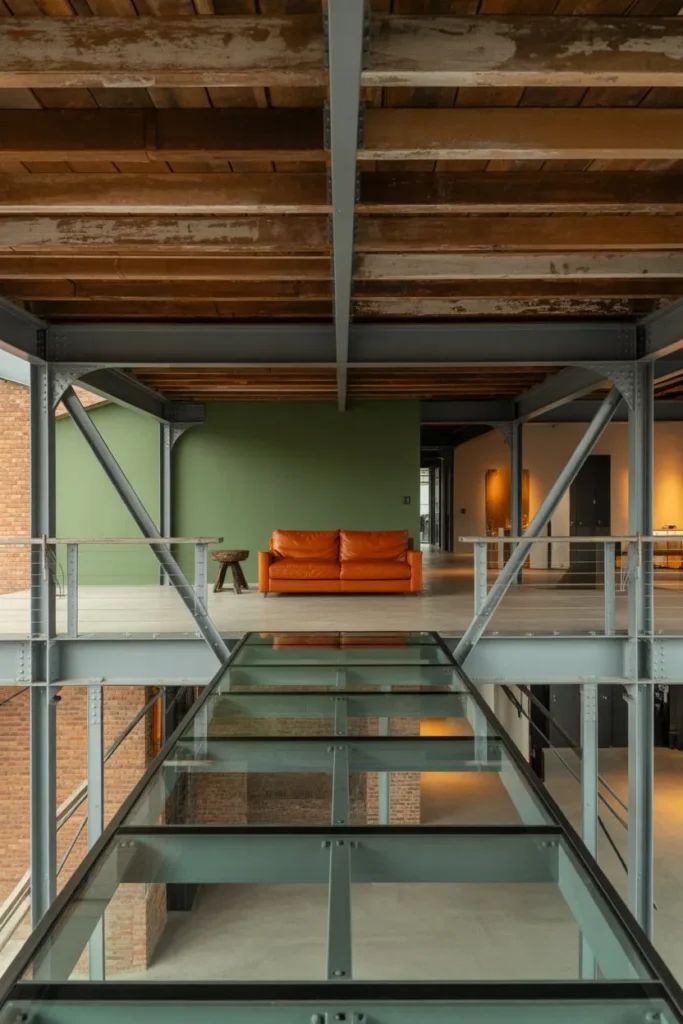
Vertical space is the star of this sage green living room design. By incorporating a glass bridge, you allow light to penetrate the lower levels while creating a stunning architectural feature. The industrial materials—brick and steel—provide a textured backdrop for the soft sage walls. This layout maximizes the footprint of a small urban loft by utilizing the height of the ceiling, creating multiple functional tiers that feel connected through transparency and a shared, nature-inspired color palette that flows throughout the space.
26. Victorian Modern Fusion Lounge
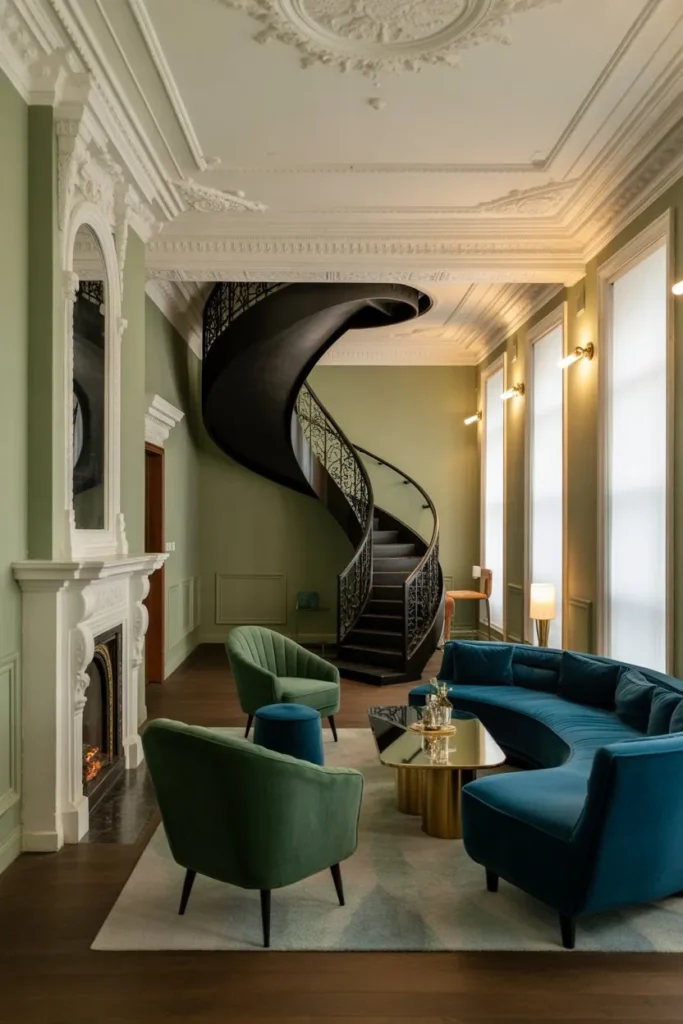
Merging a historic home with a sage green living room creates a fascinating architectural dialogue. By keeping the original Victorian moldings and fireplaces and adding a modern sage green color palette, you get the best of both worlds. A spiral staircase can act as a sculptural link between the historic upper level and the contemporary lounge below. This fusion allows for modern comfort in a space that still honors its 19th-century roots, creating a home that is both a historical treasure and a contemporary masterpiece.
27. Scandi-Minimalist Light Wood Tier
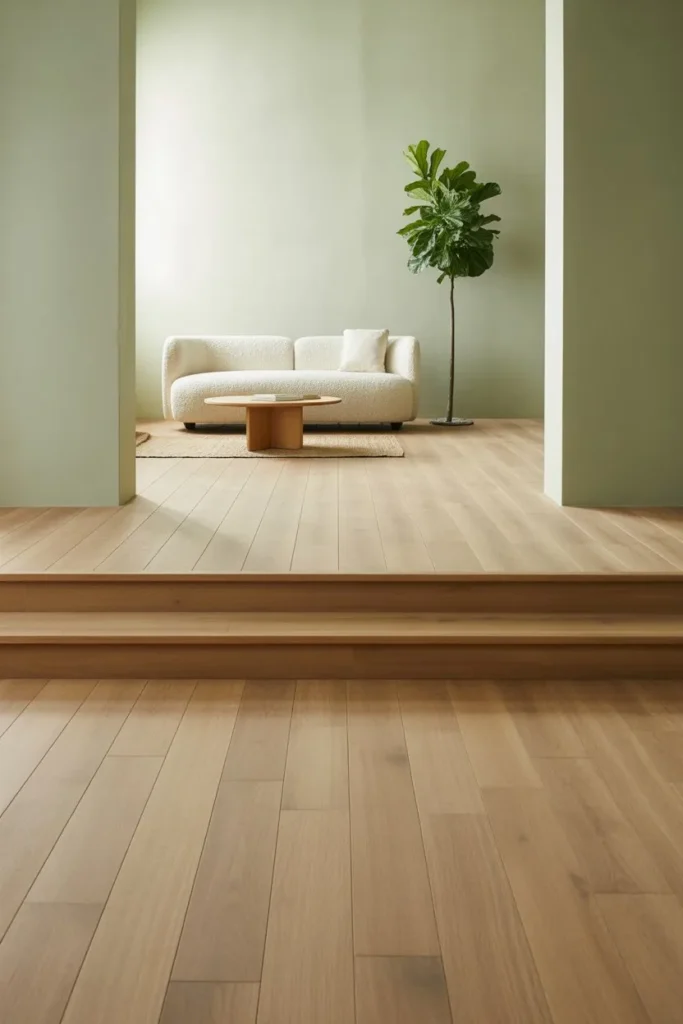
The Scandinavian approach to the sage green living room focuses on “hygge” and maximizing natural light. By using a pale sage palette and light woods, the transition between floor levels feels seamless and fluid. This design works exceptionally well in smaller homes where you want to define a zone for relaxing without making the room feel cramped. The wide steps can serve as extra informal seating when guests are over, making the most of the vertical space while maintaining a clean, clutter-free, and nature-inspired aesthetic.
Conclusion
Embracing a sage green living room allows you to create a home that feels both sophisticated and deeply restorative. Whether you choose the regal textures of velvet and gold or the raw honesty of concrete and steel, sage green provides a versatile foundation for a calm aesthetic. By carefully layering textures and utilizing unique architectural heights, you can transform your living area into a dynamic, nature-inspired sanctuary that perfectly reflects a balanced and modern way of living.