12 Espresso Balayage Hair Color Ideas
Introduction
If you love deep, glossy brunette hair but want something softer and more dimensional than a single flat color, espresso balayage hair color is your answer. It starts with a rich, dark coffee-brown base and melts into subtly lighter ribbons of warm brown, so your hair catches the light every time you move — without harsh lines or constant root touch-ups. In the next few minutes, you will find 12 wearable ideas for long layers, bobs, curls, and fine hair, each with styling tips and exactly what to ask your colorist for. If you already love dimensional brunette color, you will also enjoy these mocha balayage hair color ideas, which play with a similarly soft, coffee-inspired palette.
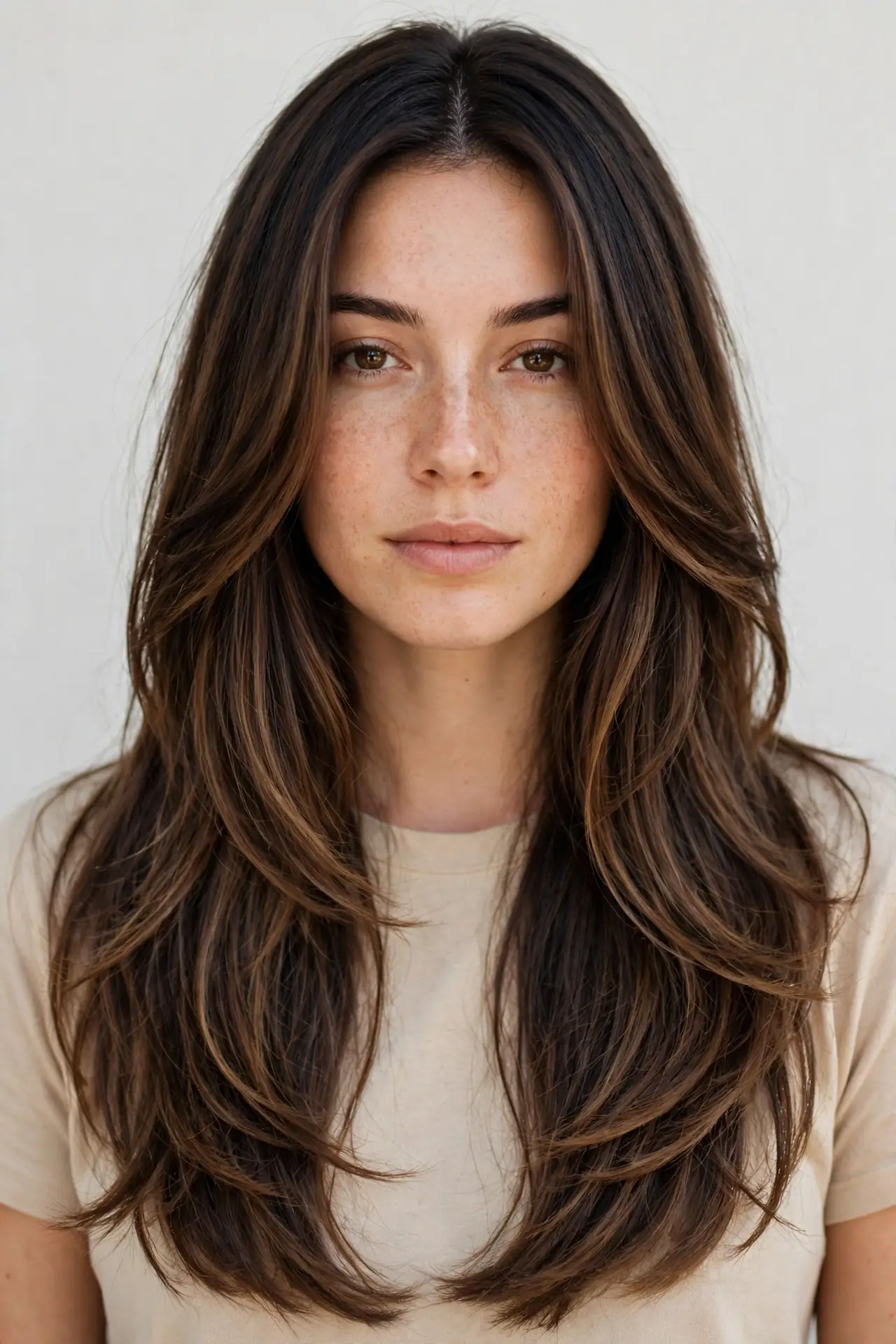
Classic Espresso Balayage on Long Layers
Long layers are the perfect canvas for classic espresso balayage, because the length gives the color room to melt gradually from dark roots to softly lightened ends. The darkest espresso shade stays near the crown, which keeps the look grounded and expensive-looking, while the mid-lengths and ends pick up ribbons of milk-chocolate and warm brown. This version suits oval, round, and heart-shaped faces especially well, since the lighter pieces around the face open up your features without washing you out. It works beautifully on straight, wavy, and thick hair, and it adds visible movement even when you wear your hair down and simple.
- Ask your colorist to keep your roots in a deep espresso shade.
- Request hand-painted ribbons that get lighter toward the ends.
- Blow-dry with a large round brush for a smooth, bouncy finish.
- Finish with a shine serum to make the dimension pop.
When you sit in the salon chair, ask for a soft balayage with no harsh line of demarcation, and bring a photo showing the level of lightness you want at the ends. At home, wash with a color-safe, sulfate-free shampoo, and use a weekly gloss or tinted mask to keep the brown tones rich rather than brassy. A trim every eight to ten weeks keeps the layers fresh and stops the ends from looking thin. Because the roots stay dark, grow-out is gentle, and you can usually stretch appointments to three or four months.
Espresso Balayage with Soft Caramel Ribbons

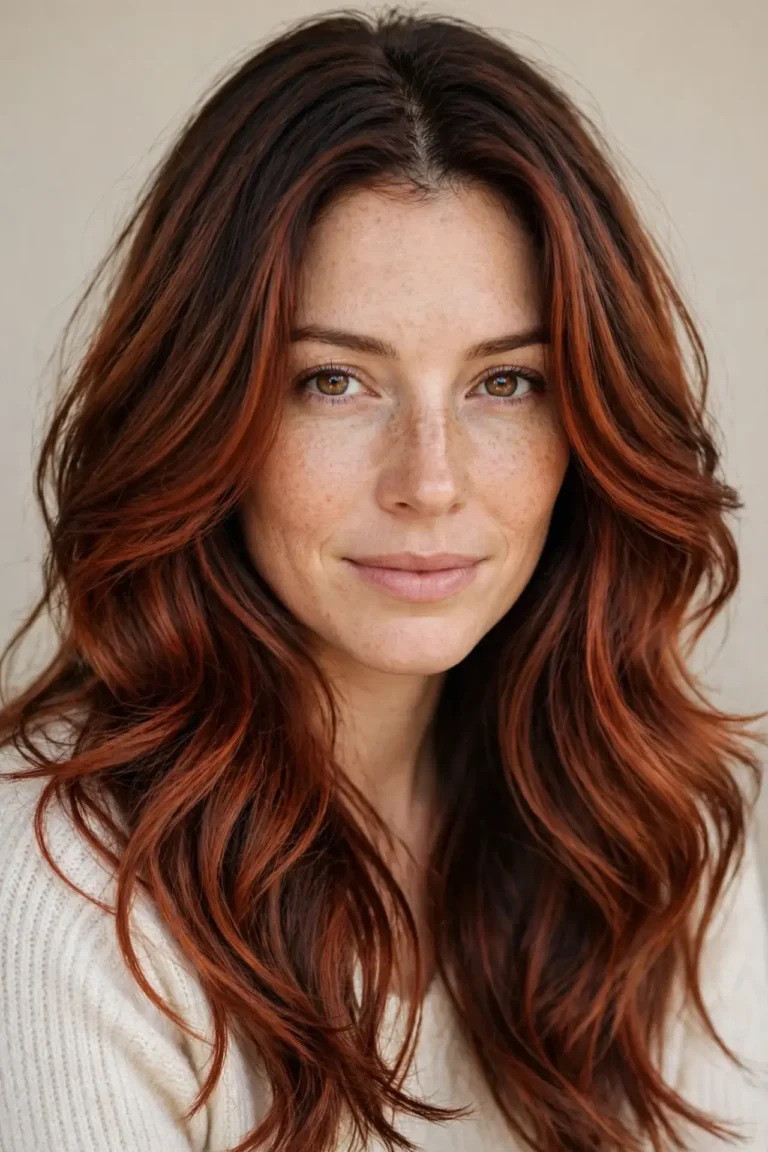
If you want your espresso base to feel warmer and a little more sun-kissed, soft caramel ribbons are the easiest way to get there. The caramel pieces are painted sparingly, mostly through the mid-lengths and around the face, so they read as golden light rather than stripes. This idea flatters warm and neutral skin tones in particular, and it softens strong features beautifully. It is also a wonderful choice if you are growing out darker hair and want lightness without committing to blonde, since caramel sits close enough to brown to blend gracefully as it grows.
- Place caramel ribbons mainly around your face and ends.
- Keep the pieces fine and blended, never chunky.
- Curl large sections away from your face for soft waves.
- Apply a lightweight oil to the ends for a glossy finish.
Ask your stylist for fine, hand-painted caramel highlights over an espresso base, with the lightest pieces framing your face. Mention that you want warmth, not blonde, so the caramel stays in the brown family. At home, a color-depositing conditioner in a warm brown shade will refresh the ribbons between appointments. Style with loose waves rather than tight curls, which can chop up the color, and protect your hair from heat with a spray before curling. Expect a gloss refresh every six to eight weeks to keep the caramel glowing.
Subtle Espresso Balayage for Dark Brown Hair
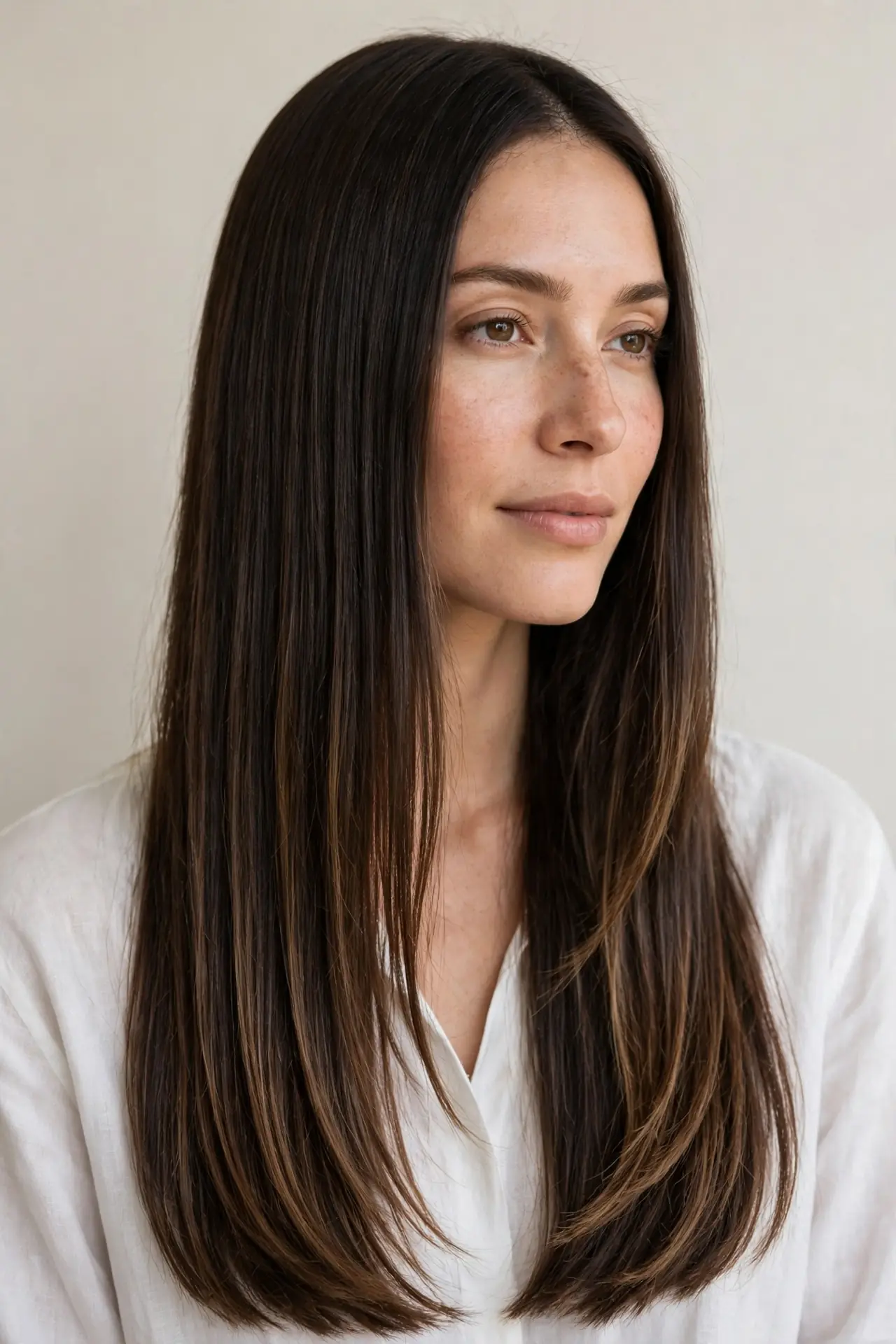
Subtle is the secret weapon of espresso balayage, especially if your natural hair is already dark brown and you want dimension without an obvious color change. Here, the lighter pieces are only one or two shades above your base, so the result looks like your hair, only richer and more alive in sunlight. This is ideal for professional settings, for first-time color clients, and for anyone who wants low maintenance above all else. It suits every face shape because the placement follows your natural part and layering, and it adds depth to straight hair that can otherwise look flat.
- Keep lightened pieces just one or two shades above your base.
- Concentrate the dimension through the mid-lengths and ends.
- Blow-dry straight to show off the subtle tonal shift.
- Use a clear gloss to boost shine without changing the color.
At the salon, ask for a “barely there” balayage and stress that you want depth, not contrast. Your colorist will likely use a gentle lightener and a warm brown toner, which keeps the result soft. At home, this is the easiest idea on the list to maintain: color-safe shampoo, occasional deep conditioning, and a clear gloss every couple of months are plenty. Trims every ten weeks keep the shape tidy, and because the contrast is so low, grow-out is nearly invisible, making this a brilliant choice if salon visits are infrequent.
Espresso Balayage Lob with Face-Framing Lights
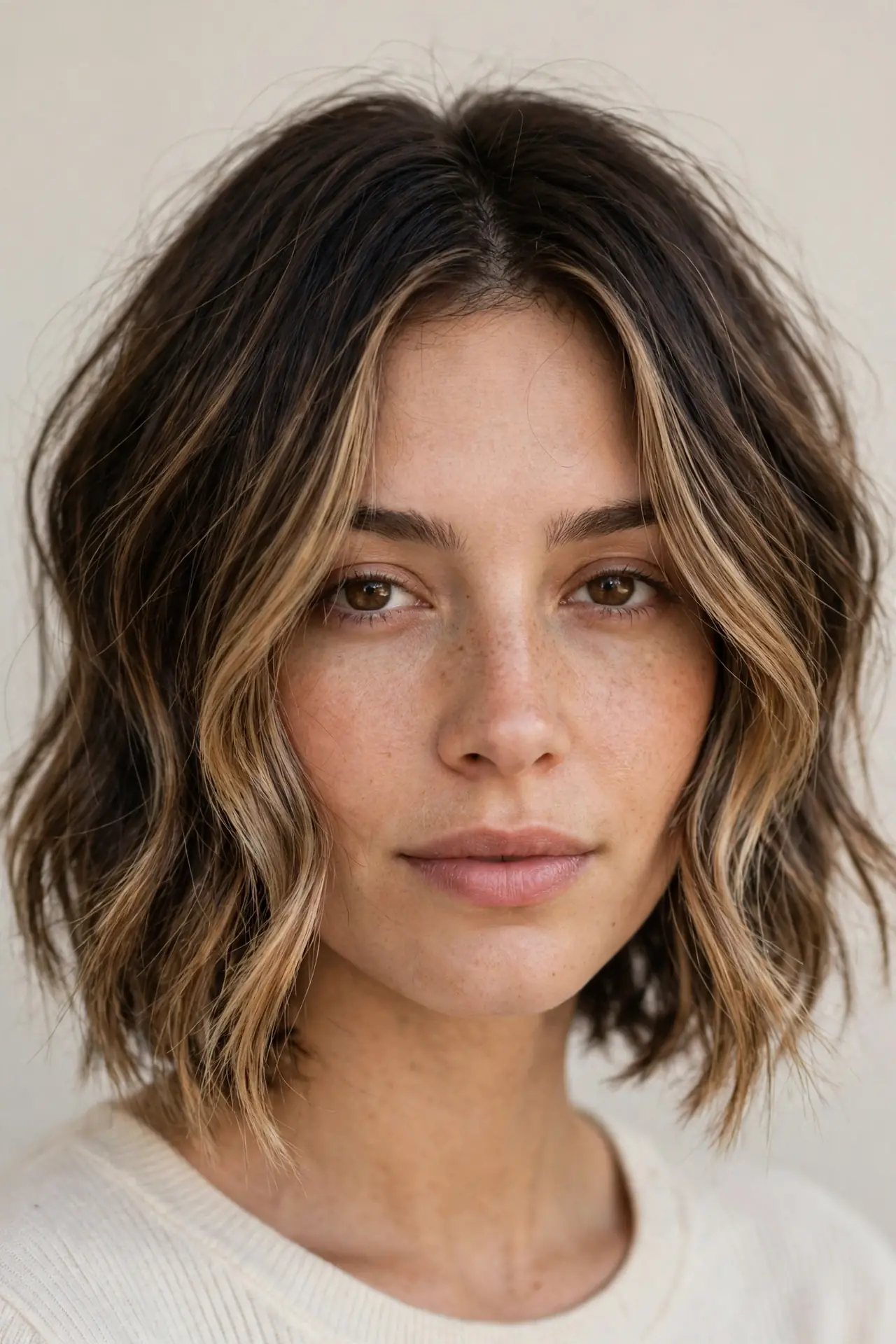
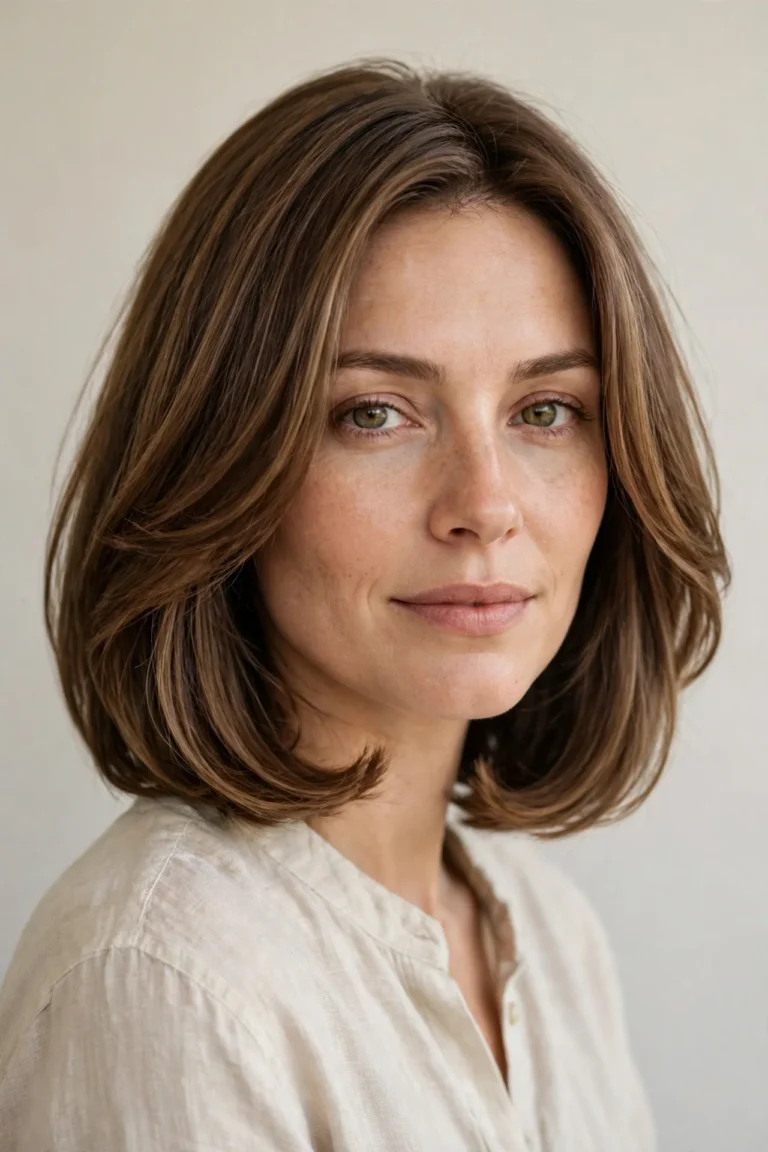
A lob, or long bob, paired with espresso balayage and face-framing lighter pieces is polished, modern, and endlessly wearable. The cut ends somewhere between the chin and the collarbone, so it frames the jawline beautifully, while the lighter strands around the face draw attention to your eyes and cheekbones. This combination suits round and square faces especially well, because the longer front pieces elongate the face, and it works on straight, wavy, and fine hair alike. The espresso base keeps the lob looking chic rather than casual, so it moves easily from office to evening.
- Keep the front pieces slightly longer than the back.
- Lighten the face-framing strands by one or two levels.
- Tuck one side behind your ear to show off the color.
- Smooth flyaways with a small amount of styling cream.
Ask for a textured lob with soft, face-framing balayage and an espresso root melt, so there is no hard line where the color begins. For styling, a flat iron bent slightly at the ends gives that effortless, swung shape, while a texturizing spray adds grip for fine hair. Refresh the face-framing pieces every eight weeks if you want them to stay bright, and keep the length trimmed every six to eight weeks so the lob holds its shape. A color-safe shampoo will protect both the cut’s polish and the color’s depth.
Rich Espresso Balayage Curls
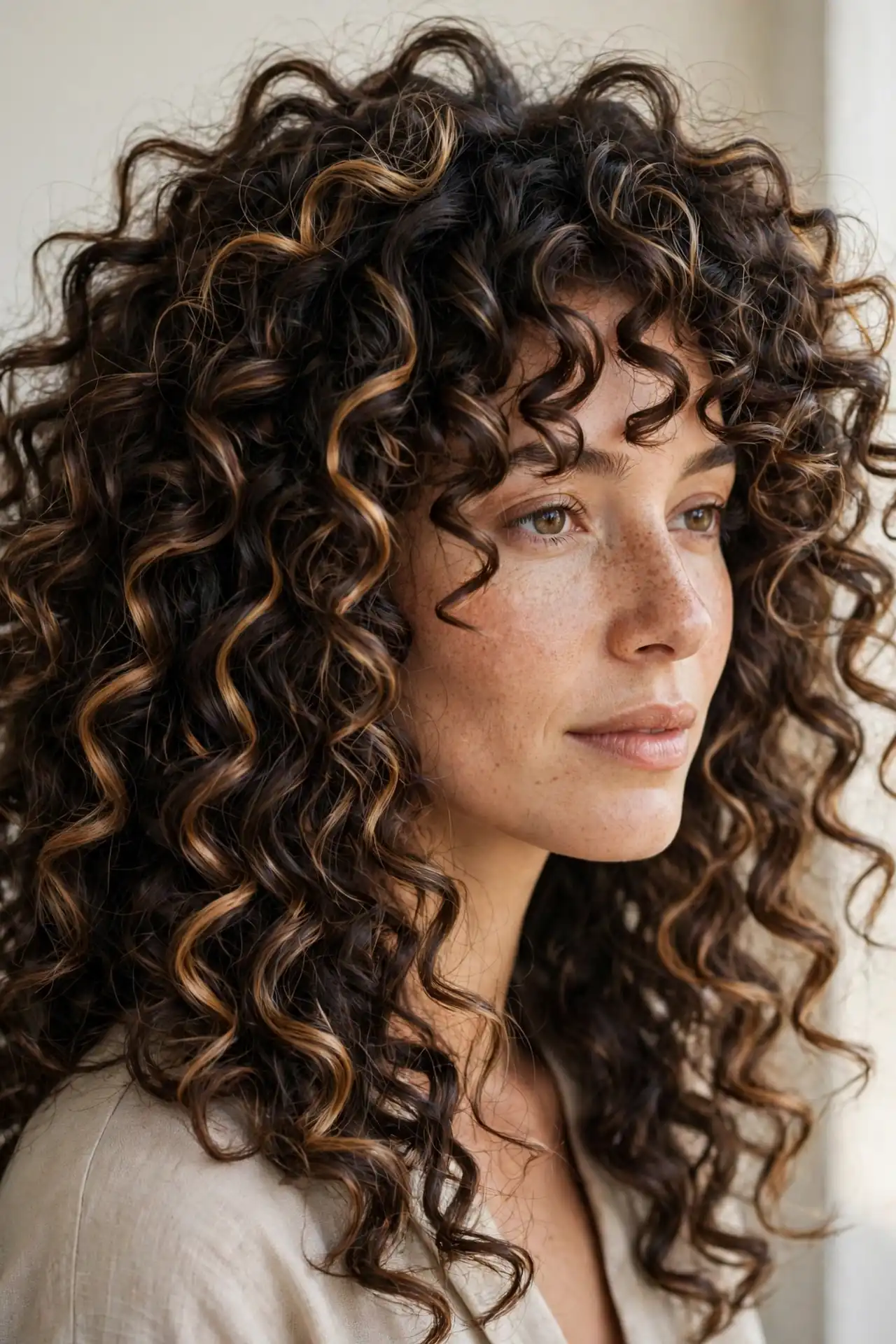
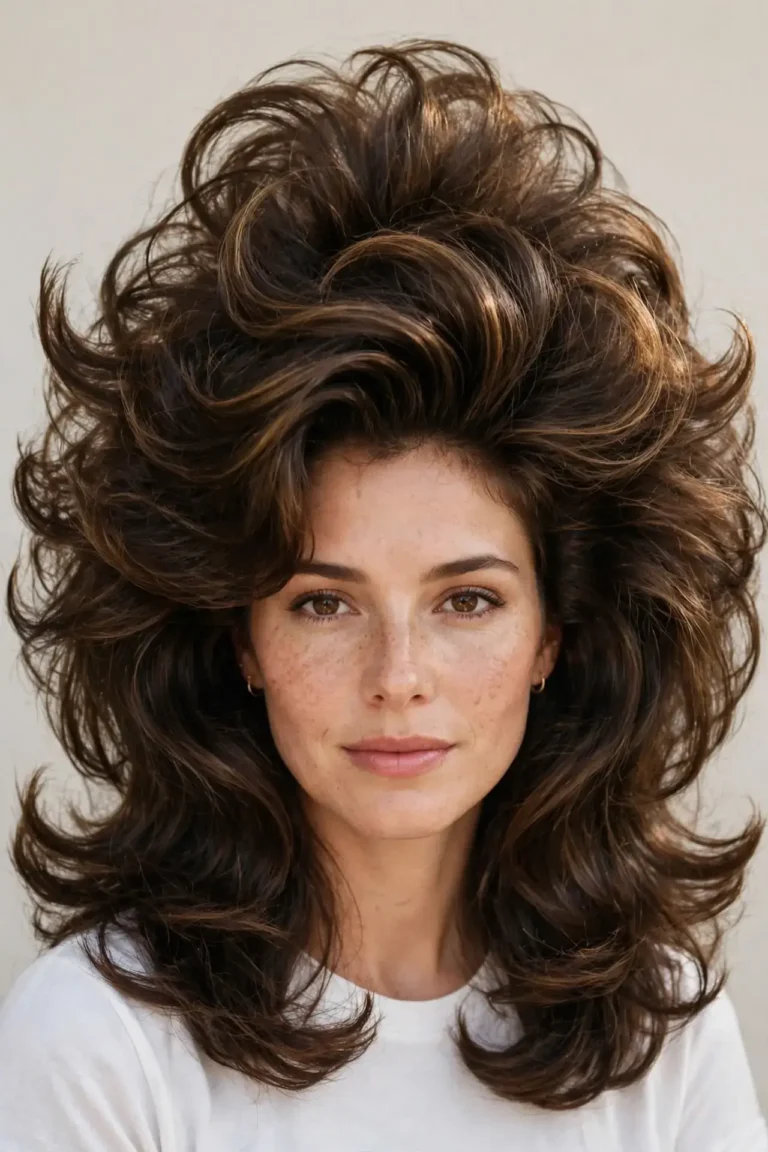
Curls and espresso balayage are a natural match, because every curl catches the light differently and shows off the color’s dimension. The espresso base gives curly hair richness and depth, while the lighter balayage ribbons trace the curl pattern, making each coil look defined rather than fuzzy. This idea suits all curl types, from loose waves to tight coils, and it flatters round and heart-shaped faces by adding volume exactly where you want it. If your curls tend to look one-dimensional, this color placement will transform them without changing your cut at all.
- Define curls with a curl cream while hair is damp.
- Diffuse on low heat to protect the curl pattern.
- Scrunch gently upward to encourage bounce and shape.
- Separate curls once dry for soft, touchable volume.
Ask your colorist for balayage painted to follow your curl pattern, with lighter pieces placed where the curls naturally catch light. Because curly hair is often drier, request a gentle lightener and a rich toner, and book a deep-conditioning treatment with your color appointment. At home, wash less often, co-wash between shampoos, and use a leave-in conditioner to keep curls hydrated. Refresh with a gloss rather than full color when the dimension fades, and trim curls every ten to twelve weeks to keep the shape springy.
Espresso Balayage with a Glossy Chocolate Finish
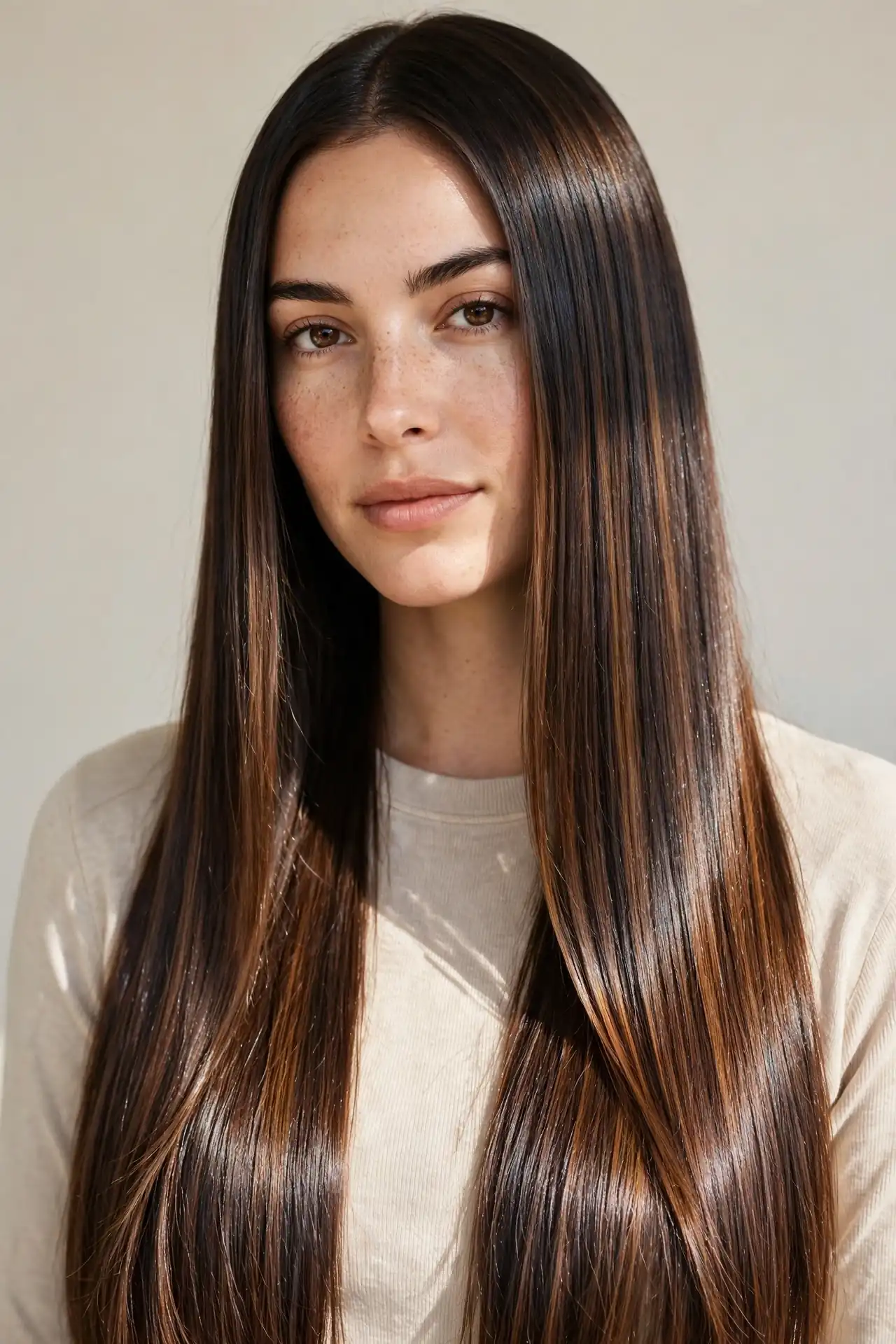
For a truly luxurious result, pair espresso balayage with a glossy chocolate finish that makes your hair look like poured silk. The balayage provides the dimension, and a chocolate gloss seals the cuticle, deepens the brown tones, and adds mirror-like shine. This version is especially flattering on straight and sleek hair, where shine is the whole point, and it suits every skin tone because chocolate brown is universally warm and rich. It is also a smart fix if your current brown color looks dull or faded, since the gloss revives it instantly.
- Apply a chocolate gloss over the balayage for extra shine.
- Blow-dry in sections with a paddle brush for sleekness.
- Smooth the ends with a flat iron on low heat.
- Mist with a shine spray as the final step.
Ask your stylist for espresso balayage finished with a demi-permanent chocolate gloss, and mention that shine is your priority. The gloss typically lasts six to eight weeks, so plan a refresh appointment rather than a full color service. At home, avoid very hot water, which strips gloss faster, and use a color-safe shampoo and conditioner. The American Academy of Dermatology offers general guidance on gentle hair care that supports keeping color-treated hair healthy, including limiting heat styling where you can. A weekly hair mask will keep the glossy finish looking salon-fresh between visits.
Dimensional Espresso Balayage for Fine Hair

Fine hair often struggles to look full, but dimensional espresso balayage can create the illusion of thickness without a single extra strand. The trick is contrast: darker espresso pieces underneath give depth, while lighter ribbons on top catch the light and make the hair look denser. This works best when the lighter pieces are fine and plentiful rather than bold, and it suits straight and slightly wavy fine hair beautifully. Paired with a layered cut, this color can make fine hair look twice as full, especially around the crown and ends.
- Request many fine ribbons rather than a few bold ones.
- Keep the underlayers darker to create depth.
- Blow-dry with volumizing mousse at the roots.
- Backcomb gently at the crown for extra lift.
Ask your colorist for a finely woven balayage over an espresso base, and pair it with long layers or a textured bob for movement. Avoid heavy oils and thick masks, which weigh fine hair down; instead, use a lightweight volumizing spray and a dry shampoo between washes to keep the roots lifted. A root-lifting powder can also help on day two or three. Because fine hair shows regrowth more readily, plan gloss refreshes every eight weeks, and keep trims regular so the ends stay thick-looking rather than wispy.
Espresso Balayage on a Sleek Straight Bob
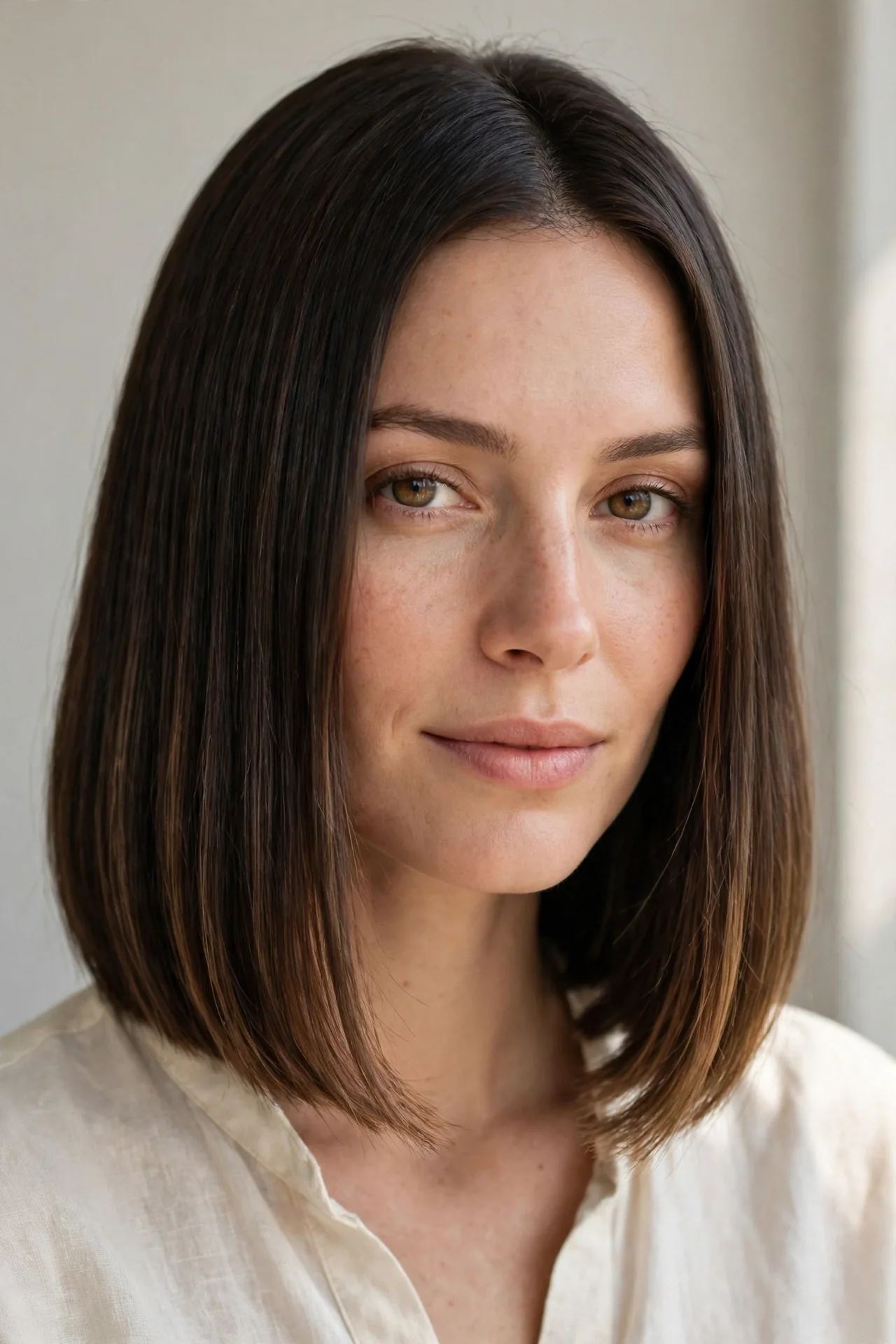
A sleek straight bob with espresso balayage is pure sophistication: sharp shape, deep color, and just enough lightness to stop the bob from looking heavy. The balayage is kept subtle and mostly toward the ends, so the bob’s clean lines stay the star while the color adds quiet movement. This idea suits oval and heart-shaped faces wonderfully, and it is a brilliant choice for straight hair, since the smooth surface shows the tonal melt clearly. If you love a polished, put-together look with minimal daily effort, this is your cut and color in one.
- Keep the balayage subtle and concentrated near the ends.
- Flat-iron in small sections for a glass-smooth finish.
- Apply a heat protectant before every styling session.
- Part hair slightly off-center for a modern feel.
Ask for a blunt or softly textured bob with a root melt in espresso and gentle balayage through the ends. Bring a photo of the exact bob length you want, since a centimeter makes a real difference at this length. At home, a smoothing serum and a good flat iron are your best friends, and a silk pillowcase will help the sleek finish last overnight. Trim every six weeks to keep the bob’s edge sharp, and refresh the gloss every couple of months so the espresso stays deep and the ends stay luminous.
Warm Espresso Balayage with Honey Ends
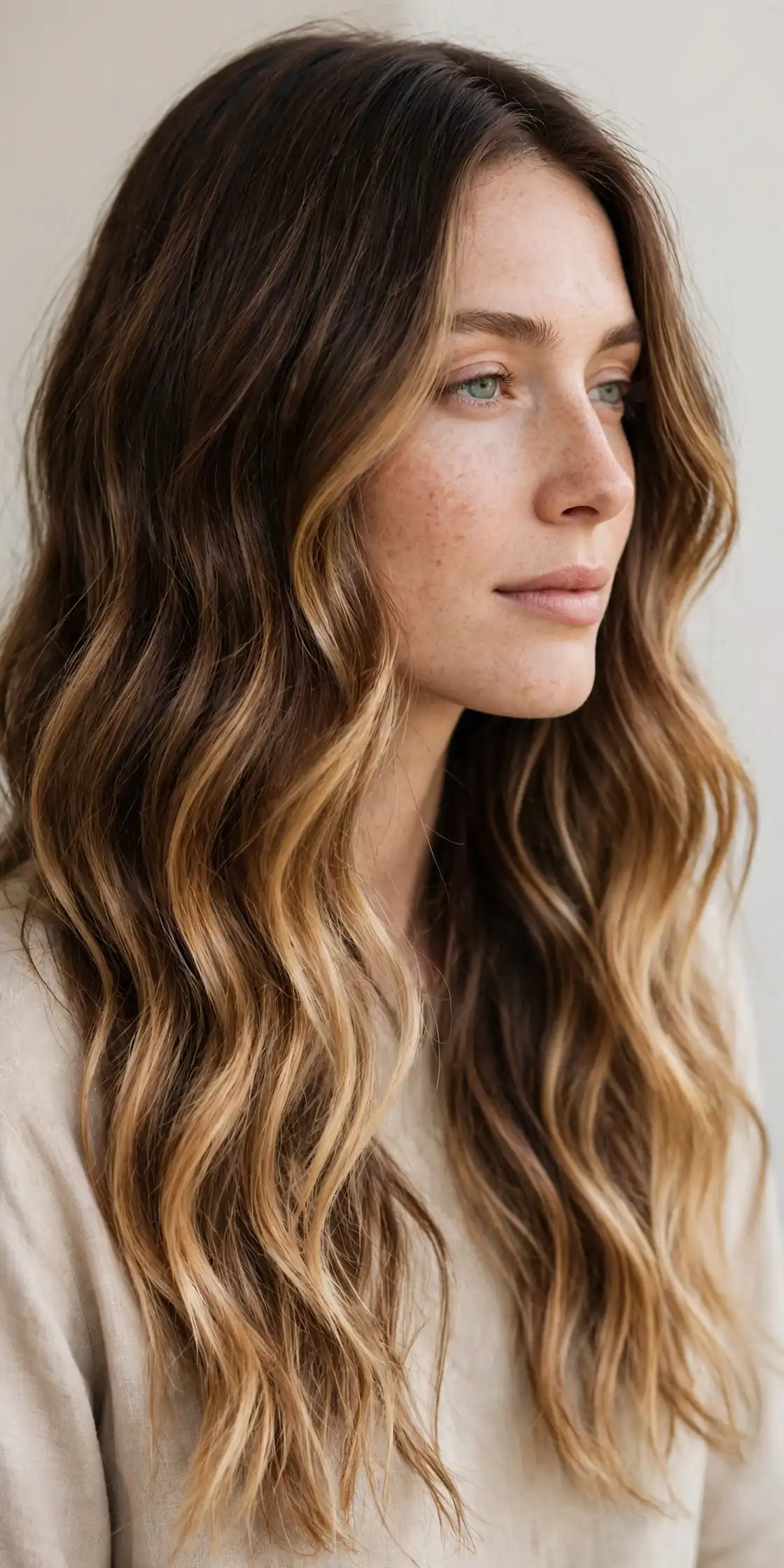
Warm espresso balayage with honey ends is the coziest version of this trend, like the last light of a golden afternoon caught in your hair. The roots stay deep espresso, the mid-lengths warm into milk chocolate, and the very ends glow with a soft honey brown. This gradient flatters warm skin tones and adds warmth to the complexion, and it is especially pretty on long, wavy hair where the gradient can unfold slowly. If you love the idea of lighter ends but find blonde too stark, honey is the perfect middle ground.
- Blend from espresso roots through chocolate mid-lengths.
- Keep the honey tone soft and golden, never brassy.
- Wave hair with a large-barrel curling iron.
- Apply a toning mask monthly to control brassiness.
Ask your stylist for a three-stage melt — espresso, chocolate, honey — and stress that you want the honey ends to stay golden rather than orange. A purple or blue toning mask used sparingly will keep brassiness in check, but use it only once or twice a month so the honey stays warm. At home, protect the ends with a leave-in conditioner, since lightened ends are more fragile, and trim every eight weeks to prevent split ends from dulling the gradient. This is a slightly higher-maintenance idea, but the glow is worth it.
Cool-Toned Espresso Balayage for a Modern Edge
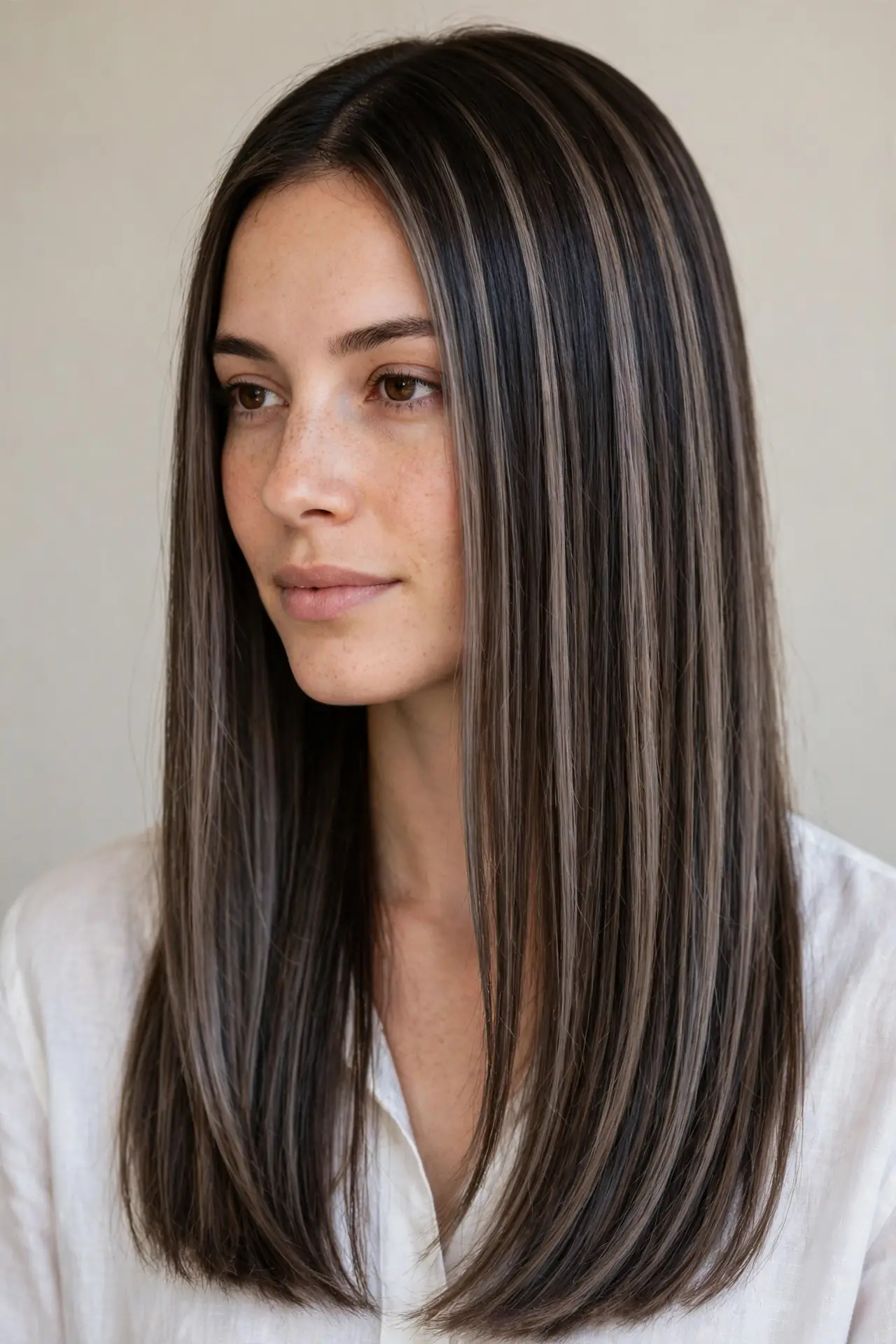
Not every espresso balayage has to be warm. A cool-toned version, with ash-brown and muted taupe ribbons over a deep espresso base, feels modern, editorial, and incredibly chic. It suits cool and neutral skin tones best, and it pairs beautifully with sleek cuts, sharp bobs, and minimalist style. The cool tones also make this version one of the least brassy options, since the toner deliberately cancels warmth. If you love brunette hair but dislike any hint of red or gold, this is the espresso balayage for you.
- Ask for ash-brown and taupe ribbons, not golden ones.
- Keep the overall effect muted and smoky.
- Style sleek and straight to show the cool tones.
- Use a cool-toned gloss to refresh the ash finish.
Tell your colorist you want a cool, ashy espresso balayage and show photos of the exact tone you mean, since “ash” varies widely. Expect a toner that neutralizes warmth, and plan gloss refreshes every six weeks, as cool tones fade faster than warm ones. At home, use a color-safe shampoo and avoid overusing purple shampoo, which can push the color too gray. A lightweight shine serum will keep the cool finish looking polished rather than flat, and regular trims will stop the ends from looking dry or washed out.
Espresso Balayage with Curtain Bangs
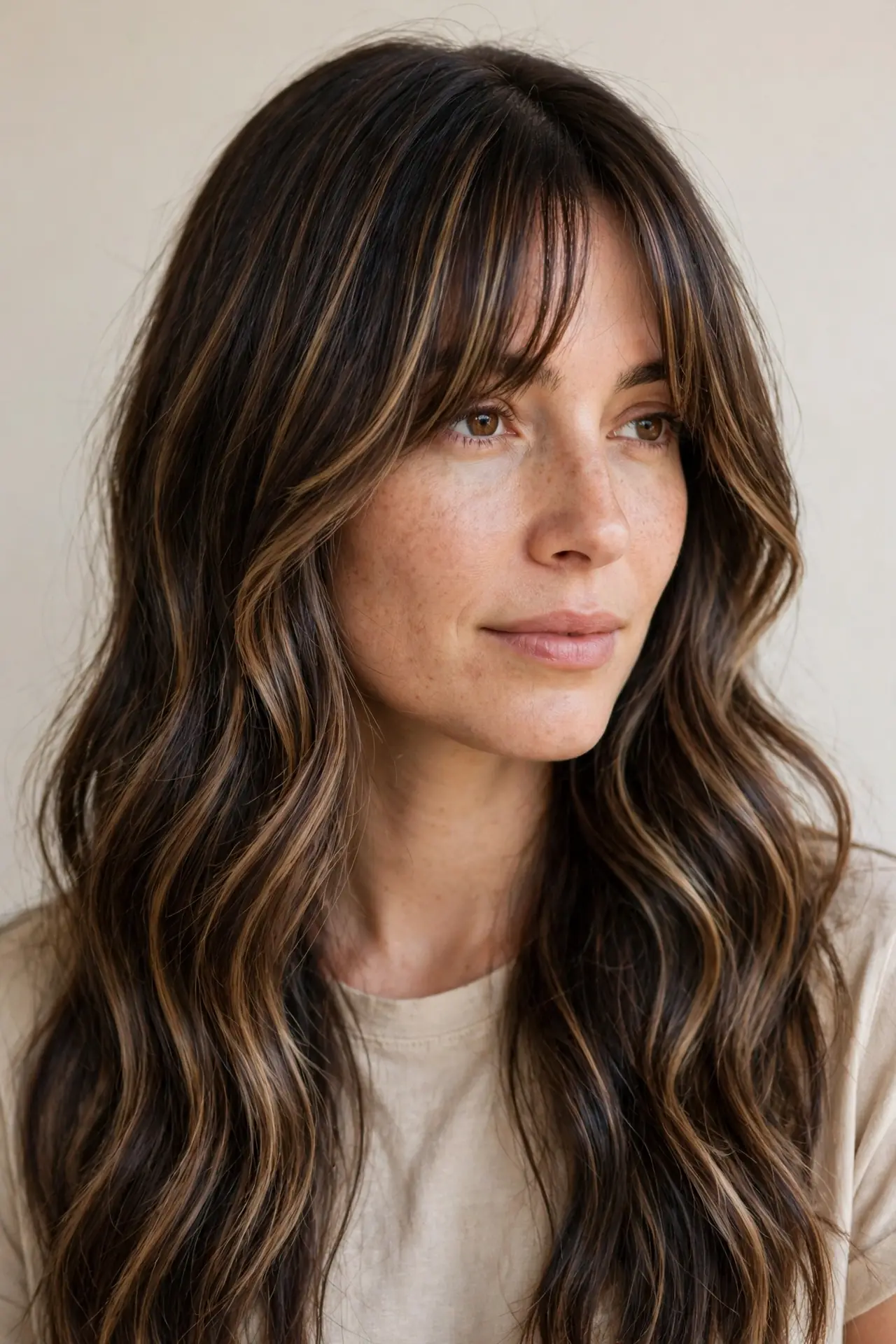
Curtain bangs and espresso balayage are a match made for face-framing, because the bangs themselves become a showcase for the lightest pieces. The bangs sweep open on either side of the face, and the balayage ribbons woven through them brighten your eyes and cheekbones instantly. This idea suits almost every face shape, since the bangs can be cut longer or shorter to flatter your features, and it works on straight, wavy, and thick hair. It also adds instant style to long hair that otherwise feels a little plain.
- Cut curtain bangs to cheekbone or jaw length.
- Weave lighter ribbons through the bang sections.
- Blow-dry bangs forward, then sweep them apart.
- Use a round brush to give the bangs soft bend.
Ask for curtain bangs cut to flatter your face shape, with balayage ribbons placed deliberately through the fringe so they catch the light. Mention whether you part your hair in the middle or slightly off-center, since that changes where the bangs fall. At home, bangs need more frequent washing than the rest of your hair, so a little dry shampoo keeps them fresh between washes. Trim the bangs every four to six weeks — faster than the rest of your cut — and refresh the face-framing color at the same appointment for a consistently polished look.
Low-Maintenance Espresso Balayage Grow-Out
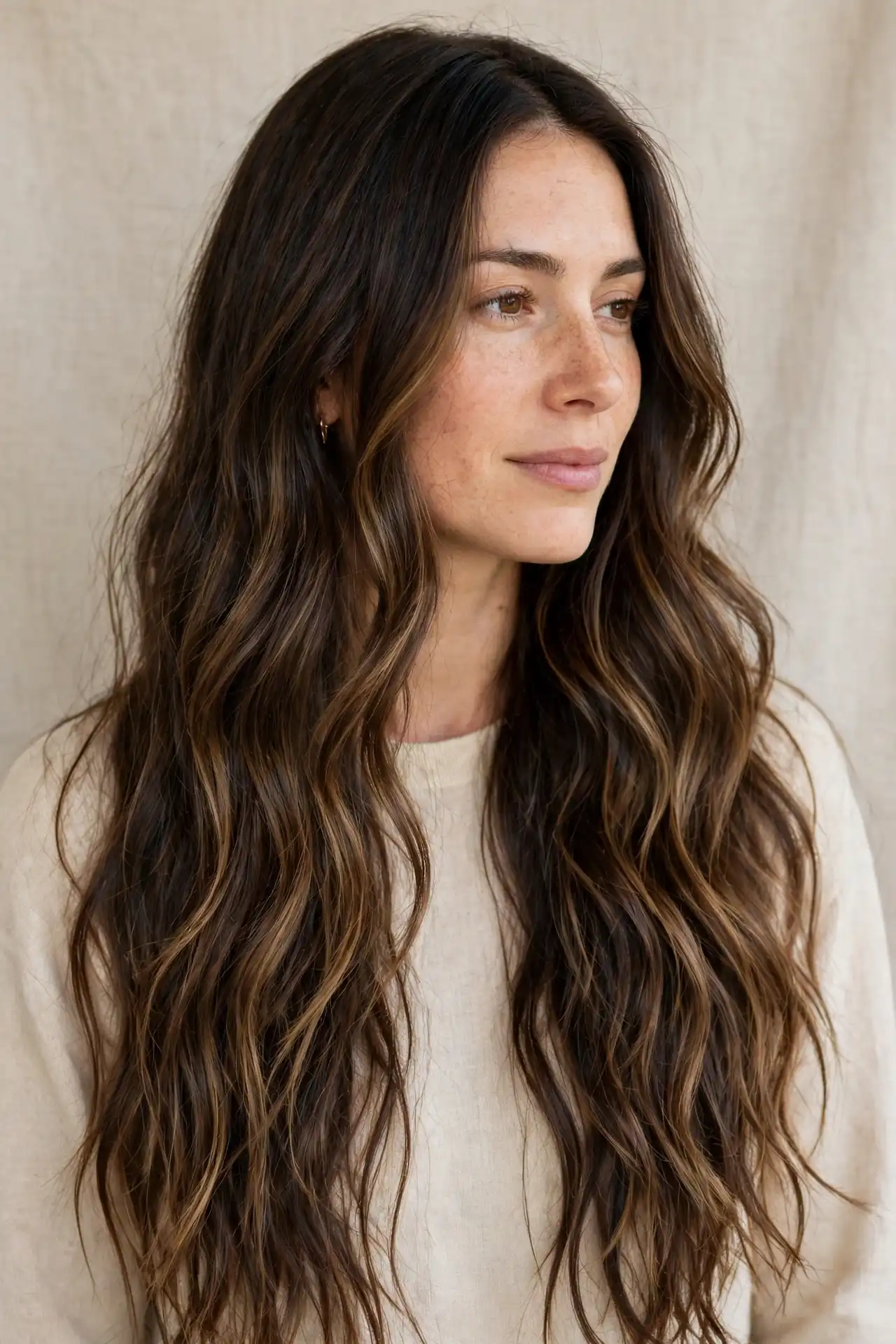
The best thing about espresso balayage is how gracefully it grows out, and this idea leans all the way into that advantage. With a root melt that matches your natural dark brown, a soft balayage through the lengths, and no foil lines anywhere, regrowth simply blends in. This is the version to choose if you visit the salon only a few times a year, if you are busy, or if you simply hate visible roots. It suits every hair type and face shape, because the placement is customized to your natural growth pattern and parting.
- Match the root melt closely to your natural color.
- Keep all transitions soft with no harsh lines.
- Air-dry or rough-dry for an effortless finish.
- Refresh with a gloss instead of full color.
Ask your stylist for a root melt and balayage designed for a six-month grow-out, and be honest about how often you realistically visit the salon. That honesty helps them place the color where it will age best. At home, this idea needs almost nothing: color-safe shampoo, occasional deep conditioning, and a gloss every few months. Avoid box dye touch-ups, which can create the harsh lines balayage is meant to avoid. When you do return to the salon, your colorist can simply refresh the lengths and ends, keeping both the cost and the damage low.
Conclusion
Espresso balayage hair color proves that brunette hair is anything but boring — it is rich, dimensional, and endlessly adaptable, from subtle dark-brown dimension to glowing honey ends and cool modern ash tones. Whichever idea caught your eye, take it to your stylist with a photo, be clear about the maintenance level you want, and let the color grow out gracefully between visits. For more inspiration in the same warm brunette family, explore these cowboy copper balayage ideas and dark copper brown hair color ideas to compare tones before your appointment. Your next great hair color might be just one espresso melt away.